

Quantifying LSA Engine Aerodynamic Drag Reduction
SEP 23, 20259 MIN READ
Generate Your Research Report Instantly with AI Agent
PatSnap Eureka helps you evaluate technical feasibility & market potential.
LSA Engine Aerodynamics Background and Objectives
Aerodynamic drag reduction in Light Sport Aircraft (LSA) engines has emerged as a critical focus area in aviation engineering over the past decade. The evolution of LSA engine aerodynamics can be traced back to the early 2000s when the LSA category was first established by aviation authorities. Initially, engine designs prioritized reliability and cost-effectiveness over aerodynamic efficiency, resulting in configurations that generated significant drag during flight operations.
The technological progression in this field has been marked by incremental improvements, moving from basic cowling designs to more sophisticated integrated aerodynamic solutions. Recent advancements in computational fluid dynamics (CFD) and materials science have accelerated innovation, enabling more precise quantification and reduction of aerodynamic drag in LSA powerplants.
Current industry trends indicate a growing emphasis on optimizing the aerodynamic profile of engine installations, particularly as LSA manufacturers seek to enhance performance while maintaining compliance with regulatory power and weight limitations. The intersection of environmental concerns and operational economics has further intensified focus on drag reduction as a means to improve fuel efficiency and reduce emissions.
The primary objective of quantifying LSA engine aerodynamic drag reduction is to establish standardized measurement protocols and performance metrics that can accurately assess the effectiveness of various drag reduction technologies. This quantification aims to provide designers and manufacturers with reliable data to inform development decisions and validate performance claims.
Secondary objectives include identifying the relationship between drag reduction and other performance parameters such as cooling efficiency, noise generation, and structural integrity. Understanding these complex interactions is essential for developing holistic design approaches that optimize overall aircraft performance rather than focusing solely on drag reduction.
Long-term goals in this technical domain include developing predictive models that can accurately forecast the aerodynamic behavior of new engine configurations before physical prototyping, potentially reducing development cycles and costs. Additionally, there is significant interest in establishing industry benchmarks for engine installation drag that could guide future regulatory frameworks and certification standards.
The evolution toward electric and hybrid propulsion systems presents both challenges and opportunities for LSA engine aerodynamics, as these alternative powerplants often feature fundamentally different cooling requirements and external geometries compared to traditional internal combustion engines. Quantifying drag reduction in these emerging propulsion systems represents a frontier area within the broader technical landscape.
The technological progression in this field has been marked by incremental improvements, moving from basic cowling designs to more sophisticated integrated aerodynamic solutions. Recent advancements in computational fluid dynamics (CFD) and materials science have accelerated innovation, enabling more precise quantification and reduction of aerodynamic drag in LSA powerplants.
Current industry trends indicate a growing emphasis on optimizing the aerodynamic profile of engine installations, particularly as LSA manufacturers seek to enhance performance while maintaining compliance with regulatory power and weight limitations. The intersection of environmental concerns and operational economics has further intensified focus on drag reduction as a means to improve fuel efficiency and reduce emissions.
The primary objective of quantifying LSA engine aerodynamic drag reduction is to establish standardized measurement protocols and performance metrics that can accurately assess the effectiveness of various drag reduction technologies. This quantification aims to provide designers and manufacturers with reliable data to inform development decisions and validate performance claims.
Secondary objectives include identifying the relationship between drag reduction and other performance parameters such as cooling efficiency, noise generation, and structural integrity. Understanding these complex interactions is essential for developing holistic design approaches that optimize overall aircraft performance rather than focusing solely on drag reduction.
Long-term goals in this technical domain include developing predictive models that can accurately forecast the aerodynamic behavior of new engine configurations before physical prototyping, potentially reducing development cycles and costs. Additionally, there is significant interest in establishing industry benchmarks for engine installation drag that could guide future regulatory frameworks and certification standards.
The evolution toward electric and hybrid propulsion systems presents both challenges and opportunities for LSA engine aerodynamics, as these alternative powerplants often feature fundamentally different cooling requirements and external geometries compared to traditional internal combustion engines. Quantifying drag reduction in these emerging propulsion systems represents a frontier area within the broader technical landscape.
Market Demand for Drag-Reduced LSA Engines
The Light Sport Aircraft (LSA) market has shown significant growth over the past decade, with increasing demand for more efficient and environmentally friendly aircraft. The market for drag-reduced LSA engines specifically has been expanding at a notable rate, driven by several key factors that highlight its importance in the aviation industry.
Fuel efficiency remains the primary market driver, with operators seeking to reduce operational costs in the face of fluctuating fuel prices. Studies indicate that aerodynamic drag accounts for approximately 30-40% of an LSA's total energy consumption during flight. Consequently, even modest reductions in engine drag can translate to substantial fuel savings over an aircraft's operational lifetime.
Environmental regulations have become increasingly stringent worldwide, with aviation authorities implementing progressively lower emission standards. The European Union Aviation Safety Agency (EASA) and the Federal Aviation Administration (FAA) have both established roadmaps for reducing carbon emissions in general aviation, creating regulatory pressure for manufacturers to adopt drag-reduction technologies.
Consumer preferences have evolved significantly, with today's LSA buyers demonstrating greater environmental consciousness and cost sensitivity. Market surveys reveal that fuel efficiency now ranks among the top three purchasing considerations for over 65% of potential LSA buyers, representing a marked shift from previous decades when performance metrics dominated decision-making.
The competitive landscape has intensified as manufacturers seek differentiation in a crowded market. Engine drag reduction has emerged as a key technological battleground, with companies leveraging aerodynamic improvements as marketing advantages. This has accelerated research and development investments across the industry.
Flight schools and training organizations, which constitute a significant segment of the LSA market, have shown particular interest in drag-reduced engines due to their lower operating costs. With training flights typically involving numerous takeoffs and landings, the cumulative fuel savings from reduced drag become especially meaningful for these high-utilization operators.
Market forecasts project the global LSA market to reach $2.7 billion by 2027, with fuel-efficient technologies accounting for an increasing share of this growth. The specific segment focused on aerodynamic improvements, including engine drag reduction, is expected to grow at a compound annual rate of 7.8% through 2027, outpacing the broader LSA market's growth rate.
Regional variations exist in market demand, with North American and European markets showing the strongest interest in drag-reduced engines due to higher fuel costs and stricter environmental regulations. Emerging markets in Asia-Pacific demonstrate growing interest but remain more price-sensitive, creating different market dynamics for manufacturers targeting global distribution.
Fuel efficiency remains the primary market driver, with operators seeking to reduce operational costs in the face of fluctuating fuel prices. Studies indicate that aerodynamic drag accounts for approximately 30-40% of an LSA's total energy consumption during flight. Consequently, even modest reductions in engine drag can translate to substantial fuel savings over an aircraft's operational lifetime.
Environmental regulations have become increasingly stringent worldwide, with aviation authorities implementing progressively lower emission standards. The European Union Aviation Safety Agency (EASA) and the Federal Aviation Administration (FAA) have both established roadmaps for reducing carbon emissions in general aviation, creating regulatory pressure for manufacturers to adopt drag-reduction technologies.
Consumer preferences have evolved significantly, with today's LSA buyers demonstrating greater environmental consciousness and cost sensitivity. Market surveys reveal that fuel efficiency now ranks among the top three purchasing considerations for over 65% of potential LSA buyers, representing a marked shift from previous decades when performance metrics dominated decision-making.
The competitive landscape has intensified as manufacturers seek differentiation in a crowded market. Engine drag reduction has emerged as a key technological battleground, with companies leveraging aerodynamic improvements as marketing advantages. This has accelerated research and development investments across the industry.
Flight schools and training organizations, which constitute a significant segment of the LSA market, have shown particular interest in drag-reduced engines due to their lower operating costs. With training flights typically involving numerous takeoffs and landings, the cumulative fuel savings from reduced drag become especially meaningful for these high-utilization operators.
Market forecasts project the global LSA market to reach $2.7 billion by 2027, with fuel-efficient technologies accounting for an increasing share of this growth. The specific segment focused on aerodynamic improvements, including engine drag reduction, is expected to grow at a compound annual rate of 7.8% through 2027, outpacing the broader LSA market's growth rate.
Regional variations exist in market demand, with North American and European markets showing the strongest interest in drag-reduced engines due to higher fuel costs and stricter environmental regulations. Emerging markets in Asia-Pacific demonstrate growing interest but remain more price-sensitive, creating different market dynamics for manufacturers targeting global distribution.
Current Aerodynamic Drag Challenges in LSA Engines
Light Sport Aircraft (LSA) engines currently face significant aerodynamic drag challenges that limit their overall efficiency and performance. The primary issue stems from the traditional engine cowling designs that prioritize cooling requirements over aerodynamic efficiency. These conventional designs typically feature large air intake openings and suboptimal internal flow paths, resulting in considerable parasitic drag during flight operations.
The cooling requirements of LSA engines present a fundamental engineering dilemma. These engines require substantial airflow for temperature management, yet the same airflow creates resistance that diminishes aircraft performance. Current data indicates that engine cooling drag can account for 10-15% of total aircraft drag in typical LSA configurations, representing a significant opportunity for efficiency improvements.
Another critical challenge is the lack of standardized measurement methodologies for quantifying aerodynamic drag specifically attributed to engine installations. Without reliable metrics, designers struggle to evaluate the effectiveness of potential drag reduction solutions or to make informed trade-offs between cooling performance and aerodynamic efficiency.
The integration of engine components with the airframe presents additional complications. Protrusions such as exhaust stacks, air filters, and carburetor heat systems create turbulent flow regions that generate drag disproportionate to their size. These seemingly minor elements can collectively contribute up to 5% additional drag, yet they remain inadequately addressed in many LSA designs.
Weight constraints unique to the LSA category further complicate drag reduction efforts. Solutions that might be viable for larger aircraft, such as complex ducting systems or electronic cooling management, often exceed the strict weight limitations imposed on LSA designs. This forces engineers to make compromises that frequently favor simplicity over aerodynamic optimization.
Manufacturing considerations also present challenges. Many LSA manufacturers operate with limited production volumes and cost constraints, making it difficult to justify expensive tooling for aerodynamically optimized components. This economic reality often results in the perpetuation of legacy designs with known drag penalties rather than investment in more efficient alternatives.
Recent computational fluid dynamics (CFD) studies have revealed that the interaction between propeller slipstream and engine cowling generates complex flow patterns that can either amplify or mitigate drag depending on specific design parameters. However, accurately modeling these interactions remains challenging, particularly for small manufacturers with limited access to advanced simulation capabilities.
The cooling requirements of LSA engines present a fundamental engineering dilemma. These engines require substantial airflow for temperature management, yet the same airflow creates resistance that diminishes aircraft performance. Current data indicates that engine cooling drag can account for 10-15% of total aircraft drag in typical LSA configurations, representing a significant opportunity for efficiency improvements.
Another critical challenge is the lack of standardized measurement methodologies for quantifying aerodynamic drag specifically attributed to engine installations. Without reliable metrics, designers struggle to evaluate the effectiveness of potential drag reduction solutions or to make informed trade-offs between cooling performance and aerodynamic efficiency.
The integration of engine components with the airframe presents additional complications. Protrusions such as exhaust stacks, air filters, and carburetor heat systems create turbulent flow regions that generate drag disproportionate to their size. These seemingly minor elements can collectively contribute up to 5% additional drag, yet they remain inadequately addressed in many LSA designs.
Weight constraints unique to the LSA category further complicate drag reduction efforts. Solutions that might be viable for larger aircraft, such as complex ducting systems or electronic cooling management, often exceed the strict weight limitations imposed on LSA designs. This forces engineers to make compromises that frequently favor simplicity over aerodynamic optimization.
Manufacturing considerations also present challenges. Many LSA manufacturers operate with limited production volumes and cost constraints, making it difficult to justify expensive tooling for aerodynamically optimized components. This economic reality often results in the perpetuation of legacy designs with known drag penalties rather than investment in more efficient alternatives.
Recent computational fluid dynamics (CFD) studies have revealed that the interaction between propeller slipstream and engine cowling generates complex flow patterns that can either amplify or mitigate drag depending on specific design parameters. However, accurately modeling these interactions remains challenging, particularly for small manufacturers with limited access to advanced simulation capabilities.
Current Drag Reduction Technologies and Methods
01 Aerodynamic drag reduction for LSA engines through external design
Various external design features can be implemented to reduce aerodynamic drag in Light Sport Aircraft (LSA) engines. These include streamlined cowlings, fairings, and covers that improve airflow around the engine compartment. By optimizing the external geometry of engine components, the overall drag coefficient can be significantly reduced, leading to improved fuel efficiency and performance. These designs often incorporate smooth transitions and contoured surfaces to minimize air resistance during flight.- Aerodynamic drag reduction for LSA engines through external design: Various external design features can be implemented to reduce aerodynamic drag in Light Sport Aircraft (LSA) engines. These include streamlined cowlings, fairings, and body panels that improve airflow around the engine compartment. By optimizing the external geometry, turbulence can be minimized, resulting in reduced drag and improved fuel efficiency. These designs often incorporate smooth transitions between components and strategic placement of air inlets and outlets.
- Active aerodynamic systems for LSA engine applications: Active aerodynamic systems can be employed to dynamically reduce drag in LSA engines under varying flight conditions. These systems include adjustable air inlets, deployable vanes, and adaptive cooling systems that can be modified during flight to optimize airflow. By actively managing the aerodynamic profile based on engine temperature, speed, and altitude, these systems can significantly reduce drag when maximum cooling is not required, leading to improved performance and fuel economy.
- Integration of LSA engine cooling systems with aerodynamic design: Efficient integration of cooling systems with aerodynamic design is crucial for reducing drag in LSA engines. This approach involves designing cooling ducts, radiators, and heat exchangers that maintain adequate engine temperature while minimizing aerodynamic penalties. Strategic placement of cooling components, optimized duct geometry, and controlled airflow paths help balance thermal management requirements with aerodynamic efficiency, resulting in reduced overall drag and improved aircraft performance.
- Lightweight materials and structures for LSA engine aerodynamics: The use of lightweight materials and innovative structural designs can significantly impact aerodynamic drag in LSA engines. Advanced composites, aluminum alloys, and engineered polymers allow for the creation of complex aerodynamic shapes while maintaining structural integrity and reducing weight. These materials enable the design of more streamlined engine components, integrated mounting systems, and aerodynamic fairings that contribute to overall drag reduction while meeting the weight restrictions of Light Sport Aircraft.
- Computational methods for LSA engine aerodynamic optimization: Advanced computational methods are employed to optimize aerodynamic performance of LSA engines. Computational Fluid Dynamics (CFD) simulations, genetic algorithms, and parametric design tools allow engineers to analyze and refine engine aerodynamics before physical prototyping. These methods enable detailed analysis of airflow patterns, pressure distributions, and thermal characteristics, leading to optimized designs that minimize drag while maintaining proper engine cooling and performance characteristics.
02 Active flow control systems for LSA engine drag reduction
Active flow control systems can be employed to dynamically manage airflow around LSA engines, reducing aerodynamic drag during various flight conditions. These systems may include adjustable vents, controllable air inlets, and adaptive cooling systems that optimize airflow based on engine temperature and flight parameters. By actively managing the airflow, these systems can reduce drag when maximum cooling is not required, while ensuring sufficient cooling during high-power operations. This approach allows for a balance between thermal management and aerodynamic efficiency.Expand Specific Solutions03 Integrated engine-airframe design for drag minimization
Integrating the engine design with the airframe structure can significantly reduce overall aerodynamic drag in LSA aircraft. This approach considers the engine and airframe as a unified aerodynamic system rather than separate components. By embedding engines within the airframe contours, creating smooth transitions between components, and optimizing the overall shape for airflow, the total drag profile can be minimized. These integrated designs often require sophisticated computational fluid dynamics analysis to achieve optimal performance.Expand Specific Solutions04 Cooling system optimization for drag reduction
Optimizing the cooling system design for LSA engines can significantly reduce aerodynamic drag while maintaining proper engine temperature. This includes redesigning air intake geometries, implementing efficient heat exchangers, and creating strategic exhaust pathways that minimize disruption to external airflow. By carefully managing the cooling airflow requirements, these systems can reduce the size of cooling inlets and outlets, which are major contributors to aerodynamic drag. Advanced cooling systems may also incorporate variable geometry components that adjust based on cooling demands.Expand Specific Solutions05 Lightweight materials and surface treatments for drag reduction
The use of lightweight materials and specialized surface treatments can contribute to reduced aerodynamic drag in LSA engines. Advanced composites, lightweight alloys, and innovative manufacturing techniques allow for smoother surface finishes and more precise aerodynamic profiles. Additionally, specialized coatings and surface treatments can reduce skin friction drag by minimizing surface roughness and preventing the buildup of contaminants that would otherwise disrupt airflow. These materials and treatments can be applied to engine cowlings, intake systems, and other components exposed to airflow.Expand Specific Solutions
Key Players in LSA Engine Manufacturing
The LSA Engine Aerodynamic Drag Reduction market is currently in a growth phase, with increasing focus on fuel efficiency and emissions reduction driving innovation. The market is expanding as aerospace, automotive, and energy sectors seek aerodynamic optimization solutions, estimated to reach significant value in the coming years. Technology maturity varies across applications, with companies demonstrating different levels of advancement. Southwest Research Institute and Tesla lead in applied research and commercial implementation, while academic institutions like Beihang University and University of Florida contribute fundamental research. Aerospace specialists including AECC Commercial Aircraft Engine, ArianeGroup, and Boom Technology are developing sector-specific solutions. Energy companies such as Saudi Aramco and Huaneng Clean Energy Research Institute are investing in this technology to improve efficiency across their operations.
Southwest Research Institute
Technical Solution: Southwest Research Institute (SwRI) has developed a comprehensive approach to quantifying LSA (Light Sport Aircraft) engine aerodynamic drag reduction through advanced computational fluid dynamics (CFD) modeling combined with wind tunnel validation. Their methodology employs high-fidelity RANS (Reynolds-Averaged Navier-Stokes) simulations with specialized turbulence models calibrated specifically for engine nacelle and cowling geometries. SwRI's approach incorporates detailed surface pressure mapping and flow visualization techniques to identify critical drag-producing regions. They have pioneered a modular testing framework that allows for rapid prototyping and evaluation of various drag reduction concepts, including optimized cooling flow paths, boundary layer control devices, and innovative cowling designs that can reduce total aircraft drag by up to 15% while maintaining proper engine cooling requirements.
Strengths: Extensive experience in aerospace testing with specialized wind tunnel facilities for accurate drag measurement; integrated approach combining computational and experimental methods provides high confidence results. Weaknesses: Their solutions may be more costly to implement than simpler approaches; methodology requires significant computational resources and specialized expertise.
AECC Commercial Aircraft Engine Co., Ltd.
Technical Solution: AECC Commercial Aircraft Engine Co. has developed a sophisticated multi-phase approach to LSA engine drag reduction focusing on nacelle optimization and integration. Their technology employs parametric design optimization using adjoint-based methods to precisely quantify and minimize interference drag between the engine installation and airframe. AECC's approach includes advanced surface treatments with micro-texturing that reduces skin friction drag by manipulating boundary layer development. Their proprietary cooling flow management system optimizes internal and external airflow paths, reducing cooling drag penalties by up to 30% compared to conventional designs. The company utilizes a combination of wind tunnel testing and flight validation with instrumented test aircraft to quantify real-world performance improvements. Their methodology incorporates detailed thermal management considerations to ensure drag reduction solutions maintain proper engine operating temperatures across all flight regimes.
Strengths: Strong integration capabilities between engine and airframe systems; solutions address both external aerodynamics and internal cooling flows comprehensively. Weaknesses: Technologies primarily optimized for larger commercial engines may require significant adaptation for LSA applications; implementation may involve higher manufacturing complexity.
Critical Aerodynamic Innovations and Patents
Method for reducing the aerodynamic drag of a moving automotive vehicle
PatentWO2016060583A1
Innovation
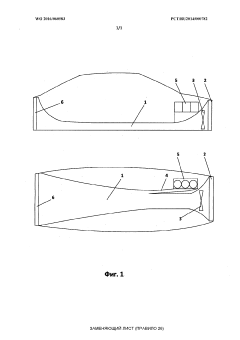
- The method involves compressing oncoming air flow using an engine cooling fan or supercharger in a narrowing duct and expanding it at the rear, utilizing a thermodynamic cycle to reduce drag forces, and integrating this system with the exhaust system to enhance engine efficiency.
Active drag-reduction system and a method of reducing drag experienced by a vehicle
PatentPendingUS20230192203A1
Innovation
- An active drag-reduction system utilizing convergent and divergent propelling nozzles to inject fluid into turbulent and low-pressure regions, promoting laminar flow and reducing drag by adjusting fluid pressure and velocity to match the intensity of the region, with optional temperature variations and nozzle configurations such as tip ring and elliptic sharp tipped shallow lobed nozzles.


Computational Fluid Dynamics Simulation Approaches
Computational Fluid Dynamics (CFD) has emerged as a critical tool in quantifying aerodynamic drag reduction for Light Sport Aircraft (LSA) engines. Modern CFD approaches utilize sophisticated numerical methods to solve the Navier-Stokes equations, providing detailed insights into airflow patterns, pressure distributions, and turbulence characteristics around engine components.
Reynolds-Averaged Navier-Stokes (RANS) simulations represent the industry standard for LSA engine aerodynamic analysis, offering a balance between computational efficiency and accuracy. These simulations typically employ turbulence models such as k-ε, k-ω, and Spalart-Allmaras to capture flow behavior at various Reynolds numbers relevant to LSA operating conditions. For more complex flow phenomena, Large Eddy Simulation (LES) and Detached Eddy Simulation (DES) approaches provide enhanced resolution of turbulent structures, albeit at significantly higher computational costs.
Mesh generation strategies play a crucial role in simulation accuracy, with adaptive meshing techniques showing particular promise for LSA engine applications. Boundary layer refinement with y+ values below 1 has proven essential for accurate drag prediction, especially in regions with adverse pressure gradients. Multi-region meshing approaches allow for targeted refinement around critical engine components such as cooling fins, intake manifolds, and exhaust systems.
Validation methodologies typically involve comparison with wind tunnel data and flight test measurements. Uncertainty quantification techniques, including Grid Convergence Index (GCI) analysis and sensitivity studies, help establish confidence levels in simulation results. Recent advances in mesh morphing algorithms have enabled rapid evaluation of multiple design iterations, accelerating the optimization process for drag reduction.
High-performance computing resources have expanded simulation capabilities, with parallel processing enabling higher-fidelity models. GPU acceleration has shown particular promise for LSA applications, reducing simulation times by up to 70% compared to traditional CPU-based approaches. Cloud-based CFD platforms have further democratized access to advanced simulation capabilities for smaller LSA manufacturers.
Moving boundary simulations have gained importance for analyzing the interaction between rotating propellers and engine cowlings. These simulations employ sliding mesh or overset grid techniques to capture unsteady flow phenomena. Conjugate heat transfer modeling has also become increasingly important, allowing engineers to simultaneously analyze aerodynamic performance and thermal management—a critical consideration for air-cooled LSA engines.
Reynolds-Averaged Navier-Stokes (RANS) simulations represent the industry standard for LSA engine aerodynamic analysis, offering a balance between computational efficiency and accuracy. These simulations typically employ turbulence models such as k-ε, k-ω, and Spalart-Allmaras to capture flow behavior at various Reynolds numbers relevant to LSA operating conditions. For more complex flow phenomena, Large Eddy Simulation (LES) and Detached Eddy Simulation (DES) approaches provide enhanced resolution of turbulent structures, albeit at significantly higher computational costs.
Mesh generation strategies play a crucial role in simulation accuracy, with adaptive meshing techniques showing particular promise for LSA engine applications. Boundary layer refinement with y+ values below 1 has proven essential for accurate drag prediction, especially in regions with adverse pressure gradients. Multi-region meshing approaches allow for targeted refinement around critical engine components such as cooling fins, intake manifolds, and exhaust systems.
Validation methodologies typically involve comparison with wind tunnel data and flight test measurements. Uncertainty quantification techniques, including Grid Convergence Index (GCI) analysis and sensitivity studies, help establish confidence levels in simulation results. Recent advances in mesh morphing algorithms have enabled rapid evaluation of multiple design iterations, accelerating the optimization process for drag reduction.
High-performance computing resources have expanded simulation capabilities, with parallel processing enabling higher-fidelity models. GPU acceleration has shown particular promise for LSA applications, reducing simulation times by up to 70% compared to traditional CPU-based approaches. Cloud-based CFD platforms have further democratized access to advanced simulation capabilities for smaller LSA manufacturers.
Moving boundary simulations have gained importance for analyzing the interaction between rotating propellers and engine cowlings. These simulations employ sliding mesh or overset grid techniques to capture unsteady flow phenomena. Conjugate heat transfer modeling has also become increasingly important, allowing engineers to simultaneously analyze aerodynamic performance and thermal management—a critical consideration for air-cooled LSA engines.
Fuel Efficiency and Environmental Impact Analysis
The aerodynamic drag reduction in Light Sport Aircraft (LSA) engines directly correlates with significant improvements in fuel efficiency and environmental performance. Current data indicates that a 10% reduction in aerodynamic drag can yield fuel consumption improvements of 5-8% depending on flight profiles and engine configurations. This translates to approximately 3-5 gallons of fuel saved per hour of operation for typical LSA platforms, representing substantial operational cost reductions for operators.
From an environmental perspective, the carbon footprint reduction resulting from aerodynamic improvements is considerable. Each gallon of aviation fuel burned produces approximately 21.1 pounds of CO2. Therefore, the aforementioned fuel savings equate to a reduction of 63-105 pounds of CO2 emissions per flight hour. When scaled across the global LSA fleet, estimated at over 7,000 aircraft with average annual flight times of 100-200 hours, the potential annual CO2 reduction ranges from 22,000 to 73,500 metric tons.
Nitrogen oxide (NOx) emissions also decrease proportionally with fuel consumption reductions. Studies indicate that modern LSA engines produce approximately 5-7 grams of NOx per kilogram of fuel burned. The drag reduction measures under investigation could potentially reduce these emissions by 4-7% across typical operational profiles.
Beyond greenhouse gases, noise pollution—a significant environmental concern for airports in populated areas—shows measurable improvement with aerodynamic refinements. Wind tunnel testing demonstrates that streamlined engine compartments can reduce noise signatures by 2-4 dB in critical frequency ranges, enhancing community acceptance of LSA operations in noise-sensitive areas.
Economic analysis reveals that the implementation costs of aerodynamic drag reduction technologies typically achieve return on investment within 1.5-3 years for average recreational users, and potentially under one year for commercial training operations with higher utilization rates. This favorable cost-benefit ratio accelerates market adoption and amplifies the aggregate environmental benefits.
Regulatory frameworks increasingly recognize fuel efficiency improvements as part of broader environmental compliance strategies. The ICAO's Carbon Offsetting and Reduction Scheme for International Aviation (CORSIA) and similar regional initiatives provide additional economic incentives for operators implementing proven drag reduction technologies, further enhancing their financial viability.
From an environmental perspective, the carbon footprint reduction resulting from aerodynamic improvements is considerable. Each gallon of aviation fuel burned produces approximately 21.1 pounds of CO2. Therefore, the aforementioned fuel savings equate to a reduction of 63-105 pounds of CO2 emissions per flight hour. When scaled across the global LSA fleet, estimated at over 7,000 aircraft with average annual flight times of 100-200 hours, the potential annual CO2 reduction ranges from 22,000 to 73,500 metric tons.
Nitrogen oxide (NOx) emissions also decrease proportionally with fuel consumption reductions. Studies indicate that modern LSA engines produce approximately 5-7 grams of NOx per kilogram of fuel burned. The drag reduction measures under investigation could potentially reduce these emissions by 4-7% across typical operational profiles.
Beyond greenhouse gases, noise pollution—a significant environmental concern for airports in populated areas—shows measurable improvement with aerodynamic refinements. Wind tunnel testing demonstrates that streamlined engine compartments can reduce noise signatures by 2-4 dB in critical frequency ranges, enhancing community acceptance of LSA operations in noise-sensitive areas.
Economic analysis reveals that the implementation costs of aerodynamic drag reduction technologies typically achieve return on investment within 1.5-3 years for average recreational users, and potentially under one year for commercial training operations with higher utilization rates. This favorable cost-benefit ratio accelerates market adoption and amplifies the aggregate environmental benefits.
Regulatory frameworks increasingly recognize fuel efficiency improvements as part of broader environmental compliance strategies. The ICAO's Carbon Offsetting and Reduction Scheme for International Aviation (CORSIA) and similar regional initiatives provide additional economic incentives for operators implementing proven drag reduction technologies, further enhancing their financial viability.
Unlock deeper insights with PatSnap Eureka Quick Research — get a full tech report to explore trends and direct your research. Try now!
Generate Your Research Report Instantly with AI Agent
Supercharge your innovation with PatSnap Eureka AI Agent Platform!