

Exploring Coil Whine Control in High-Frequency Circuits
AUG 13, 20259 MIN READ
Generate Your Research Report Instantly with AI Agent
PatSnap Eureka helps you evaluate technical feasibility & market potential.
Coil Whine Origins and Mitigation Goals
Coil whine, a persistent challenge in high-frequency circuits, has its roots in the fundamental principles of electromagnetism. This phenomenon occurs when electromagnetic forces cause mechanical vibrations in coil windings, resulting in audible noise. The origins of coil whine can be traced back to the early days of electronic devices, becoming increasingly prominent as circuit frequencies and power densities have escalated over time.
The primary source of coil whine is the interaction between alternating magnetic fields and conductive materials within electronic components. As current flows through a coil, it generates a magnetic field that fluctuates in sync with the electrical signal. These fluctuations can induce mechanical stress in nearby conductive elements, causing them to vibrate at frequencies within the human audible range, typically between 20 Hz and 20 kHz.
In high-frequency circuits, the problem is exacerbated due to the rapid changes in current flow and magnetic field strength. Power supply units, voltage regulators, and switching circuits are particularly susceptible to coil whine, as they often operate at frequencies that can produce audible harmonics. The issue is further compounded by the trend towards miniaturization in electronic devices, which can lead to tighter component spacing and increased mechanical coupling.
The goals of coil whine mitigation are multifaceted, addressing both the immediate concerns of user experience and the broader implications for device performance and longevity. Primarily, engineers aim to reduce or eliminate the audible noise, improving the overall quality and user satisfaction of electronic products. This is particularly crucial in consumer electronics, where perceived quality can significantly impact market success.
Beyond noise reduction, mitigation efforts also focus on enhancing the efficiency and reliability of high-frequency circuits. Coil whine is often indicative of energy loss in the form of vibration, which can lead to decreased power efficiency. By addressing this issue, engineers can potentially improve the overall energy performance of devices. Additionally, the mechanical stress associated with coil whine can contribute to component fatigue over time, potentially reducing the lifespan of electronic devices.
Another key objective in coil whine control is to maintain or improve electromagnetic compatibility (EMC) of devices. The vibrations causing coil whine can sometimes lead to unintended electromagnetic emissions, potentially interfering with other electronic equipment or violating regulatory standards. Therefore, mitigation strategies must not only address the audible aspects but also ensure compliance with EMC regulations.
As technology continues to advance, with higher operating frequencies and more compact designs, the challenge of coil whine control becomes increasingly complex. This necessitates ongoing research and innovation in materials science, circuit design, and manufacturing techniques to develop effective solutions that can keep pace with the evolving landscape of high-frequency electronics.
The primary source of coil whine is the interaction between alternating magnetic fields and conductive materials within electronic components. As current flows through a coil, it generates a magnetic field that fluctuates in sync with the electrical signal. These fluctuations can induce mechanical stress in nearby conductive elements, causing them to vibrate at frequencies within the human audible range, typically between 20 Hz and 20 kHz.
In high-frequency circuits, the problem is exacerbated due to the rapid changes in current flow and magnetic field strength. Power supply units, voltage regulators, and switching circuits are particularly susceptible to coil whine, as they often operate at frequencies that can produce audible harmonics. The issue is further compounded by the trend towards miniaturization in electronic devices, which can lead to tighter component spacing and increased mechanical coupling.
The goals of coil whine mitigation are multifaceted, addressing both the immediate concerns of user experience and the broader implications for device performance and longevity. Primarily, engineers aim to reduce or eliminate the audible noise, improving the overall quality and user satisfaction of electronic products. This is particularly crucial in consumer electronics, where perceived quality can significantly impact market success.
Beyond noise reduction, mitigation efforts also focus on enhancing the efficiency and reliability of high-frequency circuits. Coil whine is often indicative of energy loss in the form of vibration, which can lead to decreased power efficiency. By addressing this issue, engineers can potentially improve the overall energy performance of devices. Additionally, the mechanical stress associated with coil whine can contribute to component fatigue over time, potentially reducing the lifespan of electronic devices.
Another key objective in coil whine control is to maintain or improve electromagnetic compatibility (EMC) of devices. The vibrations causing coil whine can sometimes lead to unintended electromagnetic emissions, potentially interfering with other electronic equipment or violating regulatory standards. Therefore, mitigation strategies must not only address the audible aspects but also ensure compliance with EMC regulations.
As technology continues to advance, with higher operating frequencies and more compact designs, the challenge of coil whine control becomes increasingly complex. This necessitates ongoing research and innovation in materials science, circuit design, and manufacturing techniques to develop effective solutions that can keep pace with the evolving landscape of high-frequency electronics.
Market Demand for Quiet Electronics
The market demand for quiet electronics has been steadily increasing in recent years, driven by consumer preferences for more comfortable and less intrusive devices. This trend is particularly evident in high-frequency circuit applications, where coil whine has become a significant concern for manufacturers and end-users alike.
Consumer electronics, such as laptops, smartphones, and gaming consoles, have seen a surge in demand for quieter operation. Users are becoming more sensitive to electronic noise, especially in home and office environments where silence is often valued. This has led to a growing market for devices that minimize or eliminate coil whine, creating opportunities for manufacturers who can effectively address this issue.
In the professional sector, there is a rising demand for quiet electronics in medical equipment, laboratory instruments, and precision manufacturing tools. These industries require devices that operate with minimal acoustic interference to ensure accurate measurements and maintain a conducive working environment. The ability to control coil whine in high-frequency circuits is becoming a key differentiator for products in these markets.
The automotive industry is another significant driver of demand for quiet electronics. As vehicles become more electrified and incorporate more sophisticated electronic systems, the need for noise reduction in high-frequency circuits becomes crucial. This is particularly important in electric and hybrid vehicles, where the absence of engine noise makes electronic whine more noticeable and potentially detrimental to the driving experience.
Data centers and server rooms represent another growing market for quiet electronics. With the expansion of cloud computing and big data applications, the density of electronic equipment in these facilities has increased dramatically. Operators are seeking solutions to reduce overall noise levels, including the high-frequency whine from power supplies and other components, to create better working conditions for on-site personnel and to meet noise regulations in urban areas.
The consumer appliance sector is also experiencing increased demand for quieter products. As smart home technology becomes more prevalent, consumers are integrating more electronic devices into their living spaces. This has led to a preference for appliances that operate silently, including those with high-frequency circuits such as inverter-based air conditioners, refrigerators, and washing machines.
Market research indicates that consumers are willing to pay a premium for quieter electronic devices, suggesting a strong potential for growth in this sector. Manufacturers who can effectively address coil whine issues in their products are likely to gain a competitive edge and capture a larger market share. This trend is expected to continue as awareness of electronic noise pollution grows and as regulations around noise emissions become more stringent in various jurisdictions.
Consumer electronics, such as laptops, smartphones, and gaming consoles, have seen a surge in demand for quieter operation. Users are becoming more sensitive to electronic noise, especially in home and office environments where silence is often valued. This has led to a growing market for devices that minimize or eliminate coil whine, creating opportunities for manufacturers who can effectively address this issue.
In the professional sector, there is a rising demand for quiet electronics in medical equipment, laboratory instruments, and precision manufacturing tools. These industries require devices that operate with minimal acoustic interference to ensure accurate measurements and maintain a conducive working environment. The ability to control coil whine in high-frequency circuits is becoming a key differentiator for products in these markets.
The automotive industry is another significant driver of demand for quiet electronics. As vehicles become more electrified and incorporate more sophisticated electronic systems, the need for noise reduction in high-frequency circuits becomes crucial. This is particularly important in electric and hybrid vehicles, where the absence of engine noise makes electronic whine more noticeable and potentially detrimental to the driving experience.
Data centers and server rooms represent another growing market for quiet electronics. With the expansion of cloud computing and big data applications, the density of electronic equipment in these facilities has increased dramatically. Operators are seeking solutions to reduce overall noise levels, including the high-frequency whine from power supplies and other components, to create better working conditions for on-site personnel and to meet noise regulations in urban areas.
The consumer appliance sector is also experiencing increased demand for quieter products. As smart home technology becomes more prevalent, consumers are integrating more electronic devices into their living spaces. This has led to a preference for appliances that operate silently, including those with high-frequency circuits such as inverter-based air conditioners, refrigerators, and washing machines.
Market research indicates that consumers are willing to pay a premium for quieter electronic devices, suggesting a strong potential for growth in this sector. Manufacturers who can effectively address coil whine issues in their products are likely to gain a competitive edge and capture a larger market share. This trend is expected to continue as awareness of electronic noise pollution grows and as regulations around noise emissions become more stringent in various jurisdictions.
Current Challenges in High-Frequency Circuit Noise
High-frequency circuits are increasingly prevalent in modern electronic devices, from power supplies to wireless communication systems. However, as these circuits operate at higher frequencies, they face a significant challenge in the form of coil whine noise. This phenomenon, characterized by audible high-pitched sounds emanating from electronic components, has become a pressing issue for engineers and manufacturers alike.
The primary source of coil whine in high-frequency circuits is the electromagnetic vibration of inductors and transformers. As current flows through these components at high frequencies, it creates fluctuating magnetic fields that cause physical vibrations in the coil windings. These vibrations, when occurring within the audible frequency range, result in the characteristic whine that can be both annoying to users and potentially indicative of inefficiencies in the circuit.
One of the main challenges in addressing coil whine is its complex nature, which is influenced by multiple factors. The frequency of the circuit operation, the quality and construction of the components, the circuit board layout, and even the mechanical properties of the device housing all play roles in the generation and propagation of this noise. This multifaceted problem requires a comprehensive approach to mitigation, often necessitating expertise from various engineering disciplines.
Another significant hurdle is the trade-off between noise reduction and circuit performance. Many techniques used to reduce coil whine, such as using larger inductors or adding damping materials, can negatively impact the efficiency and compactness of the circuit. This is particularly problematic in applications where size and power efficiency are critical, such as in mobile devices or high-density computing systems.
The increasing demand for miniaturization in electronic devices further exacerbates the coil whine issue. As components are packed more tightly together, the potential for electromagnetic interference and resonance increases, making it more challenging to isolate and control noise sources. This trend towards smaller, more powerful devices is at odds with many traditional noise reduction techniques, forcing engineers to seek innovative solutions.
Moreover, the variability in human hearing sensitivity adds another layer of complexity to the problem. What may be an acceptable noise level for one user could be highly disruptive to another, making it difficult to establish universal standards for coil whine control. This subjective aspect of noise perception necessitates a more nuanced approach to noise reduction that goes beyond mere technical specifications.
In the realm of high-frequency power supplies, such as those used in modern computer systems, the challenge of coil whine is particularly acute. These circuits often operate at frequencies that coincide with the most sensitive range of human hearing, making any noise generated particularly noticeable and potentially irritating to users. The dynamic nature of power draw in these systems, with rapid changes in load, further complicates the task of noise control.
The primary source of coil whine in high-frequency circuits is the electromagnetic vibration of inductors and transformers. As current flows through these components at high frequencies, it creates fluctuating magnetic fields that cause physical vibrations in the coil windings. These vibrations, when occurring within the audible frequency range, result in the characteristic whine that can be both annoying to users and potentially indicative of inefficiencies in the circuit.
One of the main challenges in addressing coil whine is its complex nature, which is influenced by multiple factors. The frequency of the circuit operation, the quality and construction of the components, the circuit board layout, and even the mechanical properties of the device housing all play roles in the generation and propagation of this noise. This multifaceted problem requires a comprehensive approach to mitigation, often necessitating expertise from various engineering disciplines.
Another significant hurdle is the trade-off between noise reduction and circuit performance. Many techniques used to reduce coil whine, such as using larger inductors or adding damping materials, can negatively impact the efficiency and compactness of the circuit. This is particularly problematic in applications where size and power efficiency are critical, such as in mobile devices or high-density computing systems.
The increasing demand for miniaturization in electronic devices further exacerbates the coil whine issue. As components are packed more tightly together, the potential for electromagnetic interference and resonance increases, making it more challenging to isolate and control noise sources. This trend towards smaller, more powerful devices is at odds with many traditional noise reduction techniques, forcing engineers to seek innovative solutions.
Moreover, the variability in human hearing sensitivity adds another layer of complexity to the problem. What may be an acceptable noise level for one user could be highly disruptive to another, making it difficult to establish universal standards for coil whine control. This subjective aspect of noise perception necessitates a more nuanced approach to noise reduction that goes beyond mere technical specifications.
In the realm of high-frequency power supplies, such as those used in modern computer systems, the challenge of coil whine is particularly acute. These circuits often operate at frequencies that coincide with the most sensitive range of human hearing, making any noise generated particularly noticeable and potentially irritating to users. The dynamic nature of power draw in these systems, with rapid changes in load, further complicates the task of noise control.
Existing Coil Whine Suppression Methods
01 Noise reduction techniques for coil whine
Various methods are employed to reduce coil whine noise levels in electronic devices. These techniques include using specialized materials, optimizing coil design, and implementing noise cancellation technologies. By addressing the root causes of coil whine, manufacturers can significantly decrease the audible noise produced by electronic components.- Noise reduction techniques for coil whine: Various methods are employed to reduce coil whine noise levels in electronic devices. These techniques may include using specialized materials, optimizing coil design, and implementing noise cancellation technologies. By addressing the root causes of coil whine, manufacturers can significantly decrease the audible noise produced by electronic components.
- Measurement and analysis of coil whine noise: Accurate measurement and analysis of coil whine noise levels are crucial for developing effective solutions. Advanced acoustic testing equipment and methodologies are used to quantify and characterize the noise produced by coils in various operating conditions. This data helps engineers identify problematic frequencies and design appropriate countermeasures.
- Electromagnetic shielding to reduce coil whine: Electromagnetic shielding is an effective approach to minimize coil whine noise. By enclosing the coil or the entire circuit in a specially designed shield, electromagnetic interference can be contained, reducing the audible noise emitted. Various shielding materials and designs are employed to achieve optimal noise reduction while maintaining device performance.
- Power supply design optimization for coil whine reduction: Optimizing power supply design is crucial in minimizing coil whine noise. This includes careful selection of components, improved circuit layouts, and implementation of advanced power management techniques. By addressing power-related issues, the occurrence and intensity of coil whine can be significantly reduced in electronic devices.
- Acoustic damping and isolation for coil whine: Acoustic damping and isolation techniques are employed to minimize the propagation of coil whine noise. This involves using specialized materials and designs to absorb or redirect sound waves generated by coils. By implementing these methods, the overall perceived noise level can be reduced, improving the user experience of electronic devices.
02 Measurement and analysis of coil whine
Accurate measurement and analysis of coil whine noise levels are crucial for developing effective solutions. Advanced acoustic testing equipment and methodologies are used to quantify and characterize the noise produced by coils in various operating conditions. This data helps engineers identify problematic frequencies and design appropriate countermeasures.Expand Specific Solutions03 Electromagnetic shielding to reduce coil whine
Electromagnetic shielding is an effective approach to minimize coil whine noise levels. By enclosing the coils or entire circuits in specially designed shielding materials, the electromagnetic interference that contributes to coil whine can be significantly reduced. This technique is particularly useful in sensitive electronic devices and audio equipment.Expand Specific Solutions04 Coil design optimization for noise reduction
Optimizing the design of coils themselves is a key strategy in reducing coil whine noise levels. This includes considerations such as coil geometry, winding techniques, and material selection. By carefully engineering these aspects, manufacturers can create coils that are less prone to producing audible vibrations during operation.Expand Specific Solutions05 Active noise control for coil whine suppression
Active noise control systems are being developed to counteract coil whine in real-time. These systems use advanced signal processing and acoustic technologies to generate anti-noise that cancels out the coil whine. This approach is particularly promising for applications where passive noise reduction methods are insufficient.Expand Specific Solutions
Key Players in Circuit Design and Noise Control
The field of coil whine control in high-frequency circuits is in a mature development stage, with a significant market size driven by the increasing demand for electronic devices across various industries. The technology's maturity is evident from the involvement of established players like Murata Manufacturing, ON Semiconductor, and LG Electronics, who have extensive experience in electronic component manufacturing. These companies, along with others such as Infineon Technologies and Siemens AG, are actively working on solutions to mitigate coil whine issues in high-frequency applications. The competitive landscape is characterized by ongoing research and development efforts to improve efficiency and reduce electromagnetic interference in electronic circuits, with a focus on innovative materials and design techniques.
Murata Manufacturing Co. Ltd.
Technical Solution: Murata Manufacturing Co. Ltd. has developed cutting-edge solutions for coil whine control in high-frequency circuits. Their approach focuses on the design and manufacturing of high-quality inductors and transformers that inherently produce less electromagnetic noise. Murata has developed proprietary ferrite materials with optimized magnetic properties that reduce core losses and minimize magnetostriction, a key factor in coil whine generation[5]. They have also implemented advanced winding techniques, such as multi-layer and sectioned windings, to reduce parasitic capacitance and improve high-frequency performance. Additionally, Murata has developed innovative packaging solutions that provide better isolation and reduce mechanical vibrations that can contribute to coil whine[6].
Strengths: Expertise in magnetic component design and manufacturing, proprietary materials development. Weaknesses: May have limited control over overall system design in customer applications.
Agilent Technologies, Inc.
Technical Solution: Agilent Technologies, Inc. has developed sophisticated solutions for coil whine control in high-frequency circuits, particularly in test and measurement equipment. Their approach involves a combination of circuit design techniques and advanced signal processing. Agilent has implemented adaptive frequency control algorithms that continuously monitor and adjust switching frequencies to avoid resonance points that can cause coil whine[7]. They have also developed proprietary EMI suppression techniques that involve careful component selection and placement to minimize electromagnetic coupling. Additionally, Agilent has implemented digital signal processing techniques to analyze and filter out coil whine frequencies in real-time, ensuring clean signal output in their high-precision instruments[8].
Strengths: Expertise in high-precision instrumentation, advanced signal processing capabilities. Weaknesses: Solutions may be tailored for specialized equipment and may not be directly applicable to consumer electronics.
Innovative Approaches to Coil Whine Reduction
Coil component and fabrication method of the same
PatentInactiveUS7427909B2
Innovation
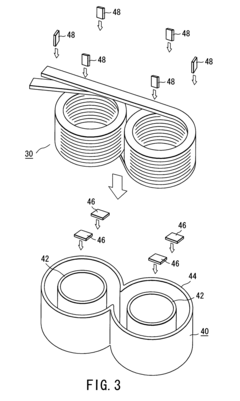
- A coil component design featuring a coil-containing insulator enclosure made of epoxy resin, embedded within a magnetic core composed of a mixture of resin and magnetic powder, which provides enhanced structural integrity and noise suppression.



Electronic Device With Signal Line Routing To Minimize Vibrations
PatentActiveUS20170025210A1
Innovation
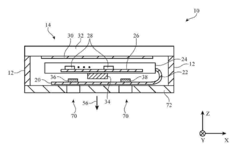
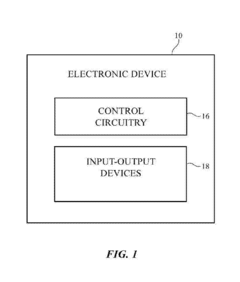
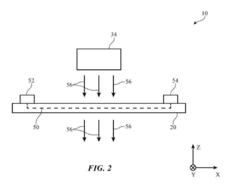
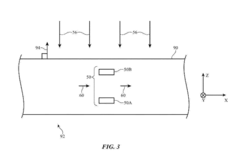
- The use of flexible printed circuits with signal lines routed vertically or in a spiral pattern around the magnet to minimize interactions between induced magnetic fields and static magnetic fields, thereby reducing vibrations and noise.
Electromagnetic Compatibility Standards
Electromagnetic Compatibility (EMC) standards play a crucial role in addressing coil whine control in high-frequency circuits. These standards are designed to ensure that electronic devices can function without causing or experiencing electromagnetic interference. For coil whine control, several key EMC standards are particularly relevant.
The International Electrotechnical Commission (IEC) has developed a series of standards that directly impact coil whine mitigation. IEC 61000-3-2 specifically addresses harmonic current emissions, which are often associated with coil whine in power supplies and other high-frequency circuits. This standard sets limits on harmonic currents injected into the public power supply system, indirectly encouraging manufacturers to implement better coil whine control measures.
Another significant standard is CISPR 22 (or its international equivalent, IEC/EN 55022), which focuses on electromagnetic interference from information technology equipment. This standard is particularly relevant for high-frequency circuits in computing and telecommunications devices, where coil whine can be a common issue. It sets limits for both conducted and radiated emissions, pushing manufacturers to implement effective shielding and filtering techniques.
The European Union's EMC Directive (2014/30/EU) incorporates many of these international standards into law for products sold within the EU. This directive requires that all electronic equipment must be designed and manufactured to ensure it does not cause excessive electromagnetic disturbance, which includes audible noise like coil whine. Compliance with this directive often necessitates advanced coil whine control techniques in high-frequency circuits.
In the United States, the Federal Communications Commission (FCC) has established EMC regulations that impact coil whine control. Part 15 of the FCC rules sets limits on unintentional radiators, which would include circuits prone to coil whine. These regulations are particularly stringent for digital devices, pushing manufacturers to implement effective noise reduction strategies in their high-frequency circuit designs.
The automotive industry has its own set of EMC standards, such as ISO 11452 and CISPR 25, which are critical for addressing coil whine in vehicle electronics. These standards are particularly demanding due to the harsh electromagnetic environment in modern vehicles and the potential safety implications of electromagnetic interference.
As technology advances and circuits operate at increasingly higher frequencies, EMC standards continue to evolve. Recent updates to these standards have begun to address emissions at higher frequency ranges, reflecting the growing concern over interference from modern high-speed digital circuits. This evolution in standards is driving innovation in coil whine control techniques, pushing manufacturers to develop more sophisticated solutions for high-frequency circuit design.
The International Electrotechnical Commission (IEC) has developed a series of standards that directly impact coil whine mitigation. IEC 61000-3-2 specifically addresses harmonic current emissions, which are often associated with coil whine in power supplies and other high-frequency circuits. This standard sets limits on harmonic currents injected into the public power supply system, indirectly encouraging manufacturers to implement better coil whine control measures.
Another significant standard is CISPR 22 (or its international equivalent, IEC/EN 55022), which focuses on electromagnetic interference from information technology equipment. This standard is particularly relevant for high-frequency circuits in computing and telecommunications devices, where coil whine can be a common issue. It sets limits for both conducted and radiated emissions, pushing manufacturers to implement effective shielding and filtering techniques.
The European Union's EMC Directive (2014/30/EU) incorporates many of these international standards into law for products sold within the EU. This directive requires that all electronic equipment must be designed and manufactured to ensure it does not cause excessive electromagnetic disturbance, which includes audible noise like coil whine. Compliance with this directive often necessitates advanced coil whine control techniques in high-frequency circuits.
In the United States, the Federal Communications Commission (FCC) has established EMC regulations that impact coil whine control. Part 15 of the FCC rules sets limits on unintentional radiators, which would include circuits prone to coil whine. These regulations are particularly stringent for digital devices, pushing manufacturers to implement effective noise reduction strategies in their high-frequency circuit designs.
The automotive industry has its own set of EMC standards, such as ISO 11452 and CISPR 25, which are critical for addressing coil whine in vehicle electronics. These standards are particularly demanding due to the harsh electromagnetic environment in modern vehicles and the potential safety implications of electromagnetic interference.
As technology advances and circuits operate at increasingly higher frequencies, EMC standards continue to evolve. Recent updates to these standards have begun to address emissions at higher frequency ranges, reflecting the growing concern over interference from modern high-speed digital circuits. This evolution in standards is driving innovation in coil whine control techniques, pushing manufacturers to develop more sophisticated solutions for high-frequency circuit design.
Thermal Management in Noise Reduction
Thermal management plays a crucial role in mitigating coil whine in high-frequency circuits. As electronic components operate at higher frequencies, they generate more heat, which can exacerbate the coil whine phenomenon. Effective thermal management strategies can help reduce the vibrations that cause coil whine and improve overall circuit performance.
One of the primary approaches to thermal management in noise reduction is the use of advanced heat dissipation materials. These materials, such as high-performance thermal interface materials (TIMs) and phase-change materials (PCMs), efficiently transfer heat away from critical components. By maintaining lower operating temperatures, these materials help reduce thermal expansion and contraction cycles that contribute to coil whine.
Optimized PCB design is another key aspect of thermal management for noise reduction. Implementing proper thermal vias, copper pours, and strategic component placement can significantly improve heat distribution across the board. This even heat distribution minimizes localized hot spots that can lead to increased vibrations and coil whine.
Active cooling solutions, such as fans and liquid cooling systems, can be employed to further enhance thermal management in high-frequency circuits. These systems provide forced convection, effectively removing heat from components and maintaining stable operating temperatures. However, care must be taken to ensure that the cooling systems themselves do not introduce additional noise or vibrations.
Thermal simulation and modeling tools play a vital role in optimizing thermal management strategies for noise reduction. These tools allow engineers to predict heat distribution, identify potential hot spots, and evaluate the effectiveness of various cooling solutions before physical prototyping. This approach enables more efficient and cost-effective thermal management designs.
Encapsulation and potting techniques can also contribute to both thermal management and noise reduction. By encasing components in thermally conductive materials, heat is more effectively dissipated while simultaneously damping vibrations that could lead to coil whine. This dual-purpose approach can be particularly effective in compact or high-density circuit designs.
Implementing temperature-controlled variable frequency operation can help manage thermal issues while reducing coil whine. By dynamically adjusting the operating frequency based on temperature feedback, circuits can maintain optimal performance while minimizing heat generation and associated vibrations.
In conclusion, effective thermal management is essential for controlling coil whine in high-frequency circuits. By implementing a combination of advanced materials, optimized designs, active cooling solutions, and intelligent thermal control strategies, engineers can significantly reduce the occurrence and severity of coil whine while improving overall circuit performance and reliability.
One of the primary approaches to thermal management in noise reduction is the use of advanced heat dissipation materials. These materials, such as high-performance thermal interface materials (TIMs) and phase-change materials (PCMs), efficiently transfer heat away from critical components. By maintaining lower operating temperatures, these materials help reduce thermal expansion and contraction cycles that contribute to coil whine.
Optimized PCB design is another key aspect of thermal management for noise reduction. Implementing proper thermal vias, copper pours, and strategic component placement can significantly improve heat distribution across the board. This even heat distribution minimizes localized hot spots that can lead to increased vibrations and coil whine.
Active cooling solutions, such as fans and liquid cooling systems, can be employed to further enhance thermal management in high-frequency circuits. These systems provide forced convection, effectively removing heat from components and maintaining stable operating temperatures. However, care must be taken to ensure that the cooling systems themselves do not introduce additional noise or vibrations.
Thermal simulation and modeling tools play a vital role in optimizing thermal management strategies for noise reduction. These tools allow engineers to predict heat distribution, identify potential hot spots, and evaluate the effectiveness of various cooling solutions before physical prototyping. This approach enables more efficient and cost-effective thermal management designs.
Encapsulation and potting techniques can also contribute to both thermal management and noise reduction. By encasing components in thermally conductive materials, heat is more effectively dissipated while simultaneously damping vibrations that could lead to coil whine. This dual-purpose approach can be particularly effective in compact or high-density circuit designs.
Implementing temperature-controlled variable frequency operation can help manage thermal issues while reducing coil whine. By dynamically adjusting the operating frequency based on temperature feedback, circuits can maintain optimal performance while minimizing heat generation and associated vibrations.
In conclusion, effective thermal management is essential for controlling coil whine in high-frequency circuits. By implementing a combination of advanced materials, optimized designs, active cooling solutions, and intelligent thermal control strategies, engineers can significantly reduce the occurrence and severity of coil whine while improving overall circuit performance and reliability.
Unlock deeper insights with PatSnap Eureka Quick Research — get a full tech report to explore trends and direct your research. Try now!
Generate Your Research Report Instantly with AI Agent
Supercharge your innovation with PatSnap Eureka AI Agent Platform!