

How to Develop Robust Coil Whine Diagnostic Frameworks?
AUG 13, 20259 MIN READ
Generate Your Research Report Instantly with AI Agent
PatSnap Eureka helps you evaluate technical feasibility & market potential.
Coil Whine Diagnostics: Background and Objectives
Coil whine, a high-frequency noise emanating from electronic components, has become an increasingly prevalent issue in modern electronic devices. As technology advances and components shrink, the occurrence of coil whine has grown more frequent, affecting user experience and product quality. The development of robust coil whine diagnostic frameworks has thus emerged as a critical area of focus for manufacturers and engineers in the electronics industry.
The evolution of coil whine as a technological challenge can be traced back to the miniaturization of electronic components and the increasing power demands of modern devices. As circuits become more densely packed and operate at higher frequencies, the likelihood of coil whine increases. This phenomenon is particularly noticeable in high-performance computing systems, power supplies, and consumer electronics, where it can significantly impact user satisfaction and product reliability.
The primary objective of developing robust coil whine diagnostic frameworks is to accurately identify, measure, and characterize coil whine in electronic devices. These frameworks aim to provide manufacturers with tools to detect and mitigate coil whine issues during the design and production phases, ultimately leading to improved product quality and user experience. Additionally, such diagnostic tools can aid in the development of more effective solutions to prevent or reduce coil whine in future product iterations.
A comprehensive coil whine diagnostic framework must address several key aspects of the phenomenon. These include the identification of coil whine sources, measurement of frequency and amplitude, analysis of environmental factors affecting coil whine, and assessment of human perception thresholds. By integrating these elements, a robust framework can provide a holistic approach to understanding and mitigating coil whine issues across various electronic devices and components.
The development of such frameworks also aligns with broader industry trends towards enhanced quality control and user-centric design. As consumers become more discerning and expectations for product performance rise, the ability to effectively diagnose and address coil whine becomes a competitive advantage for manufacturers. Furthermore, regulatory bodies are increasingly focusing on noise emissions from electronic devices, making coil whine diagnostics an important aspect of compliance and certification processes.
In conclusion, the development of robust coil whine diagnostic frameworks represents a critical technological goal in the electronics industry. By addressing this challenge, manufacturers can improve product quality, enhance user satisfaction, and stay ahead of regulatory requirements. The successful implementation of such frameworks will likely have far-reaching implications for the design and production of electronic devices across various sectors.
The evolution of coil whine as a technological challenge can be traced back to the miniaturization of electronic components and the increasing power demands of modern devices. As circuits become more densely packed and operate at higher frequencies, the likelihood of coil whine increases. This phenomenon is particularly noticeable in high-performance computing systems, power supplies, and consumer electronics, where it can significantly impact user satisfaction and product reliability.
The primary objective of developing robust coil whine diagnostic frameworks is to accurately identify, measure, and characterize coil whine in electronic devices. These frameworks aim to provide manufacturers with tools to detect and mitigate coil whine issues during the design and production phases, ultimately leading to improved product quality and user experience. Additionally, such diagnostic tools can aid in the development of more effective solutions to prevent or reduce coil whine in future product iterations.
A comprehensive coil whine diagnostic framework must address several key aspects of the phenomenon. These include the identification of coil whine sources, measurement of frequency and amplitude, analysis of environmental factors affecting coil whine, and assessment of human perception thresholds. By integrating these elements, a robust framework can provide a holistic approach to understanding and mitigating coil whine issues across various electronic devices and components.
The development of such frameworks also aligns with broader industry trends towards enhanced quality control and user-centric design. As consumers become more discerning and expectations for product performance rise, the ability to effectively diagnose and address coil whine becomes a competitive advantage for manufacturers. Furthermore, regulatory bodies are increasingly focusing on noise emissions from electronic devices, making coil whine diagnostics an important aspect of compliance and certification processes.
In conclusion, the development of robust coil whine diagnostic frameworks represents a critical technological goal in the electronics industry. By addressing this challenge, manufacturers can improve product quality, enhance user satisfaction, and stay ahead of regulatory requirements. The successful implementation of such frameworks will likely have far-reaching implications for the design and production of electronic devices across various sectors.
Market Demand for Noise Reduction in Electronics
The market demand for noise reduction in electronics has been steadily increasing over the past decade, driven by consumer expectations for quieter and more efficient devices. This trend is particularly evident in the realm of personal computing, where coil whine has become a significant concern for manufacturers and users alike. Coil whine, a high-pitched noise produced by electronic components under certain conditions, is not only an annoyance but can also indicate potential performance issues or component degradation.
The growing demand for noise reduction solutions is reflected in the rising sales of noise-canceling headphones, which have seen a compound annual growth rate of over 20% in recent years. This consumer preference for quieter environments has spilled over into expectations for other electronic devices, including laptops, desktop computers, and gaming consoles. As a result, manufacturers are under increasing pressure to address coil whine and other electronic noise issues in their products.
In the professional sector, the need for quiet computing environments has become crucial in industries such as audio production, scientific research, and healthcare. These fields require precision equipment that operates with minimal interference, making noise reduction a critical factor in product selection. The demand for silent workstations and servers in data centers has also surged, as companies seek to create more comfortable work environments and reduce the overall noise pollution in office spaces.
The automotive industry represents another significant market for noise reduction technologies, particularly with the rise of electric vehicles. As these vehicles lack the masking noise of internal combustion engines, electronic noises such as coil whine become more noticeable and potentially problematic for drivers and passengers. This has led to increased investment in noise reduction technologies for vehicle electronics and power systems.
Consumer electronics manufacturers are responding to this market demand by prioritizing noise reduction in their product development cycles. This has resulted in a growing market for specialized acoustic materials, noise-dampening components, and advanced diagnostic tools for identifying and mitigating electronic noise sources. The global market for acoustic insulation is projected to reach several billion dollars by 2025, with a significant portion attributed to electronics applications.
As the Internet of Things (IoT) continues to expand, the proliferation of connected devices in homes and offices further amplifies the need for quiet operation. Smart home devices, in particular, are expected to function silently to maintain a peaceful living environment. This trend is driving innovation in low-noise circuit design and the development of more sophisticated power management systems that can minimize coil whine and other electronic noises.
The growing demand for noise reduction solutions is reflected in the rising sales of noise-canceling headphones, which have seen a compound annual growth rate of over 20% in recent years. This consumer preference for quieter environments has spilled over into expectations for other electronic devices, including laptops, desktop computers, and gaming consoles. As a result, manufacturers are under increasing pressure to address coil whine and other electronic noise issues in their products.
In the professional sector, the need for quiet computing environments has become crucial in industries such as audio production, scientific research, and healthcare. These fields require precision equipment that operates with minimal interference, making noise reduction a critical factor in product selection. The demand for silent workstations and servers in data centers has also surged, as companies seek to create more comfortable work environments and reduce the overall noise pollution in office spaces.
The automotive industry represents another significant market for noise reduction technologies, particularly with the rise of electric vehicles. As these vehicles lack the masking noise of internal combustion engines, electronic noises such as coil whine become more noticeable and potentially problematic for drivers and passengers. This has led to increased investment in noise reduction technologies for vehicle electronics and power systems.
Consumer electronics manufacturers are responding to this market demand by prioritizing noise reduction in their product development cycles. This has resulted in a growing market for specialized acoustic materials, noise-dampening components, and advanced diagnostic tools for identifying and mitigating electronic noise sources. The global market for acoustic insulation is projected to reach several billion dollars by 2025, with a significant portion attributed to electronics applications.
As the Internet of Things (IoT) continues to expand, the proliferation of connected devices in homes and offices further amplifies the need for quiet operation. Smart home devices, in particular, are expected to function silently to maintain a peaceful living environment. This trend is driving innovation in low-noise circuit design and the development of more sophisticated power management systems that can minimize coil whine and other electronic noises.
Current Challenges in Coil Whine Detection
Coil whine detection presents several significant challenges in the development of robust diagnostic frameworks. One of the primary obstacles is the variability in coil whine characteristics across different electronic devices and components. The frequency, amplitude, and duration of coil whine can vary greatly depending on factors such as the specific electronic component, manufacturing tolerances, and operating conditions. This variability makes it difficult to establish universal detection criteria and thresholds.
Another challenge lies in distinguishing coil whine from other electronic noises and ambient sounds. Electronic devices often produce a variety of sounds during operation, including fan noise, electrical hum, and other electromagnetic interference. Developing algorithms that can accurately isolate coil whine from these background noises requires sophisticated signal processing techniques and machine learning algorithms.
The intermittent nature of coil whine further complicates detection efforts. Coil whine may only occur under specific load conditions or during certain operational states of the device. This sporadic behavior necessitates continuous monitoring and adaptive detection methods that can capture and analyze transient events effectively.
Environmental factors also pose significant challenges to coil whine detection. Ambient temperature, humidity, and electromagnetic interference can all influence the occurrence and characteristics of coil whine. Diagnostic frameworks must be robust enough to account for these environmental variables and maintain accuracy across diverse operating conditions.
The miniaturization of electronic components and the increasing complexity of modern devices present additional hurdles. As components become smaller and more densely packed, isolating the source of coil whine becomes more challenging. This complexity requires advanced localization techniques and high-resolution sensors to pinpoint the origin of the noise accurately.
Moreover, the low-frequency nature of coil whine often overlaps with other common electronic noises, making frequency-based isolation methods less effective. This overlap necessitates the development of more sophisticated spectral analysis techniques and pattern recognition algorithms to differentiate coil whine from other low-frequency phenomena.
Lastly, the subjective nature of human perception of coil whine adds another layer of complexity to detection efforts. What may be perceived as annoying coil whine by one individual might go unnoticed by another. Developing diagnostic frameworks that can correlate objective measurements with subjective human perception remains a significant challenge in the field.
Another challenge lies in distinguishing coil whine from other electronic noises and ambient sounds. Electronic devices often produce a variety of sounds during operation, including fan noise, electrical hum, and other electromagnetic interference. Developing algorithms that can accurately isolate coil whine from these background noises requires sophisticated signal processing techniques and machine learning algorithms.
The intermittent nature of coil whine further complicates detection efforts. Coil whine may only occur under specific load conditions or during certain operational states of the device. This sporadic behavior necessitates continuous monitoring and adaptive detection methods that can capture and analyze transient events effectively.
Environmental factors also pose significant challenges to coil whine detection. Ambient temperature, humidity, and electromagnetic interference can all influence the occurrence and characteristics of coil whine. Diagnostic frameworks must be robust enough to account for these environmental variables and maintain accuracy across diverse operating conditions.
The miniaturization of electronic components and the increasing complexity of modern devices present additional hurdles. As components become smaller and more densely packed, isolating the source of coil whine becomes more challenging. This complexity requires advanced localization techniques and high-resolution sensors to pinpoint the origin of the noise accurately.
Moreover, the low-frequency nature of coil whine often overlaps with other common electronic noises, making frequency-based isolation methods less effective. This overlap necessitates the development of more sophisticated spectral analysis techniques and pattern recognition algorithms to differentiate coil whine from other low-frequency phenomena.
Lastly, the subjective nature of human perception of coil whine adds another layer of complexity to detection efforts. What may be perceived as annoying coil whine by one individual might go unnoticed by another. Developing diagnostic frameworks that can correlate objective measurements with subjective human perception remains a significant challenge in the field.
Existing Coil Whine Diagnostic Methodologies
01 Diagnostic frameworks for detecting coil whine
Diagnostic frameworks can be implemented to detect and analyze coil whine in electronic devices. These frameworks may include sensors, signal processing algorithms, and machine learning techniques to identify the characteristic frequencies and patterns associated with coil whine. By accurately detecting coil whine, manufacturers can improve product quality and user experience.- Diagnostic frameworks for coil whine detection: Diagnostic frameworks are developed to detect and analyze coil whine in electronic devices. These frameworks utilize various sensors and algorithms to identify the frequency and intensity of coil whine, enabling more accurate diagnosis and troubleshooting of the issue. The frameworks may incorporate machine learning techniques to improve detection accuracy over time.
- Robustness enhancement techniques for coil whine diagnostics: Methods to enhance the robustness of coil whine diagnostic systems are implemented. These techniques may include noise filtering, signal processing algorithms, and adaptive thresholding to improve the reliability of coil whine detection under various operating conditions and environmental factors. The enhanced robustness helps minimize false positives and negatives in coil whine identification.
- Integration of coil whine diagnostics in power management systems: Coil whine diagnostic frameworks are integrated into power management systems of electronic devices. This integration allows for real-time monitoring and analysis of coil whine, enabling dynamic adjustments to power delivery and component operation to mitigate the issue. The system may also provide feedback to users or manufacturers about potential coil whine problems.
- Coil design optimization for whine reduction: Techniques for optimizing coil design to reduce the occurrence of coil whine are developed. These methods may involve modifying coil geometry, materials, or winding patterns to minimize vibrations that cause coil whine. The optimized designs are incorporated into diagnostic frameworks to assess their effectiveness in reducing coil whine under various operating conditions.
- Machine learning-based coil whine prediction and prevention: Machine learning algorithms are employed to predict and prevent coil whine in electronic devices. These algorithms analyze historical data and real-time sensor inputs to forecast potential coil whine issues before they become audible. The predictive models enable proactive measures to be taken, such as adjusting operating parameters or triggering maintenance routines to prevent coil whine occurrence.
02 Robustness enhancement techniques for coil whine diagnostics
Various techniques can be employed to enhance the robustness of coil whine diagnostic frameworks. These may include noise filtering, adaptive thresholding, and multi-sensor fusion to improve accuracy in different operating conditions. Robust diagnostic frameworks can better distinguish between coil whine and other electronic noises, leading to more reliable detection and analysis.Expand Specific Solutions03 Integration of coil whine diagnostics in power management systems
Coil whine diagnostic frameworks can be integrated into power management systems of electronic devices. This integration allows for real-time monitoring and adjustment of power delivery to minimize coil whine occurrence. By dynamically managing power distribution based on diagnostic results, the overall system performance and efficiency can be improved while reducing unwanted noise.Expand Specific Solutions04 Machine learning-based coil whine prediction and prevention
Advanced machine learning algorithms can be employed to predict and prevent coil whine in electronic systems. These algorithms analyze historical data, operating conditions, and component characteristics to forecast potential coil whine issues. Predictive models enable proactive measures to be taken, such as adjusting component designs or implementing targeted noise reduction techniques before problems occur.Expand Specific Solutions05 Coil whine diagnostic frameworks for specific applications
Specialized diagnostic frameworks can be developed for specific applications prone to coil whine, such as power supplies, motor controllers, or audio equipment. These tailored frameworks consider the unique characteristics and requirements of each application, allowing for more accurate detection and analysis of coil whine in specific contexts. This approach enables targeted solutions and optimizations for different industries and product types.Expand Specific Solutions
Key Players in Acoustic Testing and Diagnostics
The development of robust coil whine diagnostic frameworks is in a nascent stage, with the market still emerging and technology maturity varying across players. Universities like Tianjin University, Hefei University of Technology, and Harbin University of Science & Technology are leading academic research, while companies such as Siemens AG and Continental Automotive GmbH are driving industrial applications. The market size is growing as awareness of coil whine issues increases in electronics and automotive sectors. However, the technology is not yet fully mature, with ongoing research focusing on improving detection accuracy, noise isolation techniques, and standardization of diagnostic methods across different industries.
Siemens AG
Technical Solution: Siemens AG has developed a comprehensive coil whine diagnostic framework that combines advanced signal processing techniques with machine learning algorithms. Their approach utilizes high-precision microphones and accelerometers to capture acoustic and vibration data from electrical components[1]. The collected data is then processed using spectral analysis and time-frequency domain techniques to isolate coil whine signatures. Siemens employs deep learning models, specifically convolutional neural networks (CNNs), trained on extensive datasets of known coil whine patterns to accurately classify and quantify the severity of the issue[3]. The system also incorporates environmental factors and operating conditions to improve diagnostic accuracy. Siemens' framework includes a real-time monitoring capability, allowing for continuous assessment of coil whine in operational equipment, enabling predictive maintenance and early fault detection[5].
Strengths: Comprehensive approach combining multiple data sources, advanced signal processing, and machine learning for accurate diagnostics. Real-time monitoring capability enables proactive maintenance. Weaknesses: May require significant computational resources for complex deep learning models, potentially limiting deployment in resource-constrained environments.
Continental Automotive GmbH
Technical Solution: Continental Automotive GmbH has developed a robust coil whine diagnostic framework specifically tailored for automotive applications. Their approach focuses on integrating diagnostic capabilities directly into vehicle electronic control units (ECUs). The system utilizes existing vehicle sensors, such as microphones used for voice commands and noise cancellation, to detect coil whine without requiring additional hardware[2]. Continental's framework employs a multi-stage analysis process, starting with real-time frequency domain analysis to identify potential coil whine events. Suspected events are then further analyzed using more computationally intensive algorithms, including wavelet transforms and adaptive filtering techniques, to isolate and characterize the coil whine signature[4]. The system also incorporates vehicle operating data, such as engine RPM and electrical system load, to contextualize the acoustic data and improve diagnostic accuracy. Continental's framework includes a machine learning component that continuously improves its detection and classification capabilities based on field data collected across their vehicle fleet[6].
Strengths: Integrated solution leveraging existing vehicle sensors and ECUs, reducing implementation costs. Adaptive learning capability improves performance over time. Weaknesses: Primarily focused on automotive applications, may require significant adaptation for other industries.
Innovative Approaches in Coil Whine Analysis
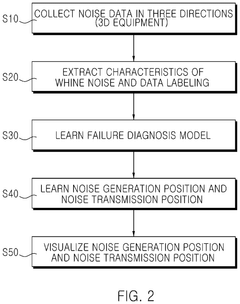
AI-based noise generation diagnosis apparatus and method of PE components for electric vehicle
PatentActiveUS12112591B2
Innovation
- An AI-based noise generation diagnosis apparatus and method using a plurality of microphones to collect noise data from multiple directions, extract feature vectors, and learn noise generation and transmission positions, combined with visualization using cameras to identify abnormal states and failure positions in PE components like motors and inverters within electric vehicles.



Coil component and fabricaiton method of the same
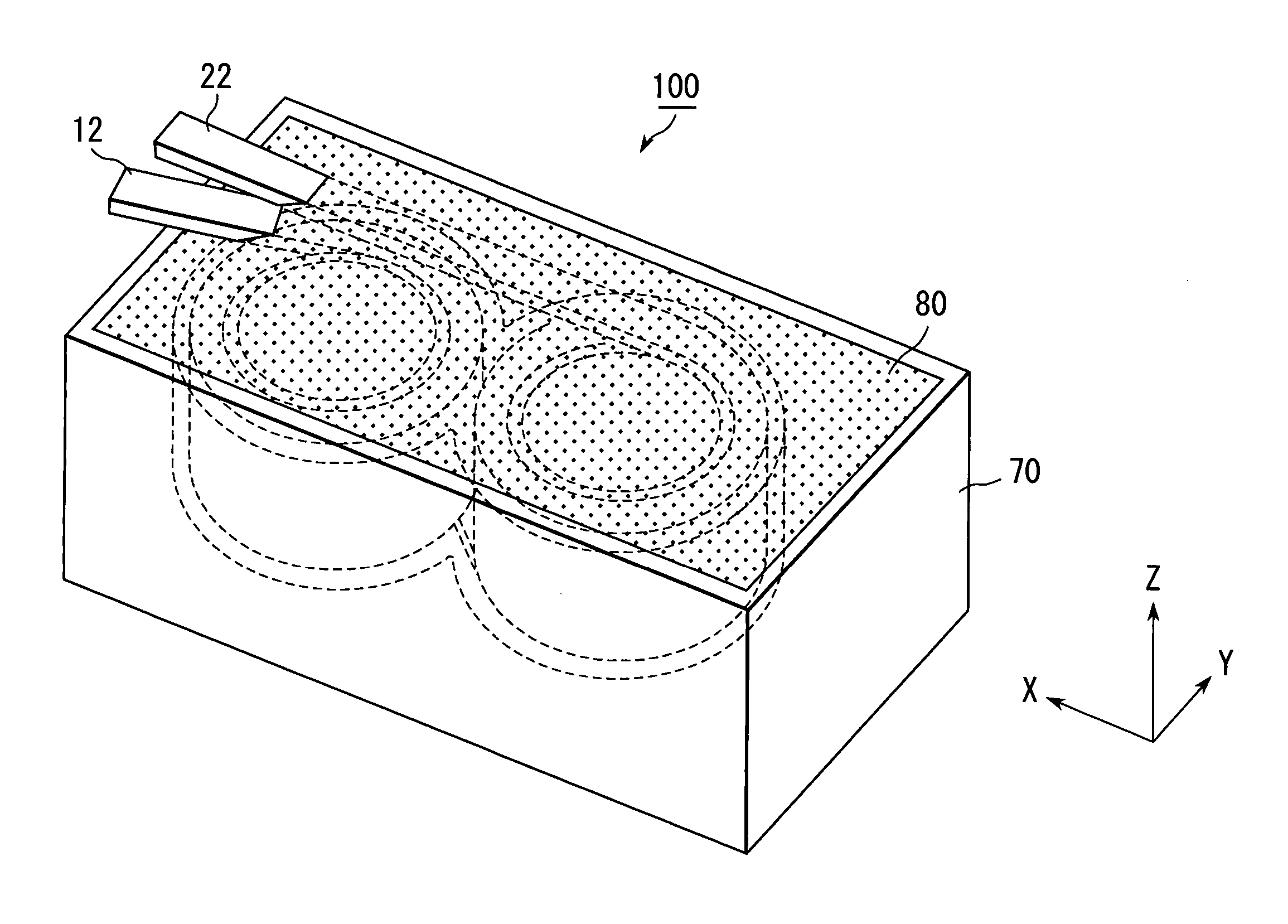
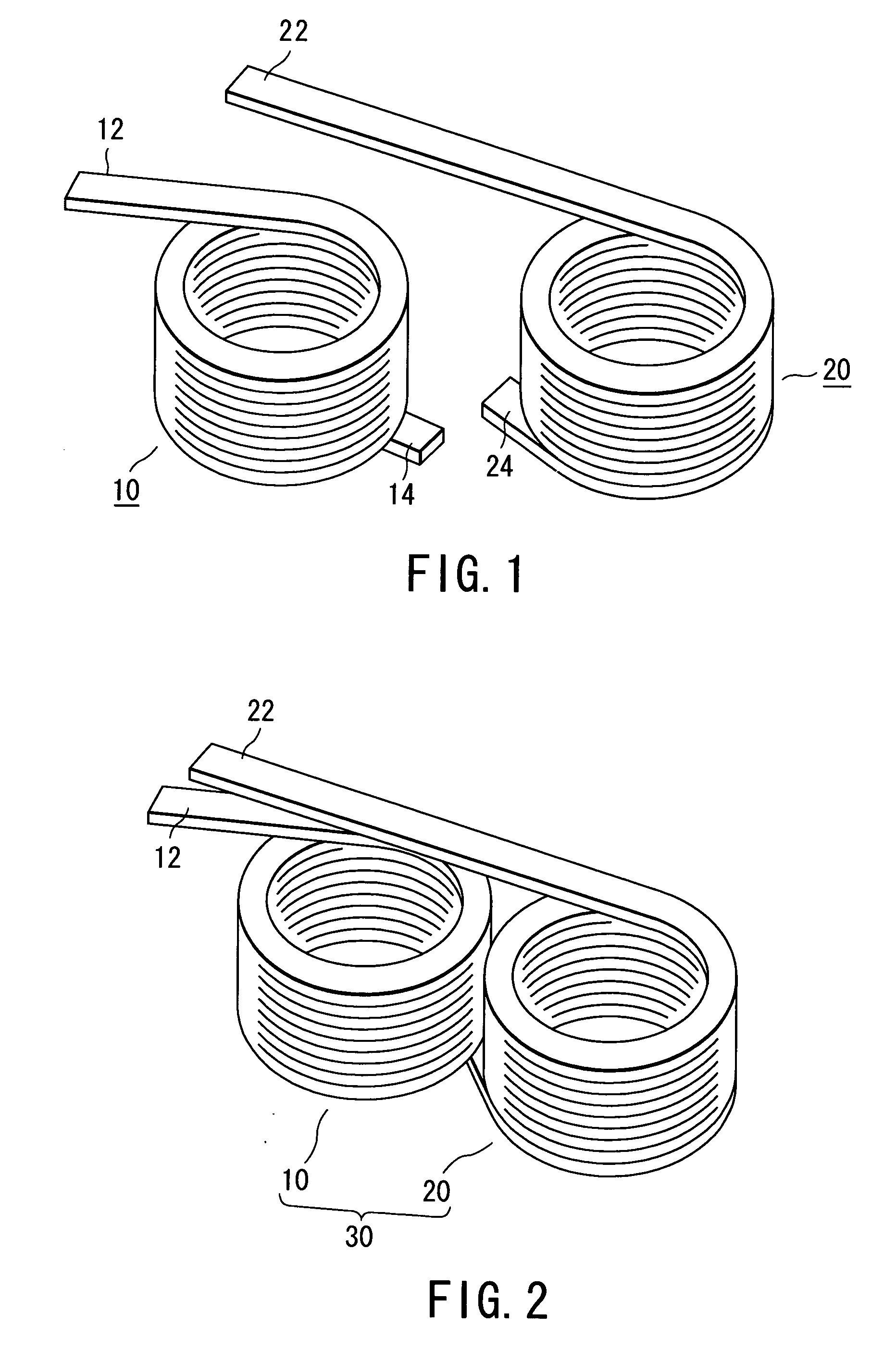
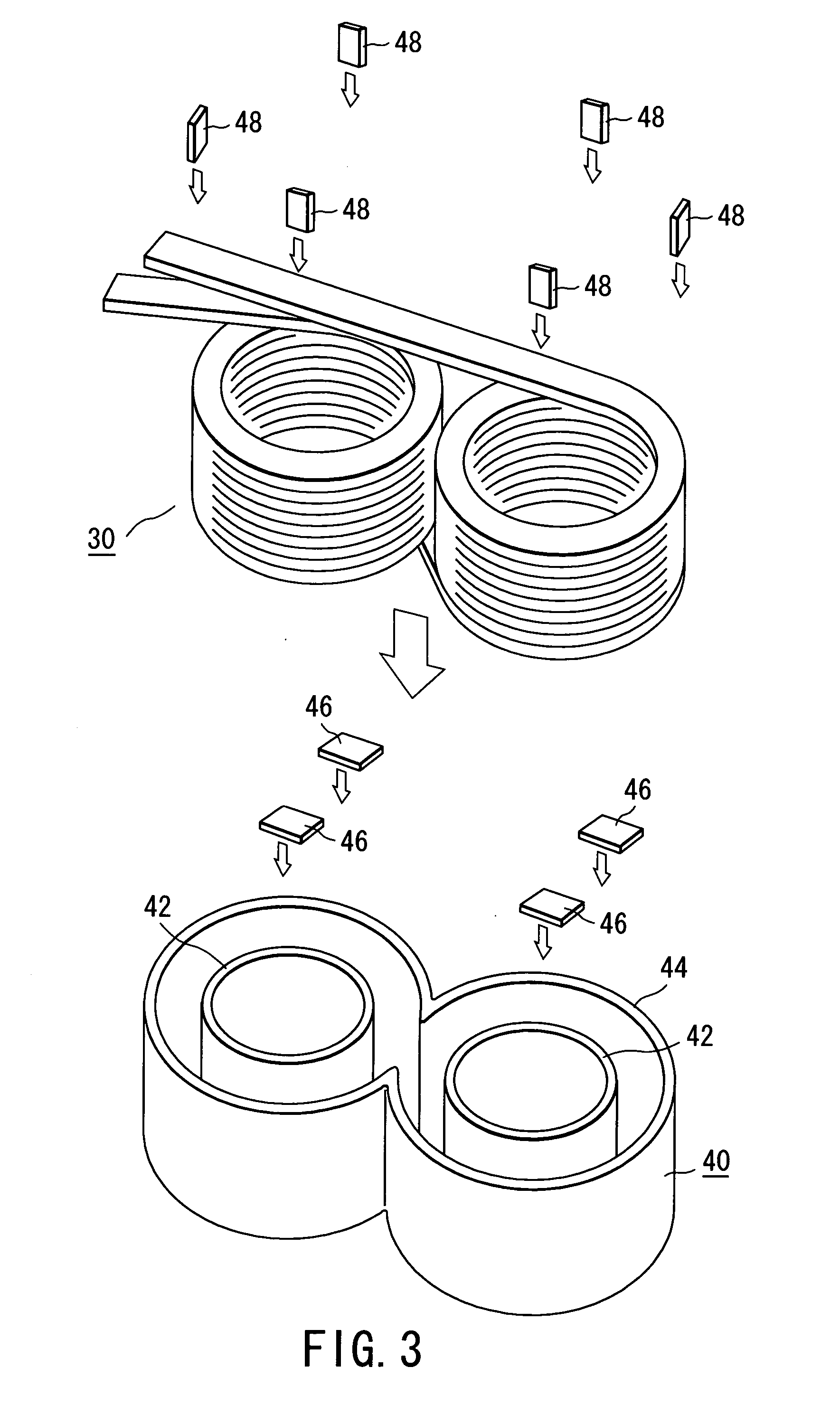
PatentInactiveUS20050012581A1
Innovation
- A coil component design featuring a coil-containing insulator enclosure made of epoxy resin and a magnetic core composed of a mixture of resin and magnetic powder, where the insulator enclosure is embedded within the magnetic core, enhancing the component's structural integrity and noise suppression capabilities.
Regulatory Standards for Electronic Noise Emissions
Regulatory standards for electronic noise emissions play a crucial role in ensuring the quality and safety of electronic devices, particularly in addressing issues such as coil whine. These standards are established by various international and national organizations to set limits on electromagnetic interference (EMI) and acoustic noise emissions from electronic products.
The International Electrotechnical Commission (IEC) has developed several standards relevant to coil whine and electronic noise emissions. IEC 61000-3-2 and IEC 61000-3-3 specifically address harmonic current emissions and voltage fluctuations in low-voltage power supply systems. These standards are particularly relevant to coil whine diagnostics, as they help regulate the electrical characteristics that can contribute to audible noise in electronic components.
In the United States, the Federal Communications Commission (FCC) has established regulations under Title 47 of the Code of Federal Regulations (CFR) Part 15, which governs radio frequency devices. While primarily focused on electromagnetic emissions, these regulations also indirectly impact coil whine by setting limits on conducted and radiated emissions that can influence the behavior of electronic components.
The European Union's Electromagnetic Compatibility (EMC) Directive 2014/30/EU sets essential requirements for electronic equipment to function without causing or being affected by electromagnetic disturbances. This directive encompasses standards that are relevant to coil whine, as it addresses both emissions and immunity of electronic devices.
For acoustic noise emissions, including those related to coil whine, the ISO 7779 standard provides methods for measuring and reporting noise emission levels of information technology and telecommunications equipment. This standard is particularly useful in developing diagnostic frameworks for coil whine, as it establishes consistent measurement methodologies.
The CISPR (Comité International Spécial des Perturbations Radioélectriques) standards, particularly CISPR 22 and CISPR 32, set limits for conducted and radiated emissions from information technology equipment. These standards are crucial in the development of robust coil whine diagnostic frameworks, as they provide guidelines for measuring and controlling electromagnetic emissions that can contribute to audible noise.
In the automotive industry, where coil whine can be a significant issue in electric and hybrid vehicles, standards such as ISO 16750-3 address environmental conditions and testing for electrical and electronic equipment. This standard includes specifications for vibration and acoustic testing, which are relevant to coil whine diagnostics in automotive applications.
Compliance with these regulatory standards is essential for manufacturers developing robust coil whine diagnostic frameworks. By adhering to these standards, developers can ensure that their diagnostic tools and methodologies are comprehensive and aligned with global requirements for electronic noise emissions.
The International Electrotechnical Commission (IEC) has developed several standards relevant to coil whine and electronic noise emissions. IEC 61000-3-2 and IEC 61000-3-3 specifically address harmonic current emissions and voltage fluctuations in low-voltage power supply systems. These standards are particularly relevant to coil whine diagnostics, as they help regulate the electrical characteristics that can contribute to audible noise in electronic components.
In the United States, the Federal Communications Commission (FCC) has established regulations under Title 47 of the Code of Federal Regulations (CFR) Part 15, which governs radio frequency devices. While primarily focused on electromagnetic emissions, these regulations also indirectly impact coil whine by setting limits on conducted and radiated emissions that can influence the behavior of electronic components.
The European Union's Electromagnetic Compatibility (EMC) Directive 2014/30/EU sets essential requirements for electronic equipment to function without causing or being affected by electromagnetic disturbances. This directive encompasses standards that are relevant to coil whine, as it addresses both emissions and immunity of electronic devices.
For acoustic noise emissions, including those related to coil whine, the ISO 7779 standard provides methods for measuring and reporting noise emission levels of information technology and telecommunications equipment. This standard is particularly useful in developing diagnostic frameworks for coil whine, as it establishes consistent measurement methodologies.
The CISPR (Comité International Spécial des Perturbations Radioélectriques) standards, particularly CISPR 22 and CISPR 32, set limits for conducted and radiated emissions from information technology equipment. These standards are crucial in the development of robust coil whine diagnostic frameworks, as they provide guidelines for measuring and controlling electromagnetic emissions that can contribute to audible noise.
In the automotive industry, where coil whine can be a significant issue in electric and hybrid vehicles, standards such as ISO 16750-3 address environmental conditions and testing for electrical and electronic equipment. This standard includes specifications for vibration and acoustic testing, which are relevant to coil whine diagnostics in automotive applications.
Compliance with these regulatory standards is essential for manufacturers developing robust coil whine diagnostic frameworks. By adhering to these standards, developers can ensure that their diagnostic tools and methodologies are comprehensive and aligned with global requirements for electronic noise emissions.
Economic Impact of Coil Whine Mitigation
The economic impact of coil whine mitigation extends far beyond the immediate costs of implementing diagnostic frameworks and solutions. By addressing this pervasive issue, industries can realize significant financial benefits and improved operational efficiency.
In the consumer electronics sector, effective coil whine mitigation can lead to substantial reductions in product returns and warranty claims. High-end devices, particularly laptops, graphics cards, and power supplies, often face customer dissatisfaction due to coil whine, resulting in increased return rates and negative brand perception. By implementing robust diagnostic frameworks and mitigation strategies, manufacturers can potentially save millions in replacement costs and preserve brand value.
For industrial applications, particularly in power distribution and manufacturing environments, coil whine mitigation can contribute to enhanced equipment longevity and reduced maintenance costs. Unaddressed coil whine can lead to accelerated wear and tear on components, necessitating more frequent replacements and unscheduled downtime. By minimizing these issues, companies can optimize their maintenance schedules and reduce overall operational expenses.
In the automotive industry, where noise, vibration, and harshness (NVH) are critical factors in vehicle quality perception, effective coil whine mitigation can significantly impact sales and customer satisfaction. Luxury vehicle manufacturers, in particular, stand to benefit from improved diagnostic frameworks, as even minor acoustic disturbances can affect perceived quality and potentially influence purchasing decisions.
The energy sector also stands to gain from advancements in coil whine diagnostics and mitigation. In power generation and distribution systems, coil whine can be an early indicator of equipment stress or impending failure. Robust diagnostic frameworks can enable predictive maintenance strategies, potentially preventing costly outages and extending the lifespan of critical infrastructure components.
Furthermore, the development and implementation of coil whine diagnostic frameworks can stimulate innovation and create new market opportunities. Specialized testing equipment, software solutions, and consulting services focused on coil whine mitigation represent emerging niches within the broader electronics and engineering services markets.
Lastly, the economic benefits of coil whine mitigation extend to workplace productivity and employee well-being. In office environments where electronic equipment is ubiquitous, reducing ambient noise from coil whine can contribute to improved concentration and reduced stress levels among workers, potentially leading to measurable gains in productivity and job satisfaction.
In the consumer electronics sector, effective coil whine mitigation can lead to substantial reductions in product returns and warranty claims. High-end devices, particularly laptops, graphics cards, and power supplies, often face customer dissatisfaction due to coil whine, resulting in increased return rates and negative brand perception. By implementing robust diagnostic frameworks and mitigation strategies, manufacturers can potentially save millions in replacement costs and preserve brand value.
For industrial applications, particularly in power distribution and manufacturing environments, coil whine mitigation can contribute to enhanced equipment longevity and reduced maintenance costs. Unaddressed coil whine can lead to accelerated wear and tear on components, necessitating more frequent replacements and unscheduled downtime. By minimizing these issues, companies can optimize their maintenance schedules and reduce overall operational expenses.
In the automotive industry, where noise, vibration, and harshness (NVH) are critical factors in vehicle quality perception, effective coil whine mitigation can significantly impact sales and customer satisfaction. Luxury vehicle manufacturers, in particular, stand to benefit from improved diagnostic frameworks, as even minor acoustic disturbances can affect perceived quality and potentially influence purchasing decisions.
The energy sector also stands to gain from advancements in coil whine diagnostics and mitigation. In power generation and distribution systems, coil whine can be an early indicator of equipment stress or impending failure. Robust diagnostic frameworks can enable predictive maintenance strategies, potentially preventing costly outages and extending the lifespan of critical infrastructure components.
Furthermore, the development and implementation of coil whine diagnostic frameworks can stimulate innovation and create new market opportunities. Specialized testing equipment, software solutions, and consulting services focused on coil whine mitigation represent emerging niches within the broader electronics and engineering services markets.
Lastly, the economic benefits of coil whine mitigation extend to workplace productivity and employee well-being. In office environments where electronic equipment is ubiquitous, reducing ambient noise from coil whine can contribute to improved concentration and reduced stress levels among workers, potentially leading to measurable gains in productivity and job satisfaction.
Unlock deeper insights with PatSnap Eureka Quick Research — get a full tech report to explore trends and direct your research. Try now!
Generate Your Research Report Instantly with AI Agent
Supercharge your innovation with PatSnap Eureka AI Agent Platform!