

Facilitating Knowledge Transfer in Magnetocaloric Sector
APR 24, 20269 MIN READ
Generate Your Research Report Instantly with AI Agent
PatSnap Eureka helps you evaluate technical feasibility & market potential.
Magnetocaloric Technology Background and Knowledge Transfer Goals
Magnetocaloric technology represents a revolutionary approach to refrigeration and cooling systems, leveraging the magnetocaloric effect where certain materials exhibit temperature changes when subjected to varying magnetic fields. This phenomenon, first discovered by Emil Warburg in 1881, has evolved from a scientific curiosity into a promising alternative to conventional vapor-compression refrigeration systems. The technology operates on the principle that magnetocaloric materials heat up when magnetized and cool down when demagnetized, enabling efficient heat pumping without harmful refrigerants.
The historical development of magnetocaloric technology spans over a century, with significant milestones marking its progression from laboratory research to commercial viability. Early developments focused on understanding the fundamental physics, while the 1970s brought renewed interest due to energy crisis concerns. The discovery of giant magnetocaloric effects in materials like Gd5Si2Ge2 in the 1990s marked a pivotal moment, demonstrating the potential for room-temperature applications and sparking intensive research worldwide.
Current technological evolution trends indicate a shift toward developing materials with enhanced magnetocaloric properties, improved magnetic refrigeration system designs, and cost-effective manufacturing processes. Research efforts concentrate on discovering new magnetocaloric materials with larger entropy changes, broader operating temperature ranges, and reduced hysteresis losses. Advanced computational methods and machine learning approaches are increasingly employed to accelerate material discovery and optimize system performance.
The primary technical objectives driving magnetocaloric sector development include achieving energy efficiency improvements of 20-30% compared to conventional refrigeration, eliminating environmentally harmful refrigerants, reducing system noise levels, and enabling precise temperature control. Long-term goals encompass developing commercially viable magnetocaloric refrigeration systems for residential, commercial, and industrial applications, establishing scalable manufacturing processes for magnetocaloric materials, and creating integrated systems that can compete economically with traditional cooling technologies.
Knowledge transfer challenges in this sector stem from the interdisciplinary nature of magnetocaloric technology, requiring expertise spanning materials science, thermodynamics, magnetic field engineering, and system integration. The gap between fundamental research and practical applications necessitates effective mechanisms for translating laboratory discoveries into industrial solutions, fostering collaboration between academic institutions, research organizations, and commercial entities to accelerate technology maturation and market adoption.
The historical development of magnetocaloric technology spans over a century, with significant milestones marking its progression from laboratory research to commercial viability. Early developments focused on understanding the fundamental physics, while the 1970s brought renewed interest due to energy crisis concerns. The discovery of giant magnetocaloric effects in materials like Gd5Si2Ge2 in the 1990s marked a pivotal moment, demonstrating the potential for room-temperature applications and sparking intensive research worldwide.
Current technological evolution trends indicate a shift toward developing materials with enhanced magnetocaloric properties, improved magnetic refrigeration system designs, and cost-effective manufacturing processes. Research efforts concentrate on discovering new magnetocaloric materials with larger entropy changes, broader operating temperature ranges, and reduced hysteresis losses. Advanced computational methods and machine learning approaches are increasingly employed to accelerate material discovery and optimize system performance.
The primary technical objectives driving magnetocaloric sector development include achieving energy efficiency improvements of 20-30% compared to conventional refrigeration, eliminating environmentally harmful refrigerants, reducing system noise levels, and enabling precise temperature control. Long-term goals encompass developing commercially viable magnetocaloric refrigeration systems for residential, commercial, and industrial applications, establishing scalable manufacturing processes for magnetocaloric materials, and creating integrated systems that can compete economically with traditional cooling technologies.
Knowledge transfer challenges in this sector stem from the interdisciplinary nature of magnetocaloric technology, requiring expertise spanning materials science, thermodynamics, magnetic field engineering, and system integration. The gap between fundamental research and practical applications necessitates effective mechanisms for translating laboratory discoveries into industrial solutions, fostering collaboration between academic institutions, research organizations, and commercial entities to accelerate technology maturation and market adoption.
Market Demand for Magnetocaloric Applications
The magnetocaloric sector is experiencing growing market demand driven by the urgent need for energy-efficient cooling technologies and environmental sustainability concerns. Traditional vapor-compression refrigeration systems consume substantial electrical energy and rely on refrigerants with high global warming potential, creating significant environmental challenges. This has intensified the search for alternative cooling solutions, positioning magnetocaloric technology as a promising candidate for next-generation refrigeration applications.
Residential and commercial refrigeration markets represent the largest potential application areas for magnetocaloric technology. The global refrigeration industry faces increasing pressure to reduce energy consumption and eliminate harmful refrigerants under international environmental agreements. Magnetocaloric cooling systems offer the potential for higher energy efficiency compared to conventional systems, with theoretical coefficient of performance values exceeding current technologies. This efficiency advantage becomes particularly attractive as energy costs continue to rise and environmental regulations become more stringent.
Industrial cooling applications present another significant market opportunity, particularly in sectors requiring precise temperature control and continuous operation. Data centers, pharmaceutical manufacturing, and food processing industries are actively seeking cooling solutions that can reduce operational costs while meeting strict environmental standards. The magnetocaloric technology's solid-state nature eliminates the need for chemical refrigerants, addressing both environmental concerns and regulatory compliance requirements.
Automotive air conditioning systems represent an emerging market segment with substantial growth potential. The automotive industry's transition toward electric vehicles has created demand for efficient cooling systems that minimize energy consumption and extend battery range. Magnetocaloric cooling systems could provide weight reduction benefits compared to traditional systems while offering improved energy efficiency, making them attractive for electric vehicle manufacturers.
The medical and scientific equipment sectors also demonstrate growing interest in magnetocaloric applications. Laboratory equipment, medical imaging systems, and specialized cooling applications require reliable, precise temperature control without vibration or chemical contamination risks. The solid-state nature of magnetocaloric cooling addresses these specific requirements while providing long-term operational reliability.
Market adoption faces challenges related to material costs, system complexity, and performance optimization across varying operating conditions. However, increasing investment in research and development, coupled with growing environmental awareness and regulatory pressure, continues to drive market interest and potential demand for magnetocaloric cooling solutions across multiple application sectors.
Residential and commercial refrigeration markets represent the largest potential application areas for magnetocaloric technology. The global refrigeration industry faces increasing pressure to reduce energy consumption and eliminate harmful refrigerants under international environmental agreements. Magnetocaloric cooling systems offer the potential for higher energy efficiency compared to conventional systems, with theoretical coefficient of performance values exceeding current technologies. This efficiency advantage becomes particularly attractive as energy costs continue to rise and environmental regulations become more stringent.
Industrial cooling applications present another significant market opportunity, particularly in sectors requiring precise temperature control and continuous operation. Data centers, pharmaceutical manufacturing, and food processing industries are actively seeking cooling solutions that can reduce operational costs while meeting strict environmental standards. The magnetocaloric technology's solid-state nature eliminates the need for chemical refrigerants, addressing both environmental concerns and regulatory compliance requirements.
Automotive air conditioning systems represent an emerging market segment with substantial growth potential. The automotive industry's transition toward electric vehicles has created demand for efficient cooling systems that minimize energy consumption and extend battery range. Magnetocaloric cooling systems could provide weight reduction benefits compared to traditional systems while offering improved energy efficiency, making them attractive for electric vehicle manufacturers.
The medical and scientific equipment sectors also demonstrate growing interest in magnetocaloric applications. Laboratory equipment, medical imaging systems, and specialized cooling applications require reliable, precise temperature control without vibration or chemical contamination risks. The solid-state nature of magnetocaloric cooling addresses these specific requirements while providing long-term operational reliability.
Market adoption faces challenges related to material costs, system complexity, and performance optimization across varying operating conditions. However, increasing investment in research and development, coupled with growing environmental awareness and regulatory pressure, continues to drive market interest and potential demand for magnetocaloric cooling solutions across multiple application sectors.
Current State and Knowledge Gaps in Magnetocaloric Sector
The magnetocaloric sector currently operates within a fragmented knowledge ecosystem where critical information remains siloed across academic institutions, research laboratories, and industrial entities. Despite significant advances in magnetocaloric materials research over the past two decades, the field suffers from inadequate knowledge dissemination mechanisms that hinder widespread adoption and commercialization efforts.
Academic research dominates the current knowledge landscape, with universities and national laboratories producing substantial volumes of theoretical and experimental data. However, this research often remains confined within academic circles, published in specialized journals with limited accessibility to industry practitioners. The disconnect between fundamental research findings and practical applications creates a substantial barrier to technology transfer and commercial development.
Industrial knowledge gaps are particularly pronounced in manufacturing processes, scalability challenges, and cost-effective production methods. While academic research focuses heavily on material discovery and characterization, industry requires practical insights into processing techniques, quality control measures, and system integration approaches. This misalignment between research priorities and industrial needs perpetuates the slow pace of magnetocaloric technology commercialization.
Cross-sector collaboration mechanisms remain underdeveloped, with limited formal channels for knowledge exchange between researchers and industry professionals. Existing conferences and symposiums provide periodic interaction opportunities, but lack systematic approaches for sustained knowledge transfer. The absence of standardized databases, shared testing protocols, and common terminology further complicates information exchange across different stakeholder groups.
Geographical disparities in knowledge distribution present additional challenges, with research concentrations in specific regions creating knowledge clusters that are poorly connected globally. European and Asian research centers have developed distinct approaches and expertise areas, but limited coordination results in duplicated efforts and missed opportunities for synergistic development.
The current state reveals critical gaps in practical implementation knowledge, including system design principles, thermal management strategies, and integration methodologies for real-world applications. While fundamental material properties are well-documented, the translation of laboratory-scale discoveries into commercially viable products requires knowledge that is currently scarce and poorly distributed across the magnetocaloric community.
Academic research dominates the current knowledge landscape, with universities and national laboratories producing substantial volumes of theoretical and experimental data. However, this research often remains confined within academic circles, published in specialized journals with limited accessibility to industry practitioners. The disconnect between fundamental research findings and practical applications creates a substantial barrier to technology transfer and commercial development.
Industrial knowledge gaps are particularly pronounced in manufacturing processes, scalability challenges, and cost-effective production methods. While academic research focuses heavily on material discovery and characterization, industry requires practical insights into processing techniques, quality control measures, and system integration approaches. This misalignment between research priorities and industrial needs perpetuates the slow pace of magnetocaloric technology commercialization.
Cross-sector collaboration mechanisms remain underdeveloped, with limited formal channels for knowledge exchange between researchers and industry professionals. Existing conferences and symposiums provide periodic interaction opportunities, but lack systematic approaches for sustained knowledge transfer. The absence of standardized databases, shared testing protocols, and common terminology further complicates information exchange across different stakeholder groups.
Geographical disparities in knowledge distribution present additional challenges, with research concentrations in specific regions creating knowledge clusters that are poorly connected globally. European and Asian research centers have developed distinct approaches and expertise areas, but limited coordination results in duplicated efforts and missed opportunities for synergistic development.
The current state reveals critical gaps in practical implementation knowledge, including system design principles, thermal management strategies, and integration methodologies for real-world applications. While fundamental material properties are well-documented, the translation of laboratory-scale discoveries into commercially viable products requires knowledge that is currently scarce and poorly distributed across the magnetocaloric community.
Existing Knowledge Transfer Solutions in Magnetocaloric Field
01 Magnetocaloric material composition and alloy development
Development of advanced magnetocaloric materials involves creating specific alloy compositions and structures that exhibit enhanced magnetocaloric effects. These materials are designed to optimize temperature change under magnetic field variations, focusing on rare earth elements, transition metals, and their compounds to achieve superior cooling performance and efficiency in magnetic refrigeration systems.- Magnetocaloric materials and alloy compositions: Development of specialized magnetocaloric materials including rare earth-based alloys, transition metal compounds, and composite materials that exhibit enhanced magnetocaloric effects. These materials are engineered to optimize temperature change under magnetic field variations for efficient cooling applications.
- Magnetocaloric refrigeration systems and apparatus: Design and construction of magnetocaloric refrigeration devices including magnetic field generators, heat exchangers, and control systems. These systems utilize the magnetocaloric effect to achieve cooling without traditional refrigerants, offering environmentally friendly alternatives to conventional cooling technologies.
- Heat transfer and thermal management methods: Techniques for optimizing heat transfer in magnetocaloric systems including fluid dynamics, thermal cycling processes, and heat exchanger configurations. These methods focus on maximizing cooling efficiency and temperature control in magnetocaloric applications.
- Manufacturing processes and fabrication techniques: Methods for producing magnetocaloric materials and components including powder metallurgy, sintering processes, and surface treatment techniques. These manufacturing approaches ensure optimal material properties and performance characteristics for magnetocaloric applications.
- Control systems and operational optimization: Advanced control algorithms and operational strategies for magnetocaloric devices including magnetic field modulation, temperature regulation, and system efficiency optimization. These technologies enable precise control and enhanced performance of magnetocaloric cooling systems.
02 Magnetic refrigeration system design and apparatus
Implementation of magnetocaloric technology in practical refrigeration systems requires specialized apparatus design including magnetic field generators, heat exchangers, and thermal management components. These systems integrate magnetocaloric materials into functional cooling devices that can replace conventional refrigeration methods with improved energy efficiency and environmental benefits.Expand Specific Solutions03 Heat transfer enhancement and thermal cycling optimization
Optimization of heat transfer processes in magnetocaloric systems involves developing methods to improve thermal conductivity, reduce thermal losses, and enhance the efficiency of heating and cooling cycles. This includes advanced heat exchanger designs, fluid dynamics optimization, and thermal interface materials that maximize the magnetocaloric effect utilization.Expand Specific Solutions04 Manufacturing processes and fabrication techniques
Production methods for magnetocaloric materials and devices encompass various manufacturing techniques including powder metallurgy, casting, sintering, and advanced processing methods. These processes are designed to achieve optimal microstructure, phase composition, and magnetic properties while ensuring scalability and cost-effectiveness for commercial applications.Expand Specific Solutions05 Control systems and operational methods
Advanced control mechanisms for magnetocaloric devices include magnetic field modulation, temperature regulation, and system automation technologies. These control systems optimize the operational parameters of magnetocaloric refrigeration units, ensuring stable performance, energy efficiency, and integration with existing cooling infrastructure while providing precise temperature control capabilities.Expand Specific Solutions
Key Players in Magnetocaloric Industry
The magnetocaloric sector is in its early commercialization stage, transitioning from research to practical applications with significant growth potential driven by environmental regulations and energy efficiency demands. The market remains relatively small but shows promising expansion opportunities, particularly in cooling and refrigeration systems. Technology maturity varies considerably across players, with established materials companies like VACUUMSCHMELZE and BASF providing foundational magnetic materials, while specialized firms like Cooltech Applications focus on direct magnetocaloric applications. Major appliance manufacturers including Gree Electric, Haier Smart Home, and DAIKIN INDUSTRIES are exploring integration opportunities. Research institutions like University of Ljubljana and Baotou Rare Earth Research Institute contribute fundamental knowledge, while technology giants such as Samsung Electronics and Hitachi investigate broader applications. The sector benefits from diverse expertise spanning rare earth materials, semiconductor technology, and thermal management systems, creating a competitive landscape where collaboration between material suppliers, equipment manufacturers, and research entities drives innovation toward commercial viability.
VACUUMSCHMELZE GmbH & Co. KG
Technical Solution: VACUUMSCHMELZE specializes in advanced magnetic materials and components for magnetocaloric applications. The company develops high-performance rare earth-based magnetic alloys and soft magnetic materials that are essential for magnetocaloric heat pumps and refrigeration systems. Their technology focuses on optimizing magnetic entropy change and adiabatic temperature change in magnetocaloric materials, particularly in gadolinium-based and La(Fe,Si)13-based compounds. They provide comprehensive material characterization services and custom alloy development to facilitate knowledge transfer between research institutions and industrial applications. The company's expertise includes powder metallurgy techniques, heat treatment optimization, and magnetic property enhancement methods that are crucial for commercializing magnetocaloric technologies.
Strengths: Deep expertise in magnetic materials science and established manufacturing capabilities for rare earth alloys. Weaknesses: Limited focus on system-level integration and higher material costs compared to conventional refrigeration materials.
Gree Electric Appliances, Inc. of Zhuhai
Technical Solution: Gree Electric has invested significantly in magnetocaloric cooling research as part of their next-generation air conditioning technology development. The company focuses on developing room-temperature magnetocaloric materials and compact magnetic refrigeration systems suitable for residential and commercial applications. Their research includes optimizing magnetocaloric effect in various material compositions, developing efficient magnetic field sources using permanent magnets, and creating heat transfer systems that maximize cooling capacity. Gree's approach emphasizes cost-effective manufacturing processes and knowledge transfer mechanisms that can accelerate the commercialization of magnetocaloric cooling technology. They collaborate with research institutions to develop standardized testing protocols and performance evaluation methods for magnetocaloric systems.
Strengths: Large-scale manufacturing capabilities and strong market presence in cooling appliances with cost optimization expertise. Weaknesses: Technology maturity gaps compared to traditional cooling systems and challenges in achieving competitive energy efficiency at commercial scale.
Core Innovations in Magnetocaloric Knowledge Sharing
Working Component for Magnetic Heat Exchange and Method of Producing a Working Component for Magnetic Refrigeration
PatentInactiveUS20120043497A1
Innovation
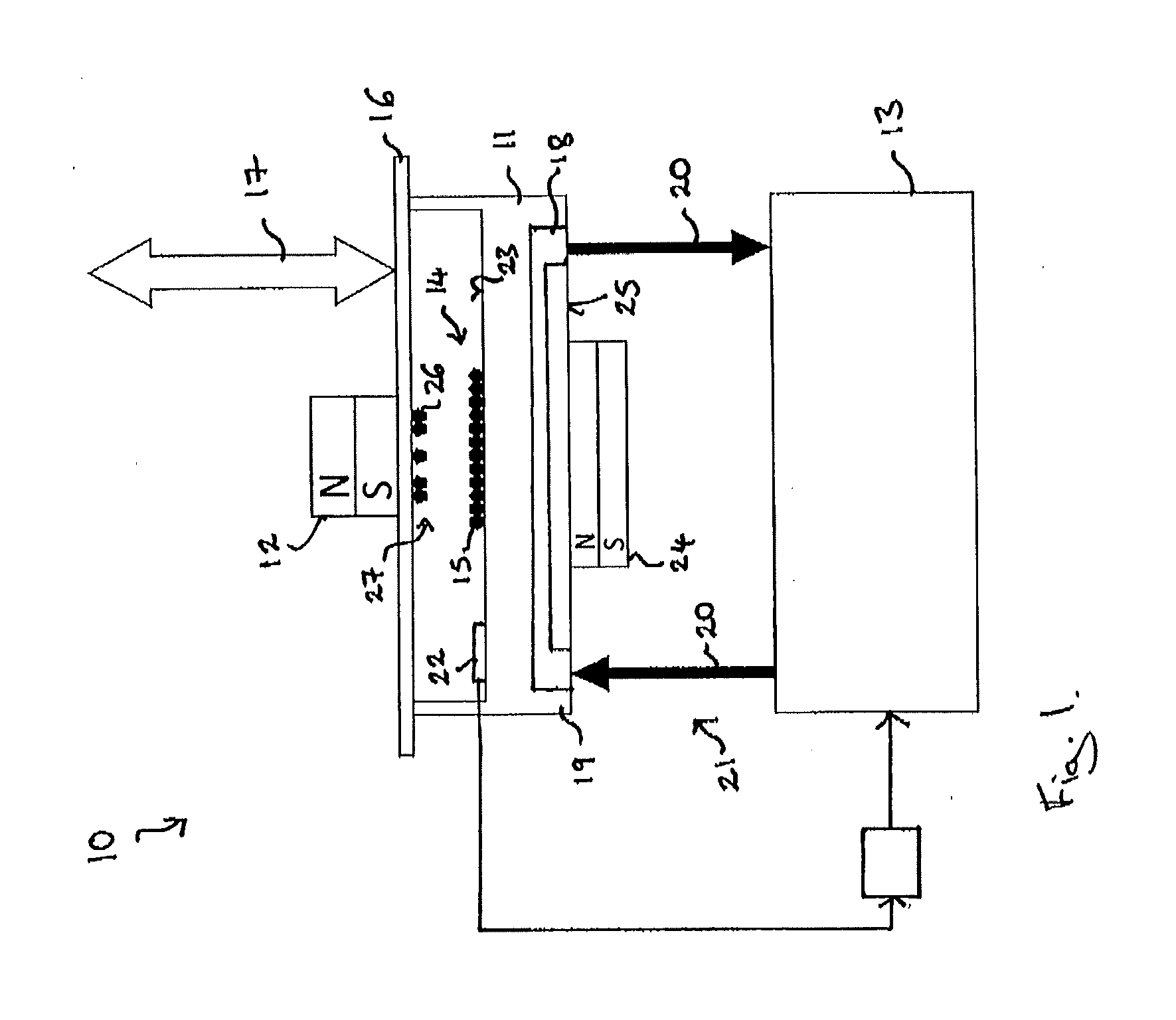
- A magnetocalorically active phase comprising La1-aRa(Fe1-x-yTyMx)13Hz with high hydrogen content, where R and T elements are selected to adjust the Curie temperature and reduce thermal hysteresis, ensuring stability and efficient entropy change.


Method for classifying articles and method for fabricating a magnetocalorically active working component for magnetic heat exchange
PatentActiveUS20150246360A9
Innovation
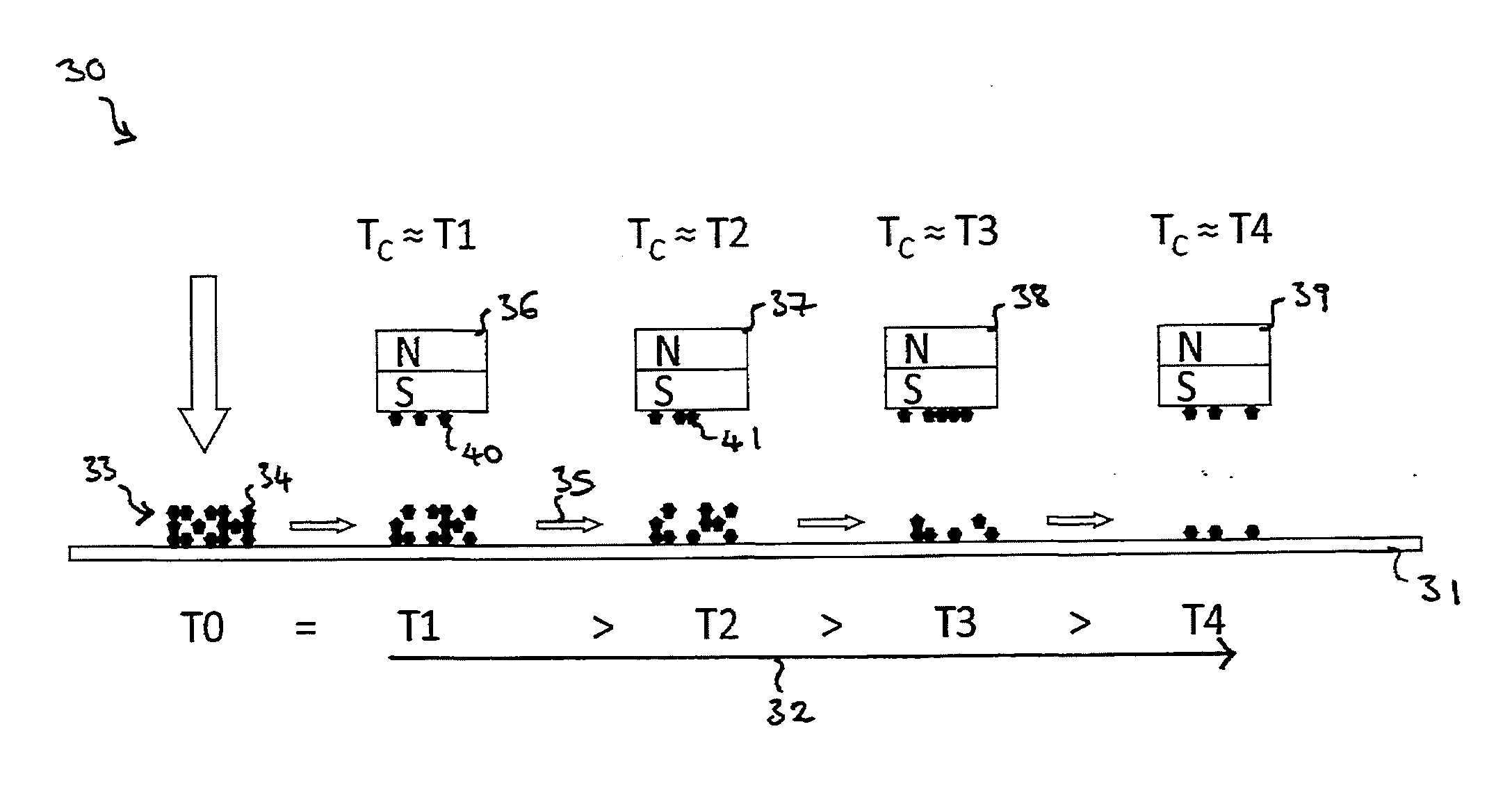
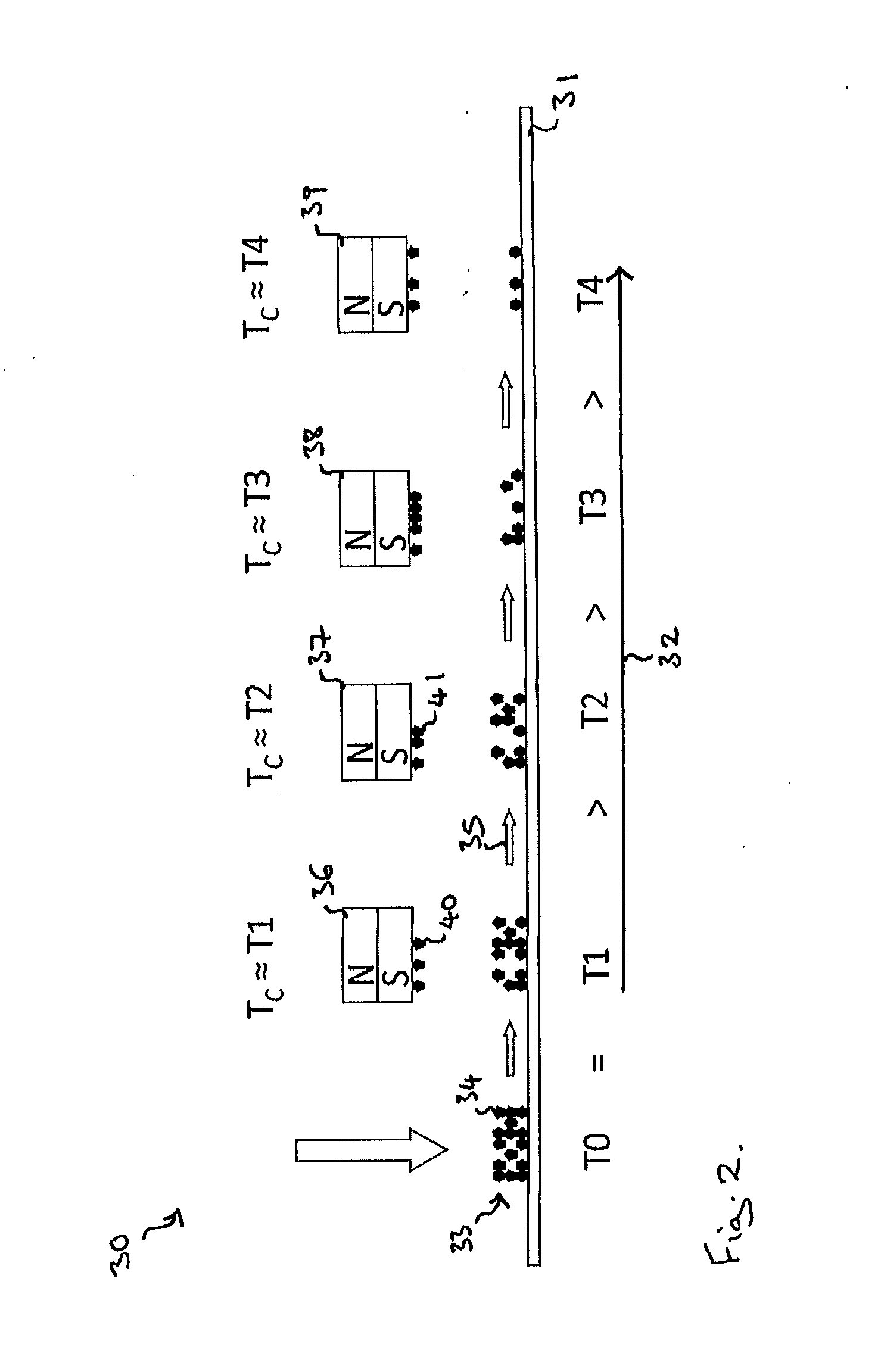
- A thermomagnetic separation method is employed, where a source of magnetocalorically active materials with different magnetic transition temperatures is subjected to a magnetic field at varying temperatures, allowing for the separation of particles based on their magnetic transition temperatures, resulting in distinct article fractions with narrow temperature ranges, which are then arranged in a layered structure to enhance the efficiency of the magnetic heat exchanger.

Academic-Industry Collaboration Models in Magnetocaloric
The magnetocaloric sector presents unique challenges in bridging the gap between academic research and industrial application, necessitating innovative collaboration models that facilitate effective knowledge transfer. Traditional linear models of technology transfer have proven insufficient for the complex, interdisciplinary nature of magnetocaloric materials research, where fundamental physics, materials science, and engineering applications intersect.
Consortium-based collaboration models have emerged as particularly effective frameworks in the magnetocaloric field. These models typically involve multiple academic institutions partnering with industrial players to share research costs, risks, and intellectual property. The European Magnetic Refrigeration Consortium and similar initiatives demonstrate how shared research facilities and coordinated research programs can accelerate technology development while ensuring industrial relevance.
Joint research centers represent another successful collaboration model, where academic institutions and companies establish dedicated facilities for magnetocaloric research. These centers combine university expertise in fundamental materials research with industry knowledge of manufacturing processes and market requirements. The co-location of researchers from both sectors facilitates continuous knowledge exchange and ensures research directions align with commercial viability.
Industry-sponsored PhD programs have proven particularly valuable for long-term knowledge transfer in magnetocaloric research. These programs embed graduate students within industrial environments while maintaining academic supervision, creating a pipeline of researchers who understand both theoretical foundations and practical constraints. Companies like Cooltech Applications and Camfridge have successfully utilized such programs to build internal expertise while contributing to academic advancement.
Collaborative research agreements with milestone-based funding structures have shown effectiveness in managing the inherent uncertainties of magnetocaloric technology development. These agreements establish clear deliverables and decision points, allowing both academic and industrial partners to adjust research directions based on emerging results and market conditions.
Open innovation platforms and technology incubators specifically focused on magnetic refrigeration technologies provide additional pathways for knowledge transfer. These platforms facilitate connections between academic researchers, established companies, and startup ventures, creating ecosystems that support both fundamental research and commercial development.
Consortium-based collaboration models have emerged as particularly effective frameworks in the magnetocaloric field. These models typically involve multiple academic institutions partnering with industrial players to share research costs, risks, and intellectual property. The European Magnetic Refrigeration Consortium and similar initiatives demonstrate how shared research facilities and coordinated research programs can accelerate technology development while ensuring industrial relevance.
Joint research centers represent another successful collaboration model, where academic institutions and companies establish dedicated facilities for magnetocaloric research. These centers combine university expertise in fundamental materials research with industry knowledge of manufacturing processes and market requirements. The co-location of researchers from both sectors facilitates continuous knowledge exchange and ensures research directions align with commercial viability.
Industry-sponsored PhD programs have proven particularly valuable for long-term knowledge transfer in magnetocaloric research. These programs embed graduate students within industrial environments while maintaining academic supervision, creating a pipeline of researchers who understand both theoretical foundations and practical constraints. Companies like Cooltech Applications and Camfridge have successfully utilized such programs to build internal expertise while contributing to academic advancement.
Collaborative research agreements with milestone-based funding structures have shown effectiveness in managing the inherent uncertainties of magnetocaloric technology development. These agreements establish clear deliverables and decision points, allowing both academic and industrial partners to adjust research directions based on emerging results and market conditions.
Open innovation platforms and technology incubators specifically focused on magnetic refrigeration technologies provide additional pathways for knowledge transfer. These platforms facilitate connections between academic researchers, established companies, and startup ventures, creating ecosystems that support both fundamental research and commercial development.
Intellectual Property Management in Magnetocaloric Sector
Intellectual property management represents a critical cornerstone for advancing knowledge transfer within the magnetocaloric sector. The complex nature of magnetocaloric materials and their applications necessitates sophisticated IP strategies that balance protection with collaborative innovation. Current IP landscapes in this field encompass fundamental patents on magnetocaloric materials, device architectures, manufacturing processes, and system integration technologies.
Patent portfolio development in the magnetocaloric sector requires strategic consideration of both composition-of-matter claims and method patents. Leading organizations typically establish comprehensive IP protection covering material compositions, crystal structures, processing techniques, and device configurations. The interdisciplinary nature of magnetocaloric technology creates opportunities for cross-licensing agreements between materials scientists, thermal engineers, and system integrators.
Licensing frameworks play a pivotal role in facilitating knowledge dissemination while maintaining competitive advantages. Standard essential patents in magnetocaloric cooling systems often require FRAND licensing terms, particularly for applications in consumer electronics and automotive sectors. Non-exclusive licensing arrangements for fundamental magnetocaloric materials enable broader market adoption while generating revenue streams for patent holders.
Trade secret management complements patent strategies by protecting proprietary manufacturing processes, material synthesis techniques, and performance optimization methods. Organizations must carefully balance between patent disclosure requirements and trade secret protection, particularly for process innovations that may be difficult to reverse-engineer.
International IP coordination presents unique challenges given the global nature of magnetocaloric research initiatives. Patent families must be strategically filed across key jurisdictions including the United States, European Union, Japan, and China, considering varying patentability requirements and enforcement mechanisms. Regional differences in utility model protection and industrial design rights further complicate IP management strategies.
Collaborative IP frameworks, including patent pools and joint licensing initiatives, emerge as effective mechanisms for accelerating technology transfer while reducing litigation risks. These structures enable smaller research institutions and startups to access essential technologies while contributing their innovations to the broader magnetocaloric ecosystem.
Patent portfolio development in the magnetocaloric sector requires strategic consideration of both composition-of-matter claims and method patents. Leading organizations typically establish comprehensive IP protection covering material compositions, crystal structures, processing techniques, and device configurations. The interdisciplinary nature of magnetocaloric technology creates opportunities for cross-licensing agreements between materials scientists, thermal engineers, and system integrators.
Licensing frameworks play a pivotal role in facilitating knowledge dissemination while maintaining competitive advantages. Standard essential patents in magnetocaloric cooling systems often require FRAND licensing terms, particularly for applications in consumer electronics and automotive sectors. Non-exclusive licensing arrangements for fundamental magnetocaloric materials enable broader market adoption while generating revenue streams for patent holders.
Trade secret management complements patent strategies by protecting proprietary manufacturing processes, material synthesis techniques, and performance optimization methods. Organizations must carefully balance between patent disclosure requirements and trade secret protection, particularly for process innovations that may be difficult to reverse-engineer.
International IP coordination presents unique challenges given the global nature of magnetocaloric research initiatives. Patent families must be strategically filed across key jurisdictions including the United States, European Union, Japan, and China, considering varying patentability requirements and enforcement mechanisms. Regional differences in utility model protection and industrial design rights further complicate IP management strategies.
Collaborative IP frameworks, including patent pools and joint licensing initiatives, emerge as effective mechanisms for accelerating technology transfer while reducing litigation risks. These structures enable smaller research institutions and startups to access essential technologies while contributing their innovations to the broader magnetocaloric ecosystem.
Unlock deeper insights with PatSnap Eureka Quick Research — get a full tech report to explore trends and direct your research. Try now!
Generate Your Research Report Instantly with AI Agent
Supercharge your innovation with PatSnap Eureka AI Agent Platform!