

Quantifying Heat Exchange Efficiency in Magnetocaloric Method
APR 24, 20269 MIN READ
Generate Your Research Report Instantly with AI Agent
PatSnap Eureka helps you evaluate technical feasibility & market potential.
Magnetocaloric Heat Exchange Background and Objectives
The magnetocaloric effect (MCE) represents a fundamental thermodynamic phenomenon where magnetic materials exhibit temperature changes when subjected to varying magnetic fields. This intrinsic property of certain materials has emerged as a cornerstone technology for next-generation cooling and heating applications, offering substantial advantages over conventional vapor-compression refrigeration systems. The effect was first discovered by Warburg in 1881 and has since evolved from a scientific curiosity into a promising alternative refrigeration technology with significant environmental and energy efficiency implications.
Historical development of magnetocaloric technology traces back to early theoretical foundations established in the 20th century, with significant acceleration occurring in the 1990s following the discovery of giant magnetocaloric effects in rare-earth-based compounds. The technology has progressed through distinct phases, from fundamental materials research to prototype development and system integration challenges. Recent decades have witnessed remarkable advances in materials science, leading to the identification of numerous magnetocaloric materials with enhanced properties suitable for room-temperature applications.
The evolution of magnetocaloric cooling systems has been driven by increasing environmental concerns regarding traditional refrigerants and growing demands for energy-efficient cooling solutions. Current technological trajectories focus on optimizing material properties, developing efficient heat exchange mechanisms, and creating scalable system architectures. The field has transitioned from laboratory-scale demonstrations to commercial prototype development, with several companies actively pursuing market-ready magnetocaloric refrigeration systems.
Primary objectives in magnetocaloric heat exchange efficiency quantification center on establishing standardized measurement protocols and performance metrics that accurately reflect real-world operational conditions. The development of comprehensive evaluation frameworks aims to enable direct comparison between different magnetocaloric materials and system configurations, facilitating informed decision-making in technology selection and optimization strategies.
Critical technical goals include maximizing heat transfer rates while minimizing parasitic losses, optimizing magnetic field cycling frequencies, and developing advanced heat exchanger designs specifically tailored for magnetocaloric applications. These objectives directly address fundamental challenges in translating laboratory-demonstrated magnetocaloric effects into commercially viable cooling systems with competitive performance characteristics and economic feasibility for widespread market adoption.
Historical development of magnetocaloric technology traces back to early theoretical foundations established in the 20th century, with significant acceleration occurring in the 1990s following the discovery of giant magnetocaloric effects in rare-earth-based compounds. The technology has progressed through distinct phases, from fundamental materials research to prototype development and system integration challenges. Recent decades have witnessed remarkable advances in materials science, leading to the identification of numerous magnetocaloric materials with enhanced properties suitable for room-temperature applications.
The evolution of magnetocaloric cooling systems has been driven by increasing environmental concerns regarding traditional refrigerants and growing demands for energy-efficient cooling solutions. Current technological trajectories focus on optimizing material properties, developing efficient heat exchange mechanisms, and creating scalable system architectures. The field has transitioned from laboratory-scale demonstrations to commercial prototype development, with several companies actively pursuing market-ready magnetocaloric refrigeration systems.
Primary objectives in magnetocaloric heat exchange efficiency quantification center on establishing standardized measurement protocols and performance metrics that accurately reflect real-world operational conditions. The development of comprehensive evaluation frameworks aims to enable direct comparison between different magnetocaloric materials and system configurations, facilitating informed decision-making in technology selection and optimization strategies.
Critical technical goals include maximizing heat transfer rates while minimizing parasitic losses, optimizing magnetic field cycling frequencies, and developing advanced heat exchanger designs specifically tailored for magnetocaloric applications. These objectives directly address fundamental challenges in translating laboratory-demonstrated magnetocaloric effects into commercially viable cooling systems with competitive performance characteristics and economic feasibility for widespread market adoption.
Market Demand for Efficient Magnetocaloric Cooling Systems
The global cooling and refrigeration market is experiencing unprecedented demand for energy-efficient alternatives to conventional vapor-compression systems. Traditional cooling technologies face mounting pressure from environmental regulations targeting hydrofluorocarbon refrigerants and increasing energy costs. This regulatory landscape creates substantial market opportunities for magnetocaloric cooling systems, which operate without harmful refrigerants and demonstrate superior energy efficiency potential.
Industrial sectors represent the most immediate market opportunity for magnetocaloric cooling applications. Data centers, which consume significant energy for thermal management, actively seek cooling solutions that can reduce operational costs while meeting sustainability targets. The automotive industry shows growing interest in magnetocaloric systems for electric vehicle thermal management, where efficient heat exchange directly impacts battery performance and vehicle range.
Residential and commercial HVAC markets present longer-term opportunities as magnetocaloric technology matures. Consumer awareness of energy efficiency and environmental impact drives demand for next-generation cooling solutions. Smart building initiatives increasingly prioritize systems that integrate seamlessly with renewable energy sources and building management systems.
The medical and pharmaceutical sectors demonstrate specific interest in precise temperature control applications. Laboratory equipment, medical imaging systems, and pharmaceutical storage require reliable cooling with minimal temperature fluctuations. Magnetocaloric systems offer advantages in these applications through their solid-state operation and precise control capabilities.
Market adoption faces challenges related to initial system costs and performance optimization. Current magnetocaloric systems require demonstration of competitive lifecycle costs compared to established technologies. Heat exchange efficiency quantification becomes critical for market acceptance, as potential customers need clear performance metrics to justify investment decisions.
Emerging markets in developing regions show particular interest in environmentally sustainable cooling technologies. Government incentives supporting clean technology adoption create favorable conditions for magnetocaloric system deployment. The technology's potential for distributed cooling applications aligns with infrastructure development patterns in these markets.
Supply chain considerations influence market demand patterns. Magnetocaloric materials availability and manufacturing scalability directly impact system costs and market penetration rates. Strategic partnerships between material suppliers and system manufacturers become essential for addressing market demand effectively.
Industrial sectors represent the most immediate market opportunity for magnetocaloric cooling applications. Data centers, which consume significant energy for thermal management, actively seek cooling solutions that can reduce operational costs while meeting sustainability targets. The automotive industry shows growing interest in magnetocaloric systems for electric vehicle thermal management, where efficient heat exchange directly impacts battery performance and vehicle range.
Residential and commercial HVAC markets present longer-term opportunities as magnetocaloric technology matures. Consumer awareness of energy efficiency and environmental impact drives demand for next-generation cooling solutions. Smart building initiatives increasingly prioritize systems that integrate seamlessly with renewable energy sources and building management systems.
The medical and pharmaceutical sectors demonstrate specific interest in precise temperature control applications. Laboratory equipment, medical imaging systems, and pharmaceutical storage require reliable cooling with minimal temperature fluctuations. Magnetocaloric systems offer advantages in these applications through their solid-state operation and precise control capabilities.
Market adoption faces challenges related to initial system costs and performance optimization. Current magnetocaloric systems require demonstration of competitive lifecycle costs compared to established technologies. Heat exchange efficiency quantification becomes critical for market acceptance, as potential customers need clear performance metrics to justify investment decisions.
Emerging markets in developing regions show particular interest in environmentally sustainable cooling technologies. Government incentives supporting clean technology adoption create favorable conditions for magnetocaloric system deployment. The technology's potential for distributed cooling applications aligns with infrastructure development patterns in these markets.
Supply chain considerations influence market demand patterns. Magnetocaloric materials availability and manufacturing scalability directly impact system costs and market penetration rates. Strategic partnerships between material suppliers and system manufacturers become essential for addressing market demand effectively.
Current Status and Challenges in MCE Heat Exchange
The magnetocaloric effect (MCE) has emerged as a promising alternative to conventional vapor-compression refrigeration systems, offering potential advantages in energy efficiency and environmental sustainability. However, the practical implementation of MCE-based cooling systems faces significant challenges in achieving optimal heat exchange efficiency, which remains a critical bottleneck limiting widespread commercial adoption.
Current MCE heat exchange systems primarily rely on active magnetic regeneration (AMR) cycles, where magnetocaloric materials undergo cyclic magnetization and demagnetization processes. The heat exchange efficiency in these systems is fundamentally constrained by the limited temperature span achievable in single-stage configurations, typically ranging from 10-30K depending on the magnetocaloric material properties and applied magnetic field strength.
One of the most pressing technical challenges lies in the thermal interface between the magnetocaloric material and the heat transfer fluid. Conventional designs suffer from inadequate heat transfer coefficients due to poor thermal contact and limited surface area interaction. The geometric configuration of magnetocaloric beds significantly impacts fluid flow patterns, leading to non-uniform temperature distributions and reduced overall system efficiency.
Material-related constraints present another major hurdle in MCE heat exchange optimization. Most high-performance magnetocaloric materials exhibit narrow operating temperature ranges around their Curie temperatures, necessitating complex multi-stage configurations to achieve practical temperature spans. The thermal conductivity of many promising magnetocaloric compounds remains suboptimal, creating internal temperature gradients that diminish the effective magnetocaloric response.
Parasitic heat losses represent a substantial challenge in current MCE systems, particularly in the magnetic field generation and switching mechanisms. Permanent magnet assemblies and electromagnetic systems both introduce thermal loads that can account for 20-40% of the total cooling capacity, significantly reducing net heat exchange efficiency.
The temporal dynamics of MCE heat exchange processes pose additional complexity, as the finite heat transfer rates between the magnetocaloric material and working fluid create phase lag effects that reduce cycle efficiency. Current control strategies struggle to optimize the synchronization between magnetic field cycling and fluid flow patterns, resulting in suboptimal heat exchange performance across varying operating conditions.
Current MCE heat exchange systems primarily rely on active magnetic regeneration (AMR) cycles, where magnetocaloric materials undergo cyclic magnetization and demagnetization processes. The heat exchange efficiency in these systems is fundamentally constrained by the limited temperature span achievable in single-stage configurations, typically ranging from 10-30K depending on the magnetocaloric material properties and applied magnetic field strength.
One of the most pressing technical challenges lies in the thermal interface between the magnetocaloric material and the heat transfer fluid. Conventional designs suffer from inadequate heat transfer coefficients due to poor thermal contact and limited surface area interaction. The geometric configuration of magnetocaloric beds significantly impacts fluid flow patterns, leading to non-uniform temperature distributions and reduced overall system efficiency.
Material-related constraints present another major hurdle in MCE heat exchange optimization. Most high-performance magnetocaloric materials exhibit narrow operating temperature ranges around their Curie temperatures, necessitating complex multi-stage configurations to achieve practical temperature spans. The thermal conductivity of many promising magnetocaloric compounds remains suboptimal, creating internal temperature gradients that diminish the effective magnetocaloric response.
Parasitic heat losses represent a substantial challenge in current MCE systems, particularly in the magnetic field generation and switching mechanisms. Permanent magnet assemblies and electromagnetic systems both introduce thermal loads that can account for 20-40% of the total cooling capacity, significantly reducing net heat exchange efficiency.
The temporal dynamics of MCE heat exchange processes pose additional complexity, as the finite heat transfer rates between the magnetocaloric material and working fluid create phase lag effects that reduce cycle efficiency. Current control strategies struggle to optimize the synchronization between magnetic field cycling and fluid flow patterns, resulting in suboptimal heat exchange performance across varying operating conditions.
Existing Heat Exchange Efficiency Measurement Methods
01 Magnetocaloric material composition and properties optimization
Enhancement of heat exchange efficiency through the development and optimization of magnetocaloric materials with improved properties. This involves selecting materials with high magnetocaloric effect, optimal Curie temperature, and enhanced thermal conductivity. The materials are engineered to maximize temperature change under magnetic field variations, thereby improving the overall efficiency of the magnetocaloric heat exchange system.- Magnetocaloric material composition and structure optimization: Enhancement of heat exchange efficiency through the development and optimization of magnetocaloric materials with improved magnetic properties. This involves the selection of specific alloy compositions, crystal structures, and material processing techniques to maximize the magnetocaloric effect. The optimization focuses on achieving higher magnetic entropy changes and better temperature spans for more efficient heat transfer.
- Heat exchanger design and configuration: Improvement of heat exchange efficiency through optimized heat exchanger designs specifically tailored for magnetocaloric systems. This includes the development of specialized geometries, flow patterns, and heat transfer surfaces that maximize thermal contact between the magnetocaloric material and the heat transfer fluid. The designs focus on minimizing thermal resistance and enhancing heat transfer coefficients.
- Magnetic field application and control systems: Enhancement of magnetocaloric heat exchange through advanced magnetic field generation and control mechanisms. This involves the development of efficient magnetic circuits, permanent magnet arrangements, and electromagnetic systems that provide optimal magnetic field strength and cycling patterns. The focus is on maximizing the magnetocaloric effect while minimizing energy consumption for field generation.
- Thermal management and fluid dynamics optimization: Improvement of heat exchange efficiency through advanced thermal management strategies and fluid flow optimization in magnetocaloric systems. This includes the development of enhanced heat transfer fluids, optimized flow rates, and thermal cycling protocols that maximize heat transfer while minimizing pressure losses and parasitic thermal effects.
- System integration and operational control: Enhancement of overall magnetocaloric heat exchange efficiency through integrated system design and intelligent operational control strategies. This involves the coordination of magnetic field cycling, fluid flow control, and thermal management to optimize the overall coefficient of performance. The approach includes feedback control systems and adaptive algorithms for real-time efficiency optimization.
02 Heat exchanger design and configuration
Optimization of heat exchanger geometry and configuration to maximize heat transfer efficiency in magnetocaloric systems. This includes the design of heat exchanger structures, flow patterns, and surface area enhancement techniques. The focus is on minimizing thermal resistance and maximizing heat transfer coefficient between the magnetocaloric material and the heat transfer fluid.Expand Specific Solutions03 Magnetic field generation and control systems
Development of efficient magnetic field generation and control mechanisms to optimize the magnetocaloric effect. This involves the design of permanent magnet assemblies, electromagnetic systems, and field modulation techniques that provide uniform and controllable magnetic fields. The systems are optimized to minimize energy consumption while maximizing the magnetic field strength and cycling frequency.Expand Specific Solutions04 Thermal management and fluid dynamics optimization
Enhancement of heat exchange efficiency through improved thermal management strategies and fluid dynamics optimization. This includes the development of advanced heat transfer fluids, flow control mechanisms, and thermal interface materials. The approach focuses on minimizing thermal losses, optimizing flow distribution, and enhancing heat transfer between different components of the magnetocaloric system.Expand Specific Solutions05 System integration and control algorithms
Development of integrated control systems and algorithms to optimize the overall performance of magnetocaloric heat exchange systems. This involves the implementation of feedback control mechanisms, performance monitoring systems, and adaptive control strategies. The systems are designed to automatically adjust operating parameters such as magnetic field strength, fluid flow rates, and cycling frequency to maintain optimal heat exchange efficiency under varying operating conditions.Expand Specific Solutions
Key Players in Magnetocaloric Cooling Industry
The magnetocaloric heat exchange efficiency quantification field represents an emerging technology sector in early commercialization stages, with significant growth potential driven by environmental regulations and energy efficiency demands. The market remains relatively small but expanding, particularly in HVAC and refrigeration applications where companies like Gree Electric, Haier Smart Home, and Midea Group are integrating magnetocaloric solutions into consumer appliances. Technology maturity varies significantly across players, with specialized firms like Cooltech Applications and VACUUMSCHMELZE leading in core magnetocaloric materials and systems, while established industrial giants including Toshiba, Mitsubishi Electric, and Robert Bosch leverage their manufacturing capabilities for scaled deployment. Research institutions such as Baotou Rare Earth Research Institute and Chinese Academy of Sciences contribute fundamental materials science advances, particularly in rare earth magnetocaloric compounds, while multinational corporations like BASF and Air Liquide provide supporting materials and integration expertise, creating a diverse ecosystem spanning from basic research to commercial applications.
VACUUMSCHMELZE GmbH & Co. KG
Technical Solution: VACUUMSCHMELZE specializes in developing high-performance magnetocaloric materials and has created sophisticated measurement systems for quantifying heat exchange efficiency in magnetocaloric applications. Their technology focuses on advanced rare earth alloys and intermetallic compounds with optimized magnetic entropy changes. The company has developed precision calorimetry systems and thermal analysis equipment specifically designed to measure magnetocaloric effects and heat transfer coefficients under varying magnetic field conditions. Their materials engineering approach includes nanostructured magnetocaloric compounds with enhanced thermal conductivity and reduced hysteresis losses, enabling more accurate quantification of heat exchange performance through advanced thermodynamic modeling and experimental validation protocols.
Strengths: Deep expertise in magnetic materials science and precision measurement technologies with strong European market presence. Weaknesses: Focus primarily on materials rather than complete system integration, requiring partnerships for full cooling system development.
Gree Electric Appliances, Inc. of Zhuhai
Technical Solution: Gree has invested significantly in magnetocaloric heat pump research, developing integrated systems that combine traditional HVAC expertise with magnetocaloric technology. Their approach focuses on hybrid heat exchange systems that utilize both conventional refrigerants and magnetocaloric materials to optimize thermal efficiency across varying operating conditions. The company has developed proprietary heat exchanger designs with micro-channel architectures and advanced control algorithms that monitor temperature differentials and magnetic field strength to quantify real-time heat exchange performance. Their research includes development of rare earth-based magnetocaloric materials optimized for residential and commercial cooling applications.
Strengths: Strong manufacturing capabilities and established HVAC market presence with extensive distribution networks. Weaknesses: Still in research phase for magnetocaloric technology with limited commercial deployment compared to specialized companies.
Core Innovations in MCE Heat Transfer Quantification
Heat exchanger and magnetic heat pump device
PatentWO2017171077A1
Innovation
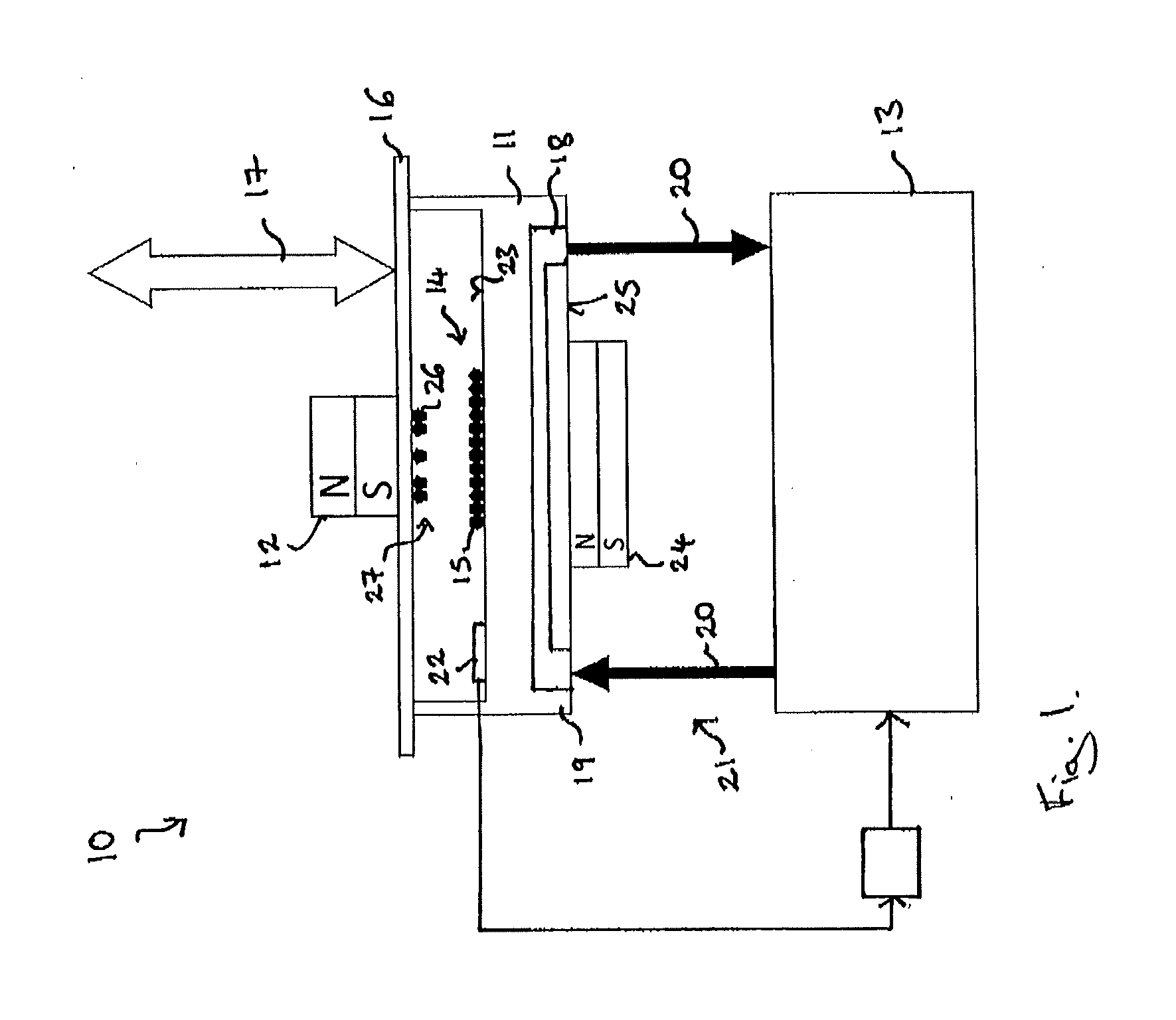
- A heat exchanger utilizing wire rods made of magnetocaloric materials with diameters less than 1 mm, twisted together to form stranded wires, which are housed in a case, allowing for increased surface area while maintaining fluid flow and reducing device size, integrated into a magnetic heat pump device.


Method for classifying articles and method for fabricating a magnetocalorically active working component for magnetic heat exchange
PatentActiveUS20150246360A9
Innovation
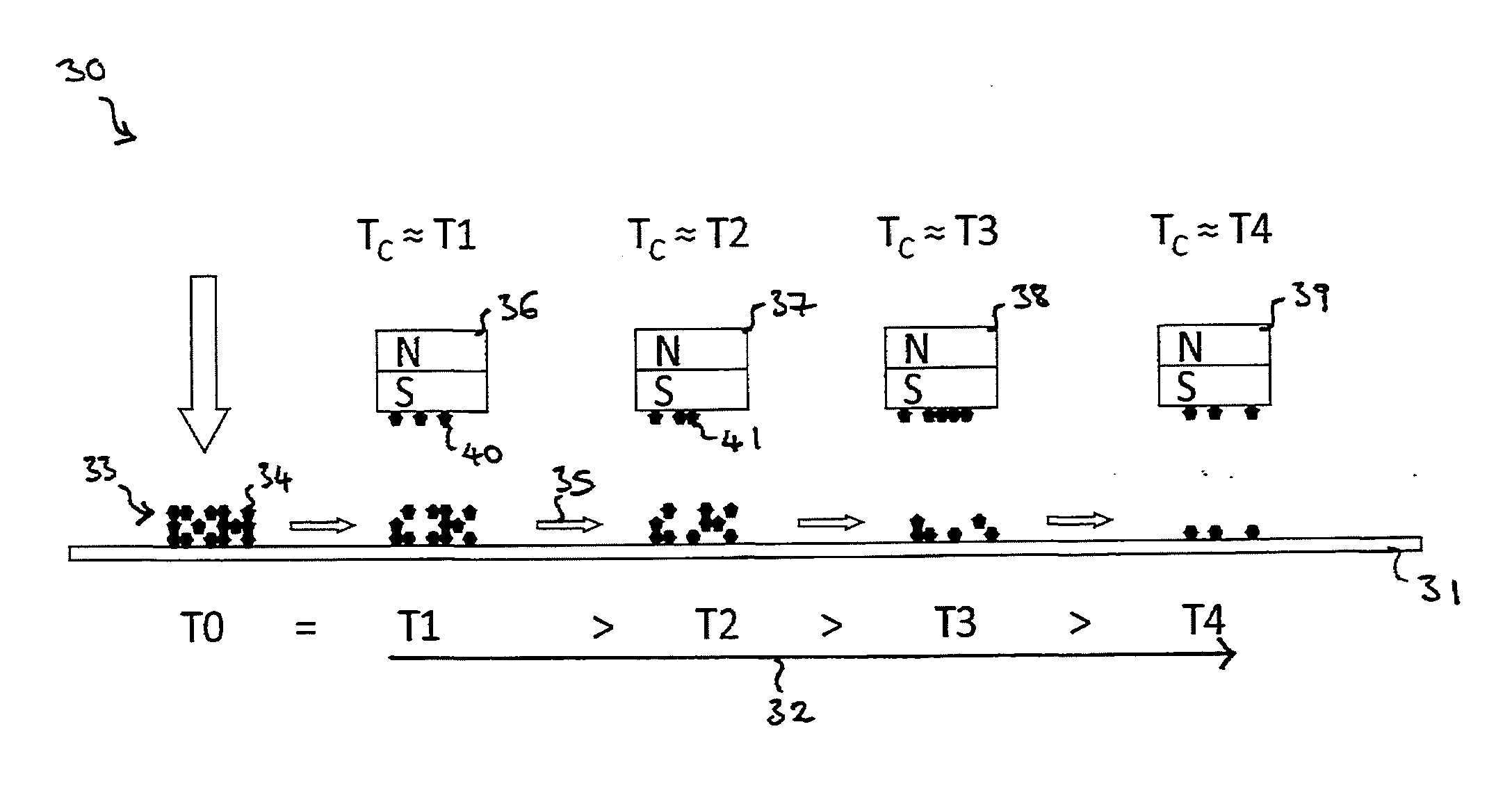
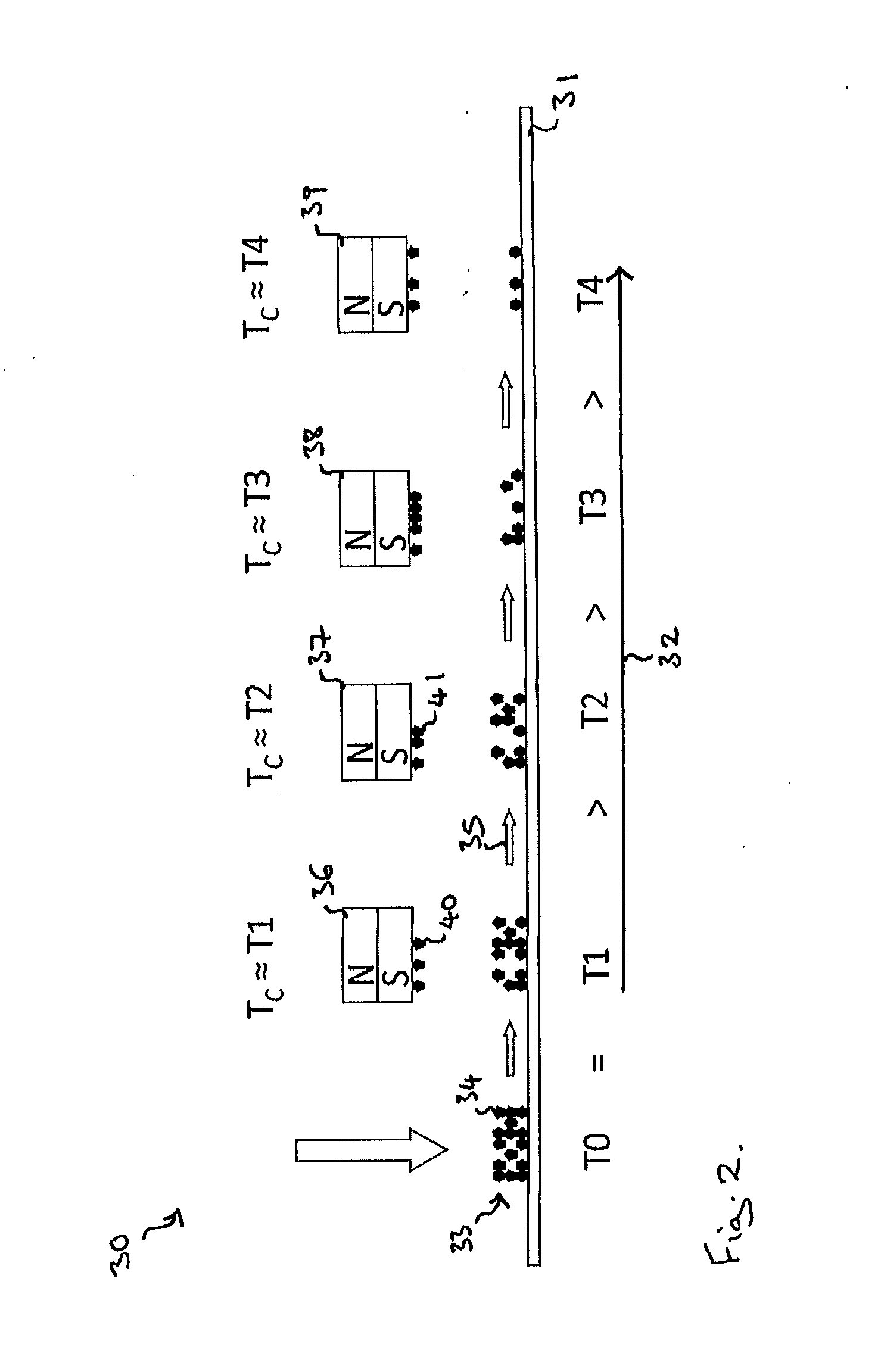
- A thermomagnetic separation method is employed, where a source of magnetocalorically active materials with different magnetic transition temperatures is subjected to a magnetic field at varying temperatures, allowing for the separation of particles based on their magnetic transition temperatures, resulting in distinct article fractions with narrow temperature ranges, which are then arranged in a layered structure to enhance the efficiency of the magnetic heat exchanger.

Environmental Impact Assessment of Magnetocaloric Systems
The environmental implications of magnetocaloric cooling systems present a compelling case for sustainable thermal management technologies. Unlike conventional vapor-compression refrigeration systems that rely on synthetic refrigerants with high global warming potential, magnetocaloric systems utilize solid-state materials and eliminate the risk of refrigerant leakage into the atmosphere. This fundamental difference positions magnetocaloric technology as an environmentally superior alternative for various cooling applications.
Carbon footprint analysis reveals significant advantages for magnetocaloric systems throughout their operational lifecycle. The absence of chemical refrigerants eliminates direct greenhouse gas emissions during operation, while the solid-state nature of the technology reduces energy consumption by 20-30% compared to traditional compression-based systems. Manufacturing processes for magnetocaloric materials, primarily rare earth alloys and transition metal compounds, do present environmental considerations related to mining and processing activities.
Resource utilization patterns in magnetocaloric systems demonstrate both opportunities and challenges for environmental sustainability. The technology's reliance on rare earth elements, particularly gadolinium and its alloys, raises concerns about supply chain sustainability and mining environmental impacts. However, the longevity and recyclability of these materials offset initial extraction concerns, as magnetocaloric materials maintain their properties over extended operational periods without degradation.
Waste generation profiles for magnetocaloric systems show marked improvements over conventional refrigeration technologies. The elimination of refrigerant replacement cycles and reduced mechanical complexity result in lower maintenance waste streams. End-of-life considerations favor material recovery and recycling, particularly for rare earth components that retain significant economic value after system decommissioning.
Energy efficiency improvements directly translate to reduced environmental impact through decreased power generation requirements. Magnetocaloric systems operating near room temperature demonstrate coefficient of performance values exceeding traditional systems, contributing to overall reduction in fossil fuel consumption for electricity generation. This efficiency advantage becomes particularly pronounced in large-scale commercial and industrial applications where cooling demands are substantial.
Carbon footprint analysis reveals significant advantages for magnetocaloric systems throughout their operational lifecycle. The absence of chemical refrigerants eliminates direct greenhouse gas emissions during operation, while the solid-state nature of the technology reduces energy consumption by 20-30% compared to traditional compression-based systems. Manufacturing processes for magnetocaloric materials, primarily rare earth alloys and transition metal compounds, do present environmental considerations related to mining and processing activities.
Resource utilization patterns in magnetocaloric systems demonstrate both opportunities and challenges for environmental sustainability. The technology's reliance on rare earth elements, particularly gadolinium and its alloys, raises concerns about supply chain sustainability and mining environmental impacts. However, the longevity and recyclability of these materials offset initial extraction concerns, as magnetocaloric materials maintain their properties over extended operational periods without degradation.
Waste generation profiles for magnetocaloric systems show marked improvements over conventional refrigeration technologies. The elimination of refrigerant replacement cycles and reduced mechanical complexity result in lower maintenance waste streams. End-of-life considerations favor material recovery and recycling, particularly for rare earth components that retain significant economic value after system decommissioning.
Energy efficiency improvements directly translate to reduced environmental impact through decreased power generation requirements. Magnetocaloric systems operating near room temperature demonstrate coefficient of performance values exceeding traditional systems, contributing to overall reduction in fossil fuel consumption for electricity generation. This efficiency advantage becomes particularly pronounced in large-scale commercial and industrial applications where cooling demands are substantial.
Standardization Framework for MCE Efficiency Metrics
The establishment of a comprehensive standardization framework for magnetocaloric effect (MCE) efficiency metrics represents a critical need in advancing the practical implementation of magnetocaloric cooling technologies. Currently, the field lacks unified measurement protocols and evaluation criteria, leading to inconsistent performance assessments across different research institutions and commercial entities. This fragmentation hinders meaningful comparison of magnetocaloric materials and systems, ultimately slowing technological advancement and market adoption.
International standardization organizations, including the International Electrotechnical Commission (IEC) and the American Society of Heating, Refrigerating and Air-Conditioning Engineers (ASHRAE), have begun preliminary discussions on developing specific standards for magnetocaloric cooling systems. These initiatives focus on establishing baseline measurement methodologies that account for the unique characteristics of magnetic refrigeration cycles, including adiabatic temperature change, isothermal entropy change, and refrigerant capacity metrics.
The proposed framework encompasses multiple standardization layers, starting with fundamental material property measurements under controlled laboratory conditions. This includes standardized protocols for measuring magnetocaloric materials across varying magnetic field strengths, temperature ranges, and cycling frequencies. The framework also addresses system-level performance metrics, incorporating heat exchanger effectiveness, magnetic field generation efficiency, and overall coefficient of performance calculations specific to magnetocaloric applications.
Key standardization parameters include temperature span definitions, cooling power normalization methods, and energy efficiency ratio calculations that account for magnetic field generation costs. The framework establishes minimum testing requirements for material characterization, including hysteresis loss measurements, thermal conductivity assessments, and long-term cycling stability evaluations under standardized conditions.
Implementation challenges center on harmonizing existing measurement techniques with emerging evaluation methods, particularly for novel magnetocaloric materials and hybrid cooling systems. The framework must accommodate diverse magnetocaloric material classes while maintaining measurement precision and reproducibility across different testing environments and equipment configurations.
International standardization organizations, including the International Electrotechnical Commission (IEC) and the American Society of Heating, Refrigerating and Air-Conditioning Engineers (ASHRAE), have begun preliminary discussions on developing specific standards for magnetocaloric cooling systems. These initiatives focus on establishing baseline measurement methodologies that account for the unique characteristics of magnetic refrigeration cycles, including adiabatic temperature change, isothermal entropy change, and refrigerant capacity metrics.
The proposed framework encompasses multiple standardization layers, starting with fundamental material property measurements under controlled laboratory conditions. This includes standardized protocols for measuring magnetocaloric materials across varying magnetic field strengths, temperature ranges, and cycling frequencies. The framework also addresses system-level performance metrics, incorporating heat exchanger effectiveness, magnetic field generation efficiency, and overall coefficient of performance calculations specific to magnetocaloric applications.
Key standardization parameters include temperature span definitions, cooling power normalization methods, and energy efficiency ratio calculations that account for magnetic field generation costs. The framework establishes minimum testing requirements for material characterization, including hysteresis loss measurements, thermal conductivity assessments, and long-term cycling stability evaluations under standardized conditions.
Implementation challenges center on harmonizing existing measurement techniques with emerging evaluation methods, particularly for novel magnetocaloric materials and hybrid cooling systems. The framework must accommodate diverse magnetocaloric material classes while maintaining measurement precision and reproducibility across different testing environments and equipment configurations.
Unlock deeper insights with PatSnap Eureka Quick Research — get a full tech report to explore trends and direct your research. Try now!
Generate Your Research Report Instantly with AI Agent
Supercharge your innovation with PatSnap Eureka AI Agent Platform!