
Fixed Satellite Telemetry Data: Accuracy and Update Rate
MAR 18, 20268 MIN READ
Generate Your Research Report Instantly with AI Agent
Patsnap Eureka helps you evaluate technical feasibility & market potential.
Satellite Telemetry Evolution and Accuracy Goals
Satellite telemetry systems have undergone significant transformation since the dawn of the space age in the 1950s. Early satellite missions relied on basic analog transmission methods with limited data capacity and accuracy constraints. The first generation of satellites transmitted simple status information through frequency-shift keying and amplitude modulation techniques, achieving data rates of only a few bits per second with substantial signal degradation over long distances.
The evolution accelerated during the 1960s and 1970s with the introduction of digital telemetry systems. This transition marked a pivotal shift toward more reliable data transmission, enabling satellites to communicate complex operational parameters with ground stations. Digital encoding techniques significantly improved signal integrity and allowed for error correction mechanisms, establishing the foundation for modern satellite communication protocols.
The 1980s and 1990s witnessed the emergence of packet-based telemetry architectures and advanced modulation schemes. These developments enabled higher data throughput while maintaining signal quality across vast distances. The integration of spread spectrum technologies and sophisticated antenna systems further enhanced the reliability and accuracy of telemetry data transmission, supporting increasingly complex satellite missions.
Contemporary satellite telemetry systems leverage cutting-edge technologies including adaptive coding, multiple-input multiple-output antenna configurations, and real-time error correction algorithms. Modern satellites can achieve telemetry data accuracy rates exceeding 99.9% with update frequencies ranging from milliseconds to seconds, depending on mission requirements and orbital characteristics.
Current technological objectives focus on achieving near-instantaneous data transmission with minimal latency while maintaining exceptional accuracy standards. The industry targets sub-millisecond update rates for critical operational parameters and error rates below 10^-9 for mission-critical telemetry streams. These ambitious goals drive continuous innovation in signal processing, antenna design, and communication protocols.
Future accuracy goals encompass the development of quantum-enhanced communication systems and artificial intelligence-driven error prediction mechanisms. The integration of machine learning algorithms aims to anticipate and compensate for signal degradation before it impacts data integrity, potentially achieving unprecedented levels of telemetry accuracy and reliability for next-generation satellite constellations.
The evolution accelerated during the 1960s and 1970s with the introduction of digital telemetry systems. This transition marked a pivotal shift toward more reliable data transmission, enabling satellites to communicate complex operational parameters with ground stations. Digital encoding techniques significantly improved signal integrity and allowed for error correction mechanisms, establishing the foundation for modern satellite communication protocols.
The 1980s and 1990s witnessed the emergence of packet-based telemetry architectures and advanced modulation schemes. These developments enabled higher data throughput while maintaining signal quality across vast distances. The integration of spread spectrum technologies and sophisticated antenna systems further enhanced the reliability and accuracy of telemetry data transmission, supporting increasingly complex satellite missions.
Contemporary satellite telemetry systems leverage cutting-edge technologies including adaptive coding, multiple-input multiple-output antenna configurations, and real-time error correction algorithms. Modern satellites can achieve telemetry data accuracy rates exceeding 99.9% with update frequencies ranging from milliseconds to seconds, depending on mission requirements and orbital characteristics.
Current technological objectives focus on achieving near-instantaneous data transmission with minimal latency while maintaining exceptional accuracy standards. The industry targets sub-millisecond update rates for critical operational parameters and error rates below 10^-9 for mission-critical telemetry streams. These ambitious goals drive continuous innovation in signal processing, antenna design, and communication protocols.
Future accuracy goals encompass the development of quantum-enhanced communication systems and artificial intelligence-driven error prediction mechanisms. The integration of machine learning algorithms aims to anticipate and compensate for signal degradation before it impacts data integrity, potentially achieving unprecedented levels of telemetry accuracy and reliability for next-generation satellite constellations.
Market Demand for High-Precision Satellite Data
The global satellite industry is experiencing unprecedented growth driven by increasing demand for high-precision telemetry data across multiple sectors. Traditional applications in telecommunications, navigation, and weather monitoring are expanding rapidly, while emerging use cases in autonomous vehicles, precision agriculture, and Internet of Things deployments are creating new market segments requiring enhanced data accuracy and real-time update capabilities.
Commercial space companies and government agencies are driving significant demand for improved satellite telemetry systems. The proliferation of small satellite constellations has intensified requirements for precise orbital tracking and collision avoidance systems. These applications demand telemetry data with sub-meter accuracy and update rates measured in seconds rather than minutes, representing a substantial shift from legacy satellite communication standards.
Financial services and trading platforms represent a growing market segment requiring ultra-low latency satellite communications. High-frequency trading operations and global financial networks depend on precise timing synchronization and rapid data transmission, creating demand for satellite systems capable of delivering telemetry updates with microsecond precision. This sector's willingness to pay premium prices for enhanced performance is driving technological advancement across the industry.
Defense and national security applications continue to represent the largest market segment for high-precision satellite data. Military operations, intelligence gathering, and strategic communications require telemetry systems with exceptional accuracy and reliability. Government contracts often specify stringent performance requirements that push the boundaries of current technology, creating sustained demand for advanced satellite telemetry solutions.
The emergence of smart city initiatives and urban planning applications is generating new demand patterns for satellite telemetry data. Municipal governments and urban developers require precise geographic information and real-time monitoring capabilities for infrastructure management, traffic optimization, and environmental monitoring. These applications typically require moderate accuracy levels but emphasize consistent update rates and long-term data reliability.
Industrial automation and remote monitoring applications are expanding the addressable market for satellite telemetry systems. Oil and gas operations, mining companies, and utility providers operating in remote locations depend on satellite communications for equipment monitoring and operational control. These sectors prioritize system reliability and consistent performance over absolute precision, creating demand for robust telemetry solutions designed for harsh operating environments.
Commercial space companies and government agencies are driving significant demand for improved satellite telemetry systems. The proliferation of small satellite constellations has intensified requirements for precise orbital tracking and collision avoidance systems. These applications demand telemetry data with sub-meter accuracy and update rates measured in seconds rather than minutes, representing a substantial shift from legacy satellite communication standards.
Financial services and trading platforms represent a growing market segment requiring ultra-low latency satellite communications. High-frequency trading operations and global financial networks depend on precise timing synchronization and rapid data transmission, creating demand for satellite systems capable of delivering telemetry updates with microsecond precision. This sector's willingness to pay premium prices for enhanced performance is driving technological advancement across the industry.
Defense and national security applications continue to represent the largest market segment for high-precision satellite data. Military operations, intelligence gathering, and strategic communications require telemetry systems with exceptional accuracy and reliability. Government contracts often specify stringent performance requirements that push the boundaries of current technology, creating sustained demand for advanced satellite telemetry solutions.
The emergence of smart city initiatives and urban planning applications is generating new demand patterns for satellite telemetry data. Municipal governments and urban developers require precise geographic information and real-time monitoring capabilities for infrastructure management, traffic optimization, and environmental monitoring. These applications typically require moderate accuracy levels but emphasize consistent update rates and long-term data reliability.
Industrial automation and remote monitoring applications are expanding the addressable market for satellite telemetry systems. Oil and gas operations, mining companies, and utility providers operating in remote locations depend on satellite communications for equipment monitoring and operational control. These sectors prioritize system reliability and consistent performance over absolute precision, creating demand for robust telemetry solutions designed for harsh operating environments.
Current Telemetry Accuracy and Update Rate Limitations
Current fixed satellite telemetry systems face significant accuracy constraints that limit their operational effectiveness across various applications. Traditional telemetry architectures typically achieve positioning accuracy ranging from 1-5 meters under optimal conditions, but this degrades substantially in challenging environments. Urban canyons, dense foliage, and atmospheric interference can reduce accuracy to 10-15 meters or worse, making these systems inadequate for precision applications requiring sub-meter accuracy.
The fundamental limitation stems from signal propagation delays and multipath effects inherent in satellite-based systems. Clock synchronization errors between satellites and ground receivers introduce timing discrepancies that directly translate to positional inaccuracies. Additionally, ionospheric and tropospheric delays cause signal distortion, particularly affecting L-band frequencies commonly used in satellite communications.
Update rate constraints represent another critical bottleneck in current telemetry systems. Most conventional satellite telemetry operates at update frequencies between 1-10 Hz, which proves insufficient for dynamic applications requiring real-time tracking. High-velocity targets, rapid maneuvering vehicles, and time-critical operations demand update rates exceeding 50-100 Hz to maintain operational relevance.
Bandwidth limitations imposed by existing satellite communication protocols restrict the volume of telemetry data that can be transmitted simultaneously. Current systems typically allocate 1-10 kbps per telemetry channel, constraining both data resolution and update frequency. This bandwidth bottleneck becomes particularly problematic when multiple parameters require simultaneous monitoring or when high-resolution sensor data needs transmission.
Processing latency within ground stations and satellite transponders introduces additional delays ranging from 100-500 milliseconds. This latency compounds with transmission delays, creating total system response times that exceed acceptable thresholds for time-sensitive applications. Legacy processing architectures lack the computational efficiency required for real-time data processing and immediate retransmission.
Power consumption constraints on satellite platforms limit the transmission power available for telemetry signals, directly impacting signal strength and reliability. Lower signal-to-noise ratios result in increased error rates and reduced effective range, particularly affecting mobile and remote applications where signal strength is already compromised.
The fundamental limitation stems from signal propagation delays and multipath effects inherent in satellite-based systems. Clock synchronization errors between satellites and ground receivers introduce timing discrepancies that directly translate to positional inaccuracies. Additionally, ionospheric and tropospheric delays cause signal distortion, particularly affecting L-band frequencies commonly used in satellite communications.
Update rate constraints represent another critical bottleneck in current telemetry systems. Most conventional satellite telemetry operates at update frequencies between 1-10 Hz, which proves insufficient for dynamic applications requiring real-time tracking. High-velocity targets, rapid maneuvering vehicles, and time-critical operations demand update rates exceeding 50-100 Hz to maintain operational relevance.
Bandwidth limitations imposed by existing satellite communication protocols restrict the volume of telemetry data that can be transmitted simultaneously. Current systems typically allocate 1-10 kbps per telemetry channel, constraining both data resolution and update frequency. This bandwidth bottleneck becomes particularly problematic when multiple parameters require simultaneous monitoring or when high-resolution sensor data needs transmission.
Processing latency within ground stations and satellite transponders introduces additional delays ranging from 100-500 milliseconds. This latency compounds with transmission delays, creating total system response times that exceed acceptable thresholds for time-sensitive applications. Legacy processing architectures lack the computational efficiency required for real-time data processing and immediate retransmission.
Power consumption constraints on satellite platforms limit the transmission power available for telemetry signals, directly impacting signal strength and reliability. Lower signal-to-noise ratios result in increased error rates and reduced effective range, particularly affecting mobile and remote applications where signal strength is already compromised.
Existing High-Accuracy Telemetry Solutions
01 Error correction and data validation techniques for satellite telemetry
Implementation of error correction algorithms and data validation methods to improve the accuracy of telemetry data received from fixed satellites. These techniques include redundancy checks, parity bits, and cyclic redundancy checks (CRC) to detect and correct transmission errors. Advanced signal processing methods are employed to filter noise and ensure data integrity during transmission from satellite to ground stations.- Error correction and data validation techniques for satellite telemetry: Implementation of error correction algorithms and data validation methods to improve the accuracy of telemetry data received from fixed satellites. These techniques include redundancy checks, parity bits, and cyclic redundancy checks (CRC) to detect and correct transmission errors. Advanced signal processing methods are employed to filter noise and ensure data integrity during transmission from satellite to ground stations.
- High-frequency data sampling and transmission systems: Systems designed to increase the update rate of satellite telemetry data through high-frequency sampling mechanisms and optimized transmission protocols. These systems utilize advanced modulation techniques and increased bandwidth allocation to enable more frequent data updates. The implementation of real-time data streaming capabilities allows for continuous monitoring and rapid response to satellite status changes.
- Multi-satellite coordination and data fusion: Methods for coordinating multiple satellite sources and fusing their telemetry data to enhance overall accuracy and reliability. These approaches combine data from different satellites to cross-validate measurements and reduce individual sensor errors. Sophisticated algorithms process and merge data streams to provide more accurate position, velocity, and status information with improved temporal resolution.
- Adaptive data compression and prioritization: Techniques for intelligently compressing and prioritizing telemetry data to optimize both accuracy and update frequency within bandwidth constraints. These methods employ adaptive algorithms that adjust compression ratios based on data criticality and available transmission capacity. Priority-based scheduling ensures that the most important telemetry parameters are transmitted more frequently while maintaining acceptable accuracy levels for all data types.
- Predictive modeling and interpolation for data gaps: Application of predictive algorithms and interpolation techniques to maintain data accuracy during transmission gaps or delays. These methods use historical telemetry patterns and mathematical models to estimate satellite parameters between actual data updates. Machine learning approaches can be employed to improve prediction accuracy and provide continuous data streams even when real-time updates are temporarily unavailable.
02 High-frequency data sampling and transmission systems
Systems designed to increase the update rate of satellite telemetry data through high-frequency sampling mechanisms and optimized transmission protocols. These systems utilize advanced modulation techniques and increased bandwidth allocation to enable more frequent data updates. The implementation of real-time data streaming capabilities allows for continuous monitoring and rapid response to satellite status changes.Expand Specific Solutions03 Multi-satellite coordination and data fusion
Methods for coordinating multiple satellite sources and fusing their telemetry data to enhance overall accuracy and update frequency. These approaches combine data from different satellites to cross-validate measurements and fill temporal gaps in coverage. Advanced algorithms process and merge data streams to provide more reliable and frequently updated telemetry information.Expand Specific Solutions04 Adaptive data compression and prioritization
Techniques for compressing telemetry data and prioritizing critical information to optimize transmission efficiency and update rates. These methods employ intelligent algorithms to identify and transmit high-priority data more frequently while compressing less critical information. Dynamic adjustment of compression ratios and transmission schedules based on satellite status and ground station requirements ensures optimal use of available bandwidth.Expand Specific Solutions05 Ground station processing and calibration systems
Advanced ground station systems that process and calibrate received telemetry data to improve accuracy and reduce latency. These systems incorporate real-time calibration algorithms that account for atmospheric effects, signal degradation, and equipment variations. Automated processing pipelines enable rapid data validation and distribution to end users with minimal delay.Expand Specific Solutions
Major Satellite Operators and Technology Providers
The fixed satellite telemetry data market is experiencing rapid growth driven by increasing demand for precise positioning and real-time data transmission across aerospace, defense, and commercial sectors. The industry is in a mature expansion phase with significant market opportunities, particularly in autonomous systems and IoT applications. Technology maturity varies considerably among key players: established telecommunications giants like Ericsson, Qualcomm, and Nokia Technologies provide robust infrastructure solutions, while aerospace leaders including Boeing, China Academy of Space Technology, and DFH Satellite Co. deliver advanced satellite platforms. Specialized positioning companies such as Trimble, Leica Geosystems, and Hi-Target focus on high-accuracy applications. Chinese institutions like Shanghai Institute of Satellite Engineering and Beihang University contribute significant R&D capabilities. The competitive landscape shows strong technological convergence between traditional satellite manufacturers and emerging software-defined solutions, with accuracy improvements and faster update rates becoming key differentiators in this increasingly competitive market.
Shanghai Institute of Satellite Engineering
Technical Solution: SISE has developed next-generation satellite telemetry systems focusing on miniaturized components and enhanced data compression algorithms. Their telemetry architecture achieves data accuracy levels of 99.8% while reducing power consumption by 30% compared to traditional systems. The institute's solutions feature adaptive sampling rates that automatically adjust from 0.5Hz during normal operations to 20Hz during critical events based on satellite status and mission requirements. SISE's telemetry systems incorporate advanced encryption protocols and support both S-band and X-band communications for improved reliability and data security in various orbital environments.
Strengths: Innovative miniaturization techniques with excellent power efficiency and strong research capabilities. Weaknesses: Limited international market penetration and smaller scale compared to established aerospace giants.
Honeywell International Technologies Ltd.
Technical Solution: Honeywell's satellite telemetry solutions leverage their extensive aerospace sensor technology expertise to deliver high-accuracy data acquisition systems with measurement precision within 0.1% for critical parameters. Their telemetry architecture features distributed smart sensors with built-in processing capabilities, enabling local data validation and compression before transmission. The system supports configurable update rates from 0.2Hz for standard monitoring to 100Hz for dynamic flight control applications. Honeywell's solutions include advanced fault detection and isolation capabilities, providing real-time system health assessment and predictive maintenance recommendations to extend satellite operational life.
Strengths: Proven aerospace sensor technology with excellent measurement accuracy and comprehensive system integration capabilities. Weaknesses: Higher costs and potential over-engineering for simpler satellite missions.
Core Technologies for Enhanced Data Precision
Satellite telemetry, tracking and control data tracking and archiving system
PatentInactiveUS9944414B2
Innovation
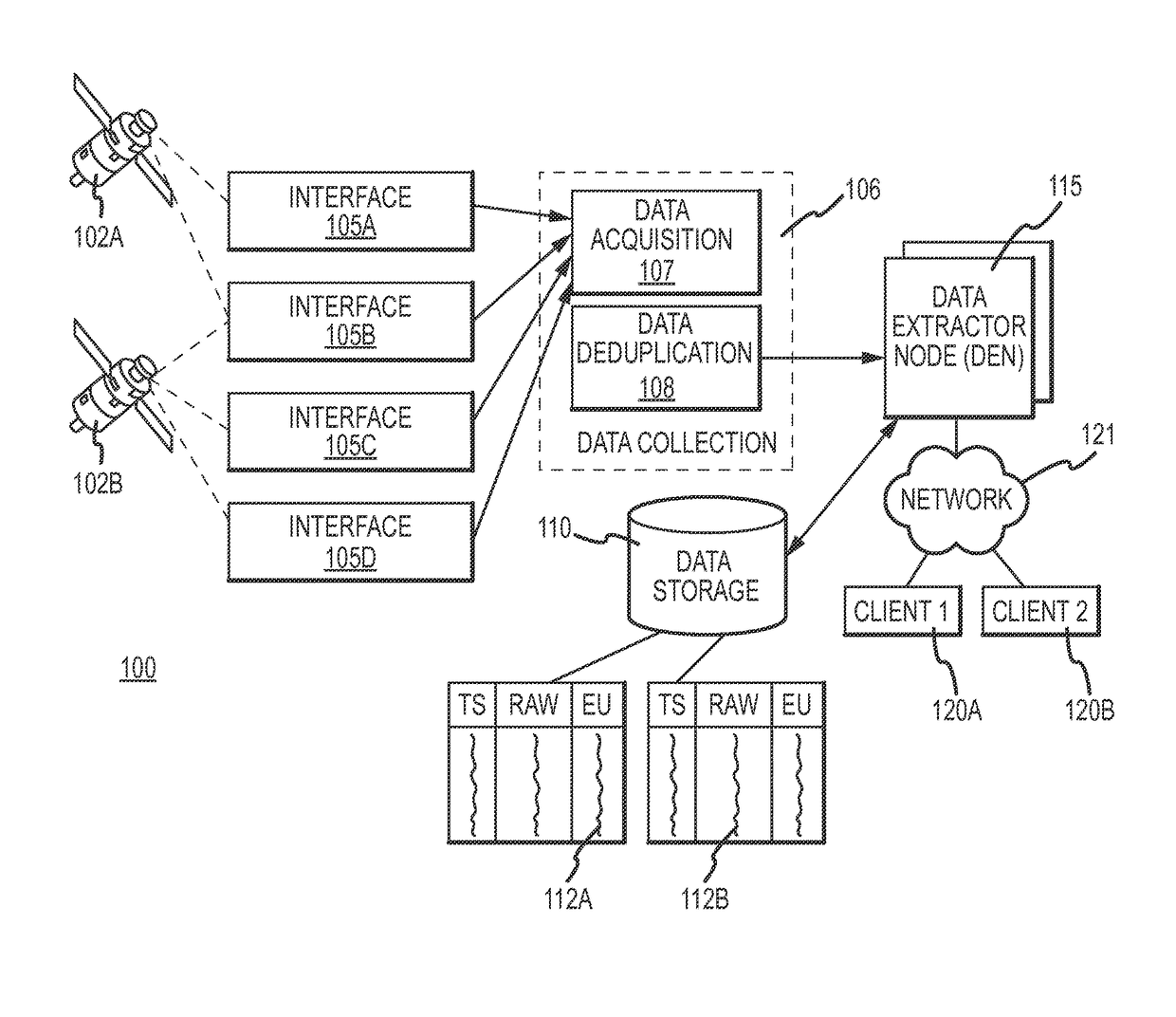
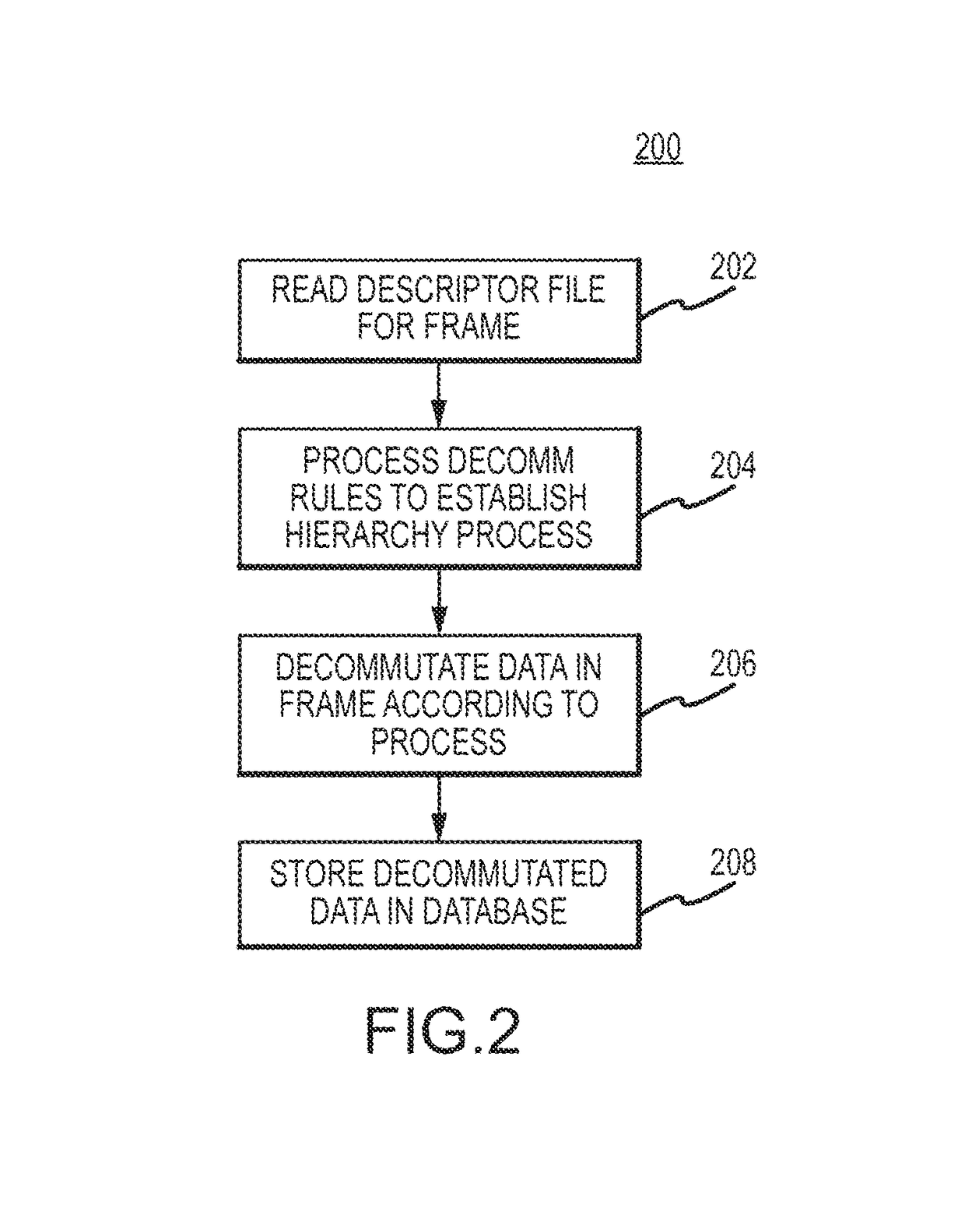
- A data processing system comprising a data acquisition system, a data extractor node (DEN), and a database that decommutates and preprocesses TT&C data in real-time, allowing for efficient retrieval and processing, enabling real-time response to user requests for reports and statistics without overwhelming processing burdens.

Global positioning system (GPS) linked satellite and missile communication systems
PatentInactiveUS5594454A
Innovation
- The GPS/Telemetry Transmitter (GTT) and GPS-Linked Transponder (GLT) systems integrate GPS transdigitizer concepts, providing a compact, power-efficient, high-data-rate telemetry transmitter with encryption and GPS transdigitization, enabling secure, accurate trajectory estimation and reducing system mass, size, and power requirements, while the GLT simplifies satellite positioning by using advanced GPS techniques and reducing spacecraft hardware complexity.


Space Regulatory Framework for Telemetry Standards
The regulatory landscape governing satellite telemetry standards operates through a complex multi-layered framework involving international, regional, and national authorities. The International Telecommunication Union (ITU) serves as the primary global coordinator, establishing fundamental principles for satellite communications through its Radio Regulations and technical recommendations. These regulations define spectrum allocation, orbital coordination procedures, and basic technical parameters that directly impact telemetry data transmission capabilities.
Regional organizations such as the European Telecommunications Standards Institute (ETSI) and the Federal Communications Commission (FCC) in the United States provide more detailed implementation guidelines. ETSI's satellite standards particularly address telemetry accuracy requirements through specifications like EN 302 307 for second-generation framing and channel coding, while FCC Part 25 regulations establish specific performance criteria for satellite earth stations and space stations operating in US jurisdiction.
National space agencies contribute additional layers of regulatory oversight, with NASA's Goddard Space Flight Center maintaining comprehensive telemetry standards through documents like the Consultative Committee for Space Data Systems (CCSDS) recommendations. These standards specifically address telemetry frame structures, error correction protocols, and data quality metrics that directly influence accuracy and update rate performance.
The Consultative Committee for Space Data Systems represents a crucial international collaboration that develops detailed technical standards for space data handling. CCSDS recommendations 101.0-B-6 for telemetry channel coding and 132.0-B-2 for space packet protocol establish fundamental frameworks that satellite operators must follow to ensure interoperability and data integrity.
Emerging regulatory challenges include the integration of commercial satellite constellations and the need for standardized approaches to telemetry data fusion from multiple sources. Recent regulatory developments focus on establishing minimum accuracy thresholds and mandatory update rate specifications to support critical applications such as collision avoidance and orbital debris tracking, reflecting the evolving demands of an increasingly congested space environment.
Regional organizations such as the European Telecommunications Standards Institute (ETSI) and the Federal Communications Commission (FCC) in the United States provide more detailed implementation guidelines. ETSI's satellite standards particularly address telemetry accuracy requirements through specifications like EN 302 307 for second-generation framing and channel coding, while FCC Part 25 regulations establish specific performance criteria for satellite earth stations and space stations operating in US jurisdiction.
National space agencies contribute additional layers of regulatory oversight, with NASA's Goddard Space Flight Center maintaining comprehensive telemetry standards through documents like the Consultative Committee for Space Data Systems (CCSDS) recommendations. These standards specifically address telemetry frame structures, error correction protocols, and data quality metrics that directly influence accuracy and update rate performance.
The Consultative Committee for Space Data Systems represents a crucial international collaboration that develops detailed technical standards for space data handling. CCSDS recommendations 101.0-B-6 for telemetry channel coding and 132.0-B-2 for space packet protocol establish fundamental frameworks that satellite operators must follow to ensure interoperability and data integrity.
Emerging regulatory challenges include the integration of commercial satellite constellations and the need for standardized approaches to telemetry data fusion from multiple sources. Recent regulatory developments focus on establishing minimum accuracy thresholds and mandatory update rate specifications to support critical applications such as collision avoidance and orbital debris tracking, reflecting the evolving demands of an increasingly congested space environment.
Ground Station Infrastructure Requirements
The infrastructure requirements for ground stations supporting fixed satellite telemetry operations are fundamentally driven by the need to achieve high data accuracy and optimal update rates. Modern ground station facilities must incorporate redundant communication systems, including primary and backup antenna arrays with precise tracking capabilities to maintain continuous satellite contact. The physical infrastructure typically requires reinforced concrete foundations to support large parabolic antennas ranging from 3 to 30 meters in diameter, depending on the satellite's orbital altitude and signal strength requirements.
Power infrastructure represents a critical component, necessitating uninterruptible power supply systems with diesel backup generators capable of sustaining operations for extended periods. The electrical systems must provide clean, stable power to sensitive RF equipment, signal processing units, and environmental control systems. Grounding systems require specialized design to minimize electromagnetic interference and ensure personnel safety during lightning events.
Environmental control systems are essential for maintaining optimal operating conditions for sensitive electronic equipment. Climate-controlled equipment shelters must maintain temperature stability within ±2°C and humidity levels below 50% to prevent signal degradation and equipment failure. These facilities typically require HVAC systems with redundant cooling capacity and air filtration to protect against dust and contaminants that could affect antenna performance.
Network connectivity infrastructure must support high-bandwidth data transmission to mission control centers and data processing facilities. This includes fiber optic connections with redundant routing paths, satellite internet backup systems, and secure communication protocols for sensitive telemetry data. The network architecture should accommodate real-time data streaming requirements while maintaining cybersecurity standards for critical infrastructure protection.
Site selection criteria significantly impact infrastructure requirements, with considerations including radio frequency interference levels, geographical accessibility for maintenance operations, and proximity to existing telecommunications infrastructure. Remote locations may require additional infrastructure investments, including access roads, security systems, and on-site maintenance facilities to ensure reliable operations and rapid response to equipment failures.
Power infrastructure represents a critical component, necessitating uninterruptible power supply systems with diesel backup generators capable of sustaining operations for extended periods. The electrical systems must provide clean, stable power to sensitive RF equipment, signal processing units, and environmental control systems. Grounding systems require specialized design to minimize electromagnetic interference and ensure personnel safety during lightning events.
Environmental control systems are essential for maintaining optimal operating conditions for sensitive electronic equipment. Climate-controlled equipment shelters must maintain temperature stability within ±2°C and humidity levels below 50% to prevent signal degradation and equipment failure. These facilities typically require HVAC systems with redundant cooling capacity and air filtration to protect against dust and contaminants that could affect antenna performance.
Network connectivity infrastructure must support high-bandwidth data transmission to mission control centers and data processing facilities. This includes fiber optic connections with redundant routing paths, satellite internet backup systems, and secure communication protocols for sensitive telemetry data. The network architecture should accommodate real-time data streaming requirements while maintaining cybersecurity standards for critical infrastructure protection.
Site selection criteria significantly impact infrastructure requirements, with considerations including radio frequency interference levels, geographical accessibility for maintenance operations, and proximity to existing telecommunications infrastructure. Remote locations may require additional infrastructure investments, including access roads, security systems, and on-site maintenance facilities to ensure reliable operations and rapid response to equipment failures.
Unlock deeper insights with Patsnap Eureka Quick Research — get a full tech report to explore trends and direct your research. Try now!
Generate Your Research Report Instantly with AI Agent
Supercharge your innovation with Patsnap Eureka AI Agent Platform!