

How to Design Optimized Ground Stations for Fixed Satellite
MAR 18, 20269 MIN READ
Generate Your Research Report Instantly with AI Agent
PatSnap Eureka helps you evaluate technical feasibility & market potential.
Fixed Satellite Ground Station Design Background and Objectives
Fixed satellite ground station design has evolved significantly since the early days of satellite communications in the 1960s. Initially, ground stations were massive installations with large parabolic antennas exceeding 30 meters in diameter, requiring substantial infrastructure investments and extensive real estate. These early systems were primarily designed for basic voice and data transmission with limited bandwidth capabilities.
The technological landscape has transformed dramatically over the past six decades. Modern ground stations leverage advanced digital signal processing, software-defined radio technologies, and sophisticated tracking algorithms to achieve superior performance with significantly reduced physical footprints. Contemporary systems can operate effectively with antenna diameters ranging from 3 to 15 meters while delivering exponentially higher data throughput rates.
Current market demands are driving the need for more efficient and cost-effective ground station solutions. The proliferation of satellite-based services including broadband internet, IoT connectivity, remote sensing, and global communications has created unprecedented requirements for ground infrastructure optimization. Organizations are seeking solutions that can maximize signal quality while minimizing operational costs and environmental impact.
The primary objective of optimized ground station design is to achieve maximum communication efficiency through strategic integration of antenna systems, RF components, and signal processing technologies. This involves optimizing parameters such as gain-to-noise temperature ratio, pointing accuracy, and frequency stability to ensure reliable satellite links under varying atmospheric conditions.
Secondary objectives include minimizing total cost of ownership through reduced power consumption, automated operations, and modular architectures that enable scalable deployments. Environmental considerations have become increasingly important, with emphasis on reducing electromagnetic interference and implementing sustainable design practices.
Future ground station designs must accommodate emerging satellite constellations operating in multiple frequency bands while maintaining backward compatibility with existing infrastructure. The integration of artificial intelligence and machine learning algorithms for predictive maintenance and adaptive signal optimization represents a critical technological advancement pathway for next-generation ground station systems.
The technological landscape has transformed dramatically over the past six decades. Modern ground stations leverage advanced digital signal processing, software-defined radio technologies, and sophisticated tracking algorithms to achieve superior performance with significantly reduced physical footprints. Contemporary systems can operate effectively with antenna diameters ranging from 3 to 15 meters while delivering exponentially higher data throughput rates.
Current market demands are driving the need for more efficient and cost-effective ground station solutions. The proliferation of satellite-based services including broadband internet, IoT connectivity, remote sensing, and global communications has created unprecedented requirements for ground infrastructure optimization. Organizations are seeking solutions that can maximize signal quality while minimizing operational costs and environmental impact.
The primary objective of optimized ground station design is to achieve maximum communication efficiency through strategic integration of antenna systems, RF components, and signal processing technologies. This involves optimizing parameters such as gain-to-noise temperature ratio, pointing accuracy, and frequency stability to ensure reliable satellite links under varying atmospheric conditions.
Secondary objectives include minimizing total cost of ownership through reduced power consumption, automated operations, and modular architectures that enable scalable deployments. Environmental considerations have become increasingly important, with emphasis on reducing electromagnetic interference and implementing sustainable design practices.
Future ground station designs must accommodate emerging satellite constellations operating in multiple frequency bands while maintaining backward compatibility with existing infrastructure. The integration of artificial intelligence and machine learning algorithms for predictive maintenance and adaptive signal optimization represents a critical technological advancement pathway for next-generation ground station systems.
Market Demand for Optimized Satellite Ground Stations
The global satellite communications market is experiencing unprecedented growth, driven by increasing demand for high-speed internet connectivity, remote sensing applications, and critical infrastructure monitoring. Fixed satellite systems, particularly those in geostationary orbit, serve as backbone infrastructure for telecommunications, broadcasting, and data transmission services across vast geographical regions. This expanding satellite constellation requires sophisticated ground station infrastructure to ensure reliable signal reception, processing, and distribution.
Commercial telecommunications providers represent the largest segment of demand for optimized ground stations. These operators require facilities capable of handling multiple frequency bands simultaneously while maintaining signal quality across diverse weather conditions. The proliferation of high-throughput satellites has intensified requirements for ground stations with enhanced processing capabilities and adaptive beamforming technologies to maximize data throughput and minimize interference.
Government and defense sectors constitute another significant demand driver, requiring ground stations with specialized security features and resilient communication capabilities. These applications often demand redundant systems, encrypted communication protocols, and the ability to operate in contested electromagnetic environments. Military satellite communications increasingly rely on optimized ground stations for secure data links, surveillance operations, and command and control functions.
The maritime and aviation industries are emerging as substantial growth markets for satellite ground station services. Ships and aircraft require reliable satellite connectivity for navigation, safety communications, and passenger services. This demand has sparked interest in compact, mobile ground station designs that can maintain stable connections despite platform movement and environmental challenges.
Remote monitoring applications across industries including oil and gas, mining, and environmental research are driving demand for cost-effective ground station solutions. These sectors require reliable data collection from sensors and equipment deployed in remote locations where terrestrial communication infrastructure is unavailable or unreliable.
The Internet of Things expansion is creating new market opportunities for satellite ground stations optimized for low-power, intermittent communications with distributed sensor networks. This emerging segment requires ground stations capable of efficiently handling large numbers of small data transmissions from diverse geographic locations.
Regional market dynamics vary significantly, with developing nations showing strong growth potential as they seek to expand telecommunications infrastructure without extensive terrestrial network investments. These markets often prioritize cost-effective solutions that can serve multiple communities from centralized locations.
Commercial telecommunications providers represent the largest segment of demand for optimized ground stations. These operators require facilities capable of handling multiple frequency bands simultaneously while maintaining signal quality across diverse weather conditions. The proliferation of high-throughput satellites has intensified requirements for ground stations with enhanced processing capabilities and adaptive beamforming technologies to maximize data throughput and minimize interference.
Government and defense sectors constitute another significant demand driver, requiring ground stations with specialized security features and resilient communication capabilities. These applications often demand redundant systems, encrypted communication protocols, and the ability to operate in contested electromagnetic environments. Military satellite communications increasingly rely on optimized ground stations for secure data links, surveillance operations, and command and control functions.
The maritime and aviation industries are emerging as substantial growth markets for satellite ground station services. Ships and aircraft require reliable satellite connectivity for navigation, safety communications, and passenger services. This demand has sparked interest in compact, mobile ground station designs that can maintain stable connections despite platform movement and environmental challenges.
Remote monitoring applications across industries including oil and gas, mining, and environmental research are driving demand for cost-effective ground station solutions. These sectors require reliable data collection from sensors and equipment deployed in remote locations where terrestrial communication infrastructure is unavailable or unreliable.
The Internet of Things expansion is creating new market opportunities for satellite ground stations optimized for low-power, intermittent communications with distributed sensor networks. This emerging segment requires ground stations capable of efficiently handling large numbers of small data transmissions from diverse geographic locations.
Regional market dynamics vary significantly, with developing nations showing strong growth potential as they seek to expand telecommunications infrastructure without extensive terrestrial network investments. These markets often prioritize cost-effective solutions that can serve multiple communities from centralized locations.
Current State and Challenges in Ground Station Technology
Ground station technology for fixed satellite communications has reached a mature stage globally, with established infrastructure spanning across major continents. Current deployments primarily utilize parabolic dish antennas ranging from 3 to 32 meters in diameter, supporting various frequency bands including C-band, Ku-band, and Ka-band operations. The technology foundation relies on proven RF components, digital signal processing systems, and automated tracking mechanisms that have been refined over decades of operational experience.
Modern ground stations incorporate advanced digital beamforming capabilities, software-defined radio architectures, and high-throughput satellite compatibility features. Leading implementations demonstrate data rates exceeding 1 Gbps per carrier, with some facilities achieving multi-gigabit throughput through carrier aggregation and advanced modulation schemes. The integration of IP-based networking protocols has enabled seamless connectivity with terrestrial networks and cloud-based services.
Despite technological maturity, significant challenges persist in optimizing ground station performance and cost-effectiveness. Atmospheric interference remains a primary concern, particularly for higher frequency bands where rain fade and atmospheric absorption can severely impact link availability. Current mitigation strategies include site diversity, adaptive coding and modulation, and uplink power control, but these solutions often require substantial infrastructure investments and operational complexity.
Spectrum congestion presents another critical challenge as the proliferation of satellite constellations intensifies interference potential. Existing ground stations must implement sophisticated interference mitigation techniques while maintaining compatibility with legacy systems. The coordination requirements between different satellite operators and terrestrial services create additional operational constraints that limit optimal frequency utilization.
Energy efficiency and environmental sustainability have emerged as pressing concerns for ground station operators. Traditional high-power amplifiers and cooling systems consume substantial electricity, contributing to operational costs and carbon footprint. The industry faces pressure to develop more efficient RF components and implement renewable energy solutions while maintaining performance standards.
Technological obsolescence poses ongoing challenges as digital processing capabilities advance rapidly. Many existing facilities require significant upgrades to support next-generation satellite technologies, including flexible payload architectures and software-defined networking capabilities. The integration of artificial intelligence and machine learning for predictive maintenance and automated optimization represents both an opportunity and a technical challenge for current ground station infrastructure.
Modern ground stations incorporate advanced digital beamforming capabilities, software-defined radio architectures, and high-throughput satellite compatibility features. Leading implementations demonstrate data rates exceeding 1 Gbps per carrier, with some facilities achieving multi-gigabit throughput through carrier aggregation and advanced modulation schemes. The integration of IP-based networking protocols has enabled seamless connectivity with terrestrial networks and cloud-based services.
Despite technological maturity, significant challenges persist in optimizing ground station performance and cost-effectiveness. Atmospheric interference remains a primary concern, particularly for higher frequency bands where rain fade and atmospheric absorption can severely impact link availability. Current mitigation strategies include site diversity, adaptive coding and modulation, and uplink power control, but these solutions often require substantial infrastructure investments and operational complexity.
Spectrum congestion presents another critical challenge as the proliferation of satellite constellations intensifies interference potential. Existing ground stations must implement sophisticated interference mitigation techniques while maintaining compatibility with legacy systems. The coordination requirements between different satellite operators and terrestrial services create additional operational constraints that limit optimal frequency utilization.
Energy efficiency and environmental sustainability have emerged as pressing concerns for ground station operators. Traditional high-power amplifiers and cooling systems consume substantial electricity, contributing to operational costs and carbon footprint. The industry faces pressure to develop more efficient RF components and implement renewable energy solutions while maintaining performance standards.
Technological obsolescence poses ongoing challenges as digital processing capabilities advance rapidly. Many existing facilities require significant upgrades to support next-generation satellite technologies, including flexible payload architectures and software-defined networking capabilities. The integration of artificial intelligence and machine learning for predictive maintenance and automated optimization represents both an opportunity and a technical challenge for current ground station infrastructure.
Existing Ground Station Optimization Solutions
01 Satellite communication systems with ground station networks
Ground stations are configured to establish communication links with satellites for data transmission and reception. These systems typically involve multiple ground stations distributed geographically to provide continuous coverage and redundancy. The ground stations include antennas, transceivers, and signal processing equipment to handle uplink and downlink communications with orbiting satellites.- Satellite communication ground station architecture and systems: Ground stations designed for satellite communication incorporate specialized architectures to enable efficient data transmission and reception. These systems include antenna arrays, signal processing units, and communication protocols optimized for space-to-ground links. The architecture typically features modular designs allowing for scalability and adaptation to different satellite constellations and frequency bands.
- Antenna tracking and positioning mechanisms for ground stations: Ground stations employ advanced tracking systems to maintain continuous communication with moving satellites. These mechanisms include motorized mounts, servo control systems, and automated tracking algorithms that calculate and adjust antenna orientation in real-time. The positioning systems ensure optimal signal strength and minimize communication interruptions as satellites traverse their orbital paths.
- Signal processing and data handling in ground station equipment: Ground stations incorporate sophisticated signal processing capabilities to handle data received from satellites. This includes demodulation, error correction, data decoding, and protocol conversion. The equipment manages multiple frequency bands simultaneously and implements filtering techniques to reduce interference and noise, ensuring high-quality data transmission and reception.
- Network integration and ground station connectivity: Modern ground stations are designed to integrate seamlessly with terrestrial networks and communication infrastructure. This involves implementing network protocols, routing systems, and interface standards that enable data distribution to end users. The connectivity solutions support various applications including internet services, remote sensing data distribution, and real-time telemetry transmission.
- Power management and environmental control for ground stations: Ground station facilities require robust power management systems and environmental controls to ensure continuous operation. This includes backup power supplies, thermal management systems, and protective enclosures designed to withstand various weather conditions. The systems maintain optimal operating temperatures for sensitive electronic equipment and provide uninterrupted power to critical components.
02 Antenna systems and tracking mechanisms for ground stations
Ground stations employ specialized antenna systems capable of tracking satellites as they move across the sky. These systems include motorized mounts, positioning controls, and tracking algorithms to maintain optimal signal alignment. The antenna configurations may include parabolic dishes, phased arrays, or other directional antenna types designed for specific frequency bands and communication requirements.Expand Specific Solutions03 Signal processing and data handling in ground stations
Ground stations incorporate advanced signal processing capabilities to handle received satellite data, including demodulation, error correction, and data formatting. These systems process telemetry, tracking, and command signals, and may include baseband processing units, digital signal processors, and data storage systems. The processing infrastructure enables real-time data analysis and distribution to end users or control centers.Expand Specific Solutions04 Ground station infrastructure and deployment configurations
Ground stations can be deployed in various configurations including fixed installations, mobile units, and portable systems. The infrastructure includes power systems, environmental control, and physical structures to house equipment. Deployment considerations include site selection based on geographical coverage requirements, interference mitigation, and accessibility for maintenance operations.Expand Specific Solutions05 Network management and control systems for ground stations
Ground station operations are managed through centralized or distributed control systems that coordinate multiple stations, schedule satellite contacts, and manage resource allocation. These systems include software for mission planning, automated operations, monitoring and diagnostics, and integration with broader satellite network infrastructure. The control systems enable efficient utilization of ground station resources and ensure reliable communication services.Expand Specific Solutions
Key Players in Satellite Ground Station Industry
The fixed satellite ground station optimization market represents a mature yet evolving sector within the broader satellite communications industry, currently valued at several billion dollars globally and experiencing steady growth driven by increasing demand for reliable satellite connectivity. The industry is in a consolidation phase where established aerospace giants and emerging technology companies compete alongside research institutions to advance ground station efficiency and performance. Technology maturity varies significantly across market participants, with companies like Telefonaktiebolaget LM Ericsson and Honeywell International Technologies demonstrating advanced commercial solutions, while research-focused entities such as China Academy of Space Technology, Shanghai Institute of Satellite Engineering, and Beijing Space Electromechanical Research Institute drive fundamental innovations in satellite system design. Academic institutions including Beihang University, Southeast University, and Sun Yat-Sen University contribute theoretical frameworks and emerging technologies, creating a competitive landscape where traditional telecommunications infrastructure providers collaborate with specialized satellite manufacturers like DFH Satellite Co., Ltd. and China Satellite Communications Co., Ltd. to deliver increasingly sophisticated ground station optimization solutions for fixed satellite applications.
Telefonaktiebolaget LM Ericsson
Technical Solution: Ericsson provides software-defined ground station solutions leveraging their 5G network infrastructure expertise for satellite communications. Their ground stations feature cloud-native architectures with virtualized network functions enabling flexible resource allocation and remote management capabilities. The system incorporates advanced signal processing algorithms optimized for low-latency applications, supporting both geostationary and non-geostationary satellite constellations. Ericsson's solution includes integrated network slicing technology allowing multiple service providers to share ground station resources while maintaining service isolation and quality guarantees.
Strengths: Strong telecommunications background, cloud-native architecture, excellent network integration capabilities. Weaknesses: Less specialized satellite communication experience compared to pure aerospace companies.
China Academy of Space Technology
Technical Solution: CAST has developed next-generation ground station architectures optimized for fixed satellite operations, incorporating phased array antenna technology with electronic beam steering capabilities. Their ground stations feature integrated signal processing units with advanced error correction algorithms achieving 99.9% uptime reliability. The system includes automated satellite acquisition and tracking with sub-degree precision, supporting multiple frequency bands simultaneously. CAST's solution integrates machine learning algorithms for predictive link quality assessment and adaptive modulation schemes that optimize data throughput based on atmospheric conditions and satellite positioning.
Strengths: Strong government backing, extensive experience in Chinese space programs, cost-effective solutions. Weaknesses: Limited international market presence, potential technology transfer restrictions.
Core Technologies in Advanced Ground Station Design
Method for scheduling communications between satellites and ground stations and related scheduler for ground stations
PatentWO2023112068A1
Innovation
- A method and scheduler that perform orbital calculations and scheduling steps to generate an optimized communication plan, considering parameters like satellite orbits, ground station locations, and user-defined requirements, allowing for automated management of multiple missions across a heterogeneous network of ground stations and satellites.


Satellite communications system using multiple earth stations
PatentInactiveUS7305211B2
Innovation
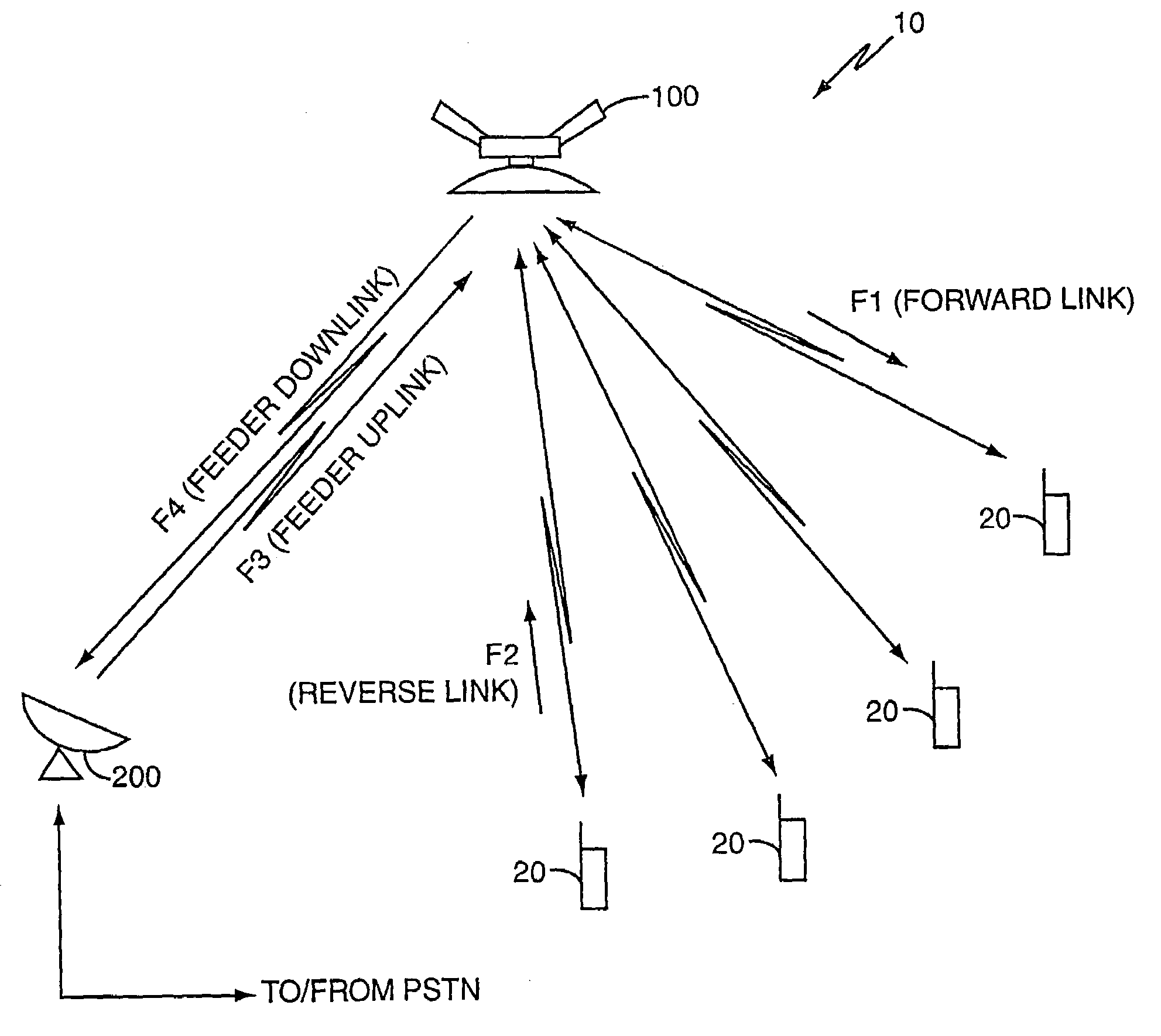
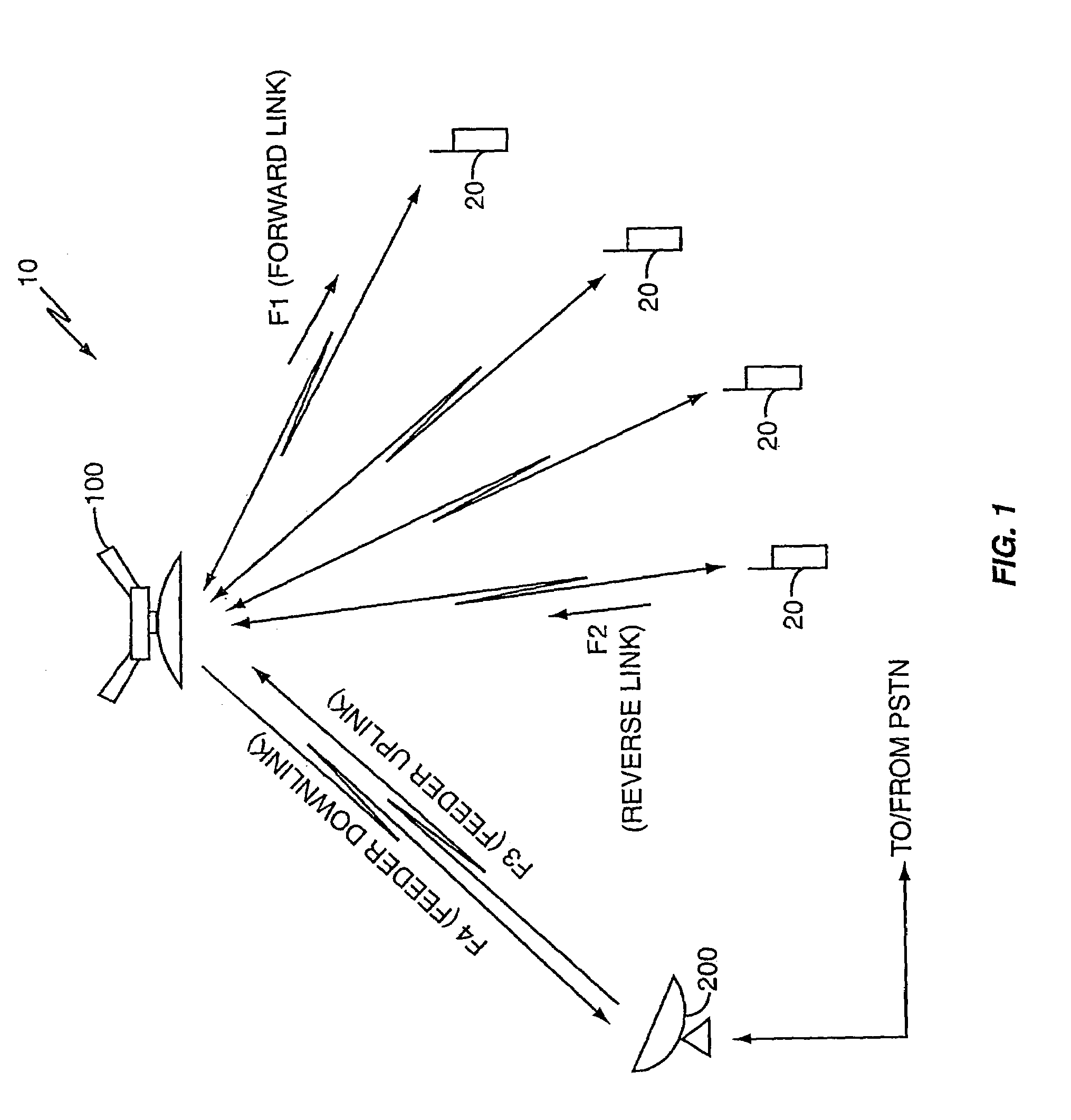
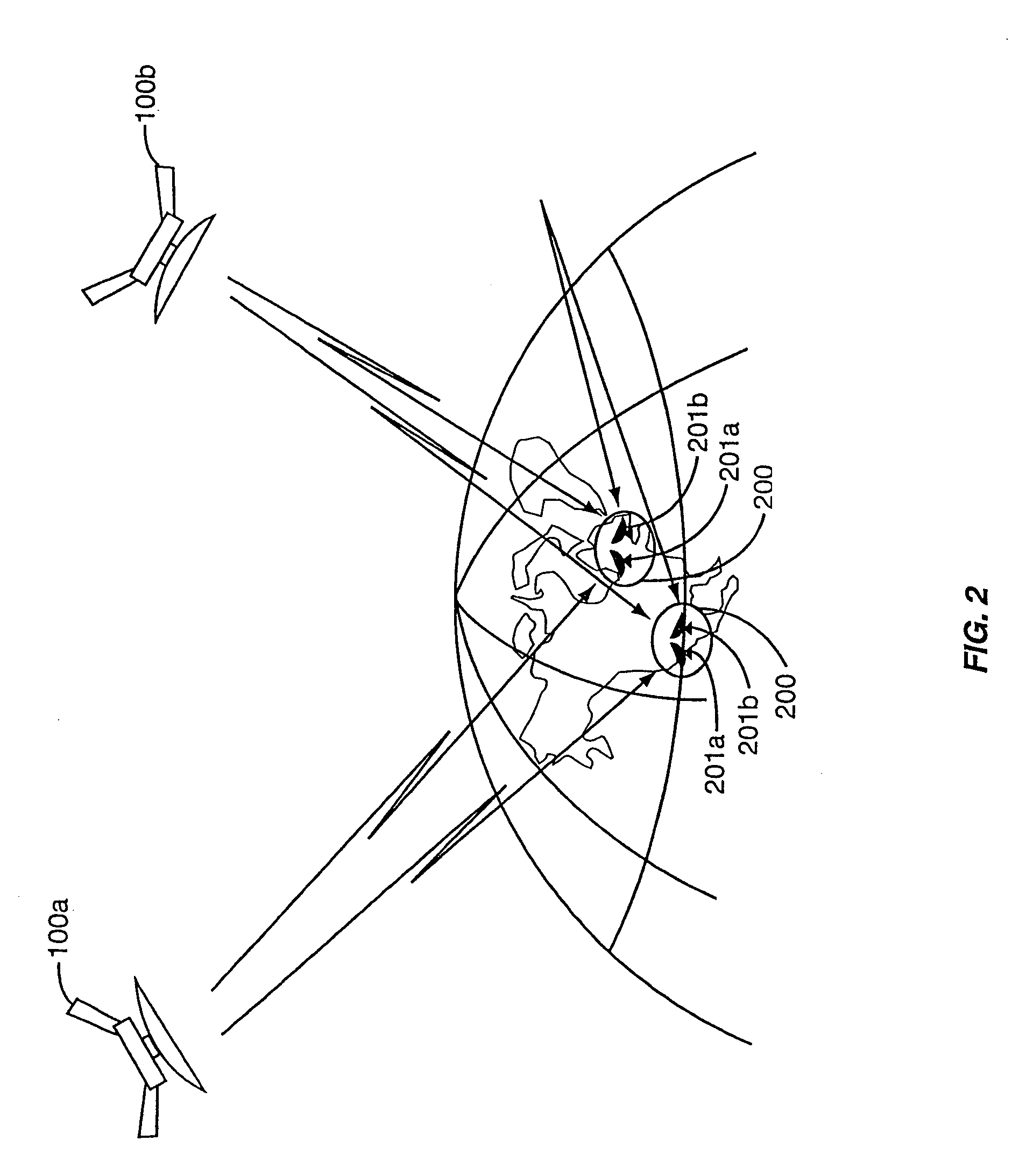
- A communications satellite system that enables multiple ground stations to cooperatively relay signals through satellites using digital beamforming techniques, allowing each station to control bandwidth and adjust beam directions to avoid interference, thereby increasing the number of supported users and improving spectral efficiency.

Spectrum Allocation and Regulatory Framework
Spectrum allocation for fixed satellite ground stations operates within a complex regulatory framework governed by international, national, and regional authorities. The International Telecommunication Union (ITU) serves as the primary global coordinator, establishing fundamental frequency bands and coordination procedures through its Radio Regulations. Key frequency bands allocated for fixed satellite services include C-band (3.7-4.2 GHz downlink, 5.925-6.425 GHz uplink), Ku-band (10.95-12.75 GHz downlink, 14.0-14.5 GHz uplink), and Ka-band (17.7-21.2 GHz downlink, 27.5-30.0 GHz uplink).
National regulatory bodies such as the Federal Communications Commission (FCC) in the United States, Ofcom in the United Kingdom, and similar agencies worldwide implement ITU guidelines while addressing local spectrum management needs. These authorities issue operating licenses, establish technical standards, and enforce compliance requirements specific to their jurisdictions. The licensing process typically involves detailed technical submissions demonstrating interference mitigation capabilities and coordination with existing services.
Regional coordination becomes critical when ground stations operate near international borders or serve multiple countries. Organizations like the European Conference of Postal and Telecommunications Administrations (CEPT) facilitate harmonized spectrum usage across member states. Cross-border coordination procedures ensure that ground station operations do not cause harmful interference to neighboring countries' satellite and terrestrial services.
Emerging regulatory challenges include spectrum sharing initiatives driven by increasing demand for wireless broadband services. The reallocation of C-band spectrum for 5G services in various regions has forced satellite operators to implement band clearing and interference mitigation strategies. Additionally, regulatory frameworks are evolving to accommodate new satellite constellations and dynamic spectrum access technologies.
Compliance requirements encompass technical parameters such as antenna radiation patterns, spurious emission limits, and coordination distances. Ground station operators must demonstrate adherence to these specifications through detailed engineering analyses and, in some cases, field measurements. Regular reporting obligations and periodic license renewals ensure ongoing compliance with evolving regulatory standards.
National regulatory bodies such as the Federal Communications Commission (FCC) in the United States, Ofcom in the United Kingdom, and similar agencies worldwide implement ITU guidelines while addressing local spectrum management needs. These authorities issue operating licenses, establish technical standards, and enforce compliance requirements specific to their jurisdictions. The licensing process typically involves detailed technical submissions demonstrating interference mitigation capabilities and coordination with existing services.
Regional coordination becomes critical when ground stations operate near international borders or serve multiple countries. Organizations like the European Conference of Postal and Telecommunications Administrations (CEPT) facilitate harmonized spectrum usage across member states. Cross-border coordination procedures ensure that ground station operations do not cause harmful interference to neighboring countries' satellite and terrestrial services.
Emerging regulatory challenges include spectrum sharing initiatives driven by increasing demand for wireless broadband services. The reallocation of C-band spectrum for 5G services in various regions has forced satellite operators to implement band clearing and interference mitigation strategies. Additionally, regulatory frameworks are evolving to accommodate new satellite constellations and dynamic spectrum access technologies.
Compliance requirements encompass technical parameters such as antenna radiation patterns, spurious emission limits, and coordination distances. Ground station operators must demonstrate adherence to these specifications through detailed engineering analyses and, in some cases, field measurements. Regular reporting obligations and periodic license renewals ensure ongoing compliance with evolving regulatory standards.
Environmental Impact and Sustainability Considerations
The environmental impact of ground station design for fixed satellite communications has become increasingly critical as the industry expands globally. Traditional ground stations consume substantial amounts of energy through high-power amplifiers, cooling systems, and continuous operational requirements. Modern optimization approaches must prioritize energy efficiency through advanced power management systems, renewable energy integration, and intelligent load balancing mechanisms.
Electromagnetic interference represents a significant environmental concern that requires careful consideration during ground station deployment. Radio frequency emissions can disrupt local wildlife communication patterns, particularly affecting migratory birds and marine mammals that rely on electromagnetic navigation. Optimized designs incorporate advanced shielding technologies and directional antenna systems to minimize electromagnetic footprint while maintaining operational effectiveness.
Land use optimization plays a crucial role in sustainable ground station development. Strategic site selection can minimize habitat disruption by utilizing previously developed areas or integrating facilities with existing infrastructure. Compact antenna designs and multi-band capabilities reduce the physical footprint required for comprehensive satellite coverage, allowing for more efficient land utilization patterns.
Energy sustainability initiatives are driving innovation in ground station power systems. Solar panel integration, wind energy harvesting, and hybrid renewable systems are becoming standard components in optimized designs. Advanced battery storage technologies enable grid independence while reducing reliance on fossil fuel-based power generation, significantly lowering carbon emissions throughout operational lifecycles.
Waste heat recovery systems represent an emerging sustainability opportunity in ground station optimization. High-frequency amplifiers and processing equipment generate substantial thermal energy that can be captured and repurposed for facility heating or converted back to electrical power through thermoelectric generators. This approach improves overall system efficiency while reducing environmental thermal pollution.
Material selection and lifecycle management considerations are increasingly important in sustainable ground station design. Recyclable components, modular architectures, and standardized interfaces facilitate equipment upgrades without complete system replacement. This approach reduces electronic waste generation while enabling technological advancement through incremental improvements rather than wholesale infrastructure replacement.
Water conservation measures are essential in ground station cooling systems, particularly in arid regions where many facilities are located. Closed-loop cooling systems, air-based heat exchangers, and advanced thermal management reduce water consumption while maintaining optimal equipment operating temperatures for reliable satellite communication services.
Electromagnetic interference represents a significant environmental concern that requires careful consideration during ground station deployment. Radio frequency emissions can disrupt local wildlife communication patterns, particularly affecting migratory birds and marine mammals that rely on electromagnetic navigation. Optimized designs incorporate advanced shielding technologies and directional antenna systems to minimize electromagnetic footprint while maintaining operational effectiveness.
Land use optimization plays a crucial role in sustainable ground station development. Strategic site selection can minimize habitat disruption by utilizing previously developed areas or integrating facilities with existing infrastructure. Compact antenna designs and multi-band capabilities reduce the physical footprint required for comprehensive satellite coverage, allowing for more efficient land utilization patterns.
Energy sustainability initiatives are driving innovation in ground station power systems. Solar panel integration, wind energy harvesting, and hybrid renewable systems are becoming standard components in optimized designs. Advanced battery storage technologies enable grid independence while reducing reliance on fossil fuel-based power generation, significantly lowering carbon emissions throughout operational lifecycles.
Waste heat recovery systems represent an emerging sustainability opportunity in ground station optimization. High-frequency amplifiers and processing equipment generate substantial thermal energy that can be captured and repurposed for facility heating or converted back to electrical power through thermoelectric generators. This approach improves overall system efficiency while reducing environmental thermal pollution.
Material selection and lifecycle management considerations are increasingly important in sustainable ground station design. Recyclable components, modular architectures, and standardized interfaces facilitate equipment upgrades without complete system replacement. This approach reduces electronic waste generation while enabling technological advancement through incremental improvements rather than wholesale infrastructure replacement.
Water conservation measures are essential in ground station cooling systems, particularly in arid regions where many facilities are located. Closed-loop cooling systems, air-based heat exchangers, and advanced thermal management reduce water consumption while maintaining optimal equipment operating temperatures for reliable satellite communication services.
Unlock deeper insights with PatSnap Eureka Quick Research — get a full tech report to explore trends and direct your research. Try now!
Generate Your Research Report Instantly with AI Agent
Supercharge your innovation with PatSnap Eureka AI Agent Platform!