
Frequency-Locked Loop vs App Frequency Modulation: Noise Immunity
MAR 18, 20269 MIN READ
Generate Your Research Report Instantly with AI Agent
Patsnap Eureka helps you evaluate technical feasibility & market potential.
FLL vs AFM Background and Technical Objectives
Frequency-Locked Loop (FLL) and Amplitude Frequency Modulation (AFM) represent two distinct approaches to signal processing and frequency control in modern communication systems. Both technologies have evolved from fundamental principles of signal theory but serve different purposes in addressing noise immunity challenges. FLL emerged from the need for robust frequency tracking in environments with high phase noise, while AFM developed as a modulation technique that embeds information in amplitude variations of carrier frequencies.
The historical development of FLL technology traces back to the 1960s when traditional Phase-Locked Loops (PLLs) demonstrated limitations in high-noise environments. FLL was conceived as an alternative that tracks frequency rather than phase, offering superior performance when phase coherence is compromised. This approach proved particularly valuable in satellite communications and GPS applications where signal integrity faces constant challenges from atmospheric interference and multipath effects.
AFM technology evolved from classical amplitude modulation principles, incorporating frequency domain techniques to enhance signal robustness. Unlike conventional amplitude modulation, AFM utilizes sophisticated algorithms to distribute signal energy across frequency bands, creating inherent redundancy that improves noise resilience. This evolution was driven by increasing demands for reliable data transmission in industrial automation and wireless sensor networks.
The primary technical objective in comparing FLL versus AFM noise immunity centers on quantifying their respective performance under various interference conditions. FLL aims to maintain frequency lock stability even when phase information becomes unreliable, targeting applications requiring precise frequency references despite environmental disturbances. The technology focuses on minimizing frequency tracking errors while maintaining rapid acquisition times.
AFM's technical objectives emphasize maximizing signal-to-noise ratio through intelligent frequency domain processing. The approach seeks to optimize information recovery rates while maintaining acceptable bandwidth efficiency. Key performance metrics include bit error rates under additive white Gaussian noise conditions and resilience to narrowband interference sources.
Contemporary research objectives focus on hybrid implementations that combine FLL's frequency tracking capabilities with AFM's noise distribution advantages. These investigations aim to establish optimal parameter configurations for specific application scenarios, particularly in emerging Internet of Things deployments where power efficiency and noise immunity must be simultaneously optimized.
The historical development of FLL technology traces back to the 1960s when traditional Phase-Locked Loops (PLLs) demonstrated limitations in high-noise environments. FLL was conceived as an alternative that tracks frequency rather than phase, offering superior performance when phase coherence is compromised. This approach proved particularly valuable in satellite communications and GPS applications where signal integrity faces constant challenges from atmospheric interference and multipath effects.
AFM technology evolved from classical amplitude modulation principles, incorporating frequency domain techniques to enhance signal robustness. Unlike conventional amplitude modulation, AFM utilizes sophisticated algorithms to distribute signal energy across frequency bands, creating inherent redundancy that improves noise resilience. This evolution was driven by increasing demands for reliable data transmission in industrial automation and wireless sensor networks.
The primary technical objective in comparing FLL versus AFM noise immunity centers on quantifying their respective performance under various interference conditions. FLL aims to maintain frequency lock stability even when phase information becomes unreliable, targeting applications requiring precise frequency references despite environmental disturbances. The technology focuses on minimizing frequency tracking errors while maintaining rapid acquisition times.
AFM's technical objectives emphasize maximizing signal-to-noise ratio through intelligent frequency domain processing. The approach seeks to optimize information recovery rates while maintaining acceptable bandwidth efficiency. Key performance metrics include bit error rates under additive white Gaussian noise conditions and resilience to narrowband interference sources.
Contemporary research objectives focus on hybrid implementations that combine FLL's frequency tracking capabilities with AFM's noise distribution advantages. These investigations aim to establish optimal parameter configurations for specific application scenarios, particularly in emerging Internet of Things deployments where power efficiency and noise immunity must be simultaneously optimized.
Market Demand for Noise-Immune Frequency Control
The telecommunications industry faces unprecedented challenges in maintaining signal integrity across increasingly complex and congested frequency environments. Modern wireless communication systems, from 5G networks to satellite communications, require exceptional frequency stability and noise immunity to deliver reliable performance. The proliferation of connected devices and the expansion of IoT ecosystems have intensified the demand for robust frequency control solutions that can operate effectively in high-interference environments.
Aerospace and defense applications represent another critical market segment driving demand for noise-immune frequency control technologies. Military communication systems, radar applications, and navigation equipment must maintain precise frequency control under extreme conditions, including electronic warfare scenarios where intentional jamming and interference are prevalent. The reliability requirements in these applications often exceed commercial standards by several orders of magnitude, creating a premium market for advanced frequency control solutions.
The automotive sector's transition toward autonomous vehicles and advanced driver assistance systems has created substantial new demand for frequency control technologies with superior noise immunity. Vehicle-to-everything communication protocols, radar-based sensing systems, and GPS navigation require consistent frequency stability despite the harsh electromagnetic environment within modern vehicles. The integration of multiple wireless systems within confined spaces amplifies the need for frequency control solutions that can maintain performance amid significant cross-interference.
Industrial automation and smart manufacturing environments present growing opportunities for noise-immune frequency control applications. Factory floors with numerous motor drives, welding equipment, and wireless sensors create challenging electromagnetic environments where traditional frequency control methods may fail. The Industry 4.0 transformation demands reliable wireless communication networks that can operate consistently in these electrically noisy environments, driving adoption of advanced frequency control technologies.
Medical device manufacturers increasingly require frequency control solutions with exceptional noise immunity for critical healthcare applications. Implantable devices, wireless patient monitoring systems, and medical imaging equipment must maintain precise frequency control to ensure patient safety and regulatory compliance. The stringent reliability requirements and the presence of various electromagnetic interference sources in hospital environments create specific market demands for robust frequency control technologies.
The scientific instrumentation market continues to expand its requirements for ultra-stable frequency references with superior noise rejection capabilities. Research facilities, metrology laboratories, and precision measurement applications demand frequency control solutions that can maintain accuracy despite environmental variations and electromagnetic interference. This market segment often drives technological advancement due to its willingness to invest in cutting-edge solutions that push performance boundaries.
Aerospace and defense applications represent another critical market segment driving demand for noise-immune frequency control technologies. Military communication systems, radar applications, and navigation equipment must maintain precise frequency control under extreme conditions, including electronic warfare scenarios where intentional jamming and interference are prevalent. The reliability requirements in these applications often exceed commercial standards by several orders of magnitude, creating a premium market for advanced frequency control solutions.
The automotive sector's transition toward autonomous vehicles and advanced driver assistance systems has created substantial new demand for frequency control technologies with superior noise immunity. Vehicle-to-everything communication protocols, radar-based sensing systems, and GPS navigation require consistent frequency stability despite the harsh electromagnetic environment within modern vehicles. The integration of multiple wireless systems within confined spaces amplifies the need for frequency control solutions that can maintain performance amid significant cross-interference.
Industrial automation and smart manufacturing environments present growing opportunities for noise-immune frequency control applications. Factory floors with numerous motor drives, welding equipment, and wireless sensors create challenging electromagnetic environments where traditional frequency control methods may fail. The Industry 4.0 transformation demands reliable wireless communication networks that can operate consistently in these electrically noisy environments, driving adoption of advanced frequency control technologies.
Medical device manufacturers increasingly require frequency control solutions with exceptional noise immunity for critical healthcare applications. Implantable devices, wireless patient monitoring systems, and medical imaging equipment must maintain precise frequency control to ensure patient safety and regulatory compliance. The stringent reliability requirements and the presence of various electromagnetic interference sources in hospital environments create specific market demands for robust frequency control technologies.
The scientific instrumentation market continues to expand its requirements for ultra-stable frequency references with superior noise rejection capabilities. Research facilities, metrology laboratories, and precision measurement applications demand frequency control solutions that can maintain accuracy despite environmental variations and electromagnetic interference. This market segment often drives technological advancement due to its willingness to invest in cutting-edge solutions that push performance boundaries.
Current FLL and AFM Noise Immunity Limitations
Current Frequency-Locked Loop (FLL) implementations face significant noise immunity challenges that limit their effectiveness in demanding applications. Traditional FLL architectures exhibit vulnerability to phase noise, particularly at close-in offset frequencies where the loop bandwidth intersects with the reference oscillator's noise characteristics. The inherent trade-off between acquisition speed and noise filtering creates operational constraints, as wider loop bandwidths improve tracking performance but simultaneously allow more noise to penetrate the system.
The frequency discriminator stage in conventional FLL designs represents a critical bottleneck for noise performance. Most existing discriminators rely on delay-and-multiply or quadrature detection methods that amplify noise components, especially when operating with low signal-to-noise ratios. These architectures struggle to maintain stable operation in environments with rapid frequency variations or when subjected to interference from adjacent channels.
Adaptive Frequency Modulation (AFM) systems encounter distinct noise immunity limitations stemming from their reliance on amplitude-based detection mechanisms. The demodulation process inherently suffers from sensitivity to amplitude noise and interference, which can cause significant degradation in signal quality. Current AFM implementations lack robust mechanisms to distinguish between intentional frequency variations and noise-induced fluctuations, leading to tracking errors and reduced system reliability.
Both FLL and AFM technologies face common challenges related to dynamic range limitations and nonlinear distortion effects. Existing solutions often employ fixed-parameter designs that cannot adapt to varying noise environments, resulting in suboptimal performance across different operating conditions. The lack of intelligent noise characterization and mitigation strategies further compounds these limitations.
Temperature-induced frequency drift presents another significant challenge for both technologies. Current compensation methods rely on lookup tables or simple polynomial corrections that fail to account for complex thermal dynamics and aging effects. This limitation becomes particularly pronounced in applications requiring long-term frequency stability and precision.
The integration of multiple noise sources, including thermal noise, flicker noise, and external interference, creates complex noise profiles that exceed the mitigation capabilities of existing FLL and AFM architectures. Current filtering approaches often introduce unwanted delays or bandwidth restrictions that compromise overall system performance, highlighting the need for more sophisticated noise immunity solutions.
The frequency discriminator stage in conventional FLL designs represents a critical bottleneck for noise performance. Most existing discriminators rely on delay-and-multiply or quadrature detection methods that amplify noise components, especially when operating with low signal-to-noise ratios. These architectures struggle to maintain stable operation in environments with rapid frequency variations or when subjected to interference from adjacent channels.
Adaptive Frequency Modulation (AFM) systems encounter distinct noise immunity limitations stemming from their reliance on amplitude-based detection mechanisms. The demodulation process inherently suffers from sensitivity to amplitude noise and interference, which can cause significant degradation in signal quality. Current AFM implementations lack robust mechanisms to distinguish between intentional frequency variations and noise-induced fluctuations, leading to tracking errors and reduced system reliability.
Both FLL and AFM technologies face common challenges related to dynamic range limitations and nonlinear distortion effects. Existing solutions often employ fixed-parameter designs that cannot adapt to varying noise environments, resulting in suboptimal performance across different operating conditions. The lack of intelligent noise characterization and mitigation strategies further compounds these limitations.
Temperature-induced frequency drift presents another significant challenge for both technologies. Current compensation methods rely on lookup tables or simple polynomial corrections that fail to account for complex thermal dynamics and aging effects. This limitation becomes particularly pronounced in applications requiring long-term frequency stability and precision.
The integration of multiple noise sources, including thermal noise, flicker noise, and external interference, creates complex noise profiles that exceed the mitigation capabilities of existing FLL and AFM architectures. Current filtering approaches often introduce unwanted delays or bandwidth restrictions that compromise overall system performance, highlighting the need for more sophisticated noise immunity solutions.
Existing Noise Immunity Solutions in FLL and AFM
01 Frequency-locked loop circuit architecture and design
Frequency-locked loops (FLL) provide an alternative to phase-locked loops for frequency synthesis and tracking applications. These circuits utilize frequency detection rather than phase detection to lock onto a reference signal. The architecture typically includes a frequency discriminator, loop filter, and voltage-controlled oscillator. This approach can offer advantages in terms of acquisition time and stability under certain operating conditions, particularly when dealing with frequency modulated signals.- Frequency-locked loop architecture with phase detection: Frequency-locked loop systems utilize phase detection mechanisms to maintain frequency lock and improve noise immunity. These systems employ phase detectors that compare input and output signals to generate error signals for frequency correction. The architecture includes feedback loops that continuously adjust the oscillator frequency to match the reference signal, thereby reducing the impact of frequency modulation noise and maintaining stable operation even in noisy environments.
- Digital frequency-locked loop implementation: Digital implementations of frequency-locked loops provide enhanced noise immunity through digital signal processing techniques. These systems convert analog signals to digital form and use digital filters and algorithms to track frequency variations. The digital approach allows for programmable loop parameters and adaptive filtering, which can be optimized to reject specific types of frequency modulation noise while maintaining accurate frequency lock.
- Noise filtering and bandwidth optimization: Advanced filtering techniques and bandwidth optimization methods are employed to improve frequency-locked loop performance in the presence of frequency modulation noise. These approaches include adaptive bandwidth control that adjusts loop parameters based on signal conditions, multi-stage filtering to remove different noise components, and dynamic response optimization to balance between tracking speed and noise rejection capabilities.
- Frequency synthesis with noise suppression: Frequency synthesis techniques integrated with noise suppression mechanisms enhance the immunity of frequency-locked loops to modulation noise. These systems incorporate fractional-N synthesis, delta-sigma modulation, and advanced divider architectures to achieve fine frequency resolution while minimizing noise propagation. The designs include compensation circuits and calibration methods that actively reduce the effects of frequency modulation noise on the synthesized output.
- Adaptive frequency tracking and lock detection: Adaptive frequency tracking systems with robust lock detection improve the reliability of frequency-locked loops under varying noise conditions. These implementations feature intelligent acquisition algorithms that quickly establish initial lock, continuous monitoring circuits that detect loss of lock conditions, and automatic recovery mechanisms that restore proper operation. The systems employ multiple detection thresholds and statistical analysis to distinguish between actual frequency changes and noise-induced variations.
02 Noise immunity enhancement through filtering techniques
Various filtering methods are employed to improve noise immunity in frequency-locked systems. These techniques include adaptive filtering, bandwidth optimization, and multi-stage filtering approaches. The filtering mechanisms help reject unwanted noise components while maintaining lock on the desired signal. Advanced filter designs can dynamically adjust their characteristics based on operating conditions to optimize performance across different noise environments.Expand Specific Solutions03 Frequency modulation noise suppression methods
Specialized techniques are implemented to suppress noise in frequency modulated signals within locked loop systems. These methods involve signal processing algorithms that can distinguish between intentional frequency modulation and noise-induced variations. Techniques include noise prediction, correlation-based detection, and adaptive threshold adjustment. The implementation of these methods significantly improves the signal-to-noise ratio and maintains stable operation under varying modulation conditions.Expand Specific Solutions04 Digital frequency-locked loop implementation
Digital implementations of frequency-locked loops offer enhanced flexibility and programmability compared to analog counterparts. These systems utilize digital signal processing techniques, including numerical controlled oscillators and digital frequency discriminators. The digital approach enables precise control over loop parameters, facilitates integration with other digital systems, and allows for sophisticated noise rejection algorithms. Digital implementations can also incorporate error correction and adaptive mechanisms to improve overall performance.Expand Specific Solutions05 Multi-loop and hybrid frequency locking systems
Advanced frequency locking architectures employ multiple loops or hybrid configurations to achieve superior noise immunity and tracking performance. These systems may combine frequency-locked and phase-locked techniques, or utilize parallel processing paths with different characteristics. The multi-loop approach allows for optimization of different performance parameters simultaneously, such as acquisition speed, tracking accuracy, and noise rejection. Hybrid systems can adaptively switch between different operating modes based on signal conditions.Expand Specific Solutions
Key Players in Frequency Control IC Industry
The frequency-locked loop versus application frequency modulation noise immunity technology represents a mature segment within the broader RF and communication systems market, currently valued at approximately $25 billion globally. The industry has reached a consolidation phase, with established semiconductor giants like Qualcomm, Intel, Texas Instruments, and Infineon Technologies dominating through comprehensive portfolios spanning mobile communications to automotive applications. Technology maturity varies significantly across players - while companies like Skyworks Solutions and MediaTek demonstrate advanced implementation in consumer electronics, emerging players such as SMIC-Beijing and Shanghai Belling are rapidly developing competitive capabilities in specialized applications. The competitive landscape shows clear technological leadership from US and European firms in high-performance applications, while Asian manufacturers like Renesas Electronics and Huawei Technologies are gaining ground through cost-effective solutions and integration expertise, particularly in IoT and automotive sectors.
QUALCOMM, Inc.
Technical Solution: Qualcomm implements advanced frequency-locked loop (FLL) architectures in their RF transceivers and baseband processors for mobile communications. Their FLL designs incorporate adaptive bandwidth control and multi-loop configurations to enhance noise immunity against phase noise and frequency drift. The company's FLL technology features fast acquisition times typically under 100μs and maintains frequency accuracy within ±10ppm across temperature variations. Their solutions integrate digital signal processing algorithms that dynamically adjust loop parameters based on signal quality metrics, providing superior performance in challenging RF environments with high interference levels.
Strengths: Industry-leading mobile RF expertise, extensive patent portfolio in frequency synthesis, proven track record in high-volume production. Weaknesses: Solutions primarily optimized for mobile applications, potentially higher cost for specialized industrial applications.
Intel Corp.
Technical Solution: Intel develops frequency-locked loop solutions primarily for high-speed digital interfaces and processor clock generation systems. Their FLL implementations focus on jitter reduction and phase noise suppression in multi-gigahertz applications. Intel's approach combines analog FLL circuits with digital calibration techniques, achieving phase noise performance below -120dBc/Hz at 1MHz offset for critical timing applications. The company's FLL designs incorporate temperature compensation and process variation correction mechanisms, ensuring stable operation across different manufacturing lots and environmental conditions. Their solutions are particularly optimized for data center and computing applications where timing accuracy is critical.
Strengths: Strong digital signal processing capabilities, extensive experience in high-frequency design, robust manufacturing processes. Weaknesses: Limited focus on RF communication applications, solutions may be over-engineered for simpler applications.
Core Patents in Frequency Lock and Modulation
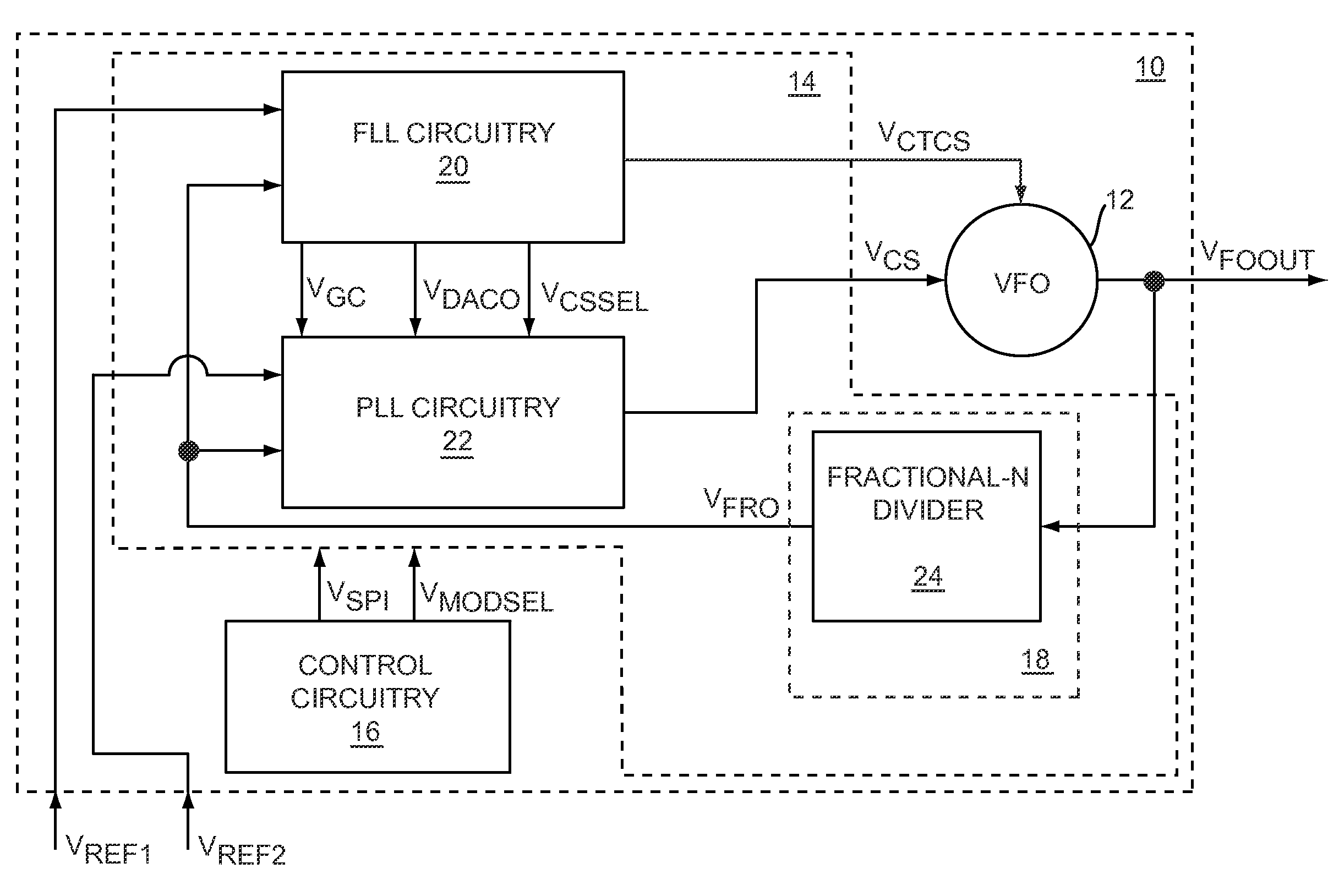
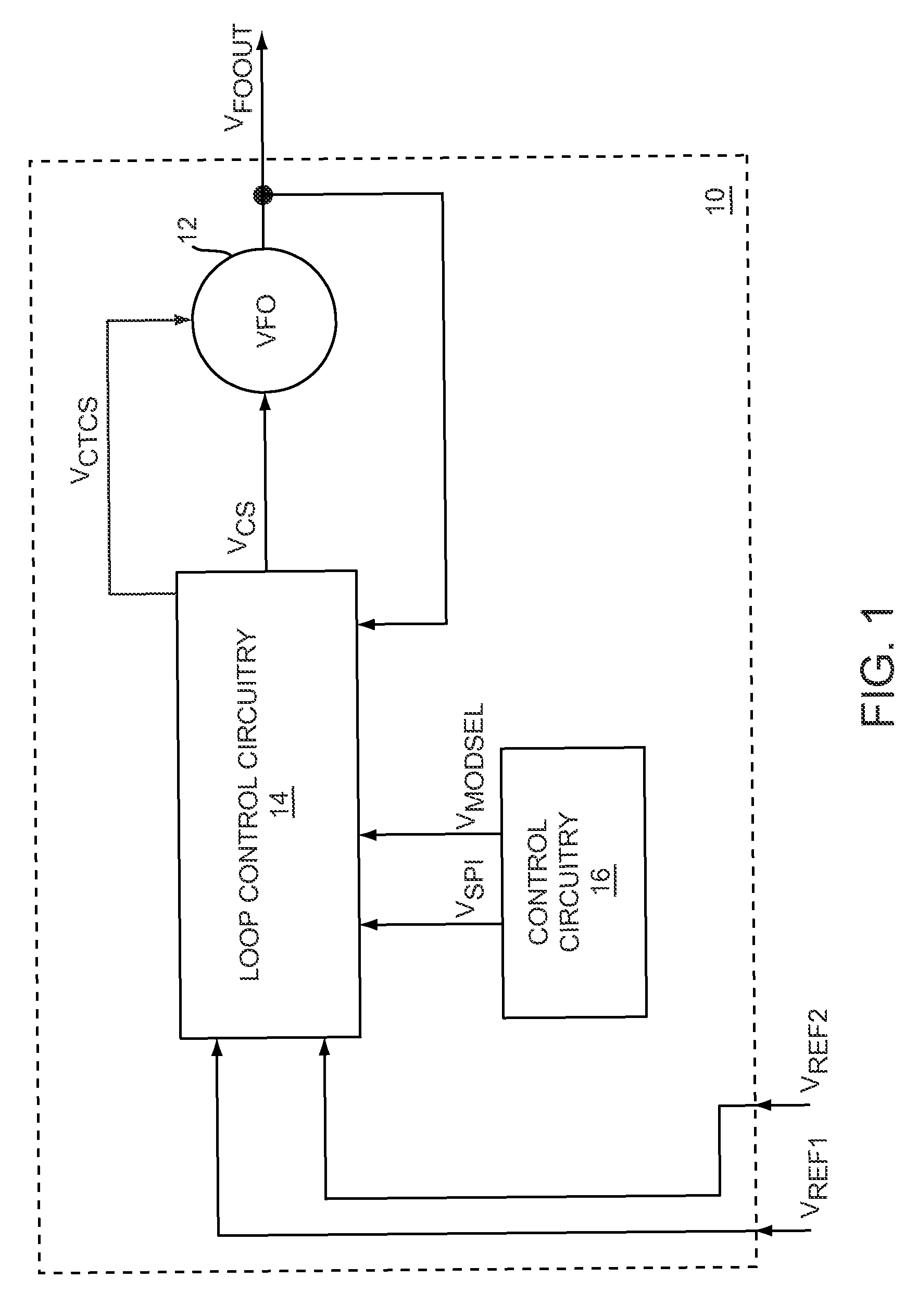
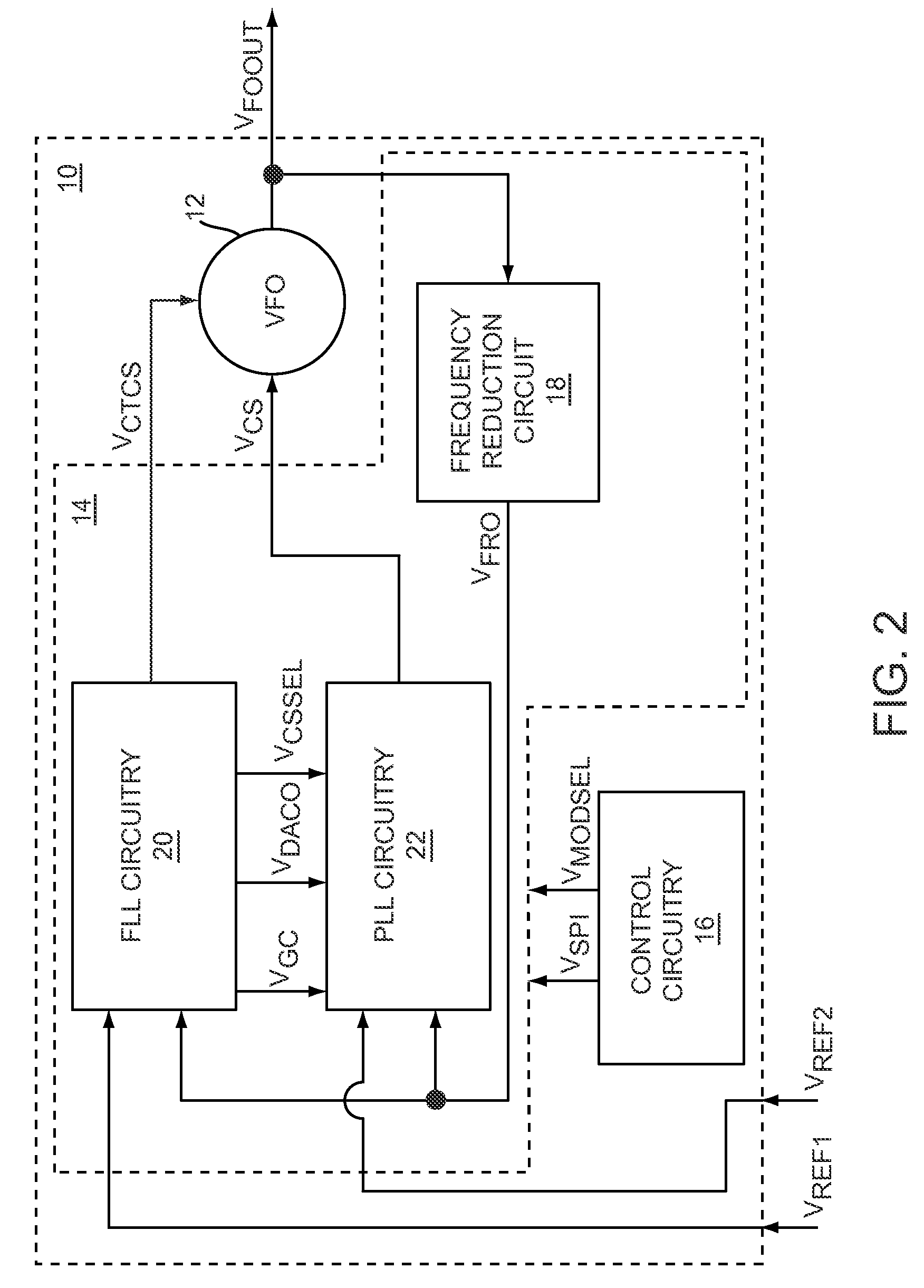
Frequency-locked loop calibration of a phase-locked loop gain
PatentInactiveUS7898343B1
Innovation
- A calibrated phase-locked loop (PLL) system with a calibration mode for measuring tuning gain and a PLL mode for normal operation, using frequency-locked loop (FLL) circuit elements for coarse tuning and PLL for high frequency accuracy, reducing phase lock times by regulating loop gain and pre-charging the PLL loop filter.

Method for noise reduction in a phase locked loop and a device having noise reduction capabilities
PatentInactiveUS7880516B2
Innovation
- The implementation of an adjustable delay unit and an adjustable trickle current source within the PLL, allowing for time shifting of modulation noise outside the detection period, and optimizing the trickle current in response to both linearity and other noise sources, to minimize noise overlap and improve phase detection accuracy.


EMC Standards for Frequency Control Systems
Electromagnetic compatibility standards for frequency control systems establish critical frameworks that directly impact the noise immunity performance of both frequency-locked loops and amplitude frequency modulation implementations. The International Electrotechnical Commission IEC 61000 series provides comprehensive guidelines for electromagnetic compatibility, with specific emphasis on conducted and radiated emissions that affect frequency stability in control applications.
The Federal Communications Commission Part 15 regulations define stringent limits for unintentional radiators in frequency control systems, particularly relevant when comparing FLL and AFM approaches. These standards mandate specific measurement procedures using calibrated test equipment to assess electromagnetic interference susceptibility. The CISPR 25 automotive EMC standard extends these requirements to vehicular applications where frequency control systems must maintain performance under severe electromagnetic stress conditions.
European EN 55011 and EN 55022 standards establish emission limits that frequency control designers must consider when selecting between FLL and AFM architectures. These regulations specify conducted emission measurements from 150 kHz to 30 MHz and radiated emissions from 30 MHz to 1 GHz, directly impacting the design choices for noise immunity enhancement strategies.
Military and aerospace applications follow MIL-STD-461 requirements, which impose more rigorous electromagnetic compatibility criteria. These standards define specific test methods including CS114 bulk cable injection and RS103 radiated susceptibility tests that evaluate frequency control system performance under extreme electromagnetic environments.
The ISO 11452 series addresses road vehicle electromagnetic compatibility, establishing test procedures for frequency control systems in automotive applications. These standards require demonstration of continued operation during electromagnetic field exposure, making noise immunity a critical design parameter for both FLL and AFM implementations.
Recent updates to IEC 62236 railway EMC standards have introduced new requirements for frequency control systems in rail transportation, emphasizing the importance of maintaining signal integrity in electromagnetically harsh environments where traditional frequency modulation approaches may face significant challenges.
The Federal Communications Commission Part 15 regulations define stringent limits for unintentional radiators in frequency control systems, particularly relevant when comparing FLL and AFM approaches. These standards mandate specific measurement procedures using calibrated test equipment to assess electromagnetic interference susceptibility. The CISPR 25 automotive EMC standard extends these requirements to vehicular applications where frequency control systems must maintain performance under severe electromagnetic stress conditions.
European EN 55011 and EN 55022 standards establish emission limits that frequency control designers must consider when selecting between FLL and AFM architectures. These regulations specify conducted emission measurements from 150 kHz to 30 MHz and radiated emissions from 30 MHz to 1 GHz, directly impacting the design choices for noise immunity enhancement strategies.
Military and aerospace applications follow MIL-STD-461 requirements, which impose more rigorous electromagnetic compatibility criteria. These standards define specific test methods including CS114 bulk cable injection and RS103 radiated susceptibility tests that evaluate frequency control system performance under extreme electromagnetic environments.
The ISO 11452 series addresses road vehicle electromagnetic compatibility, establishing test procedures for frequency control systems in automotive applications. These standards require demonstration of continued operation during electromagnetic field exposure, making noise immunity a critical design parameter for both FLL and AFM implementations.
Recent updates to IEC 62236 railway EMC standards have introduced new requirements for frequency control systems in rail transportation, emphasizing the importance of maintaining signal integrity in electromagnetically harsh environments where traditional frequency modulation approaches may face significant challenges.
Performance Benchmarking Methodologies
Establishing robust performance benchmarking methodologies for comparing Frequency-Locked Loop (FLL) and Application Frequency Modulation (AFM) systems requires a comprehensive framework that addresses noise immunity characteristics across multiple operational scenarios. The benchmarking approach must incorporate standardized test environments, quantifiable metrics, and reproducible measurement protocols to ensure meaningful comparisons between these two distinct frequency control architectures.
The primary benchmarking framework centers on Signal-to-Noise Ratio (SNR) measurements under controlled interference conditions. Test protocols should evaluate both systems across frequency ranges from 1 MHz to 10 GHz, with noise injection at predetermined power levels ranging from -120 dBm to -60 dBm. Phase noise measurements at offset frequencies of 1 Hz, 10 Hz, 100 Hz, 1 kHz, and 10 kHz provide critical baseline data for comparative analysis.
Environmental stress testing forms a crucial component of the benchmarking methodology. Temperature cycling between -40°C and +85°C, combined with humidity variations from 10% to 95% relative humidity, reveals system stability characteristics under real-world conditions. Vibration testing at frequencies from 10 Hz to 2000 Hz with acceleration levels up to 20g ensures comprehensive environmental validation.
Dynamic response benchmarking evaluates lock acquisition time, frequency settling accuracy, and transient recovery performance. Standardized step response tests with frequency deviations of ±100 ppm, ±1000 ppm, and ±10000 ppm quantify system agility and stability margins. Loop bandwidth measurements across the operational frequency range provide insights into noise filtering capabilities and tracking performance.
Statistical analysis methodologies incorporate Monte Carlo simulations with minimum 10,000 iteration cycles to establish confidence intervals and performance distributions. Bit Error Rate (BER) testing under various noise conditions, including Additive White Gaussian Noise (AWGN), phase noise, and amplitude noise scenarios, provides practical performance indicators for communication system applications.
The primary benchmarking framework centers on Signal-to-Noise Ratio (SNR) measurements under controlled interference conditions. Test protocols should evaluate both systems across frequency ranges from 1 MHz to 10 GHz, with noise injection at predetermined power levels ranging from -120 dBm to -60 dBm. Phase noise measurements at offset frequencies of 1 Hz, 10 Hz, 100 Hz, 1 kHz, and 10 kHz provide critical baseline data for comparative analysis.
Environmental stress testing forms a crucial component of the benchmarking methodology. Temperature cycling between -40°C and +85°C, combined with humidity variations from 10% to 95% relative humidity, reveals system stability characteristics under real-world conditions. Vibration testing at frequencies from 10 Hz to 2000 Hz with acceleration levels up to 20g ensures comprehensive environmental validation.
Dynamic response benchmarking evaluates lock acquisition time, frequency settling accuracy, and transient recovery performance. Standardized step response tests with frequency deviations of ±100 ppm, ±1000 ppm, and ±10000 ppm quantify system agility and stability margins. Loop bandwidth measurements across the operational frequency range provide insights into noise filtering capabilities and tracking performance.
Statistical analysis methodologies incorporate Monte Carlo simulations with minimum 10,000 iteration cycles to establish confidence intervals and performance distributions. Bit Error Rate (BER) testing under various noise conditions, including Additive White Gaussian Noise (AWGN), phase noise, and amplitude noise scenarios, provides practical performance indicators for communication system applications.
Unlock deeper insights with Patsnap Eureka Quick Research — get a full tech report to explore trends and direct your research. Try now!
Generate Your Research Report Instantly with AI Agent
Supercharge your innovation with Patsnap Eureka AI Agent Platform!