How to Achieve Rapid Deployment with Adaptive Network Control
MAR 18, 20269 MIN READ
Generate Your Research Report Instantly with AI Agent
PatSnap Eureka helps you evaluate technical feasibility & market potential.
Adaptive Network Control Background and Rapid Deployment Goals
Adaptive network control represents a paradigm shift in network management, emerging from the limitations of traditional static networking approaches. This technology domain has evolved from early software-defined networking (SDN) concepts in the 2000s to sophisticated machine learning-driven systems capable of real-time network optimization. The fundamental principle involves networks that can automatically adjust their behavior, routing policies, and resource allocation based on changing conditions, traffic patterns, and performance requirements.
The evolution of adaptive network control has been driven by the exponential growth in network complexity and the demand for zero-downtime services. Traditional networks relied heavily on manual configuration and predetermined policies, which proved inadequate for modern distributed systems and cloud environments. The integration of artificial intelligence and machine learning algorithms has enabled networks to learn from historical data, predict future patterns, and make autonomous decisions without human intervention.
Current adaptive network control systems encompass multiple technological layers, including intelligent routing protocols, dynamic bandwidth allocation, automated failover mechanisms, and predictive maintenance capabilities. These systems leverage real-time telemetry data, network analytics, and closed-loop control mechanisms to maintain optimal performance while adapting to changing operational conditions.
The primary goal of achieving rapid deployment with adaptive network control centers on minimizing the time-to-service for new network services and infrastructure components. This objective encompasses several critical dimensions: reducing initial configuration complexity, enabling zero-touch provisioning, and ensuring seamless integration with existing network infrastructure. Rapid deployment aims to transform network rollout from a weeks-long process to minutes or hours.
Another fundamental goal involves achieving autonomous network healing and optimization capabilities. This means networks should automatically detect, diagnose, and resolve performance issues without manual intervention, while continuously optimizing resource utilization and service quality. The target is to create self-managing networks that can adapt to new requirements and scale dynamically based on demand patterns.
The strategic objective also includes establishing vendor-agnostic deployment frameworks that can work across heterogeneous network environments. This goal addresses the challenge of network fragmentation and enables organizations to leverage best-of-breed solutions while maintaining operational consistency and reducing deployment complexity across diverse technological ecosystems.
The evolution of adaptive network control has been driven by the exponential growth in network complexity and the demand for zero-downtime services. Traditional networks relied heavily on manual configuration and predetermined policies, which proved inadequate for modern distributed systems and cloud environments. The integration of artificial intelligence and machine learning algorithms has enabled networks to learn from historical data, predict future patterns, and make autonomous decisions without human intervention.
Current adaptive network control systems encompass multiple technological layers, including intelligent routing protocols, dynamic bandwidth allocation, automated failover mechanisms, and predictive maintenance capabilities. These systems leverage real-time telemetry data, network analytics, and closed-loop control mechanisms to maintain optimal performance while adapting to changing operational conditions.
The primary goal of achieving rapid deployment with adaptive network control centers on minimizing the time-to-service for new network services and infrastructure components. This objective encompasses several critical dimensions: reducing initial configuration complexity, enabling zero-touch provisioning, and ensuring seamless integration with existing network infrastructure. Rapid deployment aims to transform network rollout from a weeks-long process to minutes or hours.
Another fundamental goal involves achieving autonomous network healing and optimization capabilities. This means networks should automatically detect, diagnose, and resolve performance issues without manual intervention, while continuously optimizing resource utilization and service quality. The target is to create self-managing networks that can adapt to new requirements and scale dynamically based on demand patterns.
The strategic objective also includes establishing vendor-agnostic deployment frameworks that can work across heterogeneous network environments. This goal addresses the challenge of network fragmentation and enables organizations to leverage best-of-breed solutions while maintaining operational consistency and reducing deployment complexity across diverse technological ecosystems.
Market Demand for Rapid Network Deployment Solutions
The global telecommunications infrastructure market is experiencing unprecedented demand for rapid network deployment solutions, driven by the exponential growth of digital services and connectivity requirements. Organizations across industries are seeking agile network deployment capabilities to support remote work initiatives, edge computing applications, and IoT device proliferation. This surge in demand reflects the critical need for networks that can be established quickly while maintaining adaptive control mechanisms to ensure optimal performance.
Enterprise customers represent a significant portion of this market demand, particularly those operating in dynamic environments such as construction sites, temporary facilities, disaster recovery scenarios, and pop-up retail locations. These organizations require network solutions that can be deployed within hours rather than weeks, while providing the flexibility to adapt to changing operational requirements. The traditional approach of lengthy network planning and installation cycles no longer meets the pace of modern business operations.
Telecommunications service providers are also driving substantial demand for rapid deployment solutions as they compete to expand coverage areas and improve service quality. The pressure to quickly establish network presence in underserved regions, support special events, or respond to emergency situations has created a robust market for adaptive network control technologies. These providers seek solutions that can automatically optimize network parameters based on real-time conditions and user demands.
The military and defense sector presents another critical market segment, where rapid network deployment capabilities are essential for tactical operations and mission-critical communications. Defense organizations require networks that can be established in challenging environments while maintaining security protocols and adapting to dynamic operational conditions. The ability to quickly reconfigure network topologies and control parameters based on mission requirements drives significant investment in this technology area.
Smart city initiatives and public safety applications further amplify market demand, as municipalities seek to deploy temporary or permanent network infrastructure for events, emergency response, and urban development projects. These applications require solutions that can integrate with existing infrastructure while providing autonomous adaptation capabilities to handle varying traffic patterns and service requirements.
The convergence of 5G technology deployment, edge computing adoption, and increasing bandwidth demands has created a substantial market opportunity for rapid deployment solutions with adaptive network control. Market analysts indicate strong growth potential across multiple vertical segments, with particular emphasis on solutions that combine deployment speed with intelligent network optimization capabilities.
Enterprise customers represent a significant portion of this market demand, particularly those operating in dynamic environments such as construction sites, temporary facilities, disaster recovery scenarios, and pop-up retail locations. These organizations require network solutions that can be deployed within hours rather than weeks, while providing the flexibility to adapt to changing operational requirements. The traditional approach of lengthy network planning and installation cycles no longer meets the pace of modern business operations.
Telecommunications service providers are also driving substantial demand for rapid deployment solutions as they compete to expand coverage areas and improve service quality. The pressure to quickly establish network presence in underserved regions, support special events, or respond to emergency situations has created a robust market for adaptive network control technologies. These providers seek solutions that can automatically optimize network parameters based on real-time conditions and user demands.
The military and defense sector presents another critical market segment, where rapid network deployment capabilities are essential for tactical operations and mission-critical communications. Defense organizations require networks that can be established in challenging environments while maintaining security protocols and adapting to dynamic operational conditions. The ability to quickly reconfigure network topologies and control parameters based on mission requirements drives significant investment in this technology area.
Smart city initiatives and public safety applications further amplify market demand, as municipalities seek to deploy temporary or permanent network infrastructure for events, emergency response, and urban development projects. These applications require solutions that can integrate with existing infrastructure while providing autonomous adaptation capabilities to handle varying traffic patterns and service requirements.
The convergence of 5G technology deployment, edge computing adoption, and increasing bandwidth demands has created a substantial market opportunity for rapid deployment solutions with adaptive network control. Market analysts indicate strong growth potential across multiple vertical segments, with particular emphasis on solutions that combine deployment speed with intelligent network optimization capabilities.
Current State and Challenges of Adaptive Network Control
Adaptive network control has emerged as a critical technology for modern network infrastructure, yet its current implementation faces significant technical and operational barriers. The technology landscape is characterized by fragmented solutions that often lack the sophistication required for truly dynamic network adaptation. Most existing systems rely on reactive approaches rather than proactive intelligence, limiting their effectiveness in rapidly changing network conditions.
The geographical distribution of adaptive network control capabilities reveals stark disparities between developed and emerging markets. North American and European enterprises have achieved moderate deployment success rates of approximately 60-70%, while Asia-Pacific regions show more varied implementation outcomes. This uneven distribution stems from differences in infrastructure maturity, regulatory frameworks, and technical expertise availability.
Current technical challenges center around three primary constraints: latency in decision-making processes, insufficient real-time data processing capabilities, and limited integration with legacy network components. Traditional network control systems typically require 5-15 seconds to implement configuration changes, which proves inadequate for applications demanding sub-second response times. The complexity increases exponentially when managing heterogeneous network environments spanning cloud, edge, and on-premises infrastructure.
Interoperability remains a fundamental obstacle, as most adaptive control solutions operate within vendor-specific ecosystems. This fragmentation prevents seamless integration across multi-vendor environments, forcing organizations to maintain multiple management platforms. The lack of standardized APIs and communication protocols further complicates deployment efforts, often requiring extensive custom development work.
Scalability limitations present another significant challenge, particularly for large-scale enterprise deployments. Current solutions struggle to maintain performance consistency when managing networks exceeding 10,000 nodes simultaneously. The computational overhead associated with real-time network analysis and decision-making creates bottlenecks that compromise system responsiveness.
Security concerns compound these technical challenges, as adaptive systems require extensive network visibility and control privileges. The expanded attack surface created by intelligent network controllers introduces new vulnerability vectors that traditional security frameworks struggle to address effectively. Organizations must balance automation benefits against potential security risks, often resulting in conservative deployment approaches that limit adaptive capabilities.
The geographical distribution of adaptive network control capabilities reveals stark disparities between developed and emerging markets. North American and European enterprises have achieved moderate deployment success rates of approximately 60-70%, while Asia-Pacific regions show more varied implementation outcomes. This uneven distribution stems from differences in infrastructure maturity, regulatory frameworks, and technical expertise availability.
Current technical challenges center around three primary constraints: latency in decision-making processes, insufficient real-time data processing capabilities, and limited integration with legacy network components. Traditional network control systems typically require 5-15 seconds to implement configuration changes, which proves inadequate for applications demanding sub-second response times. The complexity increases exponentially when managing heterogeneous network environments spanning cloud, edge, and on-premises infrastructure.
Interoperability remains a fundamental obstacle, as most adaptive control solutions operate within vendor-specific ecosystems. This fragmentation prevents seamless integration across multi-vendor environments, forcing organizations to maintain multiple management platforms. The lack of standardized APIs and communication protocols further complicates deployment efforts, often requiring extensive custom development work.
Scalability limitations present another significant challenge, particularly for large-scale enterprise deployments. Current solutions struggle to maintain performance consistency when managing networks exceeding 10,000 nodes simultaneously. The computational overhead associated with real-time network analysis and decision-making creates bottlenecks that compromise system responsiveness.
Security concerns compound these technical challenges, as adaptive systems require extensive network visibility and control privileges. The expanded attack surface created by intelligent network controllers introduces new vulnerability vectors that traditional security frameworks struggle to address effectively. Organizations must balance automation benefits against potential security risks, often resulting in conservative deployment approaches that limit adaptive capabilities.
Existing Solutions for Rapid Network Deployment
01 Software-Defined Networking (SDN) for Rapid Network Deployment
Software-defined networking architectures enable rapid deployment of network control functions by separating the control plane from the data plane. This approach allows for centralized network management and programmable network configurations that can be quickly deployed and modified. The technology supports dynamic network provisioning, automated configuration management, and flexible resource allocation, significantly reducing deployment time compared to traditional network architectures.- Software-Defined Networking (SDN) for Rapid Network Deployment: Software-defined networking architectures enable rapid deployment of network control functions by separating the control plane from the data plane. This approach allows for centralized network management and programmable network configurations that can be quickly deployed and modified. The technology supports dynamic network provisioning, automated configuration management, and flexible resource allocation, significantly reducing deployment time compared to traditional network architectures.
- Automated Network Configuration and Provisioning Systems: Automated systems for network configuration enable rapid deployment through pre-configured templates, policy-based provisioning, and self-configuring network elements. These systems utilize machine learning algorithms and artificial intelligence to optimize network parameters automatically, reducing manual intervention and deployment time. The technology includes automated discovery of network topology, intelligent resource allocation, and dynamic adaptation to changing network conditions.
- Cloud-Based Network Management and Orchestration: Cloud-based network management platforms provide centralized control and orchestration capabilities for rapid network deployment across distributed environments. These solutions offer scalable infrastructure, on-demand resource provisioning, and unified management interfaces that streamline deployment processes. The technology supports multi-tenant environments, hybrid cloud deployments, and seamless integration with existing network infrastructure.
- Zero-Touch Provisioning and Plug-and-Play Network Devices: Zero-touch provisioning technologies enable network devices to automatically configure themselves upon connection to the network, eliminating manual setup requirements. These systems support automatic firmware updates, configuration downloads from central servers, and self-registration with network management systems. The approach significantly accelerates deployment by allowing non-technical personnel to install network equipment without specialized configuration knowledge.
- Network Virtualization and Container-Based Deployment: Network virtualization and containerization technologies enable rapid deployment of network control functions through lightweight, portable network services. These approaches allow network functions to be deployed as software containers that can be quickly instantiated, scaled, and migrated across different infrastructure platforms. The technology supports microservices architectures, enables rapid rollback capabilities, and facilitates continuous integration and deployment practices for network services.
02 Automated Network Configuration and Orchestration
Automated orchestration systems facilitate rapid deployment through intelligent configuration management and self-provisioning capabilities. These systems utilize templates, policies, and workflow automation to streamline network setup processes. The technology includes automatic discovery of network devices, zero-touch provisioning, and policy-based configuration deployment that minimizes manual intervention and accelerates the deployment cycle.Expand Specific Solutions03 Adaptive Network Slicing and Virtualization
Network slicing technology enables rapid deployment of isolated virtual networks over shared physical infrastructure. This approach allows for dynamic creation and management of multiple logical networks tailored to specific requirements. The technology supports on-demand resource allocation, quality of service guarantees, and flexible network topology configuration, enabling quick deployment of customized network services without physical infrastructure changes.Expand Specific Solutions04 Machine Learning-Based Network Optimization
Machine learning algorithms enable adaptive network control by analyzing traffic patterns, predicting network behavior, and automatically optimizing configurations. These intelligent systems can rapidly adjust network parameters based on real-time conditions, learn from historical data to improve deployment strategies, and provide predictive analytics for proactive network management. The technology reduces deployment complexity through automated decision-making and continuous optimization.Expand Specific Solutions05 Edge Computing and Distributed Control Architecture
Distributed control architectures with edge computing capabilities enable rapid deployment by distributing network intelligence closer to end users. This approach reduces latency, improves scalability, and allows for localized decision-making without relying on centralized controllers. The technology supports hierarchical control structures, federated management systems, and distributed processing that facilitate quick deployment across geographically dispersed locations.Expand Specific Solutions
Key Players in Network Control and Automation Industry
The adaptive network control technology market is experiencing rapid evolution driven by increasing demands for dynamic, intelligent network management solutions. The industry is transitioning from traditional static configurations to software-defined, AI-powered adaptive systems, representing a shift toward mature automation capabilities. Market growth is substantial, fueled by 5G deployment, IoT expansion, and edge computing requirements. Technology maturity varies significantly across players: established telecommunications giants like Huawei, ZTE, Ericsson, and Nokia lead in infrastructure solutions, while Cisco and Arista Networks dominate enterprise networking. Cloud providers like IBM and specialized firms such as Fortinet contribute security-focused adaptive solutions. Chinese companies including China Mobile and emerging players like Kyland Technology are advancing industrial IoT applications. The competitive landscape shows convergence between traditional networking vendors and software-defined solution providers, with increasing emphasis on AI-driven automation and real-time network optimization capabilities across diverse deployment scenarios.
Huawei Technologies Co., Ltd.
Technical Solution: Huawei's adaptive network control solution leverages Intent-Based Networking (IBN) architecture combined with AI-driven automation for rapid deployment. Their CloudCampus solution integrates software-defined networking (SDN) controllers with machine learning algorithms to automatically configure network policies based on business intent. The system features zero-touch provisioning capabilities, enabling network devices to self-configure upon connection. Advanced telemetry and analytics provide real-time network visibility, while AI algorithms continuously optimize traffic flows and resource allocation. The solution supports multi-vendor environments and includes automated troubleshooting capabilities that can predict and resolve network issues before they impact services.
Strengths: Comprehensive AI integration, strong automation capabilities, excellent scalability for enterprise environments. Weaknesses: Potential vendor lock-in concerns, complexity in mixed-vendor deployments, requires significant initial investment in training and infrastructure.
Cisco Technology, Inc.
Technical Solution: Cisco's DNA Center platform provides intent-based networking with adaptive control through software-defined access (SD-Access) and software-defined WAN (SD-WAN) technologies. The solution employs machine learning for network assurance and automated policy enforcement across campus, branch, and cloud environments. Cisco's approach includes zero-touch device provisioning, automated network segmentation, and dynamic policy adaptation based on user behavior and application requirements. The platform integrates with Cisco's security portfolio to provide adaptive threat response and network micro-segmentation. Advanced analytics and telemetry enable predictive maintenance and proactive network optimization.
Strengths: Market-leading position, extensive ecosystem integration, robust security features, proven enterprise deployment track record. Weaknesses: Higher licensing costs, complexity in configuration, potential over-reliance on Cisco hardware ecosystem.
Core Innovations in Adaptive Network Control Systems
Traffic-adaptive network control systems and methods
PatentActiveUS10491501B2
Innovation
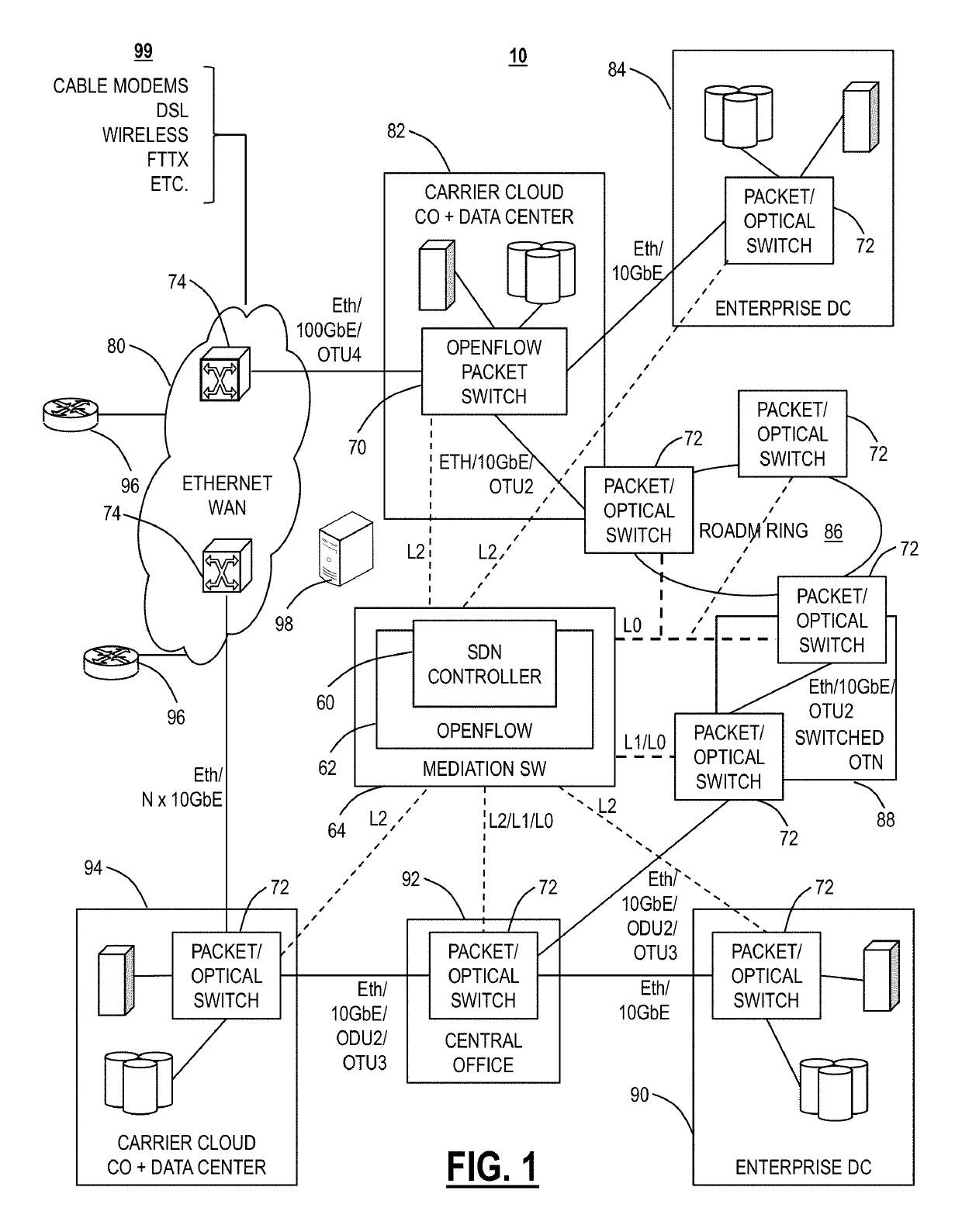
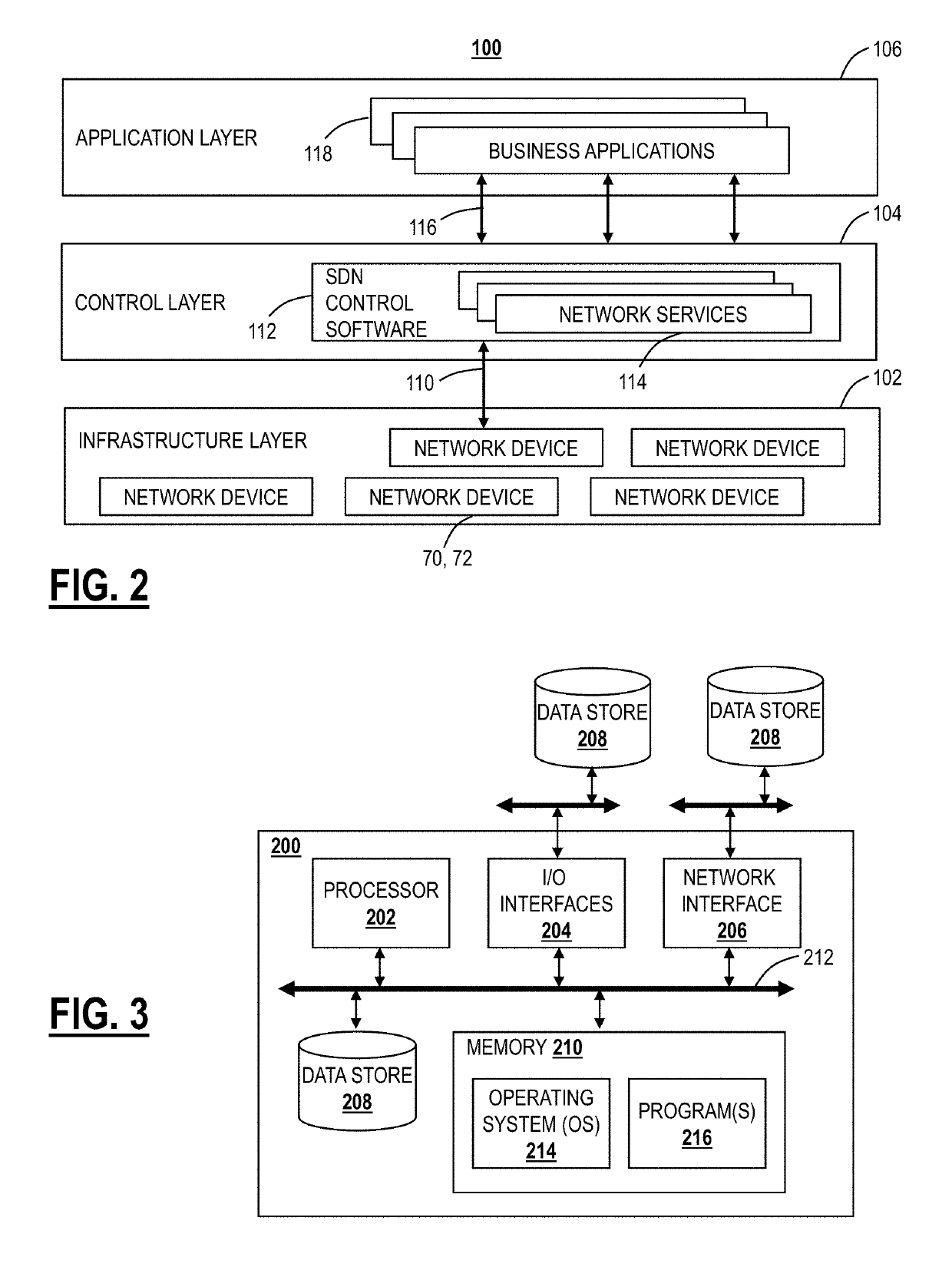
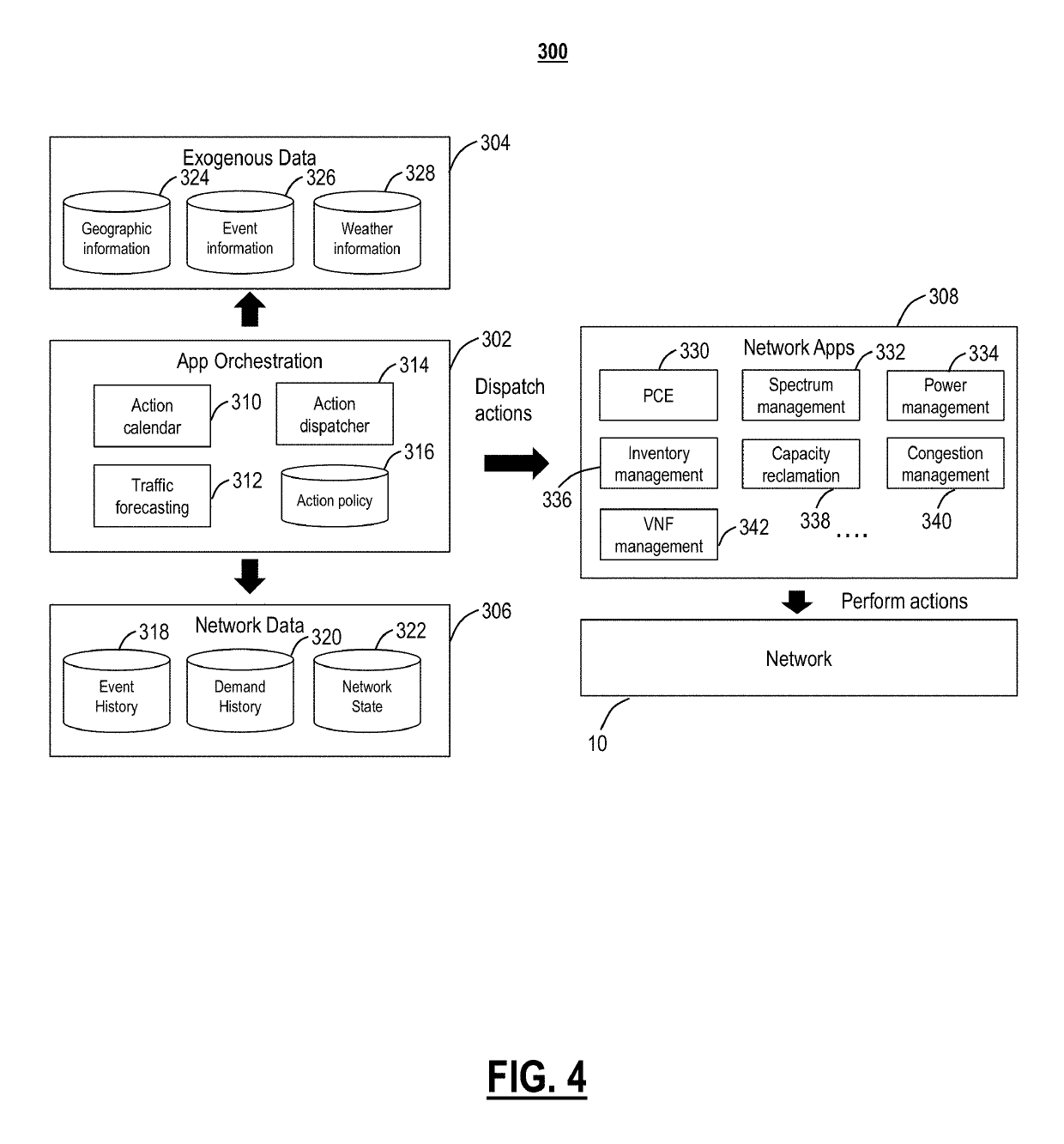
- A traffic-adaptive network control method that monitors network data, generates forecasts based on observed and external events, and orchestrates actions such as capacity recovery, reallocation, and addition using network applications to optimize resource utilization and minimize costs.

Zero-touch deployment (ZTD) with adaptive network control policies
PatentActiveUS11824710B2
Innovation
- A zero-touch deployment (ZTD) service is introduced to manage and dynamically update network traffic control policies for IoT devices, enabling adaptive policies that synchronize with IoT hubs and service providers, allowing for efficient management of cellular network bandwidth and usage requirements.


Network Security Implications of Rapid Deployment
Rapid deployment strategies in adaptive network control environments introduce significant security vulnerabilities that organizations must carefully evaluate and mitigate. The accelerated implementation timelines inherent in rapid deployment often compress traditional security validation processes, creating potential attack vectors that malicious actors can exploit. When network configurations are dynamically adjusted through automated control systems, the attack surface expands considerably, as each adaptive change represents a potential entry point for unauthorized access.
The dynamic nature of adaptive network control systems presents unique authentication and authorization challenges. Traditional security models rely on static network topologies and predetermined access control lists, but rapid deployment scenarios require real-time security policy updates that must maintain consistency across distributed network segments. This creates temporal windows where security policies may be inconsistent or incomplete, potentially allowing unauthorized traffic to traverse network boundaries.
Encryption key management becomes particularly complex in rapidly deployed adaptive networks. The frequent topology changes and dynamic routing adjustments can disrupt established secure communication channels, requiring sophisticated key distribution mechanisms that can operate effectively in unstable network conditions. Legacy encryption protocols may prove inadequate for environments where network paths and endpoints change frequently, necessitating more flexible cryptographic frameworks.
Network monitoring and intrusion detection systems face substantial challenges in rapid deployment scenarios. Traditional security monitoring relies on baseline network behavior patterns, but adaptive control systems continuously alter these baselines, making anomaly detection significantly more difficult. Security teams must develop new methodologies for distinguishing between legitimate adaptive changes and potential security threats in real-time.
The integration of automated security responses with adaptive network control systems requires careful orchestration to prevent security measures from interfering with legitimate network adaptations. Overly aggressive security policies may trigger false positives that disrupt network operations, while insufficient security automation may leave critical vulnerabilities unaddressed during rapid deployment phases. Organizations must establish clear protocols for security exception handling and emergency response procedures that account for the dynamic nature of adaptive network environments.
The dynamic nature of adaptive network control systems presents unique authentication and authorization challenges. Traditional security models rely on static network topologies and predetermined access control lists, but rapid deployment scenarios require real-time security policy updates that must maintain consistency across distributed network segments. This creates temporal windows where security policies may be inconsistent or incomplete, potentially allowing unauthorized traffic to traverse network boundaries.
Encryption key management becomes particularly complex in rapidly deployed adaptive networks. The frequent topology changes and dynamic routing adjustments can disrupt established secure communication channels, requiring sophisticated key distribution mechanisms that can operate effectively in unstable network conditions. Legacy encryption protocols may prove inadequate for environments where network paths and endpoints change frequently, necessitating more flexible cryptographic frameworks.
Network monitoring and intrusion detection systems face substantial challenges in rapid deployment scenarios. Traditional security monitoring relies on baseline network behavior patterns, but adaptive control systems continuously alter these baselines, making anomaly detection significantly more difficult. Security teams must develop new methodologies for distinguishing between legitimate adaptive changes and potential security threats in real-time.
The integration of automated security responses with adaptive network control systems requires careful orchestration to prevent security measures from interfering with legitimate network adaptations. Overly aggressive security policies may trigger false positives that disrupt network operations, while insufficient security automation may leave critical vulnerabilities unaddressed during rapid deployment phases. Organizations must establish clear protocols for security exception handling and emergency response procedures that account for the dynamic nature of adaptive network environments.
Standardization and Interoperability Requirements
The standardization landscape for rapid deployment with adaptive network control faces significant fragmentation across multiple domains. Current industry standards primarily focus on individual components rather than holistic system integration. The IEEE 802.11 family addresses wireless communication protocols, while IETF RFC specifications govern internet protocols and routing mechanisms. However, these standards often operate in isolation, creating interoperability gaps when implementing comprehensive adaptive network solutions.
Software-defined networking (SDN) standardization efforts through the Open Networking Foundation (ONF) have established OpenFlow as a foundational protocol for centralized network control. Yet, the rapid deployment aspect remains inadequately addressed in existing standards. The lack of unified deployment frameworks creates vendor lock-in scenarios and limits cross-platform compatibility, particularly in heterogeneous network environments where multiple technologies must coexist seamlessly.
Interoperability challenges emerge prominently at the interface level between different network management systems. Legacy infrastructure integration poses substantial barriers, as older systems often lack the APIs and communication protocols necessary for modern adaptive control mechanisms. The absence of standardized data models for network state representation further complicates real-time adaptation capabilities across diverse vendor ecosystems.
Emerging standardization initiatives are beginning to address these gaps through collaborative efforts. The ETSI Network Functions Virtualization (NFV) framework provides architectural guidelines for virtualized network functions, while the 3GPP specifications for 5G networks incorporate adaptive control principles. These developments suggest a convergence toward more comprehensive standardization approaches that encompass both deployment automation and adaptive control mechanisms.
Future interoperability requirements must prioritize API standardization, common data exchange formats, and unified orchestration protocols. The development of vendor-neutral deployment descriptors and standardized performance metrics will be crucial for achieving truly rapid, adaptive network deployment capabilities across heterogeneous environments.
Software-defined networking (SDN) standardization efforts through the Open Networking Foundation (ONF) have established OpenFlow as a foundational protocol for centralized network control. Yet, the rapid deployment aspect remains inadequately addressed in existing standards. The lack of unified deployment frameworks creates vendor lock-in scenarios and limits cross-platform compatibility, particularly in heterogeneous network environments where multiple technologies must coexist seamlessly.
Interoperability challenges emerge prominently at the interface level between different network management systems. Legacy infrastructure integration poses substantial barriers, as older systems often lack the APIs and communication protocols necessary for modern adaptive control mechanisms. The absence of standardized data models for network state representation further complicates real-time adaptation capabilities across diverse vendor ecosystems.
Emerging standardization initiatives are beginning to address these gaps through collaborative efforts. The ETSI Network Functions Virtualization (NFV) framework provides architectural guidelines for virtualized network functions, while the 3GPP specifications for 5G networks incorporate adaptive control principles. These developments suggest a convergence toward more comprehensive standardization approaches that encompass both deployment automation and adaptive control mechanisms.
Future interoperability requirements must prioritize API standardization, common data exchange formats, and unified orchestration protocols. The development of vendor-neutral deployment descriptors and standardized performance metrics will be crucial for achieving truly rapid, adaptive network deployment capabilities across heterogeneous environments.
Unlock deeper insights with PatSnap Eureka Quick Research — get a full tech report to explore trends and direct your research. Try now!
Generate Your Research Report Instantly with AI Agent
Supercharge your innovation with PatSnap Eureka AI Agent Platform!