
How to Align Sonication with Advanced Composite Material Goals
MAR 11, 202610 MIN READ
Generate Your Research Report Instantly with AI Agent
Patsnap Eureka helps you evaluate technical feasibility & market potential.
Sonication Technology Background and Composite Material Goals
Sonication technology has emerged as a transformative approach in materials processing, utilizing high-frequency ultrasonic waves to induce controlled mechanical and chemical effects at the molecular level. This acoustic-based methodology operates through cavitation phenomena, where rapid formation and collapse of microscopic bubbles generate intense localized energy, enabling precise material manipulation without traditional thermal or chemical interventions.
The evolution of sonication applications has progressed from basic cleaning and mixing operations to sophisticated materials engineering processes. Modern sonication systems can deliver frequencies ranging from 20 kHz to several megahertz, with power densities precisely controlled to achieve specific material modification objectives. This technological advancement has positioned sonication as a critical enabler for next-generation composite material development.
Advanced composite materials represent the convergence of multiple engineering disciplines, targeting unprecedented combinations of strength, lightweight characteristics, and functional properties. Contemporary composite goals extend beyond traditional fiber-reinforced plastics to encompass multifunctional materials integrating electrical conductivity, thermal management, self-healing capabilities, and adaptive mechanical responses. These ambitious objectives demand innovative processing techniques capable of achieving molecular-level control over material architecture.
The alignment between sonication technology and composite material goals centers on addressing fundamental challenges in material homogeneity, interfacial bonding, and nanostructure control. Traditional composite manufacturing often struggles with achieving uniform dispersion of reinforcing elements, particularly at the nanoscale, where conventional mixing techniques prove inadequate. Sonication offers unique capabilities to overcome these limitations through its ability to break down agglomerates and promote intimate mixing at unprecedented scales.
Current composite material development priorities include enhancing matrix-fiber interfacial adhesion, incorporating multifunctional nanofillers, and achieving predictable property gradients throughout material structures. These objectives align directly with sonication's core competencies in surface modification, particle dispersion, and controlled energy delivery. The technology's non-invasive nature preserves delicate nanostructure integrity while enabling precise property tuning.
The strategic convergence of sonication and advanced composites addresses critical industry demands for sustainable manufacturing processes, reduced processing temperatures, and enhanced material performance predictability. This technological synergy represents a paradigm shift toward acoustically-driven materials engineering, where sound waves become precision tools for creating tomorrow's high-performance composite systems.
The evolution of sonication applications has progressed from basic cleaning and mixing operations to sophisticated materials engineering processes. Modern sonication systems can deliver frequencies ranging from 20 kHz to several megahertz, with power densities precisely controlled to achieve specific material modification objectives. This technological advancement has positioned sonication as a critical enabler for next-generation composite material development.
Advanced composite materials represent the convergence of multiple engineering disciplines, targeting unprecedented combinations of strength, lightweight characteristics, and functional properties. Contemporary composite goals extend beyond traditional fiber-reinforced plastics to encompass multifunctional materials integrating electrical conductivity, thermal management, self-healing capabilities, and adaptive mechanical responses. These ambitious objectives demand innovative processing techniques capable of achieving molecular-level control over material architecture.
The alignment between sonication technology and composite material goals centers on addressing fundamental challenges in material homogeneity, interfacial bonding, and nanostructure control. Traditional composite manufacturing often struggles with achieving uniform dispersion of reinforcing elements, particularly at the nanoscale, where conventional mixing techniques prove inadequate. Sonication offers unique capabilities to overcome these limitations through its ability to break down agglomerates and promote intimate mixing at unprecedented scales.
Current composite material development priorities include enhancing matrix-fiber interfacial adhesion, incorporating multifunctional nanofillers, and achieving predictable property gradients throughout material structures. These objectives align directly with sonication's core competencies in surface modification, particle dispersion, and controlled energy delivery. The technology's non-invasive nature preserves delicate nanostructure integrity while enabling precise property tuning.
The strategic convergence of sonication and advanced composites addresses critical industry demands for sustainable manufacturing processes, reduced processing temperatures, and enhanced material performance predictability. This technological synergy represents a paradigm shift toward acoustically-driven materials engineering, where sound waves become precision tools for creating tomorrow's high-performance composite systems.
Market Demand for Advanced Composite Processing Solutions
The global advanced composite materials market is experiencing unprecedented growth driven by increasing demand across aerospace, automotive, renewable energy, and defense sectors. Traditional manufacturing processes for composite materials face significant limitations in achieving uniform dispersion of reinforcing agents, optimal fiber-matrix adhesion, and consistent material properties throughout complex geometries. These challenges have created substantial market opportunities for innovative processing technologies that can enhance composite performance while reducing manufacturing costs and cycle times.
Aerospace manufacturers represent the largest segment demanding advanced composite processing solutions, particularly for next-generation aircraft requiring lightweight materials with superior strength-to-weight ratios. The automotive industry follows closely, driven by stringent fuel efficiency regulations and the transition toward electric vehicles where weight reduction directly impacts battery performance and range. Wind energy applications continue expanding globally, requiring larger turbine blades with enhanced fatigue resistance and structural integrity.
Current composite processing methods including autoclave curing, resin transfer molding, and filament winding often struggle with achieving homogeneous material distribution and eliminating voids or defects that compromise structural integrity. Manufacturing costs remain elevated due to lengthy processing cycles, high energy consumption, and significant material waste rates. Quality control challenges persist in ensuring consistent mechanical properties across large-scale production runs.
The market increasingly demands processing solutions that can address nanomaterial integration challenges, particularly for incorporating carbon nanotubes, graphene, and other nanofillers that significantly enhance electrical conductivity, thermal management, and mechanical properties. Traditional mixing methods prove inadequate for achieving proper dispersion of these nanoscale reinforcements, leading to agglomeration issues and inconsistent performance characteristics.
Sustainability concerns are reshaping market requirements, with manufacturers seeking processing technologies that reduce energy consumption, minimize volatile organic compound emissions, and enable recycling of composite materials. Environmental regulations continue tightening globally, creating additional pressure for cleaner manufacturing processes.
The emergence of additive manufacturing for composites has opened new market segments requiring specialized processing approaches for continuous fiber reinforcement and multi-material integration. Smart composites incorporating sensors and actuators demand processing methods that preserve embedded functionality while achieving optimal structural properties.
Market demand increasingly focuses on scalable solutions that can transition from laboratory-scale research to industrial production volumes while maintaining processing consistency and quality standards. Cost-effective processing technologies that reduce capital equipment requirements and operational complexity are particularly valued by small and medium enterprises entering the composites market.
Aerospace manufacturers represent the largest segment demanding advanced composite processing solutions, particularly for next-generation aircraft requiring lightweight materials with superior strength-to-weight ratios. The automotive industry follows closely, driven by stringent fuel efficiency regulations and the transition toward electric vehicles where weight reduction directly impacts battery performance and range. Wind energy applications continue expanding globally, requiring larger turbine blades with enhanced fatigue resistance and structural integrity.
Current composite processing methods including autoclave curing, resin transfer molding, and filament winding often struggle with achieving homogeneous material distribution and eliminating voids or defects that compromise structural integrity. Manufacturing costs remain elevated due to lengthy processing cycles, high energy consumption, and significant material waste rates. Quality control challenges persist in ensuring consistent mechanical properties across large-scale production runs.
The market increasingly demands processing solutions that can address nanomaterial integration challenges, particularly for incorporating carbon nanotubes, graphene, and other nanofillers that significantly enhance electrical conductivity, thermal management, and mechanical properties. Traditional mixing methods prove inadequate for achieving proper dispersion of these nanoscale reinforcements, leading to agglomeration issues and inconsistent performance characteristics.
Sustainability concerns are reshaping market requirements, with manufacturers seeking processing technologies that reduce energy consumption, minimize volatile organic compound emissions, and enable recycling of composite materials. Environmental regulations continue tightening globally, creating additional pressure for cleaner manufacturing processes.
The emergence of additive manufacturing for composites has opened new market segments requiring specialized processing approaches for continuous fiber reinforcement and multi-material integration. Smart composites incorporating sensors and actuators demand processing methods that preserve embedded functionality while achieving optimal structural properties.
Market demand increasingly focuses on scalable solutions that can transition from laboratory-scale research to industrial production volumes while maintaining processing consistency and quality standards. Cost-effective processing technologies that reduce capital equipment requirements and operational complexity are particularly valued by small and medium enterprises entering the composites market.
Current Sonication Challenges in Composite Manufacturing
Sonication technology faces significant technical barriers when applied to advanced composite manufacturing processes. The primary challenge lies in achieving uniform energy distribution throughout complex three-dimensional composite structures. Current ultrasonic systems struggle to maintain consistent acoustic intensity across varying material thicknesses and geometries, resulting in localized over-processing or under-processing zones that compromise final product integrity.
Temperature control represents another critical obstacle in composite sonication applications. The acoustic energy generated during ultrasonic processing creates substantial heat buildup, particularly in thermosetting matrix systems where excessive temperatures can trigger premature curing reactions. Existing cooling mechanisms often prove inadequate for maintaining optimal processing temperatures while preserving the beneficial effects of sonication on fiber-matrix interfaces.
Frequency optimization remains poorly understood across different composite material systems. Carbon fiber reinforced polymers, glass fiber composites, and natural fiber materials each exhibit distinct acoustic impedance characteristics, yet current sonication equipment lacks the adaptive frequency modulation capabilities necessary to optimize processing parameters for specific material combinations. This limitation results in suboptimal dispersion of nanofillers and inadequate void elimination.
Scaling challenges present substantial barriers to industrial implementation. Laboratory-scale sonication systems demonstrate promising results for small composite samples, but translating these benefits to large-scale manufacturing processes proves problematic. Current industrial ultrasonic equipment cannot maintain the precise control and uniformity achieved in research environments when processing large composite components or continuous fiber preforms.
Process integration difficulties further complicate sonication adoption in composite manufacturing. Existing production lines, including resin transfer molding, vacuum-assisted resin infusion, and automated fiber placement systems, require significant modifications to accommodate ultrasonic processing equipment. The temporal coordination between sonication cycles and traditional composite processing steps remains poorly optimized, often leading to production bottlenecks.
Equipment durability issues plague current sonication systems when exposed to reactive composite chemistries. Ultrasonic transducers and coupling mechanisms experience rapid degradation when in contact with epoxy resins, polyurethane systems, and various curing agents. This degradation necessitates frequent equipment replacement and maintenance, significantly increasing operational costs and reducing manufacturing efficiency.
Real-time monitoring and feedback control systems for composite sonication processes remain underdeveloped. Current technology lacks the sophisticated sensors and control algorithms necessary to adjust sonication parameters dynamically based on real-time material property changes during processing. This limitation prevents optimization of processing conditions and quality assurance throughout the manufacturing cycle.
Temperature control represents another critical obstacle in composite sonication applications. The acoustic energy generated during ultrasonic processing creates substantial heat buildup, particularly in thermosetting matrix systems where excessive temperatures can trigger premature curing reactions. Existing cooling mechanisms often prove inadequate for maintaining optimal processing temperatures while preserving the beneficial effects of sonication on fiber-matrix interfaces.
Frequency optimization remains poorly understood across different composite material systems. Carbon fiber reinforced polymers, glass fiber composites, and natural fiber materials each exhibit distinct acoustic impedance characteristics, yet current sonication equipment lacks the adaptive frequency modulation capabilities necessary to optimize processing parameters for specific material combinations. This limitation results in suboptimal dispersion of nanofillers and inadequate void elimination.
Scaling challenges present substantial barriers to industrial implementation. Laboratory-scale sonication systems demonstrate promising results for small composite samples, but translating these benefits to large-scale manufacturing processes proves problematic. Current industrial ultrasonic equipment cannot maintain the precise control and uniformity achieved in research environments when processing large composite components or continuous fiber preforms.
Process integration difficulties further complicate sonication adoption in composite manufacturing. Existing production lines, including resin transfer molding, vacuum-assisted resin infusion, and automated fiber placement systems, require significant modifications to accommodate ultrasonic processing equipment. The temporal coordination between sonication cycles and traditional composite processing steps remains poorly optimized, often leading to production bottlenecks.
Equipment durability issues plague current sonication systems when exposed to reactive composite chemistries. Ultrasonic transducers and coupling mechanisms experience rapid degradation when in contact with epoxy resins, polyurethane systems, and various curing agents. This degradation necessitates frequent equipment replacement and maintenance, significantly increasing operational costs and reducing manufacturing efficiency.
Real-time monitoring and feedback control systems for composite sonication processes remain underdeveloped. Current technology lacks the sophisticated sensors and control algorithms necessary to adjust sonication parameters dynamically based on real-time material property changes during processing. This limitation prevents optimization of processing conditions and quality assurance throughout the manufacturing cycle.
Existing Sonication Solutions for Composite Enhancement
01 Sonication for dispersion of nanofillers in composite matrices
Ultrasonic sonication is employed to achieve uniform dispersion of nanofillers such as carbon nanotubes, graphene, and nanoparticles within polymer matrices. This process breaks down agglomerates and ensures homogeneous distribution of reinforcing materials throughout the composite structure, leading to enhanced mechanical properties and performance characteristics. The sonication parameters including frequency, amplitude, and duration are optimized to prevent damage to the nanofillers while achieving effective dispersion.- Sonication for dispersion of nanoparticles in composite matrices: Ultrasonic sonication is employed to achieve uniform dispersion of nanoparticles, nanotubes, or nanofibers within polymer or resin matrices. This technique breaks down agglomerates and ensures homogeneous distribution of reinforcing materials throughout the composite structure, leading to enhanced mechanical properties and performance characteristics. The sonication process typically involves controlled frequency and amplitude to optimize particle distribution without damaging the reinforcing materials.
- Ultrasonic treatment for fiber-matrix interface enhancement: Sonication techniques are applied to improve the interfacial bonding between reinforcing fibers and matrix materials in composite structures. The ultrasonic energy modifies the surface characteristics of fibers, promoting better wetting and adhesion with the surrounding matrix. This treatment can also facilitate the penetration of sizing agents or coupling agents into fiber bundles, resulting in stronger interfacial shear strength and improved load transfer capabilities in the final composite material.
- Sonication-assisted resin infusion and impregnation processes: Ultrasonic energy is utilized during resin infusion or impregnation stages to enhance the flow characteristics and penetration of liquid resins into fibrous reinforcements. The sonication reduces resin viscosity temporarily and helps eliminate air bubbles or voids within the composite structure. This approach improves the wetting of fibers, reduces processing time, and results in composites with lower void content and superior mechanical properties compared to conventional infusion methods.
- Ultrasonic processing for graphene and carbon nanotube composites: Sonication is specifically employed for processing advanced composites containing graphene, carbon nanotubes, or other carbon-based nanomaterials. The ultrasonic treatment facilitates exfoliation of graphene layers, disentanglement of nanotube bundles, and their subsequent dispersion in various matrix systems including polymers, ceramics, or metals. This processing method is critical for achieving the full potential of carbon nanomaterials in enhancing electrical conductivity, thermal properties, and mechanical strength of composite materials.
- Sonication for degassing and void reduction in composite manufacturing: Ultrasonic treatment is applied to remove entrapped air and gases from liquid composite precursors or during the curing process. The sonication creates cavitation effects that help release dissolved gases and promote the coalescence and escape of air bubbles from viscous resin systems. This technique is particularly valuable in manufacturing high-performance composites where void content must be minimized to achieve optimal mechanical properties, dimensional stability, and durability in demanding applications.
02 Ultrasonic processing for fiber-reinforced composite manufacturing
Sonication techniques are utilized in the preparation and processing of fiber-reinforced composites to improve fiber-matrix interfacial bonding and resin infiltration. The ultrasonic energy facilitates better wetting of fibers by the matrix material and removes air bubbles trapped during the manufacturing process. This method is particularly effective for producing high-performance composites with improved interlaminar strength and reduced void content.Expand Specific Solutions03 Sonication-assisted synthesis of composite precursors
Ultrasonic treatment is applied during the synthesis stage of composite materials to promote chemical reactions and facilitate the formation of hybrid structures. This approach enables the creation of novel composite precursors with controlled morphology and composition. The sonication process enhances mixing at the molecular level and can induce chemical modifications that improve the compatibility between different phases in the final composite material.Expand Specific Solutions04 Ultrasonic consolidation and bonding of composite layers
Sonication energy is utilized for the consolidation and bonding of multiple composite layers without the need for adhesives or high-temperature processing. The ultrasonic vibrations create localized heating and pressure at the interface between layers, promoting mechanical interlocking and molecular interdiffusion. This technique is advantageous for manufacturing complex composite structures with reduced processing time and energy consumption while maintaining structural integrity.Expand Specific Solutions05 Sonication for surface modification and functionalization of composites
Ultrasonic treatment is employed to modify the surface properties of composite materials and introduce functional groups or coatings. The cavitation effects generated by sonication create reactive sites on the composite surface, enabling enhanced adhesion of coatings or grafting of functional molecules. This method improves the interfacial properties of composites for specific applications such as enhanced environmental resistance, electrical conductivity, or biocompatibility.Expand Specific Solutions
Key Players in Sonication and Advanced Composite Industry
The sonication technology for advanced composite materials is in a rapidly evolving growth stage, driven by increasing demand for lightweight, high-performance materials across aerospace, automotive, and electronics sectors. The market demonstrates significant expansion potential, particularly in Asia-Pacific regions where companies like Hitachi Ltd., Mitsubishi Electric Corp., and Hon Hai Precision Industry are advancing manufacturing capabilities. Technology maturity varies considerably across applications, with established players like Cadence Design Systems and NGK Insulators leading in specialized industrial applications, while emerging companies such as Solidica Inc. and Mo-Sci Corp. focus on innovative material processing techniques. Research institutions including Central South University, Nanjing University of Aeronautics & Astronautics, and Brigham Young University are contributing fundamental research breakthroughs. The competitive landscape shows convergence between traditional materials companies and technology innovators, indicating a maturing but still dynamic market with substantial opportunities for technological advancement and commercial application.
Xyleco, Inc.
Technical Solution: Xyleco has developed advanced sonication technologies specifically for processing lignocellulosic biomass and composite materials. Their approach utilizes controlled ultrasonic energy to enhance fiber-matrix adhesion in bio-based composites through selective disruption of cellulose crystalline structures. The company's sonication systems operate at optimized frequencies (20-40 kHz) to achieve uniform dispersion of nanofillers within polymer matrices while maintaining structural integrity. Their technology enables precise control over cavitation effects, allowing for targeted modification of composite interfaces without compromising mechanical properties. This approach has shown significant improvements in tensile strength and interfacial bonding in natural fiber composites.
Strengths: Specialized expertise in biomass processing, proven track record in industrial-scale sonication applications. Weaknesses: Limited focus on synthetic composite materials, technology primarily optimized for bio-based systems.
Central South University
Technical Solution: Central South University has developed comprehensive research programs focusing on ultrasonic-assisted manufacturing of advanced composite materials, particularly for aerospace and automotive applications. Their sonication approach integrates multi-frequency ultrasonic systems (20-100 kHz) with real-time monitoring capabilities to optimize fiber-matrix interactions during composite fabrication. The university's research demonstrates that controlled sonication can enhance carbon fiber surface activation, improving interfacial shear strength by up to 35% in CFRP composites. Their methodology includes acoustic streaming optimization to achieve uniform resin distribution and void reduction in thick-section composites. The research team has also developed predictive models correlating sonication parameters with final composite properties, enabling process optimization for specific performance targets.
Strengths: Strong research foundation, comprehensive understanding of sonication mechanisms, proven results in CFRP applications. Weaknesses: Academic focus may limit immediate commercial scalability, requires industrial partnerships for technology transfer.
Core Innovations in Ultrasonic Composite Processing
Sonication for improved particle size distribution of core-shell particles
PatentInactiveUS20120145623A1
Innovation
- Development of porous composite particulate materials with acid-base-resistant core and shell particles bonded by a polymeric layer, where sonic energy is applied to enhance uniformity and stability, allowing for improved separation in harsh chemical conditions.


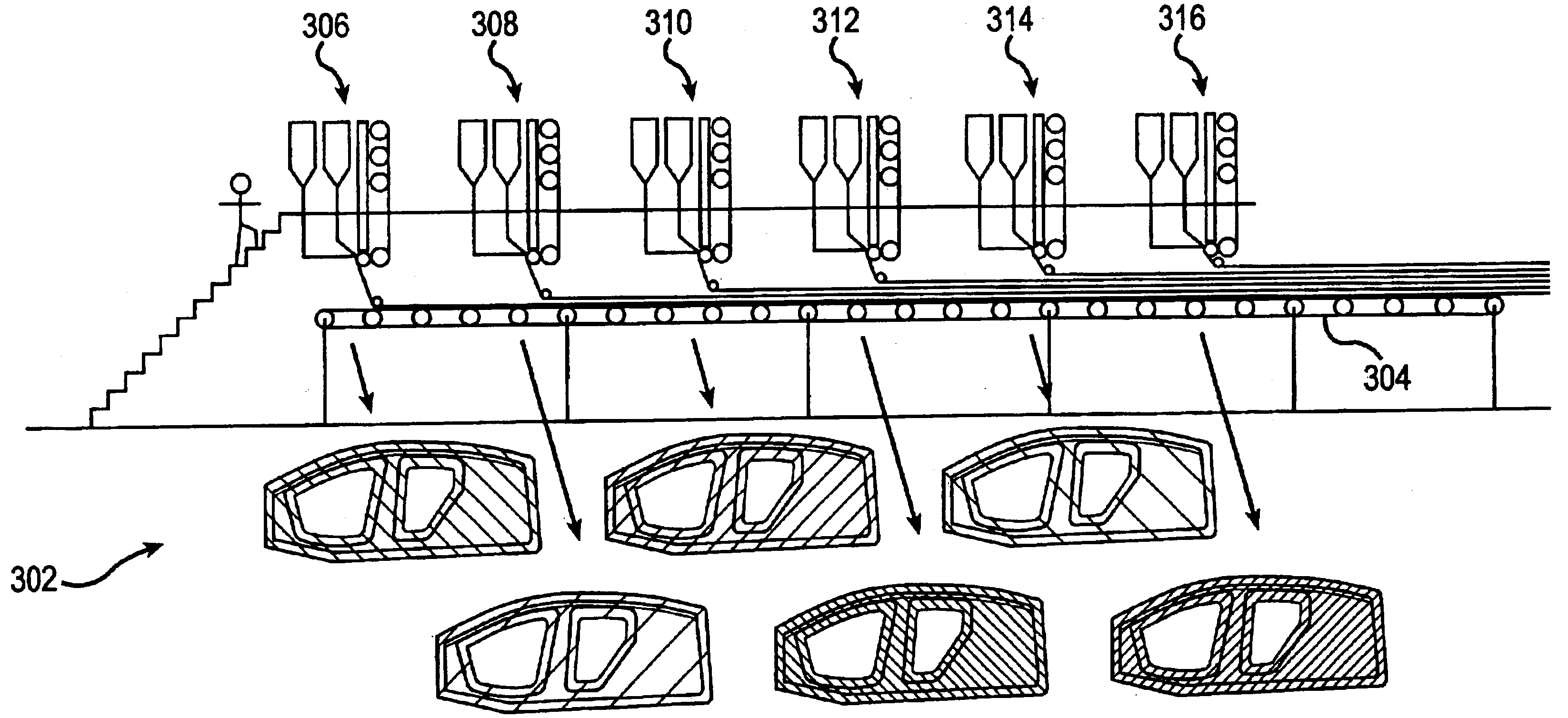
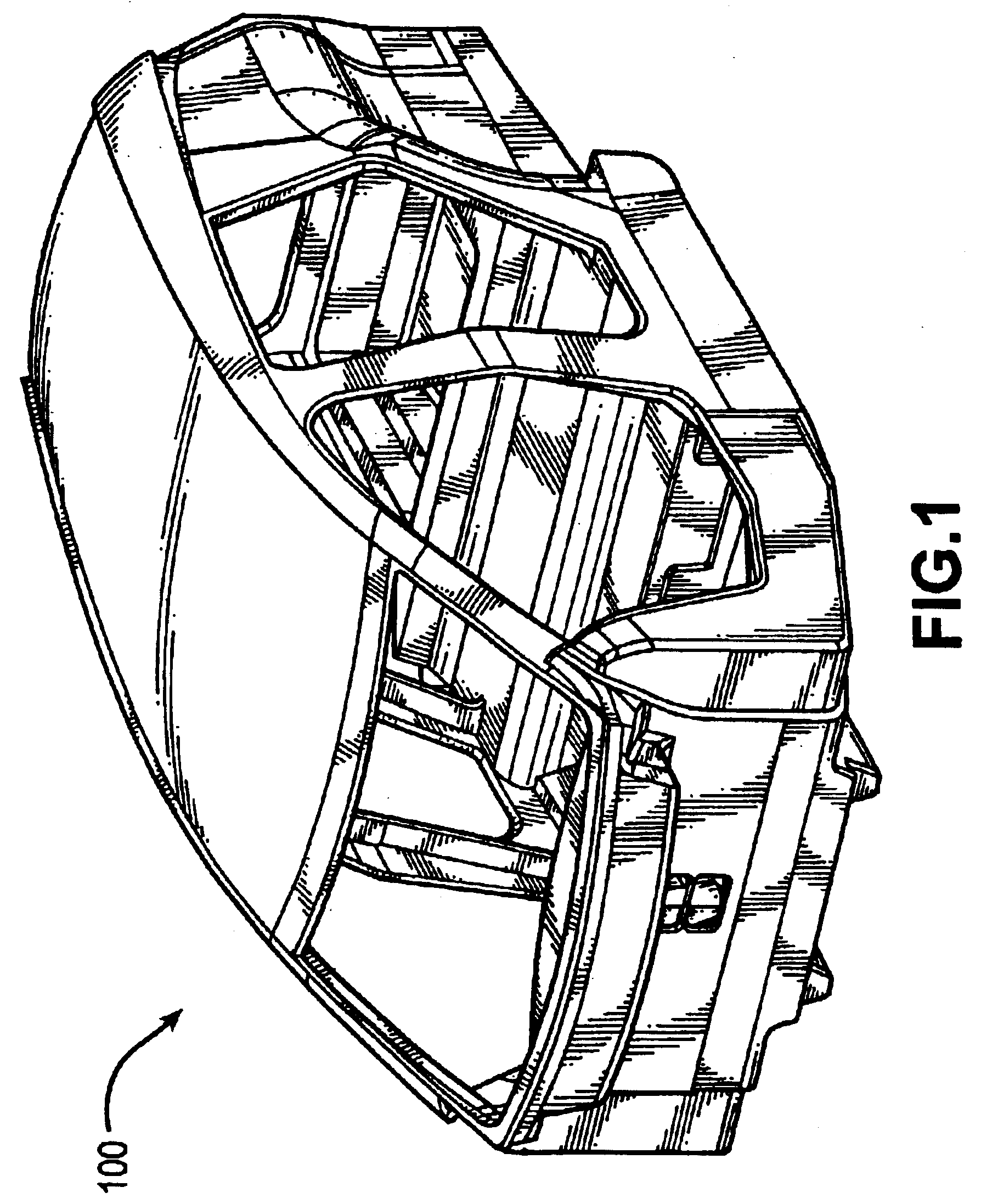
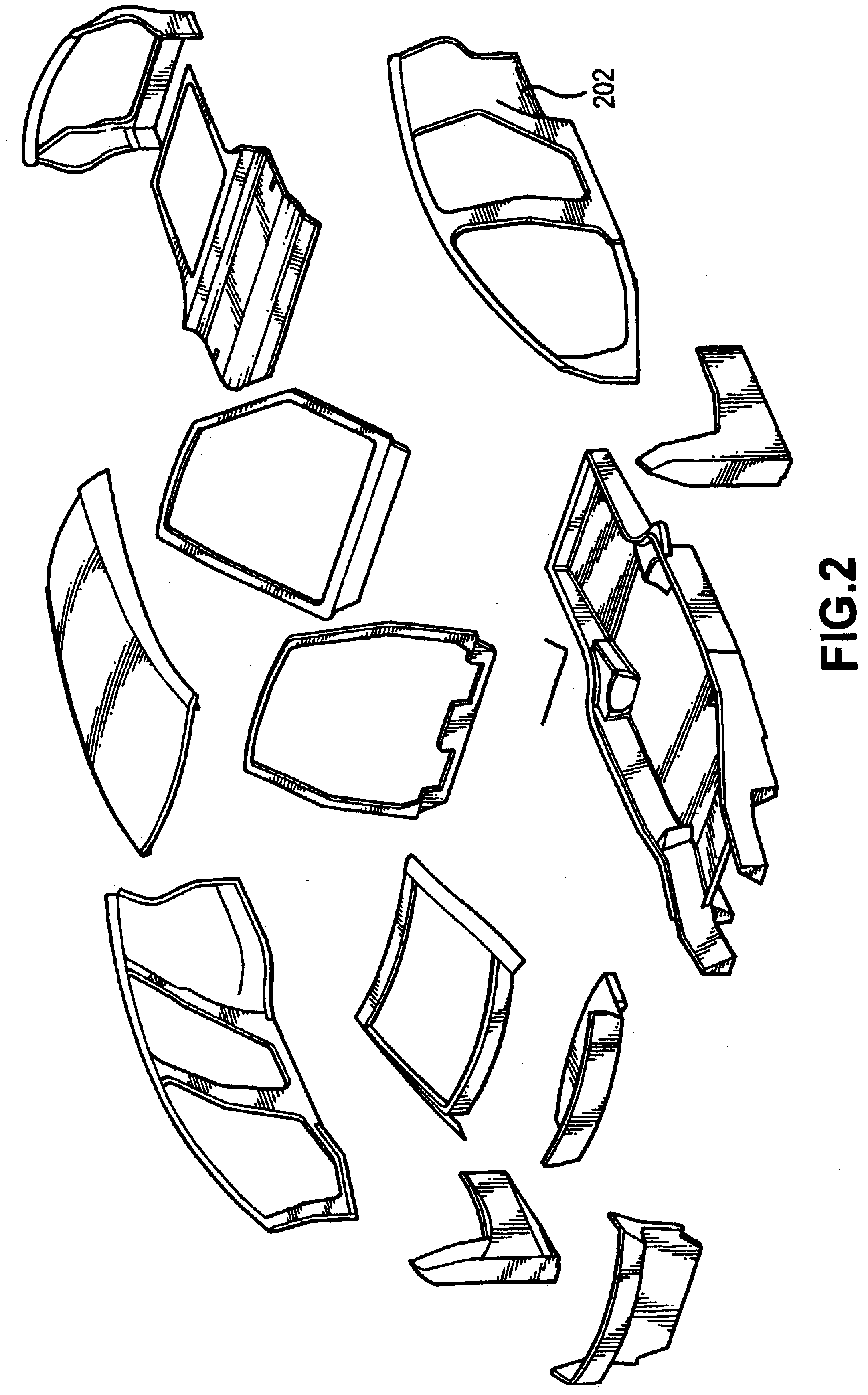
Process and equipment for manufacture of advanced composite structures
PatentInactiveUS6939423B2
Innovation
- The development of continuous, tailored lamination processes for aligned composite materials, incorporating fiber or tape placement, stretch-broken and commingled fiber yarns, binderized pre-forming, heated consolidation, and NC cutting, allowing for repeatable, affordable, and versatile production of high-performance automotive structures through methods like resin transfer molding or solid state stamping.

Environmental Impact of Sonication in Composite Production
The environmental implications of sonication in composite material production represent a critical consideration for sustainable manufacturing practices. Traditional composite manufacturing processes often rely on energy-intensive methods and chemical-heavy procedures that generate significant environmental burdens. Sonication technology offers a pathway to reduce these impacts through enhanced process efficiency and reduced chemical dependency.
Energy consumption patterns in sonication-based composite production demonstrate notable improvements over conventional methods. Ultrasonic processing typically requires lower operating temperatures and shorter processing times compared to traditional thermal curing processes. This reduction in energy intensity translates to decreased carbon footprint per unit of composite material produced. Studies indicate that sonication can reduce overall energy consumption by 15-30% in specific composite manufacturing applications, particularly in fiber-matrix interface enhancement and void reduction processes.
Chemical usage optimization represents another significant environmental benefit of sonication integration. The enhanced mixing and dispersion capabilities of ultrasonic processing often eliminate the need for additional chemical dispersants and processing aids. This reduction in chemical additives not only decreases raw material costs but also minimizes the environmental impact associated with chemical production, transportation, and disposal. Furthermore, improved fiber-matrix bonding achieved through sonication can reduce the requirement for coupling agents and surface treatment chemicals.
Waste generation and material efficiency improvements emerge as key environmental advantages. Sonication's ability to enhance material properties at lower processing temperatures reduces thermal degradation of both fibers and matrix materials. This preservation of material integrity leads to higher-quality composites with improved mechanical properties, extending product lifecycles and reducing replacement frequency. Additionally, the precise control offered by ultrasonic processing minimizes material waste during production, contributing to overall resource conservation.
Air quality considerations reveal mixed environmental impacts. While sonication eliminates many volatile organic compound emissions associated with high-temperature processing, ultrasonic equipment operation can generate noise pollution requiring appropriate containment measures. However, the overall reduction in processing temperatures significantly decreases the emission of thermal degradation products and volatile compounds typically released during conventional composite curing processes.
Water usage and treatment requirements in sonication-enhanced composite production show favorable environmental profiles. Many ultrasonic processes operate in closed-loop systems that minimize water consumption and eliminate contaminated wastewater discharge. This contrasts favorably with traditional wet processing methods that often require extensive water treatment and disposal protocols.
Energy consumption patterns in sonication-based composite production demonstrate notable improvements over conventional methods. Ultrasonic processing typically requires lower operating temperatures and shorter processing times compared to traditional thermal curing processes. This reduction in energy intensity translates to decreased carbon footprint per unit of composite material produced. Studies indicate that sonication can reduce overall energy consumption by 15-30% in specific composite manufacturing applications, particularly in fiber-matrix interface enhancement and void reduction processes.
Chemical usage optimization represents another significant environmental benefit of sonication integration. The enhanced mixing and dispersion capabilities of ultrasonic processing often eliminate the need for additional chemical dispersants and processing aids. This reduction in chemical additives not only decreases raw material costs but also minimizes the environmental impact associated with chemical production, transportation, and disposal. Furthermore, improved fiber-matrix bonding achieved through sonication can reduce the requirement for coupling agents and surface treatment chemicals.
Waste generation and material efficiency improvements emerge as key environmental advantages. Sonication's ability to enhance material properties at lower processing temperatures reduces thermal degradation of both fibers and matrix materials. This preservation of material integrity leads to higher-quality composites with improved mechanical properties, extending product lifecycles and reducing replacement frequency. Additionally, the precise control offered by ultrasonic processing minimizes material waste during production, contributing to overall resource conservation.
Air quality considerations reveal mixed environmental impacts. While sonication eliminates many volatile organic compound emissions associated with high-temperature processing, ultrasonic equipment operation can generate noise pollution requiring appropriate containment measures. However, the overall reduction in processing temperatures significantly decreases the emission of thermal degradation products and volatile compounds typically released during conventional composite curing processes.
Water usage and treatment requirements in sonication-enhanced composite production show favorable environmental profiles. Many ultrasonic processes operate in closed-loop systems that minimize water consumption and eliminate contaminated wastewater discharge. This contrasts favorably with traditional wet processing methods that often require extensive water treatment and disposal protocols.
Quality Standards for Sonication-Enhanced Composites
Establishing comprehensive quality standards for sonication-enhanced composites requires a multi-dimensional framework that addresses both process parameters and material performance metrics. The integration of ultrasonic energy into composite manufacturing introduces unique variables that demand precise control and measurement protocols to ensure consistent material properties and structural integrity.
Process-level quality standards must encompass critical sonication parameters including frequency stability, amplitude consistency, and energy distribution uniformity. Frequency tolerance should be maintained within ±2% of the target value to ensure reproducible dispersion effects. Amplitude variations must be controlled to within ±5% throughout the treatment duration, with continuous monitoring systems providing real-time feedback. Temperature control during sonication becomes paramount, requiring maintenance within ±3°C of optimal processing temperatures to prevent thermal degradation of matrix materials or reinforcement phases.
Material characterization standards should incorporate both traditional composite testing methods and specialized assessments for sonication-induced modifications. Dispersion quality metrics must include quantitative analysis of particle distribution using statistical parameters such as nearest neighbor distance and clustering coefficients. Interfacial bonding strength evaluation requires standardized pull-out tests and interfacial shear strength measurements with acceptance criteria based on minimum 15% improvement over non-sonicated controls.
Mechanical property standards should establish baseline requirements for tensile strength, flexural modulus, and impact resistance that reflect the enhanced performance expected from sonication treatment. Quality thresholds must account for the specific composite system, with fiber-reinforced composites requiring different criteria than particle-filled systems. Fatigue performance standards become particularly critical, as sonication-induced microstructural changes can significantly affect long-term durability.
Documentation and traceability standards must capture complete process histories, including sonication equipment calibration records, environmental conditions, and material batch information. Statistical process control implementation requires establishment of control limits based on capability studies, with immediate corrective action protocols when parameters exceed acceptable ranges. These comprehensive standards ensure that sonication-enhanced composites meet both immediate performance requirements and long-term reliability expectations across diverse applications.
Process-level quality standards must encompass critical sonication parameters including frequency stability, amplitude consistency, and energy distribution uniformity. Frequency tolerance should be maintained within ±2% of the target value to ensure reproducible dispersion effects. Amplitude variations must be controlled to within ±5% throughout the treatment duration, with continuous monitoring systems providing real-time feedback. Temperature control during sonication becomes paramount, requiring maintenance within ±3°C of optimal processing temperatures to prevent thermal degradation of matrix materials or reinforcement phases.
Material characterization standards should incorporate both traditional composite testing methods and specialized assessments for sonication-induced modifications. Dispersion quality metrics must include quantitative analysis of particle distribution using statistical parameters such as nearest neighbor distance and clustering coefficients. Interfacial bonding strength evaluation requires standardized pull-out tests and interfacial shear strength measurements with acceptance criteria based on minimum 15% improvement over non-sonicated controls.
Mechanical property standards should establish baseline requirements for tensile strength, flexural modulus, and impact resistance that reflect the enhanced performance expected from sonication treatment. Quality thresholds must account for the specific composite system, with fiber-reinforced composites requiring different criteria than particle-filled systems. Fatigue performance standards become particularly critical, as sonication-induced microstructural changes can significantly affect long-term durability.
Documentation and traceability standards must capture complete process histories, including sonication equipment calibration records, environmental conditions, and material batch information. Statistical process control implementation requires establishment of control limits based on capability studies, with immediate corrective action protocols when parameters exceed acceptable ranges. These comprehensive standards ensure that sonication-enhanced composites meet both immediate performance requirements and long-term reliability expectations across diverse applications.
Unlock deeper insights with Patsnap Eureka Quick Research — get a full tech report to explore trends and direct your research. Try now!
Generate Your Research Report Instantly with AI Agent
Supercharge your innovation with Patsnap Eureka AI Agent Platform!