

How to Design Regulatory Frameworks Supporting V2G?
AUG 8, 20259 MIN READ
Generate Your Research Report Instantly with AI Agent
PatSnap Eureka helps you evaluate technical feasibility & market potential.
V2G Regulatory Background and Objectives
Vehicle-to-Grid (V2G) technology represents a paradigm shift in the intersection of transportation and energy systems. The concept of V2G emerged in the late 1990s as researchers began exploring the potential of electric vehicles (EVs) to serve not only as transportation but also as distributed energy resources. Over the past two decades, V2G has evolved from a theoretical concept to a promising solution for grid stability and renewable energy integration.
The primary objective of V2G regulatory frameworks is to create an enabling environment that facilitates the seamless integration of EVs into the power grid. These frameworks aim to address the technical, economic, and legal aspects of V2G implementation, ensuring that the benefits are maximized while potential risks are mitigated. Key goals include establishing clear protocols for bidirectional power flow, defining compensation mechanisms for EV owners, and ensuring grid reliability and security.
As the global energy landscape shifts towards decarbonization, V2G technology is poised to play a crucial role in achieving renewable energy targets. Regulatory frameworks must therefore align with broader energy policies, supporting the transition to a more flexible and resilient grid infrastructure. This includes incentivizing V2G participation, standardizing communication protocols between vehicles and the grid, and addressing data privacy concerns.
The evolution of V2G technology is closely tied to advancements in EV battery technology, smart grid infrastructure, and power electronics. Regulatory frameworks must be adaptable to these technological developments, allowing for the incorporation of new innovations as they emerge. This flexibility is essential to prevent regulatory barriers from impeding the progress of V2G implementation.
International cooperation and knowledge sharing are becoming increasingly important in shaping V2G regulatory frameworks. As different countries experiment with various approaches, there is a growing need for harmonized standards and best practices. Regulatory bodies must consider global perspectives while tailoring frameworks to local energy market structures and grid characteristics.
Looking ahead, the success of V2G regulatory frameworks will depend on their ability to balance multiple stakeholder interests. This includes EV manufacturers, utility companies, grid operators, and consumers. The regulatory landscape must evolve to create win-win scenarios that incentivize participation while ensuring the stability and efficiency of the overall energy system. As V2G technology matures, regulatory frameworks will play a pivotal role in unlocking its full potential to transform our energy and transportation sectors.
The primary objective of V2G regulatory frameworks is to create an enabling environment that facilitates the seamless integration of EVs into the power grid. These frameworks aim to address the technical, economic, and legal aspects of V2G implementation, ensuring that the benefits are maximized while potential risks are mitigated. Key goals include establishing clear protocols for bidirectional power flow, defining compensation mechanisms for EV owners, and ensuring grid reliability and security.
As the global energy landscape shifts towards decarbonization, V2G technology is poised to play a crucial role in achieving renewable energy targets. Regulatory frameworks must therefore align with broader energy policies, supporting the transition to a more flexible and resilient grid infrastructure. This includes incentivizing V2G participation, standardizing communication protocols between vehicles and the grid, and addressing data privacy concerns.
The evolution of V2G technology is closely tied to advancements in EV battery technology, smart grid infrastructure, and power electronics. Regulatory frameworks must be adaptable to these technological developments, allowing for the incorporation of new innovations as they emerge. This flexibility is essential to prevent regulatory barriers from impeding the progress of V2G implementation.
International cooperation and knowledge sharing are becoming increasingly important in shaping V2G regulatory frameworks. As different countries experiment with various approaches, there is a growing need for harmonized standards and best practices. Regulatory bodies must consider global perspectives while tailoring frameworks to local energy market structures and grid characteristics.
Looking ahead, the success of V2G regulatory frameworks will depend on their ability to balance multiple stakeholder interests. This includes EV manufacturers, utility companies, grid operators, and consumers. The regulatory landscape must evolve to create win-win scenarios that incentivize participation while ensuring the stability and efficiency of the overall energy system. As V2G technology matures, regulatory frameworks will play a pivotal role in unlocking its full potential to transform our energy and transportation sectors.
Market Demand Analysis for V2G Services
The market demand for Vehicle-to-Grid (V2G) services is rapidly evolving, driven by the increasing adoption of electric vehicles (EVs) and the growing need for grid flexibility. As the global EV market expands, with sales projected to reach 26.8 million units by 2030, the potential for V2G services grows exponentially. This technology allows EVs to not only draw power from the grid but also feed it back, creating a bidirectional energy flow that can provide valuable grid support services.
The primary market drivers for V2G services include the need for grid stabilization, peak load management, and the integration of renewable energy sources. Utility companies are increasingly recognizing the value of V2G in managing grid fluctuations and reducing infrastructure costs. For instance, some European countries have already begun implementing V2G pilot projects, with the UK's National Grid estimating that V2G could save up to £270 million annually in grid balancing costs by 2030.
Consumer demand for V2G services is also on the rise, as EV owners seek ways to monetize their vehicle's battery capacity during idle periods. This creates a new revenue stream for consumers and potentially lowers the total cost of EV ownership. However, the market penetration of V2G-capable vehicles remains limited, with only a few models currently available that support bidirectional charging.
The commercial and industrial sectors present significant opportunities for V2G services, particularly in demand response programs and energy arbitrage. Large fleets of EVs, such as those operated by logistics companies or public transportation agencies, can provide substantial grid support services during off-peak hours. This market segment is expected to grow rapidly as more businesses electrify their fleets and seek to optimize their energy management strategies.
Regulatory frameworks supporting V2G will play a crucial role in shaping market demand. Policies that incentivize V2G participation, such as time-of-use pricing and grid service compensation mechanisms, can significantly boost adoption rates. Additionally, standardization of V2G protocols and equipment will be essential to ensure interoperability and reduce barriers to entry for both consumers and service providers.
The market for V2G services is closely tied to the development of smart grid technologies and the broader energy transition towards decarbonization. As power systems become more decentralized and renewable energy penetration increases, the demand for flexible grid resources like V2G is expected to grow substantially. This trend is further supported by advancements in battery technology, which are improving the economic viability of V2G by extending battery life and reducing degradation concerns.
The primary market drivers for V2G services include the need for grid stabilization, peak load management, and the integration of renewable energy sources. Utility companies are increasingly recognizing the value of V2G in managing grid fluctuations and reducing infrastructure costs. For instance, some European countries have already begun implementing V2G pilot projects, with the UK's National Grid estimating that V2G could save up to £270 million annually in grid balancing costs by 2030.
Consumer demand for V2G services is also on the rise, as EV owners seek ways to monetize their vehicle's battery capacity during idle periods. This creates a new revenue stream for consumers and potentially lowers the total cost of EV ownership. However, the market penetration of V2G-capable vehicles remains limited, with only a few models currently available that support bidirectional charging.
The commercial and industrial sectors present significant opportunities for V2G services, particularly in demand response programs and energy arbitrage. Large fleets of EVs, such as those operated by logistics companies or public transportation agencies, can provide substantial grid support services during off-peak hours. This market segment is expected to grow rapidly as more businesses electrify their fleets and seek to optimize their energy management strategies.
Regulatory frameworks supporting V2G will play a crucial role in shaping market demand. Policies that incentivize V2G participation, such as time-of-use pricing and grid service compensation mechanisms, can significantly boost adoption rates. Additionally, standardization of V2G protocols and equipment will be essential to ensure interoperability and reduce barriers to entry for both consumers and service providers.
The market for V2G services is closely tied to the development of smart grid technologies and the broader energy transition towards decarbonization. As power systems become more decentralized and renewable energy penetration increases, the demand for flexible grid resources like V2G is expected to grow substantially. This trend is further supported by advancements in battery technology, which are improving the economic viability of V2G by extending battery life and reducing degradation concerns.
Current V2G Regulatory Challenges
Vehicle-to-Grid (V2G) technology holds immense potential for revolutionizing energy systems, but its widespread adoption faces significant regulatory challenges. One of the primary obstacles is the lack of standardized regulations across different jurisdictions, creating a fragmented landscape that hinders the seamless integration of V2G systems.
The absence of clear guidelines for grid interconnection and operation poses a major hurdle. Many existing regulatory frameworks were not designed with bidirectional power flow in mind, leading to uncertainties regarding safety standards, grid stability, and liability issues. This regulatory gap often results in lengthy approval processes and increased costs for V2G implementation.
Another critical challenge lies in the complex interplay between the energy and transportation sectors. V2G technology blurs the lines between these traditionally separate domains, necessitating collaborative regulatory approaches. However, the current siloed nature of regulatory bodies often leads to conflicting requirements and jurisdictional disputes, impeding the development of cohesive V2G policies.
The issue of data privacy and cybersecurity presents another regulatory challenge. V2G systems involve the exchange of sensitive information between vehicles, charging stations, and grid operators. Existing regulations may not adequately address the unique data protection needs of V2G technology, raising concerns about consumer privacy and system vulnerability to cyber attacks.
Pricing mechanisms and market structures also pose significant regulatory challenges. The current regulatory frameworks often lack provisions for fairly compensating V2G participants for the grid services they provide. This absence of clear pricing models and market rules creates uncertainty for potential investors and hinders the economic viability of V2G projects.
Furthermore, the regulatory landscape must address the equitable distribution of V2G benefits and costs. There are concerns that without proper regulations, V2G implementation could exacerbate existing energy inequalities or create new ones. Ensuring fair access to V2G technology and its benefits across different socioeconomic groups remains a critical regulatory challenge.
Lastly, the rapid pace of technological advancement in the V2G field often outstrips the speed of regulatory adaptation. This creates a constant tension between innovation and regulation, with outdated rules potentially stifling progress or failing to address emerging issues. Developing flexible regulatory frameworks that can evolve with the technology while maintaining stability and safety is a complex challenge facing policymakers and industry stakeholders alike.
The absence of clear guidelines for grid interconnection and operation poses a major hurdle. Many existing regulatory frameworks were not designed with bidirectional power flow in mind, leading to uncertainties regarding safety standards, grid stability, and liability issues. This regulatory gap often results in lengthy approval processes and increased costs for V2G implementation.
Another critical challenge lies in the complex interplay between the energy and transportation sectors. V2G technology blurs the lines between these traditionally separate domains, necessitating collaborative regulatory approaches. However, the current siloed nature of regulatory bodies often leads to conflicting requirements and jurisdictional disputes, impeding the development of cohesive V2G policies.
The issue of data privacy and cybersecurity presents another regulatory challenge. V2G systems involve the exchange of sensitive information between vehicles, charging stations, and grid operators. Existing regulations may not adequately address the unique data protection needs of V2G technology, raising concerns about consumer privacy and system vulnerability to cyber attacks.
Pricing mechanisms and market structures also pose significant regulatory challenges. The current regulatory frameworks often lack provisions for fairly compensating V2G participants for the grid services they provide. This absence of clear pricing models and market rules creates uncertainty for potential investors and hinders the economic viability of V2G projects.
Furthermore, the regulatory landscape must address the equitable distribution of V2G benefits and costs. There are concerns that without proper regulations, V2G implementation could exacerbate existing energy inequalities or create new ones. Ensuring fair access to V2G technology and its benefits across different socioeconomic groups remains a critical regulatory challenge.
Lastly, the rapid pace of technological advancement in the V2G field often outstrips the speed of regulatory adaptation. This creates a constant tension between innovation and regulation, with outdated rules potentially stifling progress or failing to address emerging issues. Developing flexible regulatory frameworks that can evolve with the technology while maintaining stability and safety is a complex challenge facing policymakers and industry stakeholders alike.
Existing V2G Regulatory Frameworks
01 Regulatory compliance management systems
Systems and methods for managing regulatory compliance across various industries. These systems often involve digital platforms that help organizations track, monitor, and ensure adherence to relevant regulations and standards. They may include features for risk assessment, documentation management, and reporting to facilitate compliance with complex regulatory frameworks.- Regulatory compliance management systems: Systems and methods for managing regulatory compliance across various industries. These systems often involve digital platforms that help organizations track, monitor, and ensure adherence to relevant regulations and standards. They may include features for risk assessment, documentation management, and reporting to facilitate compliance with complex regulatory frameworks.
- Environmental regulatory frameworks: Frameworks and systems designed to address environmental regulations and sustainability requirements. These may include methods for monitoring and reporting environmental impacts, managing waste and emissions, and ensuring compliance with environmental protection laws. Such systems often integrate data collection, analysis, and reporting tools to support environmental regulatory compliance.
- Pharmaceutical and healthcare regulatory compliance: Specialized systems and methods for managing regulatory compliance in the pharmaceutical and healthcare industries. These may include tools for drug development oversight, clinical trial management, quality control, and adherence to Good Manufacturing Practices (GMP). Such systems often incorporate features for tracking regulatory submissions, managing product lifecycles, and ensuring patient safety compliance.
- Financial services regulatory frameworks: Systems and methods designed to address regulatory compliance in the financial services sector. These may include tools for anti-money laundering (AML), know your customer (KYC) procedures, risk management, and reporting for various financial regulations. Such systems often integrate data analytics and automation to streamline compliance processes and reduce regulatory risks.
- Regulatory technology (RegTech) solutions: Innovative technological solutions designed to address regulatory challenges across various industries. These may include artificial intelligence and machine learning applications for regulatory monitoring, blockchain-based compliance systems, and advanced data analytics tools for regulatory reporting and risk assessment. RegTech solutions aim to improve efficiency, accuracy, and cost-effectiveness in managing regulatory compliance.
02 Environmental regulatory frameworks
Frameworks and systems designed to address environmental regulations and sustainability requirements. These may include methods for monitoring and reporting on environmental impacts, managing waste and emissions, and ensuring compliance with environmental protection laws. Such systems often integrate data collection, analysis, and reporting tools to support environmental regulatory compliance.Expand Specific Solutions03 Pharmaceutical and healthcare regulatory compliance
Specialized systems and methods for managing regulatory compliance in the pharmaceutical and healthcare industries. These may include tools for drug development oversight, clinical trial management, quality control in manufacturing, and adherence to healthcare data privacy regulations. Such systems often incorporate features for tracking regulatory submissions, managing documentation, and ensuring compliance with industry-specific standards.Expand Specific Solutions04 Financial services regulatory frameworks
Systems and methods designed to address regulatory compliance in the financial services sector. These may include tools for anti-money laundering (AML) compliance, know-your-customer (KYC) procedures, risk management, and reporting to financial regulatory bodies. Such frameworks often involve automated monitoring, data analysis, and reporting capabilities to ensure adherence to complex financial regulations.Expand Specific Solutions05 Regulatory compliance automation and AI integration
Advanced systems that leverage artificial intelligence and machine learning to automate regulatory compliance processes. These may include natural language processing for interpreting regulatory texts, predictive analytics for risk assessment, and automated reporting systems. Such technologies aim to improve the efficiency and accuracy of regulatory compliance management across various industries.Expand Specific Solutions
Key Stakeholders in V2G Regulation
The development of regulatory frameworks supporting Vehicle-to-Grid (V2G) technology is in its early stages, with the market showing significant growth potential. The technology's maturity varies across regions, with some countries like Denmark and the Netherlands leading in pilot projects and policy development. Major players such as Samsung Electronics, LG Electronics, and Hitachi are investing in V2G-related technologies, focusing on smart grid solutions and energy storage systems. Automotive companies like Huawei and ZTE are also entering the space, developing V2G-compatible electric vehicle systems. As the market evolves, collaboration between technology firms, utilities, and policymakers will be crucial in shaping effective regulatory frameworks to support widespread V2G adoption.
Huawei Technologies Co., Ltd.
Technical Solution: Huawei has developed a V2G solution that leverages its expertise in 5G communication and IoT technologies. Their approach focuses on creating a secure and efficient communication network between EVs, charging stations, and the power grid[2]. Huawei's V2G system includes smart charging algorithms that optimize power flow based on real-time grid conditions and user preferences. The company has also developed blockchain-based solutions for secure energy transactions in V2G scenarios, ensuring transparency and trust among participants[4]. Huawei's regulatory framework proposal emphasizes the need for standardized communication protocols and cybersecurity measures to protect the V2G ecosystem[6].
Strengths: Strong technological capabilities in 5G and IoT, global presence for potential widespread adoption. Weaknesses: Limited direct experience in power grid management, potential geopolitical challenges in some markets.
State Grid Corp. of China
Technical Solution: State Grid Corp. of China has developed a comprehensive V2G regulatory framework that integrates smart grid technologies with electric vehicle infrastructure. Their approach includes implementing advanced metering infrastructure (AMI) and developing vehicle-to-grid communication protocols[1]. The company has also established a tiered pricing system for V2G services, incentivizing EV owners to participate in grid stabilization during peak demand periods[3]. Additionally, State Grid has implemented pilot projects in several cities to test and refine their V2G regulatory framework, incorporating lessons learned into subsequent iterations[5].
Strengths: Extensive power grid infrastructure, large-scale implementation capability, and significant R&D resources. Weaknesses: Potential resistance from traditional energy stakeholders and challenges in standardizing across diverse regional markets.
Core V2G Regulatory Innovations
Optimal dispatch of electric vehicles performing v2g regulation
PatentInactiveUS20190359065A1
Innovation
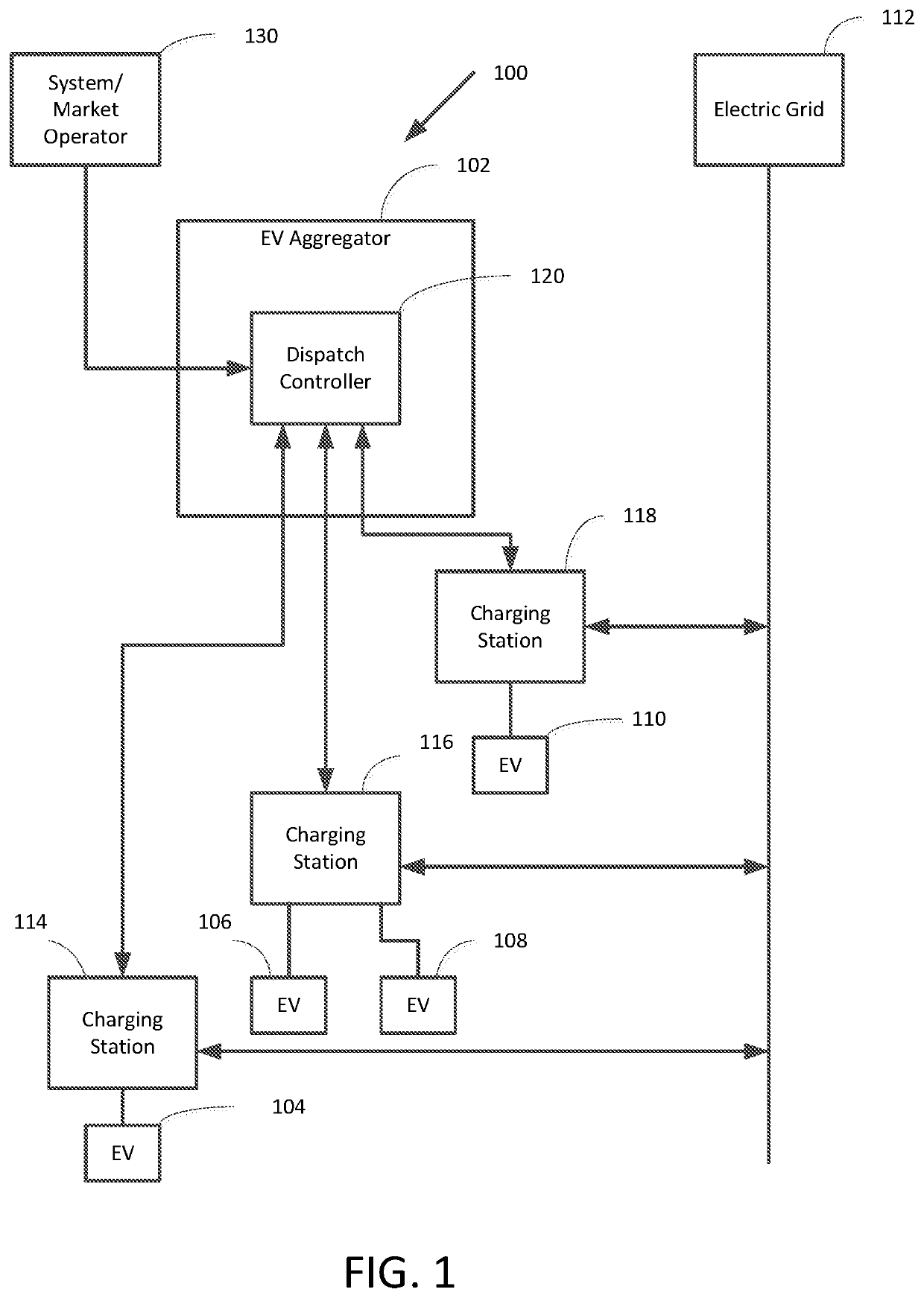
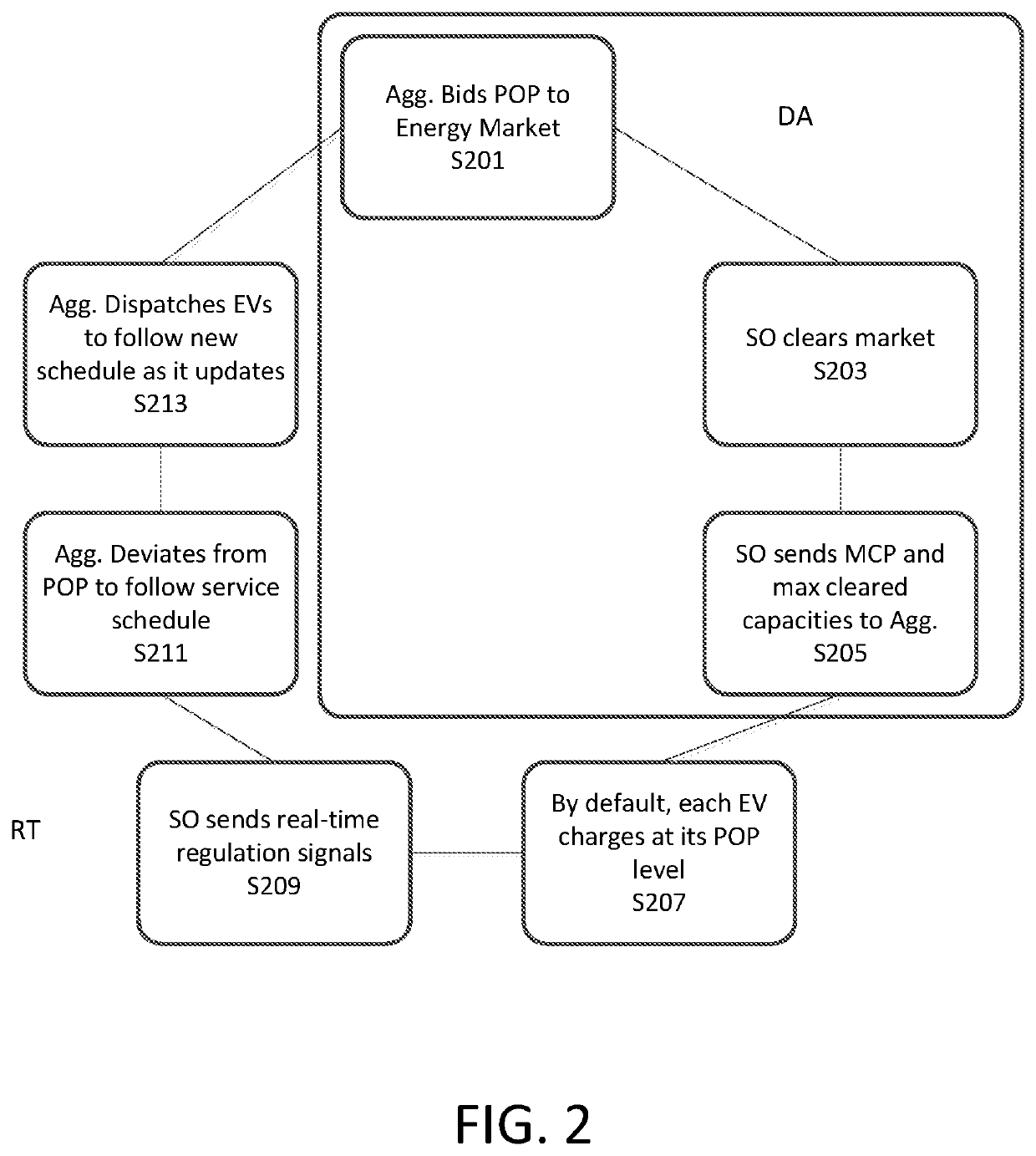
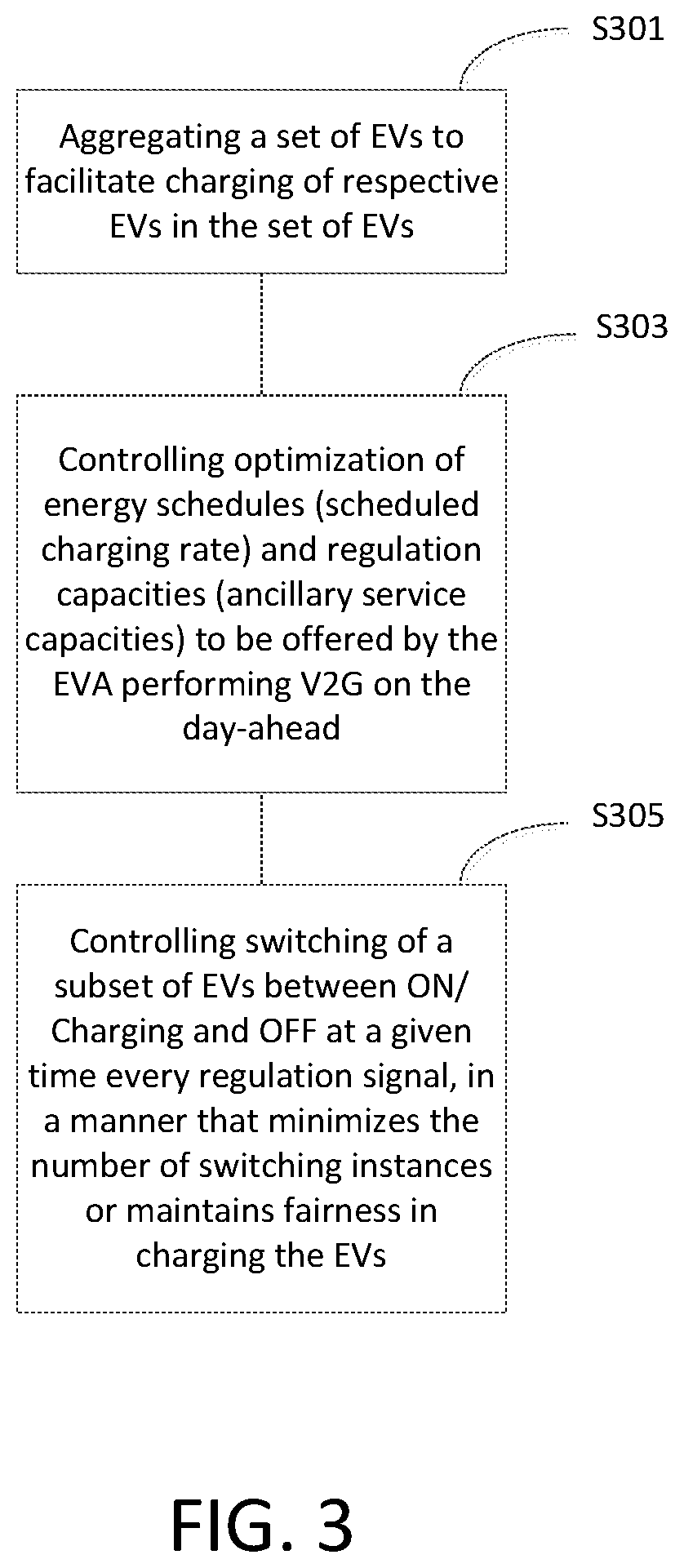
- A discrete unidirectional dispatch method that optimally switches electric vehicles (EVs) between on and off states to minimize communication messages while maintaining fairness in charging, using a two-stage charging management framework that includes day-ahead and real-time strategies to match regulation signals with reduced bandwidth requirements.

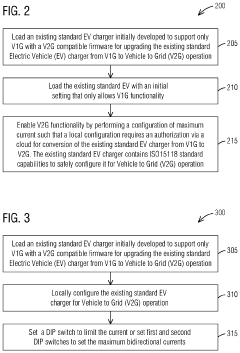
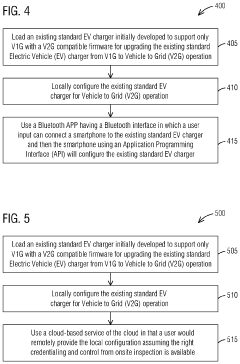
Upgrading an existing standard electric vehicle (EV) charger from grid to vehicle (V1G) to v1g plus vehicle to grid (V2G) operation
PatentPendingUS20240201974A1
Innovation
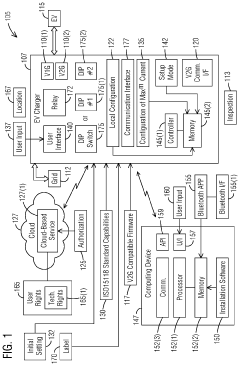
- A method to locally configure existing standard AC EV chargers with ISO15118 capabilities for V2G operation by loading V2G compatible firmware, authorizing via the cloud, and configuring maximum current, allowing bi-directional charging/discharging through a communication interface.
V2G Policy Impact Assessment
The assessment of V2G policy impact is crucial for understanding the effectiveness and implications of regulatory frameworks supporting Vehicle-to-Grid (V2G) technology. This analysis examines the multifaceted effects of V2G policies on various stakeholders and sectors within the energy ecosystem.
Policy impact on grid stability and reliability is a primary consideration. V2G regulations that encourage widespread adoption of bidirectional charging capabilities can significantly enhance grid flexibility and resilience. By allowing electric vehicles to serve as distributed energy resources, these policies can help balance supply and demand, particularly during peak hours or in response to unexpected fluctuations in renewable energy generation.
Economic implications of V2G policies are substantial for both consumers and utilities. Well-designed regulatory frameworks can create financial incentives for EV owners to participate in V2G programs, potentially reducing their overall energy costs and accelerating EV adoption. For utilities, V2G policies can lead to reduced infrastructure investment needs and improved asset utilization, ultimately resulting in more efficient grid operations and potential cost savings.
Environmental impact is another critical aspect of V2G policy assessment. By facilitating greater integration of renewable energy sources and reducing reliance on fossil fuel-based peaker plants, V2G-supportive regulations can contribute significantly to carbon emission reduction goals. This aligns with broader climate change mitigation strategies and supports the transition to a cleaner energy system.
Market dynamics are also influenced by V2G policies. Regulations that promote V2G can foster innovation in energy services, creating new business models and market opportunities. This may include the emergence of aggregators, specialized V2G service providers, and enhanced energy management systems, all of which can contribute to a more diverse and competitive energy market landscape.
Consumer behavior and acceptance are key factors in the success of V2G policies. Regulatory frameworks must address concerns related to battery degradation, privacy, and convenience to encourage widespread participation. Policies that provide clear guidelines on data protection, fair compensation, and user-friendly interfaces can help build trust and drive adoption among EV owners.
Infrastructure development is another critical area impacted by V2G policies. Regulations that mandate or incentivize the installation of bidirectional charging stations can accelerate the deployment of necessary infrastructure. This, in turn, can create jobs in the clean energy sector and stimulate economic growth in related industries.
Policy impact on grid stability and reliability is a primary consideration. V2G regulations that encourage widespread adoption of bidirectional charging capabilities can significantly enhance grid flexibility and resilience. By allowing electric vehicles to serve as distributed energy resources, these policies can help balance supply and demand, particularly during peak hours or in response to unexpected fluctuations in renewable energy generation.
Economic implications of V2G policies are substantial for both consumers and utilities. Well-designed regulatory frameworks can create financial incentives for EV owners to participate in V2G programs, potentially reducing their overall energy costs and accelerating EV adoption. For utilities, V2G policies can lead to reduced infrastructure investment needs and improved asset utilization, ultimately resulting in more efficient grid operations and potential cost savings.
Environmental impact is another critical aspect of V2G policy assessment. By facilitating greater integration of renewable energy sources and reducing reliance on fossil fuel-based peaker plants, V2G-supportive regulations can contribute significantly to carbon emission reduction goals. This aligns with broader climate change mitigation strategies and supports the transition to a cleaner energy system.
Market dynamics are also influenced by V2G policies. Regulations that promote V2G can foster innovation in energy services, creating new business models and market opportunities. This may include the emergence of aggregators, specialized V2G service providers, and enhanced energy management systems, all of which can contribute to a more diverse and competitive energy market landscape.
Consumer behavior and acceptance are key factors in the success of V2G policies. Regulatory frameworks must address concerns related to battery degradation, privacy, and convenience to encourage widespread participation. Policies that provide clear guidelines on data protection, fair compensation, and user-friendly interfaces can help build trust and drive adoption among EV owners.
Infrastructure development is another critical area impacted by V2G policies. Regulations that mandate or incentivize the installation of bidirectional charging stations can accelerate the deployment of necessary infrastructure. This, in turn, can create jobs in the clean energy sector and stimulate economic growth in related industries.
V2G Cybersecurity Considerations
Cybersecurity is a critical consideration in the development and implementation of Vehicle-to-Grid (V2G) systems. As electric vehicles become increasingly connected to the power grid, they introduce new vulnerabilities that could potentially be exploited by malicious actors. These vulnerabilities extend beyond the vehicles themselves to include charging infrastructure, communication networks, and grid management systems.
One of the primary concerns in V2G cybersecurity is the protection of sensitive data. This includes personal information of vehicle owners, charging patterns, and grid-related data. Regulatory frameworks must address data privacy and security, ensuring that appropriate encryption and access control measures are in place. Additionally, regulations should mandate regular security audits and vulnerability assessments to identify and address potential weaknesses in the V2G ecosystem.
Authentication and authorization mechanisms are crucial components of V2G cybersecurity. Regulatory frameworks should require robust identity verification for both vehicles and charging stations to prevent unauthorized access to the grid. This may involve the use of digital certificates, multi-factor authentication, and secure key management systems. Furthermore, regulations should specify the minimum security standards for communication protocols used in V2G systems, such as ISO 15118 and OpenADR, to ensure secure data exchange between vehicles, charging stations, and grid operators.
The potential for cyber-attacks to disrupt grid operations is another significant concern. Regulatory frameworks must address the need for resilience and fault tolerance in V2G systems. This includes implementing intrusion detection and prevention systems, as well as developing incident response plans to mitigate the impact of potential cyber-attacks. Regulations should also mandate the use of secure firmware and software update mechanisms to ensure that vulnerabilities can be quickly addressed as they are discovered.
Interoperability and standardization are essential aspects of V2G cybersecurity. Regulatory frameworks should promote the adoption of common security standards and protocols across different manufacturers and service providers. This approach not only enhances overall security but also facilitates the integration of diverse V2G components into a cohesive and secure ecosystem.
Lastly, regulatory frameworks must address the human factor in V2G cybersecurity. This includes mandating cybersecurity training for personnel involved in V2G operations, from vehicle manufacturers to grid operators. Regulations should also establish clear guidelines for incident reporting and information sharing among stakeholders to improve collective cybersecurity posture and response capabilities in the V2G domain.
One of the primary concerns in V2G cybersecurity is the protection of sensitive data. This includes personal information of vehicle owners, charging patterns, and grid-related data. Regulatory frameworks must address data privacy and security, ensuring that appropriate encryption and access control measures are in place. Additionally, regulations should mandate regular security audits and vulnerability assessments to identify and address potential weaknesses in the V2G ecosystem.
Authentication and authorization mechanisms are crucial components of V2G cybersecurity. Regulatory frameworks should require robust identity verification for both vehicles and charging stations to prevent unauthorized access to the grid. This may involve the use of digital certificates, multi-factor authentication, and secure key management systems. Furthermore, regulations should specify the minimum security standards for communication protocols used in V2G systems, such as ISO 15118 and OpenADR, to ensure secure data exchange between vehicles, charging stations, and grid operators.
The potential for cyber-attacks to disrupt grid operations is another significant concern. Regulatory frameworks must address the need for resilience and fault tolerance in V2G systems. This includes implementing intrusion detection and prevention systems, as well as developing incident response plans to mitigate the impact of potential cyber-attacks. Regulations should also mandate the use of secure firmware and software update mechanisms to ensure that vulnerabilities can be quickly addressed as they are discovered.
Interoperability and standardization are essential aspects of V2G cybersecurity. Regulatory frameworks should promote the adoption of common security standards and protocols across different manufacturers and service providers. This approach not only enhances overall security but also facilitates the integration of diverse V2G components into a cohesive and secure ecosystem.
Lastly, regulatory frameworks must address the human factor in V2G cybersecurity. This includes mandating cybersecurity training for personnel involved in V2G operations, from vehicle manufacturers to grid operators. Regulations should also establish clear guidelines for incident reporting and information sharing among stakeholders to improve collective cybersecurity posture and response capabilities in the V2G domain.
Unlock deeper insights with PatSnap Eureka Quick Research — get a full tech report to explore trends and direct your research. Try now!
Generate Your Research Report Instantly with AI Agent
Supercharge your innovation with PatSnap Eureka AI Agent Platform!