

How to Leverage V2G for Smart Metering Solutions?
AUG 8, 20259 MIN READ
Generate Your Research Report Instantly with AI Agent
PatSnap Eureka helps you evaluate technical feasibility & market potential.
V2G and Smart Metering Evolution
Vehicle-to-Grid (V2G) technology and smart metering solutions have evolved significantly over the past decade, driven by the increasing adoption of electric vehicles (EVs) and the need for more efficient energy management systems. The integration of these two technologies has created a synergistic relationship that is reshaping the energy landscape.
In the early 2010s, V2G was primarily a concept, with limited practical applications. The focus was on developing bidirectional charging capabilities for EVs, allowing them to not only draw power from the grid but also feed it back when needed. Concurrently, smart metering was gaining traction as utilities sought to modernize their infrastructure and improve energy consumption monitoring.
By the mid-2010s, pilot projects began to emerge, demonstrating the potential of V2G technology in conjunction with smart metering. These early trials focused on load balancing and peak shaving, utilizing EV batteries as distributed energy storage units. Smart meters played a crucial role in these projects by providing real-time data on energy consumption and grid conditions.
The late 2010s saw a significant leap forward in both V2G and smart metering technologies. Advanced communication protocols and IoT integration enabled more sophisticated energy management systems. Smart meters evolved to incorporate features such as remote disconnection, outage detection, and power quality monitoring. This period also witnessed the development of more robust V2G-enabled charging stations and vehicle-side technologies.
From 2020 onwards, the integration of V2G and smart metering has accelerated rapidly. The rollout of 5G networks has facilitated faster and more reliable communication between EVs, charging stations, and the grid. Machine learning algorithms have been implemented to optimize charging and discharging cycles based on historical data and real-time grid conditions.
Recent developments include the implementation of blockchain technology for secure and transparent energy transactions, enabling EV owners to participate in energy markets. Smart contracts are being used to automate the process of buying and selling electricity, with smart meters providing the necessary data for accurate billing and settlement.
Looking ahead, the evolution of V2G and smart metering is expected to continue at a rapid pace. The integration of artificial intelligence and predictive analytics will likely lead to more efficient grid management and personalized energy services. As the number of EVs on the road increases, V2G technology, supported by advanced smart metering solutions, is poised to play a crucial role in stabilizing the grid and facilitating the transition to renewable energy sources.
In the early 2010s, V2G was primarily a concept, with limited practical applications. The focus was on developing bidirectional charging capabilities for EVs, allowing them to not only draw power from the grid but also feed it back when needed. Concurrently, smart metering was gaining traction as utilities sought to modernize their infrastructure and improve energy consumption monitoring.
By the mid-2010s, pilot projects began to emerge, demonstrating the potential of V2G technology in conjunction with smart metering. These early trials focused on load balancing and peak shaving, utilizing EV batteries as distributed energy storage units. Smart meters played a crucial role in these projects by providing real-time data on energy consumption and grid conditions.
The late 2010s saw a significant leap forward in both V2G and smart metering technologies. Advanced communication protocols and IoT integration enabled more sophisticated energy management systems. Smart meters evolved to incorporate features such as remote disconnection, outage detection, and power quality monitoring. This period also witnessed the development of more robust V2G-enabled charging stations and vehicle-side technologies.
From 2020 onwards, the integration of V2G and smart metering has accelerated rapidly. The rollout of 5G networks has facilitated faster and more reliable communication between EVs, charging stations, and the grid. Machine learning algorithms have been implemented to optimize charging and discharging cycles based on historical data and real-time grid conditions.
Recent developments include the implementation of blockchain technology for secure and transparent energy transactions, enabling EV owners to participate in energy markets. Smart contracts are being used to automate the process of buying and selling electricity, with smart meters providing the necessary data for accurate billing and settlement.
Looking ahead, the evolution of V2G and smart metering is expected to continue at a rapid pace. The integration of artificial intelligence and predictive analytics will likely lead to more efficient grid management and personalized energy services. As the number of EVs on the road increases, V2G technology, supported by advanced smart metering solutions, is poised to play a crucial role in stabilizing the grid and facilitating the transition to renewable energy sources.
Market Demand Analysis
The market demand for Vehicle-to-Grid (V2G) technology in smart metering solutions is experiencing significant growth, driven by the increasing adoption of electric vehicles (EVs) and the need for more efficient energy management systems. As the global EV market expands, the integration of V2G capabilities into smart metering infrastructure presents a compelling opportunity for utilities, grid operators, and consumers alike.
The primary driver of market demand is the potential for V2G to address grid stability and energy management challenges. With the rising number of EVs on the roads, power grids face increased strain during peak charging times. V2G technology allows EVs to act as mobile energy storage units, capable of feeding power back into the grid when demand is high. This bidirectional flow of energy creates a more flexible and resilient grid system, reducing the need for costly infrastructure upgrades and improving overall energy efficiency.
Smart metering solutions enhanced with V2G capabilities offer utilities and grid operators valuable tools for demand response management. By leveraging the distributed energy storage capacity of EVs, these systems can help balance supply and demand in real-time, leading to more stable grid operations and reduced reliance on peaker plants. This not only improves grid reliability but also contributes to lower operational costs for utilities.
For consumers, V2G-enabled smart metering solutions present an opportunity to actively participate in the energy market. EV owners can potentially earn revenue by selling excess energy back to the grid during peak demand periods. This financial incentive is likely to drive consumer interest in V2G technology and accelerate its adoption in the residential sector.
The market demand for V2G in smart metering is further bolstered by the global push towards renewable energy integration. As countries strive to increase their renewable energy capacity, the intermittent nature of sources like solar and wind creates challenges for grid stability. V2G technology, when integrated with smart metering systems, can help mitigate these issues by providing a flexible energy storage solution that can smooth out supply fluctuations.
In the commercial and industrial sectors, there is growing interest in V2G-enabled smart metering for fleet management and energy cost optimization. Large-scale EV fleets can serve as significant energy resources, allowing businesses to reduce their energy costs and potentially generate additional revenue through grid services.
However, the market demand is not without challenges. Concerns about battery degradation, the need for standardization in V2G protocols, and the initial costs of implementing V2G-capable infrastructure may slow adoption rates. Despite these hurdles, the long-term benefits and potential for cost savings are expected to drive continued growth in the V2G smart metering market.
The primary driver of market demand is the potential for V2G to address grid stability and energy management challenges. With the rising number of EVs on the roads, power grids face increased strain during peak charging times. V2G technology allows EVs to act as mobile energy storage units, capable of feeding power back into the grid when demand is high. This bidirectional flow of energy creates a more flexible and resilient grid system, reducing the need for costly infrastructure upgrades and improving overall energy efficiency.
Smart metering solutions enhanced with V2G capabilities offer utilities and grid operators valuable tools for demand response management. By leveraging the distributed energy storage capacity of EVs, these systems can help balance supply and demand in real-time, leading to more stable grid operations and reduced reliance on peaker plants. This not only improves grid reliability but also contributes to lower operational costs for utilities.
For consumers, V2G-enabled smart metering solutions present an opportunity to actively participate in the energy market. EV owners can potentially earn revenue by selling excess energy back to the grid during peak demand periods. This financial incentive is likely to drive consumer interest in V2G technology and accelerate its adoption in the residential sector.
The market demand for V2G in smart metering is further bolstered by the global push towards renewable energy integration. As countries strive to increase their renewable energy capacity, the intermittent nature of sources like solar and wind creates challenges for grid stability. V2G technology, when integrated with smart metering systems, can help mitigate these issues by providing a flexible energy storage solution that can smooth out supply fluctuations.
In the commercial and industrial sectors, there is growing interest in V2G-enabled smart metering for fleet management and energy cost optimization. Large-scale EV fleets can serve as significant energy resources, allowing businesses to reduce their energy costs and potentially generate additional revenue through grid services.
However, the market demand is not without challenges. Concerns about battery degradation, the need for standardization in V2G protocols, and the initial costs of implementing V2G-capable infrastructure may slow adoption rates. Despite these hurdles, the long-term benefits and potential for cost savings are expected to drive continued growth in the V2G smart metering market.
V2G-Smart Meter Integration Challenges
The integration of Vehicle-to-Grid (V2G) technology with smart metering solutions presents several significant challenges that need to be addressed for successful implementation. One of the primary obstacles is the lack of standardization in communication protocols between electric vehicles (EVs) and smart meters. This inconsistency makes it difficult to establish a seamless data exchange, hindering the efficient management of energy flow between vehicles and the grid.
Another major challenge is the need for advanced bidirectional metering capabilities. Traditional smart meters are designed primarily for unidirectional energy flow from the grid to consumers. However, V2G systems require meters that can accurately measure and record both energy consumption and energy fed back into the grid from EVs. This necessitates the development and deployment of more sophisticated metering hardware and software.
The integration also faces significant cybersecurity concerns. As V2G systems involve the exchange of sensitive data between vehicles, smart meters, and the grid, they become potential targets for cyberattacks. Ensuring robust security measures to protect against data breaches, unauthorized access, and potential grid disruptions is crucial but challenging.
Furthermore, the dynamic nature of EV charging and discharging patterns poses challenges for load balancing and grid stability. Smart metering systems need to be capable of real-time monitoring and rapid response to fluctuations in energy demand and supply, which requires advanced algorithms and control systems.
There are also regulatory and policy-related challenges. The integration of V2G with smart metering involves complex issues related to energy pricing, billing, and compensation for EV owners who provide grid services. Developing fair and transparent regulatory frameworks that address these issues is essential but often complicated by varying regional policies and stakeholder interests.
Technical limitations of current EV battery technology present another hurdle. The frequent charging and discharging cycles associated with V2G can accelerate battery degradation, potentially reducing the lifespan of EV batteries. Smart metering solutions need to incorporate sophisticated battery management systems to optimize V2G operations while minimizing battery wear.
Lastly, the integration faces challenges related to consumer acceptance and behavior. Many EV owners may be hesitant to participate in V2G programs due to concerns about battery life, inconvenience, or lack of understanding about the benefits. Developing user-friendly interfaces and incentive structures that encourage participation while addressing these concerns is crucial for widespread adoption of V2G-enabled smart metering solutions.
Another major challenge is the need for advanced bidirectional metering capabilities. Traditional smart meters are designed primarily for unidirectional energy flow from the grid to consumers. However, V2G systems require meters that can accurately measure and record both energy consumption and energy fed back into the grid from EVs. This necessitates the development and deployment of more sophisticated metering hardware and software.
The integration also faces significant cybersecurity concerns. As V2G systems involve the exchange of sensitive data between vehicles, smart meters, and the grid, they become potential targets for cyberattacks. Ensuring robust security measures to protect against data breaches, unauthorized access, and potential grid disruptions is crucial but challenging.
Furthermore, the dynamic nature of EV charging and discharging patterns poses challenges for load balancing and grid stability. Smart metering systems need to be capable of real-time monitoring and rapid response to fluctuations in energy demand and supply, which requires advanced algorithms and control systems.
There are also regulatory and policy-related challenges. The integration of V2G with smart metering involves complex issues related to energy pricing, billing, and compensation for EV owners who provide grid services. Developing fair and transparent regulatory frameworks that address these issues is essential but often complicated by varying regional policies and stakeholder interests.
Technical limitations of current EV battery technology present another hurdle. The frequent charging and discharging cycles associated with V2G can accelerate battery degradation, potentially reducing the lifespan of EV batteries. Smart metering solutions need to incorporate sophisticated battery management systems to optimize V2G operations while minimizing battery wear.
Lastly, the integration faces challenges related to consumer acceptance and behavior. Many EV owners may be hesitant to participate in V2G programs due to concerns about battery life, inconvenience, or lack of understanding about the benefits. Developing user-friendly interfaces and incentive structures that encourage participation while addressing these concerns is crucial for widespread adoption of V2G-enabled smart metering solutions.
Current V2G-Smart Meter Solutions
01 Smart metering systems for V2G integration
Advanced metering systems designed specifically for V2G applications, enabling accurate measurement and management of bidirectional power flow between electric vehicles and the grid. These systems facilitate real-time monitoring, data collection, and communication for efficient V2G operations.- Smart metering systems for V2G integration: Advanced metering systems designed specifically for Vehicle-to-Grid (V2G) applications, enabling accurate measurement and management of bidirectional power flow between electric vehicles and the grid. These systems facilitate real-time monitoring, data collection, and communication for efficient V2G operations.
- V2G communication protocols and networks: Development of specialized communication protocols and network infrastructures to support V2G smart metering. These systems enable secure and reliable data exchange between vehicles, charging stations, and grid operators, ensuring seamless integration and control of V2G services.
- Energy management and load balancing for V2G: Intelligent energy management systems that utilize V2G smart metering data to optimize load balancing and grid stability. These solutions incorporate predictive algorithms and real-time analytics to efficiently manage power flow between vehicles and the grid, considering factors such as energy demand, pricing, and grid capacity.
- V2G billing and transaction management: Innovative billing and transaction management systems designed for V2G applications, leveraging smart metering data to accurately track and monetize energy exchanges. These solutions enable transparent and fair compensation for vehicle owners participating in V2G services while ensuring proper accounting for grid operators.
- Security and privacy in V2G smart metering: Advanced security and privacy measures implemented in V2G smart metering systems to protect sensitive data and prevent unauthorized access. These technologies ensure the integrity of metering information, safeguard user privacy, and maintain the overall security of the V2G ecosystem.
02 V2G communication protocols and networks
Development of specialized communication protocols and network infrastructures to support V2G smart metering. These systems enable secure and efficient data exchange between vehicles, charging stations, and grid operators, ensuring seamless integration and operation of V2G services.Expand Specific Solutions03 Energy management and optimization algorithms for V2G
Intelligent algorithms and software solutions for optimizing energy flow in V2G systems. These technologies manage charging and discharging cycles, predict energy demand, and balance grid load, maximizing the benefits of V2G integration for both vehicle owners and grid operators.Expand Specific Solutions04 V2G-enabled smart charging stations
Advanced charging stations equipped with smart metering capabilities for V2G applications. These stations can measure bidirectional power flow, communicate with vehicles and the grid, and implement dynamic pricing and energy management strategies to support V2G operations.Expand Specific Solutions05 Security and privacy measures for V2G smart metering
Innovative security protocols and privacy-preserving techniques specifically designed for V2G smart metering systems. These solutions protect sensitive user data, ensure secure transactions, and prevent unauthorized access or manipulation of V2G metering information.Expand Specific Solutions
Key Players in V2G and Smart Metering
The V2G (Vehicle-to-Grid) smart metering market is in its early growth stage, with increasing interest from utilities, automakers, and technology providers. The global market size is projected to expand significantly in the coming years, driven by the growing adoption of electric vehicles and the need for grid stability. While the technology is still evolving, several key players are making strides in this space. State Grid Corporation of China, Toyota Motor Corporation, and Honda Motor Co., Ltd. are investing in V2G research and pilot projects. Companies like Sirius XM Radio LLC and Vodafone IP Licensing Ltd. are exploring potential applications in connectivity and data management for V2G systems. As the technology matures, collaboration between automotive, energy, and tech sectors will be crucial for widespread implementation of V2G smart metering solutions.
State Grid Corp. of China
Technical Solution: State Grid Corp. of China has developed a comprehensive V2G-enabled smart metering solution that integrates electric vehicles into the grid infrastructure. Their system utilizes advanced bi-directional charging stations and smart meters to facilitate real-time energy exchange between EVs and the grid. The solution incorporates a cloud-based management platform that optimizes energy flow based on grid demand, EV battery status, and electricity pricing[1]. State Grid has also implemented blockchain technology to ensure secure and transparent energy transactions, enhancing trust among stakeholders[3]. The system includes predictive analytics to forecast grid load and EV charging patterns, enabling proactive grid management and load balancing[5].
Strengths: Extensive grid infrastructure, large-scale implementation capability, and advanced technology integration. Weaknesses: Potential regulatory challenges and the need for widespread EV adoption to maximize system effectiveness.
Toyota Motor Corp.
Technical Solution: Toyota has developed a V2G system that leverages their hybrid and electric vehicle technology to support smart metering solutions. Their approach focuses on utilizing the high-capacity batteries in their vehicles as distributed energy storage units. Toyota's system includes intelligent charging stations that can communicate with both the vehicle and the grid, enabling dynamic power flow management[2]. The company has also implemented a sophisticated energy management system that optimizes charging and discharging based on grid conditions, energy prices, and user preferences[4]. Toyota's V2G solution incorporates machine learning algorithms to predict energy demand and supply patterns, improving overall grid stability and efficiency[6].
Strengths: Extensive experience in EV technology, global market presence, and strong R&D capabilities. Weaknesses: Limited direct control over grid infrastructure and potential compatibility issues with different regional grid systems.
Core V2G-Smart Meter Innovations
Device to grid discharging and charging
PatentPendingUS20250162436A1
Innovation
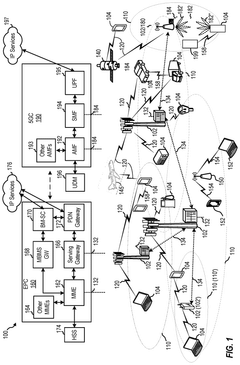
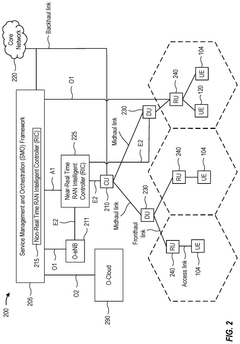
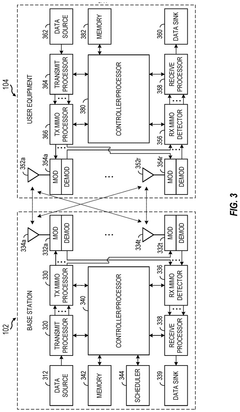
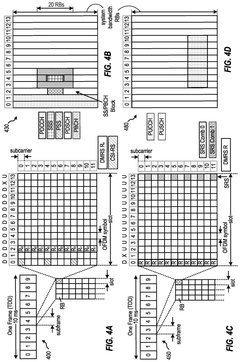
- A method for device-to-grid charge transfer that involves a controller associated with the electric grid requesting charge transfer from a wireless communication device, with the device sending a message indicating acceptance or rejection based on power requirements, and configuring the charge transfer accordingly.
Communication method between electric vehicle, supply equipment and power grid operation server and power transmission device embedded in electric vehicle
PatentPendingUS20240383364A1
Innovation
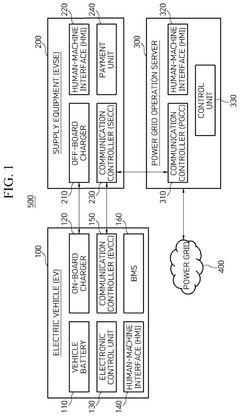
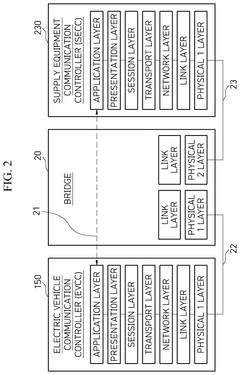
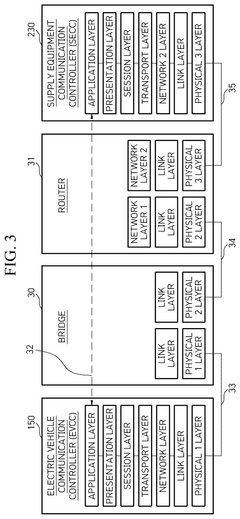
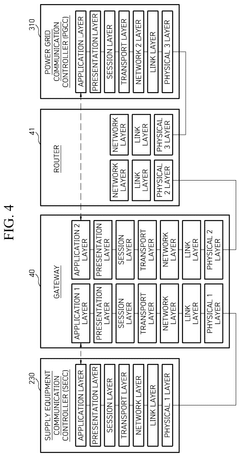
- A communication method and system that enables electric vehicles to transmit discharge schedules and costs to supply equipment and power grid controllers, facilitating authorization and efficient energy transfer, including a human-machine interface, on-board charger, and electric vehicle communication controller for managing energy transfer and billing.
Regulatory Framework for V2G Integration
The regulatory framework for Vehicle-to-Grid (V2G) integration is a critical component in leveraging V2G technology for smart metering solutions. As V2G systems involve complex interactions between electric vehicles, power grids, and energy markets, a comprehensive regulatory structure is essential to ensure smooth operation, fair practices, and consumer protection.
At the national level, regulatory bodies such as the Federal Energy Regulatory Commission (FERC) in the United States play a crucial role in establishing guidelines for V2G integration. These regulations typically address issues such as grid interconnection standards, market participation rules, and tariff structures for V2G services. For instance, FERC Order 2222 in the US has opened up opportunities for distributed energy resources, including electric vehicles, to participate in wholesale electricity markets.
State-level regulations also significantly impact V2G implementation. Many states have adopted policies to promote electric vehicle adoption and grid modernization, which indirectly support V2G integration. These may include incentives for V2G-capable charging infrastructure, requirements for utilities to consider V2G in their resource planning, or mandates for smart meter deployment that can facilitate V2G communications.
Technical standards play a crucial role in the regulatory framework. Organizations like the Society of Automotive Engineers (SAE) and the International Electrotechnical Commission (IEC) have developed standards for V2G communication protocols and hardware interfaces. These standards ensure interoperability between different vehicle models, charging stations, and grid systems, which is essential for widespread V2G adoption.
Data privacy and cybersecurity regulations are particularly important in the context of V2G and smart metering. As V2G systems involve the exchange of sensitive information about energy usage and vehicle charging patterns, robust data protection measures are necessary. Regulations such as the General Data Protection Regulation (GDPR) in Europe provide a framework for handling personal data in V2G applications.
The regulatory framework must also address the economic aspects of V2G integration. This includes defining mechanisms for compensating EV owners for grid services, establishing pricing structures for V2G-enabled charging, and ensuring fair competition in V2G service provision. Some jurisdictions have implemented time-of-use electricity rates or dynamic pricing schemes that can incentivize V2G participation.
Looking ahead, regulatory frameworks will need to evolve to keep pace with technological advancements in V2G and smart metering. This may involve updating grid codes to accommodate higher levels of bi-directional power flow, developing new market products for V2G services, and addressing emerging issues such as the impact of V2G on battery warranties and vehicle performance.
At the national level, regulatory bodies such as the Federal Energy Regulatory Commission (FERC) in the United States play a crucial role in establishing guidelines for V2G integration. These regulations typically address issues such as grid interconnection standards, market participation rules, and tariff structures for V2G services. For instance, FERC Order 2222 in the US has opened up opportunities for distributed energy resources, including electric vehicles, to participate in wholesale electricity markets.
State-level regulations also significantly impact V2G implementation. Many states have adopted policies to promote electric vehicle adoption and grid modernization, which indirectly support V2G integration. These may include incentives for V2G-capable charging infrastructure, requirements for utilities to consider V2G in their resource planning, or mandates for smart meter deployment that can facilitate V2G communications.
Technical standards play a crucial role in the regulatory framework. Organizations like the Society of Automotive Engineers (SAE) and the International Electrotechnical Commission (IEC) have developed standards for V2G communication protocols and hardware interfaces. These standards ensure interoperability between different vehicle models, charging stations, and grid systems, which is essential for widespread V2G adoption.
Data privacy and cybersecurity regulations are particularly important in the context of V2G and smart metering. As V2G systems involve the exchange of sensitive information about energy usage and vehicle charging patterns, robust data protection measures are necessary. Regulations such as the General Data Protection Regulation (GDPR) in Europe provide a framework for handling personal data in V2G applications.
The regulatory framework must also address the economic aspects of V2G integration. This includes defining mechanisms for compensating EV owners for grid services, establishing pricing structures for V2G-enabled charging, and ensuring fair competition in V2G service provision. Some jurisdictions have implemented time-of-use electricity rates or dynamic pricing schemes that can incentivize V2G participation.
Looking ahead, regulatory frameworks will need to evolve to keep pace with technological advancements in V2G and smart metering. This may involve updating grid codes to accommodate higher levels of bi-directional power flow, developing new market products for V2G services, and addressing emerging issues such as the impact of V2G on battery warranties and vehicle performance.
Cybersecurity in V2G-Smart Meter Systems
Cybersecurity in V2G-Smart Meter Systems is a critical aspect of leveraging Vehicle-to-Grid (V2G) technology for smart metering solutions. As V2G systems integrate electric vehicles with the power grid, they introduce new vulnerabilities that must be addressed to ensure the integrity and reliability of the smart grid infrastructure.
One of the primary security concerns in V2G-Smart Meter Systems is data privacy. Smart meters collect and transmit sensitive information about energy consumption patterns, which could be exploited if not properly protected. Encryption techniques, such as Advanced Encryption Standard (AES), are employed to secure data transmission between vehicles, charging stations, and smart meters.
Authentication and access control mechanisms play a crucial role in preventing unauthorized access to V2G systems. Multi-factor authentication and role-based access control (RBAC) are implemented to ensure that only authorized personnel can interact with the smart metering infrastructure. This helps mitigate the risk of malicious actors tampering with energy data or disrupting grid operations.
Network segmentation is another essential security measure in V2G-Smart Meter Systems. By isolating different components of the system, such as the charging infrastructure, vehicle communication networks, and smart meter data collection systems, the potential impact of a security breach can be contained. This approach limits the ability of attackers to move laterally within the network and compromise multiple systems.
Intrusion detection and prevention systems (IDPS) are deployed to monitor V2G-Smart Meter networks for suspicious activities. These systems use machine learning algorithms to analyze network traffic patterns and identify potential threats in real-time. By detecting and responding to security incidents promptly, IDPS helps maintain the overall integrity of the V2G ecosystem.
Secure firmware updates are crucial for maintaining the security of V2G-Smart Meter Systems. Regular updates address known vulnerabilities and introduce new security features. Implementing a robust and secure update mechanism ensures that all components of the system, including smart meters and charging stations, remain protected against evolving cyber threats.
Physical security measures are also essential in protecting V2G-Smart Meter Systems. Tamper-evident seals, secure enclosures, and surveillance systems are employed to prevent physical attacks on smart meters and charging infrastructure. These measures complement the digital security controls and provide a comprehensive approach to system protection.
As V2G technology continues to evolve, ongoing security assessments and penetration testing are necessary to identify and address new vulnerabilities. Regular security audits and compliance checks ensure that V2G-Smart Meter Systems adhere to industry standards and regulatory requirements, such as those set by the National Institute of Standards and Technology (NIST) and the European Network and Information Security Agency (ENISA).
One of the primary security concerns in V2G-Smart Meter Systems is data privacy. Smart meters collect and transmit sensitive information about energy consumption patterns, which could be exploited if not properly protected. Encryption techniques, such as Advanced Encryption Standard (AES), are employed to secure data transmission between vehicles, charging stations, and smart meters.
Authentication and access control mechanisms play a crucial role in preventing unauthorized access to V2G systems. Multi-factor authentication and role-based access control (RBAC) are implemented to ensure that only authorized personnel can interact with the smart metering infrastructure. This helps mitigate the risk of malicious actors tampering with energy data or disrupting grid operations.
Network segmentation is another essential security measure in V2G-Smart Meter Systems. By isolating different components of the system, such as the charging infrastructure, vehicle communication networks, and smart meter data collection systems, the potential impact of a security breach can be contained. This approach limits the ability of attackers to move laterally within the network and compromise multiple systems.
Intrusion detection and prevention systems (IDPS) are deployed to monitor V2G-Smart Meter networks for suspicious activities. These systems use machine learning algorithms to analyze network traffic patterns and identify potential threats in real-time. By detecting and responding to security incidents promptly, IDPS helps maintain the overall integrity of the V2G ecosystem.
Secure firmware updates are crucial for maintaining the security of V2G-Smart Meter Systems. Regular updates address known vulnerabilities and introduce new security features. Implementing a robust and secure update mechanism ensures that all components of the system, including smart meters and charging stations, remain protected against evolving cyber threats.
Physical security measures are also essential in protecting V2G-Smart Meter Systems. Tamper-evident seals, secure enclosures, and surveillance systems are employed to prevent physical attacks on smart meters and charging infrastructure. These measures complement the digital security controls and provide a comprehensive approach to system protection.
As V2G technology continues to evolve, ongoing security assessments and penetration testing are necessary to identify and address new vulnerabilities. Regular security audits and compliance checks ensure that V2G-Smart Meter Systems adhere to industry standards and regulatory requirements, such as those set by the National Institute of Standards and Technology (NIST) and the European Network and Information Security Agency (ENISA).
Unlock deeper insights with PatSnap Eureka Quick Research — get a full tech report to explore trends and direct your research. Try now!
Generate Your Research Report Instantly with AI Agent
Supercharge your innovation with PatSnap Eureka AI Agent Platform!