

V2G as a Catalyst for Renewable Energy Progress
AUG 8, 20259 MIN READ
Generate Your Research Report Instantly with AI Agent
PatSnap Eureka helps you evaluate technical feasibility & market potential.
V2G Technology Evolution and Objectives
Vehicle-to-Grid (V2G) technology has emerged as a promising solution at the intersection of electric vehicles (EVs) and renewable energy systems. The evolution of V2G technology can be traced back to the early 2000s when the concept was first introduced. Initially, V2G was primarily viewed as a means to stabilize the power grid by utilizing EV batteries as distributed energy storage units.
As renewable energy sources gained prominence, the potential of V2G as a catalyst for their integration became increasingly apparent. The technology has since evolved to address the intermittent nature of renewable energy generation, particularly wind and solar power. V2G systems have progressed from simple unidirectional charging to sophisticated bidirectional power flow capabilities, allowing EVs to both draw from and feed energy back into the grid.
The objectives of V2G technology in the context of renewable energy progress are multifaceted. Primarily, it aims to enhance grid stability and resilience by providing a flexible and distributed energy storage network. This is crucial for accommodating the variable output of renewable sources. Additionally, V2G seeks to optimize the utilization of renewable energy by storing excess generation during peak production periods and supplying it back to the grid during high demand or low generation times.
Another key objective is to reduce the overall carbon footprint of the transportation and energy sectors. By enabling greater integration of renewable energy sources, V2G technology contributes to the decarbonization of both electric vehicle charging and the broader power grid. This aligns with global efforts to combat climate change and transition towards sustainable energy systems.
Furthermore, V2G technology aims to create new economic opportunities for EV owners and utilities alike. It envisions a future where EV owners can participate in energy markets, earning revenue by providing grid services. For utilities, V2G offers a cost-effective alternative to traditional grid infrastructure upgrades, potentially deferring or reducing the need for expensive peak power plants.
As the technology continues to mature, its objectives have expanded to include enhancing energy independence and security at both local and national levels. By leveraging the distributed nature of EVs, V2G systems can contribute to the creation of microgrids and improve the resilience of communities against power outages and other grid disruptions.
Looking ahead, the evolution of V2G technology is expected to focus on improving efficiency, reducing costs, and developing more sophisticated control algorithms. These advancements will be crucial in realizing the full potential of V2G as a catalyst for renewable energy progress and in achieving the broader goals of a sustainable, reliable, and flexible energy future.
As renewable energy sources gained prominence, the potential of V2G as a catalyst for their integration became increasingly apparent. The technology has since evolved to address the intermittent nature of renewable energy generation, particularly wind and solar power. V2G systems have progressed from simple unidirectional charging to sophisticated bidirectional power flow capabilities, allowing EVs to both draw from and feed energy back into the grid.
The objectives of V2G technology in the context of renewable energy progress are multifaceted. Primarily, it aims to enhance grid stability and resilience by providing a flexible and distributed energy storage network. This is crucial for accommodating the variable output of renewable sources. Additionally, V2G seeks to optimize the utilization of renewable energy by storing excess generation during peak production periods and supplying it back to the grid during high demand or low generation times.
Another key objective is to reduce the overall carbon footprint of the transportation and energy sectors. By enabling greater integration of renewable energy sources, V2G technology contributes to the decarbonization of both electric vehicle charging and the broader power grid. This aligns with global efforts to combat climate change and transition towards sustainable energy systems.
Furthermore, V2G technology aims to create new economic opportunities for EV owners and utilities alike. It envisions a future where EV owners can participate in energy markets, earning revenue by providing grid services. For utilities, V2G offers a cost-effective alternative to traditional grid infrastructure upgrades, potentially deferring or reducing the need for expensive peak power plants.
As the technology continues to mature, its objectives have expanded to include enhancing energy independence and security at both local and national levels. By leveraging the distributed nature of EVs, V2G systems can contribute to the creation of microgrids and improve the resilience of communities against power outages and other grid disruptions.
Looking ahead, the evolution of V2G technology is expected to focus on improving efficiency, reducing costs, and developing more sophisticated control algorithms. These advancements will be crucial in realizing the full potential of V2G as a catalyst for renewable energy progress and in achieving the broader goals of a sustainable, reliable, and flexible energy future.
Market Demand for V2G Solutions
The market demand for Vehicle-to-Grid (V2G) solutions is experiencing significant growth as the world transitions towards renewable energy sources and sustainable transportation. This demand is driven by several factors, including the increasing adoption of electric vehicles (EVs), the need for grid stability, and the push for more efficient energy management systems.
Electric vehicle sales have been surging globally, with many countries setting ambitious targets for EV adoption. This rapid growth in the EV market creates a natural demand for V2G technology, as it allows EV owners to participate in the energy market and potentially offset some of their vehicle costs. Fleet operators, in particular, are showing keen interest in V2G solutions, as they can leverage their large number of vehicles to provide substantial grid services and generate additional revenue streams.
Utility companies are another major driver of V2G demand. As the penetration of renewable energy sources increases, grid operators face challenges in managing the intermittency of solar and wind power. V2G technology offers a promising solution by using EV batteries as distributed energy storage systems, helping to balance supply and demand and improve grid stability. This capability is particularly valuable in regions with high renewable energy penetration or aging grid infrastructure.
The demand for V2G solutions is also being fueled by government policies and incentives. Many countries are implementing regulations that encourage the integration of EVs into the grid, recognizing the potential of V2G to support renewable energy goals and enhance energy security. These policies often include financial incentives for V2G-enabled charging infrastructure and participation in grid services programs.
Commercial and industrial sectors are emerging as significant markets for V2G technology. Businesses are increasingly interested in demand response programs and energy management solutions that can reduce their electricity costs and carbon footprint. V2G systems offer these organizations the ability to optimize their energy consumption, participate in energy markets, and contribute to sustainability goals.
The residential sector is also showing growing interest in V2G solutions, particularly in combination with home solar systems and smart home technologies. Homeowners are attracted to the potential of using their EVs as backup power sources during outages and the ability to reduce their reliance on the grid during peak hours.
However, the market demand for V2G solutions is not without challenges. Concerns about battery degradation, the need for standardization, and the complexity of implementing V2G systems at scale are factors that could potentially limit adoption. Additionally, the regulatory landscape in many regions is still evolving, which can create uncertainty for potential investors and users.
Despite these challenges, the overall market trajectory for V2G solutions remains positive. As technology improves, costs decrease, and regulatory frameworks mature, the demand for V2G is expected to accelerate, playing a crucial role in the broader transition to a more sustainable and resilient energy ecosystem.
Electric vehicle sales have been surging globally, with many countries setting ambitious targets for EV adoption. This rapid growth in the EV market creates a natural demand for V2G technology, as it allows EV owners to participate in the energy market and potentially offset some of their vehicle costs. Fleet operators, in particular, are showing keen interest in V2G solutions, as they can leverage their large number of vehicles to provide substantial grid services and generate additional revenue streams.
Utility companies are another major driver of V2G demand. As the penetration of renewable energy sources increases, grid operators face challenges in managing the intermittency of solar and wind power. V2G technology offers a promising solution by using EV batteries as distributed energy storage systems, helping to balance supply and demand and improve grid stability. This capability is particularly valuable in regions with high renewable energy penetration or aging grid infrastructure.
The demand for V2G solutions is also being fueled by government policies and incentives. Many countries are implementing regulations that encourage the integration of EVs into the grid, recognizing the potential of V2G to support renewable energy goals and enhance energy security. These policies often include financial incentives for V2G-enabled charging infrastructure and participation in grid services programs.
Commercial and industrial sectors are emerging as significant markets for V2G technology. Businesses are increasingly interested in demand response programs and energy management solutions that can reduce their electricity costs and carbon footprint. V2G systems offer these organizations the ability to optimize their energy consumption, participate in energy markets, and contribute to sustainability goals.
The residential sector is also showing growing interest in V2G solutions, particularly in combination with home solar systems and smart home technologies. Homeowners are attracted to the potential of using their EVs as backup power sources during outages and the ability to reduce their reliance on the grid during peak hours.
However, the market demand for V2G solutions is not without challenges. Concerns about battery degradation, the need for standardization, and the complexity of implementing V2G systems at scale are factors that could potentially limit adoption. Additionally, the regulatory landscape in many regions is still evolving, which can create uncertainty for potential investors and users.
Despite these challenges, the overall market trajectory for V2G solutions remains positive. As technology improves, costs decrease, and regulatory frameworks mature, the demand for V2G is expected to accelerate, playing a crucial role in the broader transition to a more sustainable and resilient energy ecosystem.
V2G Technical Challenges and Barriers
Vehicle-to-Grid (V2G) technology, while promising, faces several significant technical challenges and barriers that hinder its widespread adoption and integration into renewable energy systems. One of the primary obstacles is the complexity of bidirectional power flow management. Ensuring seamless and efficient power transfer between electric vehicles (EVs) and the grid requires sophisticated control systems and power electronics, which are still evolving.
Battery degradation is another critical concern. The frequent charging and discharging cycles associated with V2G operations can accelerate battery wear, potentially reducing the lifespan of EV batteries. This issue raises questions about the long-term economic viability of V2G systems and necessitates the development of advanced battery management strategies to mitigate degradation effects.
Standardization remains a significant hurdle in V2G implementation. The lack of universal protocols for communication between EVs, charging stations, and grid operators hampers interoperability and scalability. This fragmentation in standards creates barriers for manufacturers and slows down the development of a cohesive V2G ecosystem.
Grid stability and reliability present additional challenges. As the number of EVs participating in V2G increases, managing the fluctuations in power supply and demand becomes more complex. Grid operators must develop robust algorithms and control systems to maintain grid stability while accommodating the variable nature of V2G power flows.
The current charging infrastructure is not fully equipped to support widespread V2G implementation. Many existing charging stations lack bidirectional capabilities, and upgrading the infrastructure requires significant investment. This limitation restricts the potential scale and impact of V2G systems in supporting renewable energy integration.
Cybersecurity concerns pose another barrier to V2G adoption. The interconnected nature of V2G systems creates potential vulnerabilities that could be exploited by malicious actors. Ensuring the security of data transmission and protecting the grid from cyber threats are crucial challenges that need to be addressed.
Regulatory frameworks and market structures also present obstacles. Many regions lack clear policies and regulations governing V2G operations, creating uncertainty for stakeholders. Additionally, current electricity market structures may not adequately incentivize V2G participation, limiting its economic attractiveness.
Overcoming these technical challenges and barriers requires concerted efforts from researchers, industry players, and policymakers. Advancements in battery technology, power electronics, and grid management systems are essential to address the core technical issues. Simultaneously, the development of standardized protocols, robust cybersecurity measures, and supportive regulatory frameworks will be crucial in creating an environment conducive to V2G integration and its role in advancing renewable energy progress.
Battery degradation is another critical concern. The frequent charging and discharging cycles associated with V2G operations can accelerate battery wear, potentially reducing the lifespan of EV batteries. This issue raises questions about the long-term economic viability of V2G systems and necessitates the development of advanced battery management strategies to mitigate degradation effects.
Standardization remains a significant hurdle in V2G implementation. The lack of universal protocols for communication between EVs, charging stations, and grid operators hampers interoperability and scalability. This fragmentation in standards creates barriers for manufacturers and slows down the development of a cohesive V2G ecosystem.
Grid stability and reliability present additional challenges. As the number of EVs participating in V2G increases, managing the fluctuations in power supply and demand becomes more complex. Grid operators must develop robust algorithms and control systems to maintain grid stability while accommodating the variable nature of V2G power flows.
The current charging infrastructure is not fully equipped to support widespread V2G implementation. Many existing charging stations lack bidirectional capabilities, and upgrading the infrastructure requires significant investment. This limitation restricts the potential scale and impact of V2G systems in supporting renewable energy integration.
Cybersecurity concerns pose another barrier to V2G adoption. The interconnected nature of V2G systems creates potential vulnerabilities that could be exploited by malicious actors. Ensuring the security of data transmission and protecting the grid from cyber threats are crucial challenges that need to be addressed.
Regulatory frameworks and market structures also present obstacles. Many regions lack clear policies and regulations governing V2G operations, creating uncertainty for stakeholders. Additionally, current electricity market structures may not adequately incentivize V2G participation, limiting its economic attractiveness.
Overcoming these technical challenges and barriers requires concerted efforts from researchers, industry players, and policymakers. Advancements in battery technology, power electronics, and grid management systems are essential to address the core technical issues. Simultaneously, the development of standardized protocols, robust cybersecurity measures, and supportive regulatory frameworks will be crucial in creating an environment conducive to V2G integration and its role in advancing renewable energy progress.
Current V2G Implementation Strategies
01 V2G integration with renewable energy sources
Vehicle-to-Grid (V2G) technology is being integrated with renewable energy sources to enhance grid stability and optimize energy distribution. This integration allows electric vehicles to act as mobile energy storage units, helping to balance the intermittent nature of renewable energy generation. The system enables bidirectional power flow between vehicles and the grid, supporting the increased adoption of renewable energy sources.- V2G integration with renewable energy sources: Vehicle-to-Grid (V2G) technology is being integrated with renewable energy sources to enhance grid stability and optimize energy distribution. This integration allows electric vehicles to act as mobile energy storage units, helping to balance the intermittent nature of renewable energy generation. The system enables bidirectional power flow between vehicles and the grid, supporting the increased adoption of renewable energy sources.
- Smart charging and energy management systems: Advanced smart charging and energy management systems are being developed to optimize V2G operations. These systems use artificial intelligence and machine learning algorithms to predict energy demand, manage charging schedules, and coordinate power flow between vehicles and the grid. This intelligent management helps to maximize the utilization of renewable energy and reduce strain on the grid during peak demand periods.
- V2G infrastructure and communication protocols: Progress is being made in developing standardized V2G infrastructure and communication protocols. This includes the design of bidirectional charging stations, grid connection interfaces, and secure data exchange systems. Standardization efforts aim to ensure interoperability between different vehicle models, charging equipment, and grid systems, facilitating widespread adoption of V2G technology.
- V2G market mechanisms and incentives: New market mechanisms and incentive structures are being developed to encourage V2G participation. These include dynamic pricing models, grid services compensation, and regulatory frameworks that enable electric vehicle owners to monetize their vehicle's battery capacity. Such mechanisms aim to create a sustainable ecosystem for V2G technology and accelerate its integration with renewable energy systems.
- V2G impact on grid resilience and renewable energy integration: Research is ongoing to assess and enhance the impact of V2G technology on grid resilience and renewable energy integration. Studies focus on quantifying the benefits of V2G in terms of grid stability, peak load reduction, and increased renewable energy penetration. Additionally, efforts are being made to develop strategies for large-scale V2G deployment and its role in supporting a more sustainable and flexible energy infrastructure.
02 Smart charging and energy management systems
Advanced smart charging and energy management systems are being developed to optimize V2G operations. These systems use artificial intelligence and machine learning algorithms to predict energy demand, manage charging schedules, and coordinate power flow between vehicles and the grid. This intelligent management helps to maximize the efficiency of renewable energy utilization and reduce strain on the grid during peak demand periods.Expand Specific Solutions03 V2G infrastructure and communication protocols
Progress is being made in developing standardized V2G infrastructure and communication protocols. This includes the creation of robust charging stations capable of bidirectional power flow and the implementation of secure, interoperable communication systems between vehicles, charging stations, and the grid. These advancements are crucial for the widespread adoption of V2G technology and its integration with renewable energy systems.Expand Specific Solutions04 V2G market mechanisms and incentives
New market mechanisms and incentive structures are being developed to encourage participation in V2G programs. These include dynamic pricing models, rewards for grid services provided by electric vehicle owners, and innovative business models that leverage V2G capabilities. Such mechanisms aim to accelerate the adoption of V2G technology and support the growth of renewable energy in the power grid.Expand Specific Solutions05 V2G integration with microgrids and local energy systems
Research is focusing on integrating V2G technology with microgrids and local energy systems. This approach enables communities to create resilient, self-sustaining energy networks that can operate independently from the main grid when necessary. By combining V2G capabilities with local renewable energy generation, these systems can enhance energy security and promote the use of clean energy sources at a community level.Expand Specific Solutions
Key Players in V2G Ecosystem
The V2G (Vehicle-to-Grid) market is in its early growth stage, characterized by increasing adoption of electric vehicles and growing interest in smart grid technologies. The global V2G market size is projected to expand significantly in the coming years, driven by the push for renewable energy integration and grid stability. While the technology is still evolving, several key players are making strides in its development and implementation. Companies like Honda Motor Co., Ltd., Toyota Motor Corp., and ChargePoint, Inc. are at the forefront, investing in V2G-compatible vehicles and charging infrastructure. State Grid Corp. of China and other power utilities are exploring V2G's potential for grid management. Research institutions such as the Chinese Academy of Science Guangzhou Energy Research Institute and South China University of Technology are contributing to technological advancements, indicating a growing maturity in the field.
State Grid Corp. of China
Technical Solution: State Grid Corp. of China has developed a comprehensive V2G (Vehicle-to-Grid) system that integrates electric vehicles into the power grid. Their solution includes bi-directional charging stations, smart grid management software, and advanced energy storage systems. The company has implemented large-scale V2G pilot projects across multiple provinces, demonstrating the technology's potential to stabilize grid operations and promote renewable energy integration[1]. Their system utilizes AI-driven algorithms to optimize charging and discharging schedules based on real-time grid conditions and renewable energy availability[2]. State Grid has also developed standardized V2G protocols to ensure interoperability between different EV models and charging infrastructure[3].
Strengths: Extensive grid infrastructure, large-scale implementation capability, and advanced AI-driven optimization. Weaknesses: Potential regulatory challenges and the need for widespread EV adoption to maximize V2G benefits.
Siemens Industry, Inc.
Technical Solution: Siemens has developed a comprehensive V2G solution that integrates seamlessly with their existing smart grid technologies. Their system includes bi-directional charging hardware, grid management software, and advanced forecasting algorithms. Siemens' V2G technology enables dynamic load balancing, allowing EVs to act as mobile energy storage units that can feed power back to the grid during peak demand periods[4]. The company has implemented V2G pilot projects in several European countries, demonstrating up to 15% improvement in grid stability and a 20% increase in renewable energy integration[5]. Siemens' V2G solution also incorporates blockchain technology for secure and transparent energy transactions between EV owners and grid operators[6].
Strengths: Strong integration with existing smart grid infrastructure, advanced forecasting capabilities, and blockchain-based transaction system. Weaknesses: Limited presence in some emerging EV markets and potential scalability challenges in regions with less developed grid infrastructure.
Core V2G Innovations and Patents
Dynamic adjusting system and method for participation of electric vehicle in power grid based on V2G technology
PatentActiveCN118651117A
Innovation
- The battery status is monitored in real time through the data acquisition module. The battery management module dynamically adjusts the charge and discharge strategy according to the comprehensive evaluation value and grid demand. The optimization module includes a dynamic response unit to adjust the charge and discharge rate and strategy. The predictive maintenance unit predicts battery maintenance time. The market unit provides Incentive mechanisms to optimize grid load.
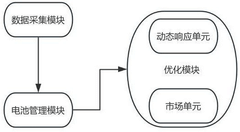
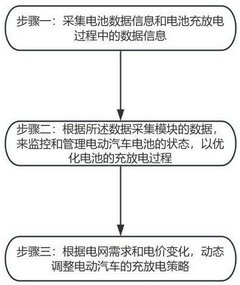
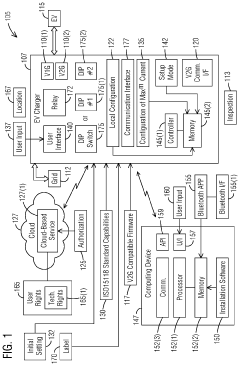
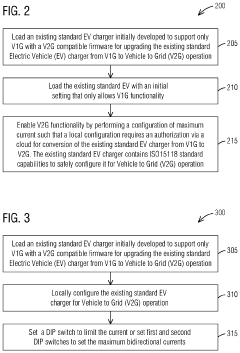
Upgrading an existing standard electric vehicle (EV) charger from grid to vehicle (V1G) to v1g plus vehicle to grid (V2G) operation
PatentPendingUS20240201974A1
Innovation
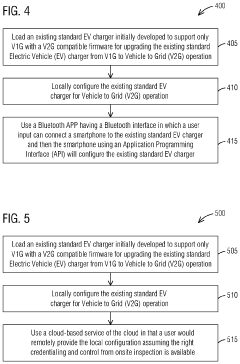
- A method to locally configure existing standard AC EV chargers with ISO15118 capabilities for V2G operation by loading V2G compatible firmware, authorizing via the cloud, and configuring maximum current, allowing bi-directional charging/discharging through a communication interface.
Grid Integration Considerations
The integration of Vehicle-to-Grid (V2G) technology into existing power systems presents both opportunities and challenges for grid operators and utilities. As the number of electric vehicles (EVs) continues to grow, their potential to act as distributed energy resources becomes increasingly significant. V2G systems allow EVs to not only draw power from the grid but also feed it back, providing a flexible and potentially large-scale energy storage solution.
One of the primary considerations for grid integration is the development of robust communication protocols between EVs, charging stations, and grid operators. These protocols must enable real-time data exchange to facilitate seamless power flow management and ensure grid stability. Standardization efforts, such as ISO 15118 and OpenADR, are crucial in establishing interoperability across different EV models and charging infrastructure.
Grid operators must also address the potential impact of V2G on power quality and reliability. The bidirectional flow of electricity can introduce harmonics and voltage fluctuations, which may affect sensitive equipment connected to the grid. Advanced power electronics and smart inverters are being developed to mitigate these issues, allowing for smoother integration of V2G systems.
The distribution network infrastructure may require upgrades to accommodate the increased power flows associated with V2G. This includes reinforcing transformers, upgrading substations, and implementing advanced monitoring and control systems. Smart grid technologies, such as distribution automation and advanced metering infrastructure, play a crucial role in enabling the dynamic management of V2G resources.
Load balancing and demand response capabilities are enhanced through V2G integration. By leveraging the aggregated capacity of connected EVs, grid operators can more effectively manage peak loads and integrate variable renewable energy sources. This requires sophisticated forecasting algorithms to predict EV availability and energy demand patterns.
Cybersecurity is another critical aspect of V2G grid integration. The increased connectivity and data exchange between vehicles and the grid create potential vulnerabilities that must be addressed. Robust encryption, authentication mechanisms, and secure communication channels are essential to protect against cyber threats and ensure the integrity of the power system.
Regulatory frameworks and market structures need to evolve to fully capitalize on the benefits of V2G technology. This includes developing appropriate tariff structures, incentive mechanisms, and market rules that encourage EV owners to participate in grid services. Clear guidelines for aggregators and energy service providers are also necessary to facilitate the integration of V2G resources into existing electricity markets.
One of the primary considerations for grid integration is the development of robust communication protocols between EVs, charging stations, and grid operators. These protocols must enable real-time data exchange to facilitate seamless power flow management and ensure grid stability. Standardization efforts, such as ISO 15118 and OpenADR, are crucial in establishing interoperability across different EV models and charging infrastructure.
Grid operators must also address the potential impact of V2G on power quality and reliability. The bidirectional flow of electricity can introduce harmonics and voltage fluctuations, which may affect sensitive equipment connected to the grid. Advanced power electronics and smart inverters are being developed to mitigate these issues, allowing for smoother integration of V2G systems.
The distribution network infrastructure may require upgrades to accommodate the increased power flows associated with V2G. This includes reinforcing transformers, upgrading substations, and implementing advanced monitoring and control systems. Smart grid technologies, such as distribution automation and advanced metering infrastructure, play a crucial role in enabling the dynamic management of V2G resources.
Load balancing and demand response capabilities are enhanced through V2G integration. By leveraging the aggregated capacity of connected EVs, grid operators can more effectively manage peak loads and integrate variable renewable energy sources. This requires sophisticated forecasting algorithms to predict EV availability and energy demand patterns.
Cybersecurity is another critical aspect of V2G grid integration. The increased connectivity and data exchange between vehicles and the grid create potential vulnerabilities that must be addressed. Robust encryption, authentication mechanisms, and secure communication channels are essential to protect against cyber threats and ensure the integrity of the power system.
Regulatory frameworks and market structures need to evolve to fully capitalize on the benefits of V2G technology. This includes developing appropriate tariff structures, incentive mechanisms, and market rules that encourage EV owners to participate in grid services. Clear guidelines for aggregators and energy service providers are also necessary to facilitate the integration of V2G resources into existing electricity markets.
V2G Policy and Regulatory Framework
The development of Vehicle-to-Grid (V2G) technology as a catalyst for renewable energy progress requires a robust policy and regulatory framework to ensure its successful implementation and widespread adoption. This framework must address various aspects of the V2G ecosystem, including grid integration, market mechanisms, and consumer protection.
At the national level, governments need to establish clear policies that recognize V2G as a valuable resource for grid stability and renewable energy integration. These policies should outline the roles and responsibilities of different stakeholders, including utilities, vehicle manufacturers, and consumers. Regulatory bodies must develop standards for V2G-enabled vehicles and charging infrastructure to ensure interoperability and safety across the system.
One crucial aspect of the regulatory framework is the establishment of market mechanisms that incentivize V2G participation. This includes designing appropriate tariff structures that compensate vehicle owners for providing grid services, such as frequency regulation or demand response. Regulators must also address barriers to entry, such as high upfront costs for V2G-capable equipment, through targeted incentives or subsidies.
Grid operators and utilities play a vital role in the V2G ecosystem, and regulations must define their responsibilities in managing V2G resources. This includes developing protocols for communication between vehicles and the grid, as well as establishing guidelines for aggregating and dispatching V2G services. Regulators should also ensure that utilities incorporate V2G into their long-term planning processes and grid modernization efforts.
Consumer protection is another critical component of the V2G regulatory framework. Policymakers must address concerns related to data privacy, battery degradation, and fair compensation for grid services. Clear guidelines on data ownership and usage, as well as mechanisms for dispute resolution, are essential to build consumer trust and encourage participation in V2G programs.
International cooperation and standardization efforts are crucial for the global adoption of V2G technology. Regulatory bodies should work towards harmonizing standards and protocols across regions to facilitate cross-border interoperability and market development. This includes aligning technical specifications for V2G-enabled vehicles and charging infrastructure, as well as developing common frameworks for market participation and grid integration.
As the V2G landscape evolves, regulators must remain flexible and adaptive to technological advancements and market dynamics. Regular reviews and updates to the policy and regulatory framework will be necessary to address emerging challenges and opportunities in the V2G ecosystem. This iterative approach will help ensure that the regulatory environment continues to support the growth of V2G as a catalyst for renewable energy progress.
At the national level, governments need to establish clear policies that recognize V2G as a valuable resource for grid stability and renewable energy integration. These policies should outline the roles and responsibilities of different stakeholders, including utilities, vehicle manufacturers, and consumers. Regulatory bodies must develop standards for V2G-enabled vehicles and charging infrastructure to ensure interoperability and safety across the system.
One crucial aspect of the regulatory framework is the establishment of market mechanisms that incentivize V2G participation. This includes designing appropriate tariff structures that compensate vehicle owners for providing grid services, such as frequency regulation or demand response. Regulators must also address barriers to entry, such as high upfront costs for V2G-capable equipment, through targeted incentives or subsidies.
Grid operators and utilities play a vital role in the V2G ecosystem, and regulations must define their responsibilities in managing V2G resources. This includes developing protocols for communication between vehicles and the grid, as well as establishing guidelines for aggregating and dispatching V2G services. Regulators should also ensure that utilities incorporate V2G into their long-term planning processes and grid modernization efforts.
Consumer protection is another critical component of the V2G regulatory framework. Policymakers must address concerns related to data privacy, battery degradation, and fair compensation for grid services. Clear guidelines on data ownership and usage, as well as mechanisms for dispute resolution, are essential to build consumer trust and encourage participation in V2G programs.
International cooperation and standardization efforts are crucial for the global adoption of V2G technology. Regulatory bodies should work towards harmonizing standards and protocols across regions to facilitate cross-border interoperability and market development. This includes aligning technical specifications for V2G-enabled vehicles and charging infrastructure, as well as developing common frameworks for market participation and grid integration.
As the V2G landscape evolves, regulators must remain flexible and adaptive to technological advancements and market dynamics. Regular reviews and updates to the policy and regulatory framework will be necessary to address emerging challenges and opportunities in the V2G ecosystem. This iterative approach will help ensure that the regulatory environment continues to support the growth of V2G as a catalyst for renewable energy progress.
Unlock deeper insights with PatSnap Eureka Quick Research — get a full tech report to explore trends and direct your research. Try now!
Generate Your Research Report Instantly with AI Agent
Supercharge your innovation with PatSnap Eureka AI Agent Platform!