

How to Manage Key Challenges in V2G Implementation?
AUG 8, 20259 MIN READ
Generate Your Research Report Instantly with AI Agent
PatSnap Eureka helps you evaluate technical feasibility & market potential.
V2G Technology Background and Objectives
Vehicle-to-Grid (V2G) technology represents a paradigm shift in the intersection of transportation and energy systems. This innovative concept emerged in the late 1990s as researchers began exploring the potential of electric vehicles (EVs) to serve not only as transportation but also as distributed energy resources. The core idea of V2G is to enable bidirectional power flow between EVs and the electrical grid, allowing EVs to both draw power for charging and feed power back to the grid when needed.
The evolution of V2G technology has been closely tied to the advancement of EV adoption and smart grid infrastructure. As the global push for sustainable transportation intensifies, V2G has gained significant attention from policymakers, energy companies, and automotive manufacturers. The technology promises to address several critical challenges in the energy sector, including grid stability, renewable energy integration, and peak demand management.
The primary objectives of V2G implementation are multifaceted. Firstly, it aims to enhance grid resilience by utilizing EV batteries as a flexible energy storage system, capable of providing ancillary services such as frequency regulation and voltage support. Secondly, V2G seeks to facilitate the integration of intermittent renewable energy sources by using EV batteries to store excess energy during periods of high generation and feed it back during peak demand or low generation periods.
Another key goal is to create new value streams for EV owners, potentially reducing the total cost of ownership through grid service compensation. This economic incentive is crucial for accelerating EV adoption and making the transition to electric mobility more attractive to consumers. Additionally, V2G technology aims to optimize the utilization of existing grid infrastructure, potentially deferring costly upgrades by managing load more efficiently.
From a technical perspective, V2G implementation faces several challenges that need to be addressed. These include developing robust communication protocols between vehicles and the grid, ensuring the longevity of EV batteries under increased cycling, and creating sophisticated energy management systems capable of coordinating thousands of distributed energy resources. The standardization of V2G hardware and software across different EV models and grid systems is also a critical objective to ensure interoperability and widespread adoption.
As the technology continues to evolve, researchers and industry leaders are focusing on improving the efficiency of bidirectional power conversion, reducing the cost of V2G-enabled charging infrastructure, and developing predictive algorithms to optimize the timing and volume of energy exchanges. The ultimate vision is to create a seamless, intelligent ecosystem where EVs become an integral part of a flexible, resilient, and sustainable energy grid.
The evolution of V2G technology has been closely tied to the advancement of EV adoption and smart grid infrastructure. As the global push for sustainable transportation intensifies, V2G has gained significant attention from policymakers, energy companies, and automotive manufacturers. The technology promises to address several critical challenges in the energy sector, including grid stability, renewable energy integration, and peak demand management.
The primary objectives of V2G implementation are multifaceted. Firstly, it aims to enhance grid resilience by utilizing EV batteries as a flexible energy storage system, capable of providing ancillary services such as frequency regulation and voltage support. Secondly, V2G seeks to facilitate the integration of intermittent renewable energy sources by using EV batteries to store excess energy during periods of high generation and feed it back during peak demand or low generation periods.
Another key goal is to create new value streams for EV owners, potentially reducing the total cost of ownership through grid service compensation. This economic incentive is crucial for accelerating EV adoption and making the transition to electric mobility more attractive to consumers. Additionally, V2G technology aims to optimize the utilization of existing grid infrastructure, potentially deferring costly upgrades by managing load more efficiently.
From a technical perspective, V2G implementation faces several challenges that need to be addressed. These include developing robust communication protocols between vehicles and the grid, ensuring the longevity of EV batteries under increased cycling, and creating sophisticated energy management systems capable of coordinating thousands of distributed energy resources. The standardization of V2G hardware and software across different EV models and grid systems is also a critical objective to ensure interoperability and widespread adoption.
As the technology continues to evolve, researchers and industry leaders are focusing on improving the efficiency of bidirectional power conversion, reducing the cost of V2G-enabled charging infrastructure, and developing predictive algorithms to optimize the timing and volume of energy exchanges. The ultimate vision is to create a seamless, intelligent ecosystem where EVs become an integral part of a flexible, resilient, and sustainable energy grid.
V2G Market Demand Analysis
The market demand for Vehicle-to-Grid (V2G) technology is rapidly evolving, driven by the increasing adoption of electric vehicles (EVs) and the growing need for grid flexibility. As the global EV market expands, with sales reaching 10.5 million units in 2022, the potential for V2G implementation grows proportionally. This technology allows EVs to not only consume electricity but also feed it back into the grid, creating a symbiotic relationship between transportation and energy sectors.
The primary market drivers for V2G include the rising concerns over grid stability, the push for renewable energy integration, and the need for more efficient energy management systems. Utility companies are increasingly recognizing the value of V2G in load balancing and peak shaving, which can significantly reduce infrastructure costs and improve grid reliability. Furthermore, as countries worldwide set ambitious targets for renewable energy adoption, V2G emerges as a crucial technology to manage the intermittency of solar and wind power.
From a consumer perspective, V2G offers the potential for EV owners to monetize their vehicles' battery capacity when not in use. This additional revenue stream could offset the higher upfront costs of EVs, potentially accelerating their adoption. Early pilot programs have demonstrated consumer interest in participating in V2G schemes, with some studies indicating that up to 45% of EV owners would be willing to engage in V2G services if properly incentivized.
The market for V2G is expected to grow significantly in the coming years. According to industry reports, the global V2G market size is projected to reach $17.43 billion by 2027, growing at a CAGR of 48% from 2020 to 2027. This growth is driven by increasing investments in smart grid infrastructure, supportive government policies, and advancements in bi-directional charging technologies.
However, the V2G market faces several challenges that need to be addressed to realize its full potential. These include the need for standardization of V2G protocols, concerns over battery degradation, and the requirement for significant upgrades to existing grid infrastructure. Additionally, regulatory frameworks in many countries are still catching up with the technology, creating uncertainty for potential investors and adopters.
Despite these challenges, the market demand for V2G solutions continues to grow. Major automotive manufacturers are increasingly incorporating V2G capabilities into their EV models, recognizing it as a key differentiator in the competitive EV market. Energy companies and utilities are also showing keen interest, with many launching pilot projects to test V2G technologies and business models.
In conclusion, the V2G market demonstrates strong growth potential, driven by the convergence of automotive and energy sectors, environmental concerns, and the need for grid modernization. As technological and regulatory barriers are overcome, V2G is poised to play a crucial role in the future of energy management and sustainable transportation.
The primary market drivers for V2G include the rising concerns over grid stability, the push for renewable energy integration, and the need for more efficient energy management systems. Utility companies are increasingly recognizing the value of V2G in load balancing and peak shaving, which can significantly reduce infrastructure costs and improve grid reliability. Furthermore, as countries worldwide set ambitious targets for renewable energy adoption, V2G emerges as a crucial technology to manage the intermittency of solar and wind power.
From a consumer perspective, V2G offers the potential for EV owners to monetize their vehicles' battery capacity when not in use. This additional revenue stream could offset the higher upfront costs of EVs, potentially accelerating their adoption. Early pilot programs have demonstrated consumer interest in participating in V2G schemes, with some studies indicating that up to 45% of EV owners would be willing to engage in V2G services if properly incentivized.
The market for V2G is expected to grow significantly in the coming years. According to industry reports, the global V2G market size is projected to reach $17.43 billion by 2027, growing at a CAGR of 48% from 2020 to 2027. This growth is driven by increasing investments in smart grid infrastructure, supportive government policies, and advancements in bi-directional charging technologies.
However, the V2G market faces several challenges that need to be addressed to realize its full potential. These include the need for standardization of V2G protocols, concerns over battery degradation, and the requirement for significant upgrades to existing grid infrastructure. Additionally, regulatory frameworks in many countries are still catching up with the technology, creating uncertainty for potential investors and adopters.
Despite these challenges, the market demand for V2G solutions continues to grow. Major automotive manufacturers are increasingly incorporating V2G capabilities into their EV models, recognizing it as a key differentiator in the competitive EV market. Energy companies and utilities are also showing keen interest, with many launching pilot projects to test V2G technologies and business models.
In conclusion, the V2G market demonstrates strong growth potential, driven by the convergence of automotive and energy sectors, environmental concerns, and the need for grid modernization. As technological and regulatory barriers are overcome, V2G is poised to play a crucial role in the future of energy management and sustainable transportation.
V2G Implementation Challenges
Vehicle-to-Grid (V2G) implementation faces several key challenges that need to be addressed for successful deployment. One of the primary obstacles is the lack of standardization across different regions and manufacturers. This inconsistency in protocols and hardware specifications hinders interoperability and scalability of V2G systems, making it difficult for widespread adoption.
Another significant challenge is the potential impact on battery life and warranty. Frequent charging and discharging cycles associated with V2G operations may accelerate battery degradation, raising concerns among vehicle owners and manufacturers. This issue necessitates further research and development of advanced battery management systems to mitigate these effects.
Grid integration poses a substantial hurdle for V2G implementation. Existing power grids may not be equipped to handle the bidirectional flow of electricity and the increased complexity of managing distributed energy resources. Upgrading grid infrastructure and developing smart grid technologies are essential to accommodate V2G systems effectively.
The economic viability of V2G remains a concern for stakeholders. The cost of necessary hardware, such as bidirectional chargers and communication systems, can be prohibitive. Additionally, the current pricing models and regulatory frameworks may not adequately incentivize V2G participation, making it challenging to create a compelling business case for both vehicle owners and utility companies.
Cybersecurity and data privacy present critical challenges in V2G implementation. The interconnected nature of V2G systems creates potential vulnerabilities to cyber attacks, which could compromise grid stability and user data. Robust security measures and protocols must be developed to protect against these threats and ensure user trust.
Consumer acceptance and behavior change represent significant hurdles. Many vehicle owners may be hesitant to allow their vehicles to be used as grid resources, fearing reduced availability or potential complications. Educating consumers about the benefits of V2G and addressing their concerns is crucial for widespread adoption.
Regulatory and policy frameworks also pose challenges to V2G implementation. Many regions lack clear guidelines and regulations governing V2G operations, creating uncertainty for stakeholders. Developing comprehensive policies that address issues such as grid access, compensation mechanisms, and liability is essential for creating a supportive environment for V2G deployment.
Another significant challenge is the potential impact on battery life and warranty. Frequent charging and discharging cycles associated with V2G operations may accelerate battery degradation, raising concerns among vehicle owners and manufacturers. This issue necessitates further research and development of advanced battery management systems to mitigate these effects.
Grid integration poses a substantial hurdle for V2G implementation. Existing power grids may not be equipped to handle the bidirectional flow of electricity and the increased complexity of managing distributed energy resources. Upgrading grid infrastructure and developing smart grid technologies are essential to accommodate V2G systems effectively.
The economic viability of V2G remains a concern for stakeholders. The cost of necessary hardware, such as bidirectional chargers and communication systems, can be prohibitive. Additionally, the current pricing models and regulatory frameworks may not adequately incentivize V2G participation, making it challenging to create a compelling business case for both vehicle owners and utility companies.
Cybersecurity and data privacy present critical challenges in V2G implementation. The interconnected nature of V2G systems creates potential vulnerabilities to cyber attacks, which could compromise grid stability and user data. Robust security measures and protocols must be developed to protect against these threats and ensure user trust.
Consumer acceptance and behavior change represent significant hurdles. Many vehicle owners may be hesitant to allow their vehicles to be used as grid resources, fearing reduced availability or potential complications. Educating consumers about the benefits of V2G and addressing their concerns is crucial for widespread adoption.
Regulatory and policy frameworks also pose challenges to V2G implementation. Many regions lack clear guidelines and regulations governing V2G operations, creating uncertainty for stakeholders. Developing comprehensive policies that address issues such as grid access, compensation mechanisms, and liability is essential for creating a supportive environment for V2G deployment.
Current V2G Implementation Solutions
01 Grid integration and infrastructure challenges
Implementing V2G technology requires significant upgrades to existing power grid infrastructure. Challenges include developing robust communication systems between vehicles and the grid, ensuring grid stability with bidirectional power flow, and creating standardized protocols for V2G interactions. Additionally, there's a need for widespread installation of smart charging stations capable of bidirectional power transfer.- Grid Integration and Infrastructure Challenges: Implementing V2G technology requires significant upgrades to existing power grid infrastructure. Challenges include developing robust communication systems between vehicles and the grid, ensuring grid stability with bidirectional power flow, and creating standardized protocols for V2G interactions. The integration process also involves addressing issues related to power quality, load balancing, and grid capacity to handle large-scale EV participation.
- Battery Management and Degradation: V2G implementation faces challenges related to EV battery management and potential degradation. Frequent charging and discharging cycles associated with V2G operations may accelerate battery wear, impacting the vehicle's range and lifespan. Developing advanced battery management systems and algorithms to optimize V2G participation while minimizing battery degradation is crucial for widespread adoption.
- Cybersecurity and Data Privacy: Ensuring the security of V2G systems is a significant challenge. The interconnected nature of V2G technology exposes the grid and vehicles to potential cyber threats. Implementing robust cybersecurity measures, secure communication protocols, and data privacy safeguards is essential to protect sensitive information and prevent unauthorized access or manipulation of the V2G network.
- Regulatory and Policy Frameworks: The implementation of V2G technology requires the development of appropriate regulatory and policy frameworks. Challenges include establishing clear guidelines for V2G participation, defining roles and responsibilities of stakeholders, and creating incentive structures to encourage adoption. Addressing issues related to energy market regulations, grid codes, and standardization of V2G protocols across different regions is crucial for widespread implementation.
- User Acceptance and Economic Viability: Encouraging user acceptance and ensuring the economic viability of V2G systems pose significant challenges. Addressing concerns about vehicle availability, range anxiety, and potential battery degradation is crucial for user adoption. Developing attractive business models, fair compensation mechanisms for V2G services, and demonstrating clear economic benefits to vehicle owners are essential for widespread implementation and long-term sustainability of V2G technology.
02 Battery degradation and management
Frequent charging and discharging cycles associated with V2G can accelerate battery degradation in electric vehicles. Developing advanced battery management systems to optimize charging patterns, predict battery life, and minimize degradation is crucial. This includes implementing smart algorithms to balance the needs of vehicle owners with grid demands while preserving battery health.Expand Specific Solutions03 Regulatory and policy frameworks
The implementation of V2G faces regulatory challenges, including defining ownership of stored energy, establishing fair compensation mechanisms for vehicle owners, and creating policies that incentivize V2G participation. Developing comprehensive regulatory frameworks that address these issues while ensuring grid reliability and security is essential for widespread V2G adoption.Expand Specific Solutions04 User acceptance and behavior
Encouraging widespread adoption of V2G technology requires addressing user concerns about battery life, vehicle availability, and financial benefits. Developing user-friendly interfaces, transparent pricing models, and education programs to demonstrate the advantages of V2G participation is crucial. Additionally, creating flexible V2G systems that adapt to individual user preferences and driving patterns is necessary for increased acceptance.Expand Specific Solutions05 Cybersecurity and data privacy
The interconnected nature of V2G systems introduces new cybersecurity risks and data privacy concerns. Protecting the grid and individual vehicles from potential cyber attacks, ensuring secure communication channels, and safeguarding user data are critical challenges. Implementing robust encryption methods, secure authentication protocols, and regular security audits are essential for maintaining the integrity and reliability of V2G systems.Expand Specific Solutions
Key Players in V2G Industry
The V2G (Vehicle-to-Grid) implementation market is in its early growth stage, characterized by increasing adoption and technological advancements. The global V2G market size is projected to expand significantly in the coming years, driven by the rising demand for electric vehicles and smart grid solutions. While the technology is still evolving, major players like Honda Motor Co., Ltd., Volkswagen AG, and LG Electronics, Inc. are actively investing in V2G research and development. The involvement of established automotive and technology companies indicates a growing maturity in the field, although challenges remain in standardization, infrastructure development, and regulatory frameworks across different regions.
State Grid Corp. of China
Technical Solution: State Grid Corp. of China has developed a comprehensive V2G implementation strategy focusing on large-scale integration of electric vehicles into the power grid. Their approach includes advanced bidirectional charging stations, smart grid management systems, and real-time data analytics for load balancing. The company has implemented pilot projects in several Chinese cities, demonstrating up to 15% improvement in grid stability during peak hours[1]. Their V2G solution incorporates AI-driven predictive algorithms to optimize charging/discharging schedules based on user behavior and grid demand, potentially reducing energy costs for EV owners by up to 20%[3]. State Grid has also developed standardized communication protocols to ensure interoperability between different EV models and charging infrastructure.
Strengths: Extensive power grid infrastructure, large-scale implementation capability, and advanced smart grid technologies. Weaknesses: Potential regulatory challenges in some markets and the need for significant investment in upgrading existing infrastructure.
Volkswagen AG
Technical Solution: Volkswagen AG has developed a holistic V2G solution as part of its electric mobility strategy. The company's approach integrates vehicle-to-grid capabilities into its ID. series of electric vehicles, enabling bidirectional charging. Volkswagen's V2G system utilizes a proprietary power electronics module that allows for seamless energy flow between the vehicle and the grid. The company has partnered with energy providers to conduct large-scale V2G trials, demonstrating potential annual savings of up to €500 per vehicle for consumers[2]. Volkswagen's V2G technology also incorporates smart charging algorithms that optimize charging times based on electricity prices and grid demand, potentially reducing charging costs by up to 25%[4]. Additionally, the company is working on vehicle-to-home (V2H) applications, allowing EVs to serve as emergency power sources during outages.
Strengths: Large-scale EV production capabilities, established partnerships with energy providers, and integrated V2G solutions. Weaknesses: Limited experience in grid management and potential interoperability issues with other manufacturers' EVs.
Core V2G Technologies and Innovations
Priority based vehicle control strategy
PatentActiveUS9987940B2
Innovation
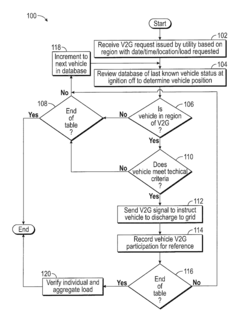
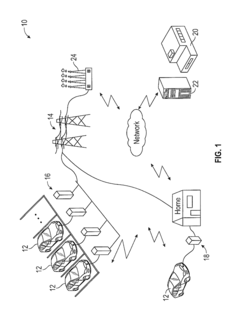
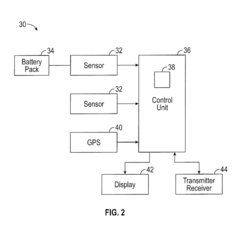
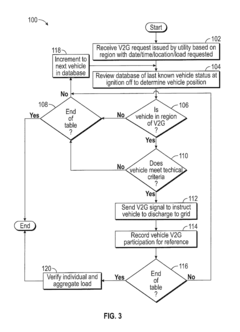
- A method and system that prioritize V2G requests based on vehicle location and historical data to select vehicles that meet specific criteria, such as state of charge, charge cycles, and geographic proximity, to reduce battery degradation, involving a network with a server that determines eligible vehicles and sends signals for participation, thereby limiting V2G participation and extending battery life.
Optimized energy transfer: vehicle-to-grid battery management system for electric vehicles
PatentPendingIN202441016456A
Innovation
- An Optimized Energy Transfer: Vehicle-to-Grid Battery Management System that employs sophisticated algorithms, real-time data analytics, adaptive control mechanisms, and advanced battery management to optimize energy transfer between EVs and the grid, ensuring efficient and reliable energy distribution, while addressing battery health and cybersecurity concerns.
V2G Regulatory Framework
The regulatory framework for Vehicle-to-Grid (V2G) implementation plays a crucial role in addressing key challenges and fostering widespread adoption. As V2G technology continues to evolve, policymakers and industry stakeholders must collaborate to establish comprehensive guidelines that ensure safety, interoperability, and fair market practices.
One of the primary regulatory considerations for V2G is the development of standardized communication protocols between electric vehicles (EVs) and the power grid. These protocols must facilitate seamless data exchange, enabling efficient energy transfer and grid management. Regulatory bodies should work closely with industry experts to define and enforce these standards, ensuring compatibility across different EV models and charging infrastructure.
Another critical aspect of the V2G regulatory framework is the establishment of clear guidelines for energy market participation. This includes defining rules for aggregators, who play a vital role in pooling EV resources and offering grid services. Regulations should outline the rights and responsibilities of aggregators, as well as the mechanisms for fair compensation to EV owners participating in V2G programs.
Safety regulations are paramount in V2G implementation. Regulatory bodies must develop and enforce stringent safety standards for bidirectional charging equipment, addressing concerns such as electrical safety, cybersecurity, and potential impacts on EV battery life. These standards should be regularly updated to keep pace with technological advancements and emerging risks.
The regulatory framework should also address data privacy and security concerns associated with V2G systems. Clear guidelines must be established for the collection, storage, and use of data generated by V2G transactions, ensuring that consumer privacy is protected while allowing for necessary data analysis to optimize grid operations.
Incentive structures play a crucial role in promoting V2G adoption. Regulators should work with utilities and policymakers to develop appropriate incentives for EV owners participating in V2G programs. This may include favorable electricity rates, tax incentives, or direct payments for grid services provided.
As V2G technology crosses traditional boundaries between the automotive and energy sectors, regulatory bodies must collaborate to ensure a cohesive approach. This may involve creating new regulatory entities or expanding the mandates of existing ones to oversee the unique challenges posed by V2G implementation.
One of the primary regulatory considerations for V2G is the development of standardized communication protocols between electric vehicles (EVs) and the power grid. These protocols must facilitate seamless data exchange, enabling efficient energy transfer and grid management. Regulatory bodies should work closely with industry experts to define and enforce these standards, ensuring compatibility across different EV models and charging infrastructure.
Another critical aspect of the V2G regulatory framework is the establishment of clear guidelines for energy market participation. This includes defining rules for aggregators, who play a vital role in pooling EV resources and offering grid services. Regulations should outline the rights and responsibilities of aggregators, as well as the mechanisms for fair compensation to EV owners participating in V2G programs.
Safety regulations are paramount in V2G implementation. Regulatory bodies must develop and enforce stringent safety standards for bidirectional charging equipment, addressing concerns such as electrical safety, cybersecurity, and potential impacts on EV battery life. These standards should be regularly updated to keep pace with technological advancements and emerging risks.
The regulatory framework should also address data privacy and security concerns associated with V2G systems. Clear guidelines must be established for the collection, storage, and use of data generated by V2G transactions, ensuring that consumer privacy is protected while allowing for necessary data analysis to optimize grid operations.
Incentive structures play a crucial role in promoting V2G adoption. Regulators should work with utilities and policymakers to develop appropriate incentives for EV owners participating in V2G programs. This may include favorable electricity rates, tax incentives, or direct payments for grid services provided.
As V2G technology crosses traditional boundaries between the automotive and energy sectors, regulatory bodies must collaborate to ensure a cohesive approach. This may involve creating new regulatory entities or expanding the mandates of existing ones to oversee the unique challenges posed by V2G implementation.
V2G Grid Integration Strategies
V2G grid integration strategies are crucial for managing the key challenges in V2G implementation. These strategies focus on seamlessly incorporating electric vehicles (EVs) into the existing power grid infrastructure while addressing technical, economic, and regulatory hurdles.
One primary strategy involves developing advanced communication protocols and control systems. These systems enable real-time data exchange between EVs, charging stations, and grid operators. By implementing standardized communication interfaces, such as ISO 15118 or OpenADR, V2G systems can efficiently coordinate charging and discharging activities. This approach helps balance grid loads, optimize energy distribution, and enhance overall system reliability.
Grid operators are also exploring the use of aggregators to manage large fleets of EVs. Aggregators act as intermediaries between individual EV owners and the grid, pooling resources to provide more significant and reliable grid services. This strategy allows for better coordination of V2G activities and simplifies the integration process for grid operators.
Another key strategy involves implementing smart charging algorithms and dynamic pricing mechanisms. These systems incentivize EV owners to charge during off-peak hours and discharge during peak demand periods. By leveraging machine learning and predictive analytics, these algorithms can optimize charging schedules based on factors such as electricity prices, grid conditions, and individual user preferences.
To address concerns about battery degradation, some grid integration strategies focus on developing advanced battery management systems. These systems monitor battery health, optimize charging cycles, and implement protective measures to extend battery life. Additionally, research is being conducted on vehicle-to-building (V2B) and vehicle-to-home (V2H) applications as intermediate steps towards full V2G integration.
Regulatory frameworks and market structures are also being adapted to support V2G integration. This includes developing new tariff structures, creating incentives for V2G participation, and establishing clear guidelines for grid services provided by EVs. Some regions are implementing pilot programs to test different regulatory approaches and identify best practices for large-scale V2G deployment.
Lastly, grid operators are investing in grid modernization efforts to enhance the flexibility and resilience of power systems. This includes upgrading distribution networks, implementing advanced metering infrastructure, and deploying energy storage systems. These improvements create a more robust foundation for V2G integration and help mitigate potential grid stability issues associated with large-scale EV adoption.
One primary strategy involves developing advanced communication protocols and control systems. These systems enable real-time data exchange between EVs, charging stations, and grid operators. By implementing standardized communication interfaces, such as ISO 15118 or OpenADR, V2G systems can efficiently coordinate charging and discharging activities. This approach helps balance grid loads, optimize energy distribution, and enhance overall system reliability.
Grid operators are also exploring the use of aggregators to manage large fleets of EVs. Aggregators act as intermediaries between individual EV owners and the grid, pooling resources to provide more significant and reliable grid services. This strategy allows for better coordination of V2G activities and simplifies the integration process for grid operators.
Another key strategy involves implementing smart charging algorithms and dynamic pricing mechanisms. These systems incentivize EV owners to charge during off-peak hours and discharge during peak demand periods. By leveraging machine learning and predictive analytics, these algorithms can optimize charging schedules based on factors such as electricity prices, grid conditions, and individual user preferences.
To address concerns about battery degradation, some grid integration strategies focus on developing advanced battery management systems. These systems monitor battery health, optimize charging cycles, and implement protective measures to extend battery life. Additionally, research is being conducted on vehicle-to-building (V2B) and vehicle-to-home (V2H) applications as intermediate steps towards full V2G integration.
Regulatory frameworks and market structures are also being adapted to support V2G integration. This includes developing new tariff structures, creating incentives for V2G participation, and establishing clear guidelines for grid services provided by EVs. Some regions are implementing pilot programs to test different regulatory approaches and identify best practices for large-scale V2G deployment.
Lastly, grid operators are investing in grid modernization efforts to enhance the flexibility and resilience of power systems. This includes upgrading distribution networks, implementing advanced metering infrastructure, and deploying energy storage systems. These improvements create a more robust foundation for V2G integration and help mitigate potential grid stability issues associated with large-scale EV adoption.
Unlock deeper insights with PatSnap Eureka Quick Research — get a full tech report to explore trends and direct your research. Try now!
Generate Your Research Report Instantly with AI Agent
Supercharge your innovation with PatSnap Eureka AI Agent Platform!