
How to Detect Catalyst Poisoning with Temperature Programmed Reduction
MAR 7, 20269 MIN READ
Generate Your Research Report Instantly with AI Agent
Patsnap Eureka helps you evaluate technical feasibility & market potential.
Catalyst Poisoning Detection Background and Objectives
Catalyst poisoning represents one of the most significant challenges in industrial catalysis, directly impacting process efficiency, economic viability, and environmental sustainability. This phenomenon occurs when foreign substances irreversibly bind to active sites on catalyst surfaces, progressively reducing catalytic activity and selectivity. The economic implications are substantial, with catalyst deactivation accounting for billions of dollars in annual losses across petrochemical, pharmaceutical, and environmental remediation industries.
Temperature Programmed Reduction (TPR) has emerged as a powerful analytical technique for investigating catalyst poisoning mechanisms and quantifying deactivation extent. This method involves controlled heating of catalyst samples in a reducing atmosphere, typically hydrogen, while monitoring the consumption of reducing gas or formation of reduction products. The resulting temperature-dependent profiles provide detailed insights into the chemical state, accessibility, and reactivity of metal species within poisoned catalysts.
The historical development of TPR-based poisoning detection traces back to early surface science studies in the 1960s, evolving from simple thermal analysis to sophisticated multi-detector systems. Initial applications focused on understanding metal-support interactions, but the technique's sensitivity to surface modifications made it invaluable for poisoning studies. Technological advances in gas chromatography, mass spectrometry, and thermal conductivity detection have significantly enhanced TPR's analytical capabilities.
Current industrial applications span diverse sectors, from monitoring sulfur poisoning in hydroprocessing catalysts to detecting chlorine contamination in automotive exhaust catalysts. The technique's non-destructive nature and ability to differentiate between various poisoning mechanisms make it particularly valuable for catalyst lifecycle management and process optimization.
The primary objective of implementing TPR-based poisoning detection is to establish quantitative relationships between poison concentration, distribution, and catalytic performance degradation. This involves developing standardized protocols for sample preparation, measurement conditions, and data interpretation that can reliably identify poisoning onset, progression rates, and reversibility potential.
Secondary objectives include creating predictive models that correlate TPR signatures with catalyst remaining useful life, enabling proactive maintenance strategies. Additionally, the technique aims to distinguish between different poisoning mechanisms, such as geometric blocking versus electronic modification, facilitating targeted regeneration approaches and improved catalyst design strategies for enhanced poison resistance.
Temperature Programmed Reduction (TPR) has emerged as a powerful analytical technique for investigating catalyst poisoning mechanisms and quantifying deactivation extent. This method involves controlled heating of catalyst samples in a reducing atmosphere, typically hydrogen, while monitoring the consumption of reducing gas or formation of reduction products. The resulting temperature-dependent profiles provide detailed insights into the chemical state, accessibility, and reactivity of metal species within poisoned catalysts.
The historical development of TPR-based poisoning detection traces back to early surface science studies in the 1960s, evolving from simple thermal analysis to sophisticated multi-detector systems. Initial applications focused on understanding metal-support interactions, but the technique's sensitivity to surface modifications made it invaluable for poisoning studies. Technological advances in gas chromatography, mass spectrometry, and thermal conductivity detection have significantly enhanced TPR's analytical capabilities.
Current industrial applications span diverse sectors, from monitoring sulfur poisoning in hydroprocessing catalysts to detecting chlorine contamination in automotive exhaust catalysts. The technique's non-destructive nature and ability to differentiate between various poisoning mechanisms make it particularly valuable for catalyst lifecycle management and process optimization.
The primary objective of implementing TPR-based poisoning detection is to establish quantitative relationships between poison concentration, distribution, and catalytic performance degradation. This involves developing standardized protocols for sample preparation, measurement conditions, and data interpretation that can reliably identify poisoning onset, progression rates, and reversibility potential.
Secondary objectives include creating predictive models that correlate TPR signatures with catalyst remaining useful life, enabling proactive maintenance strategies. Additionally, the technique aims to distinguish between different poisoning mechanisms, such as geometric blocking versus electronic modification, facilitating targeted regeneration approaches and improved catalyst design strategies for enhanced poison resistance.
Market Demand for Advanced Catalyst Monitoring Solutions
The global catalyst monitoring market is experiencing unprecedented growth driven by stringent environmental regulations and the increasing complexity of industrial processes. Refineries, petrochemical plants, and chemical manufacturing facilities are under mounting pressure to optimize catalyst performance while minimizing operational costs and environmental impact. Traditional catalyst monitoring approaches, which rely primarily on periodic sampling and offline analysis, are proving inadequate for modern industrial demands that require real-time process optimization and predictive maintenance capabilities.
Temperature Programmed Reduction-based catalyst poisoning detection represents a critical technological advancement addressing these market needs. The demand for such sophisticated monitoring solutions is particularly pronounced in the petroleum refining sector, where catalyst deactivation can result in significant economic losses through reduced conversion efficiency, increased energy consumption, and unplanned shutdowns. Chemical processing industries are similarly seeking advanced diagnostic tools to extend catalyst lifespans and maintain product quality consistency.
The automotive industry's transition toward stricter emission standards has created substantial demand for enhanced catalyst monitoring technologies. Automotive manufacturers and suppliers require precise detection methods to ensure catalytic converter performance throughout vehicle lifecycles. This regulatory-driven demand extends beyond traditional automotive applications to include industrial emission control systems and power generation facilities.
Emerging markets in Asia-Pacific and Latin America are contributing significantly to demand growth as these regions expand their refining and petrochemical capacities. Local regulatory frameworks are increasingly adopting international environmental standards, creating new opportunities for advanced catalyst monitoring technologies. The integration of Industry 4.0 principles and digital transformation initiatives across manufacturing sectors is further accelerating adoption of sophisticated monitoring solutions.
The market demand is also shaped by the growing emphasis on sustainability and circular economy principles. Companies are seeking technologies that enable catalyst regeneration and recovery, reducing waste and operational costs. Temperature Programmed Reduction-based detection systems align with these sustainability objectives by providing detailed insights into catalyst deactivation mechanisms, enabling more effective regeneration strategies and extending catalyst operational lifespans.
Temperature Programmed Reduction-based catalyst poisoning detection represents a critical technological advancement addressing these market needs. The demand for such sophisticated monitoring solutions is particularly pronounced in the petroleum refining sector, where catalyst deactivation can result in significant economic losses through reduced conversion efficiency, increased energy consumption, and unplanned shutdowns. Chemical processing industries are similarly seeking advanced diagnostic tools to extend catalyst lifespans and maintain product quality consistency.
The automotive industry's transition toward stricter emission standards has created substantial demand for enhanced catalyst monitoring technologies. Automotive manufacturers and suppliers require precise detection methods to ensure catalytic converter performance throughout vehicle lifecycles. This regulatory-driven demand extends beyond traditional automotive applications to include industrial emission control systems and power generation facilities.
Emerging markets in Asia-Pacific and Latin America are contributing significantly to demand growth as these regions expand their refining and petrochemical capacities. Local regulatory frameworks are increasingly adopting international environmental standards, creating new opportunities for advanced catalyst monitoring technologies. The integration of Industry 4.0 principles and digital transformation initiatives across manufacturing sectors is further accelerating adoption of sophisticated monitoring solutions.
The market demand is also shaped by the growing emphasis on sustainability and circular economy principles. Companies are seeking technologies that enable catalyst regeneration and recovery, reducing waste and operational costs. Temperature Programmed Reduction-based detection systems align with these sustainability objectives by providing detailed insights into catalyst deactivation mechanisms, enabling more effective regeneration strategies and extending catalyst operational lifespans.
Current TPR Technology Status and Detection Challenges
Temperature Programmed Reduction (TPR) has emerged as a fundamental characterization technique for detecting catalyst poisoning, yet its current implementation faces significant technological and methodological challenges. The technique operates on the principle of monitoring hydrogen consumption patterns as temperature increases systematically, providing insights into the reducibility of metal species and the presence of poisoning agents that alter these reduction profiles.
Contemporary TPR instrumentation predominantly relies on thermal conductivity detectors (TCD) and mass spectrometry systems to quantify hydrogen consumption. While TCD-based systems offer cost-effectiveness and reliability, they suffer from limited sensitivity and resolution, particularly when detecting subtle poisoning effects that manifest as minor shifts in reduction peak positions or intensities. Advanced quadrupole mass spectrometry integration has improved detection capabilities but introduces complexity in data interpretation and requires sophisticated calibration protocols.
The current state of TPR technology reveals substantial limitations in temporal resolution and temperature control precision. Most commercial systems operate with heating rates between 5-20°C/min, which may obscure overlapping reduction events or fail to resolve closely spaced peaks that could indicate different poisoning mechanisms. Temperature uniformity across catalyst beds remains problematic, especially for larger sample sizes, leading to peak broadening and reduced analytical precision.
Data interpretation represents perhaps the most significant challenge in current TPR applications for poison detection. Distinguishing between genuine poisoning effects and artifacts arising from particle size variations, support interactions, or instrumental drift requires extensive expertise and often complementary characterization techniques. The lack of standardized protocols for sample preparation, pretreatment conditions, and data analysis methodologies creates inconsistencies across different laboratories and research groups.
Quantitative analysis capabilities remain underdeveloped in current TPR systems. While the technique excels at qualitative identification of reduction events, accurate determination of poison coverage or concentration requires complex calibration procedures that are often impractical for routine analysis. The relationship between hydrogen consumption changes and actual poison loading is frequently non-linear and depends heavily on catalyst composition and structure.
Modern TPR systems also struggle with real-time analysis requirements. Traditional batch-mode operation limits the technique's applicability for continuous monitoring applications or rapid screening protocols. The typical analysis time of several hours per sample constrains throughput and prevents integration into high-throughput catalyst development workflows.
Environmental control during TPR measurements presents ongoing challenges. Moisture sensitivity, oxygen contamination, and carrier gas purity significantly impact measurement reproducibility. Current purification systems, while effective, add complexity and maintenance requirements that limit widespread adoption in industrial settings.
Despite these limitations, recent developments in microreactor technology and improved gas handling systems show promise for addressing some current deficiencies. Enhanced computational methods for peak deconvolution and pattern recognition are beginning to improve data interpretation capabilities, though widespread implementation remains limited.
Contemporary TPR instrumentation predominantly relies on thermal conductivity detectors (TCD) and mass spectrometry systems to quantify hydrogen consumption. While TCD-based systems offer cost-effectiveness and reliability, they suffer from limited sensitivity and resolution, particularly when detecting subtle poisoning effects that manifest as minor shifts in reduction peak positions or intensities. Advanced quadrupole mass spectrometry integration has improved detection capabilities but introduces complexity in data interpretation and requires sophisticated calibration protocols.
The current state of TPR technology reveals substantial limitations in temporal resolution and temperature control precision. Most commercial systems operate with heating rates between 5-20°C/min, which may obscure overlapping reduction events or fail to resolve closely spaced peaks that could indicate different poisoning mechanisms. Temperature uniformity across catalyst beds remains problematic, especially for larger sample sizes, leading to peak broadening and reduced analytical precision.
Data interpretation represents perhaps the most significant challenge in current TPR applications for poison detection. Distinguishing between genuine poisoning effects and artifacts arising from particle size variations, support interactions, or instrumental drift requires extensive expertise and often complementary characterization techniques. The lack of standardized protocols for sample preparation, pretreatment conditions, and data analysis methodologies creates inconsistencies across different laboratories and research groups.
Quantitative analysis capabilities remain underdeveloped in current TPR systems. While the technique excels at qualitative identification of reduction events, accurate determination of poison coverage or concentration requires complex calibration procedures that are often impractical for routine analysis. The relationship between hydrogen consumption changes and actual poison loading is frequently non-linear and depends heavily on catalyst composition and structure.
Modern TPR systems also struggle with real-time analysis requirements. Traditional batch-mode operation limits the technique's applicability for continuous monitoring applications or rapid screening protocols. The typical analysis time of several hours per sample constrains throughput and prevents integration into high-throughput catalyst development workflows.
Environmental control during TPR measurements presents ongoing challenges. Moisture sensitivity, oxygen contamination, and carrier gas purity significantly impact measurement reproducibility. Current purification systems, while effective, add complexity and maintenance requirements that limit widespread adoption in industrial settings.
Despite these limitations, recent developments in microreactor technology and improved gas handling systems show promise for addressing some current deficiencies. Enhanced computational methods for peak deconvolution and pattern recognition are beginning to improve data interpretation capabilities, though widespread implementation remains limited.
Existing TPR-Based Catalyst Poisoning Detection Methods
01 Temperature programmed reduction (TPR) method for catalyst characterization
Temperature programmed reduction is a fundamental technique used to characterize catalysts by monitoring the reduction behavior of metal oxides or other reducible species under controlled temperature conditions. This method involves heating the catalyst sample in a reducing atmosphere while measuring hydrogen consumption or other gas changes. The TPR profile provides information about the reduction temperature, number of reduction peaks, and the amount of reducible species, which are critical for understanding catalyst properties and detecting potential poisoning or deactivation.- Temperature programmed reduction (TPR) method for catalyst characterization: Temperature programmed reduction is a fundamental technique used to characterize catalysts by monitoring the reduction behavior of metal oxides or other reducible species under controlled temperature conditions. This method involves heating the catalyst sample in a reducing atmosphere while measuring hydrogen consumption or other gas composition changes. The TPR profile provides information about the reduction temperature, number of reduction peaks, and the amount of reducible species, which are critical for understanding catalyst properties and detecting abnormalities that may indicate poisoning or deactivation.
- Detection of catalyst poisoning through TPR peak shift analysis: Catalyst poisoning can be detected by analyzing shifts in TPR peak positions and intensities compared to fresh catalyst samples. When catalysts are poisoned by contaminants such as sulfur, phosphorus, or heavy metals, the reduction peaks typically shift to higher temperatures or show decreased intensity. This method allows for quantitative assessment of poisoning degree by comparing the TPR profiles before and after exposure to potential poisons. The technique is particularly useful for identifying the type and extent of poisoning in industrial catalysts.
- TPR apparatus and equipment for catalyst poisoning detection: Specialized apparatus and equipment have been developed for conducting temperature programmed reduction experiments to detect catalyst poisoning. These systems typically include temperature control units, gas flow controllers, thermal conductivity detectors or mass spectrometers, and data acquisition systems. The equipment is designed to provide precise temperature ramping, accurate gas composition monitoring, and sensitive detection of reduction events. Advanced systems may incorporate automated sample handling and real-time data analysis capabilities for rapid poisoning assessment.
- TPR combined with other characterization techniques for comprehensive poisoning analysis: Temperature programmed reduction is often combined with complementary characterization techniques to provide comprehensive analysis of catalyst poisoning. These integrated approaches may include coupling TPR with X-ray diffraction, spectroscopy methods, or surface area measurements to correlate reduction behavior with structural and compositional changes. Multi-technique analysis enables better understanding of poisoning mechanisms, identification of poison species, and assessment of reversibility of catalyst deactivation. This comprehensive approach is valuable for developing regeneration strategies and improving catalyst resistance to poisoning.
- Application of TPR in specific catalyst systems for poisoning monitoring: Temperature programmed reduction has been applied to various specific catalyst systems for monitoring poisoning in industrial processes. Applications include automotive exhaust catalysts, petrochemical catalysts, and environmental catalysts where poisoning significantly affects performance. The method enables periodic monitoring of catalyst health, prediction of remaining catalyst life, and optimization of regeneration schedules. Industry-specific TPR protocols have been developed to account for different operating conditions, poison types, and catalyst compositions, making it a versatile tool for quality control and process optimization.
02 Detection of catalyst poisoning through TPR peak shift analysis
Catalyst poisoning can be detected by analyzing shifts in temperature programmed reduction peaks compared to fresh catalyst samples. When catalysts are poisoned by contaminants such as sulfur, phosphorus, or heavy metals, the reduction peaks typically shift to higher temperatures or show decreased intensity. By comparing TPR profiles of fresh and used catalysts, the degree and type of poisoning can be identified. This diagnostic approach enables early detection of catalyst deactivation and helps determine appropriate regeneration strategies.Expand Specific Solutions03 Automated TPR testing systems with real-time monitoring
Advanced automated systems have been developed for conducting temperature programmed reduction tests with real-time monitoring capabilities. These systems integrate temperature controllers, gas flow management, and detection equipment to provide continuous analysis of catalyst reduction behavior. The automated approach improves testing efficiency, reduces human error, and enables high-throughput screening of multiple catalyst samples. Real-time data acquisition and processing allow for immediate identification of abnormal reduction patterns that may indicate catalyst poisoning.Expand Specific Solutions04 Quantitative analysis of catalyst poisoning degree using TPR data
Quantitative methods have been established to assess the degree of catalyst poisoning based on temperature programmed reduction data. These methods involve calculating parameters such as hydrogen consumption amount, peak temperature variations, and peak area ratios to determine the extent of catalyst deactivation. Mathematical models and algorithms are applied to correlate TPR characteristics with catalyst performance metrics. This quantitative approach enables precise evaluation of poisoning severity and prediction of remaining catalyst lifetime.Expand Specific Solutions05 Multi-technique combination for comprehensive catalyst poisoning diagnosis
Comprehensive catalyst poisoning detection is achieved by combining temperature programmed reduction with other analytical techniques such as temperature programmed oxidation, temperature programmed desorption, and spectroscopic methods. This integrated approach provides complementary information about catalyst surface properties, active site distribution, and poison species identification. The multi-technique strategy enhances diagnostic accuracy and enables differentiation between various poisoning mechanisms. Combined analysis results offer a complete picture of catalyst condition and guide targeted regeneration or replacement decisions.Expand Specific Solutions
Major Players in TPR and Catalyst Analysis Industry
The catalyst poisoning detection technology using temperature programmed reduction represents a mature analytical field within the broader catalyst development industry, which is experiencing significant growth driven by environmental regulations and industrial efficiency demands. The market demonstrates substantial scale, particularly in automotive emissions control and petrochemical processing sectors, with companies like Toyota Motor Corp., Hyundai Motor Co., and Honda Motor Co. leading automotive catalyst applications, while major petrochemical players including China Petroleum & Chemical Corp., PetroChina Co., ExxonMobil Chemical Patents, and Saudi Arabian Oil Co. drive industrial catalyst demand. Technology maturity varies across applications, with automotive exhaust catalyst monitoring being highly developed through companies like DENSO Corp., Robert Bosch GmbH, and Cummins Inc., while specialized research institutions such as SINOPEC Beijing Research Institute of Chemical Industry and Sinopec Research Institute of Petroleum Processing continue advancing detection methodologies for complex industrial catalytic processes.
Toyota Motor Corp.
Technical Solution: Toyota has developed advanced Temperature Programmed Reduction (TPR) methodologies for detecting catalyst poisoning in automotive exhaust systems. Their approach involves systematic temperature ramping from ambient to 900°C while monitoring hydrogen consumption patterns to identify poisoned active sites. The company utilizes mass spectrometry coupled with TPR to detect sulfur, phosphorus, and lead contamination in three-way catalysts. Their diagnostic system can differentiate between reversible and irreversible poisoning by analyzing reduction peak shifts and intensity changes. Toyota's TPR protocol includes pre-treatment procedures to remove surface contaminants and standardized heating rates to ensure reproducible results for catalyst health assessment.
Strengths: Extensive automotive catalyst experience, proven field application, integrated diagnostic systems. Weaknesses: Limited to automotive applications, requires specialized equipment, higher operational costs.
China Petroleum & Chemical Corp.
Technical Solution: SINOPEC has implemented TPR-based catalyst monitoring systems for detecting poisoning in petroleum refining catalysts, particularly for hydroprocessing units. Their methodology employs controlled temperature programming with hydrogen flow while monitoring effluent gas composition using online gas chromatography. The system can detect metal poisoning (nickel, vanadium, iron) and sulfur accumulation on catalyst surfaces by analyzing characteristic reduction temperature shifts. SINOPEC's approach includes baseline establishment for fresh catalysts and comparative analysis to identify deactivation patterns. Their TPR protocols are integrated with reactor performance data to correlate poisoning levels with process efficiency, enabling predictive maintenance scheduling for catalyst replacement in industrial refining operations.
Strengths: Large-scale industrial implementation, comprehensive poisoning detection capabilities, integrated process monitoring. Weaknesses: Complex system requirements, high maintenance costs, limited to petroleum applications.
Core TPR Innovations for Poisoning Identification
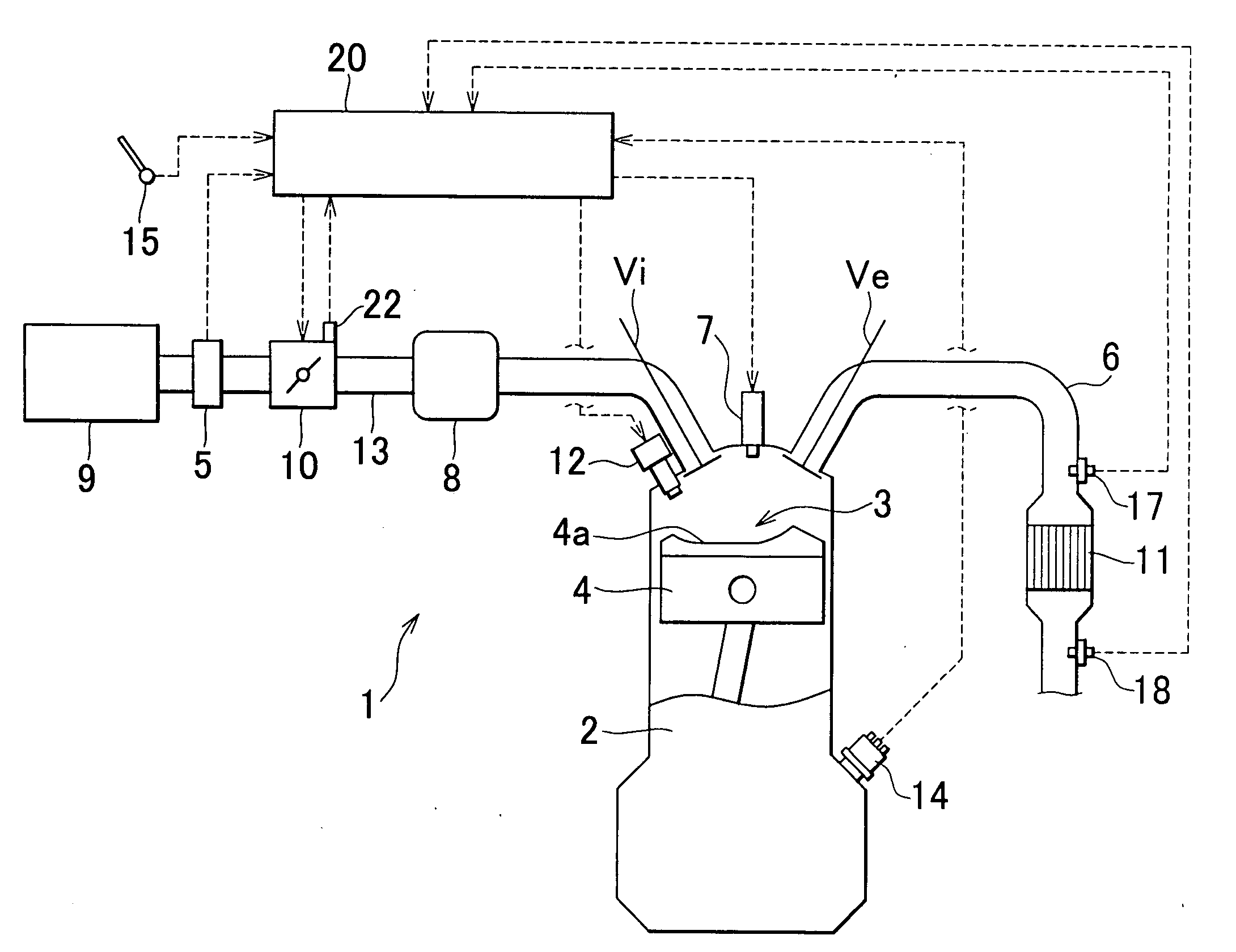
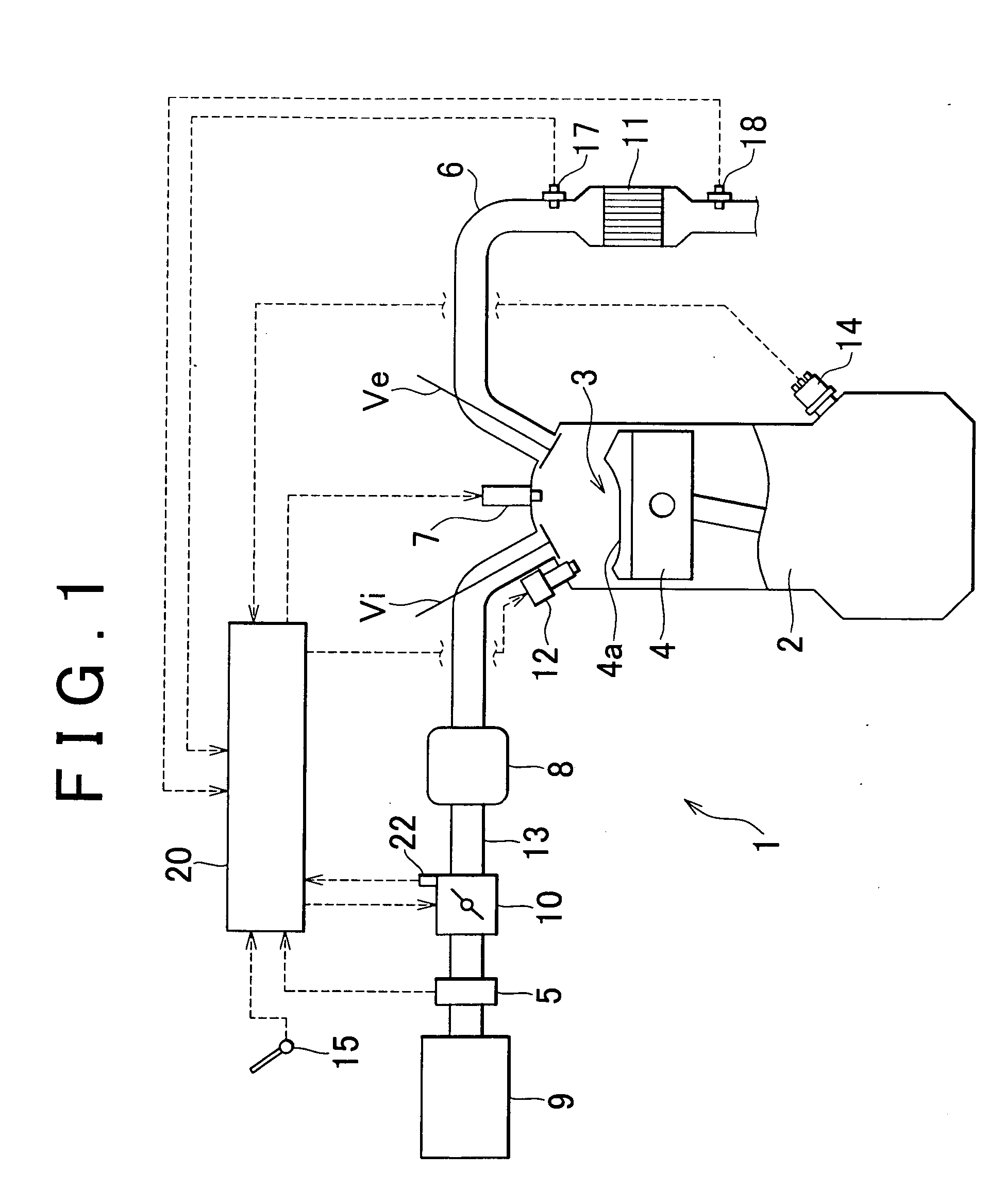
Catalyst deterioration detecting system and catalyst deterioration detecting method of internal combustion engine
PatentInactiveUS20080173008A1
Innovation
- A system that measures oxygen storage capacity and detects catalyst temperature changes to differentiate between permanent and temporary deterioration by utilizing the relationship between oxygen storage capacity and temperature changes, incorporating active air/fuel ratio control to assess poisoning presence.

Methods for controlling and detecting catalyst poisoning of selective catalytic reduction devices
PatentInactiveUS10215072B2
Innovation
- Methods for detecting catalyst poisoning in SCR devices, including monitoring the NO2:NOx ratio and temperature, determining the presence of ammonium nitrites and nitrates, and implementing a cleaning strategy such as heating the catalyst above the poisoning temperature threshold, along with adjusting reductant dosing and engine calibration parameters to mitigate poisoning and restore NOx reduction efficiency.


Environmental Regulations for Catalyst Performance
Environmental regulations governing catalyst performance have become increasingly stringent worldwide, directly impacting the development and application of temperature programmed reduction (TPR) techniques for catalyst poisoning detection. The European Union's Industrial Emissions Directive (IED) and the United States Environmental Protection Agency's National Emission Standards for Hazardous Air Pollutants (NESHAP) establish strict limits on emissions from industrial processes utilizing catalytic systems. These regulations mandate continuous monitoring of catalyst efficiency, making TPR-based poisoning detection methods essential compliance tools.
The Clean Air Act amendments have introduced specific requirements for automotive catalysts, demanding real-time monitoring capabilities that can detect performance degradation before emission thresholds are exceeded. TPR techniques must therefore be adapted to provide rapid, accurate assessments of catalyst poisoning levels to ensure regulatory compliance. This has driven the development of automated TPR systems capable of continuous operation in industrial environments.
International standards such as ISO 14040 series for life cycle assessment now require comprehensive evaluation of catalyst performance throughout their operational lifetime. These standards emphasize the importance of early poisoning detection to minimize environmental impact and extend catalyst service life. TPR methodologies must align with these assessment frameworks, providing quantitative data on catalyst degradation patterns.
Regional variations in environmental regulations create additional complexity for TPR implementation. The European REACH regulation imposes strict controls on chemical substances used in catalyst systems, while Asian markets often focus on energy efficiency standards. TPR detection systems must be flexible enough to address diverse regulatory requirements across different geographical markets.
Emerging regulations targeting greenhouse gas emissions are reshaping catalyst performance standards. The Paris Agreement's implementation has led to national policies requiring enhanced catalyst monitoring in power generation and chemical processing industries. TPR techniques are increasingly viewed as critical tools for demonstrating compliance with these evolving environmental mandates, necessitating standardized protocols and validation procedures.
Future regulatory trends indicate movement toward predictive maintenance requirements, where catalyst poisoning must be detected and addressed proactively rather than reactively. This regulatory evolution positions TPR-based detection methods as fundamental technologies for sustainable industrial operations.
The Clean Air Act amendments have introduced specific requirements for automotive catalysts, demanding real-time monitoring capabilities that can detect performance degradation before emission thresholds are exceeded. TPR techniques must therefore be adapted to provide rapid, accurate assessments of catalyst poisoning levels to ensure regulatory compliance. This has driven the development of automated TPR systems capable of continuous operation in industrial environments.
International standards such as ISO 14040 series for life cycle assessment now require comprehensive evaluation of catalyst performance throughout their operational lifetime. These standards emphasize the importance of early poisoning detection to minimize environmental impact and extend catalyst service life. TPR methodologies must align with these assessment frameworks, providing quantitative data on catalyst degradation patterns.
Regional variations in environmental regulations create additional complexity for TPR implementation. The European REACH regulation imposes strict controls on chemical substances used in catalyst systems, while Asian markets often focus on energy efficiency standards. TPR detection systems must be flexible enough to address diverse regulatory requirements across different geographical markets.
Emerging regulations targeting greenhouse gas emissions are reshaping catalyst performance standards. The Paris Agreement's implementation has led to national policies requiring enhanced catalyst monitoring in power generation and chemical processing industries. TPR techniques are increasingly viewed as critical tools for demonstrating compliance with these evolving environmental mandates, necessitating standardized protocols and validation procedures.
Future regulatory trends indicate movement toward predictive maintenance requirements, where catalyst poisoning must be detected and addressed proactively rather than reactively. This regulatory evolution positions TPR-based detection methods as fundamental technologies for sustainable industrial operations.
Economic Impact of Catalyst Poisoning Detection
The economic implications of catalyst poisoning detection through Temperature Programmed Reduction (TPR) extend far beyond the initial investment in analytical equipment, creating substantial value propositions across multiple industrial sectors. Industries heavily reliant on catalytic processes, including petrochemicals, pharmaceuticals, automotive, and environmental remediation, face significant financial losses when catalyst deactivation occurs unexpectedly. Unplanned catalyst replacement can cost facilities millions of dollars in lost production time, emergency procurement, and operational disruptions.
Early detection capabilities provided by TPR analysis offer substantial cost avoidance opportunities. By identifying poisoning mechanisms before complete catalyst failure, facilities can implement targeted regeneration strategies or optimize operating conditions to extend catalyst lifespan. This proactive approach typically reduces catalyst replacement costs by 30-50% while minimizing unscheduled downtime that often exceeds $100,000 per day in large-scale operations.
The implementation of TPR-based monitoring systems requires initial capital investments ranging from $150,000 to $500,000 for comprehensive analytical setups, including specialized equipment, software integration, and personnel training. However, return on investment calculations consistently demonstrate payback periods of 12-18 months for medium to large-scale operations, primarily through avoided replacement costs and improved operational efficiency.
Insurance and risk management considerations also contribute to the economic value proposition. Facilities implementing advanced catalyst monitoring systems often qualify for reduced insurance premiums due to lower operational risks. Additionally, regulatory compliance costs decrease as TPR monitoring helps maintain consistent emission control performance, avoiding potential fines and regulatory interventions.
The broader economic impact includes enhanced competitiveness through improved process reliability and product quality consistency. Companies utilizing TPR-based catalyst monitoring report 15-25% improvements in overall equipment effectiveness and reduced variability in product specifications, translating to stronger market positioning and customer satisfaction.
Early detection capabilities provided by TPR analysis offer substantial cost avoidance opportunities. By identifying poisoning mechanisms before complete catalyst failure, facilities can implement targeted regeneration strategies or optimize operating conditions to extend catalyst lifespan. This proactive approach typically reduces catalyst replacement costs by 30-50% while minimizing unscheduled downtime that often exceeds $100,000 per day in large-scale operations.
The implementation of TPR-based monitoring systems requires initial capital investments ranging from $150,000 to $500,000 for comprehensive analytical setups, including specialized equipment, software integration, and personnel training. However, return on investment calculations consistently demonstrate payback periods of 12-18 months for medium to large-scale operations, primarily through avoided replacement costs and improved operational efficiency.
Insurance and risk management considerations also contribute to the economic value proposition. Facilities implementing advanced catalyst monitoring systems often qualify for reduced insurance premiums due to lower operational risks. Additionally, regulatory compliance costs decrease as TPR monitoring helps maintain consistent emission control performance, avoiding potential fines and regulatory interventions.
The broader economic impact includes enhanced competitiveness through improved process reliability and product quality consistency. Companies utilizing TPR-based catalyst monitoring report 15-25% improvements in overall equipment effectiveness and reduced variability in product specifications, translating to stronger market positioning and customer satisfaction.
Unlock deeper insights with Patsnap Eureka Quick Research — get a full tech report to explore trends and direct your research. Try now!
Generate Your Research Report Instantly with AI Agent
Supercharge your innovation with Patsnap Eureka AI Agent Platform!