

How to Develop Thermite Methods for Advanced Safety?
JUN 24, 20259 MIN READ
Generate Your Research Report Instantly with AI Agent
PatSnap Eureka helps you evaluate technical feasibility & market potential.
Thermite Safety Evolution
The evolution of thermite safety methods has been a critical focus in the field of pyrotechnics and industrial applications. Initially, thermite reactions were primarily used in welding and metal purification processes, with limited safety considerations. As the applications expanded to military and civilian sectors, the need for advanced safety measures became paramount.
In the early stages, safety protocols mainly involved basic protective equipment and rudimentary containment methods. However, as incidents occurred and the potential hazards became more apparent, a shift towards more comprehensive safety strategies began to emerge. This transition marked the beginning of a systematic approach to thermite safety.
The mid-20th century saw significant advancements in understanding the chemical properties and reaction mechanisms of thermite mixtures. This knowledge led to the development of more stable compositions and improved ignition control systems. Researchers began to focus on optimizing particle sizes and exploring alternative metal oxide combinations to enhance safety without compromising performance.
As industrial applications of thermite reactions expanded, regulatory bodies started to implement stricter guidelines for handling and storage. This period witnessed the introduction of standardized safety protocols and the establishment of specialized training programs for personnel working with thermite materials. The emphasis on education and proper handling techniques became a cornerstone of thermite safety evolution.
The late 20th and early 21st centuries brought about a revolution in thermite safety through the integration of advanced materials science and nanotechnology. Researchers began exploring nanostructured thermite compositions, which offered improved control over reaction rates and energy release. This breakthrough allowed for the development of safer, more predictable thermite formulations suitable for a wider range of applications.
Concurrently, the advent of computer modeling and simulation technologies enabled scientists to predict thermite behavior under various conditions accurately. This capability significantly enhanced risk assessment and mitigation strategies, leading to the design of more effective containment systems and safety equipment.
Recent years have seen a focus on environmentally friendly and sustainable thermite formulations. Efforts to reduce toxic byproducts and develop recyclable thermite systems have gained traction, aligning with global initiatives for greener industrial processes. These advancements not only improve safety for human operators but also minimize the environmental impact of thermite applications.
In the early stages, safety protocols mainly involved basic protective equipment and rudimentary containment methods. However, as incidents occurred and the potential hazards became more apparent, a shift towards more comprehensive safety strategies began to emerge. This transition marked the beginning of a systematic approach to thermite safety.
The mid-20th century saw significant advancements in understanding the chemical properties and reaction mechanisms of thermite mixtures. This knowledge led to the development of more stable compositions and improved ignition control systems. Researchers began to focus on optimizing particle sizes and exploring alternative metal oxide combinations to enhance safety without compromising performance.
As industrial applications of thermite reactions expanded, regulatory bodies started to implement stricter guidelines for handling and storage. This period witnessed the introduction of standardized safety protocols and the establishment of specialized training programs for personnel working with thermite materials. The emphasis on education and proper handling techniques became a cornerstone of thermite safety evolution.
The late 20th and early 21st centuries brought about a revolution in thermite safety through the integration of advanced materials science and nanotechnology. Researchers began exploring nanostructured thermite compositions, which offered improved control over reaction rates and energy release. This breakthrough allowed for the development of safer, more predictable thermite formulations suitable for a wider range of applications.
Concurrently, the advent of computer modeling and simulation technologies enabled scientists to predict thermite behavior under various conditions accurately. This capability significantly enhanced risk assessment and mitigation strategies, leading to the design of more effective containment systems and safety equipment.
Recent years have seen a focus on environmentally friendly and sustainable thermite formulations. Efforts to reduce toxic byproducts and develop recyclable thermite systems have gained traction, aligning with global initiatives for greener industrial processes. These advancements not only improve safety for human operators but also minimize the environmental impact of thermite applications.
Market Demand Analysis
The market demand for advanced thermite methods in safety applications has been steadily growing, driven by increasing safety concerns across various industries. The global market for fire safety systems is projected to reach $103.9 billion by 2025, with a compound annual growth rate of 8.5% from 2020 to 2025. This growth is largely attributed to stringent safety regulations, rising awareness of fire protection, and the need for advanced fire suppression technologies.
Thermite-based safety solutions are gaining traction in sectors such as construction, automotive, aerospace, and defense. In the construction industry, there is a growing demand for fire-resistant materials that can protect structural integrity during extreme heat conditions. The automotive sector is exploring thermite-based solutions for enhanced vehicle safety, particularly in electric vehicles where battery fires pose significant risks.
The aerospace industry has shown particular interest in advanced thermite methods for improving aircraft safety. With the increasing use of composite materials in aircraft construction, there is a need for more effective fire suppression systems that can rapidly contain and extinguish fires without causing additional damage to sensitive components.
In the defense sector, thermite-based technologies are being explored for applications in ordnance disposal and protective armor. The ability of thermite reactions to generate intense heat rapidly makes them valuable for neutralizing unexploded ordnance safely and efficiently.
The oil and gas industry represents another significant market for advanced thermite safety methods. With the inherent fire risks associated with oil and gas operations, there is a constant demand for innovative fire suppression technologies that can operate effectively in challenging environments.
The market is also seeing increased demand from emerging economies, where rapid industrialization and urbanization are driving the need for advanced safety solutions. Countries like China, India, and Brazil are investing heavily in infrastructure development, creating opportunities for thermite-based safety technologies in construction and industrial applications.
However, the market faces challenges related to the high initial costs of implementing advanced thermite safety systems and concerns about potential environmental impacts. These factors are driving research into more cost-effective and environmentally friendly thermite formulations, presenting opportunities for innovation in the field.
Thermite-based safety solutions are gaining traction in sectors such as construction, automotive, aerospace, and defense. In the construction industry, there is a growing demand for fire-resistant materials that can protect structural integrity during extreme heat conditions. The automotive sector is exploring thermite-based solutions for enhanced vehicle safety, particularly in electric vehicles where battery fires pose significant risks.
The aerospace industry has shown particular interest in advanced thermite methods for improving aircraft safety. With the increasing use of composite materials in aircraft construction, there is a need for more effective fire suppression systems that can rapidly contain and extinguish fires without causing additional damage to sensitive components.
In the defense sector, thermite-based technologies are being explored for applications in ordnance disposal and protective armor. The ability of thermite reactions to generate intense heat rapidly makes them valuable for neutralizing unexploded ordnance safely and efficiently.
The oil and gas industry represents another significant market for advanced thermite safety methods. With the inherent fire risks associated with oil and gas operations, there is a constant demand for innovative fire suppression technologies that can operate effectively in challenging environments.
The market is also seeing increased demand from emerging economies, where rapid industrialization and urbanization are driving the need for advanced safety solutions. Countries like China, India, and Brazil are investing heavily in infrastructure development, creating opportunities for thermite-based safety technologies in construction and industrial applications.
However, the market faces challenges related to the high initial costs of implementing advanced thermite safety systems and concerns about potential environmental impacts. These factors are driving research into more cost-effective and environmentally friendly thermite formulations, presenting opportunities for innovation in the field.
Current Challenges
The development of thermite methods for advanced safety faces several significant challenges in the current landscape. One of the primary obstacles is the inherent instability of thermite reactions. While the high-energy output of these reactions is desirable for certain applications, it also poses substantial safety risks during handling, storage, and deployment. Researchers and engineers are grappling with the task of maintaining the reaction's effectiveness while simultaneously enhancing its controllability and predictability.
Another critical challenge lies in the precise control of the reaction rate and temperature. Thermite reactions are known for their rapid and intense heat generation, which can be difficult to manage in practical applications. Achieving a balance between the desired energy output and the ability to regulate the reaction process remains a significant hurdle. This challenge is particularly pronounced in scenarios where controlled, sustained energy release is required, such as in welding or metal purification processes.
The environmental impact of thermite reactions also presents a considerable challenge. The byproducts of these reactions can include harmful emissions and residues, raising concerns about their ecological footprint. Developing cleaner, more environmentally friendly thermite compositions without compromising their performance is a key area of focus for researchers in the field.
Safety considerations extend beyond the reaction itself to the entire lifecycle of thermite materials. The storage and transportation of thermite components pose significant risks due to their reactivity and sensitivity to environmental factors. Ensuring the stability of these materials under various conditions, while maintaining their efficacy, is a complex challenge that requires innovative solutions in material science and packaging technologies.
The scalability of advanced thermite methods is another hurdle that researchers are working to overcome. While thermite reactions can be effectively demonstrated on a small scale, translating these successes to larger, industrial-scale applications presents numerous technical and safety challenges. Issues such as heat dissipation, reaction uniformity, and containment become increasingly complex as the scale of the operation grows.
Furthermore, the development of precise ignition and control mechanisms for thermite reactions remains a significant technical challenge. Current methods often lack the level of precision required for advanced applications, particularly in scenarios where exact timing and localized reactions are crucial. Innovations in ignition technologies and reaction control systems are necessary to unlock the full potential of thermite methods in advanced safety applications.
Lastly, the regulatory landscape surrounding the use of thermite materials presents a complex challenge. Stringent safety regulations, while necessary, can sometimes impede the development and implementation of new thermite technologies. Navigating these regulatory requirements while pushing the boundaries of thermite technology requires a delicate balance between innovation and compliance with safety standards.
Another critical challenge lies in the precise control of the reaction rate and temperature. Thermite reactions are known for their rapid and intense heat generation, which can be difficult to manage in practical applications. Achieving a balance between the desired energy output and the ability to regulate the reaction process remains a significant hurdle. This challenge is particularly pronounced in scenarios where controlled, sustained energy release is required, such as in welding or metal purification processes.
The environmental impact of thermite reactions also presents a considerable challenge. The byproducts of these reactions can include harmful emissions and residues, raising concerns about their ecological footprint. Developing cleaner, more environmentally friendly thermite compositions without compromising their performance is a key area of focus for researchers in the field.
Safety considerations extend beyond the reaction itself to the entire lifecycle of thermite materials. The storage and transportation of thermite components pose significant risks due to their reactivity and sensitivity to environmental factors. Ensuring the stability of these materials under various conditions, while maintaining their efficacy, is a complex challenge that requires innovative solutions in material science and packaging technologies.
The scalability of advanced thermite methods is another hurdle that researchers are working to overcome. While thermite reactions can be effectively demonstrated on a small scale, translating these successes to larger, industrial-scale applications presents numerous technical and safety challenges. Issues such as heat dissipation, reaction uniformity, and containment become increasingly complex as the scale of the operation grows.
Furthermore, the development of precise ignition and control mechanisms for thermite reactions remains a significant technical challenge. Current methods often lack the level of precision required for advanced applications, particularly in scenarios where exact timing and localized reactions are crucial. Innovations in ignition technologies and reaction control systems are necessary to unlock the full potential of thermite methods in advanced safety applications.
Lastly, the regulatory landscape surrounding the use of thermite materials presents a complex challenge. Stringent safety regulations, while necessary, can sometimes impede the development and implementation of new thermite technologies. Navigating these regulatory requirements while pushing the boundaries of thermite technology requires a delicate balance between innovation and compliance with safety standards.
Existing Safety Solutions
01 Containment and controlled ignition systems
Safety measures for thermite reactions often involve specialized containment vessels and controlled ignition systems. These systems are designed to safely contain the high-temperature reaction and manage the release of energy. Proper containment helps prevent accidental ignition and contains any potential spills or explosions, while controlled ignition systems ensure the reaction starts and proceeds in a controlled manner.- Containment and control measures: Safety in thermite methods involves implementing containment and control measures. This includes using specialized containers, barriers, and reaction chambers to confine the thermite reaction and prevent uncontrolled spread. Advanced control systems and monitoring devices are employed to regulate the reaction process and ensure safe operation.
- Protective equipment and handling procedures: Proper protective equipment and handling procedures are crucial for thermite safety. This encompasses the use of heat-resistant clothing, face shields, and gloves. Safe handling protocols include proper storage, transportation, and disposal of thermite materials. Training personnel in correct handling techniques and emergency response procedures is essential.
- Composition and formulation safety: Enhancing safety through careful composition and formulation of thermite mixtures is important. This involves selecting appropriate metal oxides and reducing agents, adjusting particle sizes, and incorporating additives to control reaction rates. Safer alternatives to traditional thermite compositions are being developed to reduce risks associated with handling and use.
- Ignition and initiation control: Safe ignition and initiation control methods are critical in thermite processes. This includes developing reliable ignition systems with built-in safety features, using remote ignition techniques, and implementing fail-safe mechanisms. Controlled initiation helps prevent accidental ignition and ensures the reaction occurs only under intended conditions.
- Waste management and environmental safety: Proper waste management and environmental safety considerations are essential in thermite methods. This involves developing procedures for safe disposal of reaction products, implementing measures to prevent environmental contamination, and ensuring compliance with environmental regulations. Recycling and reuse of byproducts are also explored to minimize environmental impact.
02 Protective equipment and handling procedures
Implementing proper protective equipment and handling procedures is crucial for thermite safety. This includes using appropriate personal protective equipment (PPE) such as heat-resistant suits, gloves, and face shields. Established handling procedures involve proper storage, transportation, and preparation of thermite materials to minimize risks associated with accidental ignition or exposure.Expand Specific Solutions03 Remote operation and automation
Enhancing safety in thermite operations often involves remote operation and automation techniques. These methods allow operators to maintain a safe distance from the reaction site, reducing the risk of injury from heat, sparks, or potential explosions. Automated systems can precisely control the reaction parameters and respond quickly to any deviations, further improving safety.Expand Specific Solutions04 Fire suppression and emergency response systems
Incorporating fire suppression and emergency response systems is essential for thermite safety. These systems may include specialized fire extinguishing agents designed for metal fires, rapid cooling mechanisms, and emergency shutdown procedures. Having well-planned emergency response protocols and trained personnel can significantly mitigate risks associated with thermite reactions.Expand Specific Solutions05 Composition modifications for enhanced safety
Modifying the composition of thermite mixtures can improve safety while maintaining desired performance characteristics. This may involve adding stabilizers, using less reactive components, or developing new formulations that reduce sensitivity to accidental ignition. These modifications can help create safer thermite compositions for various applications while minimizing potential hazards.Expand Specific Solutions
Key Industry Players
The development of advanced thermite methods for improved safety is currently in a growth phase, with increasing market demand driven by industrial and military applications. The global market for thermite technologies is expanding, estimated to reach several billion dollars by 2025. Technologically, the field is moderately mature but still evolving, with ongoing research focused on enhancing safety and efficiency. Key players like Naval Research Laboratory, Lockheed Martin Corp., and ArianeGroup SAS are leading innovation in this space. Universities such as Nanjing University of Science & Technology and Chongqing University are contributing significant research. Companies like Pangang Group and BiSN Oil Tools Ltd. are developing specialized applications, indicating a diverse and competitive landscape with opportunities for further advancement in safety and performance.
Naval Research Laboratory
Technical Solution: The Naval Research Laboratory has developed advanced thermite compositions for enhanced safety in military applications. Their approach involves using nanoscale aluminum particles and metal oxide oxidizers to create more stable and controllable thermite reactions. The lab has also explored the use of additives to modify burn rates and reduce sensitivity to accidental ignition. Their research includes the development of environmentally friendly thermites that produce less toxic byproducts.
Strengths: Expertise in military-grade thermite formulations, advanced nanotechnology integration, and focus on safety enhancements. Weaknesses: Potential limitations in scaling up production for commercial applications and higher costs associated with specialized materials.
Xi'an Modern Chemistry Research Institute
Technical Solution: Xi'an Modern Chemistry Research Institute has focused on developing safer thermite compositions for industrial and military use. Their approach includes the use of microencapsulation techniques to improve stability and control of thermite reactions. The institute has also explored the incorporation of phase-change materials to enhance thermal management during thermite reactions, reducing the risk of uncontrolled propagation. Additionally, they have investigated the use of organic binders to create more cohesive and less dusty thermite mixtures, improving handling safety.
Strengths: Innovative microencapsulation techniques, expertise in thermal management, and focus on practical safety improvements. Weaknesses: Potential challenges in meeting international safety standards and limited experience in large-scale industrial applications.
Core Safety Innovations
Expanding Thermite Reactions for Downhole Applications
PatentActiveUS20200208494A1
Innovation
- A thermite reaction package with a cylindrical housing and ignition module, featuring gas-generating materials and additives like silicon carbide to control porosity and iron distribution, and a flexible or rigid structure to constrain longitudinal expansion and promote lateral expansion, forming a ceramic bridge plug or screen within the well.
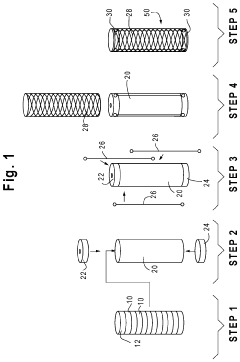
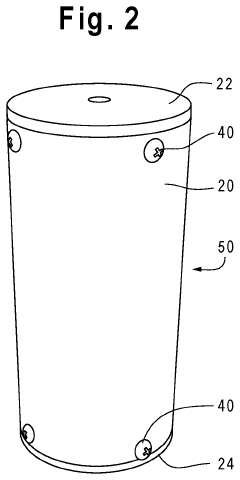
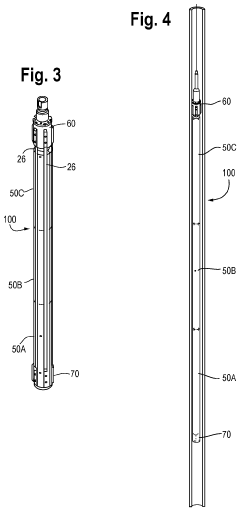
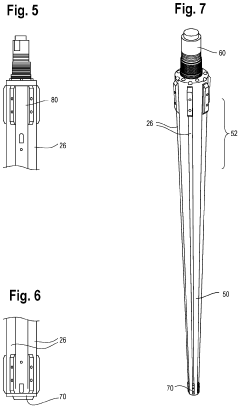
Thermite torch formulation including molybdenum trioxide
PatentInactiveUS20100089507A1
Innovation
- A thermite formulation using a magnalium alloy as the metal fuel and a combination of CuO and MoO3 as oxidizers, with a binder, optimized to provide excellent material perforation and low toxicity, where the magnalium alloy comprises about 3-35 weight percent, CuO 30-70 weight percent, MoO3 15-35 weight percent, and a small amount of binder, such as polytetrafluoroethylene.
Regulatory Framework
The regulatory framework surrounding thermite methods for advanced safety is a critical aspect of their development and implementation. Governments and international bodies have established comprehensive guidelines to ensure the safe handling, storage, and use of thermite materials. These regulations typically cover various aspects, including manufacturing processes, transportation, and application protocols.
In the United States, the Bureau of Alcohol, Tobacco, Firearms and Explosives (ATF) oversees the regulation of thermite materials. The ATF classifies thermite as a low explosive, subject to strict licensing and storage requirements. Similarly, the Department of Transportation (DOT) has specific regulations for the transportation of thermite materials, categorizing them as hazardous materials and mandating specific packaging and labeling requirements.
On an international level, the United Nations has developed the Globally Harmonized System of Classification and Labelling of Chemicals (GHS), which provides a standardized approach to chemical hazard classification and communication. This system includes guidelines for the classification and labeling of thermite materials, ensuring consistent safety standards across different countries.
The Occupational Safety and Health Administration (OSHA) in the United States has established workplace safety standards for handling thermite materials. These standards include requirements for personal protective equipment, proper ventilation, and emergency response procedures. Additionally, OSHA mandates comprehensive training programs for workers involved in thermite-related operations.
Environmental regulations also play a significant role in the development of thermite methods. The Environmental Protection Agency (EPA) has set guidelines for the disposal of thermite residues and the management of potential environmental impacts. These regulations aim to minimize the release of harmful substances and ensure responsible waste management practices.
In the context of advanced safety applications, regulatory bodies often require extensive testing and certification processes before approving new thermite methods. This typically involves rigorous safety assessments, performance evaluations, and environmental impact studies. Regulatory agencies may also mandate ongoing monitoring and reporting to ensure continued compliance with safety standards.
As thermite technology advances, regulatory frameworks are continuously evolving to address new challenges and applications. This dynamic regulatory environment necessitates ongoing collaboration between industry stakeholders, research institutions, and regulatory bodies to develop and refine safety standards that keep pace with technological advancements.
In the United States, the Bureau of Alcohol, Tobacco, Firearms and Explosives (ATF) oversees the regulation of thermite materials. The ATF classifies thermite as a low explosive, subject to strict licensing and storage requirements. Similarly, the Department of Transportation (DOT) has specific regulations for the transportation of thermite materials, categorizing them as hazardous materials and mandating specific packaging and labeling requirements.
On an international level, the United Nations has developed the Globally Harmonized System of Classification and Labelling of Chemicals (GHS), which provides a standardized approach to chemical hazard classification and communication. This system includes guidelines for the classification and labeling of thermite materials, ensuring consistent safety standards across different countries.
The Occupational Safety and Health Administration (OSHA) in the United States has established workplace safety standards for handling thermite materials. These standards include requirements for personal protective equipment, proper ventilation, and emergency response procedures. Additionally, OSHA mandates comprehensive training programs for workers involved in thermite-related operations.
Environmental regulations also play a significant role in the development of thermite methods. The Environmental Protection Agency (EPA) has set guidelines for the disposal of thermite residues and the management of potential environmental impacts. These regulations aim to minimize the release of harmful substances and ensure responsible waste management practices.
In the context of advanced safety applications, regulatory bodies often require extensive testing and certification processes before approving new thermite methods. This typically involves rigorous safety assessments, performance evaluations, and environmental impact studies. Regulatory agencies may also mandate ongoing monitoring and reporting to ensure continued compliance with safety standards.
As thermite technology advances, regulatory frameworks are continuously evolving to address new challenges and applications. This dynamic regulatory environment necessitates ongoing collaboration between industry stakeholders, research institutions, and regulatory bodies to develop and refine safety standards that keep pace with technological advancements.
Environmental Impact
The environmental impact of thermite methods for advanced safety is a critical consideration in their development and application. Thermite reactions, while highly effective for certain safety applications, can have significant environmental consequences if not properly managed.
One of the primary environmental concerns associated with thermite reactions is the production of metal oxide fumes and particulate matter. These byproducts can contribute to air pollution and potentially harm local ecosystems if released in large quantities. The aluminum oxide produced as a result of the reaction, while generally inert, can accumulate in soil and water systems, potentially affecting pH levels and nutrient availability for plants and aquatic life.
The high temperatures generated during thermite reactions also pose a risk of starting wildfires in dry or forested areas. This indirect environmental impact can lead to extensive damage to natural habitats and biodiversity. Additionally, the intense heat can cause localized soil sterilization, affecting microbial communities and potentially hindering vegetation regrowth in the immediate vicinity of the reaction site.
Water contamination is another potential environmental issue associated with thermite methods. The molten metal produced during the reaction can potentially leach into groundwater or surface water sources, introducing heavy metals and other contaminants into aquatic ecosystems. This can have long-lasting effects on water quality and aquatic life.
To mitigate these environmental impacts, researchers and engineers are focusing on developing more environmentally friendly thermite compositions. This includes exploring alternative metal fuels and oxidizers that produce less harmful byproducts. Some promising directions include the use of nano-sized particles to increase reaction efficiency and reduce the overall amount of material needed, thereby minimizing waste and environmental footprint.
Containment and controlled application methods are also being developed to limit the spread of reaction products and minimize the risk of unintended environmental contamination. These include specialized reaction chambers and application techniques that confine the thermite reaction to a specific area, reducing the potential for widespread environmental impact.
Furthermore, research is being conducted on the potential for recycling and reusing the byproducts of thermite reactions. This circular approach could significantly reduce the overall environmental impact by minimizing waste and conserving resources. For instance, the metal oxides produced could potentially be reclaimed and used in other industrial processes or as raw materials for new thermite compositions.
One of the primary environmental concerns associated with thermite reactions is the production of metal oxide fumes and particulate matter. These byproducts can contribute to air pollution and potentially harm local ecosystems if released in large quantities. The aluminum oxide produced as a result of the reaction, while generally inert, can accumulate in soil and water systems, potentially affecting pH levels and nutrient availability for plants and aquatic life.
The high temperatures generated during thermite reactions also pose a risk of starting wildfires in dry or forested areas. This indirect environmental impact can lead to extensive damage to natural habitats and biodiversity. Additionally, the intense heat can cause localized soil sterilization, affecting microbial communities and potentially hindering vegetation regrowth in the immediate vicinity of the reaction site.
Water contamination is another potential environmental issue associated with thermite methods. The molten metal produced during the reaction can potentially leach into groundwater or surface water sources, introducing heavy metals and other contaminants into aquatic ecosystems. This can have long-lasting effects on water quality and aquatic life.
To mitigate these environmental impacts, researchers and engineers are focusing on developing more environmentally friendly thermite compositions. This includes exploring alternative metal fuels and oxidizers that produce less harmful byproducts. Some promising directions include the use of nano-sized particles to increase reaction efficiency and reduce the overall amount of material needed, thereby minimizing waste and environmental footprint.
Containment and controlled application methods are also being developed to limit the spread of reaction products and minimize the risk of unintended environmental contamination. These include specialized reaction chambers and application techniques that confine the thermite reaction to a specific area, reducing the potential for widespread environmental impact.
Furthermore, research is being conducted on the potential for recycling and reusing the byproducts of thermite reactions. This circular approach could significantly reduce the overall environmental impact by minimizing waste and conserving resources. For instance, the metal oxides produced could potentially be reclaimed and used in other industrial processes or as raw materials for new thermite compositions.
Unlock deeper insights with PatSnap Eureka Quick Research — get a full tech report to explore trends and direct your research. Try now!
Generate Your Research Report Instantly with AI Agent
Supercharge your innovation with PatSnap Eureka AI Agent Platform!