

Improving Industrial Efficiency with Focused Thermite Solutions
JUN 24, 20259 MIN READ
Generate Your Research Report Instantly with AI Agent
PatSnap Eureka helps you evaluate technical feasibility & market potential.
Thermite Tech Evolution
Thermite technology has undergone significant evolution since its discovery in the late 19th century. Initially used primarily for welding railroad tracks, thermite reactions have found diverse applications in industrial processes over time. The early 20th century saw the development of thermite welding techniques for joining large metal components, particularly in the transportation sector.
In the mid-20th century, researchers began exploring the potential of thermite reactions for metal purification and extraction. This led to advancements in metallurgical processes, enabling more efficient production of high-purity metals. Concurrently, the military sector recognized the potential of thermite in incendiary devices, driving further research into controlled exothermic reactions.
The late 20th century marked a shift towards precision applications of thermite technology. Innovations in particle size control and mixture compositions allowed for more targeted and efficient energy release. This period saw the emergence of self-propagating high-temperature synthesis (SHS) techniques, opening new avenues for material science and engineering.
The turn of the 21st century brought renewed interest in thermite technology for industrial efficiency. Researchers began focusing on nano-scale thermite particles, which exhibited significantly higher reactivity and energy density compared to their micro-scale counterparts. This breakthrough led to the development of "superthermites" with enhanced performance characteristics.
Recent years have witnessed a convergence of thermite technology with advanced manufacturing processes. 3D printing techniques have been adapted to create precisely structured thermite components, allowing for tailored energy release profiles in industrial applications. Additionally, the integration of smart materials and sensors has enabled real-time monitoring and control of thermite reactions, enhancing safety and efficiency.
Current research trends are exploring environmentally friendly thermite formulations, aiming to reduce harmful emissions while maintaining high performance. There is also growing interest in combining thermite reactions with other energy sources, such as electrical or mechanical inputs, to create hybrid systems with improved controllability and efficiency.
The evolution of thermite technology continues to be driven by the demands of various industries, including manufacturing, construction, and energy production. As researchers push the boundaries of material science and reaction engineering, thermite solutions are poised to play an increasingly important role in improving industrial efficiency and enabling new manufacturing capabilities.
In the mid-20th century, researchers began exploring the potential of thermite reactions for metal purification and extraction. This led to advancements in metallurgical processes, enabling more efficient production of high-purity metals. Concurrently, the military sector recognized the potential of thermite in incendiary devices, driving further research into controlled exothermic reactions.
The late 20th century marked a shift towards precision applications of thermite technology. Innovations in particle size control and mixture compositions allowed for more targeted and efficient energy release. This period saw the emergence of self-propagating high-temperature synthesis (SHS) techniques, opening new avenues for material science and engineering.
The turn of the 21st century brought renewed interest in thermite technology for industrial efficiency. Researchers began focusing on nano-scale thermite particles, which exhibited significantly higher reactivity and energy density compared to their micro-scale counterparts. This breakthrough led to the development of "superthermites" with enhanced performance characteristics.
Recent years have witnessed a convergence of thermite technology with advanced manufacturing processes. 3D printing techniques have been adapted to create precisely structured thermite components, allowing for tailored energy release profiles in industrial applications. Additionally, the integration of smart materials and sensors has enabled real-time monitoring and control of thermite reactions, enhancing safety and efficiency.
Current research trends are exploring environmentally friendly thermite formulations, aiming to reduce harmful emissions while maintaining high performance. There is also growing interest in combining thermite reactions with other energy sources, such as electrical or mechanical inputs, to create hybrid systems with improved controllability and efficiency.
The evolution of thermite technology continues to be driven by the demands of various industries, including manufacturing, construction, and energy production. As researchers push the boundaries of material science and reaction engineering, thermite solutions are poised to play an increasingly important role in improving industrial efficiency and enabling new manufacturing capabilities.
Industrial Demand Analysis
The demand for focused thermite solutions in industrial applications has been steadily increasing due to their potential to significantly improve efficiency and productivity across various sectors. Thermite reactions, known for their high-temperature exothermic properties, have found applications in welding, metal purification, and materials synthesis. The industrial market for these solutions is driven by the need for more efficient and cost-effective processes in manufacturing, construction, and maintenance operations.
In the manufacturing sector, focused thermite solutions are gaining traction for their ability to join large metal components quickly and effectively. This is particularly valuable in industries such as automotive, aerospace, and heavy machinery production, where precision welding of thick metal parts is crucial. The demand for these solutions is expected to grow as manufacturers seek to streamline their production processes and reduce downtime associated with traditional welding methods.
The construction industry represents another significant market for focused thermite solutions. In infrastructure projects, such as railway track welding and pipeline construction, thermite reactions offer a reliable and efficient method for creating continuous, high-strength joints. As governments worldwide invest in upgrading and expanding transportation networks, the demand for these solutions is projected to increase substantially.
Maintenance and repair operations across various industries also contribute to the growing demand for focused thermite solutions. In sectors like oil and gas, power generation, and mining, where equipment downtime can result in substantial financial losses, rapid repair techniques using thermite reactions are highly valued. These solutions enable quick on-site repairs of large metal components, reducing operational disruptions and associated costs.
The market for focused thermite solutions is further propelled by the ongoing trend of industrial automation and the pursuit of Industry 4.0 principles. As companies strive to optimize their processes and reduce human intervention in hazardous tasks, thermite-based technologies offer opportunities for automated welding and joining operations. This aligns with the broader industrial trend towards smart manufacturing and increased operational efficiency.
Environmental considerations are also shaping the demand landscape for focused thermite solutions. As industries face increasing pressure to reduce their carbon footprint and improve energy efficiency, thermite reactions present an attractive alternative to traditional high-energy processes. The localized and rapid nature of thermite reactions can potentially lead to reduced overall energy consumption in certain industrial applications, making them an appealing option for environmentally conscious companies.
However, the adoption of focused thermite solutions is not without challenges. Safety concerns and the need for specialized training in handling thermite materials may limit widespread adoption in some sectors. Additionally, regulatory requirements and standards for the use of thermite in industrial settings vary across regions, potentially affecting market growth in certain areas.
In the manufacturing sector, focused thermite solutions are gaining traction for their ability to join large metal components quickly and effectively. This is particularly valuable in industries such as automotive, aerospace, and heavy machinery production, where precision welding of thick metal parts is crucial. The demand for these solutions is expected to grow as manufacturers seek to streamline their production processes and reduce downtime associated with traditional welding methods.
The construction industry represents another significant market for focused thermite solutions. In infrastructure projects, such as railway track welding and pipeline construction, thermite reactions offer a reliable and efficient method for creating continuous, high-strength joints. As governments worldwide invest in upgrading and expanding transportation networks, the demand for these solutions is projected to increase substantially.
Maintenance and repair operations across various industries also contribute to the growing demand for focused thermite solutions. In sectors like oil and gas, power generation, and mining, where equipment downtime can result in substantial financial losses, rapid repair techniques using thermite reactions are highly valued. These solutions enable quick on-site repairs of large metal components, reducing operational disruptions and associated costs.
The market for focused thermite solutions is further propelled by the ongoing trend of industrial automation and the pursuit of Industry 4.0 principles. As companies strive to optimize their processes and reduce human intervention in hazardous tasks, thermite-based technologies offer opportunities for automated welding and joining operations. This aligns with the broader industrial trend towards smart manufacturing and increased operational efficiency.
Environmental considerations are also shaping the demand landscape for focused thermite solutions. As industries face increasing pressure to reduce their carbon footprint and improve energy efficiency, thermite reactions present an attractive alternative to traditional high-energy processes. The localized and rapid nature of thermite reactions can potentially lead to reduced overall energy consumption in certain industrial applications, making them an appealing option for environmentally conscious companies.
However, the adoption of focused thermite solutions is not without challenges. Safety concerns and the need for specialized training in handling thermite materials may limit widespread adoption in some sectors. Additionally, regulatory requirements and standards for the use of thermite in industrial settings vary across regions, potentially affecting market growth in certain areas.
Thermite Challenges
Thermite reactions, while powerful and efficient, present several significant challenges in industrial applications. One of the primary concerns is the control and containment of the highly exothermic reaction. The intense heat generated during thermite reactions can pose safety risks and damage surrounding equipment if not properly managed. This necessitates the development of advanced containment systems and precise control mechanisms to harness the reaction's power effectively.
Another challenge lies in the initiation and propagation of thermite reactions. Achieving consistent and reliable ignition across different industrial settings can be problematic, especially when dealing with large-scale applications. Factors such as moisture content, particle size distribution, and environmental conditions can significantly impact the reaction's initiation and subsequent propagation. Overcoming these variables requires sophisticated ignition systems and carefully engineered thermite compositions.
The selection and optimization of thermite mixtures for specific industrial applications present additional hurdles. Different industrial processes may require varying levels of heat output, reaction rates, and byproduct compositions. Tailoring thermite formulations to meet these diverse needs while maintaining safety and efficiency is a complex task that demands extensive research and testing.
Environmental concerns also pose challenges in the widespread adoption of thermite solutions. The reaction products, including metal oxides and slag, need to be managed responsibly to minimize environmental impact. Developing eco-friendly thermite compositions and implementing effective waste management strategies are crucial for sustainable industrial applications.
Scaling up thermite reactions for large-scale industrial use introduces its own set of challenges. Maintaining reaction uniformity and heat distribution across larger volumes of thermite mixtures can be difficult. This scaling issue affects both the efficiency of the process and the quality of the end products, requiring innovative engineering solutions to overcome.
Lastly, the integration of thermite-based solutions into existing industrial processes presents logistical and operational challenges. Adapting current manufacturing lines or developing new production methods to incorporate thermite reactions requires significant investment and expertise. Ensuring seamless integration while maintaining or improving overall process efficiency is a complex undertaking that demands careful planning and execution.
Another challenge lies in the initiation and propagation of thermite reactions. Achieving consistent and reliable ignition across different industrial settings can be problematic, especially when dealing with large-scale applications. Factors such as moisture content, particle size distribution, and environmental conditions can significantly impact the reaction's initiation and subsequent propagation. Overcoming these variables requires sophisticated ignition systems and carefully engineered thermite compositions.
The selection and optimization of thermite mixtures for specific industrial applications present additional hurdles. Different industrial processes may require varying levels of heat output, reaction rates, and byproduct compositions. Tailoring thermite formulations to meet these diverse needs while maintaining safety and efficiency is a complex task that demands extensive research and testing.
Environmental concerns also pose challenges in the widespread adoption of thermite solutions. The reaction products, including metal oxides and slag, need to be managed responsibly to minimize environmental impact. Developing eco-friendly thermite compositions and implementing effective waste management strategies are crucial for sustainable industrial applications.
Scaling up thermite reactions for large-scale industrial use introduces its own set of challenges. Maintaining reaction uniformity and heat distribution across larger volumes of thermite mixtures can be difficult. This scaling issue affects both the efficiency of the process and the quality of the end products, requiring innovative engineering solutions to overcome.
Lastly, the integration of thermite-based solutions into existing industrial processes presents logistical and operational challenges. Adapting current manufacturing lines or developing new production methods to incorporate thermite reactions requires significant investment and expertise. Ensuring seamless integration while maintaining or improving overall process efficiency is a complex undertaking that demands careful planning and execution.
Current Thermite Solutions
01 Thermite composition improvements
Advancements in thermite compositions focus on enhancing industrial efficiency. These improvements include optimizing particle sizes, incorporating additives, and developing novel formulations to increase energy output and control reaction rates. Such enhancements lead to more efficient and controllable thermite reactions for various industrial applications.- Thermite composition improvements: Advancements in thermite compositions focus on enhancing industrial efficiency. These improvements include optimizing particle sizes, incorporating additives, and developing novel formulations to increase energy output and control reaction rates. Such enhancements lead to more efficient and controllable thermite reactions, benefiting various industrial applications.
- Precision ignition and control systems: Development of sophisticated ignition and control systems for thermite reactions improves industrial efficiency. These systems include precise electronic ignition mechanisms, advanced sensors for monitoring reaction progress, and automated control algorithms. Such technologies enable better timing, safety, and overall process control in thermite-based industrial applications.
- Thermite welding advancements: Innovations in thermite welding techniques enhance industrial efficiency, particularly in rail and pipeline industries. These advancements include improved mold designs, automated welding processes, and specialized thermite mixtures tailored for specific materials. Such developments result in stronger welds, faster completion times, and reduced labor costs.
- Eco-friendly thermite solutions: Development of environmentally friendly thermite solutions addresses industrial efficiency and sustainability concerns. These innovations include using recycled materials in thermite mixtures, reducing harmful emissions during reactions, and creating biodegradable by-products. Such advancements improve the environmental profile of thermite-based industrial processes while maintaining or enhancing efficiency.
- Integration with smart manufacturing: Incorporation of thermite processes into smart manufacturing systems enhances industrial efficiency. This integration involves connecting thermite-based operations to IoT platforms, implementing AI-driven process optimization, and utilizing data analytics for predictive maintenance. Such advancements lead to improved resource utilization, reduced downtime, and overall increased productivity in thermite-reliant industries.
02 Precision ignition and control systems
Development of sophisticated ignition and control systems for thermite reactions improves industrial efficiency. These systems include precise electronic ignition mechanisms, advanced sensors for monitoring reaction progress, and automated control algorithms. Such technologies enable better timing, safety, and overall process control in thermite-based industrial operations.Expand Specific Solutions03 Application-specific thermite solutions
Tailored thermite solutions for specific industrial applications enhance efficiency in various sectors. These include customized formulations for welding, metal purification, and heat generation in challenging environments. By optimizing thermite reactions for particular use cases, industries can achieve higher productivity and reduced energy consumption.Expand Specific Solutions04 Environmentally friendly thermite processes
Development of eco-friendly thermite processes focuses on reducing environmental impact while maintaining industrial efficiency. This includes using less toxic materials, minimizing waste products, and designing closed-loop systems for byproduct recovery. Such innovations contribute to sustainable industrial practices without compromising on the effectiveness of thermite reactions.Expand Specific Solutions05 Integration with advanced manufacturing techniques
Incorporation of thermite reactions into advanced manufacturing processes enhances industrial efficiency. This includes integration with 3D printing technologies, automated production lines, and smart factory systems. By combining thermite solutions with cutting-edge manufacturing techniques, industries can achieve higher precision, reduced labor costs, and improved overall productivity.Expand Specific Solutions
Key Industry Players
The focused thermite solutions market for improving industrial efficiency is in a growth phase, driven by increasing demand for high-performance materials in various industries. The market size is expanding, with significant potential in sectors like manufacturing, construction, and energy. Technologically, the field is advancing rapidly, with companies like Chongqing University, Naval Research Laboratory, and Kobe Steel, Ltd. leading research efforts. The technology's maturity varies across applications, with some areas well-established and others still emerging. Key players such as Pangang Group Research Institute Co., Ltd., BiSN Oil Tools Ltd., and BNNT Materials LLC are actively developing innovative solutions, indicating a competitive and dynamic landscape with opportunities for further advancements and market expansion.
Pangang Group Research Institute Co., Ltd.
Technical Solution: Pangang Group Research Institute has developed a focused thermite solution for improving industrial efficiency. Their approach involves using precisely controlled thermite reactions to generate localized high temperatures for specific industrial processes. The technology includes advanced ignition systems, custom thermite compositions, and precise reaction control mechanisms. This allows for targeted heat application in various manufacturing and processing operations, significantly reducing energy consumption and improving overall efficiency.
Strengths: Precise heat control, energy efficiency, versatility across industries. Weaknesses: Potential safety concerns, high initial implementation costs.
Kobe Steel, Ltd.
Technical Solution: Kobe Steel has innovated in the field of focused thermite solutions with their "Thermo-Precision" technology. This system utilizes carefully engineered thermite mixtures and advanced delivery mechanisms to provide concentrated heat for industrial applications. The technology incorporates smart sensors and real-time monitoring to ensure optimal heat distribution and energy efficiency. Kobe Steel's solution is particularly effective in metallurgical processes, welding, and heat treatment applications, where precise temperature control is crucial for product quality and process efficiency.
Strengths: High precision, adaptability to various industrial processes, improved product quality. Weaknesses: Complex implementation, requires specialized training for operators.
Core Thermite Patents
Thermite charge
PatentActiveUS7555986B2
Innovation
- A linear or curvilinear thermite charge apparatus with a compartmentalized design and modular structure, using potassium permanganate and potassium ferrate to enhance cutting power, and oxygen augmentation to produce a sustained high-temperature jet for efficient cutting through materials like steel, concrete, and rock without explosive hazards.
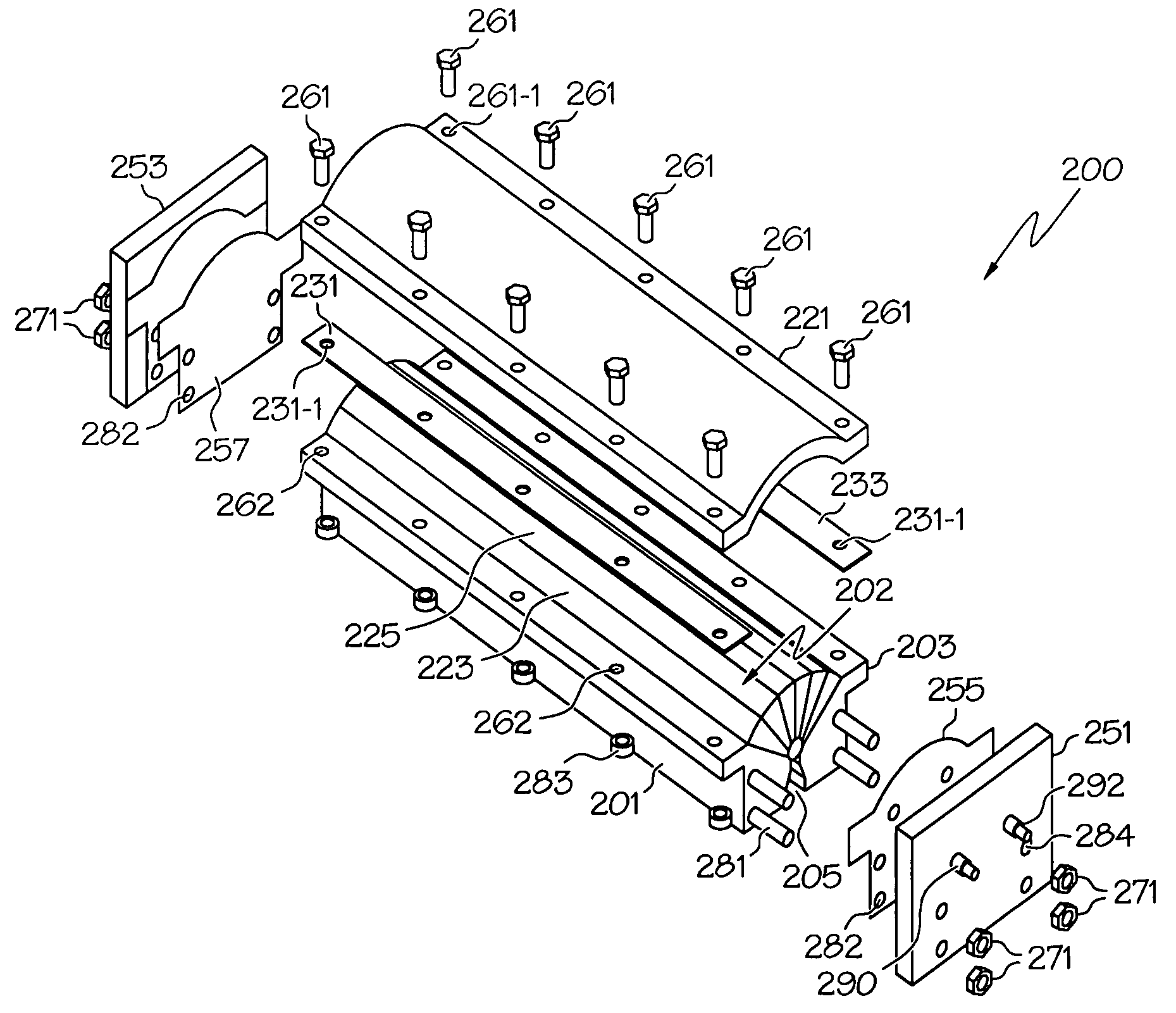
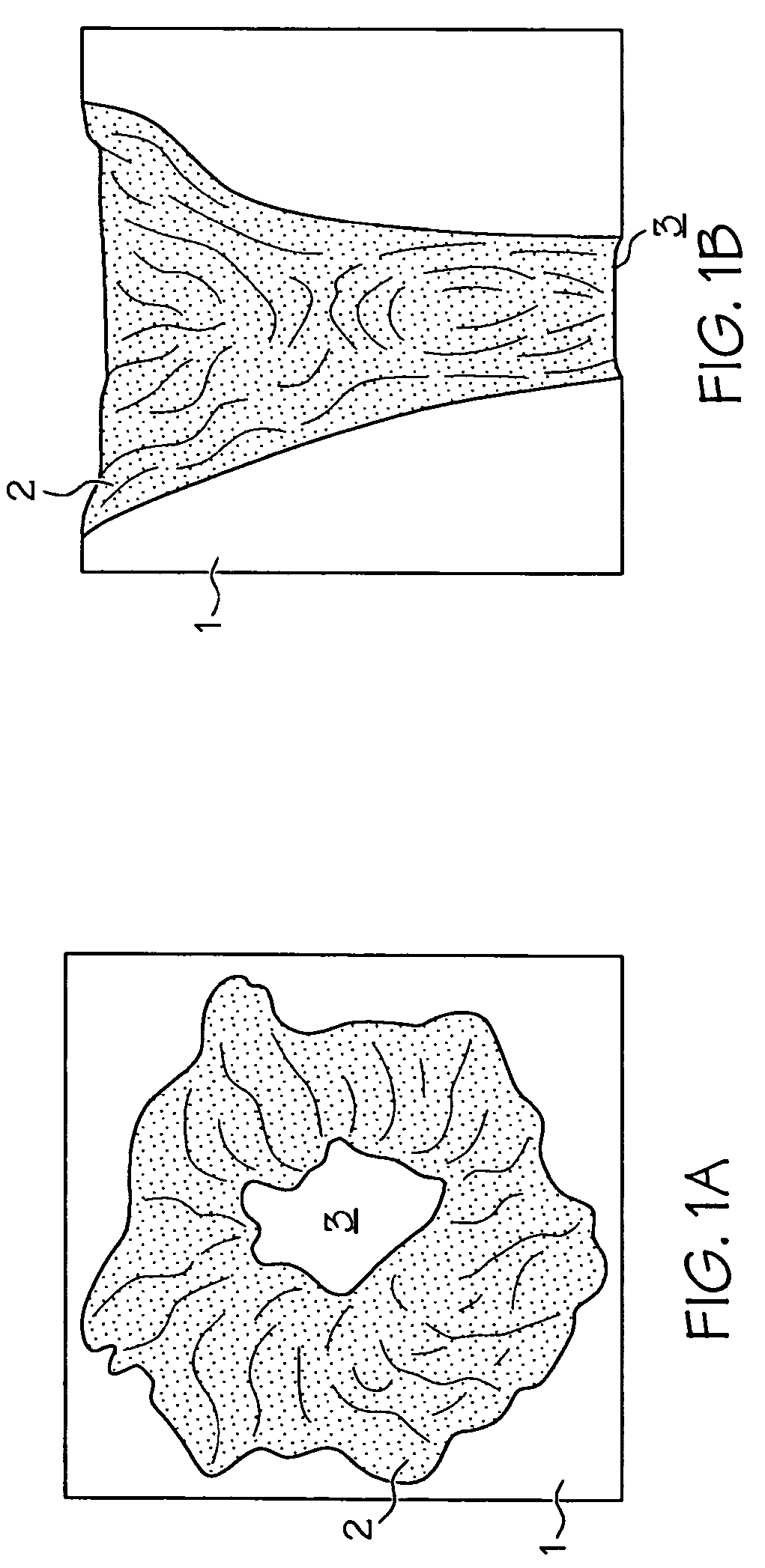
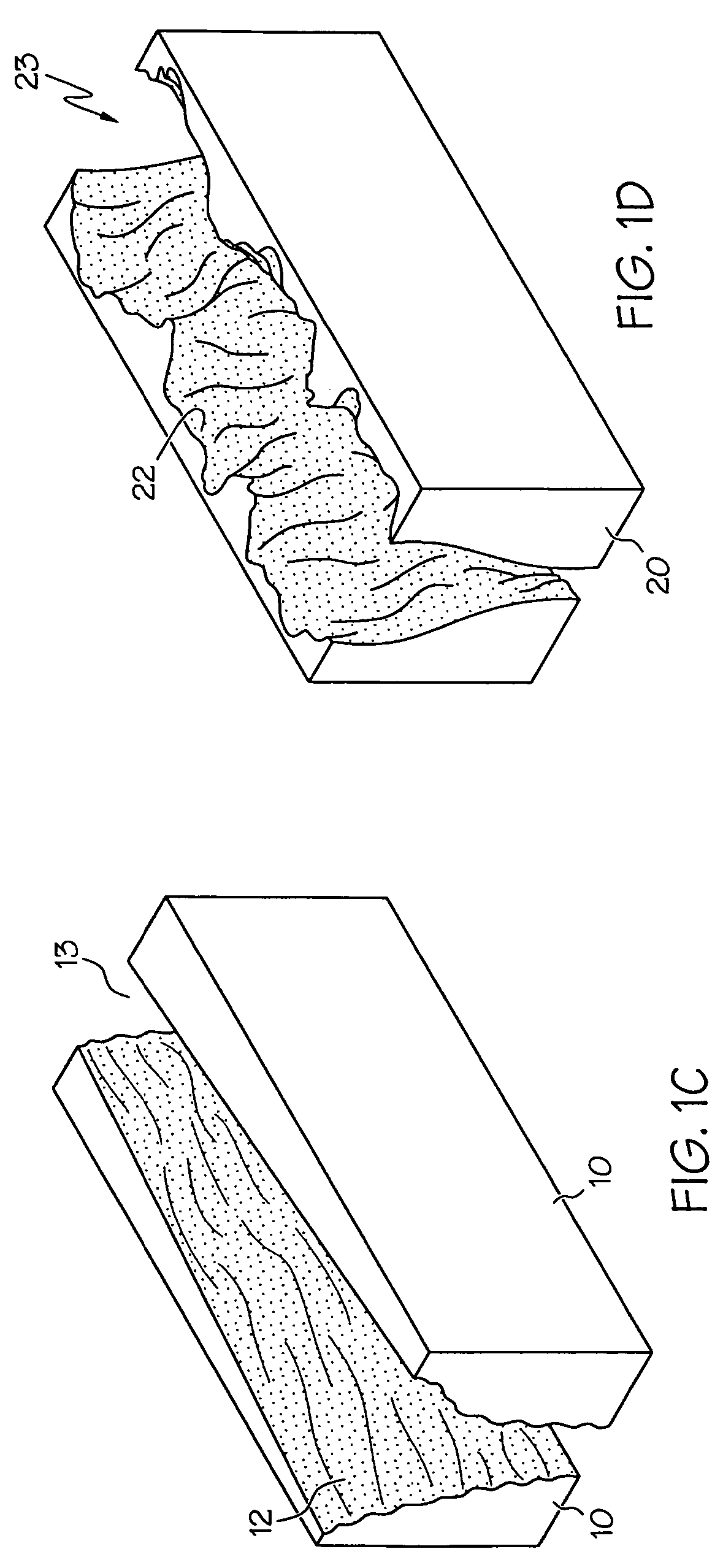
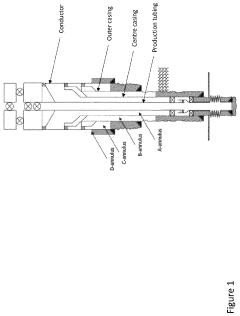
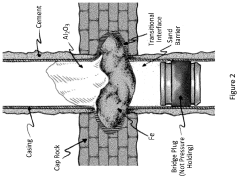
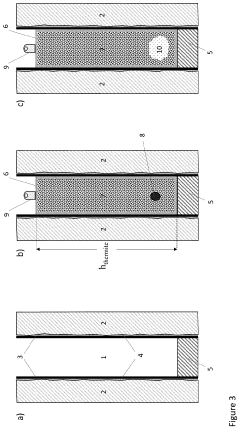
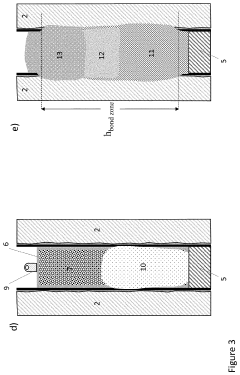
Thermite reaction charge, method for forming a threephased rock-to-rock well barrier, and a well barrier formed thereof
PatentActiveUS20230258052A1
Innovation
- A rigless method employing a bismuth oxide and fuel metal thermite reaction charge, adapted to produce sufficient heat and react slowly enough to melt downhole completion and form a three-phase rock-to-rock well barrier with bismuth, steel, and slag phases, providing a resilient bonding with the rock formation.
Safety Regulations
Safety regulations play a crucial role in the implementation of focused thermite solutions for improving industrial efficiency. The use of thermite, a highly exothermic mixture of metal powder fuel and metal oxide, requires strict adherence to safety protocols to prevent accidents and ensure the well-being of workers and the environment.
Regulatory bodies such as the Occupational Safety and Health Administration (OSHA) in the United States and the European Agency for Safety and Health at Work (EU-OSHA) have established comprehensive guidelines for handling thermite in industrial settings. These regulations cover various aspects, including storage, transportation, handling, and disposal of thermite materials.
One of the primary safety concerns addressed by regulations is the proper storage of thermite components. Strict guidelines mandate the separation of fuel and oxidizer materials to prevent accidental ignition. Storage facilities must be equipped with appropriate fire suppression systems and maintain controlled temperature and humidity levels to ensure the stability of the thermite mixture.
Transportation of thermite materials is subject to stringent regulations outlined by organizations such as the Department of Transportation (DOT) in the United States and the European Agreement concerning the International Carriage of Dangerous Goods by Road (ADR) in Europe. These regulations specify packaging requirements, labeling standards, and transportation routes to minimize the risk of accidents during transit.
Handling procedures for thermite in industrial applications are governed by detailed safety protocols. Personal protective equipment (PPE) requirements, including fire-resistant clothing, face shields, and respiratory protection, are mandated for workers involved in thermite operations. Additionally, regulations stipulate the implementation of engineering controls, such as ventilation systems and containment measures, to mitigate potential hazards.
Emergency response planning is another critical aspect of safety regulations for thermite use. Industrial facilities must develop and maintain comprehensive emergency action plans, including evacuation procedures, fire suppression strategies, and protocols for containing and cleaning up thermite spills.
Environmental regulations also play a significant role in the use of focused thermite solutions. Emissions control measures and waste disposal guidelines are in place to minimize the environmental impact of thermite reactions. These regulations often require the implementation of filtration systems and the proper disposal of byproducts generated during thermite processes.
Regular safety audits and inspections are mandated to ensure ongoing compliance with safety regulations. These assessments evaluate the effectiveness of safety measures, identify potential hazards, and recommend improvements to enhance overall safety in thermite-related industrial operations.
As the industrial application of focused thermite solutions continues to evolve, safety regulations are regularly updated to address emerging challenges and incorporate new safety technologies. This dynamic regulatory landscape necessitates ongoing training and education for workers and management to maintain compliance and foster a culture of safety in industrial settings utilizing thermite-based efficiency improvements.
Regulatory bodies such as the Occupational Safety and Health Administration (OSHA) in the United States and the European Agency for Safety and Health at Work (EU-OSHA) have established comprehensive guidelines for handling thermite in industrial settings. These regulations cover various aspects, including storage, transportation, handling, and disposal of thermite materials.
One of the primary safety concerns addressed by regulations is the proper storage of thermite components. Strict guidelines mandate the separation of fuel and oxidizer materials to prevent accidental ignition. Storage facilities must be equipped with appropriate fire suppression systems and maintain controlled temperature and humidity levels to ensure the stability of the thermite mixture.
Transportation of thermite materials is subject to stringent regulations outlined by organizations such as the Department of Transportation (DOT) in the United States and the European Agreement concerning the International Carriage of Dangerous Goods by Road (ADR) in Europe. These regulations specify packaging requirements, labeling standards, and transportation routes to minimize the risk of accidents during transit.
Handling procedures for thermite in industrial applications are governed by detailed safety protocols. Personal protective equipment (PPE) requirements, including fire-resistant clothing, face shields, and respiratory protection, are mandated for workers involved in thermite operations. Additionally, regulations stipulate the implementation of engineering controls, such as ventilation systems and containment measures, to mitigate potential hazards.
Emergency response planning is another critical aspect of safety regulations for thermite use. Industrial facilities must develop and maintain comprehensive emergency action plans, including evacuation procedures, fire suppression strategies, and protocols for containing and cleaning up thermite spills.
Environmental regulations also play a significant role in the use of focused thermite solutions. Emissions control measures and waste disposal guidelines are in place to minimize the environmental impact of thermite reactions. These regulations often require the implementation of filtration systems and the proper disposal of byproducts generated during thermite processes.
Regular safety audits and inspections are mandated to ensure ongoing compliance with safety regulations. These assessments evaluate the effectiveness of safety measures, identify potential hazards, and recommend improvements to enhance overall safety in thermite-related industrial operations.
As the industrial application of focused thermite solutions continues to evolve, safety regulations are regularly updated to address emerging challenges and incorporate new safety technologies. This dynamic regulatory landscape necessitates ongoing training and education for workers and management to maintain compliance and foster a culture of safety in industrial settings utilizing thermite-based efficiency improvements.
Environmental Impact
The environmental impact of focused thermite solutions in improving industrial efficiency is a critical aspect that requires careful consideration. While these solutions offer significant potential for enhancing productivity and reducing energy consumption in various industrial processes, their implementation also carries environmental implications that must be thoroughly assessed and mitigated.
One of the primary environmental benefits of focused thermite solutions is their potential to reduce overall energy consumption in industrial operations. By providing more precise and efficient heat application, these solutions can minimize wasted energy and decrease the carbon footprint associated with industrial processes. This reduction in energy usage translates directly to lower greenhouse gas emissions, contributing to global efforts to combat climate change.
However, the production and use of thermite materials also present environmental challenges. The manufacturing process of thermite compounds may involve the extraction and processing of raw materials, which can have localized environmental impacts such as habitat disruption and resource depletion. Additionally, the production of thermite materials may require energy-intensive processes, potentially offsetting some of the environmental gains achieved through their application in industrial settings.
The disposal of spent thermite materials and byproducts is another environmental concern that must be addressed. Proper waste management protocols need to be established to ensure that any residual materials or slag produced during thermite reactions are handled and disposed of in an environmentally responsible manner. This may involve recycling initiatives, specialized treatment processes, or the development of new applications for byproducts to minimize waste.
Air quality is an important consideration when implementing focused thermite solutions. While these technologies can lead to more efficient combustion and reduced emissions in many cases, the high temperatures involved in thermite reactions may potentially generate particulate matter or other air pollutants. Implementing appropriate filtration and emission control systems is crucial to mitigate any negative impacts on local air quality and comply with environmental regulations.
Water usage and potential contamination are additional factors that must be evaluated. Some industrial applications of focused thermite solutions may require water for cooling or other purposes. Ensuring efficient water use and implementing closed-loop systems can help minimize the environmental impact on local water resources. Moreover, safeguards must be in place to prevent any potential contamination of water sources from thermite materials or byproducts.
As the adoption of focused thermite solutions expands, it is essential to conduct comprehensive life cycle assessments to fully understand their environmental impact from cradle to grave. This holistic approach will enable industries to make informed decisions about the implementation of these technologies, balancing the potential efficiency gains against environmental considerations. Ongoing research and development efforts should focus on optimizing the environmental performance of thermite solutions, exploring more sustainable production methods, and identifying opportunities for circular economy principles in their application and disposal.
One of the primary environmental benefits of focused thermite solutions is their potential to reduce overall energy consumption in industrial operations. By providing more precise and efficient heat application, these solutions can minimize wasted energy and decrease the carbon footprint associated with industrial processes. This reduction in energy usage translates directly to lower greenhouse gas emissions, contributing to global efforts to combat climate change.
However, the production and use of thermite materials also present environmental challenges. The manufacturing process of thermite compounds may involve the extraction and processing of raw materials, which can have localized environmental impacts such as habitat disruption and resource depletion. Additionally, the production of thermite materials may require energy-intensive processes, potentially offsetting some of the environmental gains achieved through their application in industrial settings.
The disposal of spent thermite materials and byproducts is another environmental concern that must be addressed. Proper waste management protocols need to be established to ensure that any residual materials or slag produced during thermite reactions are handled and disposed of in an environmentally responsible manner. This may involve recycling initiatives, specialized treatment processes, or the development of new applications for byproducts to minimize waste.
Air quality is an important consideration when implementing focused thermite solutions. While these technologies can lead to more efficient combustion and reduced emissions in many cases, the high temperatures involved in thermite reactions may potentially generate particulate matter or other air pollutants. Implementing appropriate filtration and emission control systems is crucial to mitigate any negative impacts on local air quality and comply with environmental regulations.
Water usage and potential contamination are additional factors that must be evaluated. Some industrial applications of focused thermite solutions may require water for cooling or other purposes. Ensuring efficient water use and implementing closed-loop systems can help minimize the environmental impact on local water resources. Moreover, safeguards must be in place to prevent any potential contamination of water sources from thermite materials or byproducts.
As the adoption of focused thermite solutions expands, it is essential to conduct comprehensive life cycle assessments to fully understand their environmental impact from cradle to grave. This holistic approach will enable industries to make informed decisions about the implementation of these technologies, balancing the potential efficiency gains against environmental considerations. Ongoing research and development efforts should focus on optimizing the environmental performance of thermite solutions, exploring more sustainable production methods, and identifying opportunities for circular economy principles in their application and disposal.
Unlock deeper insights with PatSnap Eureka Quick Research — get a full tech report to explore trends and direct your research. Try now!
Generate Your Research Report Instantly with AI Agent
Supercharge your innovation with PatSnap Eureka AI Agent Platform!