

How to Optimize Thermite for Improved Mechanical Joining?
JUN 24, 20259 MIN READ
Generate Your Research Report Instantly with AI Agent
PatSnap Eureka helps you evaluate technical feasibility & market potential.
Thermite Joining Evolution
Thermite joining has undergone significant evolution since its inception in the late 19th century. Initially developed for welding railway tracks, this exothermic reaction-based joining method has expanded its applications across various industries. The evolution of thermite joining can be traced through several key stages, each marked by technological advancements and expanding use cases.
In the early 20th century, thermite welding was primarily used for railway track joining and repair. The process involved a mixture of aluminum powder and iron oxide, which, when ignited, produced molten iron and aluminum oxide. This high-temperature reaction allowed for the fusion of rail sections without the need for external heat sources. As the technique gained popularity in the railway industry, researchers began exploring ways to improve the consistency and strength of thermite welds.
The mid-20th century saw the expansion of thermite joining into other industrial applications. The aerospace and defense sectors began utilizing thermite reactions for specialized joining processes, such as the welding of thick aluminum plates. This period also witnessed the development of more sophisticated thermite mixtures, incorporating additives to enhance weld properties and control the reaction rate.
The late 20th century brought about significant advancements in thermite composition and ignition methods. Researchers focused on optimizing the particle size distribution of thermite powders to improve reaction efficiency and weld quality. Additionally, new ignition techniques, such as electrical ignition systems, were introduced to enhance process control and safety.
In recent decades, the evolution of thermite joining has been driven by the need for improved mechanical properties and broader material compatibility. Scientists have developed novel thermite compositions that can join dissimilar materials, addressing challenges in industries such as automotive and electronics manufacturing. The introduction of nanostructured thermite materials has opened up new possibilities for achieving higher energy densities and more precise control over the reaction kinetics.
The latest developments in thermite joining focus on enhancing the mechanical properties of the joined materials. Researchers are exploring the use of reinforcing particles and fibers within the thermite mixture to improve the strength and toughness of the resulting joint. Additionally, there is growing interest in developing environmentally friendly thermite formulations that reduce harmful emissions and improve overall process sustainability.
As we look to the future, the evolution of thermite joining is likely to continue with a focus on precision, automation, and integration with advanced manufacturing techniques. The development of smart thermite materials that can adapt to different joining conditions and the incorporation of in-situ monitoring systems are among the promising areas of research that may shape the next generation of thermite joining technologies.
In the early 20th century, thermite welding was primarily used for railway track joining and repair. The process involved a mixture of aluminum powder and iron oxide, which, when ignited, produced molten iron and aluminum oxide. This high-temperature reaction allowed for the fusion of rail sections without the need for external heat sources. As the technique gained popularity in the railway industry, researchers began exploring ways to improve the consistency and strength of thermite welds.
The mid-20th century saw the expansion of thermite joining into other industrial applications. The aerospace and defense sectors began utilizing thermite reactions for specialized joining processes, such as the welding of thick aluminum plates. This period also witnessed the development of more sophisticated thermite mixtures, incorporating additives to enhance weld properties and control the reaction rate.
The late 20th century brought about significant advancements in thermite composition and ignition methods. Researchers focused on optimizing the particle size distribution of thermite powders to improve reaction efficiency and weld quality. Additionally, new ignition techniques, such as electrical ignition systems, were introduced to enhance process control and safety.
In recent decades, the evolution of thermite joining has been driven by the need for improved mechanical properties and broader material compatibility. Scientists have developed novel thermite compositions that can join dissimilar materials, addressing challenges in industries such as automotive and electronics manufacturing. The introduction of nanostructured thermite materials has opened up new possibilities for achieving higher energy densities and more precise control over the reaction kinetics.
The latest developments in thermite joining focus on enhancing the mechanical properties of the joined materials. Researchers are exploring the use of reinforcing particles and fibers within the thermite mixture to improve the strength and toughness of the resulting joint. Additionally, there is growing interest in developing environmentally friendly thermite formulations that reduce harmful emissions and improve overall process sustainability.
As we look to the future, the evolution of thermite joining is likely to continue with a focus on precision, automation, and integration with advanced manufacturing techniques. The development of smart thermite materials that can adapt to different joining conditions and the incorporation of in-situ monitoring systems are among the promising areas of research that may shape the next generation of thermite joining technologies.
Market Demand Analysis
The market demand for optimized thermite in mechanical joining applications has been steadily growing across various industries. This growth is primarily driven by the increasing need for robust, efficient, and cost-effective joining solutions in sectors such as construction, automotive, aerospace, and manufacturing.
In the construction industry, there is a rising demand for thermite welding techniques in rail track joining and repair. The ability to create strong, durable joints quickly and with minimal equipment has made thermite welding a preferred method for railway maintenance and expansion projects. As global infrastructure development continues, the market for optimized thermite in this sector is expected to expand significantly.
The automotive industry has shown increasing interest in thermite-based joining methods for lightweight vehicle construction. As manufacturers strive to reduce vehicle weight to improve fuel efficiency and meet stringent emissions standards, the demand for advanced joining techniques that can effectively bond dissimilar materials, such as aluminum and steel, has surged. Optimized thermite solutions offer potential advantages in terms of joint strength, speed of application, and compatibility with automated production processes.
In the aerospace sector, the demand for high-performance joining methods is driven by the need for lightweight, yet extremely strong structures. Optimized thermite-based joining techniques could potentially offer advantages in terms of weight reduction, thermal resistance, and structural integrity, making them attractive for both aircraft and spacecraft applications.
The manufacturing industry at large is seeking innovative joining solutions to improve production efficiency and product quality. Optimized thermite joining methods could address challenges in joining thick metal sections, creating joints in hard-to-reach areas, or bonding materials with significantly different melting points.
Market analysis indicates that the global demand for advanced joining technologies, including optimized thermite solutions, is projected to grow at a compound annual growth rate (CAGR) of several percentage points over the next five years. This growth is fueled by ongoing industrialization in emerging economies, the push for more efficient and sustainable manufacturing processes in developed nations, and the continuous evolution of materials science.
Furthermore, the increasing focus on automation and Industry 4.0 initiatives is creating opportunities for smart, sensor-enabled thermite joining systems that can integrate seamlessly with digital manufacturing environments. This trend is expected to drive further innovation and market expansion in the field of optimized thermite for mechanical joining.
In the construction industry, there is a rising demand for thermite welding techniques in rail track joining and repair. The ability to create strong, durable joints quickly and with minimal equipment has made thermite welding a preferred method for railway maintenance and expansion projects. As global infrastructure development continues, the market for optimized thermite in this sector is expected to expand significantly.
The automotive industry has shown increasing interest in thermite-based joining methods for lightweight vehicle construction. As manufacturers strive to reduce vehicle weight to improve fuel efficiency and meet stringent emissions standards, the demand for advanced joining techniques that can effectively bond dissimilar materials, such as aluminum and steel, has surged. Optimized thermite solutions offer potential advantages in terms of joint strength, speed of application, and compatibility with automated production processes.
In the aerospace sector, the demand for high-performance joining methods is driven by the need for lightweight, yet extremely strong structures. Optimized thermite-based joining techniques could potentially offer advantages in terms of weight reduction, thermal resistance, and structural integrity, making them attractive for both aircraft and spacecraft applications.
The manufacturing industry at large is seeking innovative joining solutions to improve production efficiency and product quality. Optimized thermite joining methods could address challenges in joining thick metal sections, creating joints in hard-to-reach areas, or bonding materials with significantly different melting points.
Market analysis indicates that the global demand for advanced joining technologies, including optimized thermite solutions, is projected to grow at a compound annual growth rate (CAGR) of several percentage points over the next five years. This growth is fueled by ongoing industrialization in emerging economies, the push for more efficient and sustainable manufacturing processes in developed nations, and the continuous evolution of materials science.
Furthermore, the increasing focus on automation and Industry 4.0 initiatives is creating opportunities for smart, sensor-enabled thermite joining systems that can integrate seamlessly with digital manufacturing environments. This trend is expected to drive further innovation and market expansion in the field of optimized thermite for mechanical joining.
Current Challenges
The optimization of thermite for improved mechanical joining faces several significant challenges that require careful consideration and innovative solutions. One of the primary obstacles is achieving precise control over the exothermic reaction. The rapid and intense nature of the thermite reaction makes it difficult to manage the heat distribution and energy release, which can lead to inconsistent joint quality and potential damage to the materials being joined.
Another major challenge lies in the selection and formulation of thermite compositions tailored for specific joining applications. Different materials and joint configurations require varying thermal profiles and reaction characteristics. Developing optimized thermite mixtures that provide the right balance of heat generation, reaction rate, and mechanical properties is a complex task that demands extensive research and experimentation.
The control of the reaction products and their interaction with the joint interface presents another significant hurdle. The formation of oxides and other byproducts during the thermite reaction can affect the mechanical properties and long-term stability of the joint. Minimizing undesirable reactions and ensuring proper wetting and adhesion between the thermite products and the joined materials is crucial for achieving high-quality, durable connections.
Ensuring consistent and uniform joint quality across different scales and geometries remains a persistent challenge. The thermite reaction's sensitivity to environmental factors, such as moisture and temperature, can lead to variations in joint performance. Developing robust processes that maintain consistency in diverse operating conditions is essential for widespread industrial adoption of thermite-based joining techniques.
Safety considerations pose additional challenges in the optimization of thermite for mechanical joining. The high temperatures and potential for rapid energy release associated with thermite reactions necessitate stringent safety protocols and specialized handling procedures. Balancing safety requirements with process efficiency and scalability is a critical aspect of thermite optimization that cannot be overlooked.
The development of precise ignition and reaction control mechanisms represents another significant technical hurdle. Achieving controlled initiation and propagation of the thermite reaction is crucial for optimizing joint quality and minimizing thermal damage to surrounding materials. Innovations in ignition systems and reaction confinement techniques are needed to enhance the precision and reliability of thermite-based joining processes.
Another major challenge lies in the selection and formulation of thermite compositions tailored for specific joining applications. Different materials and joint configurations require varying thermal profiles and reaction characteristics. Developing optimized thermite mixtures that provide the right balance of heat generation, reaction rate, and mechanical properties is a complex task that demands extensive research and experimentation.
The control of the reaction products and their interaction with the joint interface presents another significant hurdle. The formation of oxides and other byproducts during the thermite reaction can affect the mechanical properties and long-term stability of the joint. Minimizing undesirable reactions and ensuring proper wetting and adhesion between the thermite products and the joined materials is crucial for achieving high-quality, durable connections.
Ensuring consistent and uniform joint quality across different scales and geometries remains a persistent challenge. The thermite reaction's sensitivity to environmental factors, such as moisture and temperature, can lead to variations in joint performance. Developing robust processes that maintain consistency in diverse operating conditions is essential for widespread industrial adoption of thermite-based joining techniques.
Safety considerations pose additional challenges in the optimization of thermite for mechanical joining. The high temperatures and potential for rapid energy release associated with thermite reactions necessitate stringent safety protocols and specialized handling procedures. Balancing safety requirements with process efficiency and scalability is a critical aspect of thermite optimization that cannot be overlooked.
The development of precise ignition and reaction control mechanisms represents another significant technical hurdle. Achieving controlled initiation and propagation of the thermite reaction is crucial for optimizing joint quality and minimizing thermal damage to surrounding materials. Innovations in ignition systems and reaction confinement techniques are needed to enhance the precision and reliability of thermite-based joining processes.
Existing Optimization Methods
01 Thermite welding for mechanical joining
Thermite welding is used for mechanical joining of components, particularly in railway track welding. The process involves an exothermic reaction between aluminum and metal oxide to produce high-temperature molten metal, which fuses the components together. This method provides strong, durable joints suitable for high-stress applications.- Thermite welding for mechanical joining: Thermite welding is used for mechanical joining of components, particularly in railway track welding. This process involves an exothermic reaction between aluminum and metal oxide to produce high-temperature molten metal, which fuses the components together. The technique provides strong, durable joints suitable for high-stress applications.
- Improved thermite compositions for joining: Advanced thermite compositions are developed to enhance the joining process. These formulations may include additives or modified ratios of reactants to improve reaction control, heat distribution, and joint quality. Some compositions are tailored for specific materials or applications, ensuring optimal bonding strength and performance.
- Automated thermite joining systems: Automated systems are designed to streamline the thermite joining process. These systems may include robotic arms, precision ignition mechanisms, and computer-controlled material dispensing. Automation improves consistency, reduces human error, and increases efficiency in large-scale joining operations.
- Thermite joining for specialized applications: Thermite joining techniques are adapted for specialized applications beyond traditional rail welding. This includes joining of dissimilar materials, underwater joining, and applications in aerospace or defense industries. These specialized techniques often require modifications to the standard thermite process to meet specific environmental or material requirements.
- Safety and environmental considerations in thermite joining: Advancements in thermite joining focus on improving safety and reducing environmental impact. This includes developing less hazardous thermite compositions, implementing better containment systems for the reaction, and creating more efficient processes that minimize waste and emissions. These improvements aim to make thermite joining safer for operators and more environmentally friendly.
02 Composite materials for thermite reactions
Advanced composite materials are developed for use in thermite reactions to enhance mechanical joining processes. These composites often incorporate nanoscale particles or specialized additives to improve reaction efficiency, heat distribution, and overall joint quality. The use of such materials can lead to stronger bonds and more precise control over the joining process.Expand Specific Solutions03 Controlled ignition systems for thermite joining
Innovative ignition systems are designed to initiate and control thermite reactions for mechanical joining. These systems may include electronic triggers, precise timing mechanisms, or staged ignition processes to optimize the heat generation and distribution during the joining process. Such controlled ignition can improve joint quality and reduce the risk of defects.Expand Specific Solutions04 Thermite joining for specific applications
Thermite mechanical joining techniques are adapted for specific industrial applications, such as pipeline construction, structural steel connections, or aerospace components. These specialized methods often involve custom formulations of thermite mixtures and tailored joining procedures to meet the unique requirements of each application, ensuring optimal performance and durability of the joined components.Expand Specific Solutions05 Safety and environmental considerations in thermite joining
Advancements in thermite mechanical joining focus on improving safety measures and reducing environmental impact. This includes developing less hazardous thermite compositions, implementing containment systems to manage reaction byproducts, and creating more efficient processes that minimize waste and emissions. These improvements aim to make thermite joining safer for workers and more environmentally friendly.Expand Specific Solutions
Key Industry Players
The optimization of thermite for improved mechanical joining is in a growth phase, with increasing market size and technological advancements. The industry is experiencing rapid development due to its applications in various sectors, including aerospace, automotive, and construction. Companies like Lockheed Martin Corp., Airbus Operations GmbH, and thyssenkrupp AG are driving innovation in this field. The technology's maturity is progressing, with research institutions such as Harbin Institute of Technology, Xi'an Jiaotong University, and Fraunhofer-Gesellschaft eV contributing to its advancement. The competitive landscape is diverse, featuring collaborations between academic institutions and industry leaders, indicating a strong focus on research and development to enhance thermite's mechanical joining capabilities.
Lockheed Martin Corp.
Technical Solution: Lockheed Martin has developed an advanced thermite-based joining technique for mechanical connections. Their method involves a precisely controlled exothermic reaction between aluminum and iron oxide, creating a high-temperature weld. The process is optimized for joining dissimilar materials, particularly in aerospace applications. They use a proprietary mixture of thermite compounds and a specialized ignition system to ensure consistent and reliable joints. The company has also implemented computer modeling to predict and control the heat affected zone, minimizing potential damage to surrounding structures.
Strengths: Expertise in aerospace materials, advanced ignition control, and computer-aided optimization. Weaknesses: Potentially high cost and limited applicability outside aerospace sector.
Fraunhofer-Gesellschaft eV
Technical Solution: Fraunhofer-Gesellschaft has developed a novel approach to thermite-based joining, focusing on micro-scale applications. Their technique involves the use of nanoscale thermite particles, allowing for more precise control of the reaction and resulting joint. They have created a method to deposit these particles in specific patterns using advanced printing techniques, enabling highly localized joining. The process is particularly suited for microelectronics and MEMS devices. Fraunhofer has also developed in-situ monitoring systems to control the reaction in real-time, ensuring optimal joint formation.
Strengths: Precision at micro-scale, advanced deposition techniques, and real-time process control. Weaknesses: May be limited to small-scale applications and potentially high equipment costs.
Innovative Thermite Compositions
Connector cable with lugs
PatentWO2008014981A1
Innovation
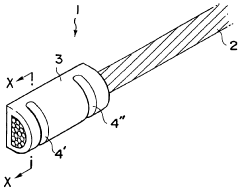
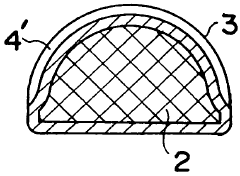
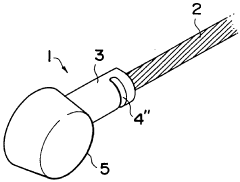
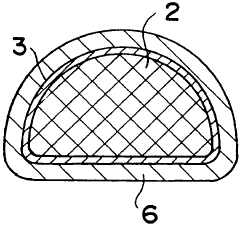
- A connector cable with an iron lug featuring one or more groove portions on its outer surface, positioned outside the welded area, to securely press against the conductor cable and facilitate inspection of wear conditions, while press-forming and thermite welding enhance the bonding strength and conductivity.
Weld material ignition
PatentInactiveUS20120055979A1
Innovation
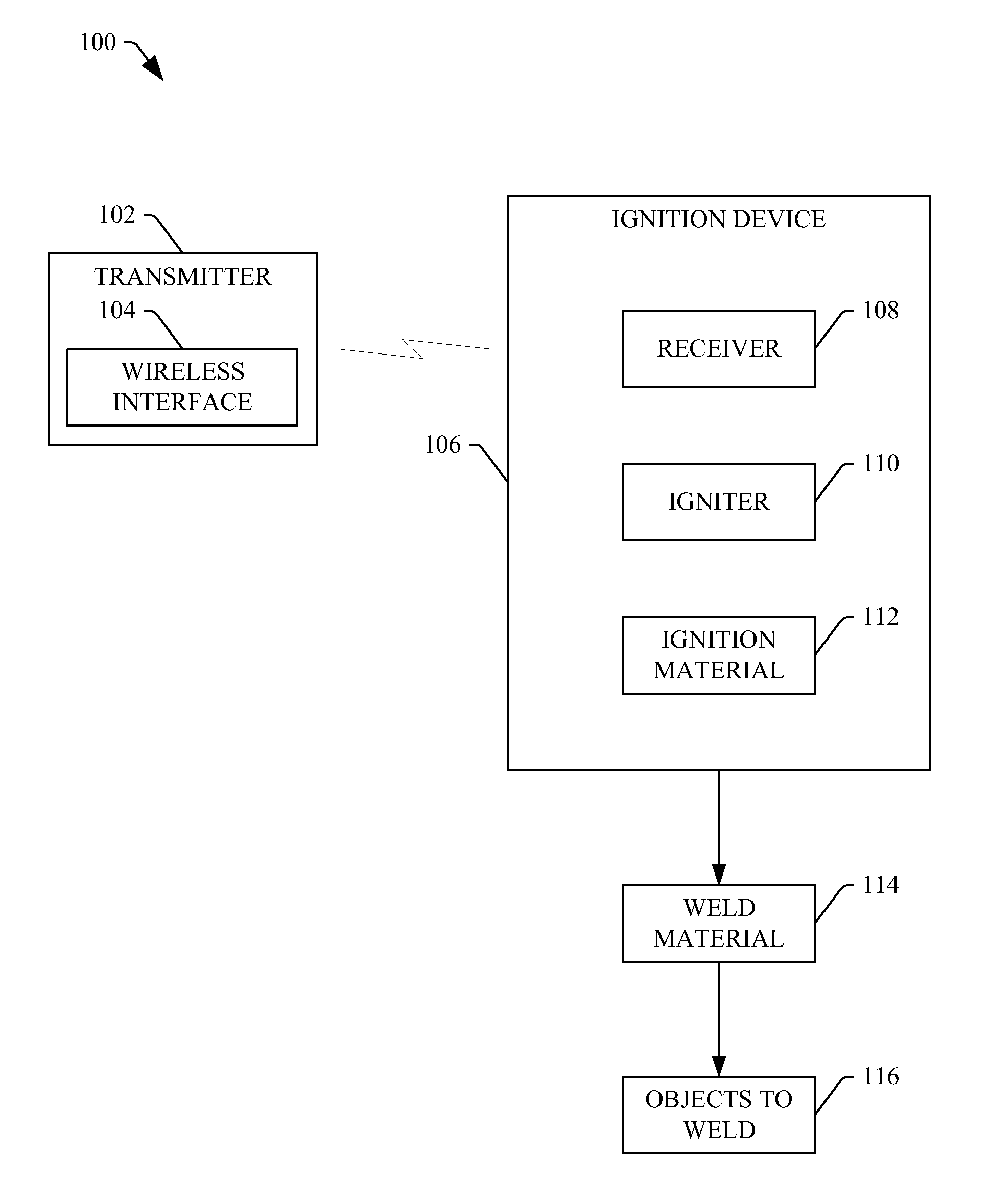
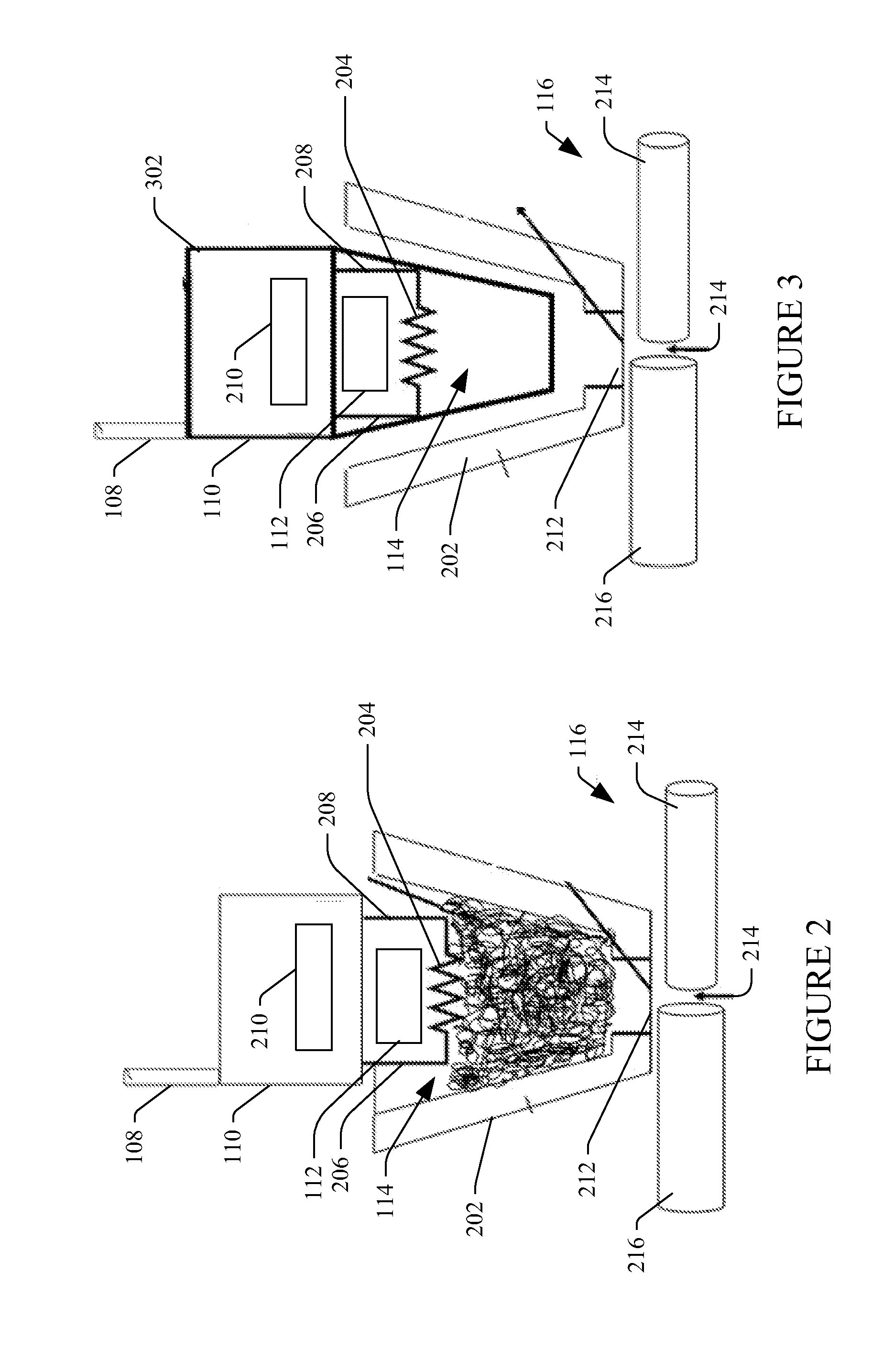
- A wireless ignition system that includes a transmitter and receiver for wirelessly transmitting and receiving activation signals to ignite an igniter, which initiates an exothermic welding reaction without the need for a starting powder or flint gun, allowing for remote control and safe operation.

Safety Regulations
Safety regulations play a crucial role in the optimization of thermite for improved mechanical joining. The use of thermite in industrial applications requires strict adherence to safety protocols due to its highly exothermic nature and potential hazards.
Regulatory bodies such as the Occupational Safety and Health Administration (OSHA) and the National Fire Protection Association (NFPA) have established comprehensive guidelines for the handling, storage, and use of thermite materials. These regulations cover various aspects, including personal protective equipment (PPE), storage facilities, and operational procedures.
One of the primary safety concerns in thermite optimization is the control of the reaction rate. Regulations mandate the use of proper ignition systems and containment measures to prevent uncontrolled reactions. This includes specifications for reaction vessels, heat-resistant materials, and ventilation systems to manage the intense heat and fumes generated during the thermite reaction.
The transportation of thermite materials is subject to strict regulations set by the Department of Transportation (DOT). These guidelines outline proper packaging, labeling, and documentation requirements to ensure safe handling during transit. Additionally, specific training and certification programs are mandated for personnel involved in thermite-related operations.
Environmental regulations also play a significant role in thermite optimization. Emissions control and waste management protocols must be adhered to, particularly concerning the disposal of reaction byproducts. This includes guidelines for the treatment and disposal of slag and other residues produced during the thermite joining process.
In the context of mechanical joining applications, safety regulations extend to the design and implementation of joining systems. This encompasses specifications for joint preparation, alignment tools, and post-joining inspection procedures to ensure the structural integrity of the thermite-joined components.
Risk assessment and mitigation strategies are integral components of safety regulations for thermite optimization. This involves the development of emergency response plans, regular safety audits, and the implementation of fail-safe mechanisms in thermite joining equipment.
As research into thermite optimization continues, regulatory bodies are actively updating safety standards to address emerging technologies and applications. This includes the development of new guidelines for novel thermite compositions and advanced joining techniques, ensuring that safety measures evolve in tandem with technological advancements in the field.
Regulatory bodies such as the Occupational Safety and Health Administration (OSHA) and the National Fire Protection Association (NFPA) have established comprehensive guidelines for the handling, storage, and use of thermite materials. These regulations cover various aspects, including personal protective equipment (PPE), storage facilities, and operational procedures.
One of the primary safety concerns in thermite optimization is the control of the reaction rate. Regulations mandate the use of proper ignition systems and containment measures to prevent uncontrolled reactions. This includes specifications for reaction vessels, heat-resistant materials, and ventilation systems to manage the intense heat and fumes generated during the thermite reaction.
The transportation of thermite materials is subject to strict regulations set by the Department of Transportation (DOT). These guidelines outline proper packaging, labeling, and documentation requirements to ensure safe handling during transit. Additionally, specific training and certification programs are mandated for personnel involved in thermite-related operations.
Environmental regulations also play a significant role in thermite optimization. Emissions control and waste management protocols must be adhered to, particularly concerning the disposal of reaction byproducts. This includes guidelines for the treatment and disposal of slag and other residues produced during the thermite joining process.
In the context of mechanical joining applications, safety regulations extend to the design and implementation of joining systems. This encompasses specifications for joint preparation, alignment tools, and post-joining inspection procedures to ensure the structural integrity of the thermite-joined components.
Risk assessment and mitigation strategies are integral components of safety regulations for thermite optimization. This involves the development of emergency response plans, regular safety audits, and the implementation of fail-safe mechanisms in thermite joining equipment.
As research into thermite optimization continues, regulatory bodies are actively updating safety standards to address emerging technologies and applications. This includes the development of new guidelines for novel thermite compositions and advanced joining techniques, ensuring that safety measures evolve in tandem with technological advancements in the field.
Environmental Impact Assessment
The environmental impact of optimizing thermite for improved mechanical joining is a critical consideration that requires thorough assessment. Thermite reactions, while effective for joining materials, can potentially have significant environmental consequences if not properly managed.
One of the primary environmental concerns is the release of particulate matter during the thermite reaction. The high-temperature reaction produces fine metal oxide particles that can become airborne, potentially affecting air quality in the surrounding area. These particles may pose respiratory risks to workers and nearby communities if not adequately controlled. Implementing advanced filtration systems and containment measures can help mitigate this issue.
The use of thermite in mechanical joining also raises concerns about the disposal of reaction byproducts. The slag produced after the reaction may contain various metal oxides and other compounds that could potentially leach into soil or water systems if not properly handled. Developing environmentally friendly disposal methods or recycling processes for these byproducts is essential to minimize long-term environmental impact.
Energy consumption is another factor to consider. While thermite reactions are exothermic and do not require external energy input during the joining process, the production and preparation of thermite materials may involve energy-intensive processes. Optimizing these upstream processes to reduce energy consumption and associated carbon emissions is crucial for improving the overall environmental footprint of thermite-based joining techniques.
The choice of thermite composition can also influence environmental impact. Some thermite mixtures may contain components that are more environmentally benign than others. Research into alternative, less harmful ingredients that maintain or improve joining effectiveness could lead to more sustainable thermite formulations.
Water usage and potential contamination should also be addressed. Although thermite reactions themselves do not typically require water, cooling processes and cleaning operations associated with the joining process may consume water resources. Implementing water recycling systems and using eco-friendly cleaning agents can help minimize water-related environmental impacts.
Lastly, the lifecycle assessment of thermite-joined products should be considered. If the optimization of thermite leads to stronger, more durable joints, it could potentially extend the lifespan of products, reducing the need for replacements and thereby decreasing overall resource consumption and waste generation in the long term.
One of the primary environmental concerns is the release of particulate matter during the thermite reaction. The high-temperature reaction produces fine metal oxide particles that can become airborne, potentially affecting air quality in the surrounding area. These particles may pose respiratory risks to workers and nearby communities if not adequately controlled. Implementing advanced filtration systems and containment measures can help mitigate this issue.
The use of thermite in mechanical joining also raises concerns about the disposal of reaction byproducts. The slag produced after the reaction may contain various metal oxides and other compounds that could potentially leach into soil or water systems if not properly handled. Developing environmentally friendly disposal methods or recycling processes for these byproducts is essential to minimize long-term environmental impact.
Energy consumption is another factor to consider. While thermite reactions are exothermic and do not require external energy input during the joining process, the production and preparation of thermite materials may involve energy-intensive processes. Optimizing these upstream processes to reduce energy consumption and associated carbon emissions is crucial for improving the overall environmental footprint of thermite-based joining techniques.
The choice of thermite composition can also influence environmental impact. Some thermite mixtures may contain components that are more environmentally benign than others. Research into alternative, less harmful ingredients that maintain or improve joining effectiveness could lead to more sustainable thermite formulations.
Water usage and potential contamination should also be addressed. Although thermite reactions themselves do not typically require water, cooling processes and cleaning operations associated with the joining process may consume water resources. Implementing water recycling systems and using eco-friendly cleaning agents can help minimize water-related environmental impacts.
Lastly, the lifecycle assessment of thermite-joined products should be considered. If the optimization of thermite leads to stronger, more durable joints, it could potentially extend the lifespan of products, reducing the need for replacements and thereby decreasing overall resource consumption and waste generation in the long term.
Unlock deeper insights with PatSnap Eureka Quick Research — get a full tech report to explore trends and direct your research. Try now!
Generate Your Research Report Instantly with AI Agent
Supercharge your innovation with PatSnap Eureka AI Agent Platform!