How to Future-Proof Infrastructure with Three Phase Electric Power
MAR 18, 202610 MIN READ
Generate Your Research Report Instantly with AI Agent
PatSnap Eureka helps you evaluate technical feasibility & market potential.
Three Phase Power Infrastructure Modernization Background and Goals
Three-phase electric power systems have served as the backbone of global electrical infrastructure for over a century, fundamentally shaping how societies generate, transmit, and distribute electrical energy. Originally developed by Nikola Tesla and refined through decades of engineering innovation, three-phase power delivery offers superior efficiency, reduced conductor requirements, and enhanced power quality compared to single-phase alternatives. This technological foundation has enabled the electrification of industrial processes, urban development, and modern civilization as we know it.
The contemporary energy landscape presents unprecedented challenges that demand comprehensive infrastructure modernization. Climate change imperatives are driving aggressive decarbonization targets, with many nations committing to net-zero emissions by 2050. Simultaneously, the proliferation of renewable energy sources, electric vehicles, and digitalization is fundamentally altering electricity consumption patterns and grid dynamics. These transformative forces necessitate a strategic reimagining of three-phase power infrastructure to accommodate bidirectional power flows, intermittent generation sources, and increasingly sophisticated load profiles.
Future-proofing three-phase infrastructure encompasses multiple technological dimensions that extend far beyond traditional grid reinforcement. The integration of smart grid technologies, advanced power electronics, and artificial intelligence-driven management systems represents a paradigm shift toward intelligent, adaptive electrical networks. These systems must seamlessly accommodate distributed energy resources, energy storage systems, and dynamic load management while maintaining the reliability and stability that modern society demands.
The primary objective of three-phase power infrastructure modernization centers on creating resilient, flexible, and sustainable electrical networks capable of supporting future energy scenarios. This involves developing grid architectures that can efficiently integrate renewable energy sources while maintaining power quality and system stability. Enhanced grid flexibility through advanced switching technologies, real-time monitoring systems, and predictive maintenance capabilities forms another critical goal, ensuring optimal performance under varying operational conditions.
Sustainability objectives drive the implementation of technologies that minimize environmental impact while maximizing energy efficiency. This includes the deployment of high-efficiency transformers, superconducting transmission lines, and advanced grid optimization algorithms that reduce losses and improve overall system performance. Additionally, the infrastructure must support the electrification of transportation and heating sectors, requiring substantial capacity expansion and load management capabilities.
Economic viability remains paramount, necessitating cost-effective solutions that deliver long-term value while managing capital expenditure requirements. The modernization strategy must balance immediate infrastructure needs with future scalability, ensuring investments remain relevant and productive throughout extended operational lifespans. This economic framework guides technology selection, implementation timelines, and risk management strategies essential for successful infrastructure transformation.
The contemporary energy landscape presents unprecedented challenges that demand comprehensive infrastructure modernization. Climate change imperatives are driving aggressive decarbonization targets, with many nations committing to net-zero emissions by 2050. Simultaneously, the proliferation of renewable energy sources, electric vehicles, and digitalization is fundamentally altering electricity consumption patterns and grid dynamics. These transformative forces necessitate a strategic reimagining of three-phase power infrastructure to accommodate bidirectional power flows, intermittent generation sources, and increasingly sophisticated load profiles.
Future-proofing three-phase infrastructure encompasses multiple technological dimensions that extend far beyond traditional grid reinforcement. The integration of smart grid technologies, advanced power electronics, and artificial intelligence-driven management systems represents a paradigm shift toward intelligent, adaptive electrical networks. These systems must seamlessly accommodate distributed energy resources, energy storage systems, and dynamic load management while maintaining the reliability and stability that modern society demands.
The primary objective of three-phase power infrastructure modernization centers on creating resilient, flexible, and sustainable electrical networks capable of supporting future energy scenarios. This involves developing grid architectures that can efficiently integrate renewable energy sources while maintaining power quality and system stability. Enhanced grid flexibility through advanced switching technologies, real-time monitoring systems, and predictive maintenance capabilities forms another critical goal, ensuring optimal performance under varying operational conditions.
Sustainability objectives drive the implementation of technologies that minimize environmental impact while maximizing energy efficiency. This includes the deployment of high-efficiency transformers, superconducting transmission lines, and advanced grid optimization algorithms that reduce losses and improve overall system performance. Additionally, the infrastructure must support the electrification of transportation and heating sectors, requiring substantial capacity expansion and load management capabilities.
Economic viability remains paramount, necessitating cost-effective solutions that deliver long-term value while managing capital expenditure requirements. The modernization strategy must balance immediate infrastructure needs with future scalability, ensuring investments remain relevant and productive throughout extended operational lifespans. This economic framework guides technology selection, implementation timelines, and risk management strategies essential for successful infrastructure transformation.
Market Demand for Future-Ready Three Phase Electric Systems
The global transition toward electrification across multiple sectors is driving unprecedented demand for robust three-phase electric power systems. Industrial facilities, data centers, electric vehicle charging networks, and renewable energy installations increasingly require power infrastructure capable of handling higher loads while maintaining operational flexibility for future expansion. This surge in demand stems from the convergence of digital transformation, sustainability mandates, and the growing complexity of modern electrical loads.
Manufacturing industries represent a primary driver of three-phase system demand, particularly as automation and Industry 4.0 technologies proliferate. Smart factories require power systems that can accommodate variable frequency drives, robotic systems, and advanced process control equipment while providing the scalability to integrate emerging technologies. The automotive sector's shift toward electric vehicle production has intensified requirements for high-capacity three-phase systems capable of supporting battery manufacturing processes and charging infrastructure.
Data center expansion continues to fuel market growth, with hyperscale facilities demanding increasingly sophisticated power distribution architectures. These facilities require three-phase systems that can deliver consistent power quality while supporting modular expansion strategies. The integration of artificial intelligence and machine learning workloads has further amplified power density requirements, necessitating infrastructure designs that can adapt to evolving computational demands.
Renewable energy integration presents both opportunities and challenges for three-phase system deployment. Solar farms, wind installations, and energy storage systems require power infrastructure capable of bidirectional power flow and grid synchronization. The intermittent nature of renewable sources demands three-phase systems with enhanced monitoring capabilities and rapid response characteristics to maintain grid stability.
Urban infrastructure modernization initiatives worldwide are creating substantial market opportunities for future-ready three-phase systems. Smart city projects encompass electric public transportation, intelligent lighting networks, and distributed energy resources, all requiring power infrastructure designed for long-term adaptability. The growing emphasis on grid resilience following extreme weather events has accelerated investment in hardened three-phase distribution systems.
The commercial building sector increasingly demands three-phase systems that can support evolving tenant requirements and building automation technologies. Modern office complexes, healthcare facilities, and educational institutions require power infrastructure capable of accommodating changing space utilization patterns and emerging technologies such as wireless power transmission and advanced HVAC systems.
Market demand is further amplified by regulatory frameworks promoting energy efficiency and carbon reduction. Government incentives for electrification projects and stricter building energy codes are driving adoption of advanced three-phase systems with integrated monitoring and optimization capabilities.
Manufacturing industries represent a primary driver of three-phase system demand, particularly as automation and Industry 4.0 technologies proliferate. Smart factories require power systems that can accommodate variable frequency drives, robotic systems, and advanced process control equipment while providing the scalability to integrate emerging technologies. The automotive sector's shift toward electric vehicle production has intensified requirements for high-capacity three-phase systems capable of supporting battery manufacturing processes and charging infrastructure.
Data center expansion continues to fuel market growth, with hyperscale facilities demanding increasingly sophisticated power distribution architectures. These facilities require three-phase systems that can deliver consistent power quality while supporting modular expansion strategies. The integration of artificial intelligence and machine learning workloads has further amplified power density requirements, necessitating infrastructure designs that can adapt to evolving computational demands.
Renewable energy integration presents both opportunities and challenges for three-phase system deployment. Solar farms, wind installations, and energy storage systems require power infrastructure capable of bidirectional power flow and grid synchronization. The intermittent nature of renewable sources demands three-phase systems with enhanced monitoring capabilities and rapid response characteristics to maintain grid stability.
Urban infrastructure modernization initiatives worldwide are creating substantial market opportunities for future-ready three-phase systems. Smart city projects encompass electric public transportation, intelligent lighting networks, and distributed energy resources, all requiring power infrastructure designed for long-term adaptability. The growing emphasis on grid resilience following extreme weather events has accelerated investment in hardened three-phase distribution systems.
The commercial building sector increasingly demands three-phase systems that can support evolving tenant requirements and building automation technologies. Modern office complexes, healthcare facilities, and educational institutions require power infrastructure capable of accommodating changing space utilization patterns and emerging technologies such as wireless power transmission and advanced HVAC systems.
Market demand is further amplified by regulatory frameworks promoting energy efficiency and carbon reduction. Government incentives for electrification projects and stricter building energy codes are driving adoption of advanced three-phase systems with integrated monitoring and optimization capabilities.
Current State and Challenges of Three Phase Power Infrastructure
Three-phase electric power infrastructure represents the backbone of modern electrical distribution systems, serving as the primary method for transmitting and distributing electrical energy across industrial, commercial, and residential sectors. This technology, developed over a century ago, continues to dominate global power systems due to its inherent efficiency advantages and balanced power delivery characteristics.
Currently, three-phase power infrastructure operates at various voltage levels, ranging from low-voltage distribution networks (400V-690V) to high-voltage transmission systems (up to 800kV). The existing infrastructure predominantly relies on alternating current (AC) systems, with established standards such as IEC 60038 and IEEE C84.1 governing voltage levels and quality parameters. Most developed nations have achieved near-universal coverage with three-phase systems in industrial and commercial applications, while residential areas often utilize single-phase derivatives.
The geographical distribution of three-phase infrastructure varies significantly across regions. European and North American markets demonstrate mature, well-established networks with high reliability indices, typically achieving availability rates exceeding 99.9%. In contrast, emerging economies in Asia, Africa, and Latin America face substantial infrastructure gaps, with many rural areas lacking adequate three-phase coverage and experiencing frequent power quality issues.
Several critical challenges currently constrain the effectiveness of three-phase power infrastructure. Grid stability issues have intensified with the increasing penetration of renewable energy sources, creating voltage fluctuations and harmonic distortions that traditional three-phase systems struggle to accommodate. The intermittent nature of solar and wind power introduces unprecedented variability, challenging the conventional load balancing mechanisms inherent in three-phase systems.
Aging infrastructure presents another significant obstacle, particularly in developed markets where much of the three-phase network was installed decades ago. Transformer failures, cable degradation, and obsolete protection systems contribute to reduced reliability and increased maintenance costs. The average age of distribution transformers in many regions exceeds 30 years, approaching the end of their designed operational life.
Power quality degradation has emerged as a growing concern, with increasing sensitivity of modern electronic equipment to voltage sags, swells, and harmonic content. Traditional three-phase systems lack sophisticated real-time monitoring and correction capabilities, making it difficult to maintain optimal power quality standards required by contemporary industrial processes and digital infrastructure.
The integration of distributed energy resources poses additional complexity, as bidirectional power flows challenge the traditional radial distribution model. Existing three-phase infrastructure was designed for unidirectional power flow from centralized generation sources, creating technical and regulatory challenges when accommodating distributed generation, energy storage systems, and electric vehicle charging networks.
Cybersecurity vulnerabilities represent an emerging threat vector, as digitalization of three-phase infrastructure increases exposure to cyber attacks. Legacy systems often lack adequate security protocols, creating potential entry points for malicious actors seeking to disrupt power delivery or compromise grid operations.
Currently, three-phase power infrastructure operates at various voltage levels, ranging from low-voltage distribution networks (400V-690V) to high-voltage transmission systems (up to 800kV). The existing infrastructure predominantly relies on alternating current (AC) systems, with established standards such as IEC 60038 and IEEE C84.1 governing voltage levels and quality parameters. Most developed nations have achieved near-universal coverage with three-phase systems in industrial and commercial applications, while residential areas often utilize single-phase derivatives.
The geographical distribution of three-phase infrastructure varies significantly across regions. European and North American markets demonstrate mature, well-established networks with high reliability indices, typically achieving availability rates exceeding 99.9%. In contrast, emerging economies in Asia, Africa, and Latin America face substantial infrastructure gaps, with many rural areas lacking adequate three-phase coverage and experiencing frequent power quality issues.
Several critical challenges currently constrain the effectiveness of three-phase power infrastructure. Grid stability issues have intensified with the increasing penetration of renewable energy sources, creating voltage fluctuations and harmonic distortions that traditional three-phase systems struggle to accommodate. The intermittent nature of solar and wind power introduces unprecedented variability, challenging the conventional load balancing mechanisms inherent in three-phase systems.
Aging infrastructure presents another significant obstacle, particularly in developed markets where much of the three-phase network was installed decades ago. Transformer failures, cable degradation, and obsolete protection systems contribute to reduced reliability and increased maintenance costs. The average age of distribution transformers in many regions exceeds 30 years, approaching the end of their designed operational life.
Power quality degradation has emerged as a growing concern, with increasing sensitivity of modern electronic equipment to voltage sags, swells, and harmonic content. Traditional three-phase systems lack sophisticated real-time monitoring and correction capabilities, making it difficult to maintain optimal power quality standards required by contemporary industrial processes and digital infrastructure.
The integration of distributed energy resources poses additional complexity, as bidirectional power flows challenge the traditional radial distribution model. Existing three-phase infrastructure was designed for unidirectional power flow from centralized generation sources, creating technical and regulatory challenges when accommodating distributed generation, energy storage systems, and electric vehicle charging networks.
Cybersecurity vulnerabilities represent an emerging threat vector, as digitalization of three-phase infrastructure increases exposure to cyber attacks. Legacy systems often lack adequate security protocols, creating potential entry points for malicious actors seeking to disrupt power delivery or compromise grid operations.
Existing Three Phase Power Future-Proofing Solutions
01 Three-phase power conversion and inverter systems
Technologies for converting DC power to three-phase AC power or converting between different AC power formats. These systems utilize inverter circuits with switching elements to generate three-phase output with controlled voltage and frequency. Applications include motor drives, renewable energy systems, and power supply units requiring three-phase output.- Three-phase power conversion and inverter systems: Technologies for converting DC power to three-phase AC power or converting between different AC power formats. These systems utilize inverter circuits with switching elements to generate three-phase output with controlled voltage and frequency. Applications include motor drives, renewable energy systems, and power supply units requiring three-phase output.
- Three-phase motor control and drive systems: Control methods and apparatus for operating three-phase electric motors with improved efficiency and performance. These systems include techniques for controlling motor speed, torque, and power consumption through advanced switching strategies and feedback control. The technologies enable precise motor operation in industrial and automotive applications.
- Three-phase power distribution and grid connection: Systems and methods for distributing three-phase electrical power in utility grids and connecting distributed generation sources. These technologies address power quality, load balancing, and grid synchronization issues. Solutions include transformers, switchgear, and protection devices designed for three-phase power networks.
- Three-phase power measurement and monitoring: Devices and methods for measuring electrical parameters in three-phase power systems, including voltage, current, power factor, and energy consumption. These systems provide real-time monitoring and data acquisition capabilities for power management and billing purposes. Technologies include smart meters and power quality analyzers.
- Three-phase power factor correction and filtering: Technologies for improving power quality in three-phase systems through power factor correction and harmonic filtering. These solutions reduce reactive power consumption and eliminate harmonic distortions caused by non-linear loads. Implementations include active and passive filtering circuits and compensation devices.
02 Three-phase motor control and drive systems
Control methods and apparatus for operating three-phase electric motors with improved efficiency and performance. These systems include techniques for controlling motor speed, torque, and power consumption through advanced switching strategies and feedback control. The technologies enable precise motor operation in industrial and automotive applications.Expand Specific Solutions03 Three-phase power distribution and grid connection
Systems and methods for distributing three-phase electrical power in utility grids and connecting distributed generation sources. These technologies address power quality, load balancing, and synchronization issues in three-phase networks. Solutions include transformers, switchgear, and grid interface equipment for reliable power transmission.Expand Specific Solutions04 Three-phase power measurement and monitoring
Devices and methods for measuring electrical parameters in three-phase power systems, including voltage, current, power factor, and energy consumption. These systems provide real-time monitoring and data acquisition capabilities for power management and billing purposes. Technologies include smart meters and power quality analyzers designed for three-phase applications.Expand Specific Solutions05 Three-phase power factor correction and harmonic filtering
Technologies for improving power quality in three-phase systems by correcting power factor and reducing harmonic distortion. These solutions employ passive or active filtering techniques to minimize reactive power and eliminate unwanted harmonics. Applications include industrial facilities and commercial buildings where power quality is critical for equipment operation.Expand Specific Solutions
Key Players in Three Phase Power Infrastructure Industry
The three-phase electric power infrastructure market is experiencing rapid evolution driven by digitalization, renewable energy integration, and smart grid demands. The industry is in a mature growth phase with significant modernization requirements, representing a multi-billion dollar global market. Technology maturity varies significantly across segments, with established players like Siemens AG, ABB Ltd., and Schneider Electric leading traditional power management solutions, while companies such as State Grid Corp. of China dominate transmission infrastructure. Emerging innovators like IONATE Ltd. are introducing advanced solid-state transformer technologies, and automation specialists including Rockwell Automation Technologies and Delta Electronics are enhancing system intelligence. The competitive landscape spans from utility giants like Korea Electric Power Corp. to specialized solution providers like Nexans SA for cables and CyberPower Systems for power management, indicating a diverse ecosystem addressing comprehensive infrastructure modernization needs.
ABB Ltd.
Technical Solution: ABB's future-proofing strategy centers on their Ability digital solutions combined with modular electrical components that support both traditional three-phase systems and emerging technologies. Their smart switchgear incorporates condition monitoring sensors and predictive maintenance algorithms, while their power quality solutions address harmonics and voltage fluctuations common in modern electrical environments. ABB emphasizes interoperability through open communication standards and provides migration paths from legacy systems to smart grid architectures, including support for bidirectional power flow and energy storage integration.
Strengths: Strong power and automation expertise, excellent interoperability, proven reliability in harsh environments. Weaknesses: Integration complexity with third-party systems, requires specialized technical expertise.
Schneider Electric Industries SASU
Technical Solution: Schneider Electric provides comprehensive three-phase power infrastructure solutions through their EcoStruxure platform, featuring advanced digital grid management systems with real-time monitoring and predictive analytics. Their solutions include modular switchgear designs that support both current AC systems and future DC integration, smart transformers with IoT connectivity for enhanced efficiency, and microgrid controllers that enable seamless integration of renewable energy sources. The company's future-proofing approach emphasizes scalable architectures that can adapt to evolving energy demands and regulatory requirements.
Strengths: Market-leading digital transformation capabilities, comprehensive ecosystem approach, strong IoT integration. Weaknesses: Higher initial investment costs, complexity in legacy system integration.
Core Innovations in Smart Three Phase Grid Technologies
Three-phase power supply system and power supply method
PatentActiveUS20210391724A1
Innovation
- A three-phase power supply system with a delta connection architecture, where each phase branch comprises multiple power conversion cells connected in parallel, allowing for regulation of active and reactive powers to maintain three-phase current balance without injecting negative-sequence or reactive currents, enabling four-quadrant operation even when one phase branch fails.
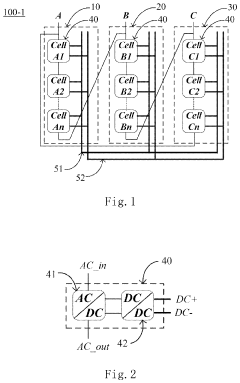
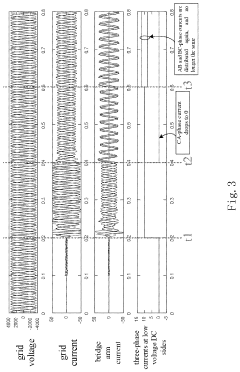
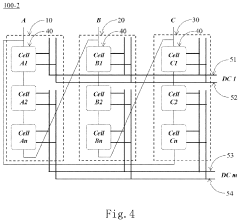
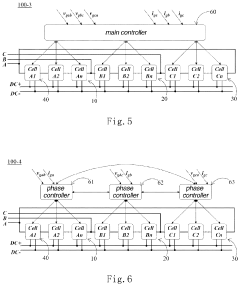
Passive impedance matching
PatentActiveUS20120074783A1
Innovation
- The implementation of passive impedance matching using a busbar with a specific geometry that provides substantially equivalent impedance between three single-phase power supplies and electronic machines, allowing for balanced load distribution without active feedback control, enabling redundancy and consistent balancing across server racks.


Grid Modernization Policy and Regulatory Framework
The modernization of three-phase electric power infrastructure requires a comprehensive policy and regulatory framework that addresses both current operational needs and future technological evolution. Governments worldwide are implementing strategic initiatives to transform aging electrical grids into smart, resilient, and sustainable systems capable of supporting emerging technologies and changing energy consumption patterns.
Regulatory bodies are establishing new standards for grid interoperability, cybersecurity, and data management to ensure seamless integration of distributed energy resources, electric vehicle charging networks, and advanced metering infrastructure. These policies emphasize the importance of maintaining three-phase power system stability while accommodating bidirectional power flows and real-time demand response capabilities.
Investment incentives and funding mechanisms are being restructured to encourage utility companies and private investors to upgrade transmission and distribution networks. Many jurisdictions are implementing performance-based rate structures that reward utilities for achieving reliability, efficiency, and environmental targets rather than simply recovering capital expenditures.
Environmental regulations are driving the adoption of cleaner technologies within three-phase power systems, including requirements for renewable energy integration, carbon emission reductions, and energy storage deployment. These mandates necessitate grid flexibility enhancements and advanced control systems to manage variable generation sources effectively.
International coordination efforts are establishing harmonized technical standards for cross-border electricity trading and grid interconnection projects. These frameworks facilitate the development of regional power markets and enhance overall system resilience through diversified energy supply chains.
Cybersecurity regulations are becoming increasingly stringent, requiring utilities to implement robust protection measures for critical infrastructure components. New compliance frameworks mandate regular security assessments, incident reporting protocols, and coordinated response strategies to address evolving digital threats to three-phase power systems.
Regulatory bodies are establishing new standards for grid interoperability, cybersecurity, and data management to ensure seamless integration of distributed energy resources, electric vehicle charging networks, and advanced metering infrastructure. These policies emphasize the importance of maintaining three-phase power system stability while accommodating bidirectional power flows and real-time demand response capabilities.
Investment incentives and funding mechanisms are being restructured to encourage utility companies and private investors to upgrade transmission and distribution networks. Many jurisdictions are implementing performance-based rate structures that reward utilities for achieving reliability, efficiency, and environmental targets rather than simply recovering capital expenditures.
Environmental regulations are driving the adoption of cleaner technologies within three-phase power systems, including requirements for renewable energy integration, carbon emission reductions, and energy storage deployment. These mandates necessitate grid flexibility enhancements and advanced control systems to manage variable generation sources effectively.
International coordination efforts are establishing harmonized technical standards for cross-border electricity trading and grid interconnection projects. These frameworks facilitate the development of regional power markets and enhance overall system resilience through diversified energy supply chains.
Cybersecurity regulations are becoming increasingly stringent, requiring utilities to implement robust protection measures for critical infrastructure components. New compliance frameworks mandate regular security assessments, incident reporting protocols, and coordinated response strategies to address evolving digital threats to three-phase power systems.
Sustainability Standards for Three Phase Power Systems
The sustainability standards for three-phase power systems have evolved significantly in response to growing environmental concerns and regulatory pressures. These standards encompass energy efficiency requirements, carbon footprint reduction mandates, and lifecycle assessment protocols that directly impact infrastructure design and operation. International frameworks such as ISO 14001 and IEC 61000 series provide foundational guidelines for environmental management and electromagnetic compatibility in electrical systems.
Energy efficiency standards represent a critical component of sustainability frameworks for three-phase systems. The International Electrotechnical Commission (IEC) has established minimum efficiency requirements for motors, transformers, and power distribution equipment. These standards mandate efficiency levels that often exceed 95% for premium efficiency motors and 98% for distribution transformers, driving manufacturers to adopt advanced materials and design methodologies.
Carbon neutrality requirements are increasingly shaping three-phase power system specifications. The European Union's Green Deal and similar initiatives worldwide establish mandatory carbon reduction targets that influence equipment selection and system architecture. These regulations require comprehensive lifecycle carbon accounting, from manufacturing through end-of-life disposal, fundamentally altering procurement decisions for electrical infrastructure.
Grid code compliance standards ensure that three-phase systems can integrate seamlessly with renewable energy sources and smart grid technologies. Standards such as IEEE 1547 and IEC 61850 define interoperability requirements that enable distributed generation integration while maintaining power quality and system stability. These protocols are essential for future-proofing infrastructure against evolving grid architectures.
Emerging sustainability certifications like LEED and BREEAM increasingly incorporate electrical system efficiency metrics into building performance assessments. These frameworks reward implementations that exceed baseline efficiency requirements and demonstrate measurable environmental benefits. The integration of real-time monitoring capabilities and predictive maintenance protocols has become standard practice for achieving certification compliance.
Regulatory harmonization efforts across different jurisdictions are creating unified sustainability benchmarks for three-phase power systems. This convergence simplifies compliance requirements for multinational infrastructure projects while establishing consistent performance expectations that drive technological innovation and market standardization.
Energy efficiency standards represent a critical component of sustainability frameworks for three-phase systems. The International Electrotechnical Commission (IEC) has established minimum efficiency requirements for motors, transformers, and power distribution equipment. These standards mandate efficiency levels that often exceed 95% for premium efficiency motors and 98% for distribution transformers, driving manufacturers to adopt advanced materials and design methodologies.
Carbon neutrality requirements are increasingly shaping three-phase power system specifications. The European Union's Green Deal and similar initiatives worldwide establish mandatory carbon reduction targets that influence equipment selection and system architecture. These regulations require comprehensive lifecycle carbon accounting, from manufacturing through end-of-life disposal, fundamentally altering procurement decisions for electrical infrastructure.
Grid code compliance standards ensure that three-phase systems can integrate seamlessly with renewable energy sources and smart grid technologies. Standards such as IEEE 1547 and IEC 61850 define interoperability requirements that enable distributed generation integration while maintaining power quality and system stability. These protocols are essential for future-proofing infrastructure against evolving grid architectures.
Emerging sustainability certifications like LEED and BREEAM increasingly incorporate electrical system efficiency metrics into building performance assessments. These frameworks reward implementations that exceed baseline efficiency requirements and demonstrate measurable environmental benefits. The integration of real-time monitoring capabilities and predictive maintenance protocols has become standard practice for achieving certification compliance.
Regulatory harmonization efforts across different jurisdictions are creating unified sustainability benchmarks for three-phase power systems. This convergence simplifies compliance requirements for multinational infrastructure projects while establishing consistent performance expectations that drive technological innovation and market standardization.
Unlock deeper insights with PatSnap Eureka Quick Research — get a full tech report to explore trends and direct your research. Try now!
Generate Your Research Report Instantly with AI Agent
Supercharge your innovation with PatSnap Eureka AI Agent Platform!