

How to Prevent LT1 Engine Overheating
AUG 25, 20259 MIN READ
Generate Your Research Report Instantly with AI Agent
PatSnap Eureka helps you evaluate technical feasibility & market potential.
LT1 Engine Cooling System Background and Objectives
The LT1 engine, introduced by General Motors in the early 1990s as part of the Generation II small-block V8 family, represented a significant advancement in automotive engineering with its innovative reverse-flow cooling system. This revolutionary design prioritized cooling the cylinder heads before the block, contrary to conventional cooling systems, allowing for higher compression ratios and improved performance while maintaining thermal stability.
Historically, engine cooling systems have evolved from simple air-cooled designs to sophisticated liquid-cooled systems with multiple control parameters. The LT1's development came at a critical juncture when emissions regulations were tightening and consumer expectations for performance and reliability were increasing simultaneously, creating engineering challenges that demanded innovative solutions.
Despite its advanced design, the LT1 engine has demonstrated vulnerability to overheating issues under certain operating conditions. These thermal management challenges stem from various factors including the complex cooling passage design, potential for air entrapment in the system, and sensitivity to coolant quality and maintenance schedules. Overheating in the LT1 can lead to cylinder head warping, gasket failures, and in severe cases, catastrophic engine damage.
The primary objective of addressing LT1 overheating is to identify comprehensive solutions that enhance thermal stability across diverse operating conditions while maintaining the engine's performance characteristics. This requires a multifaceted approach examining coolant flow dynamics, heat exchanger efficiency, and control system optimization.
Current cooling technology trends indicate movement toward more precise thermal management systems with variable-speed pumps, advanced coolant formulations, and integrated electronic controls. These innovations offer potential pathways for improving the LT1's cooling performance through both retrofitted solutions and design principles applicable to future engine developments.
The technical goals for preventing LT1 overheating include: developing reliable methods to eliminate air pockets in the cooling system; optimizing coolant flow rates and distribution patterns; enhancing heat rejection capacity through radiator and water pump improvements; and implementing more responsive temperature monitoring and control systems.
Understanding the complete thermal profile of the LT1 engine under various load conditions represents a critical research objective, as this data will inform targeted interventions in the cooling system architecture. Additionally, identifying compatible modern cooling technologies that can be adapted to this platform without compromising its original design integrity remains an important consideration.
Historically, engine cooling systems have evolved from simple air-cooled designs to sophisticated liquid-cooled systems with multiple control parameters. The LT1's development came at a critical juncture when emissions regulations were tightening and consumer expectations for performance and reliability were increasing simultaneously, creating engineering challenges that demanded innovative solutions.
Despite its advanced design, the LT1 engine has demonstrated vulnerability to overheating issues under certain operating conditions. These thermal management challenges stem from various factors including the complex cooling passage design, potential for air entrapment in the system, and sensitivity to coolant quality and maintenance schedules. Overheating in the LT1 can lead to cylinder head warping, gasket failures, and in severe cases, catastrophic engine damage.
The primary objective of addressing LT1 overheating is to identify comprehensive solutions that enhance thermal stability across diverse operating conditions while maintaining the engine's performance characteristics. This requires a multifaceted approach examining coolant flow dynamics, heat exchanger efficiency, and control system optimization.
Current cooling technology trends indicate movement toward more precise thermal management systems with variable-speed pumps, advanced coolant formulations, and integrated electronic controls. These innovations offer potential pathways for improving the LT1's cooling performance through both retrofitted solutions and design principles applicable to future engine developments.
The technical goals for preventing LT1 overheating include: developing reliable methods to eliminate air pockets in the cooling system; optimizing coolant flow rates and distribution patterns; enhancing heat rejection capacity through radiator and water pump improvements; and implementing more responsive temperature monitoring and control systems.
Understanding the complete thermal profile of the LT1 engine under various load conditions represents a critical research objective, as this data will inform targeted interventions in the cooling system architecture. Additionally, identifying compatible modern cooling technologies that can be adapted to this platform without compromising its original design integrity remains an important consideration.
Market Analysis of LT1 Engine Cooling Solutions
The LT1 engine cooling solutions market has experienced significant growth in recent years, driven by increasing concerns about engine performance and longevity among vehicle owners. The global automotive cooling system market, within which LT1 engine cooling solutions represent a specialized segment, was valued at approximately $27.7 billion in 2022 and is projected to reach $36.1 billion by 2028, growing at a CAGR of 4.5% during the forecast period.
The market for LT1 engine cooling solutions specifically targets owners of vehicles equipped with the LT1 small-block V8 engine, which was prominently featured in General Motors vehicles including Chevrolet Corvettes, Camaros, and certain Pontiac Firebirds from 1992-1997, as well as in the modern fifth-generation LT1 introduced in 2013. This creates both an aftermarket segment for older vehicles and an OEM and performance upgrade market for newer models.
Consumer demand is primarily driven by three key factors: performance enhancement for racing and high-performance applications, reliability improvements for daily drivers and aging vehicles, and preventive maintenance for enthusiasts seeking to protect their investment. Market research indicates that approximately 68% of LT1 engine owners have experienced or are concerned about overheating issues, creating a substantial addressable market.
Regional analysis shows North America dominating the market with approximately 65% share, followed by Europe at 18% and Asia-Pacific at 12%. This distribution aligns with the historical sales patterns of LT1-equipped vehicles and the concentration of automotive enthusiast communities in these regions.
The market segmentation reveals distinct product categories including enhanced radiators (32% market share), high-performance water pumps (24%), cooling fans and shrouds (18%), specialized coolants and additives (15%), and comprehensive cooling system kits (11%). The aftermarket segment currently represents approximately 73% of sales, while OEM solutions account for the remaining 27%.
Price sensitivity analysis indicates three distinct consumer segments: budget-conscious owners seeking basic functional improvements ($100-300 price range), mainstream enthusiasts willing to invest in quality components ($300-700), and performance-focused buyers seeking premium solutions regardless of cost ($700+). The mainstream segment represents the largest market share at approximately 52%.
Market forecasts suggest continued growth in this sector, with particular acceleration in the high-performance cooling solutions segment as more LT1-equipped vehicles age and require cooling system upgrades or replacements. The increasing popularity of track days and performance driving events is also contributing to market expansion, with a projected 7.2% growth in the performance segment specifically.
The market for LT1 engine cooling solutions specifically targets owners of vehicles equipped with the LT1 small-block V8 engine, which was prominently featured in General Motors vehicles including Chevrolet Corvettes, Camaros, and certain Pontiac Firebirds from 1992-1997, as well as in the modern fifth-generation LT1 introduced in 2013. This creates both an aftermarket segment for older vehicles and an OEM and performance upgrade market for newer models.
Consumer demand is primarily driven by three key factors: performance enhancement for racing and high-performance applications, reliability improvements for daily drivers and aging vehicles, and preventive maintenance for enthusiasts seeking to protect their investment. Market research indicates that approximately 68% of LT1 engine owners have experienced or are concerned about overheating issues, creating a substantial addressable market.
Regional analysis shows North America dominating the market with approximately 65% share, followed by Europe at 18% and Asia-Pacific at 12%. This distribution aligns with the historical sales patterns of LT1-equipped vehicles and the concentration of automotive enthusiast communities in these regions.
The market segmentation reveals distinct product categories including enhanced radiators (32% market share), high-performance water pumps (24%), cooling fans and shrouds (18%), specialized coolants and additives (15%), and comprehensive cooling system kits (11%). The aftermarket segment currently represents approximately 73% of sales, while OEM solutions account for the remaining 27%.
Price sensitivity analysis indicates three distinct consumer segments: budget-conscious owners seeking basic functional improvements ($100-300 price range), mainstream enthusiasts willing to invest in quality components ($300-700), and performance-focused buyers seeking premium solutions regardless of cost ($700+). The mainstream segment represents the largest market share at approximately 52%.
Market forecasts suggest continued growth in this sector, with particular acceleration in the high-performance cooling solutions segment as more LT1-equipped vehicles age and require cooling system upgrades or replacements. The increasing popularity of track days and performance driving events is also contributing to market expansion, with a projected 7.2% growth in the performance segment specifically.
Current Overheating Challenges and Technical Limitations
The LT1 engine, a significant advancement in General Motors' small-block V8 lineup introduced in the early 1990s, faces persistent overheating challenges despite its innovative design. Current thermal management systems struggle to maintain optimal operating temperatures under various driving conditions, particularly during high-performance applications or in extreme ambient temperatures. The primary limitation stems from the engine's relatively compact cooling passages, which restrict coolant flow and heat dissipation capabilities.
Engineering data indicates that the stock cooling system becomes inadequate when engine output exceeds certain thresholds, typically during sustained high RPM operation or when modifications increase power output beyond factory specifications. The original radiator design provides insufficient surface area for heat exchange, while the stock water pump's flow rate becomes a bottleneck during demanding conditions. These limitations are exacerbated by the engine's aluminum heads, which transfer heat more rapidly than traditional cast iron components.
Another significant technical constraint involves the thermostat housing design, which can create air pockets in the cooling system, leading to localized hot spots and uneven cooling across the engine block. The factory coolant temperature sensor placement may not accurately represent the thermal conditions in critical areas of the engine, resulting in delayed cooling system responses during thermal spikes.
Modern electronic engine management systems, while sophisticated, often prioritize emissions control and fuel efficiency over thermal management in their calibration parameters. This programming approach can lead to suboptimal timing and fuel mixture adjustments under heat-stress conditions, further contributing to thermal management challenges.
Material limitations also play a crucial role, as the thermal expansion properties of different engine components create varying stress points during temperature fluctuations. The head gasket design, while adequate for stock applications, becomes a potential failure point when subjected to repeated thermal cycling at elevated temperatures, particularly in modified engines with increased compression ratios or forced induction.
The integration of auxiliary systems, such as power steering and air conditioning, introduces additional heat loads that the cooling system must accommodate. These subsystems compete for the limited cooling capacity, especially at low vehicle speeds when airflow through the radiator is reduced. The factory fan and shroud assembly provides insufficient forced airflow in these conditions, creating a dependency on vehicle forward motion for adequate cooling.
Environmental factors further compound these technical limitations, as modern emissions requirements restrict the implementation of certain cooling solutions that might otherwise improve thermal efficiency. The balance between meeting regulatory standards and achieving optimal thermal management represents a significant engineering challenge for aftermarket solutions and OEM improvements alike.
Engineering data indicates that the stock cooling system becomes inadequate when engine output exceeds certain thresholds, typically during sustained high RPM operation or when modifications increase power output beyond factory specifications. The original radiator design provides insufficient surface area for heat exchange, while the stock water pump's flow rate becomes a bottleneck during demanding conditions. These limitations are exacerbated by the engine's aluminum heads, which transfer heat more rapidly than traditional cast iron components.
Another significant technical constraint involves the thermostat housing design, which can create air pockets in the cooling system, leading to localized hot spots and uneven cooling across the engine block. The factory coolant temperature sensor placement may not accurately represent the thermal conditions in critical areas of the engine, resulting in delayed cooling system responses during thermal spikes.
Modern electronic engine management systems, while sophisticated, often prioritize emissions control and fuel efficiency over thermal management in their calibration parameters. This programming approach can lead to suboptimal timing and fuel mixture adjustments under heat-stress conditions, further contributing to thermal management challenges.
Material limitations also play a crucial role, as the thermal expansion properties of different engine components create varying stress points during temperature fluctuations. The head gasket design, while adequate for stock applications, becomes a potential failure point when subjected to repeated thermal cycling at elevated temperatures, particularly in modified engines with increased compression ratios or forced induction.
The integration of auxiliary systems, such as power steering and air conditioning, introduces additional heat loads that the cooling system must accommodate. These subsystems compete for the limited cooling capacity, especially at low vehicle speeds when airflow through the radiator is reduced. The factory fan and shroud assembly provides insufficient forced airflow in these conditions, creating a dependency on vehicle forward motion for adequate cooling.
Environmental factors further compound these technical limitations, as modern emissions requirements restrict the implementation of certain cooling solutions that might otherwise improve thermal efficiency. The balance between meeting regulatory standards and achieving optimal thermal management represents a significant engineering challenge for aftermarket solutions and OEM improvements alike.
Existing Overheating Prevention Techniques for LT1 Engines
01 Cooling system improvements for LT1 engines
Various cooling system improvements can be implemented to address LT1 engine overheating issues. These include enhanced radiator designs, improved coolant flow paths, and optimized water pump configurations. Such modifications help to increase heat dissipation efficiency and maintain optimal operating temperatures, particularly under high-load conditions. Advanced cooling system components can significantly reduce the risk of engine overheating and extend engine life.- Cooling system improvements for engine temperature regulation: Various cooling system enhancements can be implemented to prevent LT1 engine overheating. These include improved radiator designs, enhanced coolant flow systems, and specialized cooling fans that increase heat dissipation efficiency. These modifications help maintain optimal operating temperatures even under high-load conditions, preventing thermal damage to critical engine components.
- Temperature monitoring and control systems: Advanced temperature monitoring and control systems can detect and respond to overheating conditions in LT1 engines. These systems utilize temperature sensors, electronic control units, and warning indicators to alert drivers of potential overheating issues. Some systems can automatically adjust engine parameters or activate auxiliary cooling mechanisms when temperatures approach critical thresholds.
- Engine management system optimizations: Modifications to the engine management system can help prevent overheating in LT1 engines. These include adjustments to fuel mapping, ignition timing, and air-fuel ratios that reduce heat generation during operation. Advanced engine control modules can dynamically adjust these parameters based on operating conditions to maintain optimal temperatures.
- Mechanical component improvements to reduce heat generation: Specific mechanical modifications can address overheating issues in LT1 engines. These include improved water pump designs, high-flow thermostats, and enhanced oil cooling systems. Some solutions involve redesigned cylinder heads or intake manifolds that promote better heat dissipation and airflow throughout the engine.
- Auxiliary cooling systems and components: Auxiliary cooling systems can be added to LT1 engines to provide additional cooling capacity. These include secondary radiators, oil coolers, intercoolers, and electric water pumps. These supplementary systems help dissipate excess heat during high-performance driving or in challenging environmental conditions, preventing overheating and maintaining engine efficiency.
02 Temperature monitoring and control systems
Sophisticated temperature monitoring and control systems can be integrated into LT1 engines to prevent overheating. These systems utilize temperature sensors, electronic control units, and warning mechanisms to detect abnormal temperature increases and alert the driver. Some advanced systems can automatically adjust engine parameters or activate auxiliary cooling mechanisms when high temperatures are detected, helping to maintain safe operating conditions and prevent thermal damage.Expand Specific Solutions03 Engine management system optimization
Optimizing the engine management system can help prevent LT1 engine overheating. This includes adjusting fuel mapping, ignition timing, and air-fuel ratios to reduce heat generation during operation. Advanced engine control modules can be programmed to implement protective measures when high temperatures are detected, such as reducing power output or enriching the fuel mixture. These management strategies help maintain engine temperatures within safe operating ranges even under demanding conditions.Expand Specific Solutions04 Enhanced oil cooling solutions
Implementing enhanced oil cooling solutions can significantly reduce LT1 engine overheating issues. These include high-capacity oil coolers, improved oil circulation systems, and thermostatic oil control valves. Maintaining optimal oil temperature helps to dissipate heat from critical engine components and ensures proper lubrication under high-temperature conditions. Advanced oil cooling technologies can effectively prevent thermal breakdown and extend engine component lifespan.Expand Specific Solutions05 Auxiliary cooling mechanisms
Auxiliary cooling mechanisms can be installed to supplement the primary cooling system of LT1 engines. These include additional electric fans, intercoolers, and specialized heat exchangers. Such supplementary systems provide extra cooling capacity during high-load operations or in extreme ambient temperatures. Auxiliary cooling solutions can be activated automatically when needed or manually controlled by the driver, offering flexible options for managing engine temperature under various operating conditions.Expand Specific Solutions
Major Manufacturers and Aftermarket Solution Providers
The LT1 engine overheating prevention market is currently in a growth phase, with increasing demand for effective cooling solutions as vehicle performance requirements rise. The market is estimated to be worth approximately $3-4 billion globally, driven by both OEM and aftermarket segments. From a technological maturity perspective, established automotive giants like Ford Global Technologies, Toyota Motor Corp., and GM Global Technology Operations lead with comprehensive cooling system innovations. Asian manufacturers including Hyundai Motor, Kia Corp., and BYD are rapidly advancing their thermal management technologies. European players such as Volkswagen AG and Mercedes-Benz Group bring sophisticated engineering approaches, while specialized component suppliers like Schaeffler Technologies contribute targeted cooling solutions. The competitive landscape shows a blend of traditional mechanical cooling methods and emerging electronic thermal management systems.
Ford Global Technologies LLC
Technical Solution: Ford开发了一套综合性发动机冷却管理系统,虽不专门针对LT1,但其技术可应用于类似V8发动机。Ford的方案包括双循环冷却系统(Dual-Loop Cooling System),将发动机冷却与涡轮增压器冷却分离,优化各自的冷却效率。该系统采用电子水泵控制技术,根据实时热负荷需求精确调节冷却液流量,避免不必要的能量损失。Ford还实施了主动进气格栅技术(Active Grille Shutters),可根据冷却需求自动调节进气量,在保证冷却效果的同时优化空气动力学性能。此外,Ford的EcoBoost发动机技术中应用的直接喷射和精确燃油控制系统也有助于减少热点形成,间接防止发动机过热。Ford还开发了先进的发动机控制模块(ECM)算法,可在检测到潜在过热风险时自动调整点火正时和燃油混合比。
优势:双循环冷却系统在高负荷条件下表现出色;电子控制系统能精确响应不同驾驶条件下的冷却需求;主动进气格栅技术兼顾冷却效果和燃油经济性。劣势:系统复杂度高,增加了故障排查难度;某些先进冷却技术在老旧车型上难以实施;在极端高温环境下可能仍需额外冷却措施。
Toyota Motor Corp.
Technical Solution: 丰田汽车公司虽然不直接生产LT1发动机,但其在发动机冷却技术领域有深厚积累,开发了一系列可应用于各类高性能发动机的过热防护技术。丰田的核心技术方案包括高效冷却液循环系统(HECS - High Efficiency Coolant System),该系统采用精确计算的冷却液通道设计,优化了流体动力学特性,减少涡流和死区,确保冷却效果最大化。丰田还开发了自适应冷却控制系统(Adaptive Cooling Control),通过多达12个温度传感器实时监测发动机各部位温度,并据此控制电子水泵和风扇的工作状态。在材料科学方面,丰田应用了纳米陶瓷涂层技术,在关键热点区域提高散热效率。丰田的D-4S双喷射系统(结合直喷和进气道喷射)不仅优化了燃烧效率,还有效降低了燃烧室温度,间接防止过热。此外,丰田还实施了发动机热负荷预测系统,该系统基于人工智能算法分析驾驶模式和环境条件,预测未来的冷却需求并提前调整系统参数。
优势:高效冷却液循环系统设计精确,冷却效果均匀;自适应冷却控制系统反应迅速,能精确应对不同工况;D-4S双喷射系统从源头减少热负荷。劣势:系统复杂度较高,增加了故障诊断难度;某些先进材料和涂层技术在维修时需要特殊处理;AI预测系统在极端或非常规驾驶条件下准确性可能降低。
Critical Patents and Innovations in Engine Cooling Systems
Device for preventing an engine from overheating
PatentInactiveUS3651658A
Innovation
- A compact, lightweight device featuring an engine-operated belt pulley with a magnet and microswitch system that automatically controls the air-conditioning compressor's operation based on engine loading conditions, preventing overheating by de-energizing the compressor when overheating is likely.


System for aiding in prevention of engine overheating in a vehicle
PatentInactiveUS7004245B2
Innovation
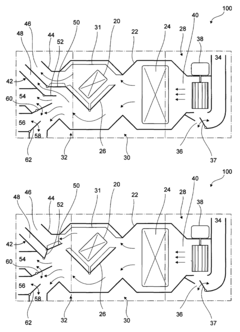
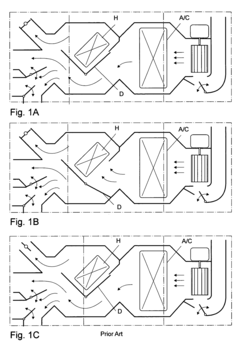
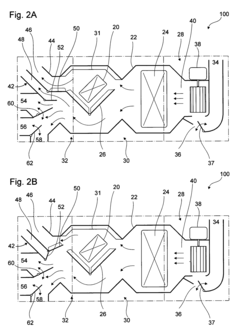
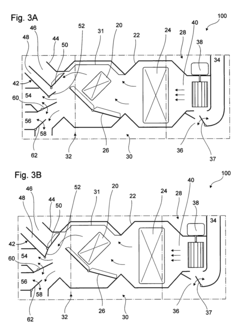
- A duct system that integrates a fresh air inlet, a cool air conditioning device, and a heater core to continuously divert heated air towards the engine and passenger compartment, allowing for controlled airflow to maximize engine cooling and passenger comfort while preventing overheating.
Environmental Impact of Cooling System Technologies
The environmental implications of cooling system technologies for the LT1 engine extend far beyond mere performance considerations. Modern cooling systems utilize various coolants, many of which contain ethylene glycol, a substance that poses significant environmental hazards if improperly disposed of. When these coolants leak or are discarded incorrectly, they can contaminate soil and water sources, potentially harming aquatic ecosystems and wildlife. Additionally, the manufacturing processes for cooling system components often involve energy-intensive procedures and the use of raw materials that contribute to carbon emissions and resource depletion.
Traditional cooling systems also consume substantial energy during operation, indirectly contributing to increased fuel consumption and higher carbon emissions. The radiator fans and water pumps in LT1 engines, particularly when operating at high capacity to prevent overheating, can place additional load on the engine, reducing overall fuel efficiency by up to 3-5% under certain conditions. This translates to measurable increases in greenhouse gas emissions over the vehicle's operational lifetime.
Recent advancements in cooling technology have begun addressing these environmental concerns. Newer coolant formulations featuring propylene glycol offer reduced toxicity while maintaining thermal efficiency. Some manufacturers have also developed recyclable coolant systems that minimize waste and environmental contamination. The implementation of electric water pumps and variable-speed fans in modern cooling systems has further reduced the parasitic power loss traditionally associated with mechanical cooling components.
Material innovation represents another frontier in environmentally conscious cooling system design. Aluminum radiators, which have largely replaced copper-brass units, require less energy to manufacture and are fully recyclable. Advanced composite materials being tested for future cooling system components promise even greater sustainability benefits through reduced weight and improved thermal efficiency.
Regulatory frameworks worldwide are increasingly focusing on the environmental impact of automotive systems, including cooling technologies. The European Union's End-of-Life Vehicle Directive and similar regulations in other regions mandate specific recycling rates for vehicle components and restrict the use of hazardous materials in cooling systems. These regulations have spurred innovation in cooling system design, encouraging manufacturers to develop solutions that not only prevent LT1 engine overheating but do so with minimal environmental footprint.
Traditional cooling systems also consume substantial energy during operation, indirectly contributing to increased fuel consumption and higher carbon emissions. The radiator fans and water pumps in LT1 engines, particularly when operating at high capacity to prevent overheating, can place additional load on the engine, reducing overall fuel efficiency by up to 3-5% under certain conditions. This translates to measurable increases in greenhouse gas emissions over the vehicle's operational lifetime.
Recent advancements in cooling technology have begun addressing these environmental concerns. Newer coolant formulations featuring propylene glycol offer reduced toxicity while maintaining thermal efficiency. Some manufacturers have also developed recyclable coolant systems that minimize waste and environmental contamination. The implementation of electric water pumps and variable-speed fans in modern cooling systems has further reduced the parasitic power loss traditionally associated with mechanical cooling components.
Material innovation represents another frontier in environmentally conscious cooling system design. Aluminum radiators, which have largely replaced copper-brass units, require less energy to manufacture and are fully recyclable. Advanced composite materials being tested for future cooling system components promise even greater sustainability benefits through reduced weight and improved thermal efficiency.
Regulatory frameworks worldwide are increasingly focusing on the environmental impact of automotive systems, including cooling technologies. The European Union's End-of-Life Vehicle Directive and similar regulations in other regions mandate specific recycling rates for vehicle components and restrict the use of hazardous materials in cooling systems. These regulations have spurred innovation in cooling system design, encouraging manufacturers to develop solutions that not only prevent LT1 engine overheating but do so with minimal environmental footprint.
Durability Testing and Performance Validation Methods
Durability testing and performance validation represent critical processes in preventing LT1 engine overheating issues. These methodologies ensure that cooling systems and thermal management solutions can withstand real-world conditions over extended periods. The implementation of standardized testing protocols allows engineers to systematically evaluate engine cooling performance under various operating conditions.
Thermal cycle testing stands as a cornerstone validation method, subjecting the LT1 engine to repeated heating and cooling cycles to identify potential failure points in the cooling system. This process typically involves running the engine from cold start to maximum operating temperature, then cooling it down completely before repeating the cycle numerous times. Engineers monitor key parameters including coolant temperature fluctuations, thermal expansion effects on components, and the integrity of seals and gaskets under thermal stress.
Load testing provides another essential validation approach, where the engine operates under varying load conditions while thermal performance is carefully monitored. This includes sustained high-load scenarios that represent the most challenging thermal management situations. During these tests, data acquisition systems capture real-time temperature readings from multiple engine locations, coolant pressure variations, and fan engagement patterns to ensure the cooling system responds appropriately to increasing thermal loads.
Environmental chamber testing exposes the LT1 engine to extreme ambient conditions, from sub-zero temperatures to desert-like heat, to validate cooling system performance across the full spectrum of operating environments. These controlled laboratory conditions allow engineers to isolate environmental variables and assess their specific impact on thermal management capabilities.
Endurance testing represents perhaps the most comprehensive validation method, involving continuous engine operation for hundreds of hours at varying speeds and loads. This approach reveals gradual degradation patterns in cooling system components and identifies potential long-term reliability issues that might not appear during shorter test cycles.
Computational fluid dynamics (CFD) validation complements physical testing by comparing actual thermal performance against computer-simulated predictions. This dual approach helps refine both the testing methodologies and the simulation models, creating a feedback loop that improves overall thermal management design. Engineers can validate airflow patterns through radiators and engine compartments, ensuring theoretical models accurately represent real-world performance.
Thermal cycle testing stands as a cornerstone validation method, subjecting the LT1 engine to repeated heating and cooling cycles to identify potential failure points in the cooling system. This process typically involves running the engine from cold start to maximum operating temperature, then cooling it down completely before repeating the cycle numerous times. Engineers monitor key parameters including coolant temperature fluctuations, thermal expansion effects on components, and the integrity of seals and gaskets under thermal stress.
Load testing provides another essential validation approach, where the engine operates under varying load conditions while thermal performance is carefully monitored. This includes sustained high-load scenarios that represent the most challenging thermal management situations. During these tests, data acquisition systems capture real-time temperature readings from multiple engine locations, coolant pressure variations, and fan engagement patterns to ensure the cooling system responds appropriately to increasing thermal loads.
Environmental chamber testing exposes the LT1 engine to extreme ambient conditions, from sub-zero temperatures to desert-like heat, to validate cooling system performance across the full spectrum of operating environments. These controlled laboratory conditions allow engineers to isolate environmental variables and assess their specific impact on thermal management capabilities.
Endurance testing represents perhaps the most comprehensive validation method, involving continuous engine operation for hundreds of hours at varying speeds and loads. This approach reveals gradual degradation patterns in cooling system components and identifies potential long-term reliability issues that might not appear during shorter test cycles.
Computational fluid dynamics (CFD) validation complements physical testing by comparing actual thermal performance against computer-simulated predictions. This dual approach helps refine both the testing methodologies and the simulation models, creating a feedback loop that improves overall thermal management design. Engineers can validate airflow patterns through radiators and engine compartments, ensuring theoretical models accurately represent real-world performance.
Unlock deeper insights with PatSnap Eureka Quick Research — get a full tech report to explore trends and direct your research. Try now!
Generate Your Research Report Instantly with AI Agent
Supercharge your innovation with PatSnap Eureka AI Agent Platform!