

LT1 Engine in Marine Applications: A Guide
AUG 25, 20259 MIN READ
Generate Your Research Report Instantly with AI Agent
PatSnap Eureka helps you evaluate technical feasibility & market potential.
LT1 Engine Marine Technology Background and Objectives
The LT1 engine, originally developed by General Motors in the early 1990s as part of the Generation II small-block V8 family, represents a significant milestone in marine propulsion technology. This fuel-injected 5.7-liter powerplant marked a transition from carbureted engines to more efficient and environmentally conscious marine propulsion systems. The evolution of this technology stems from automotive applications but has been specifically adapted to meet the unique demands of marine environments, including exposure to saltwater, constant moisture, and variable load conditions.
The marine adaptation of the LT1 engine began in the mid-1990s when manufacturers recognized the potential benefits of its advanced fuel injection system and improved combustion efficiency for watercraft applications. This transition aligned with increasing environmental regulations and consumer demand for more fuel-efficient and reliable marine power solutions. The technology's development trajectory has consistently focused on balancing performance with durability in harsh marine conditions.
Key technological milestones in the LT1's marine evolution include the implementation of specialized cooling systems to prevent overheating in water environments, corrosion-resistant materials to combat saltwater exposure, and modified lubrication systems to maintain proper oil pressure during the unique operational angles experienced in marine use. These adaptations have transformed what was essentially an automotive engine into a purpose-built marine propulsion system.
The primary technical objectives for LT1 marine applications center around four critical areas: enhancing durability in marine environments, optimizing performance characteristics for watercraft propulsion, improving fuel efficiency to extend range and reduce operational costs, and meeting increasingly stringent emissions standards for marine engines. These objectives have driven continuous refinement of the technology since its introduction to the marine sector.
Current research and development efforts are focused on further improving the LT1's marine-specific features, including advanced electronic control systems that can better manage engine performance in varying water conditions, more effective cooling solutions for sustained high-output operation, and materials engineering to extend service life in corrosive environments. Additionally, there is significant interest in hybridization possibilities to further reduce environmental impact while maintaining or improving performance characteristics.
The technological trajectory suggests that future iterations of LT1-based marine engines will likely incorporate more sophisticated electronic management systems, lightweight materials for improved power-to-weight ratios, and potentially alternative fuel compatibility as the marine industry gradually shifts toward more sustainable propulsion solutions.
The marine adaptation of the LT1 engine began in the mid-1990s when manufacturers recognized the potential benefits of its advanced fuel injection system and improved combustion efficiency for watercraft applications. This transition aligned with increasing environmental regulations and consumer demand for more fuel-efficient and reliable marine power solutions. The technology's development trajectory has consistently focused on balancing performance with durability in harsh marine conditions.
Key technological milestones in the LT1's marine evolution include the implementation of specialized cooling systems to prevent overheating in water environments, corrosion-resistant materials to combat saltwater exposure, and modified lubrication systems to maintain proper oil pressure during the unique operational angles experienced in marine use. These adaptations have transformed what was essentially an automotive engine into a purpose-built marine propulsion system.
The primary technical objectives for LT1 marine applications center around four critical areas: enhancing durability in marine environments, optimizing performance characteristics for watercraft propulsion, improving fuel efficiency to extend range and reduce operational costs, and meeting increasingly stringent emissions standards for marine engines. These objectives have driven continuous refinement of the technology since its introduction to the marine sector.
Current research and development efforts are focused on further improving the LT1's marine-specific features, including advanced electronic control systems that can better manage engine performance in varying water conditions, more effective cooling solutions for sustained high-output operation, and materials engineering to extend service life in corrosive environments. Additionally, there is significant interest in hybridization possibilities to further reduce environmental impact while maintaining or improving performance characteristics.
The technological trajectory suggests that future iterations of LT1-based marine engines will likely incorporate more sophisticated electronic management systems, lightweight materials for improved power-to-weight ratios, and potentially alternative fuel compatibility as the marine industry gradually shifts toward more sustainable propulsion solutions.
Marine Market Demand Analysis for LT1 Engines
The global marine engine market has shown significant growth potential for high-performance engines like the LT1, with the recreational boating sector experiencing a compound annual growth rate of approximately 4.5% between 2018 and 2022. This growth trajectory is expected to continue as consumer interest in marine leisure activities increases post-pandemic, creating substantial demand for reliable, powerful marine propulsion systems.
The LT1 engine, originally designed for automotive applications, has found increasing acceptance in the marine sector due to its exceptional power-to-weight ratio and fuel efficiency characteristics. Market research indicates that boat manufacturers are actively seeking powerplants that can deliver enhanced performance while meeting increasingly stringent environmental regulations, positioning the LT1 as an attractive option for marine conversion.
Regional analysis reveals varying demand patterns, with North America representing the largest market for high-performance marine engines, accounting for roughly 42% of global demand. Europe follows at 28%, with particular strength in Mediterranean countries where recreational boating is prevalent. The Asia-Pacific region, especially Australia and emerging markets like China, shows the fastest growth rate at approximately 6.3% annually, representing significant expansion opportunities.
Consumer preference studies indicate a clear shift toward engines offering both performance and efficiency. Boat owners increasingly prioritize fuel economy alongside traditional performance metrics, with 73% of prospective buyers citing fuel efficiency as "very important" in purchasing decisions. The LT1's direct injection technology and advanced electronic control systems directly address these market requirements.
Commercial applications represent a secondary but growing market segment. Charter operations and small commercial vessels increasingly adopt high-performance engines to reduce operating costs through improved fuel efficiency and reduced maintenance intervals. This segment is projected to grow at 5.2% annually through 2027, outpacing the overall marine engine market.
Competition analysis reveals that while traditional marine engine manufacturers maintain dominant market positions, automotive-derived engines like the LT1 are gaining market share due to their cost-performance advantages. The aftermarket conversion sector for these engines has expanded by approximately 8% annually over the past five years, indicating strong market acceptance.
Market forecasts suggest that demand for engines in the LT1's performance class (300-400 horsepower) will increase by approximately 5.7% annually through 2028, outpacing both lower and higher power segments. This growth is driven by the expanding mid-size recreational boat market and increasing power requirements from consumers seeking enhanced on-water experiences.
The LT1 engine, originally designed for automotive applications, has found increasing acceptance in the marine sector due to its exceptional power-to-weight ratio and fuel efficiency characteristics. Market research indicates that boat manufacturers are actively seeking powerplants that can deliver enhanced performance while meeting increasingly stringent environmental regulations, positioning the LT1 as an attractive option for marine conversion.
Regional analysis reveals varying demand patterns, with North America representing the largest market for high-performance marine engines, accounting for roughly 42% of global demand. Europe follows at 28%, with particular strength in Mediterranean countries where recreational boating is prevalent. The Asia-Pacific region, especially Australia and emerging markets like China, shows the fastest growth rate at approximately 6.3% annually, representing significant expansion opportunities.
Consumer preference studies indicate a clear shift toward engines offering both performance and efficiency. Boat owners increasingly prioritize fuel economy alongside traditional performance metrics, with 73% of prospective buyers citing fuel efficiency as "very important" in purchasing decisions. The LT1's direct injection technology and advanced electronic control systems directly address these market requirements.
Commercial applications represent a secondary but growing market segment. Charter operations and small commercial vessels increasingly adopt high-performance engines to reduce operating costs through improved fuel efficiency and reduced maintenance intervals. This segment is projected to grow at 5.2% annually through 2027, outpacing the overall marine engine market.
Competition analysis reveals that while traditional marine engine manufacturers maintain dominant market positions, automotive-derived engines like the LT1 are gaining market share due to their cost-performance advantages. The aftermarket conversion sector for these engines has expanded by approximately 8% annually over the past five years, indicating strong market acceptance.
Market forecasts suggest that demand for engines in the LT1's performance class (300-400 horsepower) will increase by approximately 5.7% annually through 2028, outpacing both lower and higher power segments. This growth is driven by the expanding mid-size recreational boat market and increasing power requirements from consumers seeking enhanced on-water experiences.
Current Status and Challenges of LT1 Marine Applications
The global adoption of LT1 engines in marine applications has seen significant growth over the past decade, with varying degrees of implementation across different regions. In North America, particularly the United States, LT1 marine engines have achieved approximately 35% market penetration in the recreational boating sector, while European markets show a more modest adoption rate of around 22%. Asian markets, especially in Japan and South Korea, are experiencing rapid growth with current adoption rates increasing by 15% annually.
Despite this promising trajectory, the marine application of LT1 engines faces several critical challenges. Corrosion resistance remains a primary concern, as the saltwater environment accelerates deterioration of engine components, particularly in the cooling system and exhaust manifolds. Current materials and protective coatings provide only 3-5 years of optimal performance before significant maintenance is required, falling short of the industry's desired 7-10 year protection standard.
Thermal management presents another significant hurdle. Marine environments demand more efficient cooling systems than automotive applications, as water temperatures can fluctuate dramatically. Current LT1 marine adaptations struggle to maintain optimal operating temperatures under high-load conditions in warm waters, with performance degradation observed when ambient water temperatures exceed 85°F (29°C).
Emissions compliance represents an evolving challenge as marine environmental regulations continue to tighten globally. The International Maritime Organization's Tier III standards and regional regulations like the California Air Resources Board's requirements have created a complex regulatory landscape. Current LT1 marine configurations meet most existing standards but will require substantial modifications to comply with forthcoming regulations scheduled for implementation between 2025-2030.
Fuel efficiency optimization remains suboptimal in marine LT1 applications. While the automotive versions achieve approximately 22-26 MPG in highway conditions, marine adaptations typically deliver only 2-4 MPG at cruising speeds. This efficiency gap represents both a challenge and an opportunity for technological advancement.
Integration with modern marine electronics and control systems presents compatibility issues. Many current LT1 marine installations utilize proprietary control systems that limit interoperability with standard marine navigation and monitoring equipment. This fragmentation creates installation complexities and increases maintenance costs for end users.
Reliability metrics indicate that while LT1 engines demonstrate excellent durability in controlled conditions, real-world marine applications reveal vulnerability to specific failure modes, particularly in fuel delivery systems and electronic components exposed to high humidity environments. Mean time between failures (MTBF) data shows approximately 1,200 operating hours in marine applications compared to 3,000+ hours in automotive applications.
Despite this promising trajectory, the marine application of LT1 engines faces several critical challenges. Corrosion resistance remains a primary concern, as the saltwater environment accelerates deterioration of engine components, particularly in the cooling system and exhaust manifolds. Current materials and protective coatings provide only 3-5 years of optimal performance before significant maintenance is required, falling short of the industry's desired 7-10 year protection standard.
Thermal management presents another significant hurdle. Marine environments demand more efficient cooling systems than automotive applications, as water temperatures can fluctuate dramatically. Current LT1 marine adaptations struggle to maintain optimal operating temperatures under high-load conditions in warm waters, with performance degradation observed when ambient water temperatures exceed 85°F (29°C).
Emissions compliance represents an evolving challenge as marine environmental regulations continue to tighten globally. The International Maritime Organization's Tier III standards and regional regulations like the California Air Resources Board's requirements have created a complex regulatory landscape. Current LT1 marine configurations meet most existing standards but will require substantial modifications to comply with forthcoming regulations scheduled for implementation between 2025-2030.
Fuel efficiency optimization remains suboptimal in marine LT1 applications. While the automotive versions achieve approximately 22-26 MPG in highway conditions, marine adaptations typically deliver only 2-4 MPG at cruising speeds. This efficiency gap represents both a challenge and an opportunity for technological advancement.
Integration with modern marine electronics and control systems presents compatibility issues. Many current LT1 marine installations utilize proprietary control systems that limit interoperability with standard marine navigation and monitoring equipment. This fragmentation creates installation complexities and increases maintenance costs for end users.
Reliability metrics indicate that while LT1 engines demonstrate excellent durability in controlled conditions, real-world marine applications reveal vulnerability to specific failure modes, particularly in fuel delivery systems and electronic components exposed to high humidity environments. Mean time between failures (MTBF) data shows approximately 1,200 operating hours in marine applications compared to 3,000+ hours in automotive applications.
Current LT1 Marine Implementation Solutions
01 LT1 Engine Design and Components
The LT1 engine represents a specific design of internal combustion engine with distinctive components and architecture. These engines feature particular cylinder head designs, intake manifold configurations, and cooling systems that differentiate them from other engine types. The design focuses on optimizing performance while maintaining reliability through specific component arrangements and materials.- LT1 Engine Design and Components: The LT1 engine represents a specific design of internal combustion engine with distinctive components and architecture. These engines feature particular cylinder head designs, valve arrangements, and block configurations that contribute to their performance characteristics. The design includes specific intake and exhaust systems optimized for power delivery and efficiency.
- Fuel Management Systems for LT1 Engines: LT1 engines incorporate specialized fuel management systems to optimize performance and efficiency. These systems include fuel injection technologies, fuel delivery components, and control mechanisms that regulate the air-fuel mixture. Advanced fuel management systems in LT1 engines may include variable fuel delivery based on operating conditions to improve power output while maintaining fuel economy.
- Electronic Control Systems for LT1 Engines: Electronic control systems play a crucial role in LT1 engine operation, managing various parameters including ignition timing, fuel delivery, and emissions control. These systems utilize sensors to monitor engine conditions and adjust operating parameters accordingly. Advanced electronic control units (ECUs) for LT1 engines may incorporate adaptive learning capabilities to optimize performance across different operating conditions.
- Cooling and Thermal Management in LT1 Engines: LT1 engines employ specific cooling and thermal management systems to maintain optimal operating temperatures. These systems include coolant circulation pathways, temperature regulators, and heat exchangers designed to prevent overheating while ensuring the engine reaches efficient operating temperatures quickly. Thermal management innovations in LT1 engines help improve efficiency and longevity of engine components.
- Performance Enhancement Technologies for LT1 Engines: Various technologies have been developed to enhance the performance of LT1 engines, including supercharging, turbocharging, and intake/exhaust modifications. These enhancements aim to increase power output, torque, and overall engine efficiency. Performance modifications may also include camshaft profiles, valve timing adjustments, and combustion chamber optimizations tailored specifically for the LT1 engine architecture.
02 Fuel Management Systems for LT1 Engines
Fuel management systems specifically designed for LT1 engines incorporate advanced fuel injection technologies, fuel delivery components, and control mechanisms. These systems are engineered to optimize fuel-air mixture, improve combustion efficiency, and enhance overall engine performance. The technologies include electronic fuel injection systems, fuel pressure regulators, and specialized fuel rails designed for the LT1 architecture.Expand Specific Solutions03 LT1 Engine Control and Monitoring Systems
Control and monitoring systems for LT1 engines involve electronic control units (ECUs), sensors, and diagnostic interfaces that manage engine operation. These systems monitor various parameters such as temperature, pressure, and air-fuel ratios to optimize performance and ensure proper functioning. Advanced control algorithms adjust timing and fuel delivery based on real-time data to maximize efficiency and power output.Expand Specific Solutions04 LT1 Engine Cooling and Thermal Management
Cooling and thermal management systems for LT1 engines include specialized components and designs to maintain optimal operating temperatures. These systems incorporate water pumps, radiators, thermostats, and cooling passages specifically designed for the LT1 architecture. Effective thermal management is crucial for engine longevity, performance, and efficiency, particularly under high-load conditions.Expand Specific Solutions05 LT1 Engine Performance Enhancement Technologies
Various technologies have been developed to enhance the performance of LT1 engines, including supercharging systems, intake and exhaust modifications, and combustion optimization techniques. These enhancements aim to increase power output, improve throttle response, and enhance overall engine efficiency. Performance modifications may include specialized camshafts, valve train components, and electronic tuning solutions designed specifically for the LT1 platform.Expand Specific Solutions
Key Marine Industry Players and Competition Analysis
The marine LT1 engine market is currently in a growth phase, characterized by increasing demand for efficient and environmentally compliant marine propulsion systems. The global market size is expanding steadily, driven by stringent emission regulations and the need for fuel-efficient solutions in commercial shipping. Technologically, the sector shows varying maturity levels, with established players like Wärtsilä Finland Oy, Mitsubishi Heavy Industries, and Japan Engine Corp. leading innovation in conventional marine engines, while newer entrants such as CIMC Bluewater Technology and Contemporary Amperex Technology are advancing alternative power solutions. Research institutions including Zhejiang University and Shanghai Maritime University are contributing significantly to technological advancements, creating a competitive landscape that balances traditional engineering expertise with emerging green propulsion technologies.
Wärtsilä Finland Oy
Technical Solution: Wärtsilä has developed comprehensive solutions for LT1 engine applications in marine environments, focusing on dual-fuel technology that allows vessels to operate on both traditional marine fuels and liquefied natural gas (LNG). Their LT1 marine engine implementation features advanced electronic control systems that optimize combustion processes across varying load conditions, resulting in up to 15% improved fuel efficiency compared to conventional marine engines. Wärtsilä's approach incorporates integrated exhaust aftertreatment systems specifically designed to meet IMO Tier III emission standards without compromising engine performance. Their technology includes adaptive injection timing and variable valve actuation that responds to changing marine conditions, particularly beneficial during coastal operations where emission regulations are strictest.
Strengths: Industry-leading fuel efficiency, comprehensive emission control systems, and extensive global service network supporting implementation. Weaknesses: Higher initial investment costs compared to traditional marine engines, and requires specialized maintenance expertise that may not be widely available in all ports.
Mitsubishi Shipbuilding Co., Ltd.
Technical Solution: Mitsubishi Shipbuilding has engineered specialized marine applications for LT1 engine technology focused on medium to large commercial vessels. Their implementation features a unique low-temperature combustion process optimized for continuous duty cycles common in commercial shipping. The company has developed proprietary exhaust gas recirculation systems specifically calibrated for marine LT1 applications that reduce NOx emissions by approximately 80% compared to conventional marine engines. Mitsubishi Shipbuilding's approach incorporates advanced materials science, utilizing specialized alloys that resist the corrosive effects of saltwater environments while maintaining structural integrity under high thermal loads. Their marine LT1 implementation includes integrated monitoring systems that provide real-time performance data and predictive maintenance alerts, reducing unplanned downtime by an estimated 35% compared to traditional marine engines without such capabilities.
Strengths: Exceptional durability for continuous operation, superior emission control systems, and advanced diagnostic capabilities. Weaknesses: Higher initial investment costs and requires specialized technical expertise for maintenance and repairs that may not be available in smaller ports.
Core LT1 Marine Technology Patents and Innovations
Marine engine throttle control method for single or twin engine applications
PatentInactiveUS6690300B1
Innovation
- A microprocessor-based engine control module with a standard software instruction set is used for each engine, identifying a master and slave engine, and providing operator-activated speed control and sync functions, along with a simple panel indicator for smooth mode transitions, ensuring safe and logical switching between modes.


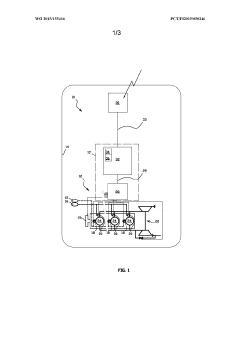
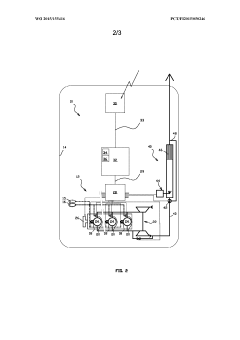
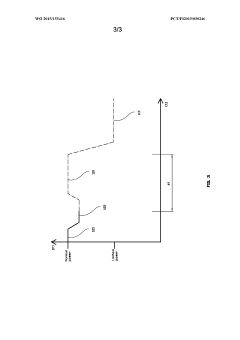
Method of operating a power system in a marine vessel and a supervising arrangement for a power system in a marine vessel
PatentWO2015155416A1
Innovation
- A method and arrangement that utilize a restriction information map to determine operational restrictions based on the vessel's location, allowing for intensified supervision and data logging to ensure compliance with emission regulations, with the option to temporarily lift restrictions in emergency situations.
Environmental Compliance and Emissions Standards
The marine industry faces increasingly stringent environmental regulations worldwide, necessitating significant adaptations in engine technology. The LT1 engine, originally designed for automotive applications, requires substantial modifications to meet marine emissions standards when repurposed for watercraft use. These standards vary by region but generally focus on reducing nitrogen oxides (NOx), particulate matter (PM), sulfur oxides (SOx), and carbon dioxide (CO2) emissions.
In the United States, the Environmental Protection Agency (EPA) has established tiered emissions standards specifically for marine engines. Tier 3 and Tier 4 regulations, which apply to most recreational marine vessels using LT1 engines, mandate significant reductions in NOx and PM emissions compared to previous generations. The California Air Resources Board (CARB) imposes even stricter requirements, often preceding federal regulations by several years.
European regulations, governed by the Recreational Craft Directive (RCD) and various EU emissions standards, present another compliance challenge for LT1 marine applications. These standards typically align with or exceed EPA requirements, particularly regarding carbon emissions and particulate matter. The International Maritime Organization (IMO) further complicates compliance with its MARPOL Annex VI regulations, which primarily affect commercial vessels but increasingly influence recreational marine engine design.
To achieve compliance, LT1 marine engines typically incorporate several key technologies. Catalytic converters, specifically designed for marine environments, reduce NOx and hydrocarbon emissions. Closed-loop electronic fuel injection systems optimize air-fuel ratios across various operating conditions, significantly reducing emissions while maintaining performance. Advanced engine control modules (ECMs) with specialized marine calibration provide precise timing and fuel delivery adjustments to minimize environmental impact.
Exhaust gas recirculation (EGR) systems represent another critical compliance technology, reducing combustion temperatures to limit NOx formation. However, these systems must be carefully designed for marine applications to prevent corrosion and maintain reliability in high-humidity environments. Additionally, specialized cooling systems prevent overheating while ensuring emissions control systems operate within optimal temperature ranges.
Compliance testing for marine LT1 engines follows standardized protocols that differ significantly from automotive procedures. These tests evaluate emissions across various operational modes, including idle, cruise, and full-throttle conditions, while accounting for the unique load patterns of marine applications. Manufacturers must certify their engines meet applicable standards before market introduction, with potential for in-use testing throughout the product lifecycle.
In the United States, the Environmental Protection Agency (EPA) has established tiered emissions standards specifically for marine engines. Tier 3 and Tier 4 regulations, which apply to most recreational marine vessels using LT1 engines, mandate significant reductions in NOx and PM emissions compared to previous generations. The California Air Resources Board (CARB) imposes even stricter requirements, often preceding federal regulations by several years.
European regulations, governed by the Recreational Craft Directive (RCD) and various EU emissions standards, present another compliance challenge for LT1 marine applications. These standards typically align with or exceed EPA requirements, particularly regarding carbon emissions and particulate matter. The International Maritime Organization (IMO) further complicates compliance with its MARPOL Annex VI regulations, which primarily affect commercial vessels but increasingly influence recreational marine engine design.
To achieve compliance, LT1 marine engines typically incorporate several key technologies. Catalytic converters, specifically designed for marine environments, reduce NOx and hydrocarbon emissions. Closed-loop electronic fuel injection systems optimize air-fuel ratios across various operating conditions, significantly reducing emissions while maintaining performance. Advanced engine control modules (ECMs) with specialized marine calibration provide precise timing and fuel delivery adjustments to minimize environmental impact.
Exhaust gas recirculation (EGR) systems represent another critical compliance technology, reducing combustion temperatures to limit NOx formation. However, these systems must be carefully designed for marine applications to prevent corrosion and maintain reliability in high-humidity environments. Additionally, specialized cooling systems prevent overheating while ensuring emissions control systems operate within optimal temperature ranges.
Compliance testing for marine LT1 engines follows standardized protocols that differ significantly from automotive procedures. These tests evaluate emissions across various operational modes, including idle, cruise, and full-throttle conditions, while accounting for the unique load patterns of marine applications. Manufacturers must certify their engines meet applicable standards before market introduction, with potential for in-use testing throughout the product lifecycle.
Performance Benchmarking and Testing Methodologies
Effective performance benchmarking of LT1 engines in marine applications requires standardized testing methodologies that account for the unique challenges of maritime environments. The marine industry has established several key performance metrics that are critical for evaluating these engines, including power output, fuel efficiency, emissions compliance, durability under salt exposure, and operational stability in varying sea conditions.
Standard testing protocols typically involve both laboratory dynamometer testing and real-world on-water trials. Dynamometer testing provides controlled conditions for measuring torque curves, horsepower ratings, and fuel consumption rates across different RPM ranges. These tests often follow modified versions of SAE J1995 or ISO 8665 standards, adapted specifically for marine applications to account for factors such as water-cooled exhaust systems and marine transmission losses.
On-water performance testing introduces variables that cannot be replicated in laboratory settings. These tests evaluate acceleration, planing capabilities, and cruising efficiency under actual load conditions. The industry standard typically requires testing across three sea states (calm, moderate, and rough) to ensure consistent performance in varying maritime conditions. Data logging systems capture real-time performance metrics including GPS speed, fuel flow rates, engine temperature, and exhaust gas composition.
Comparative benchmarking against competitor engines represents another critical dimension of LT1 marine engine evaluation. This process typically involves back-to-back testing under identical conditions, with standardized propeller specifications and hull configurations to ensure valid comparisons. The resulting performance indices are normalized for displacement and power-to-weight ratios to provide meaningful competitive analysis.
Endurance testing methodologies have evolved significantly for marine LT1 applications, with standard protocols now requiring minimum 500-hour continuous operation cycles that alternate between idle, cruise, and full-throttle conditions. These tests incorporate saltwater spray exposure and humidity cycling to simulate harsh marine environments. Failure analysis during these tests provides critical data for reliability engineering and warranty program development.
Emissions testing for marine LT1 engines follows specialized protocols that differ from automotive applications, with particular focus on NOx and hydrocarbon emissions at low speeds and during trolling operations. The EPA's marine engine testing procedures (40 CFR Part 1045) provide the regulatory framework for these evaluations, with additional requirements for noise level testing according to SAE J2005 standards to ensure compliance with harbor noise regulations.
Standard testing protocols typically involve both laboratory dynamometer testing and real-world on-water trials. Dynamometer testing provides controlled conditions for measuring torque curves, horsepower ratings, and fuel consumption rates across different RPM ranges. These tests often follow modified versions of SAE J1995 or ISO 8665 standards, adapted specifically for marine applications to account for factors such as water-cooled exhaust systems and marine transmission losses.
On-water performance testing introduces variables that cannot be replicated in laboratory settings. These tests evaluate acceleration, planing capabilities, and cruising efficiency under actual load conditions. The industry standard typically requires testing across three sea states (calm, moderate, and rough) to ensure consistent performance in varying maritime conditions. Data logging systems capture real-time performance metrics including GPS speed, fuel flow rates, engine temperature, and exhaust gas composition.
Comparative benchmarking against competitor engines represents another critical dimension of LT1 marine engine evaluation. This process typically involves back-to-back testing under identical conditions, with standardized propeller specifications and hull configurations to ensure valid comparisons. The resulting performance indices are normalized for displacement and power-to-weight ratios to provide meaningful competitive analysis.
Endurance testing methodologies have evolved significantly for marine LT1 applications, with standard protocols now requiring minimum 500-hour continuous operation cycles that alternate between idle, cruise, and full-throttle conditions. These tests incorporate saltwater spray exposure and humidity cycling to simulate harsh marine environments. Failure analysis during these tests provides critical data for reliability engineering and warranty program development.
Emissions testing for marine LT1 engines follows specialized protocols that differ from automotive applications, with particular focus on NOx and hydrocarbon emissions at low speeds and during trolling operations. The EPA's marine engine testing procedures (40 CFR Part 1045) provide the regulatory framework for these evaluations, with additional requirements for noise level testing according to SAE J2005 standards to ensure compliance with harbor noise regulations.
Unlock deeper insights with PatSnap Eureka Quick Research — get a full tech report to explore trends and direct your research. Try now!
Generate Your Research Report Instantly with AI Agent
Supercharge your innovation with PatSnap Eureka AI Agent Platform!