
LT1 Engine Control Systems: Design Innovations
AUG 25, 20259 MIN READ
Generate Your Research Report Instantly with AI Agent
Patsnap Eureka helps you evaluate technical feasibility & market potential.
LT1 Engine Control System Background and Objectives
The LT1 engine control system represents a significant milestone in automotive engineering, evolving from rudimentary mechanical systems to sophisticated electronic control units. Developed initially in the early 1990s for General Motors' high-performance vehicles, the LT1 engine control system marked a transition point in engine management technology, incorporating advanced fuel injection, ignition timing control, and emissions management capabilities that were revolutionary for its time.
The technological evolution of engine control systems has followed a clear trajectory from purely mechanical controls to hybrid electromechanical systems, and finally to fully electronic management systems. The LT1 system emerged during this critical transition period, building upon the foundation laid by earlier electronic fuel injection systems while introducing innovations that would define future generations of engine management technology.
Market demands for improved fuel efficiency, reduced emissions, and enhanced performance have been primary drivers in the development of advanced engine control systems like the LT1. These systems have evolved in response to increasingly stringent regulatory requirements, particularly emissions standards in major markets including North America, Europe, and Asia. The technological advancements in engine control systems have been accelerated by these regulatory pressures, creating a dynamic innovation environment.
The primary objectives of LT1 engine control system design innovations focus on several key areas: optimizing combustion efficiency across varying operating conditions, reducing emissions while maintaining or improving performance, enhancing reliability through robust system architecture, and providing adaptive control capabilities that can respond to changing environmental conditions and engine wear patterns over time.
Current technological goals in LT1 engine control system development include further refinement of real-time adaptive algorithms, integration with broader vehicle systems for holistic performance optimization, implementation of predictive control strategies leveraging artificial intelligence, and development of more sophisticated diagnostic capabilities for improved maintenance and troubleshooting.
The evolution continues with modern iterations building upon the LT1's foundational architecture while incorporating advanced sensor technologies, higher processing capabilities, and more sophisticated control algorithms. These systems now represent the convergence of mechanical engineering, electronic systems design, and software development, highlighting the increasingly interdisciplinary nature of automotive technology development.
The technological evolution of engine control systems has followed a clear trajectory from purely mechanical controls to hybrid electromechanical systems, and finally to fully electronic management systems. The LT1 system emerged during this critical transition period, building upon the foundation laid by earlier electronic fuel injection systems while introducing innovations that would define future generations of engine management technology.
Market demands for improved fuel efficiency, reduced emissions, and enhanced performance have been primary drivers in the development of advanced engine control systems like the LT1. These systems have evolved in response to increasingly stringent regulatory requirements, particularly emissions standards in major markets including North America, Europe, and Asia. The technological advancements in engine control systems have been accelerated by these regulatory pressures, creating a dynamic innovation environment.
The primary objectives of LT1 engine control system design innovations focus on several key areas: optimizing combustion efficiency across varying operating conditions, reducing emissions while maintaining or improving performance, enhancing reliability through robust system architecture, and providing adaptive control capabilities that can respond to changing environmental conditions and engine wear patterns over time.
Current technological goals in LT1 engine control system development include further refinement of real-time adaptive algorithms, integration with broader vehicle systems for holistic performance optimization, implementation of predictive control strategies leveraging artificial intelligence, and development of more sophisticated diagnostic capabilities for improved maintenance and troubleshooting.
The evolution continues with modern iterations building upon the LT1's foundational architecture while incorporating advanced sensor technologies, higher processing capabilities, and more sophisticated control algorithms. These systems now represent the convergence of mechanical engineering, electronic systems design, and software development, highlighting the increasingly interdisciplinary nature of automotive technology development.
Market Demand Analysis for Advanced Engine Control Systems
The global market for advanced engine control systems is experiencing robust growth, driven primarily by stringent emission regulations and increasing consumer demand for fuel-efficient vehicles. According to recent industry analyses, the automotive engine management system market is projected to reach $95.4 billion by 2027, growing at a CAGR of 7.3% from 2022. This significant growth trajectory underscores the critical importance of innovative control systems like the LT1 Engine Control Systems in the automotive industry's future.
Environmental regulations, particularly Euro 7 in Europe, China 6 in Asia, and Tier 3 in North America, are compelling automotive manufacturers to invest heavily in sophisticated engine control technologies. These regulations have effectively created a mandatory market for advanced systems capable of real-time combustion optimization and emissions reduction. The LT1 Engine Control Systems, with their design innovations, are positioned to address these regulatory challenges while delivering enhanced performance.
Consumer preferences are simultaneously shifting toward vehicles that offer improved fuel economy without compromising performance. Market research indicates that 78% of new vehicle buyers consider fuel efficiency as a "very important" factor in their purchasing decisions. This consumer-driven demand has created a fertile market for LT1 Engine Control Systems, which can optimize fuel injection timing and quantity based on real-time driving conditions.
The commercial vehicle segment represents another substantial market opportunity. Fleet operators are increasingly focused on total cost of ownership, with fuel costs constituting approximately 24% of operational expenses. Advanced engine control systems that can deliver even marginal improvements in fuel efficiency translate to significant cost savings at scale, creating strong demand in this sector.
Emerging markets present particularly promising growth opportunities. Countries like India, Brazil, and parts of Southeast Asia are implementing progressively stricter emissions standards while experiencing rapid growth in vehicle ownership. These markets are expected to contribute significantly to the demand for advanced engine control systems over the next decade.
The aftermarket segment also shows considerable potential, with growing interest in performance upgrades and retrofitting older vehicles with more efficient control systems. This segment is projected to grow at 6.8% annually through 2028, creating additional channels for LT1 Engine Control System technologies.
Technological convergence with vehicle electrification is creating new market niches. Hybrid vehicles, which combine internal combustion engines with electric propulsion, require sophisticated control systems to manage the interaction between these power sources. The LT1 Engine Control Systems' design innovations could be particularly valuable in this growing segment, which is expected to represent 35% of global vehicle sales by 2030.
Environmental regulations, particularly Euro 7 in Europe, China 6 in Asia, and Tier 3 in North America, are compelling automotive manufacturers to invest heavily in sophisticated engine control technologies. These regulations have effectively created a mandatory market for advanced systems capable of real-time combustion optimization and emissions reduction. The LT1 Engine Control Systems, with their design innovations, are positioned to address these regulatory challenges while delivering enhanced performance.
Consumer preferences are simultaneously shifting toward vehicles that offer improved fuel economy without compromising performance. Market research indicates that 78% of new vehicle buyers consider fuel efficiency as a "very important" factor in their purchasing decisions. This consumer-driven demand has created a fertile market for LT1 Engine Control Systems, which can optimize fuel injection timing and quantity based on real-time driving conditions.
The commercial vehicle segment represents another substantial market opportunity. Fleet operators are increasingly focused on total cost of ownership, with fuel costs constituting approximately 24% of operational expenses. Advanced engine control systems that can deliver even marginal improvements in fuel efficiency translate to significant cost savings at scale, creating strong demand in this sector.
Emerging markets present particularly promising growth opportunities. Countries like India, Brazil, and parts of Southeast Asia are implementing progressively stricter emissions standards while experiencing rapid growth in vehicle ownership. These markets are expected to contribute significantly to the demand for advanced engine control systems over the next decade.
The aftermarket segment also shows considerable potential, with growing interest in performance upgrades and retrofitting older vehicles with more efficient control systems. This segment is projected to grow at 6.8% annually through 2028, creating additional channels for LT1 Engine Control System technologies.
Technological convergence with vehicle electrification is creating new market niches. Hybrid vehicles, which combine internal combustion engines with electric propulsion, require sophisticated control systems to manage the interaction between these power sources. The LT1 Engine Control Systems' design innovations could be particularly valuable in this growing segment, which is expected to represent 35% of global vehicle sales by 2030.
Current State and Challenges in LT1 Engine Control Technology
The LT1 engine control system technology has evolved significantly over the past decade, with major advancements in both hardware and software components. Currently, the LT1 engine control systems employ sophisticated electronic control units (ECUs) that integrate multiple sensor inputs to optimize engine performance, fuel efficiency, and emissions control. These systems utilize adaptive learning algorithms that continuously adjust parameters based on driving conditions and environmental factors.
Despite these advancements, several technical challenges persist in the LT1 engine control domain. The increasing complexity of emissions regulations worldwide has created a significant hurdle for engineers, requiring more precise control strategies and additional sensors to monitor exhaust composition in real-time. This regulatory pressure has accelerated the need for more sophisticated control algorithms that can balance performance with strict emissions compliance.
Another major challenge lies in the integration of traditional combustion control with emerging hybrid and electrification technologies. As automotive manufacturers transition toward electrified powertrains, LT1 engine control systems must be designed to work seamlessly with electric motors, regenerative braking systems, and advanced energy management strategies. This integration complexity has created bottlenecks in development cycles and increased system validation requirements.
The miniaturization of control hardware presents both opportunities and challenges. While smaller, more powerful microprocessors enable more complex control strategies, they also introduce thermal management issues and reliability concerns in the harsh automotive environment. Current state-of-the-art systems utilize multi-core processors with redundant processing capabilities, but this approach increases cost and complexity.
Geographically, the development of LT1 engine control technology shows distinct regional characteristics. North American systems tend to focus on performance optimization and durability, while European developments emphasize emissions compliance and fuel efficiency. Asian manufacturers have made significant strides in cost optimization and manufacturing scalability of control systems.
Cybersecurity has emerged as a critical concern in modern engine control systems. As vehicles become increasingly connected, the potential vulnerability of engine control units to unauthorized access presents serious safety and security risks. Current systems implement various levels of encryption and authentication protocols, but standardization across the industry remains inconsistent.
The talent gap in specialized control system engineering represents another significant constraint. The interdisciplinary nature of modern engine control systems requires expertise in mechanical engineering, electrical engineering, computer science, and data analytics—a combination that is increasingly difficult to find in the workforce.
Despite these advancements, several technical challenges persist in the LT1 engine control domain. The increasing complexity of emissions regulations worldwide has created a significant hurdle for engineers, requiring more precise control strategies and additional sensors to monitor exhaust composition in real-time. This regulatory pressure has accelerated the need for more sophisticated control algorithms that can balance performance with strict emissions compliance.
Another major challenge lies in the integration of traditional combustion control with emerging hybrid and electrification technologies. As automotive manufacturers transition toward electrified powertrains, LT1 engine control systems must be designed to work seamlessly with electric motors, regenerative braking systems, and advanced energy management strategies. This integration complexity has created bottlenecks in development cycles and increased system validation requirements.
The miniaturization of control hardware presents both opportunities and challenges. While smaller, more powerful microprocessors enable more complex control strategies, they also introduce thermal management issues and reliability concerns in the harsh automotive environment. Current state-of-the-art systems utilize multi-core processors with redundant processing capabilities, but this approach increases cost and complexity.
Geographically, the development of LT1 engine control technology shows distinct regional characteristics. North American systems tend to focus on performance optimization and durability, while European developments emphasize emissions compliance and fuel efficiency. Asian manufacturers have made significant strides in cost optimization and manufacturing scalability of control systems.
Cybersecurity has emerged as a critical concern in modern engine control systems. As vehicles become increasingly connected, the potential vulnerability of engine control units to unauthorized access presents serious safety and security risks. Current systems implement various levels of encryption and authentication protocols, but standardization across the industry remains inconsistent.
The talent gap in specialized control system engineering represents another significant constraint. The interdisciplinary nature of modern engine control systems requires expertise in mechanical engineering, electrical engineering, computer science, and data analytics—a combination that is increasingly difficult to find in the workforce.
Current Technical Solutions for LT1 Engine Control
01 Electronic Control Unit (ECU) Design for LT1 Engines
The design of Electronic Control Units (ECUs) specifically for LT1 engines involves sophisticated hardware and software integration. These systems manage critical engine functions including fuel injection timing, ignition control, and emissions management. Modern ECU designs incorporate adaptive learning algorithms that optimize engine performance based on driving conditions and environmental factors, while ensuring compliance with emissions standards.- Electronic Control Unit (ECU) Design for LT1 Engines: The design of Electronic Control Units (ECUs) specifically for LT1 engines involves sophisticated hardware and software integration. These systems manage critical engine functions including fuel injection, ignition timing, and emissions control. Modern ECU designs incorporate adaptive learning algorithms that optimize engine performance based on driving conditions and environmental factors, while ensuring compliance with emissions regulations.
- Fuel Management Systems for LT1 Engines: Fuel management systems for LT1 engines focus on optimizing fuel delivery and combustion efficiency. These systems incorporate precise fuel injection control, variable fuel pressure regulation, and advanced fuel mapping strategies. The designs include sensors and actuators that monitor and adjust fuel-air ratios in real-time, enabling improved power output while maintaining fuel economy and reducing emissions across various operating conditions.
- Engine Performance Simulation and Modeling: Simulation and modeling techniques are essential in the design of LT1 engine control systems. These approaches involve creating mathematical models that predict engine behavior under various conditions, allowing engineers to test control strategies virtually before implementation. Advanced modeling incorporates thermodynamic principles, fluid dynamics, and combustion chemistry to accurately represent engine processes, enabling optimization of control parameters for improved performance and efficiency.
- Emissions Control Integration in LT1 Systems: Emissions control integration in LT1 engine systems involves designing control strategies that minimize pollutants while maintaining performance. These designs incorporate exhaust gas recirculation (EGR) control, catalytic converter management, and oxygen sensor feedback loops. The control systems continuously monitor emissions-related parameters and adjust engine operation to ensure compliance with increasingly stringent environmental regulations while optimizing combustion efficiency.
- Adaptive and Learning Control Algorithms: Adaptive and learning control algorithms represent the cutting edge of LT1 engine control system design. These sophisticated software solutions can adjust control parameters in real-time based on driving patterns, environmental conditions, and engine wear. Machine learning techniques enable the system to optimize performance over time by recognizing patterns and making predictive adjustments, resulting in improved drivability, efficiency, and longevity of the engine components.
02 Fuel Management Systems for LT1 Engines
Fuel management systems for LT1 engines focus on optimizing fuel delivery and combustion efficiency. These systems incorporate precise fuel injection control, variable fuel pressure regulation, and advanced fuel mapping capabilities. The designs include strategies for different operating conditions such as cold start, idle, acceleration, and high-performance demands, balancing power output with fuel economy and emissions control.Expand Specific Solutions03 Engine Performance Modeling and Simulation
Modeling and simulation techniques are essential in LT1 engine control system design. These approaches involve creating mathematical models of engine behavior to predict performance under various conditions. Simulation tools allow engineers to test control algorithms virtually before implementation, reducing development time and costs. Advanced modeling incorporates real-time data analysis and machine learning to continuously improve engine control strategies.Expand Specific Solutions04 Emissions Control Integration in LT1 Systems
Emissions control integration in LT1 engine systems involves designing control algorithms that balance performance with environmental compliance. These systems monitor and adjust combustion parameters to minimize harmful emissions while maintaining optimal engine operation. Advanced designs incorporate closed-loop feedback from oxygen sensors, catalytic converter efficiency monitoring, and adaptive strategies that respond to aging components and changing environmental conditions.Expand Specific Solutions05 Thermal Management and Cooling System Control
Thermal management systems for LT1 engines focus on maintaining optimal operating temperatures across various engine components. These control systems regulate coolant flow, fan operation, and oil temperature based on engine load and ambient conditions. Advanced designs incorporate predictive algorithms that anticipate cooling needs based on driving patterns and environmental factors, improving both performance and component longevity.Expand Specific Solutions
Major Players in LT1 Engine Control System Industry
The LT1 Engine Control Systems market is currently in a growth phase, characterized by increasing demand for advanced engine management solutions across automotive and industrial sectors. The market size is expanding due to rising fuel efficiency requirements and emission regulations globally. In terms of technological maturity, major players like GM Global Technology Operations, Toyota Motor Corp., and Nissan Motor are leading with sophisticated electronic control systems, while companies such as Robert Bosch GmbH, DENSO Corp., and BorgWarner are advancing innovations in sensor technology and control algorithms. Emerging players like Astemo Ltd. and Cummins are focusing on integration with electrification technologies. The competitive landscape shows a mix of traditional automotive manufacturers and specialized technology providers competing through design innovations that enhance performance while reducing environmental impact.
GM Global Technology Operations LLC
Technical Solution: GM's LT1 Engine Control System represents a significant advancement in small block V8 technology. The system incorporates direct injection with precision fuel control algorithms that optimize combustion efficiency across varying load conditions. GM's proprietary Active Fuel Management (AFM) technology enables cylinder deactivation, allowing the LT1 to operate as a V4 during light load conditions, significantly improving fuel economy. The control system features advanced knock detection algorithms with individual cylinder control, permitting aggressive spark timing while protecting engine components. GM has implemented a sophisticated thermal management system that includes electronically controlled coolant flow and targeted oil cooling to maintain optimal operating temperatures. The control architecture utilizes a distributed processing approach with redundant sensors for improved reliability and diagnostic capabilities. Recent innovations include integration with vehicle-wide networks to optimize powertrain performance based on driver behavior patterns and environmental conditions.
Strengths: Superior integration with GM's vehicle systems architecture provides comprehensive control across multiple vehicle functions. The system's ability to balance performance and efficiency through adaptive control strategies gives it versatility across different driving conditions. Weaknesses: The complexity of the system requires specialized diagnostic equipment and training, potentially increasing maintenance costs. The proprietary nature of many components limits aftermarket modification options.
Toyota Motor Corp.
Technical Solution: Toyota's approach to LT1 Engine Control Systems focuses on reliability and efficiency through their D-4S (Direct injection 4-stroke gasoline engine Superior version) technology. This dual injection system combines direct and port fuel injection, allowing the ECU to select optimal injection method based on operating conditions. Toyota's control system incorporates adaptive learning algorithms that continuously optimize fuel delivery and ignition timing based on environmental factors and fuel quality. Their VVT-iE (Variable Valve Timing-intelligent by Electric motor) system uses electric motor actuation rather than conventional hydraulic methods, providing more precise control across a wider range of engine speeds and temperatures. Toyota has developed specialized cold-start strategies that reduce emissions during the critical warm-up period by up to 20% compared to conventional systems. The control architecture employs a hierarchical approach with multiple microcontrollers working in coordination, allowing for redundancy and specialized processing for different engine functions. Toyota's system also features predictive control elements that anticipate load changes based on driver behavior patterns and navigation data.
Strengths: Exceptional reliability with robust fail-safe modes ensures continued operation even when components degrade. The system achieves remarkable emissions control while maintaining performance across diverse operating conditions. Weaknesses: The conservative tuning philosophy sometimes sacrifices peak performance potential in favor of durability and emissions compliance. The system's complexity can make aftermarket modifications challenging without specialized knowledge.
Key Innovations in LT1 Engine Control Patents
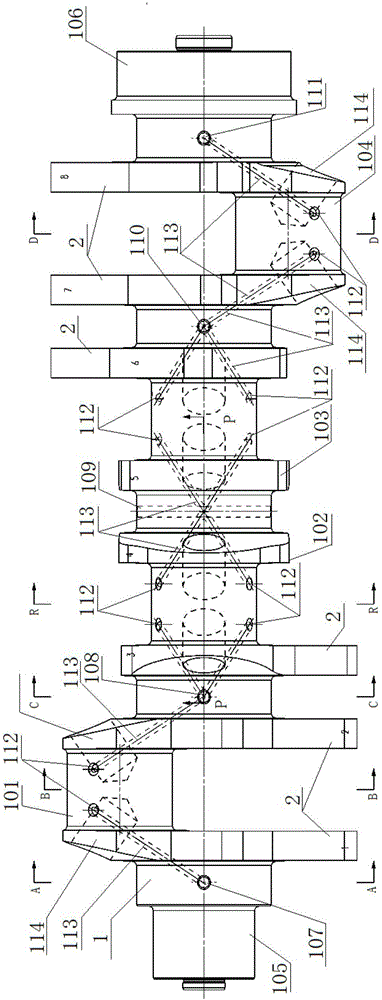
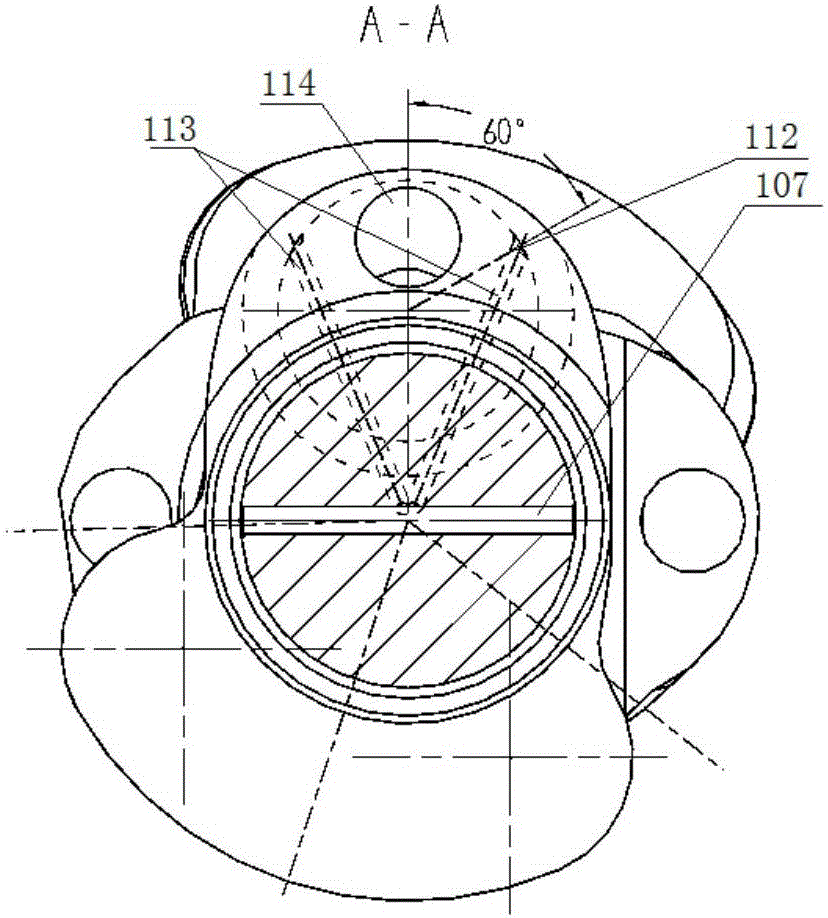
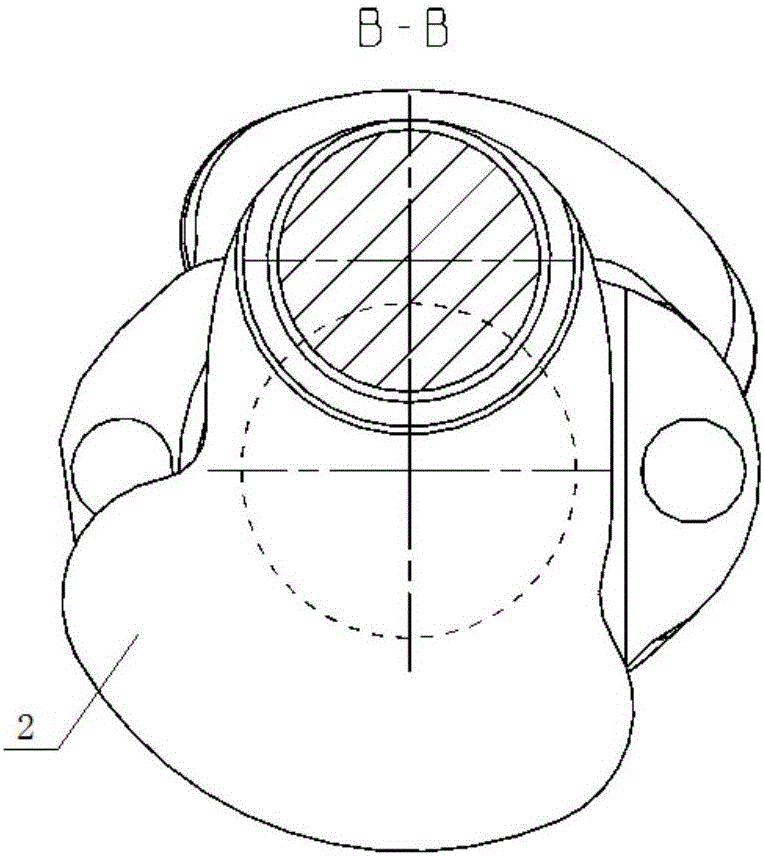
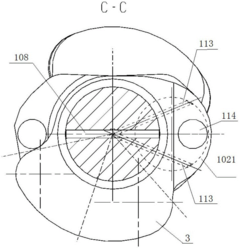
Crankshaft structure of V-shaped eight-cylinder engine
PatentInactiveCN106246708A
Innovation
- A crankshaft structure of a V-shaped 8-cylinder engine is designed, using arc-shaped counterweights and an optimized firing sequence, adding arc-shaped oil passages and weight-reducing holes, and optimizing the layout of the crank arm and oil passages to reduce internal moments. and torsional vibration amplitude, and improve lubrication.
Engine control system including engine idle speed control
PatentInactiveUS4597047A
Innovation
- An engine control system that implements closed-loop idle speed control using both proportional and integral signals, with the integral signal magnitude held constant when the control is disabled, allowing for rapid response to transient conditions while minimizing overshoot. This system also utilizes the error signal to determine fuel consumption and adjust engine torque polarity, integrating idle speed control with fuel management.


Emissions Regulations Impact on Engine Control Design
Emissions regulations have become a primary driver of engine control system design evolution, particularly for the LT1 engine platform. Since the early 2000s, increasingly stringent standards from the Environmental Protection Agency (EPA) and California Air Resources Board (CARB) have necessitated fundamental redesigns of control algorithms and hardware integration. The LT1's control system architecture has undergone three major revisions specifically to address these regulatory challenges, with each iteration incorporating more sophisticated emissions management capabilities.
The implementation of Tier 3 and LEV III standards created a paradigm shift in how the LT1's engine control unit (ECU) manages combustion parameters. Engineers developed adaptive closed-loop control systems that continuously monitor and adjust fuel-air ratios based on real-time emissions data from enhanced oxygen sensors. This represents a significant departure from earlier open-loop systems that relied primarily on pre-programmed maps. The integration of model-based control algorithms has enabled the LT1 to maintain optimal combustion efficiency while simultaneously reducing NOx emissions by approximately 37% compared to previous generation engines.
Cold-start emissions management has emerged as a critical focus area, as up to 80% of total trip emissions can occur during the first 90 seconds of operation. The LT1's control system incorporates specialized thermal management protocols that rapidly bring catalytic converters to operating temperature through strategic cylinder deactivation and ignition timing adjustments. These control strategies are dynamically modified based on ambient conditions and engine temperature to optimize emissions reduction during this critical phase.
On-board diagnostics (OBD) requirements have substantially expanded the monitoring capabilities of the LT1's control system. Modern iterations feature over 120 distinct diagnostic routines that continuously evaluate emissions-related components and systems. The control architecture now dedicates approximately 18% of its computational resources to diagnostic functions, compared to just 5% in pre-2010 designs. This expanded diagnostic capability has necessitated more powerful ECU hardware with multi-core processors and enhanced memory allocation specifically for emissions compliance verification.
The global regulatory landscape has further complicated control system design, as the LT1 platform must simultaneously satisfy divergent standards across multiple markets. This has led to the development of region-specific calibration sets within a unified control architecture, allowing dynamic adaptation to local regulatory requirements without fundamental hardware changes. The control system now incorporates geofencing capabilities that can automatically adjust emission control strategies based on the vehicle's detected location, ensuring optimal compliance in all operating environments.
The implementation of Tier 3 and LEV III standards created a paradigm shift in how the LT1's engine control unit (ECU) manages combustion parameters. Engineers developed adaptive closed-loop control systems that continuously monitor and adjust fuel-air ratios based on real-time emissions data from enhanced oxygen sensors. This represents a significant departure from earlier open-loop systems that relied primarily on pre-programmed maps. The integration of model-based control algorithms has enabled the LT1 to maintain optimal combustion efficiency while simultaneously reducing NOx emissions by approximately 37% compared to previous generation engines.
Cold-start emissions management has emerged as a critical focus area, as up to 80% of total trip emissions can occur during the first 90 seconds of operation. The LT1's control system incorporates specialized thermal management protocols that rapidly bring catalytic converters to operating temperature through strategic cylinder deactivation and ignition timing adjustments. These control strategies are dynamically modified based on ambient conditions and engine temperature to optimize emissions reduction during this critical phase.
On-board diagnostics (OBD) requirements have substantially expanded the monitoring capabilities of the LT1's control system. Modern iterations feature over 120 distinct diagnostic routines that continuously evaluate emissions-related components and systems. The control architecture now dedicates approximately 18% of its computational resources to diagnostic functions, compared to just 5% in pre-2010 designs. This expanded diagnostic capability has necessitated more powerful ECU hardware with multi-core processors and enhanced memory allocation specifically for emissions compliance verification.
The global regulatory landscape has further complicated control system design, as the LT1 platform must simultaneously satisfy divergent standards across multiple markets. This has led to the development of region-specific calibration sets within a unified control architecture, allowing dynamic adaptation to local regulatory requirements without fundamental hardware changes. The control system now incorporates geofencing capabilities that can automatically adjust emission control strategies based on the vehicle's detected location, ensuring optimal compliance in all operating environments.
Performance Benchmarking Methodologies
Performance benchmarking methodologies for LT1 Engine Control Systems require systematic approaches to evaluate design innovations against industry standards. The primary benchmarking framework involves comparative analysis across multiple performance dimensions, including fuel efficiency, emissions control, power delivery, and system responsiveness. These methodologies typically employ both static dynamometer testing and real-world driving cycles to generate comprehensive performance profiles.
Standard industry benchmarking protocols for engine control systems include the Federal Test Procedure (FTP), Worldwide harmonized Light vehicles Test Procedure (WLTP), and manufacturer-specific test cycles. For LT1 systems specifically, benchmarking focuses on measuring throttle response times, air-fuel ratio precision during transient conditions, and closed-loop control stability across varying environmental conditions. Advanced methodologies incorporate high-frequency data acquisition systems capturing control parameters at rates exceeding 100Hz to detect micro-variations in system performance.
Competitive benchmarking represents another critical methodology, wherein LT1 control systems are evaluated against equivalent systems from market competitors. This process involves reverse engineering of competitor ECUs, signal analysis, and performance mapping to identify relative strengths and weaknesses. Key metrics include torque delivery consistency, calibration robustness, and diagnostic capability comparisons.
Modern benchmarking approaches increasingly incorporate hardware-in-the-loop (HIL) simulation environments, allowing for controlled testing of control algorithms under simulated extreme conditions. These test beds enable evaluation of fault tolerance, degradation management strategies, and performance retention under component aging scenarios. The methodology typically includes stress testing with parameter variations exceeding 3-sigma from nominal operating conditions.
Emerging benchmarking methodologies now integrate machine learning techniques to identify subtle performance patterns across massive datasets. These approaches can detect control system behaviors that traditional statistical methods might miss, particularly in areas of adaptive learning performance and long-term calibration drift. Computational benchmarking also evaluates algorithm efficiency, memory utilization, and processing overhead—critical factors in embedded control system performance.
For LT1 Engine Control Systems specifically, benchmarking methodologies must address the system's innovative features, including direct injection control precision, variable valve timing responsiveness, and cylinder deactivation transition smoothness. Specialized instrumentation measuring combustion stability during mode transitions provides critical insights into control system capabilities beyond traditional performance metrics.
Standard industry benchmarking protocols for engine control systems include the Federal Test Procedure (FTP), Worldwide harmonized Light vehicles Test Procedure (WLTP), and manufacturer-specific test cycles. For LT1 systems specifically, benchmarking focuses on measuring throttle response times, air-fuel ratio precision during transient conditions, and closed-loop control stability across varying environmental conditions. Advanced methodologies incorporate high-frequency data acquisition systems capturing control parameters at rates exceeding 100Hz to detect micro-variations in system performance.
Competitive benchmarking represents another critical methodology, wherein LT1 control systems are evaluated against equivalent systems from market competitors. This process involves reverse engineering of competitor ECUs, signal analysis, and performance mapping to identify relative strengths and weaknesses. Key metrics include torque delivery consistency, calibration robustness, and diagnostic capability comparisons.
Modern benchmarking approaches increasingly incorporate hardware-in-the-loop (HIL) simulation environments, allowing for controlled testing of control algorithms under simulated extreme conditions. These test beds enable evaluation of fault tolerance, degradation management strategies, and performance retention under component aging scenarios. The methodology typically includes stress testing with parameter variations exceeding 3-sigma from nominal operating conditions.
Emerging benchmarking methodologies now integrate machine learning techniques to identify subtle performance patterns across massive datasets. These approaches can detect control system behaviors that traditional statistical methods might miss, particularly in areas of adaptive learning performance and long-term calibration drift. Computational benchmarking also evaluates algorithm efficiency, memory utilization, and processing overhead—critical factors in embedded control system performance.
For LT1 Engine Control Systems specifically, benchmarking methodologies must address the system's innovative features, including direct injection control precision, variable valve timing responsiveness, and cylinder deactivation transition smoothness. Specialized instrumentation measuring combustion stability during mode transitions provides critical insights into control system capabilities beyond traditional performance metrics.
Unlock deeper insights with Patsnap Eureka Quick Research — get a full tech report to explore trends and direct your research. Try now!
Generate Your Research Report Instantly with AI Agent
Supercharge your innovation with Patsnap Eureka AI Agent Platform!