

Improving Signal Accuracy in Optical Backplanes for Distributed IoT Systems
MAY 20, 20269 MIN READ
Generate Your Research Report Instantly with AI Agent
PatSnap Eureka helps you evaluate technical feasibility & market potential.
Optical Backplane Signal Accuracy Background and Objectives
Optical backplanes have emerged as a critical infrastructure component in modern distributed IoT systems, representing a fundamental shift from traditional electrical interconnects to photonic-based communication architectures. The evolution of optical backplane technology traces back to the early 2000s when telecommunications equipment manufacturers first recognized the limitations of copper-based backplanes in handling increasing bandwidth demands. Initial implementations focused primarily on point-to-point optical connections, but the technology has progressively advanced to support complex multi-node architectures essential for contemporary IoT deployments.
The technological progression has been driven by the exponential growth in IoT device proliferation and the corresponding demand for high-speed, low-latency data transmission. Early optical backplane systems achieved data rates of 10 Gbps per channel, while current implementations routinely support 100 Gbps and beyond. This evolution has been accompanied by significant improvements in signal integrity, power efficiency, and system reliability, making optical backplanes increasingly viable for distributed IoT applications.
Current market trends indicate a strong shift toward edge computing architectures, where distributed IoT systems require robust, high-performance interconnect solutions capable of handling diverse data types and traffic patterns. The integration of artificial intelligence and machine learning algorithms at the edge has further intensified the need for optical backplanes that can maintain signal accuracy across varying operational conditions and network topologies.
The primary technical objective centers on achieving sub-nanosecond timing precision across distributed nodes while maintaining bit error rates below 10^-12. This level of performance is essential for supporting real-time IoT applications such as autonomous vehicle coordination, industrial automation, and smart grid management. Additionally, the technology must demonstrate scalability to accommodate networks spanning hundreds of nodes without significant signal degradation.
Environmental resilience represents another critical objective, as distributed IoT systems often operate in challenging conditions including temperature variations, electromagnetic interference, and mechanical vibrations. The optical backplane architecture must maintain signal accuracy across these diverse operational environments while providing consistent performance over extended operational lifespans exceeding ten years.
Power efficiency optimization constitutes a fundamental goal, particularly given the distributed nature of IoT deployments where energy consumption directly impacts system sustainability and operational costs. The target specification involves achieving signal transmission with power consumption below 5 watts per 100 Gbps channel while maintaining the required accuracy standards.
The technological progression has been driven by the exponential growth in IoT device proliferation and the corresponding demand for high-speed, low-latency data transmission. Early optical backplane systems achieved data rates of 10 Gbps per channel, while current implementations routinely support 100 Gbps and beyond. This evolution has been accompanied by significant improvements in signal integrity, power efficiency, and system reliability, making optical backplanes increasingly viable for distributed IoT applications.
Current market trends indicate a strong shift toward edge computing architectures, where distributed IoT systems require robust, high-performance interconnect solutions capable of handling diverse data types and traffic patterns. The integration of artificial intelligence and machine learning algorithms at the edge has further intensified the need for optical backplanes that can maintain signal accuracy across varying operational conditions and network topologies.
The primary technical objective centers on achieving sub-nanosecond timing precision across distributed nodes while maintaining bit error rates below 10^-12. This level of performance is essential for supporting real-time IoT applications such as autonomous vehicle coordination, industrial automation, and smart grid management. Additionally, the technology must demonstrate scalability to accommodate networks spanning hundreds of nodes without significant signal degradation.
Environmental resilience represents another critical objective, as distributed IoT systems often operate in challenging conditions including temperature variations, electromagnetic interference, and mechanical vibrations. The optical backplane architecture must maintain signal accuracy across these diverse operational environments while providing consistent performance over extended operational lifespans exceeding ten years.
Power efficiency optimization constitutes a fundamental goal, particularly given the distributed nature of IoT deployments where energy consumption directly impacts system sustainability and operational costs. The target specification involves achieving signal transmission with power consumption below 5 watts per 100 Gbps channel while maintaining the required accuracy standards.
Market Demand for High-Performance Distributed IoT Systems
The global distributed IoT systems market is experiencing unprecedented growth driven by digital transformation initiatives across industries. Manufacturing sectors are increasingly adopting Industrial IoT (IIoT) solutions to enable predictive maintenance, real-time monitoring, and automated quality control systems. These applications demand ultra-reliable communication networks capable of handling massive data volumes with minimal latency, creating substantial demand for high-performance optical backplane technologies.
Smart city initiatives represent another significant growth driver, encompassing intelligent transportation systems, environmental monitoring networks, and public safety infrastructure. These deployments require robust distributed architectures that can seamlessly integrate thousands of sensors and actuators across vast geographical areas. The reliability and accuracy of signal transmission in such systems directly impact public services and safety outcomes.
Healthcare IoT applications are expanding rapidly, particularly in remote patient monitoring and telemedicine platforms. These systems require guaranteed signal integrity for critical health data transmission, where communication failures could have life-threatening consequences. The stringent regulatory requirements in healthcare further amplify the need for proven high-performance communication solutions.
Edge computing proliferation is fundamentally reshaping IoT architecture requirements. As processing capabilities migrate closer to data sources, distributed systems must support increasingly complex inter-node communications. This trend necessitates optical backplanes capable of maintaining signal fidelity across diverse environmental conditions and varying distances.
The automotive industry's transition toward connected and autonomous vehicles creates additional market pressure. Vehicle-to-everything communication systems require distributed IoT networks with exceptional reliability and real-time responsiveness. Signal accuracy becomes paramount when supporting safety-critical applications such as collision avoidance and autonomous navigation systems.
Enterprise adoption of IoT-enabled supply chain management and asset tracking solutions continues accelerating. These applications often span multiple facilities and geographic regions, requiring distributed architectures that maintain consistent performance across varied operational environments. The economic impact of communication failures in such systems drives strong demand for proven optical backplane technologies that ensure reliable signal transmission.
Smart city initiatives represent another significant growth driver, encompassing intelligent transportation systems, environmental monitoring networks, and public safety infrastructure. These deployments require robust distributed architectures that can seamlessly integrate thousands of sensors and actuators across vast geographical areas. The reliability and accuracy of signal transmission in such systems directly impact public services and safety outcomes.
Healthcare IoT applications are expanding rapidly, particularly in remote patient monitoring and telemedicine platforms. These systems require guaranteed signal integrity for critical health data transmission, where communication failures could have life-threatening consequences. The stringent regulatory requirements in healthcare further amplify the need for proven high-performance communication solutions.
Edge computing proliferation is fundamentally reshaping IoT architecture requirements. As processing capabilities migrate closer to data sources, distributed systems must support increasingly complex inter-node communications. This trend necessitates optical backplanes capable of maintaining signal fidelity across diverse environmental conditions and varying distances.
The automotive industry's transition toward connected and autonomous vehicles creates additional market pressure. Vehicle-to-everything communication systems require distributed IoT networks with exceptional reliability and real-time responsiveness. Signal accuracy becomes paramount when supporting safety-critical applications such as collision avoidance and autonomous navigation systems.
Enterprise adoption of IoT-enabled supply chain management and asset tracking solutions continues accelerating. These applications often span multiple facilities and geographic regions, requiring distributed architectures that maintain consistent performance across varied operational environments. The economic impact of communication failures in such systems drives strong demand for proven optical backplane technologies that ensure reliable signal transmission.
Current Signal Integrity Challenges in Optical Backplanes
Optical backplanes in distributed IoT systems face significant signal integrity challenges that directly impact system performance and reliability. The primary concern stems from signal degradation over transmission distances, where optical signals experience attenuation, dispersion, and noise accumulation. These phenomena become particularly pronounced in high-density IoT deployments where multiple optical channels operate simultaneously within confined backplane architectures.
Crosstalk interference represents a critical challenge in optical backplanes, occurring when signals from adjacent optical channels interfere with each other. This interference manifests through both electrical and optical coupling mechanisms, leading to signal distortion and reduced signal-to-noise ratios. The problem intensifies as IoT systems demand higher data rates and increased channel density to accommodate growing device populations and data throughput requirements.
Temperature variations pose another substantial challenge for optical backplane signal integrity. IoT systems often operate in diverse environmental conditions, causing thermal fluctuations that affect optical component performance. These temperature changes alter the refractive indices of optical materials, shift wavelength characteristics of laser sources, and modify the responsivity of photodetectors, ultimately degrading signal accuracy and system stability.
Connector reliability and optical alignment issues significantly impact signal integrity in distributed IoT optical backplanes. Mechanical vibrations, thermal cycling, and aging effects can cause misalignment between optical components, resulting in increased insertion losses and reflection-induced signal distortions. These alignment variations are particularly problematic in field-deployed IoT systems where maintenance access is limited.
Power budget limitations further constrain optical backplane performance in IoT applications. The need for low-power operation conflicts with requirements for maintaining adequate optical signal strength across the transmission path. This challenge is compounded by the necessity to support multiple optical channels while minimizing overall system power consumption, creating trade-offs between signal quality and energy efficiency.
Wavelength stability and spectral management present additional complexity in multi-channel optical backplane systems. Wavelength drift in laser sources, caused by temperature variations and aging, can lead to channel interference and reduced signal discrimination. The challenge becomes more severe as systems scale to accommodate larger numbers of distributed IoT devices requiring simultaneous optical communication channels.
Crosstalk interference represents a critical challenge in optical backplanes, occurring when signals from adjacent optical channels interfere with each other. This interference manifests through both electrical and optical coupling mechanisms, leading to signal distortion and reduced signal-to-noise ratios. The problem intensifies as IoT systems demand higher data rates and increased channel density to accommodate growing device populations and data throughput requirements.
Temperature variations pose another substantial challenge for optical backplane signal integrity. IoT systems often operate in diverse environmental conditions, causing thermal fluctuations that affect optical component performance. These temperature changes alter the refractive indices of optical materials, shift wavelength characteristics of laser sources, and modify the responsivity of photodetectors, ultimately degrading signal accuracy and system stability.
Connector reliability and optical alignment issues significantly impact signal integrity in distributed IoT optical backplanes. Mechanical vibrations, thermal cycling, and aging effects can cause misalignment between optical components, resulting in increased insertion losses and reflection-induced signal distortions. These alignment variations are particularly problematic in field-deployed IoT systems where maintenance access is limited.
Power budget limitations further constrain optical backplane performance in IoT applications. The need for low-power operation conflicts with requirements for maintaining adequate optical signal strength across the transmission path. This challenge is compounded by the necessity to support multiple optical channels while minimizing overall system power consumption, creating trade-offs between signal quality and energy efficiency.
Wavelength stability and spectral management present additional complexity in multi-channel optical backplane systems. Wavelength drift in laser sources, caused by temperature variations and aging, can lead to channel interference and reduced signal discrimination. The challenge becomes more severe as systems scale to accommodate larger numbers of distributed IoT devices requiring simultaneous optical communication channels.
Existing Signal Enhancement Solutions for Optical Backplanes
01 Signal transmission and routing optimization in optical backplanes
Technologies for optimizing signal transmission paths and routing mechanisms in optical backplane systems to minimize signal degradation and improve overall accuracy. These approaches focus on advanced routing algorithms, path selection methods, and transmission optimization techniques that ensure signals maintain their integrity throughout the optical backplane infrastructure.- Signal transmission and routing optimization in optical backplanes: Technologies focused on optimizing signal transmission paths and routing mechanisms within optical backplane systems to minimize signal degradation and improve overall accuracy. These approaches include advanced switching architectures, optimized waveguide designs, and intelligent routing algorithms that ensure signals maintain their integrity throughout the transmission process.
- Optical coupling and alignment mechanisms for enhanced signal fidelity: Methods and systems for achieving precise optical coupling and alignment between components in backplane architectures to maintain signal accuracy. These solutions address mechanical tolerances, thermal variations, and manufacturing inconsistencies that can affect optical signal quality through improved connector designs and alignment techniques.
- Signal processing and error correction techniques: Advanced signal processing algorithms and error correction mechanisms specifically designed for optical backplane systems to detect, correct, and compensate for signal distortions and errors. These techniques include digital signal processing, forward error correction, and adaptive equalization methods that enhance signal accuracy and reliability.
- Crosstalk mitigation and interference reduction: Technologies aimed at reducing crosstalk and electromagnetic interference in optical backplane systems to maintain signal accuracy. These solutions involve shielding techniques, channel isolation methods, and design strategies that minimize unwanted signal interactions between adjacent optical channels or electrical components.
- Monitoring and calibration systems for signal quality assurance: Integrated monitoring and calibration systems that continuously assess and maintain signal accuracy in optical backplane environments. These systems provide real-time feedback on signal quality parameters, automatic calibration capabilities, and diagnostic functions to ensure optimal performance and early detection of potential issues.
02 Optical signal processing and conditioning circuits
Implementation of specialized signal processing and conditioning circuits designed to enhance signal quality and accuracy in optical backplane systems. These circuits include amplification, filtering, and signal restoration mechanisms that compensate for various forms of signal distortion and noise that can occur during optical transmission.Expand Specific Solutions03 Error detection and correction mechanisms
Advanced error detection and correction systems specifically designed for optical backplane applications to identify and correct signal errors in real-time. These mechanisms employ various coding schemes, redundancy techniques, and error correction algorithms to maintain high signal accuracy and data integrity throughout the transmission process.Expand Specific Solutions04 Optical interconnect and coupling technologies
Specialized optical interconnect and coupling solutions that ensure precise signal transfer between different components in optical backplane systems. These technologies focus on minimizing coupling losses, reducing crosstalk, and maintaining signal fidelity at interconnection points through advanced connector designs and coupling mechanisms.Expand Specific Solutions05 Signal monitoring and calibration systems
Comprehensive monitoring and calibration systems that continuously assess and adjust signal parameters to maintain optimal accuracy in optical backplane operations. These systems include real-time signal quality monitoring, automatic calibration procedures, and adaptive compensation mechanisms that respond to environmental changes and system variations.Expand Specific Solutions
Key Players in Optical Backplane and IoT Infrastructure
The optical backplane technology for distributed IoT systems represents a rapidly evolving market driven by increasing demand for high-speed, low-latency connectivity in IoT deployments. The industry is in a growth phase, with significant investments from telecommunications giants like NTT Docomo, Qualcomm, and Huawei Technologies, alongside infrastructure leaders such as State Grid Corp. of China and China Mobile Communications Group. Technology maturity varies across players, with established semiconductor companies like GlobalFoundries, NXP USA, and Sharp Corp providing foundational components, while Nokia Solutions & Networks, Ericsson, and ZTE Corp advance system-level integration. Research institutions including University of Electronic Science & Technology of China and Beijing University of Posts & Telecommunications contribute to fundamental breakthroughs in signal processing and optical communication protocols, indicating strong academic-industry collaboration driving innovation forward.
QUALCOMM, Inc.
Technical Solution: Qualcomm focuses on RF-optical hybrid backplane solutions that combine their expertise in wireless communications with optical signal processing. Their technology integrates advanced modulation schemes and signal conditioning circuits to improve accuracy in optical backplanes for IoT applications. The company's approach emphasizes low-power optical transceivers with built-in digital signal processing capabilities, enabling efficient signal transmission in distributed IoT networks. Their solution incorporates machine learning algorithms for predictive signal optimization and adaptive compensation for environmental variations affecting optical signal quality.
Strengths: Strong RF expertise, energy-efficient designs optimized for IoT devices. Weaknesses: Limited pure optical solutions, primarily focused on mobile applications.
Nokia Technologies Oy
Technical Solution: Nokia has developed optical backplane technologies focusing on coherent optical transmission systems with advanced digital signal processing for distributed IoT applications. Their solution employs sophisticated error correction algorithms and adaptive equalization techniques to maintain signal accuracy across long-distance optical connections. The company's approach integrates software-defined networking capabilities with optical backplanes, enabling dynamic reconfiguration and optimization of signal paths in distributed IoT systems. Their technology includes real-time performance monitoring and automated fault detection mechanisms specifically designed for mission-critical IoT deployments.
Strengths: Extensive telecom network experience, robust fault tolerance mechanisms. Weaknesses: Higher complexity in deployment, requires specialized technical expertise for maintenance.
Core Innovations in Optical Signal Processing Technologies
Coupler assembly for an optical backplane system
PatentInactiveUS7062132B2
Innovation
- A coupler assembly with movable optical elements, such as MEMS mirrors or flexible optical fibers, that can automatically adjust to maintain optical coupling by tracking changes in the relative position of the circuit pack and backplane, accommodating initial misalignment and subsequent deformations without operator intervention.
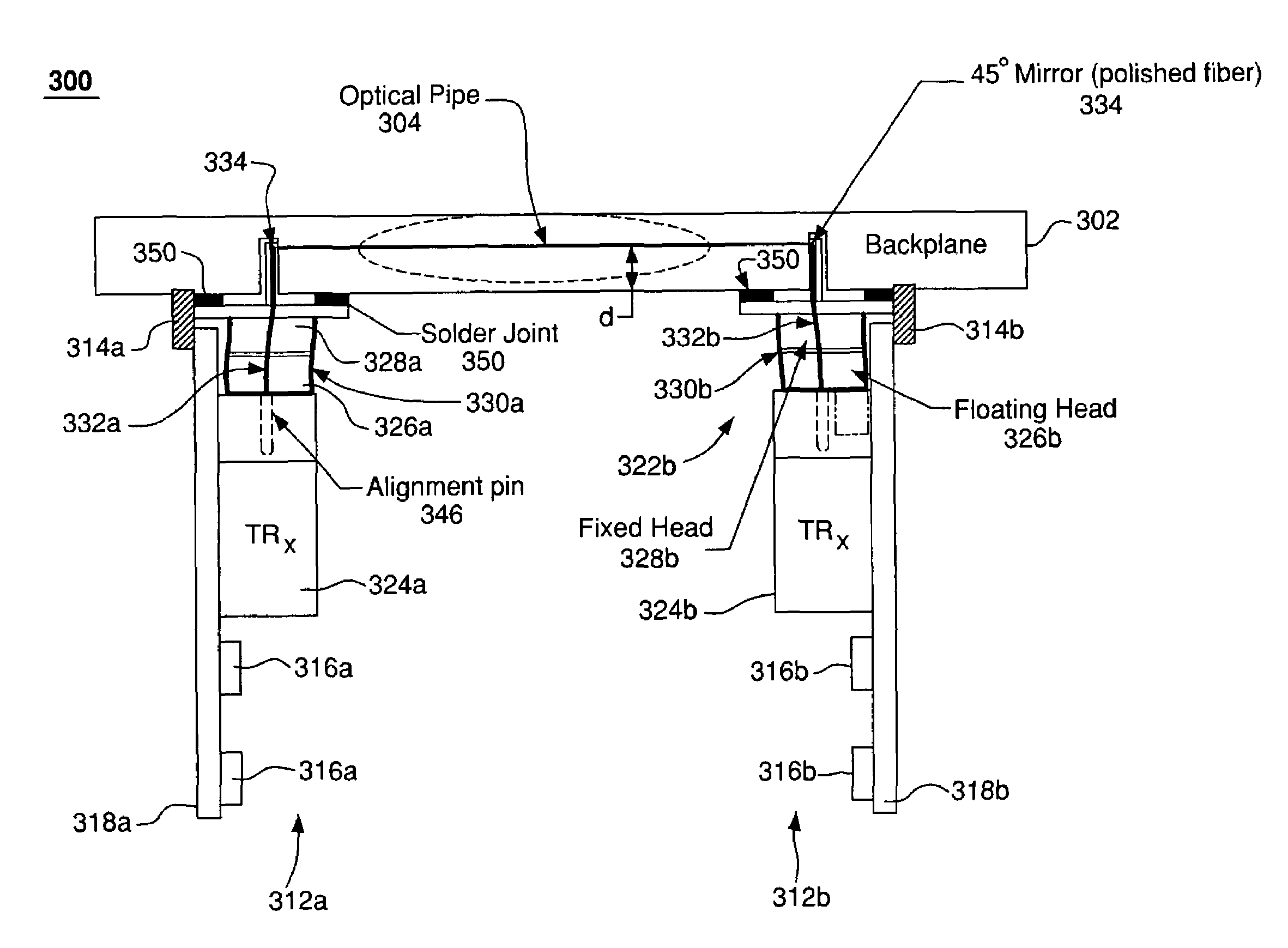
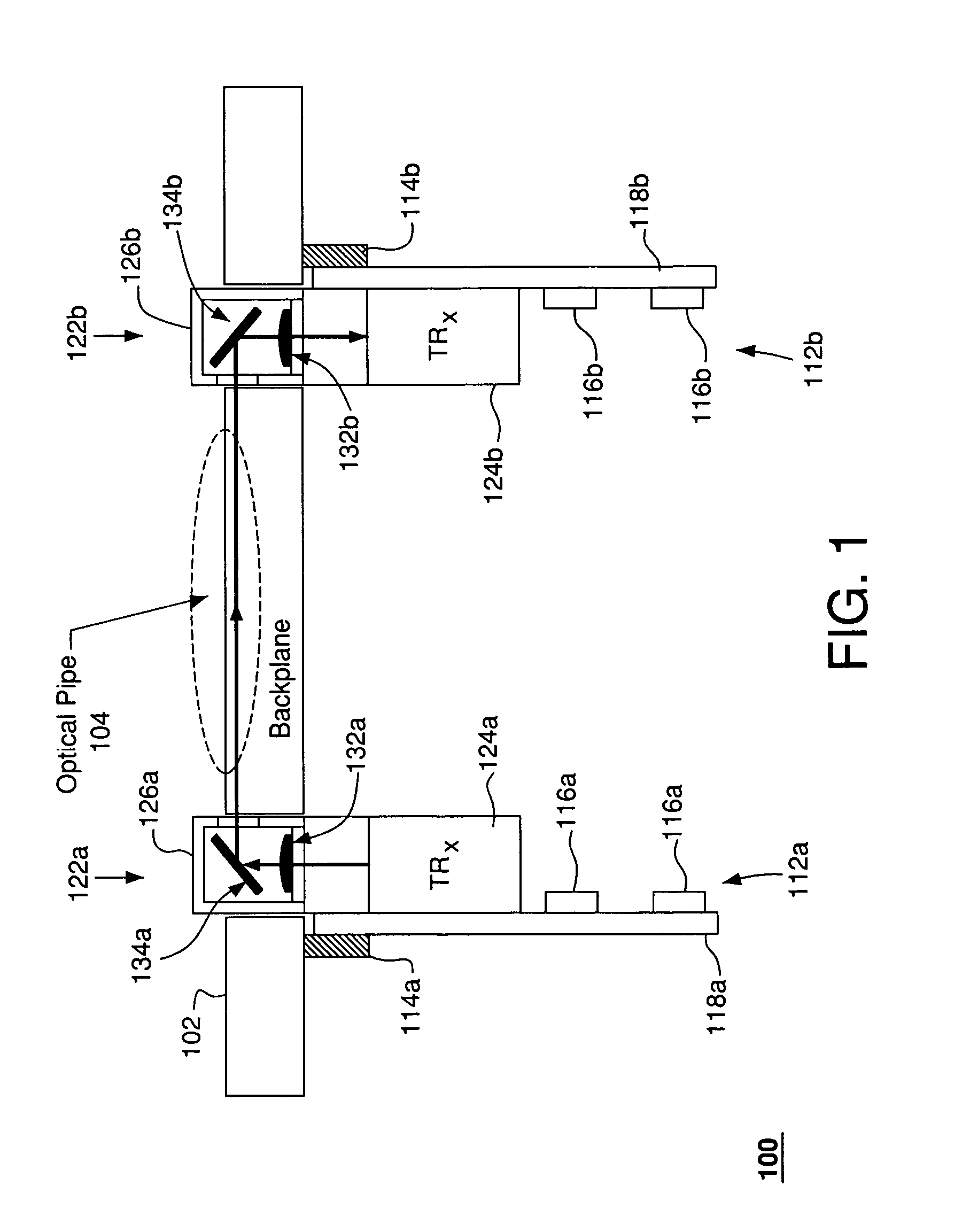
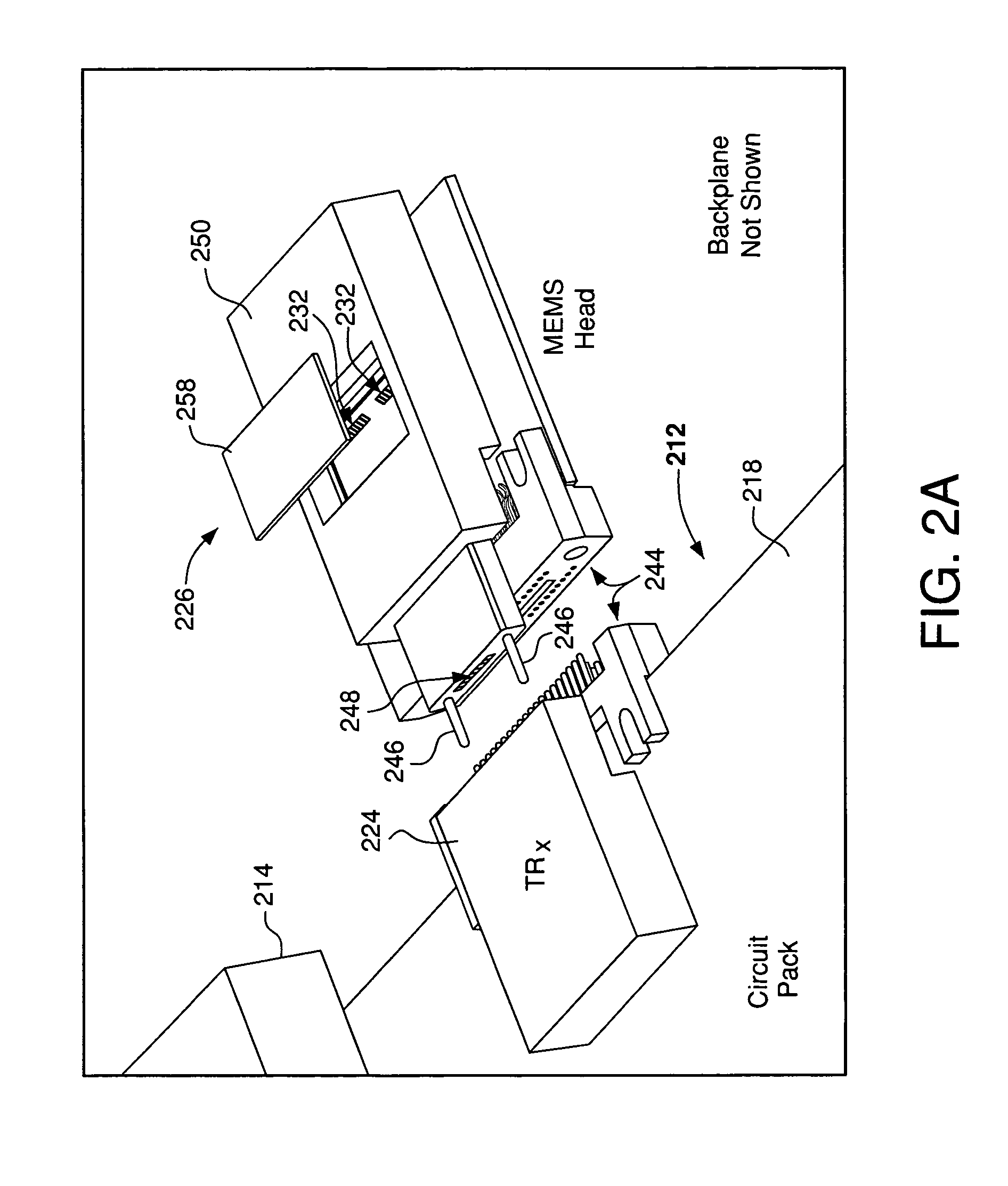

Optical backplane having at least one optical relay element for relaying light from an input facet of the backplane to an output facet of the backplane
PatentInactiveUS20120175535A1
Innovation
- An optical backplane design featuring a slab with parallel side walls and optical relay elements that reflect and refocus light beams to prevent divergence, allowing for more relaxed alignment tolerances and longer lengths without compromising signal integrity.


Standards and Protocols for Optical IoT Networks
The standardization landscape for optical IoT networks is currently fragmented, with multiple organizations developing complementary yet sometimes overlapping protocols. The IEEE 802.11bb standard for Light Fidelity (Li-Fi) communications represents a significant milestone in optical wireless networking, providing a foundation for short-range optical data transmission in IoT environments. This standard defines physical layer specifications and medium access control protocols specifically designed for visible light communication systems.
The ITU-T G.9991 standard addresses optical wireless communication for indoor applications, establishing guidelines for power management, interference mitigation, and quality of service parameters. These specifications are particularly relevant for distributed IoT systems where optical backplanes must maintain consistent signal accuracy across varying environmental conditions. The standard incorporates adaptive modulation schemes and error correction mechanisms that directly impact signal fidelity in optical transmission systems.
Protocol stack development for optical IoT networks involves multiple layers of standardization efforts. The Internet Engineering Task Force (IETF) has initiated working groups focused on routing protocols optimized for optical mesh networks, addressing the unique characteristics of light-based communication channels. These protocols must account for line-of-sight requirements, atmospheric interference, and the inherent differences between optical and radio frequency propagation characteristics.
Emerging standards from the Optical Internetworking Forum (OIF) specifically target high-speed optical interconnects in data center and distributed computing environments. The OIF's Common Electrical Interface specifications provide crucial guidelines for optical-electrical conversion processes that directly affect signal accuracy in backplane implementations. These standards define timing requirements, jitter specifications, and signal integrity parameters essential for maintaining data fidelity across optical transmission paths.
The integration of these various standards presents both opportunities and challenges for optical backplane designers. Interoperability requirements demand careful consideration of protocol translation mechanisms and standardized interfaces that can accommodate multiple optical communication standards within a single distributed IoT system architecture.
The ITU-T G.9991 standard addresses optical wireless communication for indoor applications, establishing guidelines for power management, interference mitigation, and quality of service parameters. These specifications are particularly relevant for distributed IoT systems where optical backplanes must maintain consistent signal accuracy across varying environmental conditions. The standard incorporates adaptive modulation schemes and error correction mechanisms that directly impact signal fidelity in optical transmission systems.
Protocol stack development for optical IoT networks involves multiple layers of standardization efforts. The Internet Engineering Task Force (IETF) has initiated working groups focused on routing protocols optimized for optical mesh networks, addressing the unique characteristics of light-based communication channels. These protocols must account for line-of-sight requirements, atmospheric interference, and the inherent differences between optical and radio frequency propagation characteristics.
Emerging standards from the Optical Internetworking Forum (OIF) specifically target high-speed optical interconnects in data center and distributed computing environments. The OIF's Common Electrical Interface specifications provide crucial guidelines for optical-electrical conversion processes that directly affect signal accuracy in backplane implementations. These standards define timing requirements, jitter specifications, and signal integrity parameters essential for maintaining data fidelity across optical transmission paths.
The integration of these various standards presents both opportunities and challenges for optical backplane designers. Interoperability requirements demand careful consideration of protocol translation mechanisms and standardized interfaces that can accommodate multiple optical communication standards within a single distributed IoT system architecture.
Thermal Management in High-Density Optical Systems
Thermal management represents one of the most critical challenges in high-density optical systems, particularly when deployed in distributed IoT environments where space constraints and power limitations are paramount. As optical backplanes integrate increasing numbers of transceivers, wavelength division multiplexers, and signal processing components within compact form factors, heat generation becomes a significant factor affecting signal accuracy and system reliability.
The primary thermal challenges stem from the concentrated placement of active optical components, including laser diodes, photodetectors, and electronic driver circuits. These components generate substantial heat during operation, with laser diodes being particularly sensitive to temperature variations. Even minor temperature fluctuations can cause wavelength drift in laser sources, leading to crosstalk between channels and degraded signal-to-noise ratios in dense wavelength division multiplexing systems.
Effective thermal management strategies must address both passive and active cooling mechanisms. Passive approaches include advanced heat sink designs utilizing materials with high thermal conductivity, such as copper-diamond composites or graphene-enhanced thermal interface materials. These solutions focus on efficient heat dissipation pathways from critical components to larger thermal masses or external cooling surfaces.
Active thermal management involves sophisticated temperature control systems incorporating thermoelectric coolers, micro-channel liquid cooling, and intelligent thermal monitoring. Modern implementations utilize distributed temperature sensors throughout the optical backplane, enabling real-time thermal mapping and predictive temperature control algorithms that anticipate thermal hotspots before they impact signal performance.
The integration of thermal management with optical system design requires careful consideration of thermal expansion coefficients and mechanical stress effects on optical alignments. Advanced packaging techniques employ low-stress mounting methods and thermally compensated optical paths to maintain signal accuracy across operating temperature ranges.
Emerging approaches include the development of thermally-aware routing algorithms that dynamically adjust signal paths based on real-time thermal conditions, and the implementation of temperature-compensated optical components that maintain stable performance characteristics across wider temperature ranges, ultimately ensuring consistent signal accuracy in demanding distributed IoT deployment scenarios.
The primary thermal challenges stem from the concentrated placement of active optical components, including laser diodes, photodetectors, and electronic driver circuits. These components generate substantial heat during operation, with laser diodes being particularly sensitive to temperature variations. Even minor temperature fluctuations can cause wavelength drift in laser sources, leading to crosstalk between channels and degraded signal-to-noise ratios in dense wavelength division multiplexing systems.
Effective thermal management strategies must address both passive and active cooling mechanisms. Passive approaches include advanced heat sink designs utilizing materials with high thermal conductivity, such as copper-diamond composites or graphene-enhanced thermal interface materials. These solutions focus on efficient heat dissipation pathways from critical components to larger thermal masses or external cooling surfaces.
Active thermal management involves sophisticated temperature control systems incorporating thermoelectric coolers, micro-channel liquid cooling, and intelligent thermal monitoring. Modern implementations utilize distributed temperature sensors throughout the optical backplane, enabling real-time thermal mapping and predictive temperature control algorithms that anticipate thermal hotspots before they impact signal performance.
The integration of thermal management with optical system design requires careful consideration of thermal expansion coefficients and mechanical stress effects on optical alignments. Advanced packaging techniques employ low-stress mounting methods and thermally compensated optical paths to maintain signal accuracy across operating temperature ranges.
Emerging approaches include the development of thermally-aware routing algorithms that dynamically adjust signal paths based on real-time thermal conditions, and the implementation of temperature-compensated optical components that maintain stable performance characteristics across wider temperature ranges, ultimately ensuring consistent signal accuracy in demanding distributed IoT deployment scenarios.
Unlock deeper insights with PatSnap Eureka Quick Research — get a full tech report to explore trends and direct your research. Try now!
Generate Your Research Report Instantly with AI Agent
Supercharge your innovation with PatSnap Eureka AI Agent Platform!