

Optimizing Power Distribution in Optical Backplanes for Hybrid Systems
MAY 20, 20269 MIN READ
Generate Your Research Report Instantly with AI Agent
PatSnap Eureka helps you evaluate technical feasibility & market potential.
Optical Backplane Power Distribution Background and Objectives
Optical backplane technology has emerged as a critical infrastructure component in modern high-performance computing and telecommunications systems, representing a fundamental shift from traditional electrical interconnects to photonic solutions. This evolution addresses the growing bandwidth demands and power efficiency requirements of contemporary data centers, supercomputers, and hybrid computing architectures that integrate diverse processing elements including CPUs, GPUs, FPGAs, and specialized accelerators.
The historical development of optical backplanes traces back to the early 2000s when researchers first recognized the limitations of copper-based interconnects in high-speed data transmission. Initial implementations focused primarily on signal integrity and bandwidth optimization, with power distribution remaining largely dependent on conventional electrical systems. However, as system complexity increased and power densities reached critical thresholds, the integration of optical and electrical power management became increasingly important.
Modern hybrid systems present unique challenges in power distribution optimization due to their heterogeneous nature. These systems typically combine multiple processing architectures with varying power requirements, thermal characteristics, and operational profiles. The optical backplane serves not only as a high-speed data conduit but also as a platform for sophisticated power management, requiring careful coordination between optical signal transmission and electrical power delivery networks.
The primary technical objectives in optimizing power distribution for optical backplanes center on achieving maximum power efficiency while maintaining signal integrity across all optical channels. This involves developing advanced power management algorithms that can dynamically adjust power allocation based on real-time system demands, thermal conditions, and optical component characteristics. Key performance targets include minimizing power conversion losses, reducing electromagnetic interference between power and optical circuits, and ensuring stable operation across wide temperature ranges.
Another critical objective involves the development of integrated power monitoring and control systems that can provide granular visibility into power consumption patterns across individual optical channels and processing elements. This capability enables predictive power management strategies that can anticipate system demands and optimize power distribution proactively rather than reactively.
The convergence of optical communication and power distribution technologies represents a significant engineering challenge that requires interdisciplinary expertise spanning photonics, power electronics, thermal management, and system-level optimization. Success in this domain will enable next-generation computing systems to achieve unprecedented performance levels while maintaining acceptable power consumption and thermal profiles, ultimately supporting the continued advancement of high-performance computing applications across scientific, commercial, and defense sectors.
The historical development of optical backplanes traces back to the early 2000s when researchers first recognized the limitations of copper-based interconnects in high-speed data transmission. Initial implementations focused primarily on signal integrity and bandwidth optimization, with power distribution remaining largely dependent on conventional electrical systems. However, as system complexity increased and power densities reached critical thresholds, the integration of optical and electrical power management became increasingly important.
Modern hybrid systems present unique challenges in power distribution optimization due to their heterogeneous nature. These systems typically combine multiple processing architectures with varying power requirements, thermal characteristics, and operational profiles. The optical backplane serves not only as a high-speed data conduit but also as a platform for sophisticated power management, requiring careful coordination between optical signal transmission and electrical power delivery networks.
The primary technical objectives in optimizing power distribution for optical backplanes center on achieving maximum power efficiency while maintaining signal integrity across all optical channels. This involves developing advanced power management algorithms that can dynamically adjust power allocation based on real-time system demands, thermal conditions, and optical component characteristics. Key performance targets include minimizing power conversion losses, reducing electromagnetic interference between power and optical circuits, and ensuring stable operation across wide temperature ranges.
Another critical objective involves the development of integrated power monitoring and control systems that can provide granular visibility into power consumption patterns across individual optical channels and processing elements. This capability enables predictive power management strategies that can anticipate system demands and optimize power distribution proactively rather than reactively.
The convergence of optical communication and power distribution technologies represents a significant engineering challenge that requires interdisciplinary expertise spanning photonics, power electronics, thermal management, and system-level optimization. Success in this domain will enable next-generation computing systems to achieve unprecedented performance levels while maintaining acceptable power consumption and thermal profiles, ultimately supporting the continued advancement of high-performance computing applications across scientific, commercial, and defense sectors.
Market Demand for Hybrid System Optical Backplanes
The market demand for hybrid system optical backplanes is experiencing significant growth driven by the convergence of multiple technological trends and industry requirements. Data centers and high-performance computing facilities are increasingly adopting hybrid architectures that combine electronic processing with optical interconnects to overcome bandwidth limitations and power consumption challenges inherent in traditional copper-based systems.
Telecommunications infrastructure modernization represents a major demand driver, particularly with the global rollout of 5G networks and the anticipated transition to 6G technologies. Network equipment manufacturers require optical backplanes capable of handling massive data throughput while maintaining power efficiency and thermal management. The integration of artificial intelligence and machine learning workloads in edge computing environments further amplifies the need for hybrid systems that can process both digital signals and optical data streams efficiently.
Enterprise computing markets are witnessing accelerated adoption of optical backplane technologies as organizations seek to improve server performance and reduce operational costs. Cloud service providers and hyperscale data center operators are particularly focused on solutions that can deliver higher bandwidth density while optimizing power distribution across multiple processing units and optical transceivers within the same chassis.
The automotive industry emergence as a significant market segment reflects the growing complexity of autonomous vehicle systems and advanced driver assistance technologies. These applications demand real-time processing capabilities that hybrid optical backplanes can provide, combining the precision of optical signal processing with the flexibility of electronic control systems.
Industrial automation and manufacturing sectors are increasingly recognizing the value proposition of hybrid optical backplanes for applications requiring high-speed data acquisition, real-time control, and distributed processing capabilities. The ability to integrate optical sensors, electronic controllers, and communication interfaces within a single backplane architecture addresses critical requirements for Industry 4.0 implementations.
Market growth is further supported by the expanding deployment of artificial intelligence accelerators and specialized processing units that benefit from the low-latency, high-bandwidth characteristics of optical interconnects while requiring sophisticated power management capabilities that hybrid architectures can provide.
Telecommunications infrastructure modernization represents a major demand driver, particularly with the global rollout of 5G networks and the anticipated transition to 6G technologies. Network equipment manufacturers require optical backplanes capable of handling massive data throughput while maintaining power efficiency and thermal management. The integration of artificial intelligence and machine learning workloads in edge computing environments further amplifies the need for hybrid systems that can process both digital signals and optical data streams efficiently.
Enterprise computing markets are witnessing accelerated adoption of optical backplane technologies as organizations seek to improve server performance and reduce operational costs. Cloud service providers and hyperscale data center operators are particularly focused on solutions that can deliver higher bandwidth density while optimizing power distribution across multiple processing units and optical transceivers within the same chassis.
The automotive industry emergence as a significant market segment reflects the growing complexity of autonomous vehicle systems and advanced driver assistance technologies. These applications demand real-time processing capabilities that hybrid optical backplanes can provide, combining the precision of optical signal processing with the flexibility of electronic control systems.
Industrial automation and manufacturing sectors are increasingly recognizing the value proposition of hybrid optical backplanes for applications requiring high-speed data acquisition, real-time control, and distributed processing capabilities. The ability to integrate optical sensors, electronic controllers, and communication interfaces within a single backplane architecture addresses critical requirements for Industry 4.0 implementations.
Market growth is further supported by the expanding deployment of artificial intelligence accelerators and specialized processing units that benefit from the low-latency, high-bandwidth characteristics of optical interconnects while requiring sophisticated power management capabilities that hybrid architectures can provide.
Current Power Distribution Challenges in Optical Backplanes
Optical backplanes in hybrid systems face significant power distribution challenges that stem from the fundamental differences between optical and electrical components' power requirements. Traditional electrical backplanes were designed primarily for uniform power delivery to electronic circuits, but the integration of optical transceivers, modulators, and photodetectors introduces complex power consumption patterns that existing infrastructure struggles to accommodate effectively.
The most prominent challenge lies in the substantial power density variations across the backplane. Optical components such as high-speed laser drivers and thermal electric coolers can consume 10-50 watts per channel, creating localized hot spots that exceed the thermal management capabilities of conventional designs. This uneven power distribution leads to thermal gradients that adversely affect optical component performance and reliability, particularly for temperature-sensitive elements like distributed feedback lasers and avalanche photodiodes.
Power supply noise represents another critical constraint in optical backplane systems. Optical transceivers require exceptionally clean power rails, typically demanding supply noise levels below 1% RMS to maintain signal integrity. However, the switching nature of digital circuits on the same backplane generates significant electromagnetic interference and power supply fluctuations. This noise coupling can degrade optical signal quality, increase bit error rates, and compromise overall system performance in high-speed data transmission applications.
The diverse voltage requirements across hybrid systems create additional complexity. While digital processing units typically operate at 1.2V to 3.3V, optical components often require multiple supply voltages ranging from 1.8V to 15V for different functions. Laser bias circuits may need negative voltages, while thermal electric coolers require bidirectional current capability. Managing these varied power domains within a single backplane architecture presents significant design and routing challenges.
Current distribution limitations further compound these issues. High-power optical components demand substantial current delivery, often exceeding 5 amperes per channel. The resistance and inductance of traditional backplane power distribution networks create voltage drops and dynamic impedance effects that can cause supply voltage variations beyond acceptable tolerances. These variations directly impact optical output power stability and wavelength accuracy in dense wavelength division multiplexing systems.
Thermal management emerges as a cascading challenge resulting from inadequate power distribution design. Inefficient power delivery leads to increased resistive losses, generating additional heat that must be dissipated. The confined space within backplane architectures limits cooling options, creating thermal bottlenecks that can trigger thermal runaway conditions in high-power optical components, ultimately leading to system failures and reduced operational lifespans.
The most prominent challenge lies in the substantial power density variations across the backplane. Optical components such as high-speed laser drivers and thermal electric coolers can consume 10-50 watts per channel, creating localized hot spots that exceed the thermal management capabilities of conventional designs. This uneven power distribution leads to thermal gradients that adversely affect optical component performance and reliability, particularly for temperature-sensitive elements like distributed feedback lasers and avalanche photodiodes.
Power supply noise represents another critical constraint in optical backplane systems. Optical transceivers require exceptionally clean power rails, typically demanding supply noise levels below 1% RMS to maintain signal integrity. However, the switching nature of digital circuits on the same backplane generates significant electromagnetic interference and power supply fluctuations. This noise coupling can degrade optical signal quality, increase bit error rates, and compromise overall system performance in high-speed data transmission applications.
The diverse voltage requirements across hybrid systems create additional complexity. While digital processing units typically operate at 1.2V to 3.3V, optical components often require multiple supply voltages ranging from 1.8V to 15V for different functions. Laser bias circuits may need negative voltages, while thermal electric coolers require bidirectional current capability. Managing these varied power domains within a single backplane architecture presents significant design and routing challenges.
Current distribution limitations further compound these issues. High-power optical components demand substantial current delivery, often exceeding 5 amperes per channel. The resistance and inductance of traditional backplane power distribution networks create voltage drops and dynamic impedance effects that can cause supply voltage variations beyond acceptable tolerances. These variations directly impact optical output power stability and wavelength accuracy in dense wavelength division multiplexing systems.
Thermal management emerges as a cascading challenge resulting from inadequate power distribution design. Inefficient power delivery leads to increased resistive losses, generating additional heat that must be dissipated. The confined space within backplane architectures limits cooling options, creating thermal bottlenecks that can trigger thermal runaway conditions in high-power optical components, ultimately leading to system failures and reduced operational lifespans.
Existing Power Optimization Solutions for Optical Backplanes
01 Power distribution architectures for optical backplane systems
Various power distribution architectures have been developed specifically for optical backplane systems to efficiently deliver power to optical components and modules. These architectures focus on optimizing power delivery paths, reducing power losses, and ensuring stable power supply to high-speed optical transceivers and processing units within the backplane infrastructure.- Power distribution architectures for optical backplanes: Various power distribution architectures are designed specifically for optical backplane systems to efficiently deliver power to optical components and transceivers. These architectures include distributed power systems, centralized power management units, and hybrid approaches that combine multiple power delivery methods. The designs focus on minimizing power loss, reducing electromagnetic interference, and ensuring stable power supply to sensitive optical components.
- Power management circuits and control systems: Specialized power management circuits are implemented to control and regulate power distribution within optical backplane systems. These circuits include voltage regulators, current limiters, power sequencing controllers, and monitoring systems that ensure proper power delivery timing and levels. The control systems provide real-time monitoring of power consumption and can dynamically adjust power allocation based on system requirements.
- Power delivery through optical connectors and interfaces: Integration of power delivery capabilities directly into optical connectors and interface systems allows for simultaneous transmission of optical signals and electrical power. These solutions incorporate power contacts within optical connector assemblies, enabling simplified cabling and reduced system complexity. The designs ensure proper isolation between power and optical signal paths to prevent interference.
- Thermal management for power distribution systems: Thermal management solutions are critical for power distribution in optical backplanes to handle heat generated by power conversion and distribution components. These include heat sinks, thermal interface materials, cooling systems, and thermal monitoring circuits. The designs focus on maintaining optimal operating temperatures for both power electronics and optical components to ensure system reliability and performance.
- Modular power distribution and hot-swappable systems: Modular power distribution systems enable hot-swappable operation of optical modules and cards within backplane architectures. These systems include power isolation circuits, inrush current limiting, and power sequencing mechanisms that allow individual modules to be inserted or removed without affecting the operation of other system components. The designs support redundant power paths and fault tolerance capabilities.
02 Power management circuits and control systems
Specialized power management circuits and control systems are implemented to regulate and monitor power distribution in optical backplanes. These systems include voltage regulators, power sequencing circuits, and intelligent power management units that can dynamically adjust power delivery based on system requirements and operational conditions.Expand Specific Solutions03 Integration of power and optical signal routing
Advanced techniques for integrating power distribution with optical signal routing within backplane systems have been developed. These approaches allow for simultaneous transmission of optical data and electrical power through optimized layouts that minimize interference and crosstalk while maximizing system efficiency and reliability.Expand Specific Solutions04 Modular power distribution for scalable optical systems
Modular power distribution solutions enable scalable optical backplane systems that can accommodate varying numbers of optical modules and components. These solutions provide flexible power allocation, hot-swappable capabilities, and standardized power interfaces that support system expansion and maintenance without disrupting operations.Expand Specific Solutions05 Thermal management and power efficiency optimization
Thermal management strategies and power efficiency optimization techniques are crucial for optical backplane power distribution systems. These include heat dissipation methods, power consumption monitoring, and efficiency enhancement circuits that maintain optimal operating temperatures while minimizing power waste in high-density optical communication environments.Expand Specific Solutions
Key Players in Optical Backplane and Power Distribution Industry
The optical backplane power distribution optimization market represents an emerging segment within the broader hybrid systems infrastructure industry, currently in its early-to-mid development stage with significant growth potential driven by increasing demand for high-performance computing and data center efficiency. Market size remains relatively niche but expanding rapidly as enterprises adopt hybrid optical-electrical architectures. Technology maturity varies considerably across key players, with established giants like Intel Corp., IBM, and Cisco Technology leading in foundational technologies, while specialized firms such as Ciena Corp. and Molex LLC focus on optical interconnect solutions. Asian players including NEC Corp., Fujitsu Ltd., and ZTE Corp. contribute advanced manufacturing capabilities, complemented by research institutions like Tsinghua University and UESTC driving innovation. The competitive landscape shows fragmentation between traditional semiconductor companies, optical specialists, and emerging players like VueReal Inc., indicating the technology's transitional phase toward broader commercial adoption.
International Business Machines Corp.
Technical Solution: IBM has developed advanced power distribution solutions for optical backplanes in hybrid systems, focusing on integrated power delivery architectures that combine electrical and optical components. Their approach utilizes silicon photonics technology with embedded power management units that can dynamically adjust power allocation based on optical signal requirements. The system incorporates intelligent power monitoring circuits that track power consumption across multiple optical channels simultaneously, enabling real-time optimization of power distribution efficiency. IBM's solution features modular power distribution networks that can scale from small-scale hybrid systems to large data center deployments, with power conversion efficiencies exceeding 90% and support for multiple voltage domains within a single optical backplane architecture.
Strengths: Strong integration capabilities between electrical and optical domains, high power efficiency, scalable architecture. Weaknesses: Complex implementation requirements, higher initial development costs.
Intel Corp.
Technical Solution: Intel's power distribution optimization for optical backplanes leverages their expertise in silicon photonics and power management integrated circuits. Their solution employs distributed power architecture with localized voltage regulation modules positioned strategically throughout the optical backplane to minimize power losses and electromagnetic interference. The system utilizes advanced power sequencing algorithms that coordinate power delivery with optical signal timing requirements, ensuring stable operation during high-speed data transmission. Intel's approach includes thermal-aware power management that adjusts power distribution based on temperature gradients across the backplane, preventing hotspots that could affect optical component performance. The architecture supports multiple power domains with independent control, enabling selective power gating for unused optical channels to maximize overall system efficiency.
Strengths: Excellent thermal management, proven silicon photonics expertise, comprehensive power domain control. Weaknesses: Limited to Intel ecosystem compatibility, requires specialized design tools.
Core Innovations in Hybrid System Power Distribution
Reconfigurable backplane power distribution
PatentInactiveUS20060232134A1
Innovation
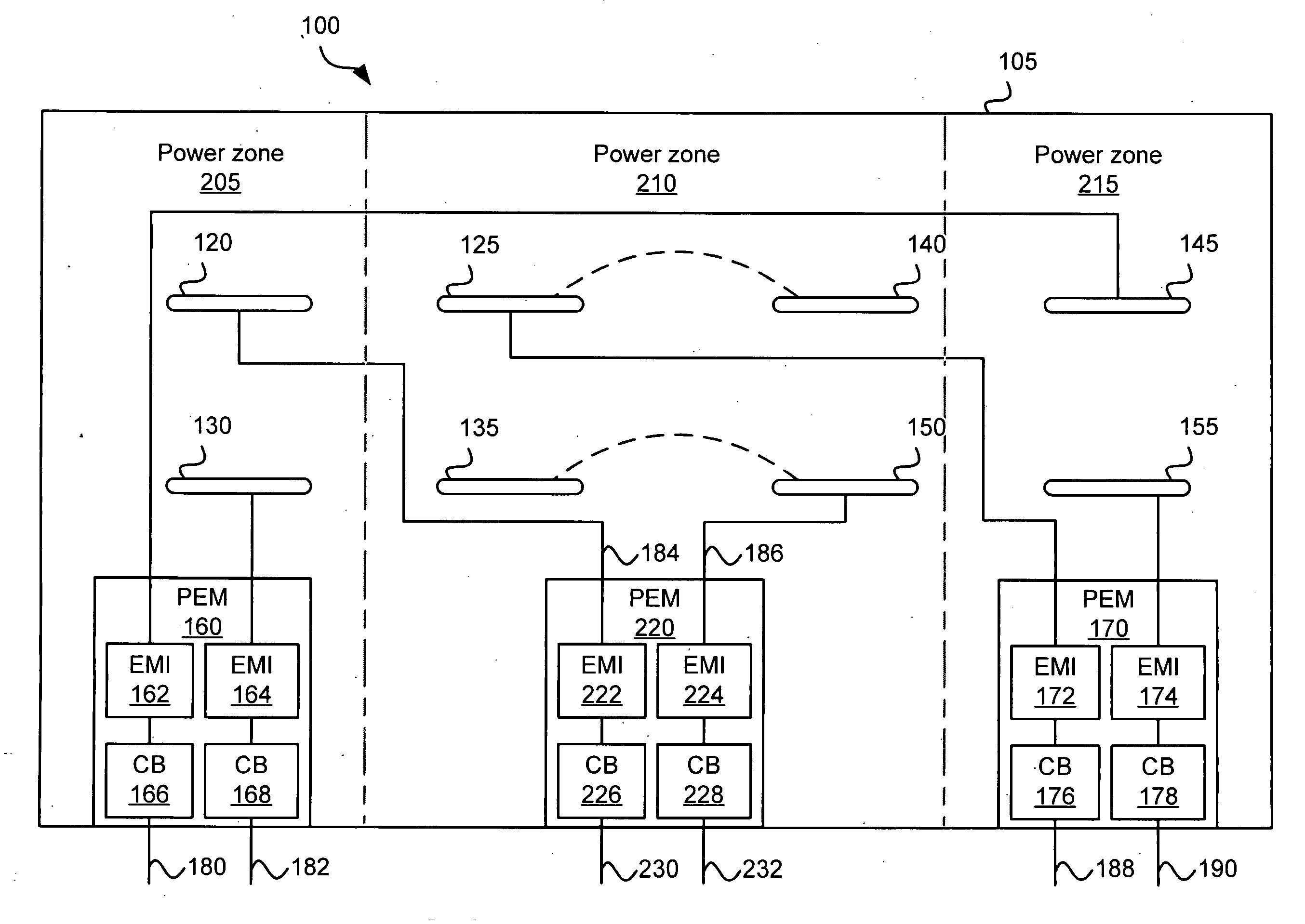
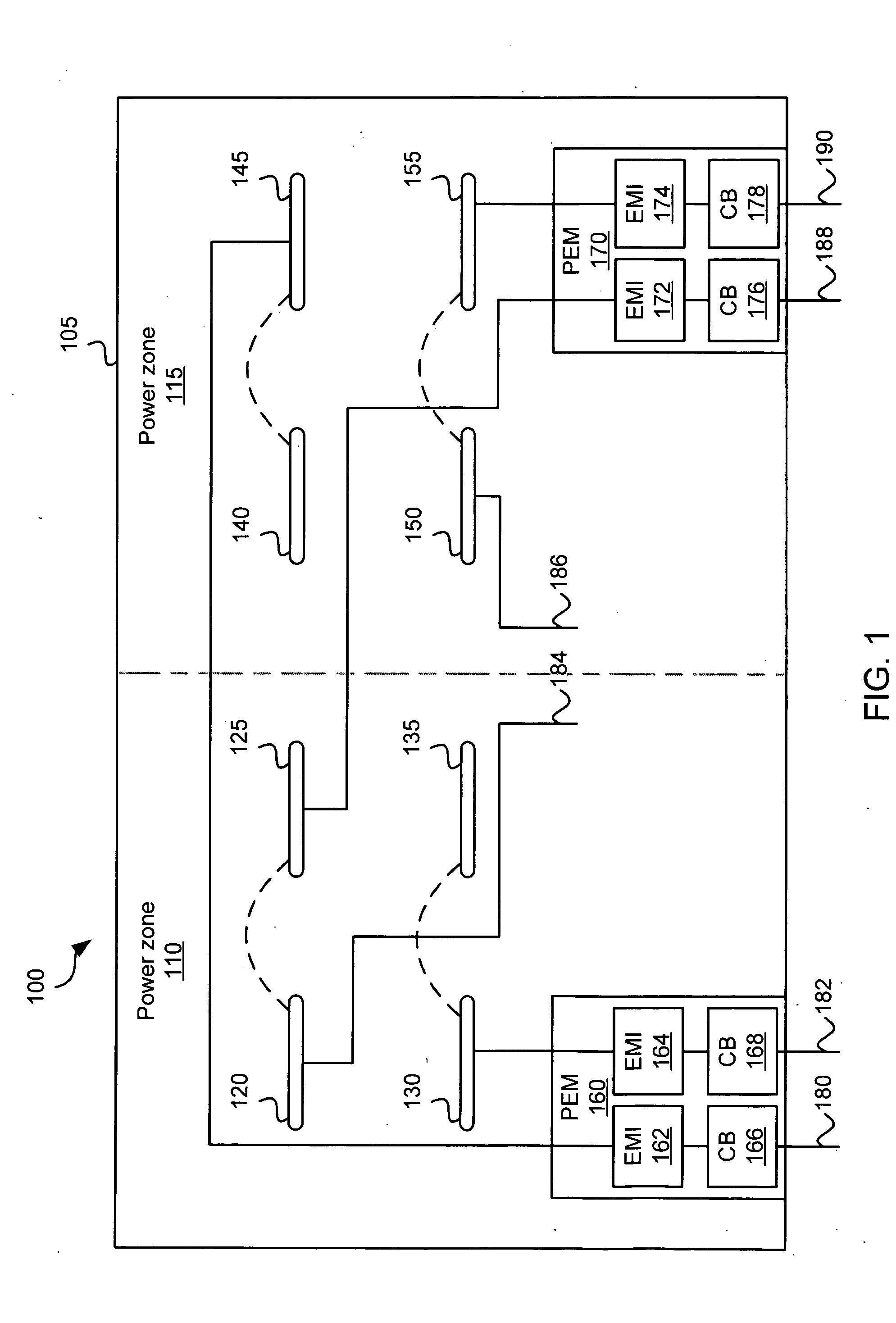
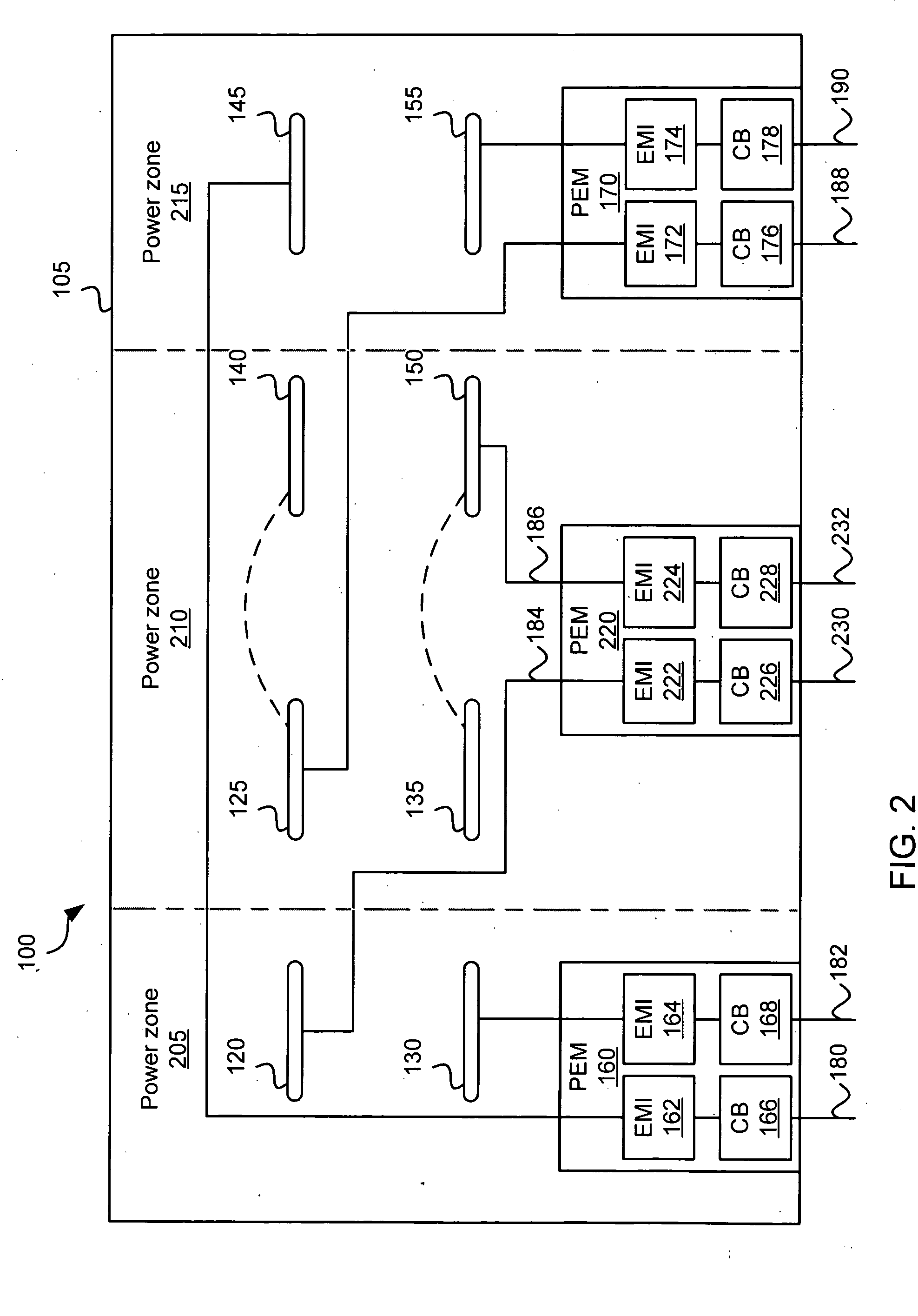
- A reconfigurable backplane power distribution system that includes circuit board slots, power entry modules, and switching circuitry, allowing for the switching between two power configurations to provide extended power capabilities without replacing the entire backplane, enabling circuit boards to operate at up to 300 watts per slot without removing existing circuit boards or replacing the power distribution circuitry.

System-Level Power Distribution, Optical Signal Distribution, and Thermal Cooling for High Bandwidth Communication
PatentPendingUS20230324636A1
Innovation
- A system-level architecture that integrates electrical signal and power delivery with optical signal distribution and thermal cooling, using an electrical interposer, optical engine, and cooling subsystem to minimize misalignment and optimize power and signal delivery, featuring a compact design with air or liquid cooling and modular components for reduced mechanical tolerance loops.


Thermal Management Strategies for High-Power Optical Systems
Thermal management represents one of the most critical challenges in optimizing power distribution for optical backplanes in hybrid systems. As optical components operate at increasingly higher power densities, the generation of waste heat becomes a primary limiting factor for system performance and reliability. Effective thermal management strategies must address both localized hotspots and overall system temperature gradients to maintain optimal operating conditions.
The fundamental challenge stems from the concentrated nature of heat generation in optical transceivers, laser diodes, and photodetectors. These components typically generate heat fluxes ranging from 50 to 200 watts per square centimeter, creating significant thermal gradients that can affect optical performance through wavelength drift, reduced quantum efficiency, and accelerated component degradation. The proximity of high-power optical elements to sensitive electronic circuits in hybrid systems further complicates thermal management requirements.
Advanced cooling architectures have emerged as essential solutions for high-power optical backplanes. Microchannel liquid cooling systems provide superior heat removal capabilities compared to traditional air cooling, enabling heat flux management exceeding 500 watts per square centimeter. These systems integrate directly with optical component packaging, utilizing specialized thermal interface materials with thermal conductivities above 400 W/mK to minimize thermal resistance between heat sources and cooling channels.
Thermal spreading techniques play a crucial role in distributing concentrated heat loads across larger surface areas. Diamond heat spreaders and graphene-enhanced thermal interface materials offer exceptional thermal conductivity while maintaining electrical isolation. These materials enable effective heat distribution from point sources to larger heat sinks, reducing peak temperatures and improving overall thermal uniformity across the backplane.
Active thermal control systems incorporate real-time temperature monitoring and adaptive cooling strategies. Thermoelectric coolers provide precise temperature regulation for critical optical components, while variable-speed cooling systems adjust thermal management capacity based on instantaneous power dissipation patterns. These systems utilize distributed temperature sensors and predictive algorithms to anticipate thermal transients and maintain stable operating temperatures.
Integration of thermal management with power distribution design requires careful consideration of thermal-electrical interactions. Copper traces and power planes serve dual functions as electrical conductors and thermal pathways, necessitating optimized routing strategies that balance electrical performance with thermal spreading requirements. Advanced packaging techniques, including embedded cooling channels and three-dimensional thermal architectures, enable more efficient heat removal while maintaining compact form factors essential for high-density optical backplane applications.
The fundamental challenge stems from the concentrated nature of heat generation in optical transceivers, laser diodes, and photodetectors. These components typically generate heat fluxes ranging from 50 to 200 watts per square centimeter, creating significant thermal gradients that can affect optical performance through wavelength drift, reduced quantum efficiency, and accelerated component degradation. The proximity of high-power optical elements to sensitive electronic circuits in hybrid systems further complicates thermal management requirements.
Advanced cooling architectures have emerged as essential solutions for high-power optical backplanes. Microchannel liquid cooling systems provide superior heat removal capabilities compared to traditional air cooling, enabling heat flux management exceeding 500 watts per square centimeter. These systems integrate directly with optical component packaging, utilizing specialized thermal interface materials with thermal conductivities above 400 W/mK to minimize thermal resistance between heat sources and cooling channels.
Thermal spreading techniques play a crucial role in distributing concentrated heat loads across larger surface areas. Diamond heat spreaders and graphene-enhanced thermal interface materials offer exceptional thermal conductivity while maintaining electrical isolation. These materials enable effective heat distribution from point sources to larger heat sinks, reducing peak temperatures and improving overall thermal uniformity across the backplane.
Active thermal control systems incorporate real-time temperature monitoring and adaptive cooling strategies. Thermoelectric coolers provide precise temperature regulation for critical optical components, while variable-speed cooling systems adjust thermal management capacity based on instantaneous power dissipation patterns. These systems utilize distributed temperature sensors and predictive algorithms to anticipate thermal transients and maintain stable operating temperatures.
Integration of thermal management with power distribution design requires careful consideration of thermal-electrical interactions. Copper traces and power planes serve dual functions as electrical conductors and thermal pathways, necessitating optimized routing strategies that balance electrical performance with thermal spreading requirements. Advanced packaging techniques, including embedded cooling channels and three-dimensional thermal architectures, enable more efficient heat removal while maintaining compact form factors essential for high-density optical backplane applications.
Signal Integrity Considerations in Power-Optimized Designs
Signal integrity becomes increasingly critical when implementing power optimization strategies in optical backplane systems, as the pursuit of energy efficiency can inadvertently introduce electromagnetic interference and signal degradation challenges. The complex interplay between power distribution networks and high-speed optical signals requires careful consideration of crosstalk mitigation, impedance matching, and electromagnetic compatibility to maintain system performance while achieving desired power savings.
Power-optimized designs often involve dynamic voltage scaling and adaptive power management techniques that can create fluctuating electromagnetic environments. These variations in power consumption patterns generate switching noise and voltage ripples that propagate through the backplane substrate, potentially affecting sensitive optical transceivers and high-speed digital circuits. The challenge intensifies in hybrid systems where electrical and optical domains coexist, as power optimization algorithms must account for the different susceptibility levels of various signal types.
Ground plane integrity represents a fundamental concern in power-optimized optical backplanes, where segmented power domains and voltage islands can create return path discontinuities. These discontinuities become particularly problematic when power management circuits switch between different operating modes, causing ground bounce and reference voltage instability. The resulting signal integrity degradation can manifest as increased bit error rates in optical channels and timing violations in control circuits.
Thermal considerations add another layer of complexity to signal integrity in power-optimized designs. While reduced power consumption generally improves thermal profiles, localized power management components and switching regulators can create thermal gradients that affect signal propagation characteristics. Temperature variations influence dielectric properties of substrate materials, leading to impedance variations and signal reflection issues that must be carefully managed through thermal-aware design methodologies.
Advanced simulation and modeling techniques become essential for predicting signal integrity performance in power-optimized optical backplanes. Time-domain and frequency-domain analysis tools must incorporate power distribution network models, thermal effects, and electromagnetic coupling mechanisms to accurately assess system behavior. These comprehensive models enable designers to optimize power efficiency while maintaining signal quality through strategic component placement, routing optimization, and shielding implementation.
Power-optimized designs often involve dynamic voltage scaling and adaptive power management techniques that can create fluctuating electromagnetic environments. These variations in power consumption patterns generate switching noise and voltage ripples that propagate through the backplane substrate, potentially affecting sensitive optical transceivers and high-speed digital circuits. The challenge intensifies in hybrid systems where electrical and optical domains coexist, as power optimization algorithms must account for the different susceptibility levels of various signal types.
Ground plane integrity represents a fundamental concern in power-optimized optical backplanes, where segmented power domains and voltage islands can create return path discontinuities. These discontinuities become particularly problematic when power management circuits switch between different operating modes, causing ground bounce and reference voltage instability. The resulting signal integrity degradation can manifest as increased bit error rates in optical channels and timing violations in control circuits.
Thermal considerations add another layer of complexity to signal integrity in power-optimized designs. While reduced power consumption generally improves thermal profiles, localized power management components and switching regulators can create thermal gradients that affect signal propagation characteristics. Temperature variations influence dielectric properties of substrate materials, leading to impedance variations and signal reflection issues that must be carefully managed through thermal-aware design methodologies.
Advanced simulation and modeling techniques become essential for predicting signal integrity performance in power-optimized optical backplanes. Time-domain and frequency-domain analysis tools must incorporate power distribution network models, thermal effects, and electromagnetic coupling mechanisms to accurately assess system behavior. These comprehensive models enable designers to optimize power efficiency while maintaining signal quality through strategic component placement, routing optimization, and shielding implementation.
Unlock deeper insights with PatSnap Eureka Quick Research — get a full tech report to explore trends and direct your research. Try now!
Generate Your Research Report Instantly with AI Agent
Supercharge your innovation with PatSnap Eureka AI Agent Platform!