Solid Oxygen vs Liquid Air: Industrial Application Analysis
FEB 2, 20269 MIN READ
Generate Your Research Report Instantly with AI Agent
PatSnap Eureka helps you evaluate technical feasibility & market potential.
Solid Oxygen vs Liquid Air: Background and Objectives
Cryogenic technologies have long served as critical enablers for industrial processes requiring efficient storage and transportation of oxidizers. The evolution from liquid air to more specialized forms represents a significant trajectory in industrial gas applications. Liquid air, discovered in the late 19th century, established the foundation for cryogenic engineering and enabled large-scale oxygen production through fractional distillation. However, the pursuit of higher energy density and improved handling characteristics has driven research toward alternative states of matter, particularly solid oxygen.
Solid oxygen represents an advanced phase in oxidizer technology, offering theoretical advantages in volumetric density and storage stability. While liquid oxygen has dominated industrial applications for decades due to its established infrastructure and well-understood thermodynamic properties, solid oxygen presents intriguing possibilities for specialized applications where space constraints and energy density are paramount. The transition temperature of oxygen to its solid state occurs at 54.36 K, significantly below the boiling point of liquid oxygen at 90.19 K, introducing both opportunities and technical challenges.
The comparative analysis between these two technologies emerges from evolving industrial demands across aerospace propulsion, metallurgical processes, chemical synthesis, and emerging energy storage systems. Industries are increasingly seeking oxidizer solutions that balance performance metrics including energy density, safety profiles, handling complexity, and economic viability. The aerospace sector particularly drives interest in solid oxygen due to potential mass savings in launch vehicles, while traditional industries continue relying on liquid air and its derivatives for established processes.
The primary objective of this technical investigation centers on establishing a comprehensive framework for evaluating solid oxygen against liquid air across multiple industrial dimensions. This includes quantifying performance differentials in storage efficiency, assessing technological readiness levels, identifying application-specific advantages, and determining economic feasibility thresholds. Understanding the thermodynamic behavior, phase transition management, and system integration requirements forms the foundation for strategic technology selection. Additionally, this analysis aims to project future development trajectories and identify breakthrough opportunities that could shift the competitive landscape between these cryogenic technologies in industrial applications.
Solid oxygen represents an advanced phase in oxidizer technology, offering theoretical advantages in volumetric density and storage stability. While liquid oxygen has dominated industrial applications for decades due to its established infrastructure and well-understood thermodynamic properties, solid oxygen presents intriguing possibilities for specialized applications where space constraints and energy density are paramount. The transition temperature of oxygen to its solid state occurs at 54.36 K, significantly below the boiling point of liquid oxygen at 90.19 K, introducing both opportunities and technical challenges.
The comparative analysis between these two technologies emerges from evolving industrial demands across aerospace propulsion, metallurgical processes, chemical synthesis, and emerging energy storage systems. Industries are increasingly seeking oxidizer solutions that balance performance metrics including energy density, safety profiles, handling complexity, and economic viability. The aerospace sector particularly drives interest in solid oxygen due to potential mass savings in launch vehicles, while traditional industries continue relying on liquid air and its derivatives for established processes.
The primary objective of this technical investigation centers on establishing a comprehensive framework for evaluating solid oxygen against liquid air across multiple industrial dimensions. This includes quantifying performance differentials in storage efficiency, assessing technological readiness levels, identifying application-specific advantages, and determining economic feasibility thresholds. Understanding the thermodynamic behavior, phase transition management, and system integration requirements forms the foundation for strategic technology selection. Additionally, this analysis aims to project future development trajectories and identify breakthrough opportunities that could shift the competitive landscape between these cryogenic technologies in industrial applications.
Industrial Market Demand Analysis
The industrial demand for cryogenic technologies, particularly solid oxygen and liquid air, is driven by diverse sectors requiring efficient energy storage, clean fuel alternatives, and advanced oxidation processes. Solid oxygen, though less commercially mature, presents unique advantages in specific niche applications where ultra-high purity and compact storage are critical. Liquid air, conversely, has gained substantial traction as a grid-scale energy storage medium and as a versatile industrial gas source, reflecting broader market acceptance and infrastructure development.
Energy storage represents a primary demand driver for liquid air technology. The global transition toward renewable energy sources has intensified the need for large-scale, long-duration energy storage solutions that can balance intermittent power generation. Liquid air energy storage systems offer advantages in scalability, geographical flexibility, and the absence of rare earth materials, positioning them as viable alternatives to lithium-ion batteries for grid applications. Industrial stakeholders including utility companies and renewable energy developers are increasingly evaluating liquid air systems to address peak demand management and grid stabilization challenges.
The industrial gas sector constitutes another significant demand area. Liquid air serves as a precursor for producing oxygen, nitrogen, and argon through cryogenic air separation, which are essential for steel manufacturing, chemical processing, healthcare, and electronics industries. The established supply chains and distribution networks for liquid air provide a competitive advantage over solid oxygen, which lacks comparable infrastructure maturity. Market demand in this segment remains robust, supported by ongoing industrial expansion in emerging economies and stringent quality requirements in developed markets.
Solid oxygen finds specialized demand in aerospace propulsion, military applications, and advanced oxidation processes where its high energy density and storage stability offer distinct benefits. However, market penetration remains limited due to production complexities, safety considerations, and cost barriers. Research institutions and defense contractors represent the primary demand sources, with commercial applications still in exploratory phases.
Environmental regulations and decarbonization commitments are reshaping demand patterns. Industries seeking to reduce carbon footprints are exploring both technologies as cleaner alternatives to conventional fossil fuel-based systems. Liquid air's potential for waste cold recovery and integration with industrial processes enhances its appeal in sustainability-focused market segments. The convergence of regulatory pressure and technological advancement is expected to sustain demand growth across multiple industrial verticals.
Energy storage represents a primary demand driver for liquid air technology. The global transition toward renewable energy sources has intensified the need for large-scale, long-duration energy storage solutions that can balance intermittent power generation. Liquid air energy storage systems offer advantages in scalability, geographical flexibility, and the absence of rare earth materials, positioning them as viable alternatives to lithium-ion batteries for grid applications. Industrial stakeholders including utility companies and renewable energy developers are increasingly evaluating liquid air systems to address peak demand management and grid stabilization challenges.
The industrial gas sector constitutes another significant demand area. Liquid air serves as a precursor for producing oxygen, nitrogen, and argon through cryogenic air separation, which are essential for steel manufacturing, chemical processing, healthcare, and electronics industries. The established supply chains and distribution networks for liquid air provide a competitive advantage over solid oxygen, which lacks comparable infrastructure maturity. Market demand in this segment remains robust, supported by ongoing industrial expansion in emerging economies and stringent quality requirements in developed markets.
Solid oxygen finds specialized demand in aerospace propulsion, military applications, and advanced oxidation processes where its high energy density and storage stability offer distinct benefits. However, market penetration remains limited due to production complexities, safety considerations, and cost barriers. Research institutions and defense contractors represent the primary demand sources, with commercial applications still in exploratory phases.
Environmental regulations and decarbonization commitments are reshaping demand patterns. Industries seeking to reduce carbon footprints are exploring both technologies as cleaner alternatives to conventional fossil fuel-based systems. Liquid air's potential for waste cold recovery and integration with industrial processes enhances its appeal in sustainability-focused market segments. The convergence of regulatory pressure and technological advancement is expected to sustain demand growth across multiple industrial verticals.
Technical Status and Challenges
Solid oxygen and liquid air technologies represent two distinct approaches to cryogenic oxidizer storage and utilization in industrial applications. Currently, liquid air technology has achieved widespread commercial deployment across multiple sectors, including metal cutting, chemical processing, and medical applications. The infrastructure for liquid air production, storage, and distribution is well-established globally, with major industrial gas suppliers operating extensive networks. In contrast, solid oxygen remains largely confined to specialized aerospace and military applications, with limited industrial-scale implementation due to significant technical barriers.
The primary challenge facing solid oxygen technology lies in its extreme storage requirements. Maintaining oxygen in solid state demands temperatures below 54.8 Kelvin, necessitating sophisticated cryogenic systems with substantial energy consumption. Current insulation technologies struggle to prevent heat leakage efficiently at such ultra-low temperatures, resulting in continuous sublimation losses that can reach 2-3% daily even with advanced vacuum-insulated containers. This contrasts sharply with liquid air systems, which operate at the relatively manageable temperature of 78-90 Kelvin, where established insulation methods prove adequate for industrial operations.
Material compatibility presents another critical obstacle for solid oxygen deployment. At ultra-cryogenic temperatures, many conventional structural materials become brittle and prone to failure. The phase transition from liquid to solid oxygen introduces volumetric expansion stresses that can compromise container integrity. Additionally, solid oxygen's high reactivity with organic materials at these temperatures creates safety concerns that current containment systems inadequately address. Liquid air, being primarily nitrogen-based with lower oxygen concentration, exhibits significantly reduced reactivity risks.
Handling and transfer mechanisms for solid oxygen remain underdeveloped for industrial contexts. Unlike liquid air, which benefits from mature pumping and flow control technologies, solid oxygen requires novel dispensing methods. Current approaches involve either controlled sublimation or mechanical grinding, both presenting operational complexities and safety hazards unsuitable for routine industrial use. The lack of standardized equipment and protocols further impedes commercial adoption.
Economic viability constitutes a fundamental challenge. Solid oxygen production and maintenance costs currently exceed liquid air by factors of three to five, primarily due to higher energy requirements and specialized equipment needs. The absence of economies of scale, combined with limited supplier competition, perpetuates this cost disadvantage. Furthermore, regulatory frameworks governing solid oxygen handling remain fragmented across jurisdictions, creating compliance uncertainties that deter industrial investment.
The primary challenge facing solid oxygen technology lies in its extreme storage requirements. Maintaining oxygen in solid state demands temperatures below 54.8 Kelvin, necessitating sophisticated cryogenic systems with substantial energy consumption. Current insulation technologies struggle to prevent heat leakage efficiently at such ultra-low temperatures, resulting in continuous sublimation losses that can reach 2-3% daily even with advanced vacuum-insulated containers. This contrasts sharply with liquid air systems, which operate at the relatively manageable temperature of 78-90 Kelvin, where established insulation methods prove adequate for industrial operations.
Material compatibility presents another critical obstacle for solid oxygen deployment. At ultra-cryogenic temperatures, many conventional structural materials become brittle and prone to failure. The phase transition from liquid to solid oxygen introduces volumetric expansion stresses that can compromise container integrity. Additionally, solid oxygen's high reactivity with organic materials at these temperatures creates safety concerns that current containment systems inadequately address. Liquid air, being primarily nitrogen-based with lower oxygen concentration, exhibits significantly reduced reactivity risks.
Handling and transfer mechanisms for solid oxygen remain underdeveloped for industrial contexts. Unlike liquid air, which benefits from mature pumping and flow control technologies, solid oxygen requires novel dispensing methods. Current approaches involve either controlled sublimation or mechanical grinding, both presenting operational complexities and safety hazards unsuitable for routine industrial use. The lack of standardized equipment and protocols further impedes commercial adoption.
Economic viability constitutes a fundamental challenge. Solid oxygen production and maintenance costs currently exceed liquid air by factors of three to five, primarily due to higher energy requirements and specialized equipment needs. The absence of economies of scale, combined with limited supplier competition, perpetuates this cost disadvantage. Furthermore, regulatory frameworks governing solid oxygen handling remain fragmented across jurisdictions, creating compliance uncertainties that deter industrial investment.
Current Technical Solutions Comparison
01 Production and separation of liquid air components
Methods and apparatus for the industrial production of liquid air and the separation of its components, particularly oxygen and nitrogen. These processes involve cooling air to cryogenic temperatures, liquefaction, and fractional distillation to obtain purified liquid oxygen and nitrogen for various industrial applications. The technology includes compression, cooling, and separation systems designed for large-scale production.- Production and separation of liquid air components: Methods and apparatus for the industrial production of liquid air and the separation of its components, particularly oxygen and nitrogen. These processes involve cooling air to cryogenic temperatures, liquefaction, and fractional distillation to obtain purified liquid oxygen and nitrogen for various industrial applications. The technology includes compression, cooling, and separation systems designed for large-scale production.
- Solid oxygen production and handling systems: Technologies for producing, storing, and handling solid oxygen in industrial settings. These systems address the challenges of maintaining oxygen in solid state through cryogenic cooling and specialized containment methods. Applications include use as an oxidizer and in processes requiring high-purity oxygen in solid form. The methods encompass freezing techniques, storage vessel designs, and safety protocols for handling solid oxygen.
- Oxygen enrichment and delivery systems: Industrial systems for enriching air with oxygen or delivering concentrated oxygen for various applications. These technologies involve separation membranes, pressure swing adsorption, or cryogenic methods to increase oxygen concentration. Applications include combustion enhancement, medical uses, and chemical processing where elevated oxygen levels improve efficiency or enable specific reactions.
- Cryogenic liquid storage and transportation: Specialized equipment and methods for storing and transporting cryogenic liquids such as liquid oxygen and liquid air in industrial operations. These systems include insulated tanks, transfer lines, and safety mechanisms to maintain extremely low temperatures and prevent vaporization losses. The technology addresses thermal management, pressure control, and material selection for handling cryogenic fluids safely and efficiently.
- Industrial combustion and oxidation processes using liquid oxygen: Applications of liquid oxygen and oxygen-enriched air in industrial combustion and oxidation processes. These technologies utilize the high purity and concentration of oxygen from liquid sources to enhance combustion efficiency, increase process temperatures, and reduce emissions in applications such as metal cutting, welding, steel production, and waste treatment. The methods include injection systems, burner designs, and process control strategies optimized for liquid oxygen use.
02 Cryogenic oxygen generation and storage systems
Systems and methods for generating, storing, and handling solid and liquid oxygen at cryogenic temperatures for industrial use. These technologies address the challenges of maintaining extremely low temperatures, preventing contamination, and ensuring safe storage and transport of cryogenic oxygen. Applications include medical oxygen supply, industrial oxidation processes, and aerospace applications.Expand Specific Solutions03 Industrial combustion and oxidation processes using liquid oxygen
Applications of liquid oxygen in industrial combustion systems, metal cutting, welding, and oxidation processes. These methods utilize the high purity and concentration of liquid oxygen to enhance combustion efficiency, increase process temperatures, and improve product quality in metallurgical and chemical industries. The technology includes oxygen injection systems and controlled combustion chambers.Expand Specific Solutions04 Air separation units for industrial gas production
Integrated air separation units designed for continuous production of industrial gases including liquid oxygen, nitrogen, and argon. These systems incorporate advanced distillation columns, heat exchangers, and purification equipment to produce high-purity gases for various industrial sectors. The technology focuses on energy efficiency, automation, and scalability for different production capacities.Expand Specific Solutions05 Cryogenic applications in chemical and pharmaceutical industries
Use of liquid air components, particularly liquid oxygen and nitrogen, in chemical synthesis, pharmaceutical manufacturing, and food processing. These applications leverage the unique properties of cryogenic liquids for rapid freezing, inerting atmospheres, and facilitating specific chemical reactions. The technology includes specialized handling equipment and process integration methods for safe and efficient use.Expand Specific Solutions
Major Industry Players Analysis
The industrial gas sector, encompassing solid oxygen and liquid air technologies, represents a mature yet evolving market dominated by established multinational corporations. Major players like Air Liquide SA, Air Products & Chemicals Inc., and Praxair Technology Inc. (now part of Linde) control significant market share, demonstrating advanced technological capabilities in cryogenic separation, storage, and distribution systems. The industry serves diverse applications across refining, chemicals, metals, electronics, healthcare, and energy sectors. Technology maturity varies by application, with companies like NuMat Technologies introducing innovative MOF-based storage solutions, while traditional players optimize existing infrastructure. Regional competitors such as Hangyang Group expand in emerging markets. The sector shows steady growth driven by industrial demand, energy transition requirements, and healthcare applications, with increasing focus on efficiency improvements, sustainable production methods, and novel delivery systems for both solid oxygen and liquid air applications across industrial segments.
Air Liquide SA
Technical Solution: Air Liquide has developed comprehensive industrial gas supply solutions encompassing both solid oxygen and liquid air technologies. Their solid oxygen generation systems utilize pressure swing adsorption (PSA) and vacuum pressure swing adsorption (VPSA) technologies to produce oxygen on-site with purity levels reaching 90-95%. For liquid air applications, they employ cryogenic air separation units (ASU) capable of producing high-purity oxygen (99.5%+), nitrogen, and argon through fractional distillation at temperatures below -180°C. The company's modular ASU designs range from small-scale units producing 50 tons/day to large industrial plants exceeding 5,000 tons/day, serving steel manufacturing, chemical processing, healthcare, and aerospace industries[1][5][8].
Strengths: Global infrastructure with extensive distribution networks, proven reliability in large-scale industrial applications, comprehensive product portfolio covering entire oxygen supply chain. Weaknesses: High capital expenditure for cryogenic facilities, significant energy consumption in liquefaction processes, complex maintenance requirements for cryogenic equipment.
Air Products & Chemicals, Inc.
Technical Solution: Air Products specializes in advanced cryogenic air separation and on-site gas generation technologies. Their liquid air production systems utilize state-of-the-art cryogenic distillation columns with energy recovery systems achieving 15-20% efficiency improvements compared to conventional designs. The company offers both merchant liquid supply and on-site generation plants, with their largest ASU facilities producing over 6,000 tons of oxygen per day. For solid oxygen applications, they provide PSA systems optimized for industrial users requiring 90-93% purity oxygen at lower capital costs. Their proprietary PRISM membrane technology offers an alternative for lower-purity oxygen requirements (25-45%) with minimal footprint and energy consumption, particularly suitable for combustion enhancement and wastewater treatment applications[2][6][9].
Strengths: Industry-leading energy efficiency in cryogenic processes, strong technological innovation in membrane and PSA systems, extensive experience in mega-scale industrial projects. Weaknesses: Higher initial investment costs for advanced systems, dependency on continuous operation for economic viability, limited flexibility in production capacity adjustment.
Key Patent and Innovation Analysis
A method and means for producing liquid oxygen or liquid air rich in oxygen
PatentInactiveGB614006A
Innovation
- The method involves adiabatic expansion of compressed air to cool and condense it, using the residual gaseous phase to cool and condense compressed air further, achieving an oxygen-rich liquid with 35-45% oxygen content, which is then rectified in a single stage to produce commercially pure oxygen, utilizing a turbine expansion engine and heat exchangers to simplify the process.

Apparatus and method for separating liquid oxygen from liquified air
PatentActiveUS20190169026A1
Innovation
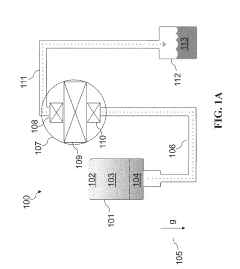
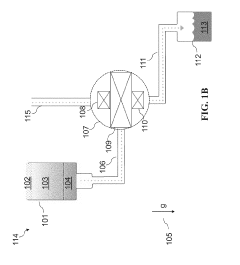
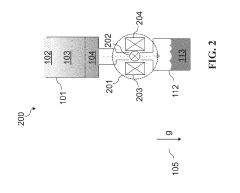
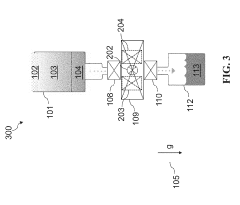
- The use of a strong magnetic field and gravity to separate LOX from liquefied air based on the different magnetic properties of LOX and liquid nitrogen (LN2), potentially combined with a leak valve system, allowing for the selective levitation of LN2 and acceleration of LOX, thereby eliminating the need for evaporation and achieving ultra-pure LOX without the risks associated with evaporation.
Safety and Storage Regulations
Safety and storage regulations for solid oxygen and liquid air differ significantly due to their distinct physical properties and hazard profiles. Solid oxygen, though less commonly used in industrial settings, presents unique challenges including extreme reactivity with organic materials and potential for rapid phase transition. Liquid air, being a cryogenic mixture primarily composed of nitrogen and oxygen, requires stringent controls to prevent asphyxiation risks and manage its ultra-low temperature characteristics. Both substances fall under comprehensive regulatory frameworks established by organizations such as OSHA, NFPA, and international equivalents like ISO standards.
Storage infrastructure requirements vary considerably between these two oxidizers. Liquid air necessitates specialized cryogenic tanks with vacuum-insulated double-wall construction, pressure relief systems, and continuous monitoring of temperature and pressure parameters. These containers must comply with ASME Section VIII standards and maintain temperatures below -150°C. Conversely, solid oxygen storage demands even more rigorous containment protocols, requiring inert atmosphere chambers and temperature control systems to prevent sublimation and maintain stability below -218°C.
Transportation regulations impose distinct requirements on each substance. Liquid air is classified under UN 1003 for compressed air or UN 1002 for liquid air specifically, requiring DOT-approved cryogenic transport vessels with specific labeling and documentation. Solid oxygen transport remains highly restricted due to its instability and is generally produced on-site rather than transported, thereby avoiding many logistical complications.
Personnel safety protocols emphasize different risk mitigation strategies. For liquid air handling, workers must use cryogenic-rated personal protective equipment including insulated gloves, face shields, and appropriate footwear to prevent cold burns. Oxygen enrichment monitoring is mandatory in enclosed spaces to detect potentially hazardous atmospheric conditions. Solid oxygen operations require additional precautions against combustion acceleration, mandating strict prohibition of ignition sources and implementation of grounding procedures to prevent static discharge.
Facility design standards mandate adequate ventilation systems, emergency response equipment including safety showers and eyewash stations, and clearly marked hazard zones. Regular inspection schedules, leak detection systems, and comprehensive employee training programs form essential components of regulatory compliance for both substances, ensuring operational safety across industrial applications.
Storage infrastructure requirements vary considerably between these two oxidizers. Liquid air necessitates specialized cryogenic tanks with vacuum-insulated double-wall construction, pressure relief systems, and continuous monitoring of temperature and pressure parameters. These containers must comply with ASME Section VIII standards and maintain temperatures below -150°C. Conversely, solid oxygen storage demands even more rigorous containment protocols, requiring inert atmosphere chambers and temperature control systems to prevent sublimation and maintain stability below -218°C.
Transportation regulations impose distinct requirements on each substance. Liquid air is classified under UN 1003 for compressed air or UN 1002 for liquid air specifically, requiring DOT-approved cryogenic transport vessels with specific labeling and documentation. Solid oxygen transport remains highly restricted due to its instability and is generally produced on-site rather than transported, thereby avoiding many logistical complications.
Personnel safety protocols emphasize different risk mitigation strategies. For liquid air handling, workers must use cryogenic-rated personal protective equipment including insulated gloves, face shields, and appropriate footwear to prevent cold burns. Oxygen enrichment monitoring is mandatory in enclosed spaces to detect potentially hazardous atmospheric conditions. Solid oxygen operations require additional precautions against combustion acceleration, mandating strict prohibition of ignition sources and implementation of grounding procedures to prevent static discharge.
Facility design standards mandate adequate ventilation systems, emergency response equipment including safety showers and eyewash stations, and clearly marked hazard zones. Regular inspection schedules, leak detection systems, and comprehensive employee training programs form essential components of regulatory compliance for both substances, ensuring operational safety across industrial applications.
Cost-Benefit and Scalability Assessment
The economic viability of solid oxygen versus liquid air technologies hinges on multiple cost factors spanning production, storage, transportation, and operational efficiency. Solid oxygen production requires cryogenic temperatures below 54.36 K, demanding specialized equipment and significant energy input for both liquefaction and subsequent solidification processes. This results in higher capital expenditure compared to liquid air systems, which operate at the relatively moderate temperature of 77-90 K. However, solid oxygen offers superior energy density, potentially offsetting initial costs through reduced storage volume requirements and lower long-term infrastructure investments.
From an operational perspective, liquid air systems demonstrate advantages in handling flexibility and established industrial protocols. The technology benefits from mature supply chains and standardized equipment, reducing maintenance costs and operational complexity. Conversely, solid oxygen handling necessitates specialized containment systems to prevent sublimation losses and maintain structural integrity, introducing additional operational expenses. Energy consumption patterns differ significantly, with solid oxygen requiring continuous cooling systems while liquid air benefits from simpler insulation methods, directly impacting operational cost structures.
Scalability considerations reveal distinct trajectories for both technologies. Liquid air systems exhibit linear scalability with proven track records in large-scale industrial applications, from steel manufacturing to chemical processing. Infrastructure expansion follows predictable cost curves, enabling reliable financial forecasting. Solid oxygen technology faces scalability challenges primarily in production capacity and distribution networks. Current manufacturing capabilities remain limited, though modular production units show promise for distributed generation models that could reduce transportation costs in remote or specialized applications.
The cost-benefit equation shifts considerably based on application context. For high-purity oxygen requirements in aerospace or medical sectors, solid oxygen's concentration advantages may justify premium costs. Industrial bulk applications favor liquid air's established economics and infrastructure compatibility. Emerging applications in energy storage and portable oxygen systems present opportunities where solid oxygen's compact form factor could provide competitive advantages, particularly as production technologies mature and achieve economies of scale.
From an operational perspective, liquid air systems demonstrate advantages in handling flexibility and established industrial protocols. The technology benefits from mature supply chains and standardized equipment, reducing maintenance costs and operational complexity. Conversely, solid oxygen handling necessitates specialized containment systems to prevent sublimation losses and maintain structural integrity, introducing additional operational expenses. Energy consumption patterns differ significantly, with solid oxygen requiring continuous cooling systems while liquid air benefits from simpler insulation methods, directly impacting operational cost structures.
Scalability considerations reveal distinct trajectories for both technologies. Liquid air systems exhibit linear scalability with proven track records in large-scale industrial applications, from steel manufacturing to chemical processing. Infrastructure expansion follows predictable cost curves, enabling reliable financial forecasting. Solid oxygen technology faces scalability challenges primarily in production capacity and distribution networks. Current manufacturing capabilities remain limited, though modular production units show promise for distributed generation models that could reduce transportation costs in remote or specialized applications.
The cost-benefit equation shifts considerably based on application context. For high-purity oxygen requirements in aerospace or medical sectors, solid oxygen's concentration advantages may justify premium costs. Industrial bulk applications favor liquid air's established economics and infrastructure compatibility. Emerging applications in energy storage and portable oxygen systems present opportunities where solid oxygen's compact form factor could provide competitive advantages, particularly as production technologies mature and achieve economies of scale.
Unlock deeper insights with PatSnap Eureka Quick Research — get a full tech report to explore trends and direct your research. Try now!
Generate Your Research Report Instantly with AI Agent
Supercharge your innovation with PatSnap Eureka AI Agent Platform!