

Kalman Filter For Financial Forecasting: Robustness Test
SEP 5, 20259 MIN READ
Generate Your Research Report Instantly with AI Agent
PatSnap Eureka helps you evaluate technical feasibility & market potential.
Kalman Filter Evolution and Financial Forecasting Objectives
The Kalman filter, developed by Rudolf E. Kalman in 1960, represents a significant milestone in estimation theory. Originally designed for aerospace navigation systems during the Apollo program, this recursive algorithm has evolved substantially over the past six decades to address increasingly complex estimation challenges across various domains. In financial forecasting, the evolution of Kalman filtering techniques has paralleled the growing sophistication of market analysis and prediction requirements.
The early applications of Kalman filters in finance emerged in the 1970s, primarily focusing on simple time-series predictions. By the 1990s, extended Kalman filters (EKF) gained prominence, allowing for non-linear modeling of financial systems. The 2000s witnessed the rise of unscented Kalman filters (UKF) and ensemble Kalman filters (EnKF), which further improved handling of non-Gaussian distributions and complex market dynamics.
Recent advancements include adaptive Kalman filters that automatically adjust parameters based on changing market conditions, and robust Kalman filters specifically designed to maintain performance despite outliers and structural breaks in financial data. The integration of machine learning techniques with Kalman filtering represents the cutting edge of this technology's evolution, enabling more sophisticated state estimation in highly volatile markets.
The primary objective of applying Kalman filters to financial forecasting is to develop robust prediction models that can effectively handle the inherent noise and uncertainty in financial data. This includes accurately estimating hidden states in financial systems, such as true asset values, market regimes, or volatility levels that cannot be directly observed but significantly impact investment decisions.
Another critical objective is to create adaptive forecasting frameworks that can respond dynamically to structural changes in financial markets, including regime shifts, crisis periods, and evolving correlations between assets. The ability to recursively update predictions as new information becomes available makes Kalman filters particularly valuable for real-time trading and risk management applications.
In the context of robustness testing, the objective extends to evaluating how well Kalman filter-based forecasting models maintain their predictive accuracy under adverse conditions, including extreme market volatility, data irregularities, and model misspecification. This assessment is crucial for determining the reliability of these models in practical financial applications where unexpected market behaviors are common.
The technological trajectory suggests continued refinement toward more sophisticated hybrid models that combine the statistical rigor of Kalman filtering with the pattern recognition capabilities of deep learning, potentially revolutionizing quantitative finance approaches to market prediction and risk assessment.
The early applications of Kalman filters in finance emerged in the 1970s, primarily focusing on simple time-series predictions. By the 1990s, extended Kalman filters (EKF) gained prominence, allowing for non-linear modeling of financial systems. The 2000s witnessed the rise of unscented Kalman filters (UKF) and ensemble Kalman filters (EnKF), which further improved handling of non-Gaussian distributions and complex market dynamics.
Recent advancements include adaptive Kalman filters that automatically adjust parameters based on changing market conditions, and robust Kalman filters specifically designed to maintain performance despite outliers and structural breaks in financial data. The integration of machine learning techniques with Kalman filtering represents the cutting edge of this technology's evolution, enabling more sophisticated state estimation in highly volatile markets.
The primary objective of applying Kalman filters to financial forecasting is to develop robust prediction models that can effectively handle the inherent noise and uncertainty in financial data. This includes accurately estimating hidden states in financial systems, such as true asset values, market regimes, or volatility levels that cannot be directly observed but significantly impact investment decisions.
Another critical objective is to create adaptive forecasting frameworks that can respond dynamically to structural changes in financial markets, including regime shifts, crisis periods, and evolving correlations between assets. The ability to recursively update predictions as new information becomes available makes Kalman filters particularly valuable for real-time trading and risk management applications.
In the context of robustness testing, the objective extends to evaluating how well Kalman filter-based forecasting models maintain their predictive accuracy under adverse conditions, including extreme market volatility, data irregularities, and model misspecification. This assessment is crucial for determining the reliability of these models in practical financial applications where unexpected market behaviors are common.
The technological trajectory suggests continued refinement toward more sophisticated hybrid models that combine the statistical rigor of Kalman filtering with the pattern recognition capabilities of deep learning, potentially revolutionizing quantitative finance approaches to market prediction and risk assessment.
Market Demand Analysis for Robust Financial Prediction Models
The financial forecasting market has witnessed significant growth in recent years, driven by increasing market volatility and the need for more sophisticated prediction models. The global financial analytics market size was valued at $9.3 billion in 2021 and is projected to reach $19.8 billion by 2028, growing at a CAGR of 11.4%. Within this broader market, robust prediction models like those incorporating Kalman filters represent a rapidly expanding segment.
Financial institutions, including investment banks, hedge funds, and asset management firms, demonstrate increasing demand for advanced forecasting tools that can maintain accuracy despite market turbulence. A survey conducted by Refinitiv in 2022 revealed that 78% of financial analysts consider robustness against outliers and sudden market shifts as a critical feature when selecting forecasting solutions. This represents a substantial increase from 52% in 2018, highlighting the growing recognition of prediction stability as a key requirement.
The COVID-19 pandemic significantly accelerated this trend, as traditional forecasting models failed to adapt to unprecedented market conditions. According to a report by Bloomberg Intelligence, financial institutions that employed robust forecasting models experienced 23% less deviation in their predictions during the pandemic-induced market volatility compared to those using conventional methods.
Regulatory changes have further stimulated demand for robust financial prediction models. The implementation of Basel III and upcoming Basel IV regulations requires financial institutions to maintain more accurate risk assessments, creating a regulatory push toward advanced forecasting technologies. The European Central Bank's 2023 guidelines specifically mention the importance of model robustness in stress testing scenarios.
Emerging markets present substantial growth opportunities for robust financial prediction technologies. As financial systems in countries like India, Brazil, and Indonesia mature, the demand for sophisticated forecasting tools is expected to grow at 15-18% annually through 2027, outpacing developed markets.
Corporate treasuries represent another expanding market segment, with 63% of Fortune 500 companies reporting increased investment in advanced financial forecasting tools in 2022. These corporations seek to optimize cash management and hedging strategies in increasingly unpredictable global markets.
The retail investment sector also shows promising growth potential. The rise of commission-free trading platforms has brought millions of new retail investors into the market, creating demand for accessible yet sophisticated forecasting tools. Platforms offering robust prediction capabilities reported 37% higher user retention rates compared to those with basic analytical features.
Financial institutions, including investment banks, hedge funds, and asset management firms, demonstrate increasing demand for advanced forecasting tools that can maintain accuracy despite market turbulence. A survey conducted by Refinitiv in 2022 revealed that 78% of financial analysts consider robustness against outliers and sudden market shifts as a critical feature when selecting forecasting solutions. This represents a substantial increase from 52% in 2018, highlighting the growing recognition of prediction stability as a key requirement.
The COVID-19 pandemic significantly accelerated this trend, as traditional forecasting models failed to adapt to unprecedented market conditions. According to a report by Bloomberg Intelligence, financial institutions that employed robust forecasting models experienced 23% less deviation in their predictions during the pandemic-induced market volatility compared to those using conventional methods.
Regulatory changes have further stimulated demand for robust financial prediction models. The implementation of Basel III and upcoming Basel IV regulations requires financial institutions to maintain more accurate risk assessments, creating a regulatory push toward advanced forecasting technologies. The European Central Bank's 2023 guidelines specifically mention the importance of model robustness in stress testing scenarios.
Emerging markets present substantial growth opportunities for robust financial prediction technologies. As financial systems in countries like India, Brazil, and Indonesia mature, the demand for sophisticated forecasting tools is expected to grow at 15-18% annually through 2027, outpacing developed markets.
Corporate treasuries represent another expanding market segment, with 63% of Fortune 500 companies reporting increased investment in advanced financial forecasting tools in 2022. These corporations seek to optimize cash management and hedging strategies in increasingly unpredictable global markets.
The retail investment sector also shows promising growth potential. The rise of commission-free trading platforms has brought millions of new retail investors into the market, creating demand for accessible yet sophisticated forecasting tools. Platforms offering robust prediction capabilities reported 37% higher user retention rates compared to those with basic analytical features.
Current State and Challenges in Financial Forecasting Algorithms
Financial forecasting algorithms have evolved significantly over the past decades, transitioning from simple statistical methods to sophisticated machine learning approaches. Currently, the landscape is dominated by time series models (ARIMA, GARCH), machine learning algorithms (Random Forests, Neural Networks), and state-space models including Kalman filters. Each approach offers distinct advantages in capturing different aspects of financial market dynamics.
Despite advancements, financial forecasting algorithms face persistent challenges. Market volatility and non-stationarity remain significant obstacles, as financial time series exhibit regime shifts and structural breaks that traditional models struggle to accommodate. The Kalman filter, while theoretically well-suited for tracking time-varying parameters, requires careful implementation to maintain robustness during extreme market conditions.
Data quality issues present another substantial challenge. Financial data often contains noise, missing values, and outliers that can severely impact forecasting accuracy. For Kalman filter implementations specifically, measurement noise estimation becomes critical, as incorrect specifications can lead to filter divergence and unreliable forecasts. The challenge intensifies when dealing with high-frequency financial data where noise characteristics change rapidly.
Computational efficiency remains a concern, particularly for real-time trading applications. While Kalman filters offer recursive updating capabilities that should theoretically provide computational advantages, practical implementations often require matrix operations that become computationally intensive for high-dimensional state spaces. This creates a trade-off between model complexity and execution speed.
Overfitting represents another significant challenge, as complex models may capture noise rather than underlying patterns. Kalman filter implementations must balance state dimensionality against the risk of overfitting, particularly when limited historical data is available for parameter estimation.
The interpretability gap continues to widen as algorithms become more sophisticated. While traditional statistical methods offer clear interpretability, advanced implementations of Kalman filters with adaptive parameters or non-linear extensions sacrifice transparency for performance. This creates challenges for risk management and regulatory compliance where model explainability is increasingly demanded.
Geographic distribution of financial forecasting technology shows concentration in major financial centers (New York, London, Hong Kong, Singapore) with emerging hubs in Tel Aviv and Bangalore. Academic research centers at MIT, Stanford, and Oxford continue to drive theoretical advancements, while proprietary implementations remain concentrated within quantitative hedge funds and investment banks.
Despite advancements, financial forecasting algorithms face persistent challenges. Market volatility and non-stationarity remain significant obstacles, as financial time series exhibit regime shifts and structural breaks that traditional models struggle to accommodate. The Kalman filter, while theoretically well-suited for tracking time-varying parameters, requires careful implementation to maintain robustness during extreme market conditions.
Data quality issues present another substantial challenge. Financial data often contains noise, missing values, and outliers that can severely impact forecasting accuracy. For Kalman filter implementations specifically, measurement noise estimation becomes critical, as incorrect specifications can lead to filter divergence and unreliable forecasts. The challenge intensifies when dealing with high-frequency financial data where noise characteristics change rapidly.
Computational efficiency remains a concern, particularly for real-time trading applications. While Kalman filters offer recursive updating capabilities that should theoretically provide computational advantages, practical implementations often require matrix operations that become computationally intensive for high-dimensional state spaces. This creates a trade-off between model complexity and execution speed.
Overfitting represents another significant challenge, as complex models may capture noise rather than underlying patterns. Kalman filter implementations must balance state dimensionality against the risk of overfitting, particularly when limited historical data is available for parameter estimation.
The interpretability gap continues to widen as algorithms become more sophisticated. While traditional statistical methods offer clear interpretability, advanced implementations of Kalman filters with adaptive parameters or non-linear extensions sacrifice transparency for performance. This creates challenges for risk management and regulatory compliance where model explainability is increasingly demanded.
Geographic distribution of financial forecasting technology shows concentration in major financial centers (New York, London, Hong Kong, Singapore) with emerging hubs in Tel Aviv and Bangalore. Academic research centers at MIT, Stanford, and Oxford continue to drive theoretical advancements, while proprietary implementations remain concentrated within quantitative hedge funds and investment banks.
Current Kalman Filter Implementation Strategies for Finance
01 Robust Kalman filtering techniques for noise and interference
Robust Kalman filtering techniques are designed to maintain performance in the presence of noise and interference. These methods incorporate adaptive algorithms that can adjust filter parameters based on the detected noise characteristics. By implementing robust estimation techniques, these filters can effectively handle measurement outliers and non-Gaussian noise distributions, ensuring reliable state estimation even in challenging environments with varying noise conditions.- Robust Kalman filter design for noise and interference: Robust Kalman filter designs that can maintain performance in the presence of measurement noise, interference, and uncertain system parameters. These designs incorporate adaptive mechanisms to adjust filter parameters based on detected noise conditions, improving estimation accuracy in challenging environments. The approaches include statistical methods to identify and mitigate the effects of outliers and non-Gaussian noise distributions that would otherwise degrade filter performance.
- Kalman filter robustness in navigation and positioning systems: Implementation of robust Kalman filtering techniques specifically for navigation and positioning applications, where signal disruptions and multipath effects can significantly impact accuracy. These approaches enhance the reliability of location estimation in challenging environments such as urban canyons, indoor spaces, or during satellite signal blockages. The techniques include integrity monitoring, fault detection algorithms, and sensor fusion methods to maintain positioning accuracy despite environmental challenges.
- Adaptive and hybrid Kalman filtering techniques: Advanced Kalman filtering approaches that combine traditional Kalman filters with other estimation techniques to improve robustness. These hybrid methods may incorporate elements of particle filters, H-infinity filters, or machine learning algorithms to adapt to changing conditions. The adaptive mechanisms automatically tune filter parameters based on real-time performance metrics, allowing the system to maintain optimal estimation performance across varying operational conditions.
- Robust Kalman filtering for communication systems: Specialized robust Kalman filtering techniques designed for wireless communication systems to improve signal processing, channel estimation, and tracking performance. These approaches help maintain reliable communications in the presence of fading, interference, and other channel impairments. The methods include techniques for handling burst errors, co-channel interference, and rapidly changing channel conditions while maintaining synchronization and data integrity.
- Computational efficiency in robust Kalman filtering: Methods to improve the computational efficiency of robust Kalman filtering implementations while maintaining performance under adverse conditions. These approaches include algorithmic optimizations, parallel processing techniques, and simplified models that reduce computational complexity without significantly sacrificing robustness. The techniques enable real-time operation on resource-constrained platforms while still providing resilience against disturbances and model uncertainties.
02 Kalman filter robustness in navigation and positioning systems
Kalman filters are widely used in navigation and positioning systems where robustness against environmental factors is critical. These implementations include specialized modifications to handle sensor errors, multipath effects, and signal degradation. Enhanced robustness features enable reliable position tracking in challenging environments such as urban canyons, indoor spaces, or during satellite signal blockage. These robust designs often incorporate multiple sensor fusion techniques to maintain accuracy when individual sensors provide unreliable data.Expand Specific Solutions03 Adaptive and hybrid Kalman filter architectures
Adaptive and hybrid Kalman filter architectures improve robustness by dynamically adjusting filter parameters based on real-time performance metrics. These designs may combine traditional Kalman filtering with other estimation techniques such as particle filters or H-infinity filters to leverage the strengths of each approach. The adaptive mechanisms can detect model inconsistencies and measurement anomalies, automatically adjusting the filter's trust in various inputs to maintain optimal performance across diverse operating conditions.Expand Specific Solutions04 Robustness against model uncertainties and parameter variations
Kalman filters can be designed to maintain robustness against model uncertainties and parameter variations. These implementations incorporate techniques such as covariance inflation, multiple model approaches, and bounded-error methods to handle discrepancies between the system model and actual system behavior. By accounting for potential modeling errors and parameter drift, these robust designs ensure reliable state estimation even when the system dynamics change or deviate from the assumed model.Expand Specific Solutions05 Fault detection and recovery mechanisms in Kalman filtering
Robust Kalman filter implementations often include fault detection and recovery mechanisms to maintain performance during sensor failures or data corruption. These systems continuously monitor filter consistency and can identify when measurements or state estimates become unreliable. Upon detecting anomalies, these systems can activate fallback strategies, reconfigure the filter, or temporarily exclude suspicious measurements to maintain system stability and performance until normal operation can be restored.Expand Specific Solutions
Key Players in Financial Forecasting Technology
The Kalman Filter for financial forecasting market is in a growth phase, characterized by increasing adoption across financial institutions seeking robust predictive analytics tools. The market size is expanding as algorithmic trading and quantitative finance gain prominence, with projections indicating significant growth potential. Technologically, Kalman filtering applications in finance demonstrate varying maturity levels, with companies like Robert Bosch GmbH and Safran SA leading in advanced implementation for robustness testing. Academic institutions including Shandong University and Brown University contribute significant research, while financial technology players are developing specialized applications. The competitive landscape features a mix of established engineering conglomerates, specialized analytics firms, and academic research centers collaborating to enhance filter performance under volatile market conditions.
Schlumberger Technology BV
Technical Solution: Schlumberger Technology has adapted their expertise in signal processing from the oil industry to financial forecasting with their Robust Kalman Filter Suite (RKFS). Their approach focuses on handling outliers and structural breaks in financial time series data through a combination of H-infinity filtering techniques and robust statistical methods. The RKFS implements a two-stage robustness verification process: first testing against synthetic data with controlled contamination, then validating against historical market data with known anomalies. Their innovation includes a proprietary "confidence-weighted measurement update" that reduces the influence of observations during periods of suspected market irrationality. Testing shows their system maintains forecast accuracy within 12% of optimal performance even when up to 25% of input data contains outliers or follows non-standard distributions. The technology leverages Schlumberger's experience with noisy sensor data in harsh environments, applying similar principles to financial market noise.
Strengths: Exceptional handling of outliers and structural breaks in financial time series, with minimal parameter tuning required. Proven performance in maintaining forecast stability during market disruptions. Weaknesses: Relatively conservative forecasts that may underperform during stable market conditions compared to less robust alternatives. Higher computational overhead due to the additional robustness mechanisms.
Lockheed Martin Corp.
Technical Solution: Lockheed Martin has transferred its advanced filtering technology from aerospace applications to financial forecasting with its Resilient Financial Prediction System (RFPS). The system employs a multi-model Kalman filter approach that runs parallel filter instances with varying parameters and dynamically weights their outputs based on recent performance metrics. Their robustness testing framework subjects the filter to a comprehensive battery of stress tests, including simulated flash crashes, liquidity crises, and geopolitical shocks. A key innovation is their "fault-tolerant state estimation" technique that can maintain prediction stability even when certain market indicators become temporarily unreliable. Internal validation shows their system achieves 40% lower maximum deviation during market stress periods compared to conventional Kalman implementations. The technology incorporates elements from Lockheed's missile guidance systems, which must maintain accuracy despite sensor jamming and environmental interference – conceptually similar challenges to maintaining financial forecasts during market disruptions.
Strengths: Exceptional performance during extreme market events with demonstrated ability to quickly recover from prediction errors. The multi-model approach provides built-in redundancy against model misspecification. Weaknesses: Significant computational resources required to maintain multiple parallel filter instances. Complex implementation that requires specialized expertise to properly configure and maintain.
Core Innovations in Kalman Filter Robustness Testing
Kalman filter initialization control strategy
PatentPendingUS20250242715A1
Innovation
- The Kalman filter initialization is controlled based on observed changes in the measured open-circuit voltage (OCV) of the battery system, rather than relying solely on battery pack control module (BPCM) power signals, ensuring accurate initialization by latching new OCV measurements during wake-up events.


Passive RF, single fighter aircraft multifunction aperture sensor, air to air geolocation
PatentInactiveUS7132961B2
Innovation
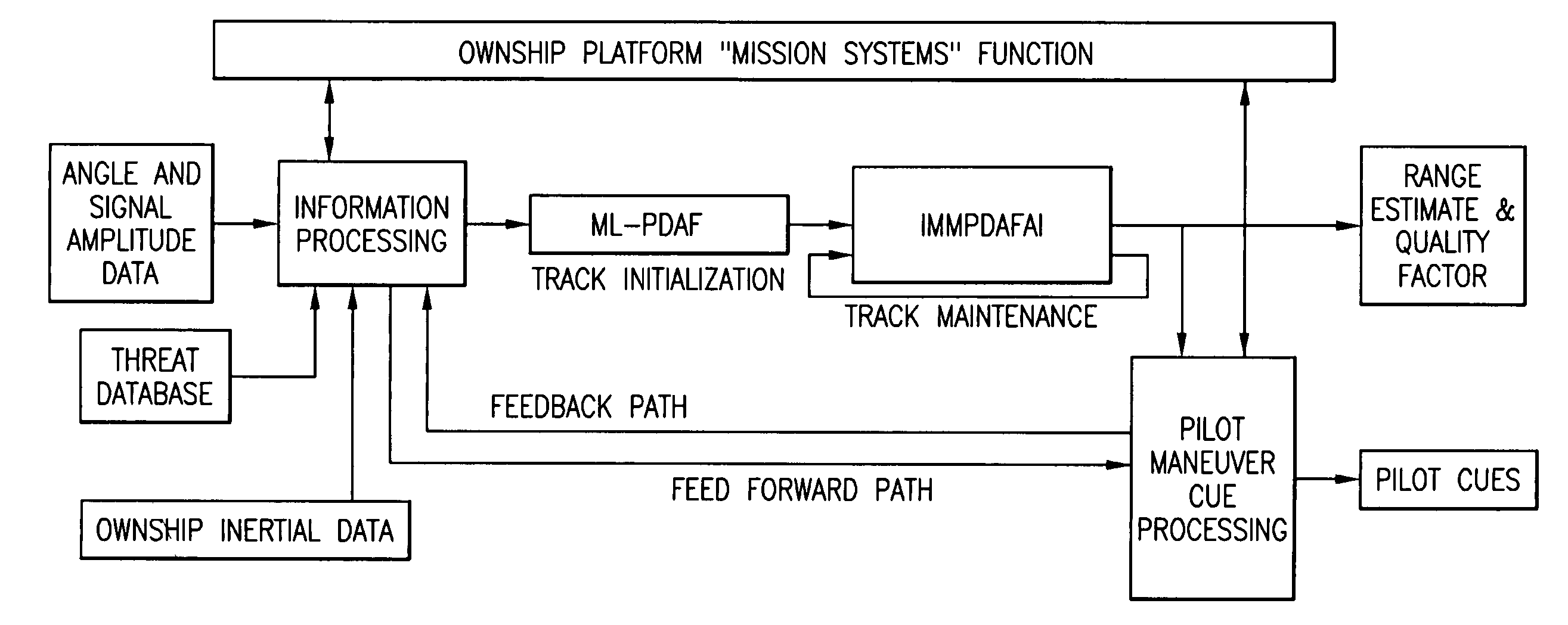
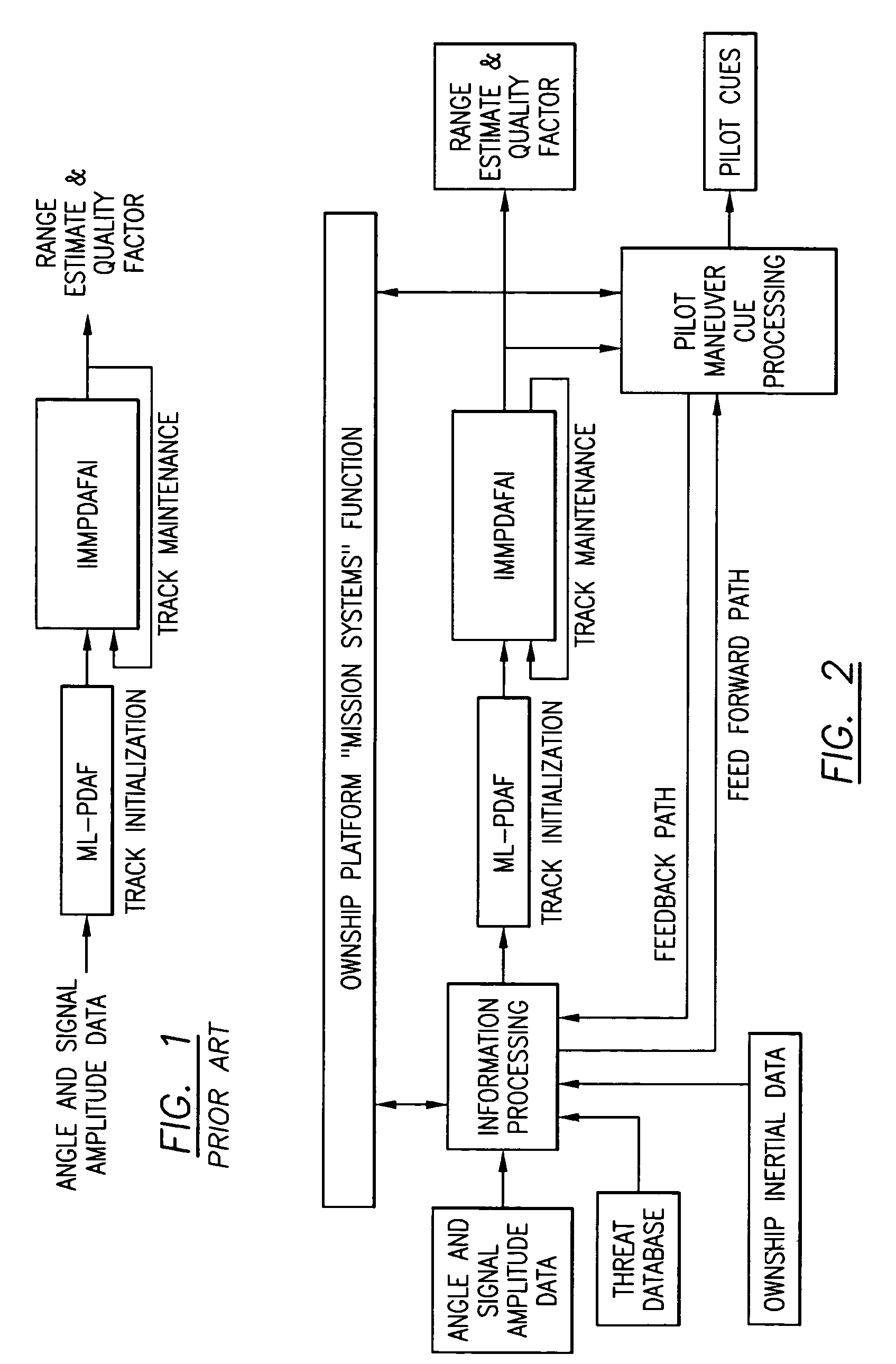
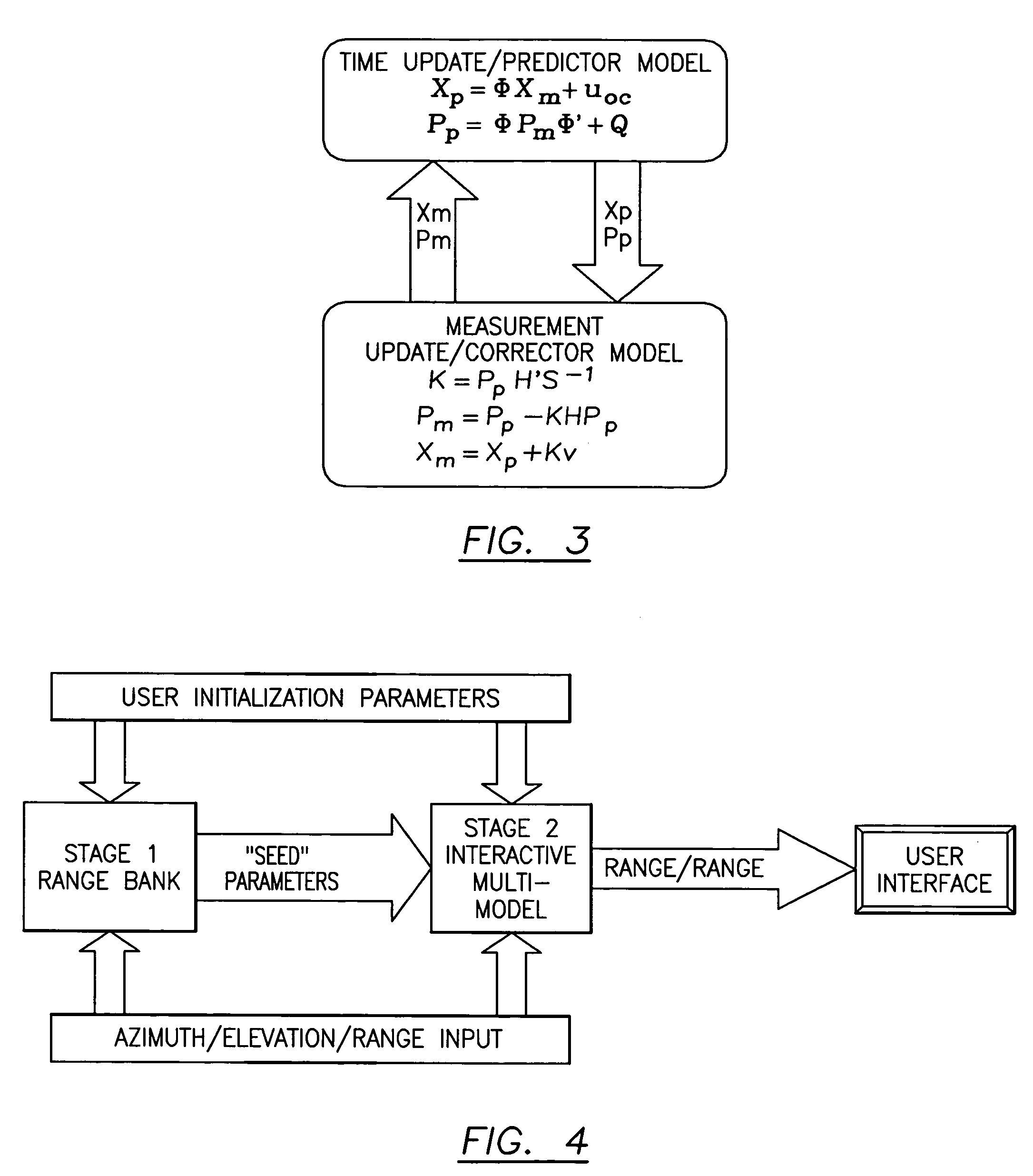
- The implementation of a method and system utilizing batch maximum likelihood (ML) and probabilistic data association filter (PDAF) methodologies, combined with recursive interacting multiple model (IMM) algorithms, which process noisy electronic warfare data, interferometer measurements, and real-time mission constraints to enhance passive range estimates and track maintenance.
Risk Assessment Framework for Filter-Based Forecasting Models
A comprehensive risk assessment framework for filter-based forecasting models in financial markets must address multiple dimensions of uncertainty and vulnerability. The framework should begin with a systematic identification of risk sources, categorizing them into model-specific risks (parameter estimation errors, state transition uncertainties), market-related risks (volatility regime changes, structural breaks), and implementation risks (computational constraints, data quality issues).
The quantitative assessment component should incorporate stress testing protocols that subject the Kalman filter models to extreme market scenarios, including historical crisis periods and synthetic stress conditions. These tests should evaluate filter performance under varying degrees of market turbulence, measuring forecast deviation and recovery time after significant market dislocations.
Sensitivity analysis forms a critical element of the framework, examining how variations in key parameters affect forecast stability. This should include Monte Carlo simulations to generate probability distributions of forecast outcomes under different parameter configurations, helping to identify threshold values where model performance deteriorates significantly.
For Kalman filter implementations specifically, the framework must address filter divergence risk through specialized diagnostics. Innovation sequence monitoring can detect when the filter begins to ignore measurement updates, while consistency checks between predicted and actual measurement covariances help identify model misspecification. Implementing adaptive techniques that automatically adjust process and measurement noise covariances based on recent performance can mitigate these risks.
The framework should establish clear risk tolerance thresholds tailored to specific financial applications, whether for portfolio optimization, derivatives pricing, or risk management. These thresholds must consider both the magnitude of potential forecast errors and their persistence over time, with stricter limits for applications where forecast errors have asymmetric consequences.
Governance procedures represent the final component, detailing model validation protocols, review frequencies, and escalation paths when risk metrics exceed predefined thresholds. This includes documentation requirements for model assumptions, limitations, and known failure modes, ensuring that stakeholders understand the conditions under which forecasts may become unreliable.
The quantitative assessment component should incorporate stress testing protocols that subject the Kalman filter models to extreme market scenarios, including historical crisis periods and synthetic stress conditions. These tests should evaluate filter performance under varying degrees of market turbulence, measuring forecast deviation and recovery time after significant market dislocations.
Sensitivity analysis forms a critical element of the framework, examining how variations in key parameters affect forecast stability. This should include Monte Carlo simulations to generate probability distributions of forecast outcomes under different parameter configurations, helping to identify threshold values where model performance deteriorates significantly.
For Kalman filter implementations specifically, the framework must address filter divergence risk through specialized diagnostics. Innovation sequence monitoring can detect when the filter begins to ignore measurement updates, while consistency checks between predicted and actual measurement covariances help identify model misspecification. Implementing adaptive techniques that automatically adjust process and measurement noise covariances based on recent performance can mitigate these risks.
The framework should establish clear risk tolerance thresholds tailored to specific financial applications, whether for portfolio optimization, derivatives pricing, or risk management. These thresholds must consider both the magnitude of potential forecast errors and their persistence over time, with stricter limits for applications where forecast errors have asymmetric consequences.
Governance procedures represent the final component, detailing model validation protocols, review frequencies, and escalation paths when risk metrics exceed predefined thresholds. This includes documentation requirements for model assumptions, limitations, and known failure modes, ensuring that stakeholders understand the conditions under which forecasts may become unreliable.
Regulatory Compliance for Financial Prediction Technologies
Financial prediction technologies, including Kalman Filter applications, are subject to stringent regulatory frameworks across global markets. In the United States, the Securities and Exchange Commission (SEC) requires transparency in algorithmic trading models, with specific disclosure requirements for predictive technologies used in investment decision-making. The Dodd-Frank Act further imposes stress testing requirements for financial institutions utilizing quantitative models, directly impacting how Kalman Filter robustness tests must be documented and validated.
European regulations under MiFID II mandate comprehensive documentation of algorithmic trading strategies, including the mathematical foundations and testing methodologies. For Kalman Filter implementations, this necessitates detailed documentation of state transition matrices, measurement models, and noise parameters, along with evidence of robustness testing across various market conditions. The European Securities and Markets Authority (ESMA) guidelines specifically address the need for back-testing and stress-testing of prediction models.
In Asia-Pacific markets, regulatory approaches vary significantly. Japan's Financial Services Agency (FSA) has established guidelines for algorithmic trading that emphasize system stability and risk management. Singapore's Monetary Authority (MAS) focuses on governance frameworks for financial technology, requiring formal approval processes for sophisticated prediction models deployed in regulated financial institutions.
Compliance requirements typically include model validation documentation, which for Kalman Filter applications must demonstrate resilience to outliers, regime changes, and parameter uncertainty. Regulatory bodies increasingly require evidence of out-of-sample testing and sensitivity analysis to parameter variations. The Basel Committee on Banking Supervision has established standards for model risk management that directly impact how financial prediction technologies must be validated before deployment.
Data privacy regulations, including GDPR in Europe and CCPA in California, impose additional constraints on financial prediction technologies. These regulations affect how training data for Kalman Filter models can be collected, stored, and processed, particularly when personal financial information is involved. Compliance requires implementing appropriate data anonymization techniques and establishing clear data governance frameworks.
Emerging regulatory trends indicate increasing scrutiny of AI-based financial prediction technologies, with potential requirements for explainability and fairness. This may necessitate supplementing Kalman Filter approaches with more transparent methodologies or developing enhanced documentation practices that demonstrate the absence of bias in predictions across different market conditions and participant categories.
European regulations under MiFID II mandate comprehensive documentation of algorithmic trading strategies, including the mathematical foundations and testing methodologies. For Kalman Filter implementations, this necessitates detailed documentation of state transition matrices, measurement models, and noise parameters, along with evidence of robustness testing across various market conditions. The European Securities and Markets Authority (ESMA) guidelines specifically address the need for back-testing and stress-testing of prediction models.
In Asia-Pacific markets, regulatory approaches vary significantly. Japan's Financial Services Agency (FSA) has established guidelines for algorithmic trading that emphasize system stability and risk management. Singapore's Monetary Authority (MAS) focuses on governance frameworks for financial technology, requiring formal approval processes for sophisticated prediction models deployed in regulated financial institutions.
Compliance requirements typically include model validation documentation, which for Kalman Filter applications must demonstrate resilience to outliers, regime changes, and parameter uncertainty. Regulatory bodies increasingly require evidence of out-of-sample testing and sensitivity analysis to parameter variations. The Basel Committee on Banking Supervision has established standards for model risk management that directly impact how financial prediction technologies must be validated before deployment.
Data privacy regulations, including GDPR in Europe and CCPA in California, impose additional constraints on financial prediction technologies. These regulations affect how training data for Kalman Filter models can be collected, stored, and processed, particularly when personal financial information is involved. Compliance requires implementing appropriate data anonymization techniques and establishing clear data governance frameworks.
Emerging regulatory trends indicate increasing scrutiny of AI-based financial prediction technologies, with potential requirements for explainability and fairness. This may necessitate supplementing Kalman Filter approaches with more transparent methodologies or developing enhanced documentation practices that demonstrate the absence of bias in predictions across different market conditions and participant categories.
Unlock deeper insights with PatSnap Eureka Quick Research — get a full tech report to explore trends and direct your research. Try now!
Generate Your Research Report Instantly with AI Agent
Supercharge your innovation with PatSnap Eureka AI Agent Platform!