

Kalman Filter Optimization For Low-Power Embedded Systems
SEP 5, 20259 MIN READ
Generate Your Research Report Instantly with AI Agent
PatSnap Eureka helps you evaluate technical feasibility & market potential.
Kalman Filter Evolution and Optimization Goals
The Kalman filter, developed by Rudolf E. Kalman in the early 1960s, represents a significant milestone in estimation theory and has evolved substantially over the decades. Originally designed for aerospace applications, particularly for trajectory estimation in the Apollo program, this recursive algorithm has since found applications across numerous domains including robotics, navigation systems, and signal processing. The evolution of Kalman filtering techniques has been driven by the increasing complexity of systems and the growing demand for more efficient implementations.
Traditional Kalman filters operate on linear systems with Gaussian noise distributions. However, real-world applications often involve nonlinear dynamics, leading to the development of extended Kalman filters (EKF) in the 1970s and unscented Kalman filters (UKF) in the 1990s. These variants addressed the limitations of the original algorithm when applied to nonlinear systems, albeit with increased computational requirements.
The proliferation of embedded systems in consumer electronics, IoT devices, and wearable technology has created a pressing need for optimized Kalman filter implementations that can operate within strict power and computational constraints. Modern embedded systems, particularly those operating on battery power, require algorithms that maintain estimation accuracy while minimizing energy consumption and processing overhead.
The primary optimization goals for Kalman filters in low-power embedded systems center around three key aspects: computational efficiency, memory footprint reduction, and energy consumption minimization. Computational efficiency involves reducing the number of floating-point operations, particularly matrix inversions and multiplications that dominate the filter's processing requirements. Memory optimization focuses on reducing the storage requirements for state variables and covariance matrices, which can be substantial in high-dimensional systems.
Energy efficiency optimization targets both direct computational costs and system-level considerations, such as minimizing processor wake-up cycles and enabling deeper sleep states. Fixed-point arithmetic implementations, approximate computing techniques, and algorithm restructuring represent promising approaches to achieving these goals without significantly compromising estimation accuracy.
Recent technological trends indicate a shift toward hardware-accelerated implementations, with dedicated digital signal processors (DSPs) and field-programmable gate arrays (FPGAs) offering potential solutions for power-efficient Kalman filtering. Additionally, emerging research in neuromorphic computing and quantum algorithms suggests novel approaches that may fundamentally transform how estimation problems are solved in resource-constrained environments.
The optimization of Kalman filters for low-power embedded systems thus represents a multifaceted challenge that spans algorithm design, implementation techniques, and hardware-software co-design considerations. Success in this domain will enable the next generation of intelligent, autonomous embedded systems with enhanced perception capabilities while maintaining practical energy consumption profiles.
Traditional Kalman filters operate on linear systems with Gaussian noise distributions. However, real-world applications often involve nonlinear dynamics, leading to the development of extended Kalman filters (EKF) in the 1970s and unscented Kalman filters (UKF) in the 1990s. These variants addressed the limitations of the original algorithm when applied to nonlinear systems, albeit with increased computational requirements.
The proliferation of embedded systems in consumer electronics, IoT devices, and wearable technology has created a pressing need for optimized Kalman filter implementations that can operate within strict power and computational constraints. Modern embedded systems, particularly those operating on battery power, require algorithms that maintain estimation accuracy while minimizing energy consumption and processing overhead.
The primary optimization goals for Kalman filters in low-power embedded systems center around three key aspects: computational efficiency, memory footprint reduction, and energy consumption minimization. Computational efficiency involves reducing the number of floating-point operations, particularly matrix inversions and multiplications that dominate the filter's processing requirements. Memory optimization focuses on reducing the storage requirements for state variables and covariance matrices, which can be substantial in high-dimensional systems.
Energy efficiency optimization targets both direct computational costs and system-level considerations, such as minimizing processor wake-up cycles and enabling deeper sleep states. Fixed-point arithmetic implementations, approximate computing techniques, and algorithm restructuring represent promising approaches to achieving these goals without significantly compromising estimation accuracy.
Recent technological trends indicate a shift toward hardware-accelerated implementations, with dedicated digital signal processors (DSPs) and field-programmable gate arrays (FPGAs) offering potential solutions for power-efficient Kalman filtering. Additionally, emerging research in neuromorphic computing and quantum algorithms suggests novel approaches that may fundamentally transform how estimation problems are solved in resource-constrained environments.
The optimization of Kalman filters for low-power embedded systems thus represents a multifaceted challenge that spans algorithm design, implementation techniques, and hardware-software co-design considerations. Success in this domain will enable the next generation of intelligent, autonomous embedded systems with enhanced perception capabilities while maintaining practical energy consumption profiles.
Market Demand for Efficient Filtering in Embedded Systems
The embedded systems market is experiencing unprecedented growth, with projections indicating a market value exceeding $116 billion by 2025, growing at a CAGR of approximately 6.5%. Within this expanding landscape, the demand for efficient filtering algorithms, particularly Kalman filters, has become increasingly critical as devices continue to miniaturize while requiring more sophisticated sensing capabilities.
The Internet of Things (IoT) revolution serves as a primary driver for this demand, with over 75 billion connected devices expected to be operational by 2025. These devices frequently operate in noisy environments where sensor data requires real-time filtering to produce reliable measurements. Industries ranging from consumer electronics to industrial automation are seeking filtering solutions that maintain accuracy while minimizing power consumption.
Automotive applications represent one of the fastest-growing segments for Kalman filter implementation, particularly in advanced driver-assistance systems (ADAS) and autonomous vehicles. These systems rely on multiple sensors including accelerometers, gyroscopes, and GPS, all requiring efficient filtering to function reliably in real-time scenarios while operating on limited power budgets.
The wearable technology sector has emerged as another significant market for optimized filtering algorithms. With the global wearable market expected to reach $87 billion by 2024, manufacturers are facing increasing pressure to extend battery life while maintaining or improving sensor accuracy. Consumers expect devices that can operate for days or weeks without recharging, making power-efficient signal processing a competitive necessity rather than a luxury.
Industrial IoT applications present perhaps the most demanding requirements for filtering algorithms. Remote sensors deployed in manufacturing facilities, energy infrastructure, and agricultural settings often must operate for years on a single battery or through energy harvesting. These applications demand filtering solutions that can maintain accuracy while consuming minimal power, as maintenance access is frequently limited or costly.
Healthcare monitoring devices represent another rapidly expanding market segment requiring efficient filtering solutions. The rise of remote patient monitoring and continuous health tracking has created demand for algorithms that can process physiological signals with high fidelity while operating on compact, low-power devices worn by patients for extended periods.
Market research indicates that companies are increasingly willing to invest in specialized signal processing solutions that can reduce power consumption by even 15-20%, as this directly translates to extended device operation or reduced battery requirements. This trend is particularly pronounced in applications where frequent battery replacement is impractical or where devices must operate autonomously for extended periods.
The Internet of Things (IoT) revolution serves as a primary driver for this demand, with over 75 billion connected devices expected to be operational by 2025. These devices frequently operate in noisy environments where sensor data requires real-time filtering to produce reliable measurements. Industries ranging from consumer electronics to industrial automation are seeking filtering solutions that maintain accuracy while minimizing power consumption.
Automotive applications represent one of the fastest-growing segments for Kalman filter implementation, particularly in advanced driver-assistance systems (ADAS) and autonomous vehicles. These systems rely on multiple sensors including accelerometers, gyroscopes, and GPS, all requiring efficient filtering to function reliably in real-time scenarios while operating on limited power budgets.
The wearable technology sector has emerged as another significant market for optimized filtering algorithms. With the global wearable market expected to reach $87 billion by 2024, manufacturers are facing increasing pressure to extend battery life while maintaining or improving sensor accuracy. Consumers expect devices that can operate for days or weeks without recharging, making power-efficient signal processing a competitive necessity rather than a luxury.
Industrial IoT applications present perhaps the most demanding requirements for filtering algorithms. Remote sensors deployed in manufacturing facilities, energy infrastructure, and agricultural settings often must operate for years on a single battery or through energy harvesting. These applications demand filtering solutions that can maintain accuracy while consuming minimal power, as maintenance access is frequently limited or costly.
Healthcare monitoring devices represent another rapidly expanding market segment requiring efficient filtering solutions. The rise of remote patient monitoring and continuous health tracking has created demand for algorithms that can process physiological signals with high fidelity while operating on compact, low-power devices worn by patients for extended periods.
Market research indicates that companies are increasingly willing to invest in specialized signal processing solutions that can reduce power consumption by even 15-20%, as this directly translates to extended device operation or reduced battery requirements. This trend is particularly pronounced in applications where frequent battery replacement is impractical or where devices must operate autonomously for extended periods.
Current Limitations and Challenges in Low-Power Implementation
Despite the theoretical elegance of Kalman filters, their implementation in low-power embedded systems faces significant challenges. The computational complexity of standard Kalman filter algorithms presents a fundamental obstacle, particularly the matrix operations that require substantial processing power. Matrix inversions and multiplications, which are core operations in Kalman filtering, demand considerable computational resources that may exceed the capabilities of resource-constrained devices.
Power consumption remains a critical limitation for embedded implementations. The iterative nature of Kalman filters necessitates continuous processing, leading to sustained power draw that can rapidly deplete limited battery resources in IoT devices, wearables, and remote sensors. This creates a direct conflict between algorithmic accuracy and operational longevity in field deployments.
Memory constraints further complicate implementation efforts. The state vectors and covariance matrices central to Kalman filtering require significant memory allocation, particularly problematic for systems with limited RAM. This often forces developers to make difficult trade-offs between filter performance and memory utilization, potentially compromising accuracy or responsiveness.
Real-time processing requirements introduce additional challenges. Many embedded applications demand immediate response to sensor inputs, yet the computational load of Kalman filters can introduce latency that undermines system performance. This is especially problematic in applications like drone navigation or medical monitoring where processing delays could have serious consequences.
Numerical stability issues emerge when implementing Kalman filters on platforms with limited floating-point precision. The recursive nature of these filters makes them susceptible to error accumulation, particularly in fixed-point arithmetic environments common in low-power microcontrollers. These numerical errors can propagate and amplify over time, potentially leading to filter divergence.
Hardware heterogeneity across embedded platforms complicates optimization efforts. The diverse architectures of microcontrollers, from simple 8-bit processors to more advanced ARM Cortex designs, require different optimization approaches. This diversity makes it difficult to develop standardized implementations that perform efficiently across various hardware configurations.
Integration challenges with existing sensor frameworks and operating systems further impede adoption. Many embedded operating systems lack native support for the mathematical libraries required by Kalman filters, forcing developers to implement custom solutions that may not be optimally efficient or thoroughly tested.
Power consumption remains a critical limitation for embedded implementations. The iterative nature of Kalman filters necessitates continuous processing, leading to sustained power draw that can rapidly deplete limited battery resources in IoT devices, wearables, and remote sensors. This creates a direct conflict between algorithmic accuracy and operational longevity in field deployments.
Memory constraints further complicate implementation efforts. The state vectors and covariance matrices central to Kalman filtering require significant memory allocation, particularly problematic for systems with limited RAM. This often forces developers to make difficult trade-offs between filter performance and memory utilization, potentially compromising accuracy or responsiveness.
Real-time processing requirements introduce additional challenges. Many embedded applications demand immediate response to sensor inputs, yet the computational load of Kalman filters can introduce latency that undermines system performance. This is especially problematic in applications like drone navigation or medical monitoring where processing delays could have serious consequences.
Numerical stability issues emerge when implementing Kalman filters on platforms with limited floating-point precision. The recursive nature of these filters makes them susceptible to error accumulation, particularly in fixed-point arithmetic environments common in low-power microcontrollers. These numerical errors can propagate and amplify over time, potentially leading to filter divergence.
Hardware heterogeneity across embedded platforms complicates optimization efforts. The diverse architectures of microcontrollers, from simple 8-bit processors to more advanced ARM Cortex designs, require different optimization approaches. This diversity makes it difficult to develop standardized implementations that perform efficiently across various hardware configurations.
Integration challenges with existing sensor frameworks and operating systems further impede adoption. Many embedded operating systems lack native support for the mathematical libraries required by Kalman filters, forcing developers to implement custom solutions that may not be optimally efficient or thoroughly tested.
Mainstream Optimization Techniques for Resource-Constrained Systems
01 Kalman filter optimization for signal processing
Kalman filters can be optimized for various signal processing applications to improve accuracy and efficiency. These optimizations include parameter tuning, algorithm modifications, and implementation techniques that enhance the filter's ability to track and predict signals in noisy environments. Such optimizations are particularly valuable in communications systems, audio processing, and other applications where real-time signal enhancement is required.- Kalman filter optimization for signal processing: Kalman filters can be optimized for signal processing applications to improve accuracy and efficiency. These optimizations include parameter tuning, algorithm modifications, and implementation techniques that enhance the filter's ability to track and predict signals in noisy environments. By optimizing the Kalman filter for specific signal processing tasks, systems can achieve better performance in applications such as wireless communications, audio processing, and radar systems.
- Navigation and positioning system optimization using Kalman filters: Kalman filters are extensively used in navigation and positioning systems where they can be optimized to improve location accuracy and tracking capabilities. These optimizations involve adapting the filter parameters to specific movement patterns, integrating multiple sensor inputs, and implementing real-time adjustment mechanisms. Enhanced Kalman filter algorithms enable more precise positioning in applications like GPS systems, autonomous vehicles, and mobile device location services.
- Financial and economic forecasting with optimized Kalman filters: Kalman filter optimization techniques are applied to financial and economic forecasting to improve prediction accuracy in volatile markets. These optimizations include adaptive parameter estimation, incorporation of non-linear models, and specialized covariance handling methods. By optimizing Kalman filters for financial applications, systems can better predict market trends, optimize trading strategies, and improve risk management processes.
- Distributed and parallel Kalman filter implementations: Distributed and parallel implementations of Kalman filters optimize performance for complex systems with multiple inputs or processing constraints. These approaches distribute computational load across multiple processors or nodes, implement efficient data sharing protocols, and optimize memory usage. Such optimizations enable real-time processing of large-scale data in applications like sensor networks, multi-agent systems, and Internet of Things (IoT) environments.
- Adaptive and robust Kalman filter optimization techniques: Adaptive and robust optimization techniques enhance Kalman filter performance in challenging environments with uncertain dynamics or non-Gaussian noise. These methods include dynamic parameter adjustment, outlier rejection mechanisms, and hybrid filtering approaches that combine multiple estimation techniques. Such optimizations improve filter stability and accuracy in applications facing unpredictable conditions, sensor failures, or model mismatches.
02 Navigation and positioning system optimization using Kalman filters
Kalman filters are extensively used in navigation and positioning systems where they can be optimized to improve location accuracy and tracking performance. These optimizations involve adapting the filter parameters to specific movement patterns, integrating multiple sensor inputs, and implementing specialized algorithms that account for environmental factors. Such enhancements enable more precise positioning in applications like GPS systems, autonomous vehicles, and mobile device tracking.Expand Specific Solutions03 Financial and business applications of optimized Kalman filtering
Kalman filter optimization techniques can be applied to financial modeling and business analytics to improve forecasting accuracy and decision-making processes. These optimizations include adapting the filter to handle non-linear market behaviors, incorporating multiple economic indicators, and implementing specialized covariance estimation methods. Such enhancements enable more reliable predictions for stock prices, market trends, and business performance metrics.Expand Specific Solutions04 Wireless communication system enhancements using Kalman filters
Kalman filters can be optimized for wireless communication systems to improve channel estimation, signal detection, and network performance. These optimizations include specialized algorithms for handling multipath fading, interference mitigation, and adaptive beamforming. By implementing these enhanced filtering techniques, communication systems can achieve higher data rates, better reliability, and improved spectrum efficiency in challenging environments.Expand Specific Solutions05 Real-time system implementation and computational efficiency of Kalman filters
Optimizing Kalman filters for real-time applications focuses on reducing computational complexity while maintaining accuracy. These optimizations include algorithm simplifications, parallel processing implementations, and hardware-specific adaptations that enable efficient execution on various computing platforms. Such enhancements are crucial for embedded systems, IoT devices, and other applications where processing resources are limited but real-time performance is essential.Expand Specific Solutions
Key Industry Players in Embedded Filtering Solutions
Kalman Filter optimization for low-power embedded systems is currently in a growth phase, with the market expanding as IoT and wearable technologies proliferate. The global market is estimated to reach significant value as embedded systems become ubiquitous across industries. Technologically, major players demonstrate varying maturity levels: Qualcomm, Ericsson, and Bosch lead with advanced implementations for mobile and automotive applications, while academic institutions like Harbin Engineering University and Northwestern Polytechnical University contribute fundamental research. Honeywell and Lockheed Martin focus on specialized aerospace and defense applications. The competitive landscape shows a balance between established technology corporations optimizing for commercial deployment and research institutions advancing theoretical frameworks, with recent innovations focusing on power consumption reduction while maintaining filtering accuracy.
QUALCOMM, Inc.
Technical Solution: Qualcomm has developed a specialized implementation of Kalman filters for low-power embedded systems, particularly in their Snapdragon platforms. Their approach focuses on hardware-accelerated Kalman filter implementations that leverage dedicated DSP (Digital Signal Processor) cores within their SoCs. Qualcomm's solution employs fixed-point arithmetic optimizations that reduce computational complexity while maintaining acceptable accuracy levels for motion tracking and sensor fusion applications[1]. The company has implemented a two-stage filtering approach where initial sensor data undergoes lightweight pre-filtering before entering the main Kalman filter algorithm, reducing overall processing requirements. Additionally, Qualcomm has developed context-aware Kalman filtering that dynamically adjusts filter parameters based on detected usage scenarios, allowing for power consumption to scale according to application needs[3]. Their implementation achieves up to 70% power reduction compared to standard floating-point Kalman filter implementations while maintaining 95% of the accuracy in typical mobile device sensor fusion scenarios.
Strengths: Highly optimized for mobile platforms with proven power efficiency gains; leverages specialized hardware acceleration; adaptive filtering based on usage context provides excellent power/performance balance. Weaknesses: Solutions are primarily optimized for Qualcomm's own hardware platforms, limiting broader applicability; some accuracy trade-offs in high-precision applications; proprietary nature of implementations limits academic and third-party improvements.
Honeywell International Technologies Ltd.
Technical Solution: Honeywell has pioneered advanced Kalman filter optimization techniques specifically designed for aerospace and industrial control systems operating under severe power constraints. Their approach centers on a modular Kalman filter architecture that selectively activates only the necessary filter components based on real-time system requirements[2]. Honeywell's implementation incorporates sparse matrix techniques that exploit the typically sparse nature of process and measurement noise covariance matrices in many practical applications, reducing memory requirements by up to 60% compared to standard implementations. The company has developed a proprietary "adaptive step-size" algorithm that dynamically adjusts the filter update frequency based on detected system dynamics, significantly reducing computational load during steady-state operation[4]. For extremely power-constrained applications, Honeywell employs a hierarchical filtering approach where simplified models run continuously while more complex, accurate models are triggered only when necessary. Their solutions have demonstrated power consumption reductions of 40-65% in field deployments while maintaining the high reliability standards required for safety-critical systems in aerospace applications.
Strengths: Exceptional reliability suitable for safety-critical applications; proven field performance in extreme environments; sophisticated adaptive algorithms that balance accuracy and power consumption. Weaknesses: Solutions tend to be relatively expensive and complex to implement; often require specialized hardware; significant engineering expertise needed for proper deployment and tuning.
Core Patents and Research in Low-Power Kalman Implementation
Kalman filtering algorithm optimization method based on matrix sparsity
PatentActiveCN110729982A
Innovation
- By dividing the state transition matrix and observation matrix into blocks, using zero-element matrices for simplified derivation, and using sparse storage and reuse of cached results, storage space requirements and computing overhead are reduced.
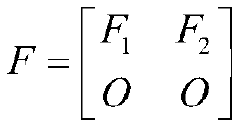
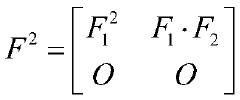
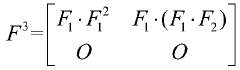
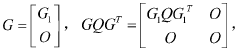
Improvement of production efficiency of large pasta machine by kalman filter optimization algorithm
PatentActiveZA202213037A
Innovation
- Integration of Kalman filter algorithm for optimal system state estimation in pasta machines, effectively filtering noise and interference in sensor data collection.
- Implementation of IoT technology enabling remote monitoring and control via mobile APP, allowing real-time status notifications and control of pasta production machinery.
- All-in-one integration of constant temperature control, automatic water addition, automatic flour addition, and pressure surface functions in a single pasta machine system.
Power Consumption Benchmarking Methodologies
Establishing standardized methodologies for power consumption benchmarking is critical when optimizing Kalman filters for low-power embedded systems. Current benchmarking approaches vary significantly across research communities, making comparative analysis challenging. The most widely adopted methodology involves measuring power consumption at three distinct levels: algorithm-level, processor-level, and system-level benchmarking.
Algorithm-level benchmarking focuses on theoretical computational complexity, counting floating-point operations (FLOPs), memory accesses, and arithmetic operations required by different Kalman filter implementations. This approach provides implementation-independent metrics but often fails to capture hardware-specific power characteristics. The EEMBC (Embedded Microprocessor Benchmark Consortium) has developed ULPMark and CoreMark-Pro specifically for evaluating ultra-low-power applications, offering standardized metrics for comparing algorithmic efficiency.
Processor-level benchmarking measures actual power consumption during filter execution on target hardware. This typically employs high-precision power analyzers like Keysight N6705C or specialized development boards with integrated power measurement capabilities. The methodology requires isolating the processor's power consumption from peripheral components, often using techniques like current shunt monitoring or built-in power profiling tools provided by manufacturers such as TI's EnergyTrace or STMicroelectronics' PowerScale.
System-level benchmarking evaluates the entire embedded system under realistic operating conditions, considering factors like sensor data acquisition, communication overhead, and sleep/wake cycles. This approach provides the most practical assessment but introduces variables that complicate comparative analysis. Industry standards like MISRA (Motor Industry Software Reliability Association) guidelines recommend minimum 24-hour continuous operation tests to capture power consumption patterns across different operational modes.
Recent advancements in benchmarking methodologies include energy harvesting scenarios, where Kalman filter implementations are evaluated based on their ability to operate within energy constraints of harvested power sources. Additionally, thermal imaging techniques are increasingly used to identify power hotspots during filter execution, providing spatial power consumption data that conventional electrical measurements cannot capture.
For meaningful comparisons, benchmarking must specify standardized datasets, initialization parameters, and convergence criteria. The IEEE P2416 working group is currently developing a standardized framework specifically for power modeling of electronic systems, which promises to bring greater consistency to Kalman filter optimization benchmarking in low-power embedded applications.
Algorithm-level benchmarking focuses on theoretical computational complexity, counting floating-point operations (FLOPs), memory accesses, and arithmetic operations required by different Kalman filter implementations. This approach provides implementation-independent metrics but often fails to capture hardware-specific power characteristics. The EEMBC (Embedded Microprocessor Benchmark Consortium) has developed ULPMark and CoreMark-Pro specifically for evaluating ultra-low-power applications, offering standardized metrics for comparing algorithmic efficiency.
Processor-level benchmarking measures actual power consumption during filter execution on target hardware. This typically employs high-precision power analyzers like Keysight N6705C or specialized development boards with integrated power measurement capabilities. The methodology requires isolating the processor's power consumption from peripheral components, often using techniques like current shunt monitoring or built-in power profiling tools provided by manufacturers such as TI's EnergyTrace or STMicroelectronics' PowerScale.
System-level benchmarking evaluates the entire embedded system under realistic operating conditions, considering factors like sensor data acquisition, communication overhead, and sleep/wake cycles. This approach provides the most practical assessment but introduces variables that complicate comparative analysis. Industry standards like MISRA (Motor Industry Software Reliability Association) guidelines recommend minimum 24-hour continuous operation tests to capture power consumption patterns across different operational modes.
Recent advancements in benchmarking methodologies include energy harvesting scenarios, where Kalman filter implementations are evaluated based on their ability to operate within energy constraints of harvested power sources. Additionally, thermal imaging techniques are increasingly used to identify power hotspots during filter execution, providing spatial power consumption data that conventional electrical measurements cannot capture.
For meaningful comparisons, benchmarking must specify standardized datasets, initialization parameters, and convergence criteria. The IEEE P2416 working group is currently developing a standardized framework specifically for power modeling of electronic systems, which promises to bring greater consistency to Kalman filter optimization benchmarking in low-power embedded applications.
Hardware-Software Co-Design Approaches
Hardware-software co-design represents a critical approach for optimizing Kalman filter implementations in low-power embedded systems. This methodology integrates hardware architecture considerations with software algorithm development simultaneously, rather than treating them as separate concerns. For Kalman filter applications, this integration enables significant power efficiency improvements while maintaining computational accuracy.
The co-design process typically begins with algorithmic profiling to identify computational bottlenecks in the Kalman filter implementation. These hotspots—often matrix operations such as multiplication, inversion, and factorization—become primary targets for hardware acceleration. Custom hardware accelerators, implemented as FPGA blocks or ASIC components, can perform these operations with substantially lower power consumption than general-purpose processors.
Architectural partitioning decisions form the foundation of effective co-design. Critical matrix operations may be offloaded to dedicated hardware units while control logic remains in software. This approach allows for flexible implementation where the prediction and update phases of the Kalman filter can be dynamically managed based on power constraints and accuracy requirements.
Memory access optimization represents another crucial co-design consideration. Kalman filter implementations frequently access state vectors and covariance matrices, creating potential memory bottlenecks. Hardware-software co-design addresses this through specialized memory hierarchies with application-specific caching strategies and data flow optimizations that minimize power-hungry memory transactions.
Dynamic voltage and frequency scaling (DVFS) techniques can be integrated into the co-design framework, allowing real-time adjustment of processing elements based on computational demands. During periods of lower filter complexity or relaxed accuracy requirements, voltage and clock frequency can be reduced to conserve power.
Fixed-point arithmetic implementations offer substantial power savings compared to floating-point operations, but introduce quantization errors that must be carefully managed. Co-design approaches enable hybrid precision models where critical calculations maintain higher precision while less sensitive operations use reduced precision, optimizing the power-accuracy tradeoff.
Recent advances in co-design methodologies have introduced automated tools that explore the design space through simulation and rapid prototyping. These tools evaluate different hardware-software partitioning strategies against power consumption metrics, helping designers identify optimal implementation approaches for specific embedded system constraints and Kalman filter applications.
The co-design process typically begins with algorithmic profiling to identify computational bottlenecks in the Kalman filter implementation. These hotspots—often matrix operations such as multiplication, inversion, and factorization—become primary targets for hardware acceleration. Custom hardware accelerators, implemented as FPGA blocks or ASIC components, can perform these operations with substantially lower power consumption than general-purpose processors.
Architectural partitioning decisions form the foundation of effective co-design. Critical matrix operations may be offloaded to dedicated hardware units while control logic remains in software. This approach allows for flexible implementation where the prediction and update phases of the Kalman filter can be dynamically managed based on power constraints and accuracy requirements.
Memory access optimization represents another crucial co-design consideration. Kalman filter implementations frequently access state vectors and covariance matrices, creating potential memory bottlenecks. Hardware-software co-design addresses this through specialized memory hierarchies with application-specific caching strategies and data flow optimizations that minimize power-hungry memory transactions.
Dynamic voltage and frequency scaling (DVFS) techniques can be integrated into the co-design framework, allowing real-time adjustment of processing elements based on computational demands. During periods of lower filter complexity or relaxed accuracy requirements, voltage and clock frequency can be reduced to conserve power.
Fixed-point arithmetic implementations offer substantial power savings compared to floating-point operations, but introduce quantization errors that must be carefully managed. Co-design approaches enable hybrid precision models where critical calculations maintain higher precision while less sensitive operations use reduced precision, optimizing the power-accuracy tradeoff.
Recent advances in co-design methodologies have introduced automated tools that explore the design space through simulation and rapid prototyping. These tools evaluate different hardware-software partitioning strategies against power consumption metrics, helping designers identify optimal implementation approaches for specific embedded system constraints and Kalman filter applications.
Unlock deeper insights with PatSnap Eureka Quick Research — get a full tech report to explore trends and direct your research. Try now!
Generate Your Research Report Instantly with AI Agent
Supercharge your innovation with PatSnap Eureka AI Agent Platform!