

Laser Engineered Net Shaping for Critical Aerospace Components
APR 1, 20269 MIN READ
Generate Your Research Report Instantly with AI Agent
PatSnap Eureka helps you evaluate technical feasibility & market potential.
LENS Technology Background and Aerospace Manufacturing Goals
Laser Engineered Net Shaping (LENS) represents a revolutionary additive manufacturing technology that emerged in the mid-1990s at Sandia National Laboratories. This directed energy deposition process utilizes a high-powered laser beam to simultaneously melt metallic powder and substrate material, creating fully dense three-dimensional components through layer-by-layer construction. The technology fundamentally differs from traditional subtractive manufacturing by building components from the ground up, enabling unprecedented design freedom and material efficiency.
The aerospace industry has historically relied on conventional manufacturing methods such as machining, forging, and casting for critical components. However, these traditional approaches often result in significant material waste, lengthy lead times, and geometric limitations that constrain innovative design solutions. The introduction of LENS technology addresses these fundamental challenges by offering a paradigm shift toward net-shape manufacturing capabilities.
LENS technology's evolution has been driven by the aerospace sector's demanding requirements for lightweight, high-performance components with complex geometries. The process enables the production of parts with internal cooling channels, lattice structures, and integrated features that would be impossible or economically unfeasible using conventional manufacturing methods. This capability aligns perfectly with the aerospace industry's continuous pursuit of weight reduction and performance optimization.
The primary manufacturing goals for LENS in aerospace applications center on achieving superior material properties while maintaining dimensional accuracy and surface finish requirements. Critical aerospace components such as turbine blades, structural brackets, and heat exchangers demand exceptional mechanical properties, including high strength-to-weight ratios, fatigue resistance, and thermal stability. LENS technology aims to meet these stringent requirements while reducing manufacturing complexity and costs.
Furthermore, the technology targets the elimination of traditional manufacturing constraints, enabling the production of components with optimized internal structures and reduced part counts through consolidation. The ability to process high-performance aerospace alloys, including titanium, Inconel, and aluminum variants, positions LENS as a strategic manufacturing solution for next-generation aerospace systems.
The overarching goal extends beyond mere component production to encompass rapid prototyping capabilities, on-demand manufacturing, and supply chain simplification. These objectives align with the aerospace industry's increasing emphasis on agile manufacturing processes and reduced inventory requirements, ultimately supporting more responsive and cost-effective production strategies.
The aerospace industry has historically relied on conventional manufacturing methods such as machining, forging, and casting for critical components. However, these traditional approaches often result in significant material waste, lengthy lead times, and geometric limitations that constrain innovative design solutions. The introduction of LENS technology addresses these fundamental challenges by offering a paradigm shift toward net-shape manufacturing capabilities.
LENS technology's evolution has been driven by the aerospace sector's demanding requirements for lightweight, high-performance components with complex geometries. The process enables the production of parts with internal cooling channels, lattice structures, and integrated features that would be impossible or economically unfeasible using conventional manufacturing methods. This capability aligns perfectly with the aerospace industry's continuous pursuit of weight reduction and performance optimization.
The primary manufacturing goals for LENS in aerospace applications center on achieving superior material properties while maintaining dimensional accuracy and surface finish requirements. Critical aerospace components such as turbine blades, structural brackets, and heat exchangers demand exceptional mechanical properties, including high strength-to-weight ratios, fatigue resistance, and thermal stability. LENS technology aims to meet these stringent requirements while reducing manufacturing complexity and costs.
Furthermore, the technology targets the elimination of traditional manufacturing constraints, enabling the production of components with optimized internal structures and reduced part counts through consolidation. The ability to process high-performance aerospace alloys, including titanium, Inconel, and aluminum variants, positions LENS as a strategic manufacturing solution for next-generation aerospace systems.
The overarching goal extends beyond mere component production to encompass rapid prototyping capabilities, on-demand manufacturing, and supply chain simplification. These objectives align with the aerospace industry's increasing emphasis on agile manufacturing processes and reduced inventory requirements, ultimately supporting more responsive and cost-effective production strategies.
Market Demand for Additive Manufacturing in Aerospace Industry
The aerospace industry has experienced unprecedented growth in demand for additive manufacturing technologies, with Laser Engineered Net Shaping (LENS) emerging as a critical solution for producing complex aerospace components. This surge is driven by the industry's relentless pursuit of weight reduction, performance optimization, and manufacturing efficiency improvements that traditional manufacturing methods cannot adequately address.
Commercial aviation sector expansion has created substantial pressure for lightweight, high-performance components that can withstand extreme operational conditions. Airlines worldwide are seeking fuel-efficient aircraft designs, driving manufacturers to adopt advanced materials and manufacturing processes. LENS technology addresses these requirements by enabling the production of components with complex internal geometries, reduced material waste, and enhanced mechanical properties that are difficult or impossible to achieve through conventional manufacturing.
Military and defense applications represent another significant demand driver for LENS technology in aerospace. The need for rapid prototyping, on-demand spare parts production, and customized components for specialized aircraft has intensified. Defense contractors require manufacturing solutions that can produce critical components with minimal lead times while maintaining stringent quality standards and security protocols.
The space exploration sector has emerged as a particularly promising market for LENS applications. Satellite manufacturers, launch vehicle producers, and space agencies are increasingly adopting additive manufacturing for producing lightweight structural components, propulsion system parts, and specialized instruments. The ability to manufacture components with optimized material distribution and reduced assembly requirements aligns perfectly with space industry requirements for reliability and weight minimization.
Supply chain resilience concerns have further accelerated adoption of LENS technology across aerospace applications. Recent global disruptions have highlighted the vulnerability of traditional manufacturing supply chains, prompting aerospace companies to invest in distributed manufacturing capabilities. LENS technology enables localized production of critical components, reducing dependency on complex global supply networks and improving production flexibility.
Market demand is also being shaped by regulatory acceptance and certification processes. Aviation authorities worldwide are developing frameworks for additive manufacturing qualification, creating clearer pathways for LENS-produced components to enter service applications. This regulatory evolution is removing barriers that previously limited widespread adoption of additive manufacturing in safety-critical aerospace applications.
The convergence of these demand factors has created a robust market environment for LENS technology, with aerospace companies increasingly viewing additive manufacturing not as an experimental technology but as an essential capability for maintaining competitive advantage in modern aircraft and spacecraft development.
Commercial aviation sector expansion has created substantial pressure for lightweight, high-performance components that can withstand extreme operational conditions. Airlines worldwide are seeking fuel-efficient aircraft designs, driving manufacturers to adopt advanced materials and manufacturing processes. LENS technology addresses these requirements by enabling the production of components with complex internal geometries, reduced material waste, and enhanced mechanical properties that are difficult or impossible to achieve through conventional manufacturing.
Military and defense applications represent another significant demand driver for LENS technology in aerospace. The need for rapid prototyping, on-demand spare parts production, and customized components for specialized aircraft has intensified. Defense contractors require manufacturing solutions that can produce critical components with minimal lead times while maintaining stringent quality standards and security protocols.
The space exploration sector has emerged as a particularly promising market for LENS applications. Satellite manufacturers, launch vehicle producers, and space agencies are increasingly adopting additive manufacturing for producing lightweight structural components, propulsion system parts, and specialized instruments. The ability to manufacture components with optimized material distribution and reduced assembly requirements aligns perfectly with space industry requirements for reliability and weight minimization.
Supply chain resilience concerns have further accelerated adoption of LENS technology across aerospace applications. Recent global disruptions have highlighted the vulnerability of traditional manufacturing supply chains, prompting aerospace companies to invest in distributed manufacturing capabilities. LENS technology enables localized production of critical components, reducing dependency on complex global supply networks and improving production flexibility.
Market demand is also being shaped by regulatory acceptance and certification processes. Aviation authorities worldwide are developing frameworks for additive manufacturing qualification, creating clearer pathways for LENS-produced components to enter service applications. This regulatory evolution is removing barriers that previously limited widespread adoption of additive manufacturing in safety-critical aerospace applications.
The convergence of these demand factors has created a robust market environment for LENS technology, with aerospace companies increasingly viewing additive manufacturing not as an experimental technology but as an essential capability for maintaining competitive advantage in modern aircraft and spacecraft development.
Current State and Challenges of LENS for Critical Components
Laser Engineered Net Shaping (LENS) technology has achieved significant maturity in additive manufacturing for aerospace applications, demonstrating capabilities to produce complex geometries with high-performance materials including titanium alloys, Inconel, and stainless steels. Current LENS systems can achieve dimensional accuracies within ±0.1mm and surface roughness values of Ra 10-25 μm, making them suitable for near-net-shape manufacturing of critical aerospace components such as turbine blades, structural brackets, and repair applications.
The technology exhibits particular strength in processing difficult-to-machine materials and creating functionally graded structures. Leading aerospace manufacturers have successfully implemented LENS for producing components with internal cooling channels, lightweight lattice structures, and multi-material assemblies that would be impossible or economically unfeasible using conventional manufacturing methods.
Despite these advances, several critical challenges continue to limit widespread adoption for mission-critical aerospace components. Porosity control remains a primary concern, with typical LENS-produced parts exhibiting 0.1-2% porosity levels that may compromise fatigue performance in high-stress applications. The layer-by-layer deposition process creates inherent anisotropy in mechanical properties, with strength variations of 10-15% between build directions.
Thermal management presents another significant challenge, as the rapid heating and cooling cycles during deposition can induce residual stresses exceeding 200 MPa in some materials. These stresses often require post-processing stress relief treatments that may alter the desired microstructure and dimensional accuracy. The heat-affected zone extends 2-3 times the melt pool width, potentially affecting previously deposited layers and creating microstructural inconsistencies.
Surface finish quality remains problematic for aerospace applications requiring tight tolerances. The typical stair-stepping effect and powder particle adhesion necessitate extensive post-processing machining, reducing the net-shape manufacturing advantage. Process monitoring and quality control present additional hurdles, as real-time defect detection systems are still developing and lack the reliability required for flight-critical components.
Certification and qualification challenges represent perhaps the most significant barrier to broader aerospace adoption. Current aerospace standards and testing protocols were developed for traditional manufacturing processes, creating regulatory gaps for LENS-produced components. The statistical process control requirements and material property databases necessary for aerospace certification are still being established, requiring extensive testing and validation programs that can span several years.
The technology exhibits particular strength in processing difficult-to-machine materials and creating functionally graded structures. Leading aerospace manufacturers have successfully implemented LENS for producing components with internal cooling channels, lightweight lattice structures, and multi-material assemblies that would be impossible or economically unfeasible using conventional manufacturing methods.
Despite these advances, several critical challenges continue to limit widespread adoption for mission-critical aerospace components. Porosity control remains a primary concern, with typical LENS-produced parts exhibiting 0.1-2% porosity levels that may compromise fatigue performance in high-stress applications. The layer-by-layer deposition process creates inherent anisotropy in mechanical properties, with strength variations of 10-15% between build directions.
Thermal management presents another significant challenge, as the rapid heating and cooling cycles during deposition can induce residual stresses exceeding 200 MPa in some materials. These stresses often require post-processing stress relief treatments that may alter the desired microstructure and dimensional accuracy. The heat-affected zone extends 2-3 times the melt pool width, potentially affecting previously deposited layers and creating microstructural inconsistencies.
Surface finish quality remains problematic for aerospace applications requiring tight tolerances. The typical stair-stepping effect and powder particle adhesion necessitate extensive post-processing machining, reducing the net-shape manufacturing advantage. Process monitoring and quality control present additional hurdles, as real-time defect detection systems are still developing and lack the reliability required for flight-critical components.
Certification and qualification challenges represent perhaps the most significant barrier to broader aerospace adoption. Current aerospace standards and testing protocols were developed for traditional manufacturing processes, creating regulatory gaps for LENS-produced components. The statistical process control requirements and material property databases necessary for aerospace certification are still being established, requiring extensive testing and validation programs that can span several years.
Existing LENS Solutions for Critical Aerospace Applications
01 Laser cladding and surface modification techniques
Laser Engineered Net Shaping technology can be applied for laser cladding processes to modify surface properties of materials. This technique involves depositing material layer by layer using a laser beam to create coatings or repair worn surfaces. The process enables precise control over material composition and microstructure, resulting in enhanced wear resistance, corrosion protection, and improved mechanical properties of the substrate material.- Laser cladding and surface modification techniques: Laser Engineered Net Shaping technology can be applied for laser cladding processes to modify surface properties of materials. This involves depositing material layer by layer using a laser beam to create coatings or repair worn surfaces. The process enables precise control over material composition and microstructure, resulting in enhanced wear resistance, corrosion resistance, and mechanical properties of the substrate material.
- Powder feeding and material delivery systems: Advanced powder feeding mechanisms are critical for laser net shaping processes. These systems control the delivery rate, flow pattern, and distribution of powder materials to the laser processing zone. Precise powder feeding ensures uniform material deposition, consistent layer thickness, and improved part quality. The systems may incorporate multiple powder feeders for processing composite or gradient materials.
- Process parameter optimization and control: Optimization of laser processing parameters is essential for achieving desired part properties in net shaping applications. Key parameters include laser power, scanning speed, powder feed rate, and layer thickness. Advanced control systems monitor and adjust these parameters in real-time to maintain process stability and part quality. Process optimization strategies help reduce defects such as porosity, cracking, and delamination.
- Three-dimensional component manufacturing and repair: Laser net shaping enables direct fabrication of complex three-dimensional components from digital models without requiring molds or tooling. The technology is particularly valuable for manufacturing parts with intricate geometries, internal channels, or customized features. It is also widely used for repairing high-value components by adding material to damaged or worn areas, extending component service life and reducing replacement costs.
- Material development and metallurgical characteristics: Research focuses on developing suitable materials and understanding metallurgical phenomena in laser net shaping processes. This includes studying phase transformations, grain structure evolution, residual stress formation, and bonding mechanisms between deposited layers. Material development efforts aim to expand the range of processable alloys, including high-performance metals, metal matrix composites, and functionally graded materials with tailored properties for specific applications.
02 Powder feeding and material delivery systems
Advanced powder feeding mechanisms are critical components in laser net shaping processes. These systems control the precise delivery of metal or alloy powders into the laser interaction zone. The powder delivery rate, particle size distribution, and flow characteristics directly influence the quality of the deposited material. Optimized feeding systems ensure consistent material deposition, minimize waste, and enable the fabrication of complex geometries with uniform properties.Expand Specific Solutions03 Process parameter optimization and control
The quality and properties of components produced through laser net shaping depend heavily on process parameters such as laser power, scanning speed, powder feed rate, and beam focus. Systematic optimization of these parameters is essential for achieving desired microstructures, minimizing defects, and ensuring dimensional accuracy. Advanced control systems monitor and adjust parameters in real-time to maintain consistent quality throughout the manufacturing process.Expand Specific Solutions04 Multi-material and functionally graded structures
Laser Engineered Net Shaping enables the fabrication of components with varying material compositions throughout their structure. This capability allows for the creation of functionally graded materials where properties transition gradually from one region to another. Such structures can combine different materials to optimize performance characteristics, such as having a wear-resistant surface with a tough core, or integrating materials with different thermal or electrical properties within a single component.Expand Specific Solutions05 Repair and remanufacturing applications
The technology provides effective solutions for repairing damaged or worn components by adding material precisely where needed. This approach is particularly valuable for high-value parts in aerospace, energy, and tooling industries. The repair process can restore original dimensions and properties, or even enhance performance beyond original specifications. This capability extends component life, reduces replacement costs, and supports sustainable manufacturing practices by enabling multiple service cycles for expensive parts.Expand Specific Solutions
Key Players in LENS and Aerospace Manufacturing Industry
The Laser Engineered Net Shaping (LENS) technology for critical aerospace components represents a rapidly evolving additive manufacturing sector currently in its growth phase. The global aerospace additive manufacturing market, valued at approximately $3.8 billion in 2023, is experiencing robust expansion driven by demand for lightweight, complex geometries in critical applications. Technology maturity varies significantly across market participants, with established aerospace giants like General Electric Company, Boeing, and Rolls-Royce leading commercial implementation alongside engine manufacturers such as MTU Aero Engines and Kawasaki Heavy Industries. Research institutions including Huazhong University of Science & Technology, Xi'an Jiaotong University, and California Institute of Technology are advancing fundamental LENS capabilities, while specialized companies like Lumentum Operations and PowerPhotonic contribute enabling laser technologies. The competitive landscape shows a clear bifurcation between mature industrial players with proven aerospace credentials and emerging technology developers focusing on process optimization and material innovations.
General Electric Company
Technical Solution: GE has developed advanced LENS technology for manufacturing critical aerospace components including turbine blades and engine parts. Their LENS process utilizes high-power laser systems with precise powder delivery mechanisms to create near-net-shape components with complex geometries. The technology enables direct manufacturing of functional parts from CAD data, reducing lead times from months to weeks. GE's LENS systems can process various aerospace-grade materials including Inconel, titanium alloys, and stainless steels with controlled microstructures and mechanical properties comparable to conventional manufacturing methods.
Strengths: Established aerospace manufacturing expertise, proven track record in critical component production. Weaknesses: High equipment costs and limited material selection compared to traditional methods.
Rolls-Royce Plc
Technical Solution: Rolls-Royce employs LENS technology for repair and manufacturing of high-value aerospace components, particularly for jet engine applications. Their approach focuses on depositing materials layer-by-layer to build complex internal cooling channels and repair worn components. The company has integrated LENS with advanced process monitoring systems to ensure consistent quality and material properties. Their LENS operations can handle high-temperature superalloys and achieve precise dimensional tolerances required for aerospace applications, enabling both new part manufacturing and component life extension through strategic material addition.
Strengths: Deep aerospace domain knowledge, established quality systems for critical applications. Weaknesses: Technology still emerging for high-volume production, requires specialized operator training.
Core Innovations in LENS Process Control and Materials
Methods for fabricating gradient alloy articles with multi-functional properties
PatentActiveUS20150044084A1
Innovation
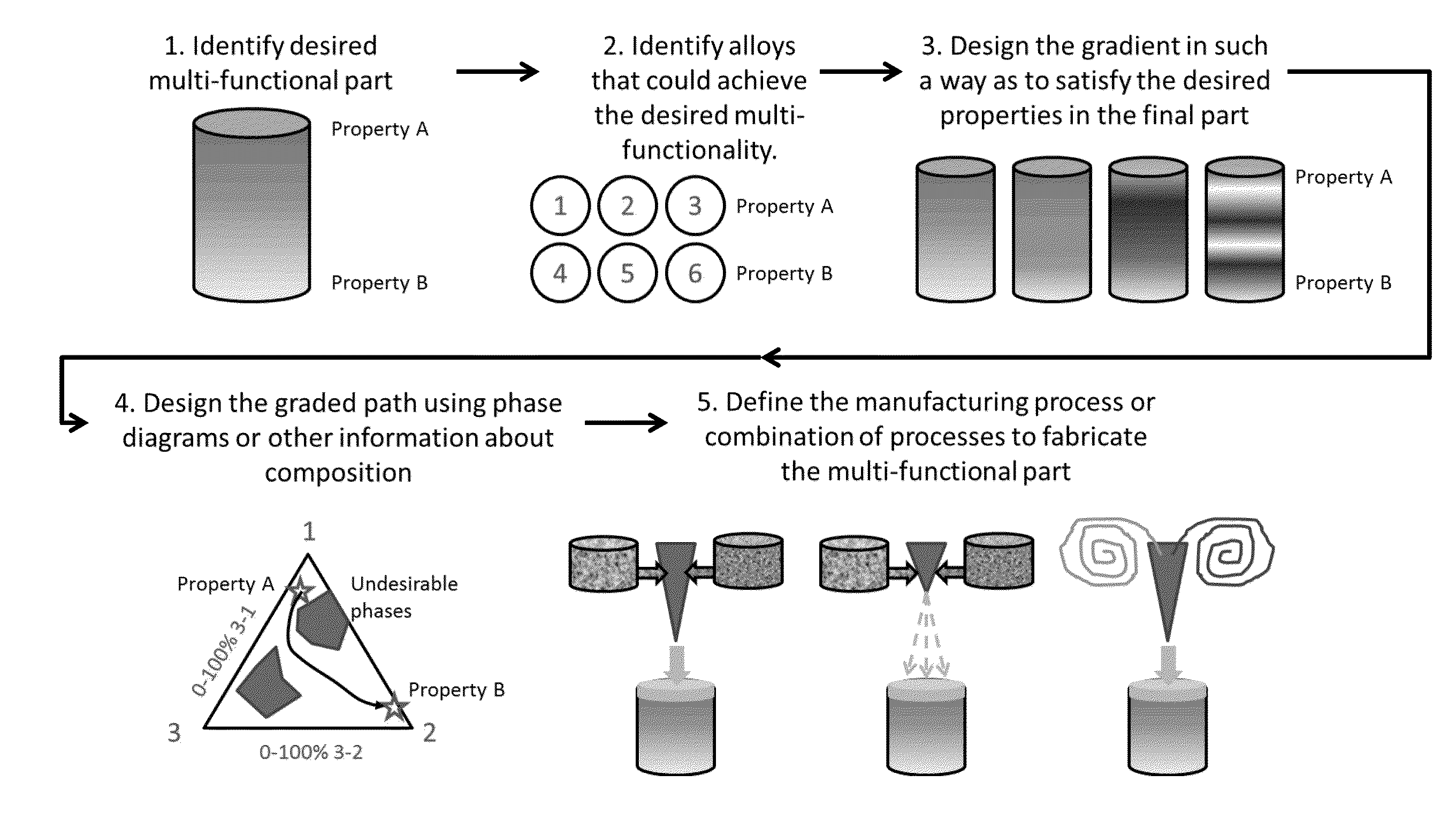
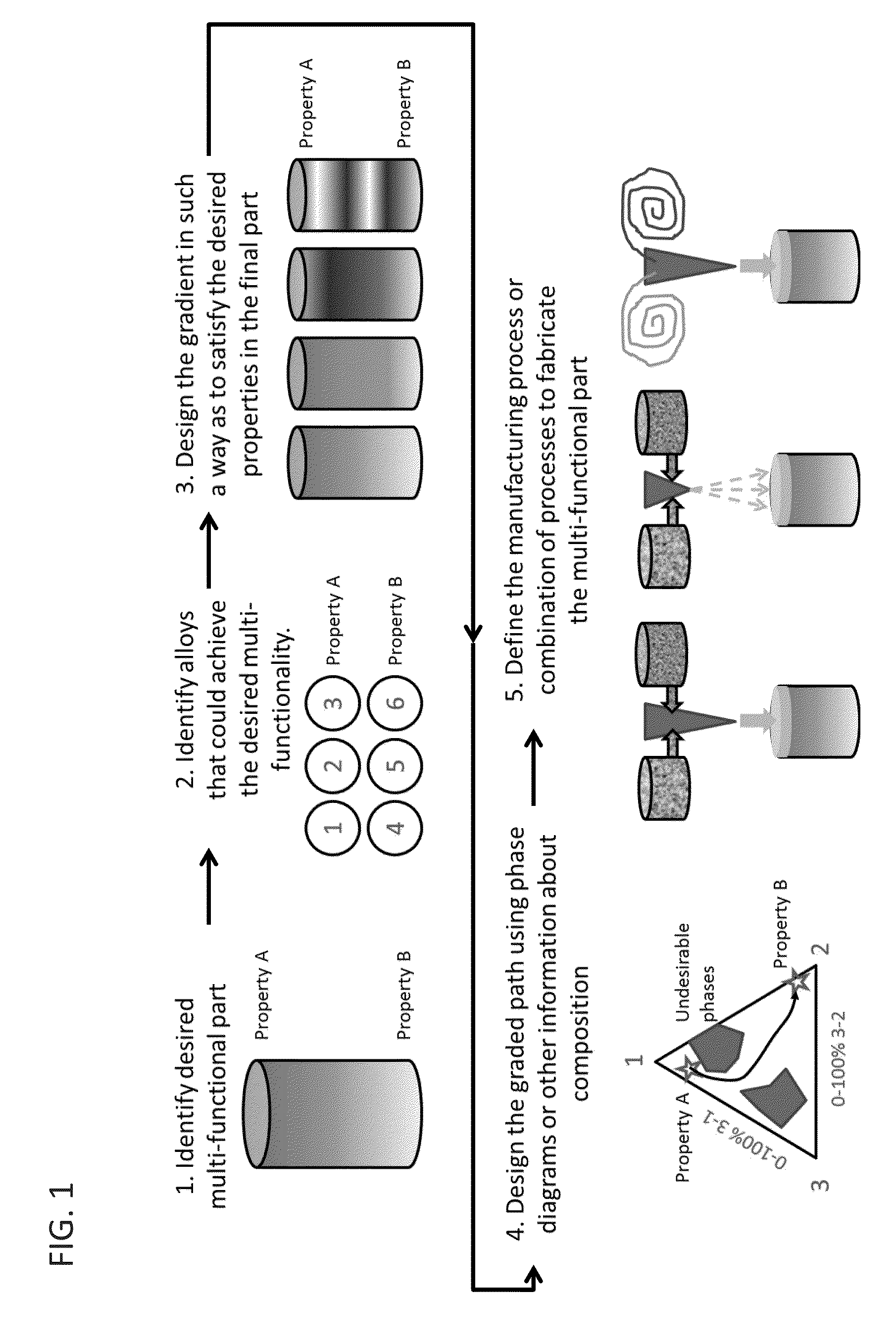
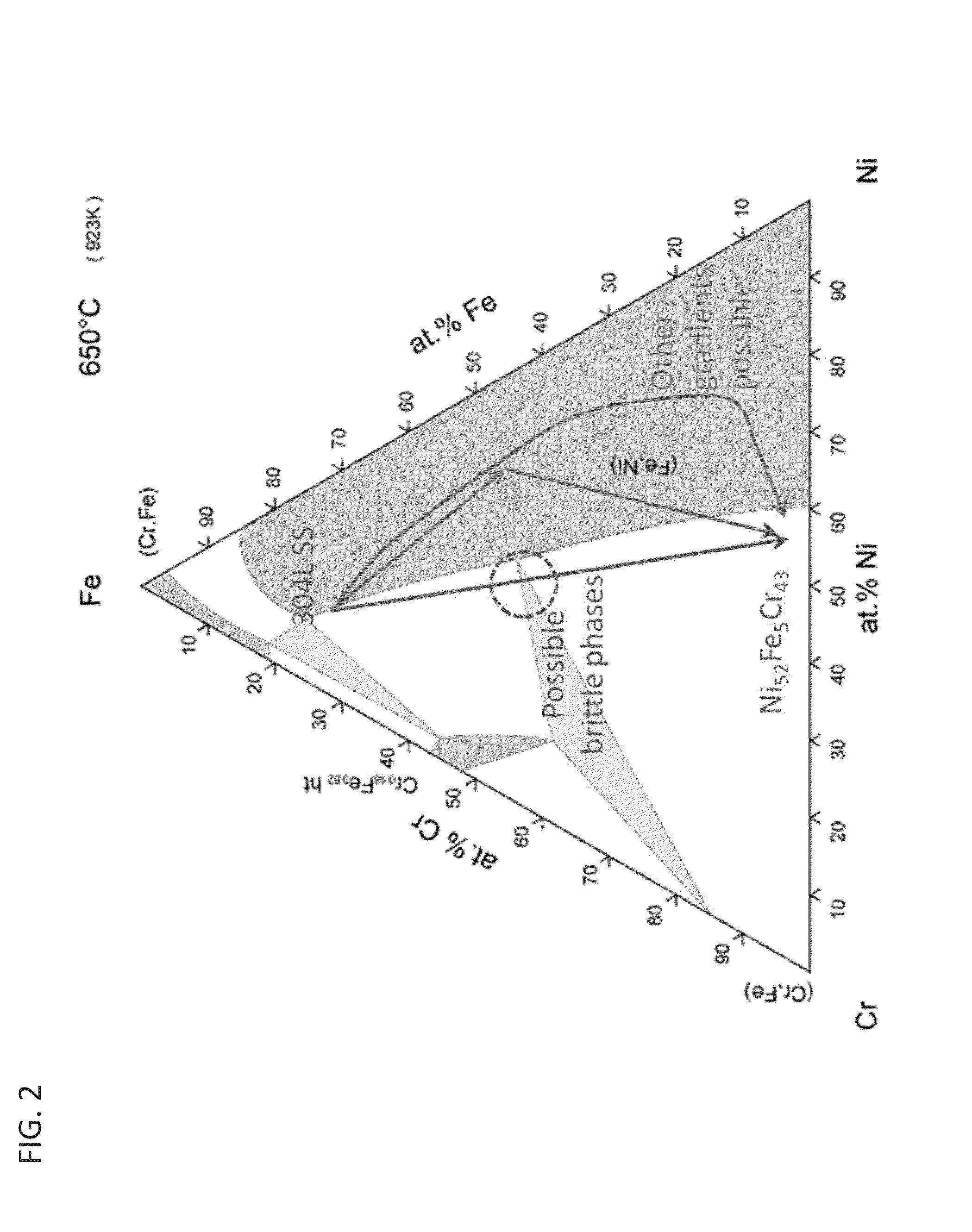
- The method involves determining a compositional gradient pathway between distinct materials using phase diagrams to avoid undesirable phases, and then using additive manufacturing techniques like Laser Engineered Net Shaping (LENS) to form multi-functional articles with precise compositional transitions, allowing for the creation of gradient layers with varying mechanical and thermophysical properties.

Laser net shape manufactured component using an adaptive toolpath deposition method
PatentActiveUS20160076374A1
Innovation
- The adaptive toolpath deposition method in Laser Net Shape Manufacturing (LNSM) uses a laser to deposit thin layers of metal powder with variable bead widths and controlled overlap ratios, allowing for precise 3D geometry creation and minimizing fusion imperfections by dynamically adjusting laser power and toolpath parameters.


Aerospace Certification Requirements for LENS Components
Aerospace certification requirements for LENS components represent one of the most stringent regulatory frameworks in manufacturing, demanding comprehensive validation across multiple dimensions of component performance and reliability. The Federal Aviation Administration (FAA) and European Union Aviation Safety Agency (EASA) have established rigorous protocols that LENS-manufactured parts must satisfy before integration into critical flight systems.
Material qualification forms the foundation of aerospace certification, requiring extensive documentation of powder feedstock properties, including chemical composition, particle size distribution, and contamination levels. LENS components must demonstrate consistent mechanical properties that meet or exceed traditional manufacturing methods, with particular emphasis on fatigue resistance, fracture toughness, and high-temperature performance characteristics essential for aerospace applications.
Process validation requirements mandate detailed documentation of LENS manufacturing parameters, including laser power settings, powder feed rates, substrate temperatures, and atmospheric conditions throughout production. Certification bodies require statistical process control data demonstrating repeatability and reproducibility across multiple production runs, with comprehensive traceability from raw materials through final component delivery.
Non-destructive testing protocols for LENS components exceed conventional manufacturing standards, incorporating advanced inspection techniques such as computed tomography, ultrasonic testing, and fluorescent penetrant inspection. These methods must detect internal defects, porosity, and microstructural anomalies that could compromise component integrity under operational stress conditions.
Airworthiness certification demands extensive mechanical testing programs, including static strength verification, fatigue life assessment, and environmental durability evaluation under simulated flight conditions. Components must withstand temperature cycling, vibration exposure, and corrosive environments while maintaining structural integrity throughout their operational lifespan.
Documentation requirements encompass comprehensive manufacturing records, quality control data, and design validation reports that demonstrate compliance with applicable aerospace standards such as AS9100, RTCA DO-178C, and specific OEM requirements. This documentation must support full component traceability and enable rapid response to any safety concerns that may arise during service life.
Material qualification forms the foundation of aerospace certification, requiring extensive documentation of powder feedstock properties, including chemical composition, particle size distribution, and contamination levels. LENS components must demonstrate consistent mechanical properties that meet or exceed traditional manufacturing methods, with particular emphasis on fatigue resistance, fracture toughness, and high-temperature performance characteristics essential for aerospace applications.
Process validation requirements mandate detailed documentation of LENS manufacturing parameters, including laser power settings, powder feed rates, substrate temperatures, and atmospheric conditions throughout production. Certification bodies require statistical process control data demonstrating repeatability and reproducibility across multiple production runs, with comprehensive traceability from raw materials through final component delivery.
Non-destructive testing protocols for LENS components exceed conventional manufacturing standards, incorporating advanced inspection techniques such as computed tomography, ultrasonic testing, and fluorescent penetrant inspection. These methods must detect internal defects, porosity, and microstructural anomalies that could compromise component integrity under operational stress conditions.
Airworthiness certification demands extensive mechanical testing programs, including static strength verification, fatigue life assessment, and environmental durability evaluation under simulated flight conditions. Components must withstand temperature cycling, vibration exposure, and corrosive environments while maintaining structural integrity throughout their operational lifespan.
Documentation requirements encompass comprehensive manufacturing records, quality control data, and design validation reports that demonstrate compliance with applicable aerospace standards such as AS9100, RTCA DO-178C, and specific OEM requirements. This documentation must support full component traceability and enable rapid response to any safety concerns that may arise during service life.
Quality Assurance Standards for Critical Aerospace Parts
Quality assurance standards for critical aerospace components manufactured through Laser Engineered Net Shaping (LENS) represent a comprehensive framework designed to ensure the highest levels of safety, reliability, and performance in mission-critical applications. These standards encompass multiple layers of verification and validation processes that address the unique challenges associated with additive manufacturing technologies in aerospace environments.
The foundation of LENS quality assurance rests on material certification protocols that verify feedstock powder characteristics, including particle size distribution, chemical composition, and contamination levels. These protocols establish traceability requirements from raw material suppliers through final component delivery, ensuring complete documentation of the manufacturing chain. Material properties must meet or exceed traditional manufacturing standards, with particular emphasis on fatigue resistance, fracture toughness, and environmental durability under extreme operating conditions.
Process control standards define critical parameters for laser power, scanning speed, powder feed rates, and environmental conditions within the build chamber. Real-time monitoring systems continuously track these variables, automatically flagging deviations that could compromise component integrity. Statistical process control methodologies establish acceptable tolerance ranges and trigger corrective actions when parameters drift beyond specified limits.
Non-destructive testing requirements form a crucial component of LENS quality assurance, incorporating advanced inspection techniques such as computed tomography, ultrasonic testing, and penetrant inspection. These methods detect internal defects, porosity, and dimensional variations that could affect component performance. Acceptance criteria are established based on component criticality levels and operational stress requirements.
Mechanical testing protocols validate component performance through tensile testing, fatigue analysis, and stress rupture evaluations. These tests verify that LENS-manufactured components meet or exceed performance specifications established for conventionally manufactured parts. Statistical sampling plans ensure adequate representation while maintaining cost-effectiveness in testing programs.
Documentation and certification requirements establish comprehensive records for each component, including build parameters, inspection results, and material certifications. Digital traceability systems enable rapid identification and assessment of components in service, supporting fleet management and maintenance planning activities throughout the component lifecycle.
The foundation of LENS quality assurance rests on material certification protocols that verify feedstock powder characteristics, including particle size distribution, chemical composition, and contamination levels. These protocols establish traceability requirements from raw material suppliers through final component delivery, ensuring complete documentation of the manufacturing chain. Material properties must meet or exceed traditional manufacturing standards, with particular emphasis on fatigue resistance, fracture toughness, and environmental durability under extreme operating conditions.
Process control standards define critical parameters for laser power, scanning speed, powder feed rates, and environmental conditions within the build chamber. Real-time monitoring systems continuously track these variables, automatically flagging deviations that could compromise component integrity. Statistical process control methodologies establish acceptable tolerance ranges and trigger corrective actions when parameters drift beyond specified limits.
Non-destructive testing requirements form a crucial component of LENS quality assurance, incorporating advanced inspection techniques such as computed tomography, ultrasonic testing, and penetrant inspection. These methods detect internal defects, porosity, and dimensional variations that could affect component performance. Acceptance criteria are established based on component criticality levels and operational stress requirements.
Mechanical testing protocols validate component performance through tensile testing, fatigue analysis, and stress rupture evaluations. These tests verify that LENS-manufactured components meet or exceed performance specifications established for conventionally manufactured parts. Statistical sampling plans ensure adequate representation while maintaining cost-effectiveness in testing programs.
Documentation and certification requirements establish comprehensive records for each component, including build parameters, inspection results, and material certifications. Digital traceability systems enable rapid identification and assessment of components in service, supporting fleet management and maintenance planning activities throughout the component lifecycle.
Unlock deeper insights with PatSnap Eureka Quick Research — get a full tech report to explore trends and direct your research. Try now!
Generate Your Research Report Instantly with AI Agent
Supercharge your innovation with PatSnap Eureka AI Agent Platform!