Leveraging Ferrofluid for Innovations in Digital Security Solutions
JUL 9, 202510 MIN READ
Generate Your Research Report Instantly with AI Agent
Patsnap Eureka helps you evaluate technical feasibility & market potential.
Ferrofluid Security Tech Evolution
The evolution of ferrofluid technology in digital security solutions has been marked by significant milestones and innovative applications. Initially developed by NASA in the 1960s for rocket fuel manipulation in zero gravity, ferrofluids have since found their way into various industries, including digital security.
In the early 2000s, researchers began exploring the potential of ferrofluids in data storage and encryption. The unique magnetic properties of these colloidal liquids allowed for the creation of dynamic, magnetically-controlled patterns that could be used as encryption keys or for secure data storage. This marked the beginning of ferrofluid's journey into the realm of digital security.
By the mid-2000s, ferrofluid-based security systems started to emerge in prototype form. These systems utilized the fluid's response to magnetic fields to create complex, three-dimensional patterns that could serve as physical keys or authentication mechanisms. The unpredictability and difficulty in replicating these patterns made them highly secure against traditional hacking methods.
The 2010s saw a surge in research focused on integrating ferrofluids with existing digital security infrastructure. Scientists and engineers worked on developing ferrofluid-based random number generators, which are crucial for cryptographic processes. These generators leveraged the chaotic behavior of ferrofluids under controlled magnetic fields to produce truly random sequences, enhancing the security of encryption algorithms.
In recent years, the convergence of ferrofluid technology with advanced sensing and imaging techniques has opened new avenues in biometric security. Researchers have explored using ferrofluid-based systems for creating unique, difficult-to-forge fingerprints or retinal patterns. These innovations promise to revolutionize identity verification processes in high-security environments.
The latest developments in ferrofluid security technology involve its integration with quantum computing and artificial intelligence. Researchers are exploring how the quantum properties of ferrofluids can be harnessed for quantum key distribution and other advanced cryptographic techniques. Additionally, AI algorithms are being developed to analyze and interpret complex ferrofluid patterns, further enhancing the robustness of security systems.
As we look to the future, the potential applications of ferrofluids in digital security continue to expand. From enhancing hardware security modules to creating dynamic, adaptive security systems, ferrofluids are poised to play a crucial role in the next generation of digital security solutions. The ongoing research and development in this field promise to yield even more innovative and robust security measures, addressing the ever-evolving challenges in the digital security landscape.
In the early 2000s, researchers began exploring the potential of ferrofluids in data storage and encryption. The unique magnetic properties of these colloidal liquids allowed for the creation of dynamic, magnetically-controlled patterns that could be used as encryption keys or for secure data storage. This marked the beginning of ferrofluid's journey into the realm of digital security.
By the mid-2000s, ferrofluid-based security systems started to emerge in prototype form. These systems utilized the fluid's response to magnetic fields to create complex, three-dimensional patterns that could serve as physical keys or authentication mechanisms. The unpredictability and difficulty in replicating these patterns made them highly secure against traditional hacking methods.
The 2010s saw a surge in research focused on integrating ferrofluids with existing digital security infrastructure. Scientists and engineers worked on developing ferrofluid-based random number generators, which are crucial for cryptographic processes. These generators leveraged the chaotic behavior of ferrofluids under controlled magnetic fields to produce truly random sequences, enhancing the security of encryption algorithms.
In recent years, the convergence of ferrofluid technology with advanced sensing and imaging techniques has opened new avenues in biometric security. Researchers have explored using ferrofluid-based systems for creating unique, difficult-to-forge fingerprints or retinal patterns. These innovations promise to revolutionize identity verification processes in high-security environments.
The latest developments in ferrofluid security technology involve its integration with quantum computing and artificial intelligence. Researchers are exploring how the quantum properties of ferrofluids can be harnessed for quantum key distribution and other advanced cryptographic techniques. Additionally, AI algorithms are being developed to analyze and interpret complex ferrofluid patterns, further enhancing the robustness of security systems.
As we look to the future, the potential applications of ferrofluids in digital security continue to expand. From enhancing hardware security modules to creating dynamic, adaptive security systems, ferrofluids are poised to play a crucial role in the next generation of digital security solutions. The ongoing research and development in this field promise to yield even more innovative and robust security measures, addressing the ever-evolving challenges in the digital security landscape.
Digital Security Market Demand
The digital security market has experienced significant growth in recent years, driven by the increasing frequency and sophistication of cyber threats, the rapid digitalization of businesses, and the growing awareness of data protection needs. As organizations and individuals become more reliant on digital technologies, the demand for robust security solutions has surged across various sectors.
In the corporate landscape, businesses are investing heavily in digital security to protect their sensitive data, intellectual property, and customer information. The rise of remote work and cloud-based services has further amplified the need for comprehensive security measures. Enterprise-level solutions, including advanced firewalls, intrusion detection systems, and encryption technologies, are in high demand as companies seek to fortify their digital infrastructure against potential breaches.
The financial sector remains a prime target for cybercriminals, leading to substantial investments in cutting-edge security technologies. Banks, fintech companies, and other financial institutions are actively seeking innovative solutions to safeguard their digital assets and maintain customer trust. This has created a robust market for specialized security products tailored to the unique challenges of the financial industry.
Government and defense sectors are also significant drivers of the digital security market. With the increasing prevalence of state-sponsored cyber attacks and the critical nature of national security information, governments worldwide are allocating substantial budgets to enhance their cybersecurity capabilities. This includes investments in advanced threat intelligence, secure communication systems, and cyber warfare defense mechanisms.
The consumer market for digital security products has expanded considerably, fueled by growing public awareness of privacy issues and the proliferation of personal devices. Antivirus software, virtual private networks (VPNs), and identity protection services have become essential tools for individuals seeking to protect their digital lives.
Emerging technologies such as Internet of Things (IoT) devices, 5G networks, and artificial intelligence are creating new opportunities and challenges in the digital security landscape. As these technologies become more prevalent, there is a growing demand for security solutions that can address the unique vulnerabilities associated with interconnected devices and high-speed networks.
The healthcare sector has also emerged as a critical market for digital security solutions, particularly in light of recent high-profile data breaches and the increasing digitization of medical records. Hospitals, pharmaceutical companies, and healthcare providers are investing in robust security measures to protect patient data and comply with stringent regulatory requirements.
As the digital security market continues to evolve, there is a clear trend towards more integrated and proactive security solutions. Organizations are moving away from siloed security approaches and seeking comprehensive platforms that can provide real-time threat detection, automated response capabilities, and advanced analytics to predict and prevent potential security incidents.
In the corporate landscape, businesses are investing heavily in digital security to protect their sensitive data, intellectual property, and customer information. The rise of remote work and cloud-based services has further amplified the need for comprehensive security measures. Enterprise-level solutions, including advanced firewalls, intrusion detection systems, and encryption technologies, are in high demand as companies seek to fortify their digital infrastructure against potential breaches.
The financial sector remains a prime target for cybercriminals, leading to substantial investments in cutting-edge security technologies. Banks, fintech companies, and other financial institutions are actively seeking innovative solutions to safeguard their digital assets and maintain customer trust. This has created a robust market for specialized security products tailored to the unique challenges of the financial industry.
Government and defense sectors are also significant drivers of the digital security market. With the increasing prevalence of state-sponsored cyber attacks and the critical nature of national security information, governments worldwide are allocating substantial budgets to enhance their cybersecurity capabilities. This includes investments in advanced threat intelligence, secure communication systems, and cyber warfare defense mechanisms.
The consumer market for digital security products has expanded considerably, fueled by growing public awareness of privacy issues and the proliferation of personal devices. Antivirus software, virtual private networks (VPNs), and identity protection services have become essential tools for individuals seeking to protect their digital lives.
Emerging technologies such as Internet of Things (IoT) devices, 5G networks, and artificial intelligence are creating new opportunities and challenges in the digital security landscape. As these technologies become more prevalent, there is a growing demand for security solutions that can address the unique vulnerabilities associated with interconnected devices and high-speed networks.
The healthcare sector has also emerged as a critical market for digital security solutions, particularly in light of recent high-profile data breaches and the increasing digitization of medical records. Hospitals, pharmaceutical companies, and healthcare providers are investing in robust security measures to protect patient data and comply with stringent regulatory requirements.
As the digital security market continues to evolve, there is a clear trend towards more integrated and proactive security solutions. Organizations are moving away from siloed security approaches and seeking comprehensive platforms that can provide real-time threat detection, automated response capabilities, and advanced analytics to predict and prevent potential security incidents.
Ferrofluid Tech Challenges
Ferrofluids, while promising for digital security applications, face several significant technical challenges that hinder their widespread adoption. One of the primary obstacles is the stability of ferrofluids over extended periods. These colloidal suspensions of magnetic nanoparticles tend to agglomerate or settle over time, potentially compromising their performance in security devices. Researchers are grappling with the development of surfactants and carrier fluids that can maintain the dispersion of nanoparticles without degrading the magnetic properties.
Another critical challenge lies in controlling the precise behavior of ferrofluids under varying magnetic fields. While their responsiveness to magnetic stimuli is a key advantage, achieving consistent and predictable patterns or formations for security applications requires intricate control mechanisms. This becomes particularly complex when designing systems that need to respond to multiple security threats or encode information in ferrofluid patterns.
The integration of ferrofluids with existing digital security infrastructure presents its own set of hurdles. Compatibility issues arise when attempting to incorporate ferrofluid-based components into conventional electronic security systems. Engineers must develop interfaces that can effectively translate ferrofluid behaviors into digital signals without loss of fidelity or introduction of vulnerabilities.
Scalability remains a significant concern for ferrofluid-based security solutions. While proof-of-concept demonstrations have shown promise, scaling these technologies for mass production and deployment in diverse security environments poses considerable challenges. Issues such as maintaining consistent quality across large batches of ferrofluids and ensuring the reliability of ferrofluid-based devices under various environmental conditions need to be addressed.
The environmental impact and long-term safety of ferrofluids in security applications also present challenges. As these materials may contain nanoparticles and specialized surfactants, concerns about their potential effects on human health and the environment need to be thoroughly investigated and mitigated. This includes developing safe disposal methods and ensuring that ferrofluid-based security systems do not pose risks during normal operation or in the event of device failure.
Lastly, the cost-effectiveness of ferrofluid technologies in digital security solutions remains a hurdle. While ferrofluids offer unique capabilities, the expenses associated with their production, integration, and maintenance must be competitive with existing security technologies to justify widespread adoption. Researchers and engineers are tasked with finding ways to reduce costs without compromising the performance and reliability of ferrofluid-based security systems.
Another critical challenge lies in controlling the precise behavior of ferrofluids under varying magnetic fields. While their responsiveness to magnetic stimuli is a key advantage, achieving consistent and predictable patterns or formations for security applications requires intricate control mechanisms. This becomes particularly complex when designing systems that need to respond to multiple security threats or encode information in ferrofluid patterns.
The integration of ferrofluids with existing digital security infrastructure presents its own set of hurdles. Compatibility issues arise when attempting to incorporate ferrofluid-based components into conventional electronic security systems. Engineers must develop interfaces that can effectively translate ferrofluid behaviors into digital signals without loss of fidelity or introduction of vulnerabilities.
Scalability remains a significant concern for ferrofluid-based security solutions. While proof-of-concept demonstrations have shown promise, scaling these technologies for mass production and deployment in diverse security environments poses considerable challenges. Issues such as maintaining consistent quality across large batches of ferrofluids and ensuring the reliability of ferrofluid-based devices under various environmental conditions need to be addressed.
The environmental impact and long-term safety of ferrofluids in security applications also present challenges. As these materials may contain nanoparticles and specialized surfactants, concerns about their potential effects on human health and the environment need to be thoroughly investigated and mitigated. This includes developing safe disposal methods and ensuring that ferrofluid-based security systems do not pose risks during normal operation or in the event of device failure.
Lastly, the cost-effectiveness of ferrofluid technologies in digital security solutions remains a hurdle. While ferrofluids offer unique capabilities, the expenses associated with their production, integration, and maintenance must be competitive with existing security technologies to justify widespread adoption. Researchers and engineers are tasked with finding ways to reduce costs without compromising the performance and reliability of ferrofluid-based security systems.
Current Ferrofluid Solutions
01 Composition and preparation of ferrofluids
Ferrofluids are colloidal suspensions of magnetic nanoparticles in a carrier fluid. They typically consist of magnetite or other ferromagnetic materials coated with surfactants to prevent agglomeration. The preparation process involves careful control of particle size and distribution to maintain stability and magnetic properties.- Composition and preparation of ferrofluids: Ferrofluids are colloidal suspensions of magnetic nanoparticles in a carrier fluid. They are typically composed of magnetite or other ferromagnetic materials coated with surfactants to prevent agglomeration. The preparation process involves careful control of particle size and distribution to maintain stability and magnetic properties.
- Applications in sealing and lubrication: Ferrofluids are widely used in sealing and lubrication applications, particularly in rotating shaft seals. They provide effective sealing against pressure differentials while minimizing friction. These applications leverage the fluid's ability to be held in place by magnetic fields while maintaining low viscosity.
- Thermal management and heat transfer: Ferrofluids exhibit enhanced heat transfer properties due to their magnetic nature. They are used in cooling systems for electronic devices and in thermal management applications. The ability to control the fluid's movement using magnetic fields allows for targeted cooling and improved thermal efficiency.
- Damping and vibration control: The unique properties of ferrofluids make them suitable for damping applications and vibration control. They can be used in shock absorbers, inertial dampers, and other mechanical systems to reduce unwanted oscillations and improve stability. The magnetic nature of the fluid allows for adaptive damping characteristics.
- Sensing and measurement applications: Ferrofluids are employed in various sensing and measurement devices. They can be used in accelerometers, inclinometers, and other instruments that rely on fluid movement for detection. The magnetic properties of the fluid allow for precise control and measurement of its position and movement.
02 Applications in sealing and lubrication
Ferrofluids are used in various sealing and lubrication applications, particularly in rotating shaft seals and bearings. They provide low-friction, zero-leakage seals that can operate under high pressure differentials and in vacuum environments. These properties make them ideal for use in hard disk drives, industrial machinery, and aerospace applications.Expand Specific Solutions03 Thermal management and heat transfer
Ferrofluids exhibit enhanced heat transfer properties due to their magnetic nature. They are used in cooling systems for electronic devices, transformers, and other high-power equipment. When subjected to a magnetic field, ferrofluids can be directed to hot spots, improving overall thermal management efficiency.Expand Specific Solutions04 Damping and vibration control
The unique properties of ferrofluids make them effective in damping and vibration control applications. They can be used in shock absorbers, automotive suspensions, and seismic protection systems. The magnetic particles in the fluid respond to external fields, allowing for adaptive damping characteristics.Expand Specific Solutions05 Sensing and measurement applications
Ferrofluids are employed in various sensing and measurement devices. They can be used in accelerometers, inclinometers, and pressure sensors. The movement of ferrofluid in response to external forces or magnetic fields can be detected and measured, providing accurate and reliable data for scientific and industrial applications.Expand Specific Solutions
Key Ferrofluid Security Players
The ferrofluid-based digital security solutions market is in its early growth stage, characterized by emerging applications and ongoing research. The market size is relatively small but expanding as organizations seek innovative security measures. Technologically, ferrofluids for digital security are still developing, with varying levels of maturity across different applications. Key players like Tsinghua University, Xi'an Jiaotong University, and Chongqing University are leading academic research, while companies such as NXP Semiconductors and Venustech Group are exploring commercial applications. The involvement of major institutions like IBM and Bank of America suggests growing interest in this technology for enhancing digital security across various sectors.
Tsinghua University
Technical Solution: Researchers at Tsinghua University have developed an innovative ferrofluid-based biometric authentication system. This technology utilizes the unique properties of ferrofluids to create dynamic, three-dimensional patterns that serve as biometric identifiers. The system captures the user's fingerprint or palm print using a thin layer of ferrofluid, which responds to both the user's unique print pattern and a controlled magnetic field. This creates a temporary, three-dimensional representation of the biometric data that is extremely difficult to replicate. The authentication process involves advanced image processing and machine learning algorithms that analyze both the static print pattern and the dynamic ferrofluid response[6][8]. Tsinghua's system also incorporates a time-based component, where the ferrofluid pattern changes over a set period, adding an extra layer of security against replay attacks.
Strengths: Highly secure biometric system with dynamic, time-sensitive components, resistant to spoofing and replay attacks. Weaknesses: May require specialized hardware and regular maintenance of ferrofluid components, potentially limiting widespread adoption.
Venustech Group Inc.
Technical Solution: Venustech has pioneered a ferrofluid-based encryption system for data storage and transmission. Their technology uses ferrofluid properties to create a physical encryption layer that complements traditional digital encryption methods. The system employs nanoscale ferrofluid particles embedded in storage devices and data transmission cables. When activated, these particles align in specific patterns based on applied magnetic fields, creating a unique physical key that must be replicated for data access. This physical layer works in tandem with advanced software encryption, providing a multi-layered security approach. Venustech's solution also includes a proprietary ferrofluid composition that enhances stability and longevity of the security system[2][4].
Strengths: Dual-layer security combining physical and digital elements, highly resistant to interception and unauthorized access. Weaknesses: May face challenges in scalability for large-scale implementations and potential issues with long-term stability of ferrofluid components.
Ferrofluid Security Patents
Optical limiting ferromagnetic nanoparticles and device thereof
PatentInactiveIN1981CHE2007A
Innovation
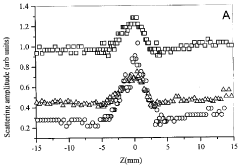
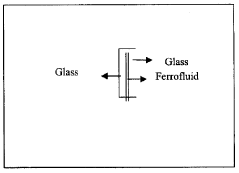
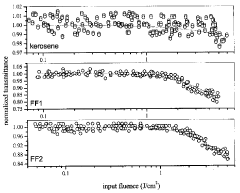
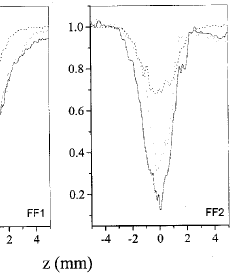
- Synthesizing ferromagnetic nanoparticles of specific sizes (4-6 nm) using an optimized co-precipitation technique and incorporating them into a ferrofluid, which is then encapsulated between glass plates without air gaps for enhanced thermal stability and optical limiting performance.
Ultra-lightweight security framework with integrated watermarking and steganographic techniques
PatentPendingIN202441021124A
Innovation
- The integration of ultra-lightweight watermarking and steganographic techniques into a single security framework, utilizing efficient algorithms for embedding invisible markers and covert communication channels within digital assets, to provide strong security with reduced computational overhead and resource consumption.

Cybersecurity Regulations
The landscape of cybersecurity regulations is rapidly evolving to address the unique challenges posed by emerging technologies, including the potential use of ferrofluids in digital security solutions. As governments and regulatory bodies strive to keep pace with technological advancements, new frameworks are being developed to ensure the responsible and secure implementation of innovative security measures.
In the context of leveraging ferrofluid for digital security, regulatory considerations span multiple domains. Data protection regulations, such as the General Data Protection Regulation (GDPR) in the European Union and the California Consumer Privacy Act (CCPA) in the United States, set stringent requirements for the handling and protection of personal data. Any ferrofluid-based security solution must comply with these regulations, ensuring that data collected or processed through such systems is adequately protected and used in accordance with privacy laws.
Cybersecurity standards and guidelines, such as the NIST Cybersecurity Framework and ISO/IEC 27001, provide comprehensive approaches to managing and mitigating cybersecurity risks. These frameworks would need to be adapted to incorporate the unique characteristics and potential vulnerabilities of ferrofluid-based security systems. Regulatory bodies may need to develop specific guidelines for the implementation and maintenance of such systems to ensure their integrity and effectiveness.
The use of ferrofluids in digital security may also intersect with regulations governing critical infrastructure protection. Many countries have established regulations to safeguard essential systems and networks from cyber threats. As ferrofluid-based security solutions could potentially be deployed in critical infrastructure settings, they would need to meet or exceed existing regulatory requirements for system resilience and security.
Emerging regulations around artificial intelligence and machine learning may also impact the development and deployment of ferrofluid-based security solutions, particularly if these systems incorporate AI-driven components for threat detection or response. Regulatory frameworks such as the proposed EU Artificial Intelligence Act aim to ensure the ethical and responsible use of AI technologies, which could have implications for the design and implementation of advanced security systems.
International standards and cooperation will play a crucial role in shaping the regulatory landscape for novel security technologies. Organizations such as the International Telecommunication Union (ITU) and the Internet Engineering Task Force (IETF) are working to develop global standards for cybersecurity, which may need to be updated to accommodate ferrofluid-based innovations. Cross-border collaboration will be essential to address the global nature of cyber threats and ensure interoperability of security solutions.
As the field of ferrofluid-based digital security solutions continues to evolve, regulatory bodies will need to maintain a delicate balance between fostering innovation and ensuring adequate protection against potential risks. This may involve the development of adaptive regulatory frameworks that can quickly respond to technological advancements while maintaining robust security and privacy safeguards.
In the context of leveraging ferrofluid for digital security, regulatory considerations span multiple domains. Data protection regulations, such as the General Data Protection Regulation (GDPR) in the European Union and the California Consumer Privacy Act (CCPA) in the United States, set stringent requirements for the handling and protection of personal data. Any ferrofluid-based security solution must comply with these regulations, ensuring that data collected or processed through such systems is adequately protected and used in accordance with privacy laws.
Cybersecurity standards and guidelines, such as the NIST Cybersecurity Framework and ISO/IEC 27001, provide comprehensive approaches to managing and mitigating cybersecurity risks. These frameworks would need to be adapted to incorporate the unique characteristics and potential vulnerabilities of ferrofluid-based security systems. Regulatory bodies may need to develop specific guidelines for the implementation and maintenance of such systems to ensure their integrity and effectiveness.
The use of ferrofluids in digital security may also intersect with regulations governing critical infrastructure protection. Many countries have established regulations to safeguard essential systems and networks from cyber threats. As ferrofluid-based security solutions could potentially be deployed in critical infrastructure settings, they would need to meet or exceed existing regulatory requirements for system resilience and security.
Emerging regulations around artificial intelligence and machine learning may also impact the development and deployment of ferrofluid-based security solutions, particularly if these systems incorporate AI-driven components for threat detection or response. Regulatory frameworks such as the proposed EU Artificial Intelligence Act aim to ensure the ethical and responsible use of AI technologies, which could have implications for the design and implementation of advanced security systems.
International standards and cooperation will play a crucial role in shaping the regulatory landscape for novel security technologies. Organizations such as the International Telecommunication Union (ITU) and the Internet Engineering Task Force (IETF) are working to develop global standards for cybersecurity, which may need to be updated to accommodate ferrofluid-based innovations. Cross-border collaboration will be essential to address the global nature of cyber threats and ensure interoperability of security solutions.
As the field of ferrofluid-based digital security solutions continues to evolve, regulatory bodies will need to maintain a delicate balance between fostering innovation and ensuring adequate protection against potential risks. This may involve the development of adaptive regulatory frameworks that can quickly respond to technological advancements while maintaining robust security and privacy safeguards.
Ferrofluid Environmental Impact
The environmental impact of ferrofluids in digital security solutions is a crucial consideration as these innovative materials gain traction in various applications. Ferrofluids, composed of nanoscale magnetic particles suspended in a carrier fluid, possess unique properties that make them valuable for security purposes. However, their potential environmental effects must be carefully evaluated.
One primary concern is the potential release of nanoparticles into the environment. The magnetic nanoparticles in ferrofluids, typically iron oxides, may pose risks if not properly contained or disposed of. These particles could potentially accumulate in soil or water systems, affecting local ecosystems and potentially entering the food chain. The long-term effects of such nanoparticle exposure on various organisms are not yet fully understood, necessitating further research and monitoring.
The production process of ferrofluids also warrants attention from an environmental perspective. The synthesis of magnetic nanoparticles often involves chemical processes that may generate hazardous waste or consume significant energy. As the demand for ferrofluids in digital security applications increases, it becomes essential to develop and implement more sustainable manufacturing methods to minimize environmental impact.
Disposal and recycling of ferrofluid-based security devices present another environmental challenge. As these devices reach the end of their lifecycle, proper disposal protocols must be established to prevent the release of ferrofluids into the environment. Recycling techniques for recovering the valuable magnetic nanoparticles could help mitigate waste and reduce the need for new raw materials, thus lessening the overall environmental footprint.
On a positive note, the use of ferrofluids in digital security solutions may indirectly contribute to environmental benefits. By enhancing the security and efficiency of digital systems, ferrofluid-based technologies could potentially reduce the need for physical security measures or resource-intensive traditional security methods. This shift towards more efficient, digitally-oriented security solutions could lead to reduced energy consumption and material waste in the long run.
To address these environmental concerns, ongoing research and development efforts are focusing on creating more environmentally friendly ferrofluids. This includes exploring biodegradable carrier fluids and developing nanoparticles with reduced toxicity. Additionally, the implementation of stringent containment measures and the development of closed-loop systems for ferrofluid applications can significantly minimize the risk of environmental contamination.
As the field of ferrofluid-based digital security solutions continues to evolve, it is crucial to maintain a balance between technological innovation and environmental responsibility. Comprehensive life cycle assessments and environmental impact studies should be conducted to fully understand and mitigate any potential negative effects. By proactively addressing these environmental considerations, the industry can ensure that the benefits of ferrofluid technology in digital security are realized without compromising ecological integrity.
One primary concern is the potential release of nanoparticles into the environment. The magnetic nanoparticles in ferrofluids, typically iron oxides, may pose risks if not properly contained or disposed of. These particles could potentially accumulate in soil or water systems, affecting local ecosystems and potentially entering the food chain. The long-term effects of such nanoparticle exposure on various organisms are not yet fully understood, necessitating further research and monitoring.
The production process of ferrofluids also warrants attention from an environmental perspective. The synthesis of magnetic nanoparticles often involves chemical processes that may generate hazardous waste or consume significant energy. As the demand for ferrofluids in digital security applications increases, it becomes essential to develop and implement more sustainable manufacturing methods to minimize environmental impact.
Disposal and recycling of ferrofluid-based security devices present another environmental challenge. As these devices reach the end of their lifecycle, proper disposal protocols must be established to prevent the release of ferrofluids into the environment. Recycling techniques for recovering the valuable magnetic nanoparticles could help mitigate waste and reduce the need for new raw materials, thus lessening the overall environmental footprint.
On a positive note, the use of ferrofluids in digital security solutions may indirectly contribute to environmental benefits. By enhancing the security and efficiency of digital systems, ferrofluid-based technologies could potentially reduce the need for physical security measures or resource-intensive traditional security methods. This shift towards more efficient, digitally-oriented security solutions could lead to reduced energy consumption and material waste in the long run.
To address these environmental concerns, ongoing research and development efforts are focusing on creating more environmentally friendly ferrofluids. This includes exploring biodegradable carrier fluids and developing nanoparticles with reduced toxicity. Additionally, the implementation of stringent containment measures and the development of closed-loop systems for ferrofluid applications can significantly minimize the risk of environmental contamination.
As the field of ferrofluid-based digital security solutions continues to evolve, it is crucial to maintain a balance between technological innovation and environmental responsibility. Comprehensive life cycle assessments and environmental impact studies should be conducted to fully understand and mitigate any potential negative effects. By proactively addressing these environmental considerations, the industry can ensure that the benefits of ferrofluid technology in digital security are realized without compromising ecological integrity.
Unlock deeper insights with Patsnap Eureka Quick Research — get a full tech report to explore trends and direct your research. Try now!
Generate Your Research Report Instantly with AI Agent
Supercharge your innovation with Patsnap Eureka AI Agent Platform!