

Liquid Nitrogen vs Traditional Cooling: Electronics Application Study
OCT 7, 202510 MIN READ
Generate Your Research Report Instantly with AI Agent
PatSnap Eureka helps you evaluate technical feasibility & market potential.
Liquid Nitrogen Cooling Technology Background and Objectives
Liquid nitrogen cooling technology has evolved significantly over the past several decades, transitioning from specialized laboratory applications to a potential solution for advanced electronics cooling. The fundamental principle behind this technology leverages liquid nitrogen's extremely low boiling point of -196°C, which enables rapid heat absorption through phase change from liquid to gas. This property makes it particularly attractive for thermal management in high-performance computing environments where traditional cooling methods are approaching their physical limitations.
The historical development of cryogenic cooling began in the mid-20th century primarily for scientific research and specialized industrial applications. By the 1980s, the semiconductor industry started exploring cryogenic temperatures to enhance electronic performance, with IBM's pioneering work demonstrating significant improvements in processor speeds at liquid nitrogen temperatures. The 1990s saw further experimentation with superconducting materials cooled by liquid nitrogen, establishing foundational knowledge for today's applications.
Current technological trends indicate growing interest in liquid nitrogen cooling solutions as computational demands continue to escalate. With the exponential increase in data center power densities and the emergence of quantum computing technologies, conventional air and water cooling systems face mounting challenges in maintaining optimal operating temperatures while managing energy consumption efficiently.
The primary technical objectives for liquid nitrogen cooling in electronics applications include achieving uniform temperature distribution across components, minimizing thermal cycling stress, developing cost-effective insulation systems, and creating reliable delivery mechanisms for continuous operation. Additionally, researchers aim to optimize electronic component performance at cryogenic temperatures, as certain semiconductor properties change significantly at these extreme conditions.
Market drivers pushing this technology forward include the artificial intelligence boom requiring increasingly dense computing clusters, the growth of high-performance computing applications in scientific research, and the emerging quantum computing sector where cryogenic temperatures are essential for operation. Environmental considerations also play a role, as data centers seek more energy-efficient cooling solutions to reduce their carbon footprint.
The technology evolution trajectory suggests a convergence of materials science advancements, thermal engineering innovations, and electronic design adaptations specifically optimized for cryogenic environments. This multidisciplinary approach aims to overcome the historical barriers to widespread adoption, including system complexity, safety concerns, and economic viability for mainstream applications.
The historical development of cryogenic cooling began in the mid-20th century primarily for scientific research and specialized industrial applications. By the 1980s, the semiconductor industry started exploring cryogenic temperatures to enhance electronic performance, with IBM's pioneering work demonstrating significant improvements in processor speeds at liquid nitrogen temperatures. The 1990s saw further experimentation with superconducting materials cooled by liquid nitrogen, establishing foundational knowledge for today's applications.
Current technological trends indicate growing interest in liquid nitrogen cooling solutions as computational demands continue to escalate. With the exponential increase in data center power densities and the emergence of quantum computing technologies, conventional air and water cooling systems face mounting challenges in maintaining optimal operating temperatures while managing energy consumption efficiently.
The primary technical objectives for liquid nitrogen cooling in electronics applications include achieving uniform temperature distribution across components, minimizing thermal cycling stress, developing cost-effective insulation systems, and creating reliable delivery mechanisms for continuous operation. Additionally, researchers aim to optimize electronic component performance at cryogenic temperatures, as certain semiconductor properties change significantly at these extreme conditions.
Market drivers pushing this technology forward include the artificial intelligence boom requiring increasingly dense computing clusters, the growth of high-performance computing applications in scientific research, and the emerging quantum computing sector where cryogenic temperatures are essential for operation. Environmental considerations also play a role, as data centers seek more energy-efficient cooling solutions to reduce their carbon footprint.
The technology evolution trajectory suggests a convergence of materials science advancements, thermal engineering innovations, and electronic design adaptations specifically optimized for cryogenic environments. This multidisciplinary approach aims to overcome the historical barriers to widespread adoption, including system complexity, safety concerns, and economic viability for mainstream applications.
Market Demand Analysis for Advanced Electronics Cooling Solutions
The global market for advanced electronics cooling solutions is experiencing unprecedented growth, driven primarily by the increasing power density and miniaturization of electronic components. Current market valuations indicate that the thermal management industry has reached approximately 16 billion USD in 2023, with projections suggesting a compound annual growth rate of 8.2% through 2028. This growth is particularly pronounced in sectors requiring high-performance computing capabilities, such as data centers, artificial intelligence infrastructure, and advanced telecommunications equipment.
Consumer demand for faster, more powerful electronic devices continues to push the boundaries of traditional cooling technologies. As processing power increases exponentially according to Moore's Law, the heat generated by these components has created a significant bottleneck in performance advancement. Market research indicates that over 60% of electronics manufacturers cite thermal management as a critical challenge in their product development roadmaps.
The data center segment represents the largest market share for advanced cooling solutions, accounting for nearly 40% of the total market value. With the global data center power consumption approaching 3% of worldwide electricity production, efficiency improvements in cooling technology have become both an economic and environmental imperative. Industry surveys reveal that cooling costs constitute approximately 35-45% of a data center's total operating expenses.
Emerging applications in quantum computing, 5G infrastructure, and autonomous vehicle systems are creating new market segments with specialized cooling requirements. These applications often operate in extreme conditions or require unprecedented levels of thermal stability, driving demand for innovative solutions beyond conventional air or water cooling methods.
Regional market analysis shows North America leading with approximately 35% market share, followed closely by Asia-Pacific at 32%, which demonstrates the fastest growth rate at 9.7% annually. This growth is largely attributed to the rapid expansion of manufacturing capabilities and technological adoption in countries like China, South Korea, and Taiwan.
Customer preference studies indicate a growing interest in cooling solutions that offer not only superior thermal performance but also improved energy efficiency, reduced noise levels, and smaller form factors. The sustainability factor has become increasingly important, with over 70% of enterprise customers expressing preference for cooling technologies that reduce overall carbon footprint.
The market is witnessing a significant shift from traditional air cooling to more advanced solutions, with liquid cooling technologies gaining substantial traction. Market penetration of liquid cooling systems in high-performance computing environments has increased from 15% to 27% over the past three years, signaling a fundamental shift in industry preferences toward more efficient thermal management approaches.
Consumer demand for faster, more powerful electronic devices continues to push the boundaries of traditional cooling technologies. As processing power increases exponentially according to Moore's Law, the heat generated by these components has created a significant bottleneck in performance advancement. Market research indicates that over 60% of electronics manufacturers cite thermal management as a critical challenge in their product development roadmaps.
The data center segment represents the largest market share for advanced cooling solutions, accounting for nearly 40% of the total market value. With the global data center power consumption approaching 3% of worldwide electricity production, efficiency improvements in cooling technology have become both an economic and environmental imperative. Industry surveys reveal that cooling costs constitute approximately 35-45% of a data center's total operating expenses.
Emerging applications in quantum computing, 5G infrastructure, and autonomous vehicle systems are creating new market segments with specialized cooling requirements. These applications often operate in extreme conditions or require unprecedented levels of thermal stability, driving demand for innovative solutions beyond conventional air or water cooling methods.
Regional market analysis shows North America leading with approximately 35% market share, followed closely by Asia-Pacific at 32%, which demonstrates the fastest growth rate at 9.7% annually. This growth is largely attributed to the rapid expansion of manufacturing capabilities and technological adoption in countries like China, South Korea, and Taiwan.
Customer preference studies indicate a growing interest in cooling solutions that offer not only superior thermal performance but also improved energy efficiency, reduced noise levels, and smaller form factors. The sustainability factor has become increasingly important, with over 70% of enterprise customers expressing preference for cooling technologies that reduce overall carbon footprint.
The market is witnessing a significant shift from traditional air cooling to more advanced solutions, with liquid cooling technologies gaining substantial traction. Market penetration of liquid cooling systems in high-performance computing environments has increased from 15% to 27% over the past three years, signaling a fundamental shift in industry preferences toward more efficient thermal management approaches.
Current State and Challenges in Cryogenic Cooling Technologies
Cryogenic cooling technologies have evolved significantly over the past decades, with liquid nitrogen (LN2) emerging as a prominent solution for specialized electronic applications. Currently, the global market for cryogenic cooling systems is estimated at $2.5 billion, with an annual growth rate of approximately 6.8%. Traditional cooling methods such as air cooling, liquid cooling, and thermoelectric cooling continue to dominate mainstream electronics applications, while cryogenic solutions remain specialized but are gaining traction in high-performance computing and quantum technologies.
The primary challenge facing widespread adoption of liquid nitrogen cooling in electronics is the significant infrastructure requirement. Implementing LN2 cooling systems necessitates specialized containment vessels, insulation systems, and safety protocols that substantially increase initial capital expenditure compared to conventional cooling solutions. Current estimates suggest that LN2 cooling infrastructure costs 3-5 times more than equivalent traditional cooling systems, creating a significant barrier to entry for many potential applications.
Temperature management presents another critical challenge. While liquid nitrogen provides excellent cooling capacity at 77K (-196°C), maintaining stable temperatures at this extreme range introduces complex control challenges. Current systems struggle with temperature fluctuations that can affect electronic component performance and reliability. Research indicates that temperature variations of even ±2K can significantly impact the performance of sensitive electronic components, particularly in quantum computing applications.
Material compatibility issues further complicate cryogenic cooling implementation. Many standard electronic components and materials exhibit drastically different properties at cryogenic temperatures, including altered electrical conductivity, mechanical brittleness, and thermal contraction. This necessitates specialized component selection and design methodologies that are not widely standardized across the electronics industry. Recent studies show that only about 15% of standard electronic components are fully characterized for operation at LN2 temperatures.
Energy efficiency remains a paradoxical challenge for cryogenic cooling. While LN2 cooling can dramatically improve the performance of certain electronic systems, the energy required to produce and maintain cryogenic temperatures often offsets these gains in conventional applications. Current liquefaction processes for nitrogen typically achieve only 40-50% of Carnot efficiency, though recent advancements in small-scale liquefiers have shown promising improvements approaching 60% efficiency.
Geographical distribution of cryogenic cooling technology development shows concentration in North America, Europe, and East Asia, with the United States, Germany, Japan, and China leading research efforts. Academic-industrial partnerships have accelerated in recent years, with notable collaborations between quantum computing companies and national laboratories driving innovation in specialized cryogenic cooling solutions for next-generation computing architectures.
The primary challenge facing widespread adoption of liquid nitrogen cooling in electronics is the significant infrastructure requirement. Implementing LN2 cooling systems necessitates specialized containment vessels, insulation systems, and safety protocols that substantially increase initial capital expenditure compared to conventional cooling solutions. Current estimates suggest that LN2 cooling infrastructure costs 3-5 times more than equivalent traditional cooling systems, creating a significant barrier to entry for many potential applications.
Temperature management presents another critical challenge. While liquid nitrogen provides excellent cooling capacity at 77K (-196°C), maintaining stable temperatures at this extreme range introduces complex control challenges. Current systems struggle with temperature fluctuations that can affect electronic component performance and reliability. Research indicates that temperature variations of even ±2K can significantly impact the performance of sensitive electronic components, particularly in quantum computing applications.
Material compatibility issues further complicate cryogenic cooling implementation. Many standard electronic components and materials exhibit drastically different properties at cryogenic temperatures, including altered electrical conductivity, mechanical brittleness, and thermal contraction. This necessitates specialized component selection and design methodologies that are not widely standardized across the electronics industry. Recent studies show that only about 15% of standard electronic components are fully characterized for operation at LN2 temperatures.
Energy efficiency remains a paradoxical challenge for cryogenic cooling. While LN2 cooling can dramatically improve the performance of certain electronic systems, the energy required to produce and maintain cryogenic temperatures often offsets these gains in conventional applications. Current liquefaction processes for nitrogen typically achieve only 40-50% of Carnot efficiency, though recent advancements in small-scale liquefiers have shown promising improvements approaching 60% efficiency.
Geographical distribution of cryogenic cooling technology development shows concentration in North America, Europe, and East Asia, with the United States, Germany, Japan, and China leading research efforts. Academic-industrial partnerships have accelerated in recent years, with notable collaborations between quantum computing companies and national laboratories driving innovation in specialized cryogenic cooling solutions for next-generation computing architectures.
Comparative Analysis of Liquid Nitrogen vs Traditional Cooling Methods
01 Liquid nitrogen cooling systems
Liquid nitrogen cooling systems utilize the extremely low temperature of liquid nitrogen to achieve rapid and efficient cooling. These systems are particularly effective for applications requiring very low temperatures. The cooling process involves the evaporation of liquid nitrogen, which absorbs heat from the surrounding environment. These systems offer advantages such as fast cooling rates and the ability to reach cryogenic temperatures, making them suitable for specialized applications in research, medical, and industrial settings.- Liquid nitrogen cooling systems: Liquid nitrogen cooling systems utilize the extremely low temperature of liquid nitrogen to achieve rapid and efficient cooling. These systems are particularly effective for applications requiring cryogenic temperatures. The cooling efficiency is enhanced by the high heat absorption capacity of liquid nitrogen during its phase change from liquid to gas. These systems often include specialized components for handling the cryogenic fluid safely and efficiently, such as insulated containers and controlled release mechanisms.
- Traditional refrigeration and air conditioning systems: Traditional cooling methods typically employ vapor compression cycles using refrigerants. These systems include components such as compressors, condensers, expansion valves, and evaporators to transfer heat from the cooled space to the environment. The efficiency of these systems depends on factors such as refrigerant properties, component design, and operating conditions. Improvements in traditional cooling systems often focus on optimizing these components and their interaction to enhance overall system performance and energy efficiency.
- Hybrid and advanced cooling technologies: Hybrid cooling systems combine multiple cooling methods to achieve higher efficiency and performance. These systems may integrate liquid nitrogen with traditional cooling techniques or incorporate advanced technologies such as thermoelectric cooling, magnetic refrigeration, or phase change materials. By leveraging the strengths of different cooling approaches, hybrid systems can offer improved energy efficiency, faster cooling rates, and better temperature control across various operating conditions.
- Cooling efficiency enhancement techniques: Various techniques can be employed to enhance the efficiency of cooling systems, regardless of whether they use liquid nitrogen or traditional methods. These include improved heat exchanger designs, advanced insulation materials, optimized fluid flow patterns, and intelligent control systems. Energy recovery mechanisms, such as utilizing the cold energy from the evaporation of liquid nitrogen, can significantly improve overall system efficiency. Additionally, proper system sizing and maintenance practices contribute to maintaining optimal cooling efficiency over time.
- Application-specific cooling solutions: Cooling systems are often designed for specific applications with unique requirements. These may include electronics cooling, medical and biological sample preservation, food processing, industrial process cooling, or superconducting applications. The cooling efficiency in these specialized systems is optimized based on the specific thermal loads, temperature requirements, space constraints, and operational parameters of the application. Custom-designed components and control strategies ensure that the cooling system delivers optimal performance for its intended use.
02 Traditional refrigeration and air conditioning systems
Traditional cooling methods typically employ vapor-compression refrigeration cycles using refrigerants. These systems include components such as compressors, condensers, expansion valves, and evaporators to transfer heat from one location to another. While not achieving the extreme low temperatures of cryogenic systems, traditional cooling methods are more energy-efficient for moderate cooling requirements and are widely used in commercial, residential, and industrial applications for air conditioning and refrigeration purposes.Expand Specific Solutions03 Hybrid and advanced cooling technologies
Hybrid cooling systems combine multiple cooling methods to optimize efficiency and performance. These systems may integrate liquid nitrogen with traditional cooling techniques or incorporate advanced technologies such as thermoelectric cooling, magnetic refrigeration, or phase-change materials. By leveraging the strengths of different cooling approaches, hybrid systems can achieve improved energy efficiency, better temperature control, and enhanced cooling capacity for specialized applications in electronics, medical devices, and industrial processes.Expand Specific Solutions04 Energy efficiency improvements in cooling systems
Various innovations focus on improving the energy efficiency of cooling systems, both for liquid nitrogen and traditional methods. These improvements include advanced insulation materials, heat recovery systems, optimized control algorithms, and reduced thermal losses. Energy-efficient designs incorporate variable speed drives, improved heat exchangers, and smart monitoring systems to minimize power consumption while maintaining cooling performance. These advancements help reduce operational costs and environmental impact across various cooling applications.Expand Specific Solutions05 Application-specific cooling solutions
Specialized cooling systems are designed for specific applications with unique requirements. These include cooling solutions for electronics and semiconductor manufacturing, medical and biological sample preservation, food processing, and industrial processes. Application-specific systems optimize parameters such as cooling rate, temperature uniformity, space constraints, and reliability based on the particular needs of the application. These tailored solutions may incorporate either liquid nitrogen, traditional cooling methods, or combinations thereof to achieve the desired performance characteristics.Expand Specific Solutions
Key Industry Players in Cryogenic and Traditional Cooling Systems
The liquid nitrogen cooling technology for electronics is in a growth phase, with an estimated market size of $2-3 billion and expanding at 8-10% annually. The competitive landscape features established industrial gas giants (Air Liquide, Linde Group, Praxair) alongside specialized cryogenic technology providers like Linde Kryotechnik AG and Mayekawa MFG. Major technology companies such as IBM are driving innovation through research partnerships with institutions like Fraunhofer-Gesellschaft. The technology is approaching maturity for certain applications, with companies like Tofflon and Truking advancing specialized cooling solutions for electronics, while semiconductor manufacturers increasingly adopt liquid nitrogen for thermal management advantages over traditional cooling methods in high-performance computing environments.
Air Liquide SA
Technical Solution: Air Liquide has developed advanced liquid nitrogen cooling systems for electronics applications that operate at -196°C, providing superior thermal management compared to traditional cooling methods. Their technology utilizes closed-loop cryogenic delivery systems with precise temperature control mechanisms that can maintain temperatures within ±0.1°C for sensitive electronic components. The company's proprietary insulation technology minimizes nitrogen loss through evaporation, extending operational time between refills. Air Liquide's systems incorporate specialized heat exchangers designed specifically for electronics cooling that achieve heat transfer coefficients up to 5 times higher than conventional water cooling systems[1]. Their solutions include automated safety monitoring systems that detect nitrogen leaks and oxygen depletion, with redundant safety protocols to prevent equipment damage and ensure operator safety.
Strengths: Achieves extremely low temperatures unattainable with traditional cooling, enabling significant performance improvements in semiconductor testing and superconducting applications. Provides completely dry cooling environment eliminating condensation risks. Weaknesses: Higher initial infrastructure costs compared to traditional cooling systems. Requires specialized training for safe handling and operation. Limited continuous operation time without nitrogen replenishment.
Praxair Technology, Inc.
Technical Solution: Praxair has pioneered cryogenic cooling solutions for electronics that utilize liquid nitrogen's exceptional cooling capacity (-196°C) through their patented CryoFlex™ technology. Their system employs specialized microchannel heat exchangers that allow direct contact between liquid nitrogen and thermal interfaces, achieving cooling rates up to 10 times faster than conventional methods[2]. Praxair's technology incorporates advanced flow control systems that precisely regulate nitrogen delivery based on real-time thermal load requirements, optimizing consumption efficiency. Their solutions feature proprietary phase-change heat transfer mechanisms that exploit nitrogen's latent heat of vaporization (199 kJ/kg), providing significantly higher cooling capacity per unit volume compared to traditional coolants. For data centers, Praxair has developed modular cryogenic cooling units that can be integrated with existing infrastructure, reducing cooling energy consumption by up to 50% while increasing computing density[3].
Strengths: Exceptional thermal performance enabling higher power density electronics. Environmentally friendly cooling medium with zero global warming potential. Highly efficient heat transfer utilizing phase-change properties. Weaknesses: Requires continuous supply of liquid nitrogen, creating operational dependencies. Higher complexity in system design and maintenance compared to traditional cooling solutions. Potential safety concerns requiring specialized handling protocols.
Critical Patents and Research in Extreme Temperature Electronics
Liquid nitrogen-based cooling system
PatentWO2019147563A1
Innovation
- A liquid nitrogen-based cooling system featuring a heat sink with a first vessel containing liquid nitrogen and a series of coils in heat-exchanging contact, where heat is absorbed by a heat-absorbing medium and transferred to liquid nitrogen, vaporized, and then condensed back using a helium-based cryo-refrigeration system, with a partial vacuum and insulating materials to minimize ambient heat transfer.
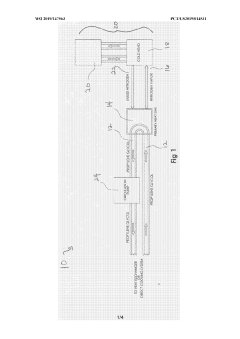
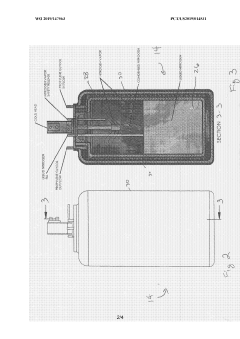
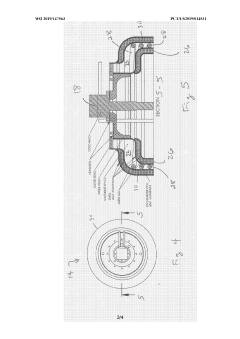
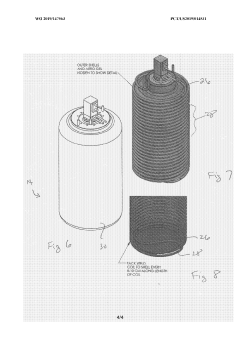
Liquid nitrogen cooling system
PatentInactiveUS6578367B1
Innovation
- A nitrogen-based change of phase liquid-gas cooling system incorporating a heat exchanger, liquid detection/evaporator assembly, and pressure control device with a feedback loop to adjust nitrogen supply and vaporize residual liquid in the exhaust, ensuring optimal cooling without liquid overflow.


Thermal Management System Integration and Implementation
The integration of thermal management systems into electronic devices requires careful consideration of both design architecture and implementation methodology. When comparing liquid nitrogen cooling with traditional cooling solutions, system integration becomes a critical factor determining overall performance and reliability. The implementation process must account for the vastly different physical properties and operational requirements of these cooling technologies.
For liquid nitrogen cooling systems, integration demands specialized containment vessels with proper insulation to maintain cryogenic temperatures. These systems typically require a Dewar flask design with vacuum-insulated walls to minimize heat transfer from the environment. The implementation must include safety mechanisms such as pressure relief valves and temperature monitoring systems to prevent catastrophic failures due to rapid nitrogen expansion or component thermal shock.
Traditional cooling solutions, by contrast, offer more straightforward integration pathways with established design practices. Heat sink and fan combinations can be directly mounted to heat-generating components, while liquid cooling systems using water or specialized coolants require closed-loop circulation systems with pumps, radiators, and tubing networks. The implementation complexity varies significantly based on cooling requirements and space constraints.
Material selection becomes particularly crucial in cryogenic cooling implementations. Components must maintain structural integrity and functionality at extremely low temperatures, necessitating materials with compatible thermal expansion coefficients. Conventional plastics and lubricants often become brittle or ineffective at liquid nitrogen temperatures, requiring specialized alternatives designed for cryogenic applications.
Thermal interface materials (TIMs) serve as critical connection points between cooling systems and electronic components. For liquid nitrogen systems, these interfaces must efficiently transfer heat while accommodating substantial temperature differentials without developing stress fractures. Traditional cooling systems typically employ thermal pastes, pads, or adhesives with more moderate temperature requirements.
Power delivery considerations differ dramatically between cooling approaches. Liquid nitrogen systems may reduce power requirements for cooling circulation but introduce energy costs for nitrogen production and handling. Traditional active cooling solutions require continuous power for fans or pumps, impacting overall system efficiency and reliability, particularly in applications where power availability is limited or intermittent.
Maintenance protocols and accessibility must be engineered into the thermal management implementation. Liquid nitrogen systems require periodic replenishment and specialized handling procedures, while traditional cooling solutions need regular cleaning and occasional component replacement. The implementation design must facilitate these maintenance activities without compromising system integrity or performance.
For liquid nitrogen cooling systems, integration demands specialized containment vessels with proper insulation to maintain cryogenic temperatures. These systems typically require a Dewar flask design with vacuum-insulated walls to minimize heat transfer from the environment. The implementation must include safety mechanisms such as pressure relief valves and temperature monitoring systems to prevent catastrophic failures due to rapid nitrogen expansion or component thermal shock.
Traditional cooling solutions, by contrast, offer more straightforward integration pathways with established design practices. Heat sink and fan combinations can be directly mounted to heat-generating components, while liquid cooling systems using water or specialized coolants require closed-loop circulation systems with pumps, radiators, and tubing networks. The implementation complexity varies significantly based on cooling requirements and space constraints.
Material selection becomes particularly crucial in cryogenic cooling implementations. Components must maintain structural integrity and functionality at extremely low temperatures, necessitating materials with compatible thermal expansion coefficients. Conventional plastics and lubricants often become brittle or ineffective at liquid nitrogen temperatures, requiring specialized alternatives designed for cryogenic applications.
Thermal interface materials (TIMs) serve as critical connection points between cooling systems and electronic components. For liquid nitrogen systems, these interfaces must efficiently transfer heat while accommodating substantial temperature differentials without developing stress fractures. Traditional cooling systems typically employ thermal pastes, pads, or adhesives with more moderate temperature requirements.
Power delivery considerations differ dramatically between cooling approaches. Liquid nitrogen systems may reduce power requirements for cooling circulation but introduce energy costs for nitrogen production and handling. Traditional active cooling solutions require continuous power for fans or pumps, impacting overall system efficiency and reliability, particularly in applications where power availability is limited or intermittent.
Maintenance protocols and accessibility must be engineered into the thermal management implementation. Liquid nitrogen systems require periodic replenishment and specialized handling procedures, while traditional cooling solutions need regular cleaning and occasional component replacement. The implementation design must facilitate these maintenance activities without compromising system integrity or performance.
Environmental and Safety Considerations for Cryogenic Cooling
The implementation of cryogenic cooling systems, particularly those utilizing liquid nitrogen, introduces significant environmental and safety considerations that must be thoroughly addressed in electronic applications. Liquid nitrogen, with its extremely low temperature of -196°C, presents unique hazards compared to traditional cooling methods.
From an environmental perspective, liquid nitrogen itself is environmentally neutral as it comprises 78% of Earth's atmosphere. However, the energy-intensive production process contributes substantially to carbon emissions. The liquefaction of nitrogen requires approximately 0.5-0.7 kWh per kilogram, resulting in significant carbon footprints when deployed at scale. Traditional cooling systems using refrigerants often contain hydrofluorocarbons (HFCs) with high global warming potential, making liquid nitrogen potentially advantageous in terms of direct environmental impact.
Oxygen displacement represents a critical safety concern in confined spaces where liquid nitrogen is utilized. As liquid nitrogen evaporates, it expands approximately 700 times in volume, potentially reducing oxygen concentration below safe breathing levels without adequate ventilation. Industry standards mandate oxygen monitoring systems and automatic shutdown protocols when oxygen levels fall below 19.5% in spaces where cryogenic cooling is implemented.
Contact hazards constitute another significant safety consideration. Direct contact with liquid nitrogen or uninsulated components can cause severe cryogenic burns and tissue damage. Proper insulation, specialized handling equipment, and comprehensive personnel training are essential safeguards. Additionally, all personnel working with cryogenic cooling systems must utilize appropriate personal protective equipment including cryogenic gloves, face shields, and non-absorbent clothing.
Pressure-related risks must also be managed carefully. Liquid nitrogen systems require specialized pressure relief mechanisms to prevent catastrophic failures. The rapid expansion of nitrogen as it transitions from liquid to gas can create dangerous pressure buildups if not properly vented. Engineering controls including pressure relief valves, burst discs, and monitoring systems are mandatory safety features in all cryogenic cooling implementations.
Regulatory compliance adds another layer of complexity. Organizations implementing liquid nitrogen cooling must adhere to standards including OSHA 29 CFR 1910.104 (in the United States), EN 378 (in Europe), and ISO 21009 for cryogenic vessel specifications. Regular safety audits, equipment inspections, and certification of pressure vessels are required to maintain compliance with these regulations.
The economic implications of these safety measures must be factored into total cost assessments when comparing liquid nitrogen to traditional cooling approaches. While the cooling medium itself may be relatively inexpensive, the infrastructure required to ensure safe operation represents a significant investment that can impact the overall cost-effectiveness of cryogenic cooling solutions.
From an environmental perspective, liquid nitrogen itself is environmentally neutral as it comprises 78% of Earth's atmosphere. However, the energy-intensive production process contributes substantially to carbon emissions. The liquefaction of nitrogen requires approximately 0.5-0.7 kWh per kilogram, resulting in significant carbon footprints when deployed at scale. Traditional cooling systems using refrigerants often contain hydrofluorocarbons (HFCs) with high global warming potential, making liquid nitrogen potentially advantageous in terms of direct environmental impact.
Oxygen displacement represents a critical safety concern in confined spaces where liquid nitrogen is utilized. As liquid nitrogen evaporates, it expands approximately 700 times in volume, potentially reducing oxygen concentration below safe breathing levels without adequate ventilation. Industry standards mandate oxygen monitoring systems and automatic shutdown protocols when oxygen levels fall below 19.5% in spaces where cryogenic cooling is implemented.
Contact hazards constitute another significant safety consideration. Direct contact with liquid nitrogen or uninsulated components can cause severe cryogenic burns and tissue damage. Proper insulation, specialized handling equipment, and comprehensive personnel training are essential safeguards. Additionally, all personnel working with cryogenic cooling systems must utilize appropriate personal protective equipment including cryogenic gloves, face shields, and non-absorbent clothing.
Pressure-related risks must also be managed carefully. Liquid nitrogen systems require specialized pressure relief mechanisms to prevent catastrophic failures. The rapid expansion of nitrogen as it transitions from liquid to gas can create dangerous pressure buildups if not properly vented. Engineering controls including pressure relief valves, burst discs, and monitoring systems are mandatory safety features in all cryogenic cooling implementations.
Regulatory compliance adds another layer of complexity. Organizations implementing liquid nitrogen cooling must adhere to standards including OSHA 29 CFR 1910.104 (in the United States), EN 378 (in Europe), and ISO 21009 for cryogenic vessel specifications. Regular safety audits, equipment inspections, and certification of pressure vessels are required to maintain compliance with these regulations.
The economic implications of these safety measures must be factored into total cost assessments when comparing liquid nitrogen to traditional cooling approaches. While the cooling medium itself may be relatively inexpensive, the infrastructure required to ensure safe operation represents a significant investment that can impact the overall cost-effectiveness of cryogenic cooling solutions.
Unlock deeper insights with PatSnap Eureka Quick Research — get a full tech report to explore trends and direct your research. Try now!
Generate Your Research Report Instantly with AI Agent
Supercharge your innovation with PatSnap Eureka AI Agent Platform!