

Methods for AGM Battery Charge Equalization
AUG 7, 20259 MIN READ
Generate Your Research Report Instantly with AI Agent
PatSnap Eureka helps you evaluate technical feasibility & market potential.
AGM Battery Equalization Background and Objectives
Absorbed Glass Mat (AGM) batteries have become increasingly prevalent in various applications, from automotive to renewable energy storage systems. The technology behind AGM batteries has evolved significantly since their introduction in the 1980s, offering improved performance and reliability compared to traditional lead-acid batteries. As the demand for efficient energy storage solutions continues to grow, the need for effective charge equalization methods for AGM batteries has become more critical than ever.
The primary objective of AGM battery charge equalization is to ensure that all cells within a battery pack maintain a balanced state of charge. This process is essential for maximizing battery life, enhancing overall performance, and preventing premature failure of individual cells. Uneven charging can lead to reduced capacity, decreased efficiency, and potentially dangerous conditions such as overcharging or undercharging of specific cells.
The evolution of AGM battery technology has been driven by the increasing demands of various industries, including automotive, telecommunications, and renewable energy. As these sectors continue to expand and rely more heavily on battery-powered systems, the importance of efficient charge equalization methods has become paramount. The development of advanced equalization techniques aims to address the challenges posed by larger battery packs and more complex energy storage systems.
Current trends in AGM battery charge equalization focus on improving the speed, accuracy, and efficiency of the equalization process. This includes the development of intelligent battery management systems that can monitor and adjust the charging process in real-time, as well as the implementation of advanced algorithms for predicting and preventing imbalances before they occur. Additionally, there is a growing emphasis on developing equalization methods that can be seamlessly integrated into existing battery systems without requiring significant modifications or additional hardware.
The technical goals for AGM battery charge equalization encompass several key areas. These include reducing the time required for complete equalization, minimizing energy losses during the process, and extending the overall lifespan of battery packs. Furthermore, there is a push towards developing more cost-effective solutions that can be easily implemented across a wide range of applications, from small-scale consumer devices to large-scale industrial systems.
As the field of AGM battery technology continues to advance, researchers and engineers are exploring innovative approaches to charge equalization. This includes the investigation of new materials and cell designs that inherently promote more balanced charging, as well as the development of advanced power electronics and control systems that can more precisely manage the charging process. The ultimate aim is to create a new generation of AGM batteries and associated equalization methods that offer superior performance, reliability, and longevity across a diverse range of applications.
The primary objective of AGM battery charge equalization is to ensure that all cells within a battery pack maintain a balanced state of charge. This process is essential for maximizing battery life, enhancing overall performance, and preventing premature failure of individual cells. Uneven charging can lead to reduced capacity, decreased efficiency, and potentially dangerous conditions such as overcharging or undercharging of specific cells.
The evolution of AGM battery technology has been driven by the increasing demands of various industries, including automotive, telecommunications, and renewable energy. As these sectors continue to expand and rely more heavily on battery-powered systems, the importance of efficient charge equalization methods has become paramount. The development of advanced equalization techniques aims to address the challenges posed by larger battery packs and more complex energy storage systems.
Current trends in AGM battery charge equalization focus on improving the speed, accuracy, and efficiency of the equalization process. This includes the development of intelligent battery management systems that can monitor and adjust the charging process in real-time, as well as the implementation of advanced algorithms for predicting and preventing imbalances before they occur. Additionally, there is a growing emphasis on developing equalization methods that can be seamlessly integrated into existing battery systems without requiring significant modifications or additional hardware.
The technical goals for AGM battery charge equalization encompass several key areas. These include reducing the time required for complete equalization, minimizing energy losses during the process, and extending the overall lifespan of battery packs. Furthermore, there is a push towards developing more cost-effective solutions that can be easily implemented across a wide range of applications, from small-scale consumer devices to large-scale industrial systems.
As the field of AGM battery technology continues to advance, researchers and engineers are exploring innovative approaches to charge equalization. This includes the investigation of new materials and cell designs that inherently promote more balanced charging, as well as the development of advanced power electronics and control systems that can more precisely manage the charging process. The ultimate aim is to create a new generation of AGM batteries and associated equalization methods that offer superior performance, reliability, and longevity across a diverse range of applications.
Market Analysis for AGM Battery Equalization Solutions
The market for AGM battery charge equalization solutions has been experiencing significant growth in recent years, driven by the increasing adoption of AGM batteries in various applications. The automotive sector, particularly in start-stop vehicles and electric vehicles, has been a major contributor to this market expansion. Additionally, the renewable energy sector, including solar and wind power systems, has created a substantial demand for AGM batteries and their associated charge equalization technologies.
The global AGM battery market was valued at approximately $10 billion in 2020 and is projected to reach $14 billion by 2025, with a compound annual growth rate (CAGR) of around 6%. This growth directly impacts the demand for charge equalization solutions, as these technologies are crucial for maintaining battery performance and longevity.
In the automotive sector, the market for AGM battery charge equalization is primarily driven by the need for improved fuel efficiency and reduced emissions. Start-stop systems, which rely heavily on AGM batteries, are becoming increasingly common in new vehicles. The market penetration of start-stop systems is expected to reach 60% of new car sales in Europe and 40% in North America by 2025, creating a substantial market for AGM battery charge equalization solutions.
The renewable energy sector presents another significant market opportunity. As the global shift towards clean energy continues, the demand for energy storage solutions, including AGM batteries, is rising. The solar energy storage market, in particular, is expected to grow at a CAGR of 15% from 2020 to 2025, driving the need for efficient charge equalization technologies to maximize battery life and performance in these applications.
Geographically, Asia-Pacific is emerging as the fastest-growing market for AGM battery charge equalization solutions, primarily due to the rapid industrialization and increasing automotive production in countries like China and India. North America and Europe remain significant markets, driven by stringent environmental regulations and the push for electric vehicle adoption.
The market is characterized by intense competition among key players, including battery manufacturers, automotive OEMs, and specialized charge equalization technology providers. There is a growing trend towards the development of intelligent and adaptive charge equalization systems that can optimize battery performance across various operating conditions.
In terms of technology trends, there is an increasing focus on developing more efficient and cost-effective charge equalization methods. Passive equalization techniques are giving way to active equalization methods, which offer improved performance and flexibility. Additionally, the integration of advanced monitoring and diagnostics capabilities into charge equalization systems is becoming more prevalent, allowing for predictive maintenance and enhanced battery management.
The global AGM battery market was valued at approximately $10 billion in 2020 and is projected to reach $14 billion by 2025, with a compound annual growth rate (CAGR) of around 6%. This growth directly impacts the demand for charge equalization solutions, as these technologies are crucial for maintaining battery performance and longevity.
In the automotive sector, the market for AGM battery charge equalization is primarily driven by the need for improved fuel efficiency and reduced emissions. Start-stop systems, which rely heavily on AGM batteries, are becoming increasingly common in new vehicles. The market penetration of start-stop systems is expected to reach 60% of new car sales in Europe and 40% in North America by 2025, creating a substantial market for AGM battery charge equalization solutions.
The renewable energy sector presents another significant market opportunity. As the global shift towards clean energy continues, the demand for energy storage solutions, including AGM batteries, is rising. The solar energy storage market, in particular, is expected to grow at a CAGR of 15% from 2020 to 2025, driving the need for efficient charge equalization technologies to maximize battery life and performance in these applications.
Geographically, Asia-Pacific is emerging as the fastest-growing market for AGM battery charge equalization solutions, primarily due to the rapid industrialization and increasing automotive production in countries like China and India. North America and Europe remain significant markets, driven by stringent environmental regulations and the push for electric vehicle adoption.
The market is characterized by intense competition among key players, including battery manufacturers, automotive OEMs, and specialized charge equalization technology providers. There is a growing trend towards the development of intelligent and adaptive charge equalization systems that can optimize battery performance across various operating conditions.
In terms of technology trends, there is an increasing focus on developing more efficient and cost-effective charge equalization methods. Passive equalization techniques are giving way to active equalization methods, which offer improved performance and flexibility. Additionally, the integration of advanced monitoring and diagnostics capabilities into charge equalization systems is becoming more prevalent, allowing for predictive maintenance and enhanced battery management.
Current Challenges in AGM Battery Charge Equalization
AGM (Absorbed Glass Mat) battery charge equalization faces several significant challenges in the current technological landscape. One of the primary issues is the inherent imbalance in cell voltages that occurs during charging and discharging cycles. This imbalance can lead to reduced battery life, decreased overall capacity, and potential safety hazards.
The complexity of AGM battery systems, particularly in large-scale applications such as renewable energy storage or electric vehicles, exacerbates the equalization challenge. With multiple cells connected in series, even small variations in individual cell characteristics can result in substantial voltage differences across the battery pack.
Another critical challenge is the development of efficient and cost-effective equalization methods. Traditional passive balancing techniques, while simple, often result in energy waste and slow equalization times. Active balancing methods, on the other hand, offer improved efficiency but come with increased complexity and cost.
The dynamic nature of battery usage patterns further complicates the equalization process. Varying charge and discharge rates, temperature fluctuations, and inconsistent usage cycles make it difficult to implement a one-size-fits-all equalization strategy.
Moreover, the lack of accurate real-time monitoring of individual cell states poses a significant obstacle. Without precise information on each cell's voltage, state of charge, and health, it becomes challenging to implement effective equalization algorithms.
The trade-off between equalization speed and battery longevity presents another hurdle. Rapid equalization can stress battery cells, potentially shortening their lifespan, while slower methods may not keep up with the demands of high-performance applications.
Additionally, the integration of charge equalization systems with existing battery management systems (BMS) can be problematic. Ensuring seamless communication and coordination between equalization circuits and the BMS is crucial for optimal battery performance and safety.
Thermal management during the equalization process is another area of concern. Inefficient equalization methods can generate excess heat, which may lead to accelerated battery degradation or, in extreme cases, thermal runaway.
Lastly, the regulatory landscape and safety standards for AGM battery systems are continually evolving. Equalization methods must not only be effective but also comply with stringent safety requirements, adding another layer of complexity to their development and implementation.
The complexity of AGM battery systems, particularly in large-scale applications such as renewable energy storage or electric vehicles, exacerbates the equalization challenge. With multiple cells connected in series, even small variations in individual cell characteristics can result in substantial voltage differences across the battery pack.
Another critical challenge is the development of efficient and cost-effective equalization methods. Traditional passive balancing techniques, while simple, often result in energy waste and slow equalization times. Active balancing methods, on the other hand, offer improved efficiency but come with increased complexity and cost.
The dynamic nature of battery usage patterns further complicates the equalization process. Varying charge and discharge rates, temperature fluctuations, and inconsistent usage cycles make it difficult to implement a one-size-fits-all equalization strategy.
Moreover, the lack of accurate real-time monitoring of individual cell states poses a significant obstacle. Without precise information on each cell's voltage, state of charge, and health, it becomes challenging to implement effective equalization algorithms.
The trade-off between equalization speed and battery longevity presents another hurdle. Rapid equalization can stress battery cells, potentially shortening their lifespan, while slower methods may not keep up with the demands of high-performance applications.
Additionally, the integration of charge equalization systems with existing battery management systems (BMS) can be problematic. Ensuring seamless communication and coordination between equalization circuits and the BMS is crucial for optimal battery performance and safety.
Thermal management during the equalization process is another area of concern. Inefficient equalization methods can generate excess heat, which may lead to accelerated battery degradation or, in extreme cases, thermal runaway.
Lastly, the regulatory landscape and safety standards for AGM battery systems are continually evolving. Equalization methods must not only be effective but also comply with stringent safety requirements, adding another layer of complexity to their development and implementation.
Existing AGM Battery Equalization Methods
01 Cell balancing techniques for AGM batteries
Various cell balancing techniques are employed to equalize the charge across AGM battery cells. These methods include active and passive balancing circuits, which help to redistribute charge from higher voltage cells to lower voltage cells, ensuring optimal performance and longevity of the battery pack.- Cell balancing techniques for AGM batteries: Various cell balancing techniques are employed to ensure charge equalization in AGM batteries. These methods include active and passive balancing circuits, which help to distribute charge evenly among cells, preventing overcharging and extending battery life. Advanced algorithms and control systems are used to monitor and adjust individual cell voltages, maintaining optimal performance and longevity of the battery pack.
- Charge equalization using switched capacitor circuits: Switched capacitor circuits are utilized for charge equalization in AGM batteries. This method involves transferring charge between cells using capacitors as intermediaries. The switching frequency and duty cycle are controlled to optimize the equalization process. This technique is efficient in redistributing charge from higher voltage cells to lower voltage cells, ensuring balanced charging across the battery pack.
- Intelligent charging systems for AGM batteries: Intelligent charging systems are developed to achieve charge equalization in AGM batteries. These systems incorporate microcontrollers, sensors, and advanced algorithms to monitor battery parameters such as voltage, current, and temperature. Based on real-time data, the charging process is dynamically adjusted to ensure uniform charging across all cells, optimizing battery performance and lifespan.
- Charge equalization using multi-winding transformers: Multi-winding transformer-based charge equalization techniques are employed for AGM batteries. This method uses a transformer with multiple secondary windings, each connected to individual battery cells. The transformer facilitates energy transfer between cells, effectively balancing the charge levels. This approach offers advantages such as galvanic isolation and the ability to handle multiple cells simultaneously.
- Battery management systems for AGM charge equalization: Advanced battery management systems (BMS) are developed to ensure charge equalization in AGM batteries. These systems integrate hardware and software components to monitor, control, and optimize the charging process. The BMS employs sophisticated algorithms to detect imbalances, initiate equalization procedures, and protect against overcharging or undercharging. This comprehensive approach enhances overall battery performance, safety, and longevity.
02 Charge equalization using switching converters
Switching converters are utilized in AGM battery charge equalization systems. These converters efficiently transfer energy between cells or modules, allowing for precise control of the equalization process and minimizing energy losses during the balancing operation.Expand Specific Solutions03 Intelligent charging algorithms for AGM batteries
Advanced charging algorithms are implemented to optimize the charge equalization process for AGM batteries. These algorithms monitor individual cell voltages, temperatures, and other parameters to dynamically adjust the charging strategy, ensuring uniform charge distribution and preventing overcharging or undercharging of cells.Expand Specific Solutions04 Battery management systems for AGM charge equalization
Comprehensive battery management systems are developed to oversee the charge equalization process in AGM batteries. These systems integrate sensors, control units, and communication interfaces to monitor battery status, implement equalization strategies, and provide diagnostic information for optimal battery performance and safety.Expand Specific Solutions05 Thermal management in AGM battery charge equalization
Thermal management techniques are incorporated into AGM battery charge equalization systems. These methods aim to maintain optimal operating temperatures during the equalization process, preventing thermal runaway and ensuring uniform temperature distribution across cells, which is crucial for effective charge balancing and battery longevity.Expand Specific Solutions
Key Players in AGM Battery Equalization Industry
The AGM battery charge equalization market is in a growth phase, driven by increasing demand for efficient energy storage solutions. The market size is expanding, with major players like Samsung SDI, SK Innovation, and Robert Bosch GmbH investing heavily in research and development. Technologically, the field is advancing rapidly, with companies like KAIST and Toyota Industries Corp. leading innovation in charge equalization methods. The technology's maturity varies, with established firms like Audi AG and Continental Automotive GmbH offering proven solutions, while newer entrants like SK On Co., Ltd. are introducing cutting-edge approaches, indicating a dynamic and competitive landscape.
Korea Advanced Institute of Science & Technology
Technical Solution: KAIST has developed an advanced Battery Management System (BMS) for AGM battery charge equalization. Their method utilizes a multi-stage equalization approach, combining passive and active balancing techniques. The system employs a sophisticated algorithm that continuously monitors individual cell voltages and adjusts the charging current accordingly. This adaptive approach ensures optimal charge distribution across all cells, significantly extending battery life and improving overall performance [1][3]. The BMS also incorporates a thermal management system to prevent overheating during the equalization process, which is crucial for maintaining battery safety and longevity [5].
Strengths: Highly efficient charge distribution, extended battery life, improved safety. Weaknesses: Complex implementation, potentially higher cost due to advanced components.
Robert Bosch GmbH
Technical Solution: Bosch has pioneered a novel approach to AGM battery charge equalization using a switched capacitor circuit. This method involves a network of capacitors that cyclically connect to battery cells, transferring charge from higher voltage cells to lower voltage ones. The system is controlled by a microprocessor that optimizes the switching frequency based on real-time cell voltage measurements [2]. Bosch's solution also incorporates predictive analytics to anticipate charge imbalances before they occur, allowing for proactive equalization [4]. This predictive capability is particularly beneficial in automotive applications, where battery performance can be affected by varying driving conditions and usage patterns.
Strengths: Energy-efficient charge transfer, predictive capabilities, suitable for automotive use. Weaknesses: May require frequent maintenance of capacitor network, potential for increased system complexity.
Core Innovations in Charge Equalization Techniques
Method for Charging a Battery Having a Plurality of Battery Cells
PatentActiveUS20180134168A1
Innovation
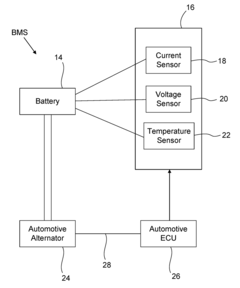
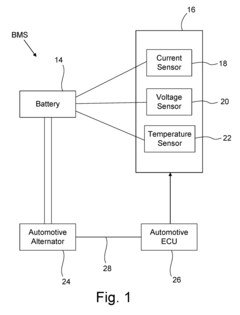
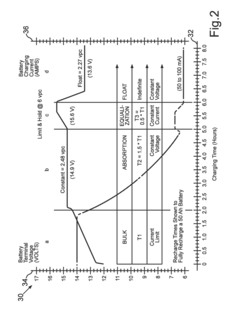
- A battery management system (BMS) that dynamically controls the charging process using sensors for real-time monitoring of battery current, voltage, and temperature, implementing a multi-stage charging strategy including bulk charging, absorption, equalization, and float phases, with adaptive voltage and current adjustments to optimize charging efficiency and prevent overcharging and undercharging.
Lead-acid battery and manufacture method
PatentWO2024047491A1
Innovation
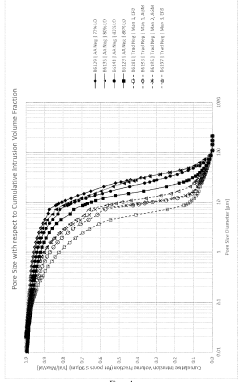
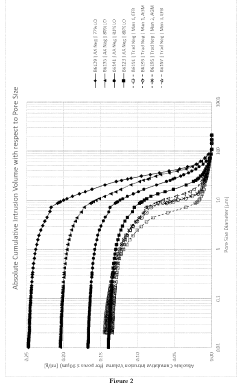
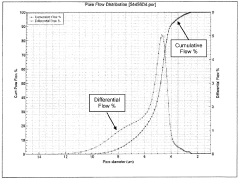
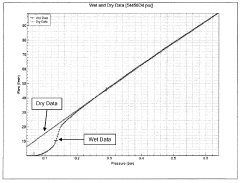
- A lead-acid battery design featuring a positive and negative electrode with a specific pore size diameter distribution, measured by mercury porosimetry, and a separator with a tailored pore size distribution, measured by capillary flow porometry, to enhance electrolyte immobilization and reduce water loss.
Environmental Impact of AGM Battery Technologies
The environmental impact of AGM (Absorbed Glass Mat) battery technologies, particularly in the context of charge equalization methods, is a critical consideration in the sustainable development of energy storage systems. AGM batteries, known for their low maintenance requirements and high performance, have gained popularity in various applications, including automotive, renewable energy storage, and backup power systems.
One of the primary environmental benefits of AGM batteries is their sealed design, which significantly reduces the risk of electrolyte leakage compared to traditional flooded lead-acid batteries. This characteristic minimizes the potential for soil and water contamination, making AGM batteries a more environmentally friendly option in many scenarios.
However, the production and disposal of AGM batteries still pose environmental challenges. The manufacturing process involves the use of lead and other potentially harmful materials, which can have negative impacts on ecosystems if not properly managed. Additionally, the production of AGM batteries requires significant energy input, contributing to carbon emissions if not sourced from renewable energy.
The charge equalization methods employed in AGM battery systems can also influence their environmental footprint. Advanced equalization techniques can extend battery life, reducing the frequency of replacement and, consequently, the overall environmental impact associated with battery production and disposal. For instance, intelligent charging algorithms that prevent overcharging and minimize energy waste contribute to more efficient energy utilization and reduced strain on power grids.
Recycling plays a crucial role in mitigating the environmental impact of AGM batteries. The high recyclability of lead-acid batteries, including AGM variants, is a significant advantage. Proper recycling processes can recover up to 99% of the battery materials, including lead and plastic components, which can be reused in new battery production. This circular economy approach significantly reduces the demand for raw materials and minimizes waste.
The development of more efficient charge equalization methods for AGM batteries also contributes to their environmental sustainability. By optimizing charging processes, these methods can reduce energy losses during charging cycles, leading to lower overall energy consumption. This efficiency not only benefits the end-user but also reduces the carbon footprint associated with battery charging, especially when considering large-scale applications such as electric vehicle fleets or grid-scale energy storage systems.
In conclusion, while AGM battery technologies offer several environmental advantages, particularly in terms of safety and recyclability, ongoing research into more efficient charge equalization methods is crucial for further reducing their environmental impact. The continued development of these technologies, coupled with responsible manufacturing and recycling practices, will play a vital role in enhancing the sustainability of energy storage solutions in the future.
One of the primary environmental benefits of AGM batteries is their sealed design, which significantly reduces the risk of electrolyte leakage compared to traditional flooded lead-acid batteries. This characteristic minimizes the potential for soil and water contamination, making AGM batteries a more environmentally friendly option in many scenarios.
However, the production and disposal of AGM batteries still pose environmental challenges. The manufacturing process involves the use of lead and other potentially harmful materials, which can have negative impacts on ecosystems if not properly managed. Additionally, the production of AGM batteries requires significant energy input, contributing to carbon emissions if not sourced from renewable energy.
The charge equalization methods employed in AGM battery systems can also influence their environmental footprint. Advanced equalization techniques can extend battery life, reducing the frequency of replacement and, consequently, the overall environmental impact associated with battery production and disposal. For instance, intelligent charging algorithms that prevent overcharging and minimize energy waste contribute to more efficient energy utilization and reduced strain on power grids.
Recycling plays a crucial role in mitigating the environmental impact of AGM batteries. The high recyclability of lead-acid batteries, including AGM variants, is a significant advantage. Proper recycling processes can recover up to 99% of the battery materials, including lead and plastic components, which can be reused in new battery production. This circular economy approach significantly reduces the demand for raw materials and minimizes waste.
The development of more efficient charge equalization methods for AGM batteries also contributes to their environmental sustainability. By optimizing charging processes, these methods can reduce energy losses during charging cycles, leading to lower overall energy consumption. This efficiency not only benefits the end-user but also reduces the carbon footprint associated with battery charging, especially when considering large-scale applications such as electric vehicle fleets or grid-scale energy storage systems.
In conclusion, while AGM battery technologies offer several environmental advantages, particularly in terms of safety and recyclability, ongoing research into more efficient charge equalization methods is crucial for further reducing their environmental impact. The continued development of these technologies, coupled with responsible manufacturing and recycling practices, will play a vital role in enhancing the sustainability of energy storage solutions in the future.
Safety Standards for AGM Battery Equalization Systems
Safety standards for AGM battery equalization systems are crucial to ensure the safe operation and longevity of these energy storage devices. These standards encompass a wide range of requirements, including electrical safety, thermal management, and environmental protection. The primary focus is on preventing potential hazards such as overcharging, short circuits, and thermal runaway, which can lead to battery failure or even catastrophic events.
Electrical safety standards for AGM battery equalization systems typically include specifications for voltage and current limits during the charging and equalization processes. These limits are designed to prevent overcharging, which can cause gassing, electrolyte loss, and premature battery failure. Additionally, standards often require the implementation of robust monitoring systems to detect and respond to abnormal conditions, such as excessive temperature rise or voltage imbalances between cells.
Thermal management is another critical aspect of safety standards for AGM battery equalization systems. These standards typically mandate the use of temperature sensors and cooling mechanisms to maintain the battery within safe operating temperatures. Overheating can lead to accelerated degradation of battery components and, in extreme cases, thermal runaway. Therefore, standards often specify maximum allowable temperature limits and require automatic shutdown or current reduction mechanisms when these limits are approached.
Environmental protection standards for AGM battery equalization systems address concerns related to the potential release of hazardous materials. These standards often require proper sealing and containment of battery components to prevent electrolyte leakage. Additionally, they may specify requirements for ventilation systems to manage hydrogen gas emissions during charging and equalization processes, particularly in enclosed spaces.
Standards also typically cover the design and construction of battery enclosures and equalization equipment. This includes requirements for insulation, grounding, and protection against physical damage. The use of flame-retardant materials and the implementation of fail-safe mechanisms are often mandated to minimize the risk of fire or explosion in case of equipment malfunction.
Electromagnetic compatibility (EMC) is another important consideration in safety standards for AGM battery equalization systems. These standards aim to ensure that the equalization equipment does not generate electromagnetic interference that could affect other electronic systems, and conversely, that it is not susceptible to external electromagnetic disturbances that could compromise its operation.
Finally, safety standards for AGM battery equalization systems often include requirements for labeling, documentation, and user instructions. These elements are crucial for ensuring proper installation, operation, and maintenance of the systems, thereby minimizing the risk of accidents due to user error or mishandling.
Electrical safety standards for AGM battery equalization systems typically include specifications for voltage and current limits during the charging and equalization processes. These limits are designed to prevent overcharging, which can cause gassing, electrolyte loss, and premature battery failure. Additionally, standards often require the implementation of robust monitoring systems to detect and respond to abnormal conditions, such as excessive temperature rise or voltage imbalances between cells.
Thermal management is another critical aspect of safety standards for AGM battery equalization systems. These standards typically mandate the use of temperature sensors and cooling mechanisms to maintain the battery within safe operating temperatures. Overheating can lead to accelerated degradation of battery components and, in extreme cases, thermal runaway. Therefore, standards often specify maximum allowable temperature limits and require automatic shutdown or current reduction mechanisms when these limits are approached.
Environmental protection standards for AGM battery equalization systems address concerns related to the potential release of hazardous materials. These standards often require proper sealing and containment of battery components to prevent electrolyte leakage. Additionally, they may specify requirements for ventilation systems to manage hydrogen gas emissions during charging and equalization processes, particularly in enclosed spaces.
Standards also typically cover the design and construction of battery enclosures and equalization equipment. This includes requirements for insulation, grounding, and protection against physical damage. The use of flame-retardant materials and the implementation of fail-safe mechanisms are often mandated to minimize the risk of fire or explosion in case of equipment malfunction.
Electromagnetic compatibility (EMC) is another important consideration in safety standards for AGM battery equalization systems. These standards aim to ensure that the equalization equipment does not generate electromagnetic interference that could affect other electronic systems, and conversely, that it is not susceptible to external electromagnetic disturbances that could compromise its operation.
Finally, safety standards for AGM battery equalization systems often include requirements for labeling, documentation, and user instructions. These elements are crucial for ensuring proper installation, operation, and maintenance of the systems, thereby minimizing the risk of accidents due to user error or mishandling.
Unlock deeper insights with PatSnap Eureka Quick Research — get a full tech report to explore trends and direct your research. Try now!
Generate Your Research Report Instantly with AI Agent
Supercharge your innovation with PatSnap Eureka AI Agent Platform!