Neuromorphic materials synergy with bioinformatics tools
SEP 19, 20259 MIN READ
Generate Your Research Report Instantly with AI Agent
PatSnap Eureka helps you evaluate technical feasibility & market potential.
Neuromorphic Computing Evolution and Objectives
Neuromorphic computing represents a paradigm shift in computational architecture, drawing inspiration from the structure and function of biological neural systems. The evolution of this field began in the late 1980s with Carver Mead's pioneering work at Caltech, where he first proposed using analog VLSI systems to mimic neurobiological architectures. This marked the birth of neuromorphic engineering as a distinct discipline combining neuroscience, physics, mathematics, computer science, and electrical engineering.
The 1990s witnessed early experimental implementations, primarily focused on sensory processing systems that emulated retinal and cochlear functions. These systems demonstrated the potential for efficient pattern recognition using biologically-inspired architectures. By the early 2000s, research expanded to include more complex neural networks and spike-based computing models, with projects like IBM's TrueNorth and the European Human Brain Project accelerating development.
A significant evolutionary milestone occurred around 2010-2015 with the emergence of new neuromorphic materials and devices, particularly memristors and phase-change materials, which could more accurately mimic synaptic plasticity. These materials enabled more efficient implementation of learning algorithms directly in hardware, dramatically reducing power consumption compared to traditional von Neumann architectures.
The integration of bioinformatics tools with neuromorphic computing represents the latest evolutionary phase. This synergy leverages computational biology techniques to inform neuromorphic design, creating a feedback loop where biological neural network insights drive hardware innovation. Machine learning algorithms originally developed for genomic and proteomic analysis are now being adapted to optimize neuromorphic material properties and network topologies.
The primary objectives of current neuromorphic computing research center on achieving greater energy efficiency, scalability, and biological fidelity. Energy efficiency remains paramount, with goals to develop systems that operate at energy levels comparable to the human brain (approximately 20 watts). Scalability objectives focus on creating architectures capable of supporting billions of artificial neurons and trillions of synapses while maintaining real-time processing capabilities.
Another critical objective is developing neuromorphic materials that can seamlessly interface with bioinformatics tools, enabling more sophisticated analysis of neural activity patterns and facilitating the design of more effective neural network architectures. This includes creating standardized frameworks for translating biological neural data into parameters for neuromorphic systems.
The ultimate goal remains the development of general-purpose neuromorphic systems capable of adaptive learning and decision-making across diverse applications, from autonomous vehicles to medical diagnostics, while maintaining the energy efficiency and fault tolerance characteristic of biological neural systems.
The 1990s witnessed early experimental implementations, primarily focused on sensory processing systems that emulated retinal and cochlear functions. These systems demonstrated the potential for efficient pattern recognition using biologically-inspired architectures. By the early 2000s, research expanded to include more complex neural networks and spike-based computing models, with projects like IBM's TrueNorth and the European Human Brain Project accelerating development.
A significant evolutionary milestone occurred around 2010-2015 with the emergence of new neuromorphic materials and devices, particularly memristors and phase-change materials, which could more accurately mimic synaptic plasticity. These materials enabled more efficient implementation of learning algorithms directly in hardware, dramatically reducing power consumption compared to traditional von Neumann architectures.
The integration of bioinformatics tools with neuromorphic computing represents the latest evolutionary phase. This synergy leverages computational biology techniques to inform neuromorphic design, creating a feedback loop where biological neural network insights drive hardware innovation. Machine learning algorithms originally developed for genomic and proteomic analysis are now being adapted to optimize neuromorphic material properties and network topologies.
The primary objectives of current neuromorphic computing research center on achieving greater energy efficiency, scalability, and biological fidelity. Energy efficiency remains paramount, with goals to develop systems that operate at energy levels comparable to the human brain (approximately 20 watts). Scalability objectives focus on creating architectures capable of supporting billions of artificial neurons and trillions of synapses while maintaining real-time processing capabilities.
Another critical objective is developing neuromorphic materials that can seamlessly interface with bioinformatics tools, enabling more sophisticated analysis of neural activity patterns and facilitating the design of more effective neural network architectures. This includes creating standardized frameworks for translating biological neural data into parameters for neuromorphic systems.
The ultimate goal remains the development of general-purpose neuromorphic systems capable of adaptive learning and decision-making across diverse applications, from autonomous vehicles to medical diagnostics, while maintaining the energy efficiency and fault tolerance characteristic of biological neural systems.
Market Analysis for Bio-inspired Computing Solutions
The bio-inspired computing solutions market is experiencing robust growth, driven by increasing demand for energy-efficient computing architectures that mimic biological neural systems. Current market valuations indicate the neuromorphic computing sector reached approximately 3.2 billion USD in 2022, with projections suggesting a compound annual growth rate of 23.7% through 2030. This growth trajectory is particularly significant when considering the convergence of neuromorphic materials and bioinformatics tools, which represents a specialized but rapidly expanding market segment.
Healthcare and pharmaceutical industries constitute the largest market segments, where neuromorphic computing solutions offer unprecedented capabilities in drug discovery, genomic analysis, and personalized medicine. These sectors benefit from the ability of bio-inspired systems to process complex biological datasets with significantly reduced power consumption compared to traditional computing architectures.
Financial services represent another substantial market, with neuromorphic systems increasingly deployed for real-time fraud detection, risk assessment, and algorithmic trading. The pattern recognition capabilities inherent in these systems align perfectly with the requirements of financial data analysis.
Geographically, North America dominates the market with approximately 42% share, followed by Europe and Asia-Pacific. However, the Asia-Pacific region is demonstrating the fastest growth rate, particularly in countries like China, Japan, and South Korea, where substantial investments in neuromorphic research and development are occurring.
Customer segmentation reveals three primary buyer categories: research institutions seeking advanced computational tools for scientific discovery, technology companies integrating neuromorphic components into existing products, and end-user organizations implementing complete bio-inspired computing solutions. Each segment demonstrates different purchasing behaviors and adoption timelines.
Market barriers include high initial development costs, technical complexity requiring specialized expertise, and integration challenges with existing computing infrastructure. Additionally, the relative immaturity of neuromorphic materials technology creates uncertainty regarding long-term reliability and performance metrics.
Competitive analysis reveals a market structure with several established technology corporations investing heavily in proprietary neuromorphic architectures, alongside innovative startups focusing on specialized applications. Academic-industrial partnerships are increasingly common, accelerating commercialization pathways for laboratory breakthroughs in neuromorphic materials.
Future market growth will likely be catalyzed by advancements in neuromorphic materials that enhance synergy with bioinformatics tools, particularly in applications requiring real-time processing of complex biological data. As manufacturing scales improve and costs decrease, wider adoption across additional industry verticals is anticipated.
Healthcare and pharmaceutical industries constitute the largest market segments, where neuromorphic computing solutions offer unprecedented capabilities in drug discovery, genomic analysis, and personalized medicine. These sectors benefit from the ability of bio-inspired systems to process complex biological datasets with significantly reduced power consumption compared to traditional computing architectures.
Financial services represent another substantial market, with neuromorphic systems increasingly deployed for real-time fraud detection, risk assessment, and algorithmic trading. The pattern recognition capabilities inherent in these systems align perfectly with the requirements of financial data analysis.
Geographically, North America dominates the market with approximately 42% share, followed by Europe and Asia-Pacific. However, the Asia-Pacific region is demonstrating the fastest growth rate, particularly in countries like China, Japan, and South Korea, where substantial investments in neuromorphic research and development are occurring.
Customer segmentation reveals three primary buyer categories: research institutions seeking advanced computational tools for scientific discovery, technology companies integrating neuromorphic components into existing products, and end-user organizations implementing complete bio-inspired computing solutions. Each segment demonstrates different purchasing behaviors and adoption timelines.
Market barriers include high initial development costs, technical complexity requiring specialized expertise, and integration challenges with existing computing infrastructure. Additionally, the relative immaturity of neuromorphic materials technology creates uncertainty regarding long-term reliability and performance metrics.
Competitive analysis reveals a market structure with several established technology corporations investing heavily in proprietary neuromorphic architectures, alongside innovative startups focusing on specialized applications. Academic-industrial partnerships are increasingly common, accelerating commercialization pathways for laboratory breakthroughs in neuromorphic materials.
Future market growth will likely be catalyzed by advancements in neuromorphic materials that enhance synergy with bioinformatics tools, particularly in applications requiring real-time processing of complex biological data. As manufacturing scales improve and costs decrease, wider adoption across additional industry verticals is anticipated.
Current Challenges in Neuromorphic Materials Integration
Despite significant advancements in neuromorphic computing, the integration of neuromorphic materials with bioinformatics tools faces several critical challenges. The fundamental issue lies in the material-algorithm interface, where traditional silicon-based materials struggle to efficiently implement the complex, parallel processing capabilities required for neuromorphic systems. Current materials exhibit limitations in power efficiency, with energy consumption remaining orders of magnitude higher than biological neural systems.
Scalability presents another significant hurdle. While laboratory demonstrations have shown promising results with small-scale neuromorphic circuits, scaling these to handle complex bioinformatics workloads remains problematic. The non-linear behavior of neuromorphic materials at larger scales introduces unpredictable performance variations that complicate system design and reliability.
Temporal dynamics management represents a sophisticated challenge. Bioinformatics applications often require precise timing mechanisms for data processing, yet current neuromorphic materials exhibit inconsistent temporal response characteristics. This temporal inconsistency creates difficulties in synchronizing neuromorphic hardware with the sequential processing requirements of many bioinformatics algorithms.
The heterogeneity gap between neuromorphic hardware and bioinformatics software architectures constitutes a substantial barrier. Most bioinformatics tools were developed for traditional computing architectures, making their adaptation to neuromorphic systems exceptionally complex. The translation of algorithms optimized for sequential processing to parallel neuromorphic architectures requires fundamental redesigns rather than simple adaptations.
Data representation compatibility poses additional challenges. Neuromorphic systems typically operate with spike-based information encoding, while bioinformatics tools generally utilize floating-point or integer-based data structures. This fundamental difference in data representation necessitates complex conversion mechanisms that can introduce latency and accuracy losses.
Manufacturing consistency remains problematic for advanced neuromorphic materials. Current fabrication techniques struggle to produce materials with uniform properties at scale, resulting in device-to-device variations that complicate system-level performance predictions and reliability.
Lastly, the interdisciplinary knowledge gap between materials science, neuroscience, and bioinformatics creates communication barriers that slow innovation. Researchers in each field often lack sufficient understanding of the others' domains, hampering collaborative development of integrated solutions that effectively leverage the strengths of neuromorphic materials for bioinformatics applications.
Scalability presents another significant hurdle. While laboratory demonstrations have shown promising results with small-scale neuromorphic circuits, scaling these to handle complex bioinformatics workloads remains problematic. The non-linear behavior of neuromorphic materials at larger scales introduces unpredictable performance variations that complicate system design and reliability.
Temporal dynamics management represents a sophisticated challenge. Bioinformatics applications often require precise timing mechanisms for data processing, yet current neuromorphic materials exhibit inconsistent temporal response characteristics. This temporal inconsistency creates difficulties in synchronizing neuromorphic hardware with the sequential processing requirements of many bioinformatics algorithms.
The heterogeneity gap between neuromorphic hardware and bioinformatics software architectures constitutes a substantial barrier. Most bioinformatics tools were developed for traditional computing architectures, making their adaptation to neuromorphic systems exceptionally complex. The translation of algorithms optimized for sequential processing to parallel neuromorphic architectures requires fundamental redesigns rather than simple adaptations.
Data representation compatibility poses additional challenges. Neuromorphic systems typically operate with spike-based information encoding, while bioinformatics tools generally utilize floating-point or integer-based data structures. This fundamental difference in data representation necessitates complex conversion mechanisms that can introduce latency and accuracy losses.
Manufacturing consistency remains problematic for advanced neuromorphic materials. Current fabrication techniques struggle to produce materials with uniform properties at scale, resulting in device-to-device variations that complicate system-level performance predictions and reliability.
Lastly, the interdisciplinary knowledge gap between materials science, neuroscience, and bioinformatics creates communication barriers that slow innovation. Researchers in each field often lack sufficient understanding of the others' domains, hampering collaborative development of integrated solutions that effectively leverage the strengths of neuromorphic materials for bioinformatics applications.
Existing Neuromorphic-Bioinformatics Integration Approaches
01 Neuromorphic computing architectures and hardware
Neuromorphic computing systems mimic the structure and function of the human brain, using specialized materials and architectures to enable efficient processing of complex data. These systems incorporate brain-inspired neural networks with hardware implementations that can perform parallel processing, pattern recognition, and learning tasks. The architectures often feature memristive devices, spiking neural networks, and specialized circuits that enable low-power, high-efficiency computing for artificial intelligence applications.- Neuromorphic computing architectures: Neuromorphic computing architectures mimic the structure and function of the human brain to process information more efficiently. These systems utilize specialized materials and circuit designs that enable parallel processing, low power consumption, and adaptive learning capabilities. By implementing brain-inspired computing principles, these architectures can perform complex pattern recognition and cognitive tasks while overcoming the limitations of traditional von Neumann computing paradigms.
- Bioinformatics tools for neural data analysis: Advanced bioinformatics tools designed specifically for neural data analysis enable researchers to process, visualize, and interpret complex neurological information. These tools incorporate machine learning algorithms to identify patterns in neural activity, map neural networks, and correlate genetic data with neurological functions. They facilitate the integration of multi-modal data sources including genomics, proteomics, and electrophysiological recordings to provide comprehensive insights into brain function and neurological disorders.
- Materials for neuromorphic devices: Novel materials are being developed specifically for neuromorphic applications, including memristive materials, phase-change materials, and specialized semiconductors. These materials exhibit properties that allow them to mimic synaptic functions such as plasticity, potentiation, and depression. Their unique electrical, magnetic, or optical characteristics enable the creation of artificial neural networks in hardware form, leading to more efficient and biologically realistic computational systems that can learn and adapt to new information.
- AI-enhanced neuromorphic systems: The integration of artificial intelligence with neuromorphic hardware creates powerful hybrid systems that combine the learning capabilities of AI with the efficiency of brain-inspired computing architectures. These systems utilize specialized algorithms and neural network models optimized for neuromorphic hardware to perform complex cognitive tasks. The AI components help in training, optimizing, and adapting the neuromorphic systems, while the neuromorphic hardware provides energy-efficient implementation of neural processing, creating a synergistic relationship that advances both fields.
- Computational methods for neuromorphic material design: Advanced computational methods are being employed to design and optimize materials for neuromorphic applications. These approaches include molecular modeling, quantum simulations, and machine learning techniques that predict material properties and behaviors before physical synthesis. By simulating how different materials might function in neuromorphic contexts, researchers can identify promising candidates with desired characteristics such as low power consumption, high switching speed, or specific memory properties, accelerating the development of next-generation neuromorphic hardware.
02 Bioinformatics tools for genomic and proteomic analysis
Advanced bioinformatics tools enable the analysis of complex biological data, including genomic sequences, protein structures, and metabolic pathways. These computational methods facilitate the identification of patterns, relationships, and functional elements within biological datasets. Machine learning algorithms and statistical methods are employed to process large-scale biological data, supporting applications in drug discovery, personalized medicine, and understanding of biological systems at the molecular level.Expand Specific Solutions03 Integration of neuromorphic materials with biological systems
The interface between neuromorphic materials and biological systems enables the development of advanced bioelectronic devices and neural interfaces. These hybrid systems combine engineered materials with biological components to create functional devices for applications in neural recording, stimulation, and rehabilitation. Materials with properties similar to biological tissues facilitate better integration with living systems, allowing for more effective communication between electronic devices and biological neural networks.Expand Specific Solutions04 Machine learning algorithms for neuromorphic computing
Specialized machine learning algorithms designed for neuromorphic computing systems enable efficient processing of complex data patterns. These algorithms leverage the unique properties of neuromorphic hardware to perform tasks such as pattern recognition, classification, and prediction with high efficiency and low power consumption. Spiking neural networks, reinforcement learning techniques, and unsupervised learning methods are adapted to work with the constraints and capabilities of neuromorphic architectures.Expand Specific Solutions05 Materials science for neuromorphic device fabrication
Advanced materials play a crucial role in the development of neuromorphic computing devices. These materials exhibit properties that enable the mimicking of synaptic functions, including memristive behavior, phase-change characteristics, and tunable conductivity. Novel fabrication techniques allow for the creation of nanoscale structures with specific electrical and physical properties required for neuromorphic computing. Materials such as metal oxides, phase-change materials, and organic compounds are engineered to create devices with synaptic-like behavior for efficient information processing.Expand Specific Solutions
Leading Organizations in Neuromorphic Computing Research
The neuromorphic materials and bioinformatics tools integration market is currently in an early growth phase, characterized by significant research activity but limited commercial deployment. Market size remains modest but is expanding rapidly, with projections suggesting substantial growth as applications in AI, healthcare, and computing mature. Technologically, the field shows varying maturity levels across players. IBM leads with advanced neuromorphic computing platforms, while Samsung and SK hynix focus on memory-centric neuromorphic hardware. Academic institutions like KAIST, Tsinghua University, and EPFL contribute fundamental research breakthroughs. Specialized players such as Innatera Nanosystems are emerging with novel neuromorphic chip architectures. The convergence of materials science expertise from companies like TDK and Renesas with bioinformatics capabilities positions this field for accelerated development in the coming years.
International Business Machines Corp.
Technical Solution: IBM has pioneered neuromorphic computing through its TrueNorth and subsequent Brain-inspired Computing architectures. Their approach integrates neuromorphic materials with advanced bioinformatics tools to create cognitive computing systems that mimic brain functionality. IBM's neuromorphic chips feature non-von Neumann architectures with densely interconnected artificial neurons and synapses, utilizing phase-change memory (PCM) and other novel materials to enable spike-based neural processing. Their SyNAPSE program developed chips with over 1 million programmable neurons and 256 million synapses, consuming only 70mW of power. IBM has integrated these neuromorphic systems with sophisticated bioinformatics pipelines that enable processing of complex biological data, including genomic sequences and protein structures, with significantly reduced energy consumption compared to traditional computing architectures. Their systems leverage spike-timing-dependent plasticity (STDP) for unsupervised learning capabilities that adapt to biological data patterns.
Strengths: Industry-leading integration of hardware neuromorphic systems with bioinformatics software stacks; exceptional energy efficiency (1000x more efficient than conventional architectures); mature ecosystem for development. Weaknesses: Specialized programming requirements create steep learning curve; limited compatibility with existing bioinformatics workflows; higher initial implementation costs compared to conventional computing solutions.
Samsung Electronics Co., Ltd.
Technical Solution: Samsung has developed advanced neuromorphic computing solutions that integrate novel materials with bioinformatics applications. Their approach centers on memristor-based neuromorphic systems that utilize resistive random-access memory (RRAM) and magnetoresistive RAM (MRAM) technologies to create artificial synapses and neurons. Samsung's neuromorphic chips feature high-density crossbar arrays of these memory elements, enabling massively parallel processing of biological data patterns. Their architecture implements spike-timing-dependent plasticity (STDP) learning rules directly in hardware, allowing for efficient unsupervised learning from complex biological datasets. Samsung has demonstrated integration of these neuromorphic systems with bioinformatics tools for applications including protein structure prediction, genomic sequence analysis, and drug discovery. Their systems achieve significant improvements in energy efficiency (up to 100x) compared to conventional computing approaches when processing large biological datasets. Samsung has also developed specialized software frameworks that bridge the gap between traditional bioinformatics algorithms and neuromorphic hardware, enabling seamless deployment of existing tools on their neuromorphic platforms.
Strengths: Strong integration with existing semiconductor manufacturing capabilities ensures scalability; comprehensive software stack for bioinformatics applications; significant energy efficiency improvements for data-intensive applications. Weaknesses: Still in relatively early stages of commercial deployment; requires specialized knowledge to fully optimize bioinformatics workflows; higher initial investment compared to conventional computing solutions.
Key Innovations in Brain-inspired Material Design
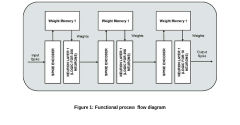
Neuromorphic computing: brain-inspired hardware for efficient ai processing
PatentPendingIN202411005149A
Innovation
- Neuromorphic computing systems mimic the brain's neural networks and synapses to enable parallel and adaptive processing, leveraging advances in neuroscience and hardware to create energy-efficient AI systems that can learn and adapt in real-time.
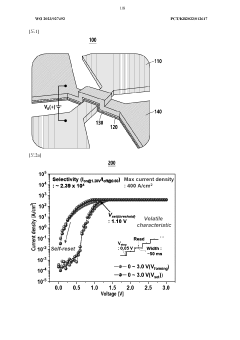
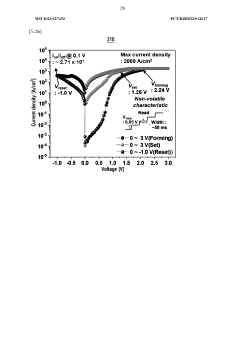
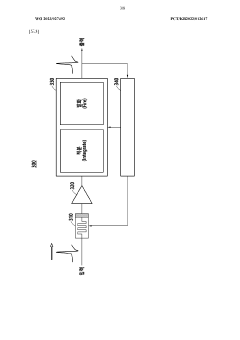
Neuromorphic device based on memristor device, and neuromorphic system using same
PatentWO2023027492A1
Innovation
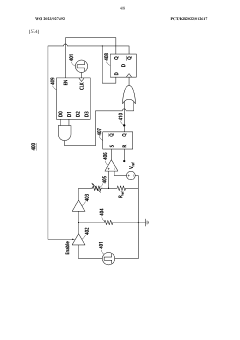
- A neuromorphic device using a memristor with a switching layer of amorphous germanium sulfide and a source layer of copper telluride, allowing for both artificial neuron and synapse characteristics to be implemented, with a crossbar-type structure that adjusts current density for volatility or non-volatility, enabling efficient memory operations and paired pulse facilitation.
Interdisciplinary Collaboration Frameworks
The integration of neuromorphic materials with bioinformatics tools requires robust interdisciplinary collaboration frameworks that transcend traditional academic and industrial boundaries. These frameworks must facilitate seamless knowledge exchange between materials scientists, computer engineers, bioinformaticians, and neuroscientists to achieve meaningful innovation in brain-inspired computing systems.
Effective collaboration models typically incorporate multi-tiered engagement structures, beginning with cross-disciplinary research clusters where experts maintain their specialized focus while participating in regular knowledge-sharing forums. These clusters often operate under a hub-and-spoke model, with centralized coordination of distributed expertise across institutions and geographical boundaries.
Digital collaboration platforms specifically designed for neuromorphic-bioinformatics integration have emerged as critical infrastructure. These platforms feature specialized data visualization tools that bridge the conceptual gap between materials properties and biological neural network principles, enabling researchers from diverse backgrounds to interpret complex datasets through familiar paradigms.
Funding mechanisms have evolved to support these interdisciplinary endeavors, with several major research foundations now offering dedicated grants for projects that demonstrate robust collaboration frameworks between materials science and bioinformatics. Notable examples include the EU's Horizon Europe Brain Initiative and the US BRAIN 2.0 program, both emphasizing cross-disciplinary team composition as a key evaluation criterion.
Industry-academia partnerships represent another crucial dimension of these collaboration frameworks. Companies developing neuromorphic hardware increasingly establish open innovation networks with academic bioinformatics labs, creating shared intellectual property agreements that balance commercial interests with scientific advancement. These arrangements typically include provisions for specialized training programs that develop hybrid expertise in both domains.
Standardization efforts have become a cornerstone of successful collaboration, with several international working groups developing common ontologies and data exchange formats that enable neuromorphic material characteristics to be meaningfully interpreted through bioinformatics analytical pipelines. The Neuromorphic Materials Ontology Consortium has made significant progress in establishing these shared vocabularies.
Ethical frameworks governing these collaborations have also evolved to address unique challenges at this intersection, particularly regarding the responsible development of brain-inspired artificial intelligence systems. Multi-stakeholder governance structures now commonly incorporate ethicists alongside technical experts to ensure that neuromorphic-bioinformatic innovations advance with appropriate consideration of societal implications.
Effective collaboration models typically incorporate multi-tiered engagement structures, beginning with cross-disciplinary research clusters where experts maintain their specialized focus while participating in regular knowledge-sharing forums. These clusters often operate under a hub-and-spoke model, with centralized coordination of distributed expertise across institutions and geographical boundaries.
Digital collaboration platforms specifically designed for neuromorphic-bioinformatics integration have emerged as critical infrastructure. These platforms feature specialized data visualization tools that bridge the conceptual gap between materials properties and biological neural network principles, enabling researchers from diverse backgrounds to interpret complex datasets through familiar paradigms.
Funding mechanisms have evolved to support these interdisciplinary endeavors, with several major research foundations now offering dedicated grants for projects that demonstrate robust collaboration frameworks between materials science and bioinformatics. Notable examples include the EU's Horizon Europe Brain Initiative and the US BRAIN 2.0 program, both emphasizing cross-disciplinary team composition as a key evaluation criterion.
Industry-academia partnerships represent another crucial dimension of these collaboration frameworks. Companies developing neuromorphic hardware increasingly establish open innovation networks with academic bioinformatics labs, creating shared intellectual property agreements that balance commercial interests with scientific advancement. These arrangements typically include provisions for specialized training programs that develop hybrid expertise in both domains.
Standardization efforts have become a cornerstone of successful collaboration, with several international working groups developing common ontologies and data exchange formats that enable neuromorphic material characteristics to be meaningfully interpreted through bioinformatics analytical pipelines. The Neuromorphic Materials Ontology Consortium has made significant progress in establishing these shared vocabularies.
Ethical frameworks governing these collaborations have also evolved to address unique challenges at this intersection, particularly regarding the responsible development of brain-inspired artificial intelligence systems. Multi-stakeholder governance structures now commonly incorporate ethicists alongside technical experts to ensure that neuromorphic-bioinformatic innovations advance with appropriate consideration of societal implications.
Ethical Implications of Brain-inspired Computing Systems
The integration of neuromorphic materials with bioinformatics tools raises profound ethical questions that society must address as these brain-inspired computing systems evolve. The fundamental nature of these technologies—mimicking human neural processes—creates unique ethical tensions around consciousness, personhood, and human identity. As these systems become increasingly sophisticated, the boundary between machine cognition and human thought grows increasingly blurred.
Privacy concerns represent a primary ethical challenge, as neuromorphic systems may process and store information in ways that parallel human memory formation. This raises questions about data ownership, consent, and the potential for unprecedented surveillance capabilities. Unlike traditional computing architectures, neuromorphic systems may develop novel methods of information encoding that could circumvent existing privacy protections and regulatory frameworks.
Autonomy and agency present another critical dimension of ethical consideration. As neuromorphic computing systems develop more sophisticated decision-making capabilities through the synergy with bioinformatics tools, questions arise regarding responsibility attribution. When systems make decisions based on neural-like processing, determining accountability becomes increasingly complex, particularly in high-stakes domains like healthcare, transportation, and security.
The potential for bias amplification represents a significant ethical concern. Neuromorphic systems trained on bioinformatics datasets may inherit and potentially magnify existing biases in medical research, healthcare delivery, and biological understanding. These biases could disproportionately impact marginalized communities if not carefully addressed through rigorous ethical oversight and diverse development teams.
Resource allocation ethics must also be considered, as neuromorphic computing may require specialized materials and significant energy resources. The environmental impact of manufacturing and operating these systems raises questions about sustainability and equitable access to advanced computing capabilities across global populations and economic divides.
Finally, the potential for dual-use applications presents complex ethical dilemmas. Neuromorphic systems integrated with bioinformatics tools could advance medical diagnostics and treatment while simultaneously enabling sophisticated biological weapons or surveillance systems. This tension requires thoughtful governance frameworks that promote beneficial applications while mitigating potential harms through international cooperation and ethical standards development.
Privacy concerns represent a primary ethical challenge, as neuromorphic systems may process and store information in ways that parallel human memory formation. This raises questions about data ownership, consent, and the potential for unprecedented surveillance capabilities. Unlike traditional computing architectures, neuromorphic systems may develop novel methods of information encoding that could circumvent existing privacy protections and regulatory frameworks.
Autonomy and agency present another critical dimension of ethical consideration. As neuromorphic computing systems develop more sophisticated decision-making capabilities through the synergy with bioinformatics tools, questions arise regarding responsibility attribution. When systems make decisions based on neural-like processing, determining accountability becomes increasingly complex, particularly in high-stakes domains like healthcare, transportation, and security.
The potential for bias amplification represents a significant ethical concern. Neuromorphic systems trained on bioinformatics datasets may inherit and potentially magnify existing biases in medical research, healthcare delivery, and biological understanding. These biases could disproportionately impact marginalized communities if not carefully addressed through rigorous ethical oversight and diverse development teams.
Resource allocation ethics must also be considered, as neuromorphic computing may require specialized materials and significant energy resources. The environmental impact of manufacturing and operating these systems raises questions about sustainability and equitable access to advanced computing capabilities across global populations and economic divides.
Finally, the potential for dual-use applications presents complex ethical dilemmas. Neuromorphic systems integrated with bioinformatics tools could advance medical diagnostics and treatment while simultaneously enabling sophisticated biological weapons or surveillance systems. This tension requires thoughtful governance frameworks that promote beneficial applications while mitigating potential harms through international cooperation and ethical standards development.
Unlock deeper insights with PatSnap Eureka Quick Research — get a full tech report to explore trends and direct your research. Try now!
Generate Your Research Report Instantly with AI Agent
Supercharge your innovation with PatSnap Eureka AI Agent Platform!