

Oceanographic Research and Battery Management System Dependency
AUG 8, 20259 MIN READ
Generate Your Research Report Instantly with AI Agent
PatSnap Eureka helps you evaluate technical feasibility & market potential.
Oceanographic BMS Goals
The integration of Battery Management Systems (BMS) in oceanographic research vessels and equipment has become increasingly crucial as the field advances towards more sophisticated and power-intensive operations. The primary goal of implementing BMS in oceanographic research is to optimize energy utilization, enhance operational efficiency, and extend the duration of underwater missions.
One of the key objectives is to develop BMS that can withstand the harsh marine environment, including high pressure, corrosive saltwater, and extreme temperature variations. This requires the design of robust, waterproof enclosures and the use of materials that can resist degradation in marine conditions. Additionally, the BMS must be capable of accurate monitoring and control of battery performance under these challenging circumstances.
Another critical goal is to improve the energy density and longevity of battery systems used in oceanographic research. This involves the development of advanced battery chemistries and configurations that can provide higher capacity and longer cycle life while maintaining a compact form factor suitable for underwater deployment. The BMS must be able to effectively manage these new battery technologies, optimizing their performance and ensuring safe operation.
Real-time monitoring and data transmission capabilities are essential objectives for oceanographic BMS. The system should be able to continuously assess battery health, state of charge, and performance metrics, transmitting this information to surface vessels or onshore stations. This data is crucial for making informed decisions about mission duration, equipment usage, and maintenance schedules.
Enhancing the safety and reliability of underwater operations is another paramount goal. The BMS must incorporate advanced safety features such as overcharge protection, thermal management, and fault detection algorithms. These systems should be capable of predicting potential failures and initiating preventive measures to avoid catastrophic events that could compromise expensive equipment or endanger research missions.
Integrating BMS with other onboard systems and sensors is a key objective to create a holistic approach to energy management in oceanographic research. This includes developing interfaces and protocols that allow seamless communication between the BMS and various scientific instruments, propulsion systems, and data collection devices. Such integration enables more efficient power allocation and usage optimization across all systems during research expeditions.
Lastly, there is a growing emphasis on developing environmentally friendly and sustainable BMS solutions for oceanographic research. This includes exploring the use of renewable energy sources, such as solar panels or wave energy converters, to supplement battery power. The BMS should be designed to efficiently manage and balance these hybrid power systems, maximizing the use of clean energy and reducing the environmental impact of research activities.
One of the key objectives is to develop BMS that can withstand the harsh marine environment, including high pressure, corrosive saltwater, and extreme temperature variations. This requires the design of robust, waterproof enclosures and the use of materials that can resist degradation in marine conditions. Additionally, the BMS must be capable of accurate monitoring and control of battery performance under these challenging circumstances.
Another critical goal is to improve the energy density and longevity of battery systems used in oceanographic research. This involves the development of advanced battery chemistries and configurations that can provide higher capacity and longer cycle life while maintaining a compact form factor suitable for underwater deployment. The BMS must be able to effectively manage these new battery technologies, optimizing their performance and ensuring safe operation.
Real-time monitoring and data transmission capabilities are essential objectives for oceanographic BMS. The system should be able to continuously assess battery health, state of charge, and performance metrics, transmitting this information to surface vessels or onshore stations. This data is crucial for making informed decisions about mission duration, equipment usage, and maintenance schedules.
Enhancing the safety and reliability of underwater operations is another paramount goal. The BMS must incorporate advanced safety features such as overcharge protection, thermal management, and fault detection algorithms. These systems should be capable of predicting potential failures and initiating preventive measures to avoid catastrophic events that could compromise expensive equipment or endanger research missions.
Integrating BMS with other onboard systems and sensors is a key objective to create a holistic approach to energy management in oceanographic research. This includes developing interfaces and protocols that allow seamless communication between the BMS and various scientific instruments, propulsion systems, and data collection devices. Such integration enables more efficient power allocation and usage optimization across all systems during research expeditions.
Lastly, there is a growing emphasis on developing environmentally friendly and sustainable BMS solutions for oceanographic research. This includes exploring the use of renewable energy sources, such as solar panels or wave energy converters, to supplement battery power. The BMS should be designed to efficiently manage and balance these hybrid power systems, maximizing the use of clean energy and reducing the environmental impact of research activities.
Market Analysis
The market for oceanographic research and battery management systems is experiencing significant growth, driven by increasing demand for sustainable energy solutions and advancements in marine exploration technologies. The global oceanographic research market is projected to expand steadily over the next decade, fueled by growing investments in ocean conservation, climate change studies, and marine resource exploration.
Battery management systems play a crucial role in oceanographic research, powering underwater vehicles, autonomous sensors, and other marine equipment. The dependency between these two sectors has created a unique market niche with substantial growth potential. As oceanographic research activities intensify, the demand for more efficient and reliable battery management systems continues to rise.
The market for battery management systems in oceanographic applications is characterized by a focus on high-performance, long-lasting, and environmentally friendly solutions. Lithium-ion batteries have emerged as the preferred choice for many marine applications due to their high energy density and relatively low environmental impact. This trend has spurred innovation in battery management technologies specifically tailored for harsh marine environments.
Key market drivers include increasing government funding for ocean research programs, growing interest in deep-sea exploration for mineral resources, and the rising adoption of autonomous underwater vehicles (AUVs) for various scientific and commercial applications. The market is also benefiting from the broader shift towards renewable energy sources, with marine energy harvesting technologies gaining traction.
The integration of advanced technologies such as artificial intelligence and Internet of Things (IoT) in battery management systems is opening new opportunities in the oceanographic research sector. These innovations are enabling more efficient power management, predictive maintenance, and real-time monitoring of battery performance in challenging underwater conditions.
Geographically, North America and Europe currently dominate the market, owing to their substantial investments in oceanographic research and advanced marine technologies. However, the Asia-Pacific region is expected to witness the fastest growth in the coming years, driven by increasing marine exploration activities and government initiatives to develop blue economies.
Despite the positive outlook, the market faces challenges such as high initial costs, technical complexities associated with deep-sea operations, and the need for continuous innovation to meet evolving research requirements. Overcoming these challenges will be crucial for sustained market growth and technological advancement in the field of oceanographic research and battery management systems.
Battery management systems play a crucial role in oceanographic research, powering underwater vehicles, autonomous sensors, and other marine equipment. The dependency between these two sectors has created a unique market niche with substantial growth potential. As oceanographic research activities intensify, the demand for more efficient and reliable battery management systems continues to rise.
The market for battery management systems in oceanographic applications is characterized by a focus on high-performance, long-lasting, and environmentally friendly solutions. Lithium-ion batteries have emerged as the preferred choice for many marine applications due to their high energy density and relatively low environmental impact. This trend has spurred innovation in battery management technologies specifically tailored for harsh marine environments.
Key market drivers include increasing government funding for ocean research programs, growing interest in deep-sea exploration for mineral resources, and the rising adoption of autonomous underwater vehicles (AUVs) for various scientific and commercial applications. The market is also benefiting from the broader shift towards renewable energy sources, with marine energy harvesting technologies gaining traction.
The integration of advanced technologies such as artificial intelligence and Internet of Things (IoT) in battery management systems is opening new opportunities in the oceanographic research sector. These innovations are enabling more efficient power management, predictive maintenance, and real-time monitoring of battery performance in challenging underwater conditions.
Geographically, North America and Europe currently dominate the market, owing to their substantial investments in oceanographic research and advanced marine technologies. However, the Asia-Pacific region is expected to witness the fastest growth in the coming years, driven by increasing marine exploration activities and government initiatives to develop blue economies.
Despite the positive outlook, the market faces challenges such as high initial costs, technical complexities associated with deep-sea operations, and the need for continuous innovation to meet evolving research requirements. Overcoming these challenges will be crucial for sustained market growth and technological advancement in the field of oceanographic research and battery management systems.
Technical Challenges
Oceanographic research and battery management systems face several interconnected technical challenges that hinder their advancement and integration. One of the primary obstacles is the harsh marine environment, which poses significant risks to electronic components and power systems. Saltwater corrosion, extreme pressure at depth, and temperature fluctuations can severely impact the performance and longevity of battery systems used in oceanographic research equipment.
The need for long-term deployment of research instruments in remote oceanic locations presents another major challenge. Current battery technologies often struggle to provide sufficient power for extended periods without frequent maintenance or replacement. This limitation restricts the duration and scope of oceanographic studies, particularly in deep-sea environments where access is limited and costly.
Energy harvesting from the marine environment, such as through wave or tidal power, offers a potential solution but introduces its own set of technical hurdles. The unpredictable nature of ocean conditions makes it difficult to design reliable and efficient energy harvesting systems that can consistently supplement or replace traditional battery power sources.
Data transmission and communication between submerged research equipment and surface or land-based stations present additional complications. The attenuation of radio signals in water necessitates the use of acoustic communication methods, which have limited bandwidth and are susceptible to interference from marine life and ambient noise. This constraint affects the ability to remotely monitor and manage battery systems effectively.
The integration of advanced battery management systems (BMS) with oceanographic research equipment is further complicated by size and weight restrictions. Miniaturization of BMS components while maintaining robust performance in marine conditions remains a significant engineering challenge. Additionally, the need for waterproof and pressure-resistant enclosures adds complexity to the design and increases overall system weight.
Balancing power consumption with data collection needs is another critical challenge. High-resolution sensors and data processing capabilities required for cutting-edge oceanographic research often demand substantial energy, putting strain on battery systems. Developing intelligent power management algorithms that can optimize energy use without compromising research quality is an ongoing area of research and development.
Environmental concerns also play a role in shaping technical challenges. The potential ecological impact of battery materials leaching into marine ecosystems necessitates the development of environmentally friendly power solutions. This includes research into biodegradable batteries or systems that can be safely recovered after use, adding another layer of complexity to battery management system design for oceanographic applications.
The need for long-term deployment of research instruments in remote oceanic locations presents another major challenge. Current battery technologies often struggle to provide sufficient power for extended periods without frequent maintenance or replacement. This limitation restricts the duration and scope of oceanographic studies, particularly in deep-sea environments where access is limited and costly.
Energy harvesting from the marine environment, such as through wave or tidal power, offers a potential solution but introduces its own set of technical hurdles. The unpredictable nature of ocean conditions makes it difficult to design reliable and efficient energy harvesting systems that can consistently supplement or replace traditional battery power sources.
Data transmission and communication between submerged research equipment and surface or land-based stations present additional complications. The attenuation of radio signals in water necessitates the use of acoustic communication methods, which have limited bandwidth and are susceptible to interference from marine life and ambient noise. This constraint affects the ability to remotely monitor and manage battery systems effectively.
The integration of advanced battery management systems (BMS) with oceanographic research equipment is further complicated by size and weight restrictions. Miniaturization of BMS components while maintaining robust performance in marine conditions remains a significant engineering challenge. Additionally, the need for waterproof and pressure-resistant enclosures adds complexity to the design and increases overall system weight.
Balancing power consumption with data collection needs is another critical challenge. High-resolution sensors and data processing capabilities required for cutting-edge oceanographic research often demand substantial energy, putting strain on battery systems. Developing intelligent power management algorithms that can optimize energy use without compromising research quality is an ongoing area of research and development.
Environmental concerns also play a role in shaping technical challenges. The potential ecological impact of battery materials leaching into marine ecosystems necessitates the development of environmentally friendly power solutions. This includes research into biodegradable batteries or systems that can be safely recovered after use, adding another layer of complexity to battery management system design for oceanographic applications.
Current BMS Solutions
01 Battery monitoring and control
Battery Management Systems (BMS) incorporate advanced monitoring and control features to optimize battery performance and safety. These systems continuously monitor parameters such as voltage, current, temperature, and state of charge. They use this data to control charging and discharging processes, balance cell voltages, and protect against overcharging, over-discharging, and thermal runaway.- Battery monitoring and control: Battery Management Systems (BMS) incorporate advanced monitoring and control features to optimize battery performance and safety. These systems continuously monitor parameters such as voltage, current, temperature, and state of charge. They use this data to control charging and discharging processes, balance cells, and protect against overcharging, over-discharging, and thermal runaway.
- State estimation and prediction: Modern BMS employ sophisticated algorithms for accurate state estimation and prediction of battery performance. These systems use real-time data and historical patterns to estimate the state of charge (SOC), state of health (SOH), and remaining useful life (RUL) of batteries. This information is crucial for optimizing battery usage, scheduling maintenance, and improving overall system reliability.
- Thermal management integration: Thermal management is a critical aspect of BMS design. Advanced systems integrate cooling and heating mechanisms to maintain optimal battery temperature ranges. This integration helps prevent thermal runaway, extends battery life, and ensures consistent performance across various operating conditions. Thermal management strategies may include active cooling, passive cooling, or a combination of both.
- Communication and data management: Modern BMS incorporate advanced communication protocols and data management capabilities. These systems can interface with other vehicle systems, cloud platforms, or grid infrastructure for data exchange and remote monitoring. They often include features for data logging, diagnostics, and over-the-air updates, enabling predictive maintenance and continuous improvement of battery performance.
- Safety and fault detection: BMS prioritize safety through comprehensive fault detection and protection mechanisms. These systems continuously monitor for abnormalities such as short circuits, cell imbalances, or unusual temperature fluctuations. Upon detecting a fault, the BMS can initiate appropriate responses, including isolating affected cells, adjusting power output, or shutting down the system to prevent catastrophic failures and ensure user safety.
02 State estimation and prediction
BMS employ sophisticated algorithms to estimate and predict battery states, including state of charge (SOC), state of health (SOH), and remaining useful life (RUL). These estimations are crucial for optimizing battery usage, scheduling maintenance, and ensuring reliable operation in various applications such as electric vehicles and energy storage systems.Expand Specific Solutions03 Thermal management
Effective thermal management is a key aspect of BMS design. These systems implement strategies to maintain optimal operating temperatures, which can include active cooling or heating mechanisms. Proper thermal management extends battery life, enhances performance, and prevents safety hazards associated with extreme temperatures.Expand Specific Solutions04 Communication and data management
Modern BMS integrate advanced communication protocols and data management capabilities. They can interface with other vehicle systems or grid infrastructure, transmit real-time data for remote monitoring, and store historical data for analysis. This connectivity enables features like over-the-air updates, predictive maintenance, and integration with energy management systems.Expand Specific Solutions05 Safety and fault detection
BMS incorporate multiple layers of safety features and fault detection mechanisms. These include hardware-based protection circuits, software algorithms for detecting abnormalities, and fail-safe modes. The system can identify and respond to various fault conditions such as short circuits, ground faults, and cell imbalances, ensuring safe operation and preventing catastrophic failures.Expand Specific Solutions
Key Industry Players
The oceanographic research and battery management system dependency market is in a growth phase, driven by increasing demand for sustainable energy solutions in marine applications. The market size is expanding, with significant potential for further development. Technologically, the field is advancing rapidly, with companies like LG Energy Solution, Samsung Electronics, and Contemporary Amperex Technology leading in battery innovation. Ocean University of China and Qingdao National Laboratory contribute valuable research in oceanography. The integration of these technologies is still evolving, with companies like Robert Bosch GmbH and Johnson Controls developing advanced battery management systems. This convergence presents opportunities for cross-sector collaboration and innovation in marine energy solutions.
LG Energy Solution Ltd.
Technical Solution: LG Energy Solution has developed an advanced Battery Management System (BMS) specifically designed for oceanographic research applications. Their system utilizes AI-powered predictive analytics to optimize battery performance in harsh marine environments[1]. The BMS incorporates real-time data from oceanographic sensors to adjust charging and discharging patterns, maximizing battery life and efficiency. Additionally, they have implemented a corrosion-resistant casing and waterproof connectors to ensure durability in saltwater conditions[3]. The system also features a remote monitoring capability, allowing researchers to track battery status and performance from onshore facilities[5].
Strengths: Specialized for marine environments, AI-powered optimization, remote monitoring capabilities. Weaknesses: Potentially higher cost due to specialized design, may require specific integration with oceanographic equipment.
Ocean University of China
Technical Solution: Ocean University of China has developed a novel Battery Management System tailored for oceanographic research vessels and underwater vehicles. Their system incorporates advanced algorithms that account for the unique challenges of deep-sea environments, such as extreme pressure and temperature variations[2]. The BMS utilizes a distributed architecture, with multiple smart nodes monitoring different battery packs across the vessel or vehicle. This approach enhances reliability and allows for more precise control of energy distribution[4]. The system also integrates with various oceanographic sensors, using real-time data to optimize battery performance based on current research activities and environmental conditions[6].
Strengths: Specifically designed for oceanographic research, distributed architecture for enhanced reliability, integration with research equipment. Weaknesses: May be less adaptable to non-marine applications, potentially complex installation and maintenance.
Core BMS Innovations
battery management system and method for operating a battery management system
PatentPendingDE102021207048A1
Innovation
- A battery management system utilizing an AI-optimized computing device equipped with a trained neural network to analyze electrical and physical variables from battery cells and modules, enabling precise estimation of cell and battery states, including state of charge, health, and potential faults, and allowing for proactive control strategies.


Battery Management System, Battery Pack and Method for Controlling Discharge of at Least One Battery Cell
PatentPendingUS20250087769A1
Innovation
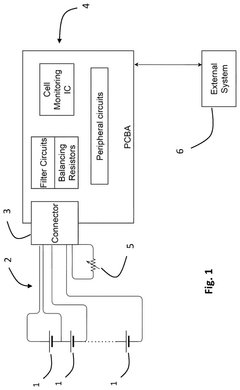
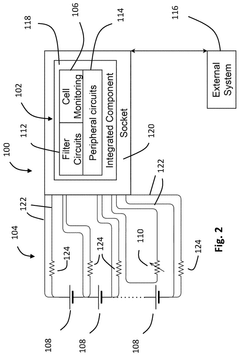
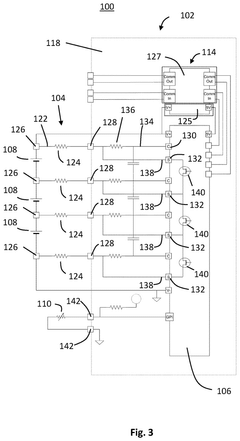
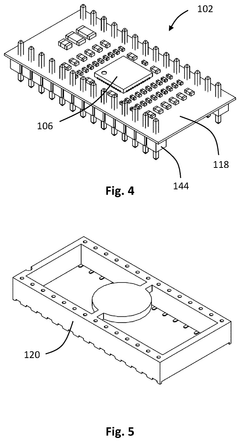
- The battery management system incorporates a control circuit mounted on a small component carrier with a connector circuit that includes a balancing resistor, allowing for a compact design and improved thermal management by placing the balancing resistor outside the control circuit.
Environmental Impact
The environmental impact of oceanographic research and battery management systems is a critical consideration in the development and deployment of these technologies. As marine exploration and data collection activities intensify, the potential ecological consequences must be carefully assessed and mitigated.
One of the primary environmental concerns is the impact of research vessels and equipment on marine ecosystems. The presence of large ships and underwater vehicles can disrupt marine life, particularly in sensitive habitats such as coral reefs or breeding grounds. Noise pollution from engines and sonar systems can interfere with marine mammal communication and navigation, potentially leading to behavioral changes or even physical harm.
The use of batteries in oceanographic research equipment also raises environmental issues. While batteries provide a clean energy source for underwater devices, their production and disposal can have significant environmental implications. The mining of raw materials for battery production, such as lithium and cobalt, can lead to habitat destruction and water pollution in terrestrial ecosystems. Additionally, improper disposal of spent batteries can result in the leaching of toxic chemicals into marine environments.
However, advancements in battery management systems offer opportunities to mitigate some of these environmental concerns. Improved energy efficiency and longer battery life can reduce the frequency of battery replacements, thereby minimizing waste generation and the need for resource extraction. Furthermore, the development of more environmentally friendly battery chemistries, such as those based on sodium or zinc, could reduce the reliance on rare and potentially harmful materials.
The integration of renewable energy sources, such as solar panels or wave energy converters, into oceanographic research platforms can further reduce the environmental footprint of these operations. By decreasing reliance on fossil fuels for power generation, these systems can help lower greenhouse gas emissions associated with marine research activities.
It is also important to consider the potential for unintended consequences when deploying battery-powered devices in marine environments. For instance, the loss or abandonment of equipment could introduce persistent pollution in the form of plastics and electronic waste. To address this, researchers are developing biodegradable materials for device casings and exploring retrieval systems to ensure proper recovery of deployed equipment.
In conclusion, while oceanographic research and battery management systems play a crucial role in advancing our understanding of marine ecosystems and climate change, their environmental impact must be carefully managed. Continued innovation in sustainable materials, energy-efficient designs, and responsible operational practices will be essential in minimizing the ecological footprint of these technologies while maximizing their scientific and societal benefits.
One of the primary environmental concerns is the impact of research vessels and equipment on marine ecosystems. The presence of large ships and underwater vehicles can disrupt marine life, particularly in sensitive habitats such as coral reefs or breeding grounds. Noise pollution from engines and sonar systems can interfere with marine mammal communication and navigation, potentially leading to behavioral changes or even physical harm.
The use of batteries in oceanographic research equipment also raises environmental issues. While batteries provide a clean energy source for underwater devices, their production and disposal can have significant environmental implications. The mining of raw materials for battery production, such as lithium and cobalt, can lead to habitat destruction and water pollution in terrestrial ecosystems. Additionally, improper disposal of spent batteries can result in the leaching of toxic chemicals into marine environments.
However, advancements in battery management systems offer opportunities to mitigate some of these environmental concerns. Improved energy efficiency and longer battery life can reduce the frequency of battery replacements, thereby minimizing waste generation and the need for resource extraction. Furthermore, the development of more environmentally friendly battery chemistries, such as those based on sodium or zinc, could reduce the reliance on rare and potentially harmful materials.
The integration of renewable energy sources, such as solar panels or wave energy converters, into oceanographic research platforms can further reduce the environmental footprint of these operations. By decreasing reliance on fossil fuels for power generation, these systems can help lower greenhouse gas emissions associated with marine research activities.
It is also important to consider the potential for unintended consequences when deploying battery-powered devices in marine environments. For instance, the loss or abandonment of equipment could introduce persistent pollution in the form of plastics and electronic waste. To address this, researchers are developing biodegradable materials for device casings and exploring retrieval systems to ensure proper recovery of deployed equipment.
In conclusion, while oceanographic research and battery management systems play a crucial role in advancing our understanding of marine ecosystems and climate change, their environmental impact must be carefully managed. Continued innovation in sustainable materials, energy-efficient designs, and responsible operational practices will be essential in minimizing the ecological footprint of these technologies while maximizing their scientific and societal benefits.
Data Management Strategies
Effective data management strategies are crucial for oceanographic research and battery management systems, as both fields generate vast amounts of complex data that require careful handling, storage, and analysis. In oceanographic research, data management involves collecting, processing, and storing diverse datasets from various sources, including sensors, buoys, and satellite imagery. These datasets often include parameters such as temperature, salinity, currents, and biological indicators, which need to be integrated and analyzed to gain insights into ocean dynamics and ecosystems.
For battery management systems, data management focuses on collecting and processing real-time information about battery performance, including voltage, current, temperature, and state of charge. This data is essential for optimizing battery life, predicting maintenance needs, and ensuring safe operation. In both fields, the implementation of robust data management strategies is critical for maintaining data integrity, facilitating data sharing among researchers and stakeholders, and enabling long-term data preservation for future analysis.
One key aspect of data management in these domains is the development of standardized data formats and metadata protocols. This standardization ensures that data from different sources can be easily integrated and compared, promoting collaboration and reducing the risk of data misinterpretation. Additionally, implementing quality control measures is essential to identify and correct errors in the data collection process, ensuring the reliability of the information used for decision-making and research.
Cloud-based storage solutions have become increasingly popular for managing large volumes of oceanographic and battery system data. These platforms offer scalability, accessibility, and enhanced security features, allowing researchers and engineers to access and analyze data from multiple locations. Furthermore, the use of distributed database systems can improve data retrieval speeds and provide redundancy, reducing the risk of data loss due to hardware failures or natural disasters.
Machine learning and artificial intelligence techniques are being increasingly employed to process and analyze the vast amounts of data generated in both fields. These advanced analytics tools can help identify patterns, predict trends, and optimize system performance based on historical and real-time data. For oceanographic research, this might involve predicting ocean currents or identifying areas of ecological concern, while in battery management systems, it could be used to forecast battery degradation and optimize charging strategies.
For battery management systems, data management focuses on collecting and processing real-time information about battery performance, including voltage, current, temperature, and state of charge. This data is essential for optimizing battery life, predicting maintenance needs, and ensuring safe operation. In both fields, the implementation of robust data management strategies is critical for maintaining data integrity, facilitating data sharing among researchers and stakeholders, and enabling long-term data preservation for future analysis.
One key aspect of data management in these domains is the development of standardized data formats and metadata protocols. This standardization ensures that data from different sources can be easily integrated and compared, promoting collaboration and reducing the risk of data misinterpretation. Additionally, implementing quality control measures is essential to identify and correct errors in the data collection process, ensuring the reliability of the information used for decision-making and research.
Cloud-based storage solutions have become increasingly popular for managing large volumes of oceanographic and battery system data. These platforms offer scalability, accessibility, and enhanced security features, allowing researchers and engineers to access and analyze data from multiple locations. Furthermore, the use of distributed database systems can improve data retrieval speeds and provide redundancy, reducing the risk of data loss due to hardware failures or natural disasters.
Machine learning and artificial intelligence techniques are being increasingly employed to process and analyze the vast amounts of data generated in both fields. These advanced analytics tools can help identify patterns, predict trends, and optimize system performance based on historical and real-time data. For oceanographic research, this might involve predicting ocean currents or identifying areas of ecological concern, while in battery management systems, it could be used to forecast battery degradation and optimize charging strategies.
Unlock deeper insights with PatSnap Eureka Quick Research — get a full tech report to explore trends and direct your research. Try now!
Generate Your Research Report Instantly with AI Agent
Supercharge your innovation with PatSnap Eureka AI Agent Platform!