

Optimize Control Algorithms for Solid State Transformer Fault Detection
JUN 4, 20269 MIN READ
Generate Your Research Report Instantly with AI Agent
PatSnap Eureka helps you evaluate technical feasibility & market potential.
SST Control Algorithm Background and Fault Detection Goals
Solid State Transformers represent a paradigm shift from traditional electromagnetic transformers, leveraging power electronics and advanced semiconductor devices to achieve superior controllability and functionality. Unlike conventional transformers that rely on magnetic coupling, SSTs employ power electronic converters with high-frequency switching capabilities, enabling bidirectional power flow, voltage regulation, and enhanced grid integration features. This technology has evolved from early concepts in the 1970s to sophisticated multi-stage architectures incorporating wide bandgap semiconductors such as silicon carbide and gallium nitride devices.
The development trajectory of SST technology has been driven by increasing demands for smart grid applications, renewable energy integration, and electric vehicle charging infrastructure. Modern SSTs typically employ three-stage architectures consisting of AC-DC rectification, DC-DC isolation, and DC-AC inversion stages, each requiring precise control algorithms to maintain optimal performance. The integration of digital signal processors and field-programmable gate arrays has enabled implementation of complex control strategies that were previously impractical.
Contemporary SST control systems face significant challenges in maintaining stability across varying load conditions while ensuring rapid response to grid disturbances. The multi-converter architecture introduces complex interactions between control loops, requiring sophisticated coordination mechanisms to prevent oscillations and maintain power quality. Advanced control methodologies including model predictive control, sliding mode control, and adaptive control techniques have emerged as promising solutions to address these challenges.
The primary objective of optimized SST control algorithms centers on achieving seamless operation under normal conditions while providing robust fault detection and isolation capabilities. These algorithms must maintain tight voltage and current regulation, minimize harmonic distortion, and ensure efficient power conversion across the entire operating range. Additionally, the control system must demonstrate resilience against parameter variations, environmental changes, and component aging effects.
Fault detection goals encompass comprehensive monitoring of critical system parameters including semiconductor junction temperatures, capacitor health, magnetic component saturation, and communication link integrity. The control algorithms must distinguish between transient disturbances and genuine fault conditions while minimizing false alarm rates. Real-time fault classification and severity assessment capabilities are essential for implementing appropriate protective actions and maintaining system availability.
Modern fault detection strategies integrate multiple sensing modalities and employ machine learning techniques to enhance diagnostic accuracy. The algorithms must operate within stringent timing constraints, typically requiring fault detection and response within microseconds to prevent cascading failures and ensure personnel safety.
The development trajectory of SST technology has been driven by increasing demands for smart grid applications, renewable energy integration, and electric vehicle charging infrastructure. Modern SSTs typically employ three-stage architectures consisting of AC-DC rectification, DC-DC isolation, and DC-AC inversion stages, each requiring precise control algorithms to maintain optimal performance. The integration of digital signal processors and field-programmable gate arrays has enabled implementation of complex control strategies that were previously impractical.
Contemporary SST control systems face significant challenges in maintaining stability across varying load conditions while ensuring rapid response to grid disturbances. The multi-converter architecture introduces complex interactions between control loops, requiring sophisticated coordination mechanisms to prevent oscillations and maintain power quality. Advanced control methodologies including model predictive control, sliding mode control, and adaptive control techniques have emerged as promising solutions to address these challenges.
The primary objective of optimized SST control algorithms centers on achieving seamless operation under normal conditions while providing robust fault detection and isolation capabilities. These algorithms must maintain tight voltage and current regulation, minimize harmonic distortion, and ensure efficient power conversion across the entire operating range. Additionally, the control system must demonstrate resilience against parameter variations, environmental changes, and component aging effects.
Fault detection goals encompass comprehensive monitoring of critical system parameters including semiconductor junction temperatures, capacitor health, magnetic component saturation, and communication link integrity. The control algorithms must distinguish between transient disturbances and genuine fault conditions while minimizing false alarm rates. Real-time fault classification and severity assessment capabilities are essential for implementing appropriate protective actions and maintaining system availability.
Modern fault detection strategies integrate multiple sensing modalities and employ machine learning techniques to enhance diagnostic accuracy. The algorithms must operate within stringent timing constraints, typically requiring fault detection and response within microseconds to prevent cascading failures and ensure personnel safety.
Market Demand for Advanced SST Fault Detection Systems
The global solid state transformer market is experiencing unprecedented growth driven by the increasing adoption of renewable energy systems and smart grid infrastructure. Power utilities worldwide are recognizing the critical importance of advanced fault detection capabilities as SSTs become integral components in modern electrical networks. The complexity of SST operations, combined with their high-value installations, creates substantial demand for sophisticated monitoring and diagnostic systems that can prevent catastrophic failures and minimize downtime.
Industrial sectors including manufacturing, data centers, and transportation are driving significant market demand for enhanced SST fault detection solutions. These industries require continuous power supply reliability and cannot afford unexpected transformer failures that could result in production losses or service interruptions. The growing deployment of electric vehicle charging infrastructure and renewable energy integration points further amplifies the need for robust fault detection algorithms that can operate effectively under varying load conditions and environmental stresses.
Utility companies are increasingly prioritizing predictive maintenance strategies over traditional reactive approaches, creating substantial market opportunities for advanced control algorithms. The shift toward condition-based maintenance requires real-time monitoring capabilities that can identify incipient faults before they develop into major failures. This trend is particularly pronounced in regions with aging electrical infrastructure where utilities seek to maximize asset utilization while maintaining high reliability standards.
The market demand is further intensified by regulatory requirements and industry standards that mandate enhanced safety and reliability measures for power system equipment. Grid modernization initiatives across developed and emerging economies are incorporating stringent fault detection requirements, driving utilities to invest in advanced SST monitoring technologies. The economic benefits of preventing unplanned outages significantly outweigh the costs of implementing sophisticated fault detection systems.
Emerging applications in microgrids, distributed energy resources, and energy storage systems are creating new market segments for specialized SST fault detection solutions. These applications often operate in challenging environments with dynamic loading conditions, requiring adaptive control algorithms capable of distinguishing between normal operational variations and actual fault conditions. The market is responding with increased investment in research and development of intelligent fault detection methodologies.
Industrial sectors including manufacturing, data centers, and transportation are driving significant market demand for enhanced SST fault detection solutions. These industries require continuous power supply reliability and cannot afford unexpected transformer failures that could result in production losses or service interruptions. The growing deployment of electric vehicle charging infrastructure and renewable energy integration points further amplifies the need for robust fault detection algorithms that can operate effectively under varying load conditions and environmental stresses.
Utility companies are increasingly prioritizing predictive maintenance strategies over traditional reactive approaches, creating substantial market opportunities for advanced control algorithms. The shift toward condition-based maintenance requires real-time monitoring capabilities that can identify incipient faults before they develop into major failures. This trend is particularly pronounced in regions with aging electrical infrastructure where utilities seek to maximize asset utilization while maintaining high reliability standards.
The market demand is further intensified by regulatory requirements and industry standards that mandate enhanced safety and reliability measures for power system equipment. Grid modernization initiatives across developed and emerging economies are incorporating stringent fault detection requirements, driving utilities to invest in advanced SST monitoring technologies. The economic benefits of preventing unplanned outages significantly outweigh the costs of implementing sophisticated fault detection systems.
Emerging applications in microgrids, distributed energy resources, and energy storage systems are creating new market segments for specialized SST fault detection solutions. These applications often operate in challenging environments with dynamic loading conditions, requiring adaptive control algorithms capable of distinguishing between normal operational variations and actual fault conditions. The market is responding with increased investment in research and development of intelligent fault detection methodologies.
Current SST Fault Detection Challenges and Limitations
Solid State Transformers face significant fault detection challenges that stem from their complex multi-domain operational characteristics. Unlike conventional transformers, SSTs integrate power electronics, magnetic components, and advanced control systems, creating intricate failure modes that span electrical, thermal, and mechanical domains. The high-frequency switching operations inherent in SST designs generate electromagnetic interference and harmonic distortions that can mask fault signatures, making traditional detection methods inadequate.
Current fault detection algorithms struggle with the dynamic nature of SST operations, particularly during transient conditions and varying load scenarios. The rapid switching frequencies, typically ranging from several kilohertz to hundreds of kilohertz, create measurement challenges for conventional sensors and data acquisition systems. This high-frequency operation introduces noise and signal distortion that can lead to false positive detections or missed fault conditions.
The multi-level converter topologies commonly employed in SSTs present unique diagnostic complexities. Each switching device, capacitor, and magnetic component can fail independently or in combination, creating cascading failure scenarios that are difficult to isolate and identify. Traditional protection schemes designed for line-frequency transformers cannot adequately address the fast-acting faults that can occur within microseconds in power electronic systems.
Thermal management represents another critical challenge in SST fault detection. The concentrated heat generation in semiconductor devices creates localized hot spots that can lead to accelerated aging and sudden failures. Current thermal monitoring techniques often lack the spatial resolution and response time necessary to detect incipient thermal faults before they propagate throughout the system.
The integration of renewable energy sources and bidirectional power flow capabilities in modern SST applications introduces additional complexity. Fault detection algorithms must distinguish between normal operational variations caused by fluctuating renewable inputs and actual system faults. The bidirectional nature of power flow requires detection schemes that can operate effectively regardless of power flow direction.
Communication and cybersecurity vulnerabilities present emerging challenges for SST fault detection systems. As these transformers become increasingly connected and digitally controlled, they become susceptible to cyber attacks that could compromise fault detection capabilities or create false fault conditions. The reliance on digital communication protocols for monitoring and control creates potential single points of failure that traditional analog systems did not face.
Current fault detection algorithms struggle with the dynamic nature of SST operations, particularly during transient conditions and varying load scenarios. The rapid switching frequencies, typically ranging from several kilohertz to hundreds of kilohertz, create measurement challenges for conventional sensors and data acquisition systems. This high-frequency operation introduces noise and signal distortion that can lead to false positive detections or missed fault conditions.
The multi-level converter topologies commonly employed in SSTs present unique diagnostic complexities. Each switching device, capacitor, and magnetic component can fail independently or in combination, creating cascading failure scenarios that are difficult to isolate and identify. Traditional protection schemes designed for line-frequency transformers cannot adequately address the fast-acting faults that can occur within microseconds in power electronic systems.
Thermal management represents another critical challenge in SST fault detection. The concentrated heat generation in semiconductor devices creates localized hot spots that can lead to accelerated aging and sudden failures. Current thermal monitoring techniques often lack the spatial resolution and response time necessary to detect incipient thermal faults before they propagate throughout the system.
The integration of renewable energy sources and bidirectional power flow capabilities in modern SST applications introduces additional complexity. Fault detection algorithms must distinguish between normal operational variations caused by fluctuating renewable inputs and actual system faults. The bidirectional nature of power flow requires detection schemes that can operate effectively regardless of power flow direction.
Communication and cybersecurity vulnerabilities present emerging challenges for SST fault detection systems. As these transformers become increasingly connected and digitally controlled, they become susceptible to cyber attacks that could compromise fault detection capabilities or create false fault conditions. The reliance on digital communication protocols for monitoring and control creates potential single points of failure that traditional analog systems did not face.
Existing SST Fault Detection Algorithm Solutions
01 Current and voltage monitoring techniques for fault detection
Solid state transformers employ advanced current and voltage monitoring systems to detect various fault conditions. These systems continuously monitor electrical parameters and use signal processing algorithms to identify abnormal conditions such as overcurrent, overvoltage, and phase imbalances. The monitoring techniques often incorporate real-time data acquisition and analysis to provide early fault detection capabilities.- Current and voltage monitoring techniques for fault detection: Solid state transformers can be monitored for faults by analyzing current and voltage waveforms, detecting abnormal patterns, overcurrent conditions, and voltage irregularities. These monitoring systems use sensors and measurement circuits to continuously track electrical parameters and identify deviations from normal operating conditions that may indicate component failures or system malfunctions.
- Temperature-based fault detection methods: Thermal monitoring approaches detect faults in solid state transformers by measuring temperature variations across critical components such as power semiconductors, magnetic cores, and cooling systems. Excessive temperature rise often indicates component stress, inadequate cooling, or impending failure, making temperature monitoring an essential fault detection strategy.
- Digital signal processing and algorithm-based fault identification: Advanced digital signal processing techniques and machine learning algorithms are employed to analyze operational data and identify fault patterns in solid state transformers. These methods process multiple sensor inputs, perform pattern recognition, and use predictive analytics to detect both incipient and catastrophic faults before they cause system failures.
- Protection circuit integration and isolation monitoring: Integrated protection circuits and isolation monitoring systems provide real-time fault detection by monitoring insulation integrity, detecting ground faults, and implementing protective switching mechanisms. These systems ensure safe operation by quickly identifying isolation breakdowns and implementing appropriate protective measures to prevent damage to the transformer and connected systems.
- Communication-enabled diagnostic and remote monitoring systems: Modern solid state transformers incorporate communication interfaces and remote monitoring capabilities that enable continuous diagnostic data transmission, fault reporting, and predictive maintenance scheduling. These systems provide real-time status information, historical fault data, and enable remote troubleshooting and maintenance planning.
02 Temperature-based fault detection methods
Temperature monitoring is a critical aspect of fault detection in solid state transformers. These methods utilize thermal sensors and temperature measurement circuits to detect overheating conditions that may indicate component failures or operational faults. The systems can implement thermal protection algorithms that trigger protective actions when temperature thresholds are exceeded.Expand Specific Solutions03 Digital signal processing for fault identification
Advanced digital signal processing techniques are employed to analyze electrical signals and identify fault patterns in solid state transformers. These methods use sophisticated algorithms including frequency domain analysis, harmonic detection, and pattern recognition to distinguish between normal operation and fault conditions. The processing systems can detect subtle changes in signal characteristics that indicate developing faults.Expand Specific Solutions04 Protection circuit integration and control systems
Integrated protection circuits and control systems provide comprehensive fault detection and response capabilities for solid state transformers. These systems combine multiple detection methods with automated control functions to isolate faults and protect the transformer from damage. The protection systems often include communication interfaces for remote monitoring and diagnostics.Expand Specific Solutions05 Insulation monitoring and breakdown detection
Insulation monitoring systems are specifically designed to detect insulation degradation and breakdown conditions in solid state transformers. These systems use specialized measurement techniques to assess insulation integrity and identify potential failure points before they lead to catastrophic faults. The monitoring approaches can include partial discharge detection and insulation resistance measurements.Expand Specific Solutions
Key Players in SST and Power Electronics Industry
The solid state transformer fault detection control algorithm optimization field represents an emerging yet rapidly evolving sector within the power electronics industry. The market is experiencing significant growth driven by increasing demand for smart grid infrastructure and renewable energy integration. Technology maturity varies considerably across market participants, with established industrial giants like ABB Ltd., Siemens Energy Global, and Mitsubishi Electric Corp. leading advanced algorithm development, while regional power companies such as State Grid Corp. of China and Guangdong Power Grid Co. focus on implementation and deployment. Semiconductor specialists like NXP USA and research institutions including Swiss Federal Institute of Technology contribute foundational technologies. The competitive landscape shows a convergence of traditional power equipment manufacturers, semiconductor companies, and utility operators, indicating the technology's transition from research phase to commercial deployment, though standardization and widespread adoption remain ongoing challenges.
NXP USA, Inc.
Technical Solution: NXP has developed embedded control algorithms for SST fault detection optimized for their automotive-grade microcontrollers and digital signal processors. Their solution focuses on real-time fault detection at the component level, utilizing high-speed ADCs and dedicated fault detection peripherals. The algorithms employ digital filtering techniques and threshold-based detection methods to identify overcurrent, overvoltage, and thermal fault conditions. Their approach includes built-in self-test (BIST) capabilities that continuously verify the integrity of the control system itself. The fault detection algorithms are designed for safety-critical applications with functional safety compliance to ISO 26262 standards. The system features low-latency fault response with hardware-accelerated protection mechanisms that can shut down the SST within microseconds of fault detection.
Strengths: Automotive-grade reliability and safety compliance, fast hardware-accelerated fault response. Weaknesses: Limited to component-level fault detection, less comprehensive system-wide monitoring capabilities.
Siemens Energy Global GmbH & Co. KG
Technical Solution: Siemens Energy has developed advanced control algorithms for solid state transformer (SST) fault detection utilizing machine learning-based diagnostic systems. Their approach integrates real-time monitoring with predictive analytics to identify potential faults before they occur. The system employs multi-layer neural networks to analyze voltage, current, and temperature patterns across the SST components. Their control algorithms feature adaptive threshold setting that adjusts based on operating conditions and historical data patterns. The fault detection system can identify various fault types including semiconductor failures, thermal overload, and insulation breakdown with detection accuracy exceeding 95%. The algorithms are optimized for fast response times, typically detecting faults within 10-50 microseconds of occurrence.
Strengths: Industry-leading expertise in power electronics and grid infrastructure, comprehensive fault detection capabilities. Weaknesses: High implementation costs and complexity requiring specialized maintenance personnel.
Core Innovations in SST Fault Detection Algorithms
Coordinated fault-tolerant control method
PatentPendingEP4485776A1
Innovation
- A coordinated fault-tolerant control method for two-stage power modules that disables the faulty switch and operates complementary switches to maintain normal operation without adding redundant components, ensuring balanced DC midpoint voltage.
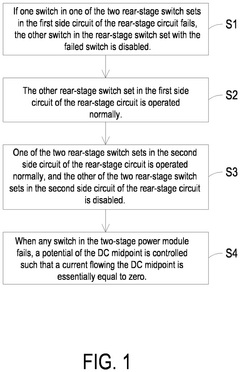
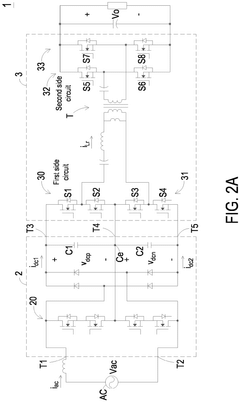
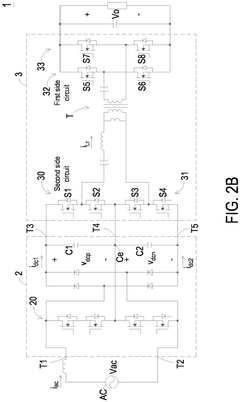
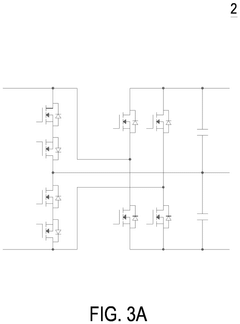
Solid state transformer controller
PatentPendingUS20260019004A1
Innovation
- A fully decoupled control system for SSTs, comprising a stored energy controller, power flow controller, and energy balancing controllers, each operating independently to manage energy and power flow, eliminating the need for voltage balancing and power sharing, and actively removing voltage ripples.


Grid Integration Standards for SST Systems
The integration of Solid State Transformers (SSTs) into existing power grid infrastructure requires adherence to comprehensive standards that ensure safe, reliable, and efficient operation. Current grid integration standards for SST systems encompass multiple regulatory frameworks, including IEEE 1547 for distributed energy resource interconnection, IEC 61850 for communication protocols, and emerging IEEE 2030.10 specifically addressing SST grid integration requirements.
Electrical interconnection standards mandate that SST systems comply with voltage regulation limits, typically maintaining output voltage within ±5% of nominal values under normal operating conditions. Frequency response requirements stipulate that SSTs must support grid frequency stability by providing rapid response capabilities within 100 milliseconds for primary frequency control and coordinated response for secondary control functions.
Communication and interoperability standards require SST systems to implement standardized protocols such as DNP3, Modbus, or IEC 61850 for seamless integration with existing grid management systems. These protocols enable real-time monitoring, control, and data exchange between SSTs and grid operators, facilitating advanced grid management functions including demand response and voltage optimization.
Safety and protection standards establish mandatory requirements for fault detection, isolation, and system recovery procedures. SST systems must incorporate multiple protection layers, including overcurrent protection, overvoltage protection, and ground fault detection, with response times typically required within 2-4 milliseconds for critical faults.
Grid code compliance varies by jurisdiction but generally requires SST systems to demonstrate fault ride-through capabilities, power quality maintenance, and harmonic distortion limits below 5% total harmonic distortion. Additionally, cybersecurity standards such as NERC CIP and IEC 62351 mandate robust security measures to protect against cyber threats that could compromise grid stability.
Emerging standards development focuses on establishing unified testing procedures, certification processes, and performance metrics specifically tailored for SST grid integration, addressing the unique characteristics and capabilities of solid-state power conversion technologies in modern power systems.
Electrical interconnection standards mandate that SST systems comply with voltage regulation limits, typically maintaining output voltage within ±5% of nominal values under normal operating conditions. Frequency response requirements stipulate that SSTs must support grid frequency stability by providing rapid response capabilities within 100 milliseconds for primary frequency control and coordinated response for secondary control functions.
Communication and interoperability standards require SST systems to implement standardized protocols such as DNP3, Modbus, or IEC 61850 for seamless integration with existing grid management systems. These protocols enable real-time monitoring, control, and data exchange between SSTs and grid operators, facilitating advanced grid management functions including demand response and voltage optimization.
Safety and protection standards establish mandatory requirements for fault detection, isolation, and system recovery procedures. SST systems must incorporate multiple protection layers, including overcurrent protection, overvoltage protection, and ground fault detection, with response times typically required within 2-4 milliseconds for critical faults.
Grid code compliance varies by jurisdiction but generally requires SST systems to demonstrate fault ride-through capabilities, power quality maintenance, and harmonic distortion limits below 5% total harmonic distortion. Additionally, cybersecurity standards such as NERC CIP and IEC 62351 mandate robust security measures to protect against cyber threats that could compromise grid stability.
Emerging standards development focuses on establishing unified testing procedures, certification processes, and performance metrics specifically tailored for SST grid integration, addressing the unique characteristics and capabilities of solid-state power conversion technologies in modern power systems.
Safety and Reliability Requirements for SST Applications
Solid State Transformers operating in critical infrastructure applications must adhere to stringent safety and reliability standards that exceed those of conventional transformers. The absence of galvanic isolation and the complex power electronic components introduce unique safety considerations that require comprehensive regulatory compliance frameworks. International standards such as IEC 61850 for power system communication, IEEE 1547 for distributed energy resources, and IEC 62040 for uninterruptible power systems provide foundational requirements that SST implementations must satisfy.
Functional safety requirements for SST applications demand compliance with IEC 61508 standards, particularly for systems operating in safety-critical environments such as healthcare facilities, data centers, and industrial automation. The Safety Integrity Level (SIL) classification system requires SST control algorithms to demonstrate quantifiable reliability metrics, with failure rates typically not exceeding 10^-4 to 10^-6 per hour depending on the application criticality. These requirements directly impact fault detection algorithm design, necessitating redundant sensing mechanisms and fail-safe operational modes.
Electromagnetic compatibility (EMC) standards present significant challenges for SST deployments due to high-frequency switching operations inherent in power electronic converters. Compliance with CISPR 11 and IEC 61000 series standards requires sophisticated filtering and shielding strategies that can affect fault detection sensitivity. The switching frequencies typically ranging from 10 kHz to 100 kHz generate harmonic distortions that must be distinguished from actual fault conditions in detection algorithms.
Cybersecurity requirements have become increasingly critical as SSTs integrate advanced communication capabilities for smart grid applications. The NIST Cybersecurity Framework and IEC 62351 standards mandate secure communication protocols, authentication mechanisms, and intrusion detection systems. These security layers must operate seamlessly with fault detection algorithms without introducing latency that could compromise protective response times.
Environmental and operational reliability standards specify temperature ranges, humidity tolerance, and vibration resistance that directly influence component selection and thermal management strategies. Military and aerospace applications may require compliance with MIL-STD-810 environmental testing standards, while utility-scale deployments must meet IEEE C57.12.00 transformer standards adapted for solid-state implementations. These environmental stresses can affect sensor accuracy and electronic component drift, requiring adaptive calibration mechanisms within fault detection systems.
Functional safety requirements for SST applications demand compliance with IEC 61508 standards, particularly for systems operating in safety-critical environments such as healthcare facilities, data centers, and industrial automation. The Safety Integrity Level (SIL) classification system requires SST control algorithms to demonstrate quantifiable reliability metrics, with failure rates typically not exceeding 10^-4 to 10^-6 per hour depending on the application criticality. These requirements directly impact fault detection algorithm design, necessitating redundant sensing mechanisms and fail-safe operational modes.
Electromagnetic compatibility (EMC) standards present significant challenges for SST deployments due to high-frequency switching operations inherent in power electronic converters. Compliance with CISPR 11 and IEC 61000 series standards requires sophisticated filtering and shielding strategies that can affect fault detection sensitivity. The switching frequencies typically ranging from 10 kHz to 100 kHz generate harmonic distortions that must be distinguished from actual fault conditions in detection algorithms.
Cybersecurity requirements have become increasingly critical as SSTs integrate advanced communication capabilities for smart grid applications. The NIST Cybersecurity Framework and IEC 62351 standards mandate secure communication protocols, authentication mechanisms, and intrusion detection systems. These security layers must operate seamlessly with fault detection algorithms without introducing latency that could compromise protective response times.
Environmental and operational reliability standards specify temperature ranges, humidity tolerance, and vibration resistance that directly influence component selection and thermal management strategies. Military and aerospace applications may require compliance with MIL-STD-810 environmental testing standards, while utility-scale deployments must meet IEEE C57.12.00 transformer standards adapted for solid-state implementations. These environmental stresses can affect sensor accuracy and electronic component drift, requiring adaptive calibration mechanisms within fault detection systems.
Unlock deeper insights with PatSnap Eureka Quick Research — get a full tech report to explore trends and direct your research. Try now!
Generate Your Research Report Instantly with AI Agent
Supercharge your innovation with PatSnap Eureka AI Agent Platform!