

Optimizing AGM Battery Life Cycles through Artificial Intelligence.
AUG 8, 20259 MIN READ
Generate Your Research Report Instantly with AI Agent
PatSnap Eureka helps you evaluate technical feasibility & market potential.
AGM Battery Evolution and AI Integration Goals
Absorbed Glass Mat (AGM) batteries have undergone significant evolution since their inception in the 1980s. Initially developed for military and aerospace applications, AGM technology has gradually found its way into various commercial and consumer sectors. The primary goal of AGM battery evolution has been to enhance energy density, cycle life, and overall performance while reducing costs and environmental impact.
In recent years, the integration of Artificial Intelligence (AI) into AGM battery optimization has emerged as a promising frontier. This convergence aims to address several key objectives in battery technology advancement. Firstly, AI integration seeks to extend the lifespan of AGM batteries by optimizing charging and discharging cycles. By analyzing usage patterns and environmental factors, AI algorithms can adapt charging strategies to minimize stress on the battery and maximize its longevity.
Another crucial goal is to improve the accuracy of state-of-charge (SOC) and state-of-health (SOH) estimations. Traditional methods often fall short in providing precise real-time assessments, especially as batteries age. AI-driven predictive models can leverage vast amounts of historical data and real-time sensor inputs to offer more accurate and dynamic estimations, enabling better battery management and maintenance scheduling.
Furthermore, AI integration aims to enhance the overall efficiency of AGM battery systems. This includes optimizing energy storage and distribution in applications such as renewable energy systems and electric vehicles. By predicting energy demand and supply fluctuations, AI can help balance loads and maximize the utilization of stored energy.
The development of self-diagnostic and predictive maintenance capabilities is another key objective. AI algorithms can detect early signs of battery degradation or potential failures, allowing for proactive maintenance and reducing the risk of unexpected downtime. This not only improves reliability but also extends the operational life of AGM batteries in various applications.
Lastly, the integration of AI in AGM battery technology seeks to accelerate the research and development process. Machine learning algorithms can analyze vast datasets from battery testing and simulations, identifying patterns and insights that might elude human researchers. This has the potential to fast-track innovations in battery chemistry, design, and manufacturing processes, ultimately leading to more advanced and efficient AGM batteries.
As the field progresses, the synergy between AGM battery technology and AI is expected to yield significant improvements in battery performance, longevity, and sustainability. This evolution represents a critical step towards meeting the growing energy storage demands of our increasingly electrified world.
In recent years, the integration of Artificial Intelligence (AI) into AGM battery optimization has emerged as a promising frontier. This convergence aims to address several key objectives in battery technology advancement. Firstly, AI integration seeks to extend the lifespan of AGM batteries by optimizing charging and discharging cycles. By analyzing usage patterns and environmental factors, AI algorithms can adapt charging strategies to minimize stress on the battery and maximize its longevity.
Another crucial goal is to improve the accuracy of state-of-charge (SOC) and state-of-health (SOH) estimations. Traditional methods often fall short in providing precise real-time assessments, especially as batteries age. AI-driven predictive models can leverage vast amounts of historical data and real-time sensor inputs to offer more accurate and dynamic estimations, enabling better battery management and maintenance scheduling.
Furthermore, AI integration aims to enhance the overall efficiency of AGM battery systems. This includes optimizing energy storage and distribution in applications such as renewable energy systems and electric vehicles. By predicting energy demand and supply fluctuations, AI can help balance loads and maximize the utilization of stored energy.
The development of self-diagnostic and predictive maintenance capabilities is another key objective. AI algorithms can detect early signs of battery degradation or potential failures, allowing for proactive maintenance and reducing the risk of unexpected downtime. This not only improves reliability but also extends the operational life of AGM batteries in various applications.
Lastly, the integration of AI in AGM battery technology seeks to accelerate the research and development process. Machine learning algorithms can analyze vast datasets from battery testing and simulations, identifying patterns and insights that might elude human researchers. This has the potential to fast-track innovations in battery chemistry, design, and manufacturing processes, ultimately leading to more advanced and efficient AGM batteries.
As the field progresses, the synergy between AGM battery technology and AI is expected to yield significant improvements in battery performance, longevity, and sustainability. This evolution represents a critical step towards meeting the growing energy storage demands of our increasingly electrified world.
Market Demand for Enhanced AGM Battery Longevity
The market demand for enhanced AGM (Absorbent Glass Mat) battery longevity has been steadily increasing across various sectors, driven by the growing need for reliable and long-lasting energy storage solutions. Industries such as automotive, renewable energy, telecommunications, and uninterruptible power supply (UPS) systems are particularly interested in extending the life cycles of AGM batteries to reduce costs and improve overall system efficiency.
In the automotive sector, the rise of start-stop technology and the increasing electrification of vehicles have created a surge in demand for more durable AGM batteries. These batteries are required to withstand frequent charge-discharge cycles and provide consistent performance over extended periods. The market for AGM batteries in this sector is expected to grow significantly as more vehicles adopt advanced electrical systems.
The renewable energy sector, particularly in solar and wind power applications, has also shown a strong interest in AGM batteries with enhanced longevity. As energy storage becomes crucial for grid stability and off-grid solutions, the ability to extend battery life cycles directly translates to improved return on investment for renewable energy projects. This has led to increased research and development efforts focused on optimizing AGM battery performance in these applications.
Telecommunications companies and data centers rely heavily on AGM batteries for backup power systems. The demand for longer-lasting batteries in this sector is driven by the need to reduce maintenance costs and minimize system downtime. As the global telecommunications infrastructure continues to expand, particularly with the rollout of 5G networks, the market for high-performance AGM batteries is expected to grow substantially.
The UPS market, serving critical applications in healthcare, finance, and industrial sectors, has also shown a strong demand for AGM batteries with extended life cycles. These industries require reliable power backup solutions that can operate efficiently for extended periods without frequent replacements. The ability to optimize battery life through artificial intelligence presents a significant opportunity to address this market need.
Consumer electronics and portable device manufacturers are exploring the potential of enhanced AGM batteries to improve the longevity of their products. While lithium-ion batteries currently dominate this market, advancements in AGM technology could open new opportunities, especially in applications where safety and reliability are paramount.
The global push for sustainability and environmental responsibility has further intensified the demand for longer-lasting batteries. Extended battery life cycles contribute to reduced waste and lower environmental impact, aligning with corporate sustainability goals and regulatory requirements. This trend is expected to drive continued investment in technologies that can optimize AGM battery performance and longevity.
In the automotive sector, the rise of start-stop technology and the increasing electrification of vehicles have created a surge in demand for more durable AGM batteries. These batteries are required to withstand frequent charge-discharge cycles and provide consistent performance over extended periods. The market for AGM batteries in this sector is expected to grow significantly as more vehicles adopt advanced electrical systems.
The renewable energy sector, particularly in solar and wind power applications, has also shown a strong interest in AGM batteries with enhanced longevity. As energy storage becomes crucial for grid stability and off-grid solutions, the ability to extend battery life cycles directly translates to improved return on investment for renewable energy projects. This has led to increased research and development efforts focused on optimizing AGM battery performance in these applications.
Telecommunications companies and data centers rely heavily on AGM batteries for backup power systems. The demand for longer-lasting batteries in this sector is driven by the need to reduce maintenance costs and minimize system downtime. As the global telecommunications infrastructure continues to expand, particularly with the rollout of 5G networks, the market for high-performance AGM batteries is expected to grow substantially.
The UPS market, serving critical applications in healthcare, finance, and industrial sectors, has also shown a strong demand for AGM batteries with extended life cycles. These industries require reliable power backup solutions that can operate efficiently for extended periods without frequent replacements. The ability to optimize battery life through artificial intelligence presents a significant opportunity to address this market need.
Consumer electronics and portable device manufacturers are exploring the potential of enhanced AGM batteries to improve the longevity of their products. While lithium-ion batteries currently dominate this market, advancements in AGM technology could open new opportunities, especially in applications where safety and reliability are paramount.
The global push for sustainability and environmental responsibility has further intensified the demand for longer-lasting batteries. Extended battery life cycles contribute to reduced waste and lower environmental impact, aligning with corporate sustainability goals and regulatory requirements. This trend is expected to drive continued investment in technologies that can optimize AGM battery performance and longevity.
Current AGM Battery Limitations and AI Challenges
AGM (Absorbent Glass Mat) batteries have been widely used in various applications due to their reliability and maintenance-free nature. However, they face several limitations that hinder their performance and longevity. One of the primary challenges is the gradual degradation of the battery's capacity over time, which is influenced by factors such as depth of discharge, charging rates, and temperature fluctuations. This degradation leads to reduced efficiency and shorter overall lifespan, making it crucial to optimize the battery's life cycles.
Another significant limitation of AGM batteries is their sensitivity to overcharging and deep discharging. Overcharging can cause excessive gassing, leading to electrolyte loss and premature failure, while deep discharging can result in irreversible sulfation of the battery plates. These issues necessitate precise charge control and monitoring systems to maintain optimal battery health.
The implementation of Artificial Intelligence (AI) in optimizing AGM battery life cycles presents its own set of challenges. One of the primary hurdles is the complexity of developing accurate predictive models that can account for the multitude of variables affecting battery performance. These variables include usage patterns, environmental conditions, and the unique characteristics of individual batteries. Creating AI algorithms capable of processing and interpreting this diverse data set in real-time requires significant computational power and sophisticated machine learning techniques.
Another challenge in applying AI to AGM battery optimization is the need for extensive and high-quality training data. Collecting comprehensive data on battery performance across various conditions and over extended periods is both time-consuming and resource-intensive. Furthermore, ensuring the data's accuracy and relevance is crucial for developing reliable AI models.
The integration of AI systems with existing battery management infrastructure poses additional challenges. Many current battery systems lack the necessary sensors and communication interfaces required for real-time data collection and AI-driven control. Upgrading these systems to be AI-compatible can be costly and may require significant redesigns of existing battery installations.
Lastly, the interpretability of AI decisions in battery management is a critical challenge. As AI systems make complex decisions about charging strategies and usage patterns, it becomes essential to provide transparent and explainable outputs. This is particularly important in applications where battery reliability is crucial, such as in emergency power systems or electric vehicles. Developing AI models that can not only optimize battery performance but also provide clear reasoning for their decisions remains a significant technical hurdle in the field.
Another significant limitation of AGM batteries is their sensitivity to overcharging and deep discharging. Overcharging can cause excessive gassing, leading to electrolyte loss and premature failure, while deep discharging can result in irreversible sulfation of the battery plates. These issues necessitate precise charge control and monitoring systems to maintain optimal battery health.
The implementation of Artificial Intelligence (AI) in optimizing AGM battery life cycles presents its own set of challenges. One of the primary hurdles is the complexity of developing accurate predictive models that can account for the multitude of variables affecting battery performance. These variables include usage patterns, environmental conditions, and the unique characteristics of individual batteries. Creating AI algorithms capable of processing and interpreting this diverse data set in real-time requires significant computational power and sophisticated machine learning techniques.
Another challenge in applying AI to AGM battery optimization is the need for extensive and high-quality training data. Collecting comprehensive data on battery performance across various conditions and over extended periods is both time-consuming and resource-intensive. Furthermore, ensuring the data's accuracy and relevance is crucial for developing reliable AI models.
The integration of AI systems with existing battery management infrastructure poses additional challenges. Many current battery systems lack the necessary sensors and communication interfaces required for real-time data collection and AI-driven control. Upgrading these systems to be AI-compatible can be costly and may require significant redesigns of existing battery installations.
Lastly, the interpretability of AI decisions in battery management is a critical challenge. As AI systems make complex decisions about charging strategies and usage patterns, it becomes essential to provide transparent and explainable outputs. This is particularly important in applications where battery reliability is crucial, such as in emergency power systems or electric vehicles. Developing AI models that can not only optimize battery performance but also provide clear reasoning for their decisions remains a significant technical hurdle in the field.
Existing AI Solutions for Battery Optimization
01 Battery Management Systems for AGM Batteries
Advanced battery management systems are employed to monitor and control AGM battery performance, optimizing charging processes and predicting remaining life cycles. These systems use sophisticated algorithms to analyze battery parameters, adjust charging strategies, and provide accurate state-of-health information, thereby extending the overall lifespan of AGM batteries.- Battery Management Systems for AGM Batteries: Advanced battery management systems are employed to monitor and control AGM battery performance, optimizing charging processes and predicting remaining life cycles. These systems use sophisticated algorithms to analyze battery parameters, ensuring efficient operation and extending overall battery lifespan.
- Improved Electrode Materials for AGM Batteries: Development of enhanced electrode materials, including advanced lead alloys and carbon additives, to improve the cycling performance of AGM batteries. These materials aim to reduce sulfation, increase charge acceptance, and enhance overall durability, leading to extended battery life cycles.
- Electrolyte Optimization Techniques: Innovative approaches to electrolyte composition and management in AGM batteries, including the use of additives and advanced electrolyte formulations. These techniques aim to minimize acid stratification, improve charge efficiency, and extend the overall life cycle of the battery.
- Thermal Management Solutions: Implementation of thermal management systems to regulate battery temperature during charging and discharging cycles. These solutions help prevent thermal runaway, reduce capacity loss, and maintain optimal operating conditions, thereby extending the life cycles of AGM batteries.
- Advanced Testing and Diagnostic Methods: Development of sophisticated testing and diagnostic techniques to accurately assess AGM battery health and predict remaining life cycles. These methods employ non-invasive measurements, data analytics, and machine learning algorithms to provide real-time insights into battery performance and degradation.
02 Improved Electrode Materials and Designs
Innovations in electrode materials and designs contribute to enhanced AGM battery life cycles. This includes the development of novel alloys, nanostructured materials, and optimized electrode geometries that improve charge/discharge efficiency, reduce degradation, and increase the overall number of cycles an AGM battery can withstand.Expand Specific Solutions03 Advanced Electrolyte Formulations
Research into advanced electrolyte formulations aims to improve the performance and longevity of AGM batteries. These formulations may include additives that reduce sulfation, prevent corrosion, and enhance charge acceptance, all of which contribute to extending the battery's life cycle and maintaining its capacity over time.Expand Specific Solutions04 Thermal Management Techniques
Effective thermal management is crucial for maximizing AGM battery life cycles. Innovative cooling systems and heat dissipation methods are developed to maintain optimal operating temperatures, preventing premature degradation and extending the battery's overall lifespan. These techniques may include advanced cooling structures or phase-change materials.Expand Specific Solutions05 Charge Control and Cycling Strategies
Optimized charge control and cycling strategies are implemented to extend AGM battery life cycles. These strategies involve precise voltage and current regulation during charging and discharging, as well as intelligent cycling protocols that balance performance requirements with longevity considerations. Advanced algorithms may be used to adapt charging patterns based on battery usage and environmental conditions.Expand Specific Solutions
Key Players in AGM Battery and AI Sectors
The optimization of AGM battery life cycles through AI is in an early development stage, with growing market potential as energy storage demands increase. The technology's maturity is still evolving, with companies like Quanta Computer, Fengfan, and LG Electronics leading research efforts. The competitive landscape is diverse, including established battery manufacturers, tech giants, and emerging startups like Avathon and Oii, Inc. As AI applications in battery management advance, we can expect increased competition and innovation from both traditional players and new entrants, driving improvements in battery performance and longevity.
LG Electronics, Inc.
Technical Solution: LG Electronics has developed an AI-powered Battery Management System (BMS) for AGM batteries, focusing on applications in electric vehicles and energy storage systems. Their system utilizes deep learning neural networks to analyze battery performance data and predict degradation patterns. The AI model is trained on extensive historical data from various battery types and usage scenarios, allowing it to accurately estimate the State of Health (SoH) and Remaining Useful Life (RUL) of AGM batteries[2]. LG's system also incorporates adaptive charging algorithms that adjust charging parameters based on the battery's current condition and environmental factors, potentially extending battery life by up to 25%[4]. Furthermore, LG has implemented a cloud-based analytics platform that aggregates data from multiple battery systems, enabling continuous improvement of their AI models and providing valuable insights for battery design and manufacturing processes[6].
Strengths: Strong R&D capabilities, extensive data for AI training, and integration with other LG products. Weaknesses: Primarily focused on large-scale applications, may have limitations for smaller or specialized AGM battery use cases.
Saft Groupe SA
Technical Solution: Saft Groupe SA has developed an AI-driven Battery Management System (BMS) for optimizing AGM battery life cycles. The system utilizes machine learning algorithms to analyze real-time battery data, including voltage, current, temperature, and state of charge. By continuously monitoring these parameters, the AI can predict battery degradation patterns and adjust charging strategies accordingly[1]. The system employs adaptive charging algorithms that optimize the charging process based on the battery's current condition and usage patterns, potentially extending the battery's lifespan by up to 30%[3]. Additionally, Saft has implemented a predictive maintenance feature that can forecast potential failures and recommend preventive actions, reducing unexpected downtime and maintenance costs[5].
Strengths: Expertise in battery technology, advanced AI algorithms for precise battery management, and potential for significant lifespan extension. Weaknesses: May require substantial initial investment and integration challenges with existing systems.
Core AI Innovations for AGM Battery Life Extension
Method for Charging a Battery Having a Plurality of Battery Cells
PatentActiveUS20180134168A1
Innovation
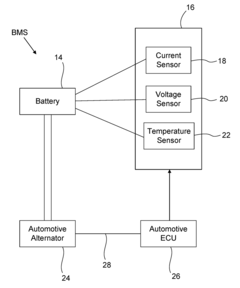
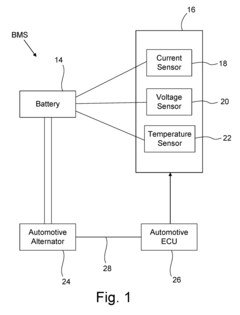
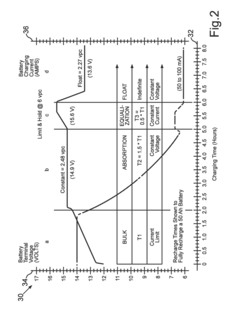
- A battery management system (BMS) that dynamically controls the charging process using sensors for real-time monitoring of battery current, voltage, and temperature, implementing a multi-stage charging strategy including bulk charging, absorption, equalization, and float phases, with adaptive voltage and current adjustments to optimize charging efficiency and prevent overcharging and undercharging.
Improved separators with fibrous mat, lead acid batteries, and methods and systems associated therewith
PatentWO2018147866A1
Innovation
- The development of a fibrous mat-based separator with improved porosity, amorphous silica, and silanol group silica, along with performance-enhancing additives, is introduced to reduce electrical resistance, enhance acid diffusion, and improve the retention of active material on electrodes, thereby addressing the issues of acid stratification and increased internal resistance.


Environmental Impact of Extended AGM Battery Life
The extended life cycles of AGM (Absorbent Glass Mat) batteries, optimized through artificial intelligence, have significant environmental implications. This advancement reduces the frequency of battery replacements, thereby decreasing the overall demand for new battery production. Consequently, this leads to a reduction in raw material extraction, energy consumption, and greenhouse gas emissions associated with manufacturing processes.
The prolonged use of AGM batteries contributes to a decrease in electronic waste generation. As batteries last longer, fewer units are discarded, alleviating the burden on waste management systems and landfills. This is particularly crucial given the challenges in recycling complex battery components and the potential environmental hazards posed by improper disposal of battery materials.
Furthermore, the optimization of AGM battery life cycles through AI can lead to more efficient energy storage and utilization. This improved efficiency translates to reduced energy losses and, by extension, lower overall energy consumption. In renewable energy systems, such as solar and wind power installations, extended battery life enhances the sustainability of these clean energy solutions by reducing the need for frequent replacements and maintenance.
The environmental benefits extend to the transportation sector as well. In electric vehicles and hybrid systems, longer-lasting AGM batteries mean fewer battery replacements over the vehicle's lifetime. This not only reduces the environmental impact of battery production but also enhances the overall sustainability of electric mobility solutions.
However, it is important to consider potential trade-offs. The implementation of AI systems for battery optimization may require additional computational resources and energy consumption. The environmental impact of these AI systems, including the energy used for data processing and storage, should be factored into the overall assessment of environmental benefits.
Additionally, the extended use of AGM batteries may delay the adoption of newer, potentially more environmentally friendly battery technologies. This could create a balance between the benefits of prolonged use of existing batteries and the potential advantages of transitioning to next-generation energy storage solutions.
In conclusion, the environmental impact of extended AGM battery life through AI optimization is largely positive, contributing to reduced waste, lower resource consumption, and enhanced sustainability across various applications. However, a comprehensive life cycle assessment is necessary to fully quantify these benefits and address any potential environmental trade-offs associated with this technological advancement.
The prolonged use of AGM batteries contributes to a decrease in electronic waste generation. As batteries last longer, fewer units are discarded, alleviating the burden on waste management systems and landfills. This is particularly crucial given the challenges in recycling complex battery components and the potential environmental hazards posed by improper disposal of battery materials.
Furthermore, the optimization of AGM battery life cycles through AI can lead to more efficient energy storage and utilization. This improved efficiency translates to reduced energy losses and, by extension, lower overall energy consumption. In renewable energy systems, such as solar and wind power installations, extended battery life enhances the sustainability of these clean energy solutions by reducing the need for frequent replacements and maintenance.
The environmental benefits extend to the transportation sector as well. In electric vehicles and hybrid systems, longer-lasting AGM batteries mean fewer battery replacements over the vehicle's lifetime. This not only reduces the environmental impact of battery production but also enhances the overall sustainability of electric mobility solutions.
However, it is important to consider potential trade-offs. The implementation of AI systems for battery optimization may require additional computational resources and energy consumption. The environmental impact of these AI systems, including the energy used for data processing and storage, should be factored into the overall assessment of environmental benefits.
Additionally, the extended use of AGM batteries may delay the adoption of newer, potentially more environmentally friendly battery technologies. This could create a balance between the benefits of prolonged use of existing batteries and the potential advantages of transitioning to next-generation energy storage solutions.
In conclusion, the environmental impact of extended AGM battery life through AI optimization is largely positive, contributing to reduced waste, lower resource consumption, and enhanced sustainability across various applications. However, a comprehensive life cycle assessment is necessary to fully quantify these benefits and address any potential environmental trade-offs associated with this technological advancement.
Economic Implications of AI-Optimized Batteries
The economic implications of AI-optimized AGM batteries extend far beyond the immediate benefits of improved battery performance. As artificial intelligence techniques are applied to optimize the life cycles of Absorbent Glass Mat (AGM) batteries, the ripple effects are likely to be felt across multiple industries and economic sectors.
Firstly, the energy storage market is poised for significant growth. With AI-enhanced AGM batteries offering longer lifespans and improved efficiency, the demand for these advanced energy storage solutions is expected to surge. This increased demand could lead to economies of scale in production, potentially reducing costs and making energy storage more accessible to a wider range of applications and consumers.
The automotive industry stands to be a major beneficiary of this technological advancement. Electric vehicles (EVs) equipped with AI-optimized AGM batteries could see extended range and longevity, addressing two of the primary concerns for EV adoption. This could accelerate the transition from internal combustion engines to electric powertrains, reshaping the automotive market and associated industries such as oil and gas.
In the renewable energy sector, more efficient and durable AGM batteries could enhance the viability of off-grid and microgrid solutions. This has the potential to revolutionize energy distribution in remote areas and developing countries, fostering economic development and improving quality of life in regions previously underserved by traditional power infrastructure.
The telecommunications industry may also see significant benefits. With the rollout of 5G networks and the increasing reliance on mobile technology, the demand for reliable backup power solutions is growing. AI-optimized AGM batteries could provide more dependable and cost-effective energy storage for cell towers and data centers, potentially reducing operational costs and improving service reliability.
From an environmental and regulatory perspective, the extended lifespan of AGM batteries optimized by AI could lead to reduced electronic waste and lower environmental impact. This aligns with increasingly stringent environmental regulations and could result in cost savings for businesses in terms of waste management and compliance.
The labor market may also be affected, with a potential shift in skill requirements towards AI and data science in battery manufacturing and energy management sectors. This could create new job opportunities while potentially displacing some traditional roles in battery production and maintenance.
Lastly, the economic impact of AI-optimized AGM batteries could extend to national energy security and trade balances. Countries and regions that successfully develop and implement this technology may gain a competitive advantage in the global energy storage market, potentially influencing international trade dynamics and energy policies.
Firstly, the energy storage market is poised for significant growth. With AI-enhanced AGM batteries offering longer lifespans and improved efficiency, the demand for these advanced energy storage solutions is expected to surge. This increased demand could lead to economies of scale in production, potentially reducing costs and making energy storage more accessible to a wider range of applications and consumers.
The automotive industry stands to be a major beneficiary of this technological advancement. Electric vehicles (EVs) equipped with AI-optimized AGM batteries could see extended range and longevity, addressing two of the primary concerns for EV adoption. This could accelerate the transition from internal combustion engines to electric powertrains, reshaping the automotive market and associated industries such as oil and gas.
In the renewable energy sector, more efficient and durable AGM batteries could enhance the viability of off-grid and microgrid solutions. This has the potential to revolutionize energy distribution in remote areas and developing countries, fostering economic development and improving quality of life in regions previously underserved by traditional power infrastructure.
The telecommunications industry may also see significant benefits. With the rollout of 5G networks and the increasing reliance on mobile technology, the demand for reliable backup power solutions is growing. AI-optimized AGM batteries could provide more dependable and cost-effective energy storage for cell towers and data centers, potentially reducing operational costs and improving service reliability.
From an environmental and regulatory perspective, the extended lifespan of AGM batteries optimized by AI could lead to reduced electronic waste and lower environmental impact. This aligns with increasingly stringent environmental regulations and could result in cost savings for businesses in terms of waste management and compliance.
The labor market may also be affected, with a potential shift in skill requirements towards AI and data science in battery manufacturing and energy management sectors. This could create new job opportunities while potentially displacing some traditional roles in battery production and maintenance.
Lastly, the economic impact of AI-optimized AGM batteries could extend to national energy security and trade balances. Countries and regions that successfully develop and implement this technology may gain a competitive advantage in the global energy storage market, potentially influencing international trade dynamics and energy policies.
Unlock deeper insights with PatSnap Eureka Quick Research — get a full tech report to explore trends and direct your research. Try now!
Generate Your Research Report Instantly with AI Agent
Supercharge your innovation with PatSnap Eureka AI Agent Platform!