Optimizing HVAC Efficiency with Feedback Linearization Techniques
MAR 27, 20269 MIN READ
Generate Your Research Report Instantly with AI Agent
Patsnap Eureka helps you evaluate technical feasibility & market potential.
HVAC Feedback Linearization Background and Objectives
Heating, Ventilation, and Air Conditioning (HVAC) systems have undergone significant technological evolution since their inception in the early 20th century. Initially, these systems relied on simple mechanical controls and basic thermostatic regulation. The integration of electronic controls in the 1970s marked a pivotal shift, followed by the adoption of digital control systems in the 1990s. The emergence of Building Management Systems (BMS) and Internet of Things (IoT) technologies in the 2000s further revolutionized HVAC operations, enabling remote monitoring and basic optimization capabilities.
The current trajectory of HVAC technology development emphasizes intelligent control algorithms, predictive maintenance, and energy optimization strategies. Advanced control methodologies, including Model Predictive Control (MPC), adaptive control, and nonlinear control techniques, have gained prominence as building energy efficiency requirements become increasingly stringent. Feedback linearization represents a sophisticated control approach that addresses the inherent nonlinear characteristics of HVAC systems, offering potential solutions to longstanding efficiency challenges.
Modern HVAC systems exhibit complex nonlinear dynamics due to multiple interacting subsystems, variable load conditions, and environmental disturbances. Traditional Proportional-Integral-Derivative (PID) controllers, while widely implemented, often struggle to maintain optimal performance across diverse operating conditions. The nonlinear nature of heat transfer processes, fluid dynamics, and thermodynamic cycles creates control challenges that linear control methods cannot adequately address.
Feedback linearization techniques aim to transform nonlinear HVAC system dynamics into equivalent linear systems through mathematical transformation and strategic control input design. This approach enables the application of well-established linear control theory to achieve superior performance in terms of energy efficiency, temperature regulation accuracy, and system stability. The technique particularly addresses issues such as overshooting, oscillations, and slow response times that commonly plague conventional HVAC control systems.
The primary objective of implementing feedback linearization in HVAC systems centers on achieving substantial energy consumption reduction while maintaining or improving occupant comfort levels. Specific targets include reducing energy usage by 15-30% compared to conventional control methods, minimizing temperature fluctuations within ±0.5°C of setpoints, and enhancing system response times to load changes. Additionally, the technology aims to extend equipment lifespan through smoother operation and reduced mechanical stress, ultimately contributing to sustainable building operations and reduced operational costs.
The current trajectory of HVAC technology development emphasizes intelligent control algorithms, predictive maintenance, and energy optimization strategies. Advanced control methodologies, including Model Predictive Control (MPC), adaptive control, and nonlinear control techniques, have gained prominence as building energy efficiency requirements become increasingly stringent. Feedback linearization represents a sophisticated control approach that addresses the inherent nonlinear characteristics of HVAC systems, offering potential solutions to longstanding efficiency challenges.
Modern HVAC systems exhibit complex nonlinear dynamics due to multiple interacting subsystems, variable load conditions, and environmental disturbances. Traditional Proportional-Integral-Derivative (PID) controllers, while widely implemented, often struggle to maintain optimal performance across diverse operating conditions. The nonlinear nature of heat transfer processes, fluid dynamics, and thermodynamic cycles creates control challenges that linear control methods cannot adequately address.
Feedback linearization techniques aim to transform nonlinear HVAC system dynamics into equivalent linear systems through mathematical transformation and strategic control input design. This approach enables the application of well-established linear control theory to achieve superior performance in terms of energy efficiency, temperature regulation accuracy, and system stability. The technique particularly addresses issues such as overshooting, oscillations, and slow response times that commonly plague conventional HVAC control systems.
The primary objective of implementing feedback linearization in HVAC systems centers on achieving substantial energy consumption reduction while maintaining or improving occupant comfort levels. Specific targets include reducing energy usage by 15-30% compared to conventional control methods, minimizing temperature fluctuations within ±0.5°C of setpoints, and enhancing system response times to load changes. Additionally, the technology aims to extend equipment lifespan through smoother operation and reduced mechanical stress, ultimately contributing to sustainable building operations and reduced operational costs.
Market Demand for Energy-Efficient HVAC Systems
The global HVAC market is experiencing unprecedented growth driven by increasing awareness of energy consumption and environmental sustainability. Commercial and residential sectors are actively seeking advanced control solutions that can significantly reduce operational costs while maintaining optimal indoor climate conditions. This demand surge is particularly pronounced in developed economies where energy regulations are becoming increasingly stringent and utility costs continue to rise.
Building automation systems represent a rapidly expanding segment within the HVAC market, with facility managers prioritizing intelligent control technologies that can adapt to varying load conditions and occupancy patterns. The integration of sophisticated control algorithms, including feedback linearization techniques, addresses the critical need for precise temperature and humidity regulation while minimizing energy waste. This technological approach is gaining traction among system integrators and HVAC manufacturers who recognize its potential to deliver superior performance compared to conventional control methods.
The industrial sector demonstrates particularly strong demand for advanced HVAC optimization solutions, especially in manufacturing facilities, data centers, and healthcare institutions where precise environmental control is mission-critical. These applications require robust control systems capable of handling complex nonlinear dynamics and multiple input-output relationships that traditional PID controllers often struggle to manage effectively.
Regulatory frameworks worldwide are accelerating market adoption of energy-efficient HVAC technologies. Building energy codes and green certification programs are establishing performance benchmarks that favor advanced control strategies capable of achieving substantial energy savings. This regulatory environment creates a compelling business case for implementing sophisticated control algorithms that can demonstrate measurable efficiency improvements.
The retrofit market presents significant opportunities as existing buildings seek to upgrade their HVAC control systems without complete equipment replacement. Feedback linearization techniques offer particular advantages in these scenarios by enhancing the performance of existing hardware through advanced software-based control strategies, making them an attractive solution for cost-conscious building owners seeking efficiency improvements.
Emerging markets are also contributing to demand growth as urbanization accelerates and building standards evolve. The increasing adoption of smart building technologies in these regions creates opportunities for advanced HVAC control solutions that can deliver both energy efficiency and improved occupant comfort through precise environmental management.
Building automation systems represent a rapidly expanding segment within the HVAC market, with facility managers prioritizing intelligent control technologies that can adapt to varying load conditions and occupancy patterns. The integration of sophisticated control algorithms, including feedback linearization techniques, addresses the critical need for precise temperature and humidity regulation while minimizing energy waste. This technological approach is gaining traction among system integrators and HVAC manufacturers who recognize its potential to deliver superior performance compared to conventional control methods.
The industrial sector demonstrates particularly strong demand for advanced HVAC optimization solutions, especially in manufacturing facilities, data centers, and healthcare institutions where precise environmental control is mission-critical. These applications require robust control systems capable of handling complex nonlinear dynamics and multiple input-output relationships that traditional PID controllers often struggle to manage effectively.
Regulatory frameworks worldwide are accelerating market adoption of energy-efficient HVAC technologies. Building energy codes and green certification programs are establishing performance benchmarks that favor advanced control strategies capable of achieving substantial energy savings. This regulatory environment creates a compelling business case for implementing sophisticated control algorithms that can demonstrate measurable efficiency improvements.
The retrofit market presents significant opportunities as existing buildings seek to upgrade their HVAC control systems without complete equipment replacement. Feedback linearization techniques offer particular advantages in these scenarios by enhancing the performance of existing hardware through advanced software-based control strategies, making them an attractive solution for cost-conscious building owners seeking efficiency improvements.
Emerging markets are also contributing to demand growth as urbanization accelerates and building standards evolve. The increasing adoption of smart building technologies in these regions creates opportunities for advanced HVAC control solutions that can deliver both energy efficiency and improved occupant comfort through precise environmental management.
Current HVAC Control Challenges and Nonlinear Limitations
Traditional HVAC control systems predominantly rely on linear control strategies such as proportional-integral-derivative (PID) controllers, which assume linear relationships between system inputs and outputs. However, HVAC systems exhibit inherently nonlinear characteristics due to complex thermodynamic processes, variable heat transfer coefficients, and dynamic interactions between multiple subsystems including compressors, evaporators, condensers, and air handling units.
The nonlinear nature of HVAC systems manifests in several critical areas. Refrigerant flow dynamics demonstrate nonlinear pressure-temperature relationships that vary significantly across operating conditions. Heat exchanger performance exhibits nonlinear heat transfer characteristics influenced by fluid properties, flow rates, and temperature differentials. Additionally, building thermal dynamics introduce further complexity through nonlinear heat transfer mechanisms, occupancy variations, and external environmental disturbances.
Current control methodologies struggle with these nonlinearities, resulting in suboptimal performance across varying operating conditions. PID controllers, while effective within narrow operating ranges, fail to maintain consistent performance when system conditions deviate from design parameters. This limitation leads to energy inefficiencies, temperature overshoots, hunting behaviors, and inadequate disturbance rejection capabilities.
Multi-zone HVAC systems present additional challenges due to coupling effects between different zones and the nonlinear relationship between damper positions and airflow distribution. Variable air volume systems compound these issues through nonlinear fan characteristics and pressure-flow relationships that change dynamically with system configuration.
The integration of renewable energy sources and smart grid technologies further exacerbates control complexity. Heat pump systems operating across wide temperature ranges exhibit highly nonlinear coefficient of performance characteristics, making traditional linear control approaches increasingly inadequate for optimal energy management.
These nonlinear limitations directly impact system efficiency, with studies indicating potential energy savings of 15-30% through advanced nonlinear control strategies. The inability of conventional controllers to adapt to changing system dynamics results in conservative control settings that prioritize stability over efficiency, leaving substantial optimization potential unrealized in modern HVAC applications.
The nonlinear nature of HVAC systems manifests in several critical areas. Refrigerant flow dynamics demonstrate nonlinear pressure-temperature relationships that vary significantly across operating conditions. Heat exchanger performance exhibits nonlinear heat transfer characteristics influenced by fluid properties, flow rates, and temperature differentials. Additionally, building thermal dynamics introduce further complexity through nonlinear heat transfer mechanisms, occupancy variations, and external environmental disturbances.
Current control methodologies struggle with these nonlinearities, resulting in suboptimal performance across varying operating conditions. PID controllers, while effective within narrow operating ranges, fail to maintain consistent performance when system conditions deviate from design parameters. This limitation leads to energy inefficiencies, temperature overshoots, hunting behaviors, and inadequate disturbance rejection capabilities.
Multi-zone HVAC systems present additional challenges due to coupling effects between different zones and the nonlinear relationship between damper positions and airflow distribution. Variable air volume systems compound these issues through nonlinear fan characteristics and pressure-flow relationships that change dynamically with system configuration.
The integration of renewable energy sources and smart grid technologies further exacerbates control complexity. Heat pump systems operating across wide temperature ranges exhibit highly nonlinear coefficient of performance characteristics, making traditional linear control approaches increasingly inadequate for optimal energy management.
These nonlinear limitations directly impact system efficiency, with studies indicating potential energy savings of 15-30% through advanced nonlinear control strategies. The inability of conventional controllers to adapt to changing system dynamics results in conservative control settings that prioritize stability over efficiency, leaving substantial optimization potential unrealized in modern HVAC applications.
Existing Feedback Linearization Solutions for HVAC
01 Smart control and automation systems for HVAC optimization
Implementation of intelligent control systems that utilize sensors, algorithms, and automated adjustments to optimize HVAC performance. These systems can monitor environmental conditions, occupancy patterns, and equipment status to dynamically adjust heating, cooling, and ventilation parameters. Advanced control strategies include predictive algorithms, machine learning capabilities, and real-time data processing to minimize energy consumption while maintaining comfort levels.- Smart control and automation systems for HVAC optimization: Implementation of intelligent control systems that utilize sensors, algorithms, and automated adjustments to optimize HVAC performance. These systems can monitor environmental conditions, occupancy patterns, and equipment status to dynamically adjust heating, cooling, and ventilation parameters. Advanced control strategies include predictive algorithms, machine learning capabilities, and real-time optimization to reduce energy consumption while maintaining comfort levels.
- Variable speed and modulating component technologies: Integration of variable speed drives, modulating valves, and adjustable capacity compressors that allow HVAC systems to operate at partial loads matching actual demand. These technologies enable precise control of airflow, refrigerant flow, and thermal output, avoiding the inefficiencies of on-off cycling. Variable speed motors for fans and pumps can significantly reduce energy consumption during low-demand periods while maintaining system responsiveness.
- Heat recovery and energy reclamation systems: Incorporation of heat exchangers and energy recovery ventilators that capture waste heat from exhaust air or process streams and transfer it to incoming fresh air or other system components. These systems can include enthalpy wheels, plate heat exchangers, and heat pipe technologies that reduce the heating and cooling loads on primary HVAC equipment. Energy reclamation approaches maximize the utilization of thermal energy that would otherwise be wasted.
- Advanced refrigerant management and thermodynamic cycle optimization: Utilization of improved refrigerants with better thermodynamic properties and lower environmental impact, combined with optimized refrigeration cycles. Techniques include subcooling, superheating control, multi-stage compression, and economizer cycles that enhance coefficient of performance. System designs that minimize pressure drops, optimize heat exchanger effectiveness, and reduce parasitic losses contribute to overall efficiency improvements.
- Building integration and demand-responsive HVAC strategies: Coordination of HVAC systems with building management systems, occupancy schedules, and utility demand response programs. Strategies include pre-cooling or pre-heating during off-peak hours, thermal mass utilization, zone-based control, and load shifting to reduce peak demand charges. Integration with renewable energy sources and energy storage systems allows for optimized operation based on energy availability and cost considerations.
02 Variable speed and modulating component technologies
Integration of variable speed drives, modulating valves, and adjustable capacity compressors that allow HVAC systems to operate at partial loads matching actual demand. These technologies enable continuous adjustment of system output rather than simple on-off cycling, resulting in significant energy savings. Components can include variable frequency drives for fans and pumps, electronically commutated motors, and inverter-driven compressors that provide precise capacity control.Expand Specific Solutions03 Heat recovery and energy reclamation systems
Technologies that capture and reuse waste heat from HVAC operations or other building processes to improve overall system efficiency. These include heat exchangers, energy recovery ventilators, and thermal storage systems that transfer energy between exhaust and supply air streams or between different zones. Such systems reduce the heating and cooling loads by pre-conditioning incoming air or transferring thermal energy to areas where it can be beneficially used.Expand Specific Solutions04 Advanced refrigerant management and thermodynamic cycle optimization
Improvements in refrigerant circuit design, refrigerant selection, and thermodynamic cycle efficiency to enhance heat transfer and reduce energy consumption. This includes optimization of evaporator and condenser configurations, subcooling and superheating control, and implementation of advanced refrigeration cycles. Technologies may involve multi-stage compression, economizer circuits, and precise refrigerant charge management to maximize coefficient of performance.Expand Specific Solutions05 Building integration and zone-based climate control
Systems that optimize HVAC efficiency through intelligent zoning, building envelope integration, and localized climate control. These approaches divide buildings into multiple zones with independent temperature and airflow control, allowing conditioning only where and when needed. Integration with building management systems enables coordination with lighting, occupancy detection, and other building systems to minimize overall energy use while maintaining occupant comfort in specific areas.Expand Specific Solutions
Key Players in HVAC Control and Building Automation
The HVAC efficiency optimization market using feedback linearization techniques represents an emerging technological frontier within the broader building automation industry. The sector is experiencing rapid growth driven by increasing energy costs and sustainability mandates, with the global HVAC controls market projected to reach significant scale. Technology maturity varies considerably across players, with established industrial giants like Siemens AG, Robert Bosch GmbH, and Schneider Electric leading in traditional control systems, while specialized firms like Optimum Energy LLC pioneer advanced optimization algorithms. Academic institutions including MIT and Shanghai Jiao Tong University contribute foundational research in control theory applications. The competitive landscape shows fragmentation between hardware manufacturers like Gree Electric and Viessmann Group, software-focused companies such as Budderfly, and integrated solution providers including Honeywell and Johnson Controls subsidiaries, indicating the industry's transition toward intelligent, data-driven HVAC management systems.
Robert Bosch GmbH
Technical Solution: Bosch has developed advanced HVAC control systems utilizing feedback linearization techniques for automotive and building applications. Their approach employs model-based predictive control combined with real-time feedback linearization to optimize thermal comfort while minimizing energy consumption. The system uses multiple sensor inputs including temperature, humidity, and occupancy data to create a linearized model of the nonlinear HVAC dynamics. This enables precise control of compressor speed, fan operation, and damper positioning through continuous feedback adjustment, achieving up to 25% energy savings compared to conventional control methods.
Strengths: Strong automotive expertise and robust control algorithms. Weaknesses: Limited focus on large-scale commercial building applications.
Schneider Electric Industries SASU
Technical Solution: Schneider Electric has developed EcoStruxure Building solutions that incorporate feedback linearization for HVAC efficiency optimization. Their approach uses advanced control algorithms that linearize the nonlinear relationships between HVAC components, enabling more precise and responsive control. The system employs IoT sensors and edge computing to implement real-time feedback linearization, adjusting variables such as chilled water flow rates, air handling unit operations, and zone temperature controls. This integrated approach has demonstrated energy savings of 20-35% in various building types while maintaining optimal comfort levels.
Strengths: Strong IoT integration and proven energy savings track record. Weaknesses: Dependency on proprietary hardware ecosystem limits flexibility.
Core Patents in Nonlinear HVAC Control Methods
System and method for transferring heat
PatentInactiveJP2004227574A
Innovation
- A heat transfer system and method involving a first and second heat exchanger with a processing unit that estimates heat transfer and controls parameters such as coolant temperature, superheat, and compressor speed to manage HVAC operations effectively.


Heating, ventilation and air conditioning (HVAC) system and method using feedback linearization
PatentInactiveUS7076962B2
Innovation
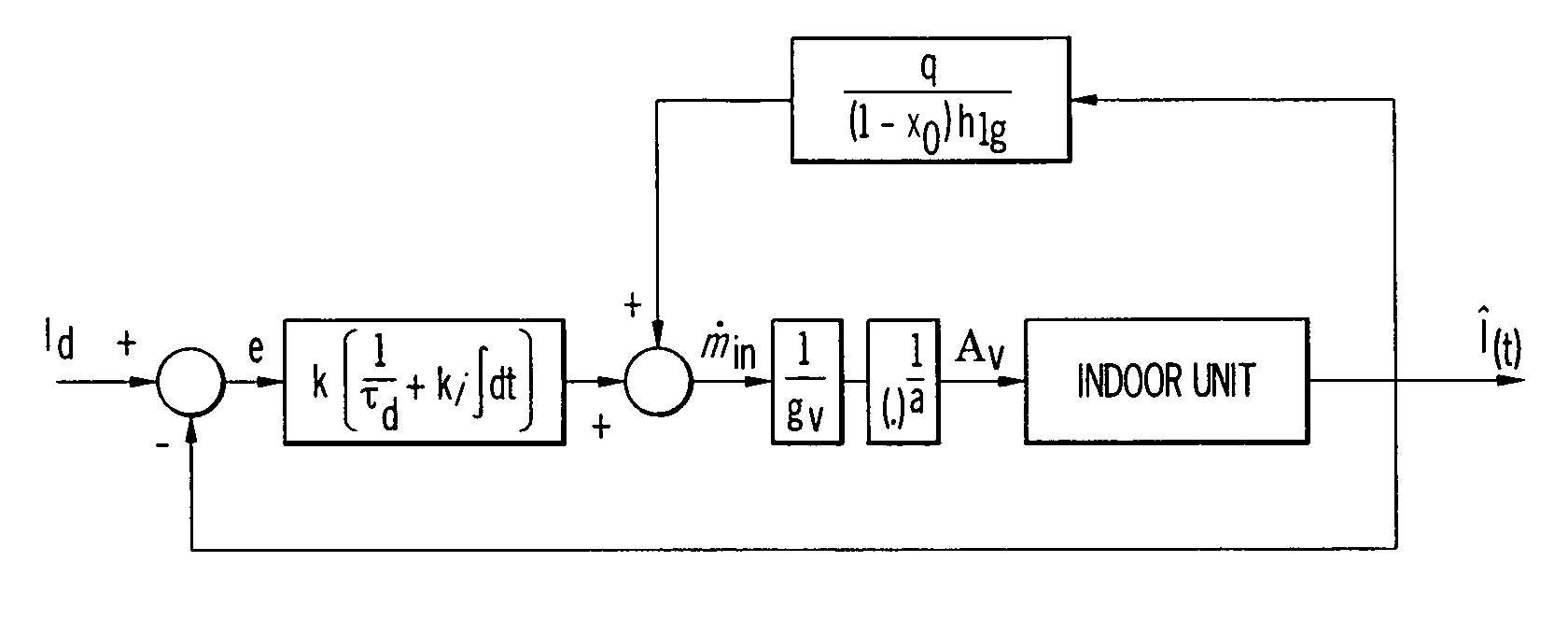
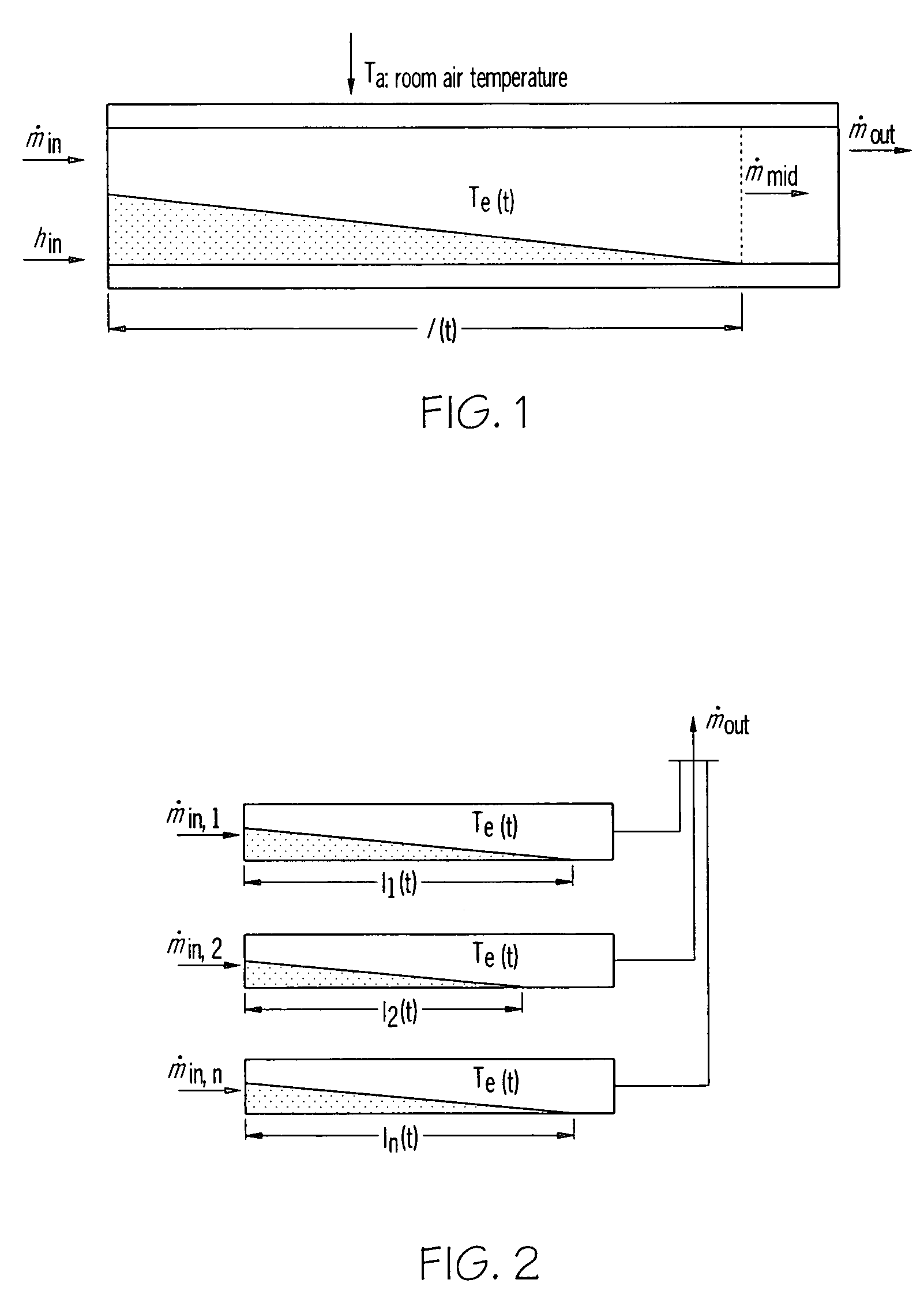
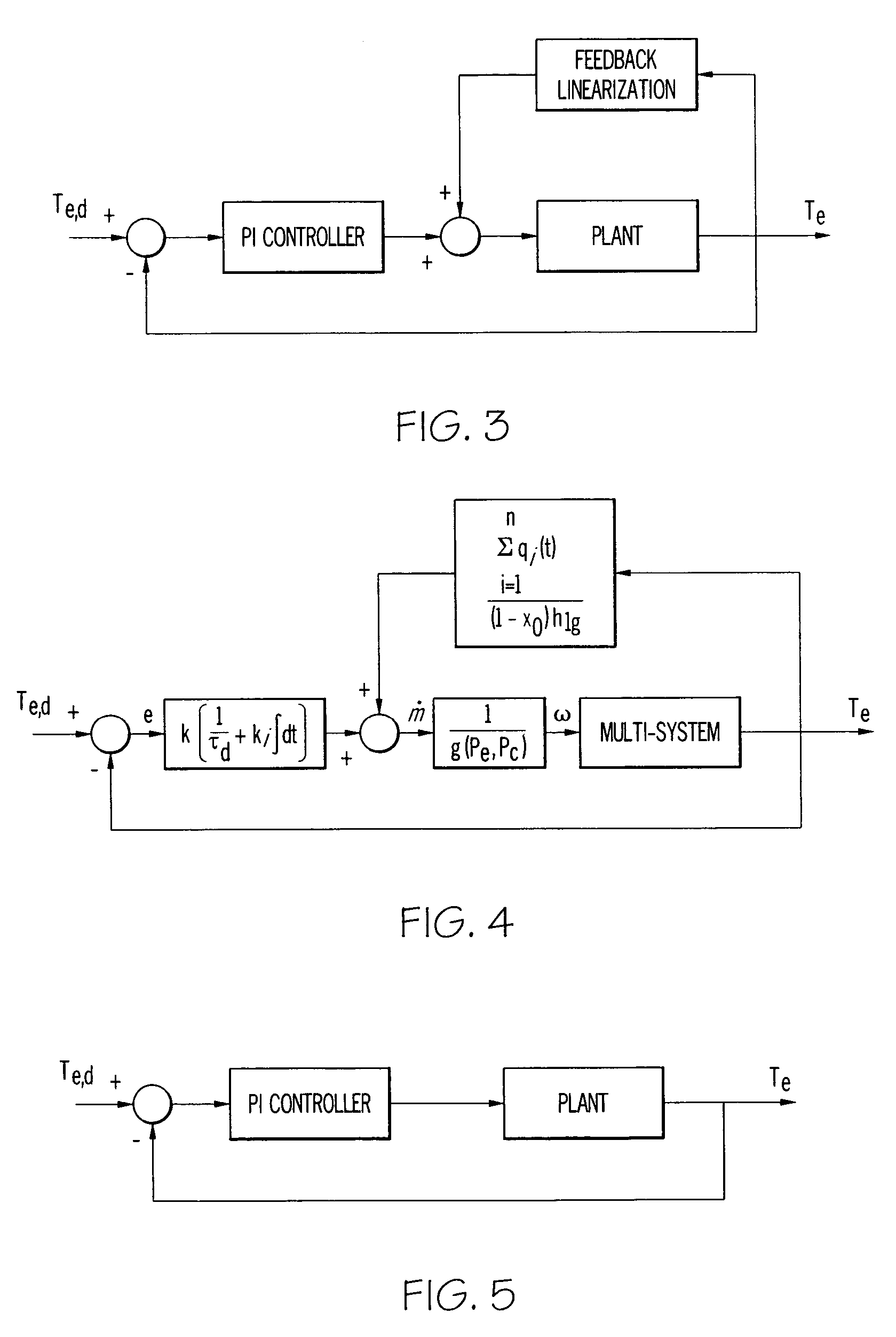
- A heat transfer system with a processor that estimates heat transfer between heat exchangers and a space, altering control parameters such as expansion valve openings, compressor speed, and refrigerant temperatures to optimize heat transfer, employing feedback linearization for nonlinear control to compensate for system nonlinearity.

Energy Efficiency Standards and HVAC Regulations
The regulatory landscape for HVAC energy efficiency has evolved significantly over the past two decades, establishing a comprehensive framework that directly impacts the implementation of advanced control technologies like feedback linearization. In the United States, the Department of Energy's appliance standards program sets minimum efficiency requirements for commercial and residential HVAC equipment, with recent updates emphasizing dynamic control capabilities and smart system integration.
The ASHRAE Standard 90.1 serves as the cornerstone for commercial building energy codes, mandating specific efficiency thresholds that create market demand for sophisticated control algorithms. The 2019 edition introduced enhanced requirements for variable-speed equipment and advanced control sequences, which align well with feedback linearization applications. Similarly, the International Energy Conservation Code has progressively tightened performance requirements, driving manufacturers toward innovative control solutions.
European regulations under the Energy Performance of Buildings Directive and Ecodesign Directive establish even more stringent efficiency targets, particularly for large commercial systems where feedback linearization techniques show greatest promise. The EU's F-Gas Regulation additionally constrains refrigerant choices, making optimal control strategies increasingly critical for maintaining performance while meeting environmental compliance.
California's Title 24 Energy Efficiency Standards represent the most aggressive regulatory framework in North America, requiring advanced control capabilities that naturally favor nonlinear control approaches. The state's demand response requirements and grid integration mandates create additional incentives for implementing sophisticated control algorithms that can adapt to external signals while maintaining optimal efficiency.
Recent regulatory trends indicate growing emphasis on real-time performance monitoring and verification, with proposed standards requiring continuous commissioning capabilities. These developments favor advanced control technologies that can demonstrate measurable efficiency improvements and provide detailed performance analytics, positioning feedback linearization techniques as valuable compliance tools rather than merely optional enhancements.
The ASHRAE Standard 90.1 serves as the cornerstone for commercial building energy codes, mandating specific efficiency thresholds that create market demand for sophisticated control algorithms. The 2019 edition introduced enhanced requirements for variable-speed equipment and advanced control sequences, which align well with feedback linearization applications. Similarly, the International Energy Conservation Code has progressively tightened performance requirements, driving manufacturers toward innovative control solutions.
European regulations under the Energy Performance of Buildings Directive and Ecodesign Directive establish even more stringent efficiency targets, particularly for large commercial systems where feedback linearization techniques show greatest promise. The EU's F-Gas Regulation additionally constrains refrigerant choices, making optimal control strategies increasingly critical for maintaining performance while meeting environmental compliance.
California's Title 24 Energy Efficiency Standards represent the most aggressive regulatory framework in North America, requiring advanced control capabilities that naturally favor nonlinear control approaches. The state's demand response requirements and grid integration mandates create additional incentives for implementing sophisticated control algorithms that can adapt to external signals while maintaining optimal efficiency.
Recent regulatory trends indicate growing emphasis on real-time performance monitoring and verification, with proposed standards requiring continuous commissioning capabilities. These developments favor advanced control technologies that can demonstrate measurable efficiency improvements and provide detailed performance analytics, positioning feedback linearization techniques as valuable compliance tools rather than merely optional enhancements.
Environmental Impact of Smart HVAC Technologies
The integration of feedback linearization techniques in HVAC systems represents a significant advancement in environmental sustainability, offering substantial reductions in energy consumption and associated carbon emissions. Traditional HVAC systems typically operate with fixed control parameters, leading to energy waste through overshooting target temperatures and inefficient cycling patterns. By implementing feedback linearization control strategies, these systems can achieve precise temperature regulation while minimizing energy expenditure, directly translating to reduced greenhouse gas emissions from power generation facilities.
Smart HVAC technologies incorporating advanced control algorithms demonstrate remarkable potential for carbon footprint reduction across commercial and residential sectors. Studies indicate that optimized HVAC systems utilizing feedback linearization can reduce energy consumption by 15-30% compared to conventional systems. This efficiency improvement corresponds to significant CO2 emission reductions, particularly in regions heavily dependent on fossil fuel-based electricity generation. The cumulative environmental impact becomes substantial when considering widespread adoption across building infrastructure.
The environmental benefits extend beyond direct energy savings to encompass improved air quality management and reduced strain on electrical grid systems. Feedback linearization enables more precise control of ventilation rates and air filtration processes, optimizing indoor air quality while minimizing unnecessary energy consumption for air circulation and purification. This precision control reduces the environmental burden associated with excessive air processing and filtration media replacement.
Resource conservation represents another critical environmental advantage of smart HVAC implementations. Enhanced system efficiency reduces wear on mechanical components, extending equipment lifespan and decreasing manufacturing demands for replacement parts. The reduced maintenance requirements also minimize the environmental impact associated with service visits, replacement materials, and disposal of worn components.
The broader environmental implications include reduced peak electricity demand, which helps utilities avoid activating less efficient backup power generation facilities during high-demand periods. This demand smoothing effect contributes to overall grid efficiency and reduces reliance on carbon-intensive peaking power plants. Additionally, the improved system reliability and longevity associated with optimized control strategies support sustainable building practices and contribute to green building certification standards, promoting environmentally conscious construction and renovation practices across the industry.
Smart HVAC technologies incorporating advanced control algorithms demonstrate remarkable potential for carbon footprint reduction across commercial and residential sectors. Studies indicate that optimized HVAC systems utilizing feedback linearization can reduce energy consumption by 15-30% compared to conventional systems. This efficiency improvement corresponds to significant CO2 emission reductions, particularly in regions heavily dependent on fossil fuel-based electricity generation. The cumulative environmental impact becomes substantial when considering widespread adoption across building infrastructure.
The environmental benefits extend beyond direct energy savings to encompass improved air quality management and reduced strain on electrical grid systems. Feedback linearization enables more precise control of ventilation rates and air filtration processes, optimizing indoor air quality while minimizing unnecessary energy consumption for air circulation and purification. This precision control reduces the environmental burden associated with excessive air processing and filtration media replacement.
Resource conservation represents another critical environmental advantage of smart HVAC implementations. Enhanced system efficiency reduces wear on mechanical components, extending equipment lifespan and decreasing manufacturing demands for replacement parts. The reduced maintenance requirements also minimize the environmental impact associated with service visits, replacement materials, and disposal of worn components.
The broader environmental implications include reduced peak electricity demand, which helps utilities avoid activating less efficient backup power generation facilities during high-demand periods. This demand smoothing effect contributes to overall grid efficiency and reduces reliance on carbon-intensive peaking power plants. Additionally, the improved system reliability and longevity associated with optimized control strategies support sustainable building practices and contribute to green building certification standards, promoting environmentally conscious construction and renovation practices across the industry.
Unlock deeper insights with Patsnap Eureka Quick Research — get a full tech report to explore trends and direct your research. Try now!
Generate Your Research Report Instantly with AI Agent
Supercharge your innovation with Patsnap Eureka AI Agent Platform!