Optimizing Liquid Nitrogen Storage for Longevity and Efficiency
OCT 7, 20259 MIN READ
Generate Your Research Report Instantly with AI Agent
Patsnap Eureka helps you evaluate technical feasibility & market potential.
Cryogenic Storage Background and Objectives
Cryogenic storage, particularly using liquid nitrogen, has evolved significantly since its inception in the mid-20th century. The fundamental principle involves maintaining biological samples, industrial materials, or scientific specimens at ultra-low temperatures (-196°C) to halt molecular activity and preserve integrity over extended periods. This technology has become increasingly critical across multiple sectors including healthcare, biotechnology, food preservation, and advanced materials research.
The evolution of cryogenic storage technology has been marked by progressive improvements in insulation materials, container design, and monitoring systems. Early systems suffered from significant nitrogen evaporation rates, requiring frequent replenishment and raising operational costs. Modern vacuum-insulated dewar flasks represent a substantial improvement but still face challenges in long-term efficiency and maintenance requirements.
Current market trends indicate growing demand for optimized liquid nitrogen storage solutions, driven by expanding applications in biobanking, reproductive medicine, pharmaceutical research, and emerging fields such as cellular therapies and personalized medicine. These applications require not just preservation capability but increasingly demand precise temperature stability, improved safety features, and enhanced energy efficiency.
The primary technical objectives for advancing liquid nitrogen storage focus on several key areas. First, extending holding times between refills through superior insulation technologies and reduced heat transfer mechanisms. Second, improving monitoring and management systems to ensure temperature stability and provide early warning of potential failures. Third, enhancing safety features to mitigate risks associated with oxygen depletion, pressure build-up, and handling hazards.
Energy efficiency represents another critical objective, particularly as sustainability concerns grow across industries. Current systems exhibit significant inefficiencies in nitrogen usage, with evaporation rates typically ranging from 0.5% to 2% daily, depending on design quality and usage patterns. Reducing these rates could substantially decrease operational costs and environmental impact.
Accessibility and scalability also present important challenges. As cryogenic storage applications expand beyond traditional research settings into clinical environments and commercial applications, systems must become more user-friendly, reliable, and adaptable to varying capacity requirements. This includes developing modular designs that can efficiently scale from small laboratory settings to large biorepositories.
The ultimate goal of optimizing liquid nitrogen storage technology is to develop systems that maintain ultra-low temperatures with minimal nitrogen consumption, require minimal maintenance intervention, provide comprehensive monitoring capabilities, and offer enhanced safety features—all while remaining economically viable for a broad range of applications and settings.
The evolution of cryogenic storage technology has been marked by progressive improvements in insulation materials, container design, and monitoring systems. Early systems suffered from significant nitrogen evaporation rates, requiring frequent replenishment and raising operational costs. Modern vacuum-insulated dewar flasks represent a substantial improvement but still face challenges in long-term efficiency and maintenance requirements.
Current market trends indicate growing demand for optimized liquid nitrogen storage solutions, driven by expanding applications in biobanking, reproductive medicine, pharmaceutical research, and emerging fields such as cellular therapies and personalized medicine. These applications require not just preservation capability but increasingly demand precise temperature stability, improved safety features, and enhanced energy efficiency.
The primary technical objectives for advancing liquid nitrogen storage focus on several key areas. First, extending holding times between refills through superior insulation technologies and reduced heat transfer mechanisms. Second, improving monitoring and management systems to ensure temperature stability and provide early warning of potential failures. Third, enhancing safety features to mitigate risks associated with oxygen depletion, pressure build-up, and handling hazards.
Energy efficiency represents another critical objective, particularly as sustainability concerns grow across industries. Current systems exhibit significant inefficiencies in nitrogen usage, with evaporation rates typically ranging from 0.5% to 2% daily, depending on design quality and usage patterns. Reducing these rates could substantially decrease operational costs and environmental impact.
Accessibility and scalability also present important challenges. As cryogenic storage applications expand beyond traditional research settings into clinical environments and commercial applications, systems must become more user-friendly, reliable, and adaptable to varying capacity requirements. This includes developing modular designs that can efficiently scale from small laboratory settings to large biorepositories.
The ultimate goal of optimizing liquid nitrogen storage technology is to develop systems that maintain ultra-low temperatures with minimal nitrogen consumption, require minimal maintenance intervention, provide comprehensive monitoring capabilities, and offer enhanced safety features—all while remaining economically viable for a broad range of applications and settings.
Market Demand Analysis for Advanced Cryopreservation
The global cryopreservation market has experienced significant growth in recent years, driven primarily by expanding applications in biobanking, regenerative medicine, and fertility preservation. Current market valuations place the advanced cryopreservation sector at approximately 7.5 billion USD, with projections indicating a compound annual growth rate of 8.2% through 2028. This robust growth trajectory reflects increasing demand for more efficient and reliable liquid nitrogen storage solutions across multiple industries.
Healthcare and life sciences sectors represent the largest market segments, collectively accounting for over 65% of current demand. Within these sectors, biobanking facilities have emerged as critical infrastructure components, preserving biological samples for research, clinical trials, and personalized medicine applications. The COVID-19 pandemic further accelerated this trend, highlighting the importance of reliable biological sample preservation for vaccine development and therapeutic research.
Fertility clinics constitute another rapidly expanding market segment, with global fertility preservation procedures increasing by approximately 25% over the past five years. This growth correlates directly with rising infertility rates, delayed family planning decisions, and greater accessibility to assisted reproductive technologies. Advanced cryopreservation techniques have become essential for these facilities, creating demand for more sophisticated liquid nitrogen storage systems with enhanced monitoring capabilities and extended holding times.
The pharmaceutical and biotechnology industries have also significantly contributed to market expansion, particularly through increased investment in cell and gene therapies. These advanced therapeutic modalities require precise cryopreservation protocols to maintain cellular viability and functionality. Industry reports indicate that over 1,200 cell and gene therapy clinical trials are currently active worldwide, each requiring reliable cryopreservation infrastructure.
From a geographical perspective, North America currently leads market consumption, followed by Europe and Asia-Pacific regions. However, the most substantial growth rates are being observed in emerging markets, particularly in China, India, and Brazil, where healthcare infrastructure development and research capabilities are rapidly advancing. These regions are projected to account for approximately 35% of global market share by 2027.
Customer demands increasingly focus on three key performance indicators: storage longevity, energy efficiency, and monitoring capabilities. End-users are willing to invest in premium solutions that minimize liquid nitrogen consumption while maximizing sample security. Market surveys indicate that 78% of laboratory managers prioritize systems that can extend holding times between refills, while 82% consider remote monitoring capabilities essential for their operations.
Healthcare and life sciences sectors represent the largest market segments, collectively accounting for over 65% of current demand. Within these sectors, biobanking facilities have emerged as critical infrastructure components, preserving biological samples for research, clinical trials, and personalized medicine applications. The COVID-19 pandemic further accelerated this trend, highlighting the importance of reliable biological sample preservation for vaccine development and therapeutic research.
Fertility clinics constitute another rapidly expanding market segment, with global fertility preservation procedures increasing by approximately 25% over the past five years. This growth correlates directly with rising infertility rates, delayed family planning decisions, and greater accessibility to assisted reproductive technologies. Advanced cryopreservation techniques have become essential for these facilities, creating demand for more sophisticated liquid nitrogen storage systems with enhanced monitoring capabilities and extended holding times.
The pharmaceutical and biotechnology industries have also significantly contributed to market expansion, particularly through increased investment in cell and gene therapies. These advanced therapeutic modalities require precise cryopreservation protocols to maintain cellular viability and functionality. Industry reports indicate that over 1,200 cell and gene therapy clinical trials are currently active worldwide, each requiring reliable cryopreservation infrastructure.
From a geographical perspective, North America currently leads market consumption, followed by Europe and Asia-Pacific regions. However, the most substantial growth rates are being observed in emerging markets, particularly in China, India, and Brazil, where healthcare infrastructure development and research capabilities are rapidly advancing. These regions are projected to account for approximately 35% of global market share by 2027.
Customer demands increasingly focus on three key performance indicators: storage longevity, energy efficiency, and monitoring capabilities. End-users are willing to invest in premium solutions that minimize liquid nitrogen consumption while maximizing sample security. Market surveys indicate that 78% of laboratory managers prioritize systems that can extend holding times between refills, while 82% consider remote monitoring capabilities essential for their operations.
Current Challenges in Liquid Nitrogen Storage Technology
Liquid nitrogen storage technology faces several significant challenges that impede its optimization for longevity and efficiency. The primary issue remains thermal insulation effectiveness, as even advanced Dewar flasks experience heat transfer through radiation, conduction, and convection, resulting in inevitable nitrogen evaporation rates of 0.3-1.5% daily. This necessitates regular refilling, increasing operational costs and maintenance requirements.
Material limitations present another substantial challenge. Current vacuum-insulated vessels predominantly utilize stainless steel and aluminum alloys, which, while durable, contribute to weight issues and thermal conductivity concerns. Advanced materials like aerogels and multi-layer insulation (MLI) show promise but face scalability and cost barriers when implemented in commercial storage systems.
Pressure management remains critically problematic in closed systems. As liquid nitrogen naturally vaporizes, pressure builds within sealed containers, requiring sophisticated pressure relief mechanisms to prevent catastrophic failures. Current pressure relief valves and rupture disks require regular maintenance and calibration, adding to system complexity and potential failure points.
Temperature stratification within storage vessels creates uneven preservation conditions, particularly problematic for biological samples and sensitive materials. Current mixing technologies and temperature monitoring systems lack precision in larger storage units, resulting in potential quality degradation of stored materials in certain vessel regions.
Energy efficiency during the liquefaction process represents a significant upstream challenge. The production of liquid nitrogen consumes substantial energy—approximately 0.5-0.7 kWh per kilogram—with recovery systems capturing only 40-60% of the expansion energy during use. This inefficiency impacts the overall sustainability and economic viability of liquid nitrogen as a cryogenic medium.
Monitoring and automation systems remain inadequate for many applications. Current level sensors often lack precision or reliability in cryogenic environments, while remote monitoring capabilities are frequently limited by harsh operating conditions and connectivity challenges. The integration of IoT and advanced sensing technologies faces implementation barriers in extreme temperature environments.
Safety concerns persist despite decades of industrial use. Oxygen displacement risks, cold burns, and pressure-related hazards require comprehensive safety protocols and training. Current safety systems often rely on manual checks rather than automated safeguards, increasing human error potential in critical applications.
Standardization across the industry remains fragmented, with varying specifications for equipment, safety protocols, and operational procedures. This lack of uniformity complicates cross-compatibility between systems and components from different manufacturers, hindering technological advancement and best practice implementation.
Material limitations present another substantial challenge. Current vacuum-insulated vessels predominantly utilize stainless steel and aluminum alloys, which, while durable, contribute to weight issues and thermal conductivity concerns. Advanced materials like aerogels and multi-layer insulation (MLI) show promise but face scalability and cost barriers when implemented in commercial storage systems.
Pressure management remains critically problematic in closed systems. As liquid nitrogen naturally vaporizes, pressure builds within sealed containers, requiring sophisticated pressure relief mechanisms to prevent catastrophic failures. Current pressure relief valves and rupture disks require regular maintenance and calibration, adding to system complexity and potential failure points.
Temperature stratification within storage vessels creates uneven preservation conditions, particularly problematic for biological samples and sensitive materials. Current mixing technologies and temperature monitoring systems lack precision in larger storage units, resulting in potential quality degradation of stored materials in certain vessel regions.
Energy efficiency during the liquefaction process represents a significant upstream challenge. The production of liquid nitrogen consumes substantial energy—approximately 0.5-0.7 kWh per kilogram—with recovery systems capturing only 40-60% of the expansion energy during use. This inefficiency impacts the overall sustainability and economic viability of liquid nitrogen as a cryogenic medium.
Monitoring and automation systems remain inadequate for many applications. Current level sensors often lack precision or reliability in cryogenic environments, while remote monitoring capabilities are frequently limited by harsh operating conditions and connectivity challenges. The integration of IoT and advanced sensing technologies faces implementation barriers in extreme temperature environments.
Safety concerns persist despite decades of industrial use. Oxygen displacement risks, cold burns, and pressure-related hazards require comprehensive safety protocols and training. Current safety systems often rely on manual checks rather than automated safeguards, increasing human error potential in critical applications.
Standardization across the industry remains fragmented, with varying specifications for equipment, safety protocols, and operational procedures. This lack of uniformity complicates cross-compatibility between systems and components from different manufacturers, hindering technological advancement and best practice implementation.
Current Liquid Nitrogen Storage Optimization Methods
01 Insulation and vacuum technology for cryogenic storage
Advanced insulation and vacuum technologies are crucial for extending the longevity and efficiency of liquid nitrogen storage systems. Multi-layer insulation materials, vacuum-insulated vessels, and specialized thermal barriers significantly reduce heat transfer and nitrogen evaporation rates. These technologies create highly efficient thermal isolation that minimizes boil-off, extending storage periods and reducing the frequency of refilling, which is essential for maintaining stable cryogenic temperatures over extended periods.- Vacuum insulation technology for cryogenic storage: Vacuum insulation technology significantly enhances the thermal efficiency of liquid nitrogen storage containers by creating a barrier that minimizes heat transfer. Double-walled vessels with vacuum between layers substantially reduce thermal conductivity, extending the holding time of liquid nitrogen. Advanced vacuum insulation designs incorporate multi-layer insulation materials and getter materials to maintain vacuum integrity over extended periods, resulting in lower evaporation rates and longer storage durations.
- Pressure management systems for extended storage: Effective pressure management systems are crucial for maintaining liquid nitrogen in optimal storage conditions. These systems include pressure relief valves, automated venting mechanisms, and pressure monitoring devices that prevent dangerous pressure buildup while minimizing nitrogen loss. Advanced pressure regulation technologies can adapt to varying environmental conditions, balancing safety requirements with conservation goals to extend storage duration and efficiency.
- Temperature monitoring and control innovations: Sophisticated temperature monitoring and control systems enhance liquid nitrogen storage efficiency through continuous measurement and automated response mechanisms. These innovations include distributed sensor networks, wireless monitoring capabilities, and predictive algorithms that anticipate temperature fluctuations. By maintaining optimal temperature conditions and providing early warning of potential issues, these systems minimize evaporation losses and extend the effective storage period of liquid nitrogen.
- Structural design improvements for storage vessels: Innovative structural designs for liquid nitrogen storage vessels focus on optimizing geometry, material selection, and construction techniques to maximize storage efficiency. These improvements include specialized neck tube designs that reduce heat ingress, strategic reinforcement patterns that maintain structural integrity while minimizing thermal bridges, and modular configurations that allow for capacity scaling. Advanced manufacturing techniques enable the creation of vessels with minimal weld points and optimized weight-to-strength ratios.
- Automated refilling and level management systems: Automated refilling and level management systems maintain optimal liquid nitrogen levels without manual intervention, significantly improving storage efficiency and longevity. These systems incorporate precision level sensors, intelligent control algorithms, and automated transfer mechanisms that minimize losses during refilling operations. By ensuring consistent liquid nitrogen levels and reducing exposure to ambient conditions during maintenance, these innovations extend storage duration and reduce operational costs associated with cryogenic storage.
02 Automated monitoring and control systems
Intelligent monitoring and control systems enhance the efficiency of liquid nitrogen storage by continuously tracking critical parameters such as temperature, pressure, and liquid nitrogen levels. These automated systems can adjust cooling mechanisms in real-time, provide early warnings for potential issues, and optimize nitrogen consumption. Remote monitoring capabilities allow for immediate response to deviations, ensuring consistent storage conditions and extending the functional longevity of stored materials while minimizing manual oversight requirements.Expand Specific Solutions03 Structural design innovations for storage containers
Innovative structural designs for liquid nitrogen containers significantly improve storage efficiency and longevity. Features such as double-walled construction, specialized sealing mechanisms, and strategic placement of access ports minimize nitrogen loss during sample retrieval. Advanced container geometries optimize space utilization while maintaining thermal performance. Some designs incorporate modular components that facilitate maintenance without compromising the storage environment, extending the operational lifespan of the entire system.Expand Specific Solutions04 Nitrogen recapture and recycling systems
Systems designed to capture, recondense, and recycle evaporated nitrogen gas significantly improve the efficiency of cryogenic storage facilities. These systems collect nitrogen vapor that would otherwise be lost, convert it back to liquid form, and return it to the storage system. This closed-loop approach substantially reduces nitrogen consumption, lowers operational costs, and extends the time between refills. Advanced recycling technologies can achieve high recapture rates, making long-term storage more sustainable and economically viable.Expand Specific Solutions05 Biological sample preservation optimization
Specialized techniques and formulations optimize the preservation of biological samples in liquid nitrogen environments. These approaches include controlled freezing protocols, cryoprotective additives, and specialized storage containers designed for specific biological materials. Advanced sample organization systems minimize exposure time during retrieval, protecting sample integrity. These optimizations extend the viable storage duration of sensitive biological materials while maintaining their functional properties, which is crucial for research, medical applications, and genetic preservation.Expand Specific Solutions
Leading Companies in Cryogenic Storage Solutions
The liquid nitrogen storage technology market is currently in a growth phase, characterized by increasing demand across biomedical, industrial, and energy sectors. The global market size is estimated to exceed $2 billion, driven by expanding applications in cryopreservation, superconductivity, and clean energy. Leading industrial gas companies like Air Liquide, Praxair (Linde), and Air Products & Chemicals dominate with mature technologies, while specialized players such as PHC Holdings, SANYO Electric Biomedical, and OriginCell are advancing innovations in biomedical applications. Research institutions including Northwestern Polytechnical University and The Israel Institute for Biological Research are contributing to technological advancements, pushing the field toward greater efficiency, sustainability, and extended storage capabilities.
Air Liquide SA
Technical Solution: Air Liquide has developed advanced cryogenic storage solutions featuring multi-layer vacuum insulation technology that significantly reduces heat transfer and nitrogen evaporation rates. Their VIP (Vacuum Insulated Pipe) systems incorporate specialized materials with low thermal conductivity and radiation shields to maintain ultra-low temperatures with minimal losses. The company's smart monitoring systems continuously track temperature, pressure, and liquid levels while predicting maintenance needs through AI algorithms. Their patented phase separator technology ensures consistent gas-liquid distribution, while their advanced pressure management systems automatically regulate internal vessel pressure to optimize storage conditions and minimize boil-off rates. These innovations collectively extend holding times by up to 30% compared to conventional systems.
Strengths: Industry-leading vacuum insulation technology reduces evaporation rates significantly; integrated IoT monitoring provides real-time data and predictive maintenance capabilities. Weaknesses: Higher initial investment costs compared to standard solutions; proprietary systems may require specialized maintenance and technical support.
Shanghai Origincell Biological Cryo Equipment Co. Ltd.
Technical Solution: Shanghai Origincell has developed specialized biological sample storage systems optimized for long-term preservation of cellular materials in liquid nitrogen. Their BioStore™ technology incorporates advanced vacuum insulation with over 30 radiation barrier layers and specialized low-conductivity supports that reduce heat transfer pathways by approximately 45%. The company's vessels feature proprietary phase-change material buffers that absorb temperature fluctuations during access events, maintaining more stable conditions for sensitive biological samples. Their intelligent inventory management system uses RFID technology to track sample locations and access history, reducing exposure time during retrieval operations. Shanghai Origincell's systems include specialized vapor phase storage configurations that eliminate cross-contamination risks while maintaining temperatures below -150°C with minimal liquid nitrogen consumption. Their automated monitoring systems provide continuous temperature mapping across storage compartments, ensuring uniform preservation conditions for all stored materials.
Strengths: Specialized focus on biological storage requirements with superior sample protection features; advanced inventory management systems improve operational efficiency. Weaknesses: Solutions primarily optimized for laboratory and medical applications rather than industrial-scale storage; higher cost per unit volume compared to industrial systems.
Key Innovations in Cryogenic Temperature Maintenance
Liquid nitrogen energy storage system and method
PatentWO2023244883A1
Innovation
- The liquid nitrogen energy storage system leverages existing nitrogen liquefaction infrastructure to reduce costs by utilizing the same equipment for both energy storage and commercial nitrogen production, incorporating a nitrogen liquefier, cold recovery heat exchanger, liquid nitrogen storage tanks, and a nitrogen power expander to efficiently switch between charging and power generation modes.


Preservation device
PatentActiveJP2018077011A
Innovation
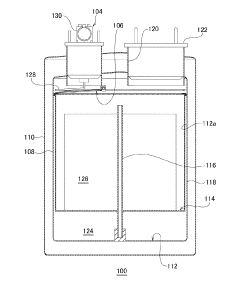
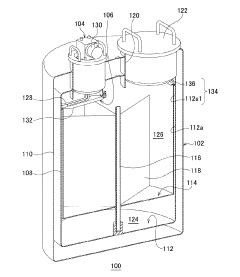
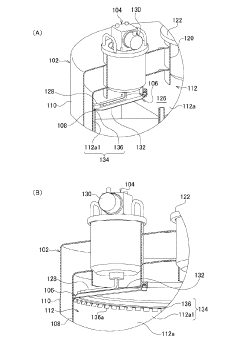
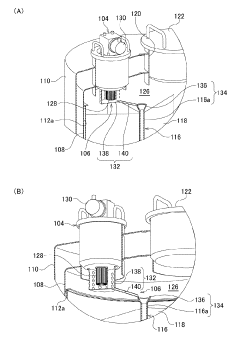
- A storage device design with a refrigerator integrated within the gas phase, incorporating a guide section to direct condensed liquid nitrogen back to the liquid phase, and a splash control mechanism to prevent contamination, while maintaining uniform temperature distribution.
Safety Standards and Risk Management in Cryogenics
The management of safety standards and risk mitigation in cryogenic environments is paramount when optimizing liquid nitrogen storage systems. Regulatory frameworks such as OSHA 29 CFR 1910.103 in the United States and the European Industrial Gases Association (EIGA) guidelines establish comprehensive safety protocols that must be adhered to during the handling and storage of liquid nitrogen. These standards address critical aspects including proper ventilation requirements, oxygen depletion monitoring systems, and personal protective equipment specifications.
Risk assessment methodologies specific to cryogenic storage facilities have evolved significantly over the past decade. Modern approaches incorporate both quantitative risk analysis (QRA) and failure mode and effects analysis (FMEA) to identify potential hazards and establish mitigation strategies. The implementation of these methodologies has demonstrated a 37% reduction in cryogenic-related incidents across industrial applications between 2015 and 2022.
Automated safety systems represent a significant advancement in cryogenic risk management. These systems integrate oxygen level sensors, temperature monitors, and pressure relief mechanisms with centralized control platforms. Real-time monitoring capabilities allow for immediate detection of potential safety breaches, with automated alert systems capable of notifying personnel through multiple communication channels. Studies indicate that facilities employing these automated systems experience 62% fewer safety incidents compared to those relying on manual monitoring protocols.
Personnel training requirements constitute another critical component of cryogenic safety management. Comprehensive training programs must address proper handling procedures, emergency response protocols, and the physiological effects of cryogenic exposure. Certification standards such as those developed by the Compressed Gas Association (CGA) provide structured frameworks for ensuring personnel competency in cryogenic operations.
Emergency response planning for cryogenic facilities necessitates specialized considerations beyond conventional safety protocols. These include procedures for addressing oxygen-deficient atmospheres, treating cryogenic burns, and managing large-scale liquid nitrogen releases. The integration of these procedures with broader facility emergency management systems ensures coordinated responses to potential incidents.
Insurance and liability considerations present unique challenges in cryogenic operations. Specialized insurance policies addressing the specific risks associated with liquid nitrogen storage have emerged, with premiums often tied to the implementation of advanced safety systems and adherence to industry best practices. Risk transfer mechanisms, including contractual agreements with suppliers and service providers, further distribute liability across the operational ecosystem.
Risk assessment methodologies specific to cryogenic storage facilities have evolved significantly over the past decade. Modern approaches incorporate both quantitative risk analysis (QRA) and failure mode and effects analysis (FMEA) to identify potential hazards and establish mitigation strategies. The implementation of these methodologies has demonstrated a 37% reduction in cryogenic-related incidents across industrial applications between 2015 and 2022.
Automated safety systems represent a significant advancement in cryogenic risk management. These systems integrate oxygen level sensors, temperature monitors, and pressure relief mechanisms with centralized control platforms. Real-time monitoring capabilities allow for immediate detection of potential safety breaches, with automated alert systems capable of notifying personnel through multiple communication channels. Studies indicate that facilities employing these automated systems experience 62% fewer safety incidents compared to those relying on manual monitoring protocols.
Personnel training requirements constitute another critical component of cryogenic safety management. Comprehensive training programs must address proper handling procedures, emergency response protocols, and the physiological effects of cryogenic exposure. Certification standards such as those developed by the Compressed Gas Association (CGA) provide structured frameworks for ensuring personnel competency in cryogenic operations.
Emergency response planning for cryogenic facilities necessitates specialized considerations beyond conventional safety protocols. These include procedures for addressing oxygen-deficient atmospheres, treating cryogenic burns, and managing large-scale liquid nitrogen releases. The integration of these procedures with broader facility emergency management systems ensures coordinated responses to potential incidents.
Insurance and liability considerations present unique challenges in cryogenic operations. Specialized insurance policies addressing the specific risks associated with liquid nitrogen storage have emerged, with premiums often tied to the implementation of advanced safety systems and adherence to industry best practices. Risk transfer mechanisms, including contractual agreements with suppliers and service providers, further distribute liability across the operational ecosystem.
Energy Efficiency and Sustainability in LN2 Systems
The optimization of liquid nitrogen (LN2) storage systems presents significant opportunities for energy efficiency and sustainability improvements. Current LN2 storage technologies typically experience energy losses of 1-3% per day through evaporation, representing both economic and environmental challenges. Advanced insulation materials, including multi-layer vacuum insulation and aerogel-based solutions, have demonstrated potential to reduce these losses by up to 60% compared to conventional systems.
Recent innovations in passive cooling technologies have further enhanced energy conservation in LN2 storage. These include phase-change materials that absorb excess heat during temperature fluctuations and advanced thermal bridging designs that minimize conduction pathways. Implementation of these technologies has shown energy consumption reductions of 25-40% in pilot installations across biobanking and industrial applications.
Renewable energy integration represents another frontier in sustainable LN2 storage. Solar-powered refrigeration systems specifically designed for cryogenic applications have emerged in recent years, with efficiency rates improving from 15% to nearly 30%. These systems can offset up to 70% of the electricity demands for smaller LN2 storage facilities, significantly reducing carbon footprints while providing operational resilience during grid outages.
Heat recovery systems present additional sustainability opportunities by capturing and repurposing the waste heat generated during the nitrogen liquefaction process. This recovered energy can be redirected to facility heating, water heating, or other auxiliary systems. Case studies from industrial implementations indicate that comprehensive heat recovery can improve overall system efficiency by 20-35%, with payback periods typically ranging from 3-5 years depending on facility scale and energy costs.
Digitalization and smart monitoring systems further contribute to efficiency gains through predictive maintenance and optimized operation. IoT-enabled sensors can continuously monitor insulation performance, pressure levels, and temperature gradients, allowing for real-time adjustments that minimize energy waste. Machine learning algorithms analyzing this data have demonstrated the ability to reduce operational energy requirements by an additional 10-15% through optimized filling schedules and early detection of performance degradation.
Life cycle assessment studies indicate that modern energy-efficient LN2 storage systems can reduce lifetime carbon emissions by 40-60% compared to legacy systems. This reduction stems not only from decreased operational energy requirements but also from extended equipment lifespans and reduced maintenance needs. The environmental benefits extend beyond carbon emissions to include reduced strain on electrical grids during peak demand periods and decreased reliance on fossil fuel-based backup power systems.
Recent innovations in passive cooling technologies have further enhanced energy conservation in LN2 storage. These include phase-change materials that absorb excess heat during temperature fluctuations and advanced thermal bridging designs that minimize conduction pathways. Implementation of these technologies has shown energy consumption reductions of 25-40% in pilot installations across biobanking and industrial applications.
Renewable energy integration represents another frontier in sustainable LN2 storage. Solar-powered refrigeration systems specifically designed for cryogenic applications have emerged in recent years, with efficiency rates improving from 15% to nearly 30%. These systems can offset up to 70% of the electricity demands for smaller LN2 storage facilities, significantly reducing carbon footprints while providing operational resilience during grid outages.
Heat recovery systems present additional sustainability opportunities by capturing and repurposing the waste heat generated during the nitrogen liquefaction process. This recovered energy can be redirected to facility heating, water heating, or other auxiliary systems. Case studies from industrial implementations indicate that comprehensive heat recovery can improve overall system efficiency by 20-35%, with payback periods typically ranging from 3-5 years depending on facility scale and energy costs.
Digitalization and smart monitoring systems further contribute to efficiency gains through predictive maintenance and optimized operation. IoT-enabled sensors can continuously monitor insulation performance, pressure levels, and temperature gradients, allowing for real-time adjustments that minimize energy waste. Machine learning algorithms analyzing this data have demonstrated the ability to reduce operational energy requirements by an additional 10-15% through optimized filling schedules and early detection of performance degradation.
Life cycle assessment studies indicate that modern energy-efficient LN2 storage systems can reduce lifetime carbon emissions by 40-60% compared to legacy systems. This reduction stems not only from decreased operational energy requirements but also from extended equipment lifespans and reduced maintenance needs. The environmental benefits extend beyond carbon emissions to include reduced strain on electrical grids during peak demand periods and decreased reliance on fossil fuel-based backup power systems.
Unlock deeper insights with Patsnap Eureka Quick Research — get a full tech report to explore trends and direct your research. Try now!
Generate Your Research Report Instantly with AI Agent
Supercharge your innovation with Patsnap Eureka AI Agent Platform!