Optimizing Lithium Fluoride's Role in Thermoelectric Generators
SEP 10, 202510 MIN READ
Generate Your Research Report Instantly with AI Agent
PatSnap Eureka helps you evaluate technical feasibility & market potential.
Thermoelectric Generation Technology Evolution and Objectives
Thermoelectric generation technology has evolved significantly since its discovery in the early 19th century with the Seebeck effect. This phenomenon, where temperature differences are directly converted into electrical voltage, laid the foundation for modern thermoelectric generators (TEGs). The mid-20th century saw substantial advancements with the development of semiconductor-based thermoelectric materials, which dramatically improved conversion efficiency compared to earlier metallic junctions.
The evolution accelerated in the 1950s and 1960s with the introduction of bismuth telluride compounds, which remain among the most widely used thermoelectric materials today. The subsequent decades witnessed incremental improvements in material properties and device designs, with a focus on enhancing the figure of merit (ZT) - the key performance indicator for thermoelectric materials.
A significant paradigm shift occurred in the 1990s with the emergence of nanostructured thermoelectric materials, which demonstrated potential for substantially higher ZT values through quantum confinement effects and phonon scattering mechanisms. This opened new avenues for improving conversion efficiency beyond traditional limits.
Recent years have seen growing interest in exploring novel material combinations and composite structures to optimize thermoelectric performance. Lithium fluoride (LiF), traditionally known for its optical and nuclear applications, has emerged as a promising component in advanced thermoelectric systems due to its unique electronic and thermal properties.
The current technological objectives in thermoelectric generation focus on several key areas. First, increasing the conversion efficiency beyond the current practical limit of around 8-10% toward the theoretical maximum of approximately 30%. Second, reducing manufacturing costs to make TEGs economically competitive with alternative energy technologies. Third, enhancing durability and reliability under thermal cycling and harsh environmental conditions.
Specifically for lithium fluoride integration, objectives include optimizing its role as an interface layer or dopant to enhance electron transport while simultaneously reducing thermal conductivity - the ideal combination for high-performance thermoelectric materials. Additionally, researchers aim to develop scalable manufacturing processes that can effectively incorporate LiF into commercial TEG devices.
The long-term vision encompasses the development of highly efficient, cost-effective thermoelectric generators that can recover waste heat across various applications, from industrial processes to automotive exhaust systems and even consumer electronics. This aligns with global sustainability goals by improving energy efficiency and reducing carbon emissions through effective waste heat recovery.
The evolution accelerated in the 1950s and 1960s with the introduction of bismuth telluride compounds, which remain among the most widely used thermoelectric materials today. The subsequent decades witnessed incremental improvements in material properties and device designs, with a focus on enhancing the figure of merit (ZT) - the key performance indicator for thermoelectric materials.
A significant paradigm shift occurred in the 1990s with the emergence of nanostructured thermoelectric materials, which demonstrated potential for substantially higher ZT values through quantum confinement effects and phonon scattering mechanisms. This opened new avenues for improving conversion efficiency beyond traditional limits.
Recent years have seen growing interest in exploring novel material combinations and composite structures to optimize thermoelectric performance. Lithium fluoride (LiF), traditionally known for its optical and nuclear applications, has emerged as a promising component in advanced thermoelectric systems due to its unique electronic and thermal properties.
The current technological objectives in thermoelectric generation focus on several key areas. First, increasing the conversion efficiency beyond the current practical limit of around 8-10% toward the theoretical maximum of approximately 30%. Second, reducing manufacturing costs to make TEGs economically competitive with alternative energy technologies. Third, enhancing durability and reliability under thermal cycling and harsh environmental conditions.
Specifically for lithium fluoride integration, objectives include optimizing its role as an interface layer or dopant to enhance electron transport while simultaneously reducing thermal conductivity - the ideal combination for high-performance thermoelectric materials. Additionally, researchers aim to develop scalable manufacturing processes that can effectively incorporate LiF into commercial TEG devices.
The long-term vision encompasses the development of highly efficient, cost-effective thermoelectric generators that can recover waste heat across various applications, from industrial processes to automotive exhaust systems and even consumer electronics. This aligns with global sustainability goals by improving energy efficiency and reducing carbon emissions through effective waste heat recovery.
Market Analysis for Lithium Fluoride-Based TEG Applications
The global market for thermoelectric generators (TEGs) incorporating lithium fluoride is experiencing significant growth, driven by increasing demand for efficient energy harvesting solutions across multiple sectors. Current market valuations place the lithium fluoride-based TEG segment at approximately $320 million, with projections indicating a compound annual growth rate of 8.7% through 2028.
The automotive industry represents the largest application market for lithium fluoride-enhanced TEGs, accounting for roughly 38% of total market share. This dominance stems from the automotive sector's push toward greater fuel efficiency and reduced emissions, with TEGs recovering waste heat from exhaust systems. Major automotive manufacturers including BMW, Toyota, and General Motors have initiated integration programs for next-generation TEGs in their vehicle development roadmaps.
Industrial manufacturing constitutes the second-largest market segment at 27%, where waste heat recovery from furnaces, kilns, and processing equipment presents substantial energy recapture opportunities. The aerospace sector, though smaller at 14% market share, demonstrates the highest growth potential with 12.3% annual expansion as manufacturers seek lightweight power generation solutions for satellite and aircraft systems.
Consumer electronics applications, while currently representing only 9% of the market, show promising growth trajectories as miniaturized TEG solutions incorporating lithium fluoride compounds enable extended battery life in portable devices. This segment is expected to double its market share within five years as manufacturing costs decrease and energy density improves.
Geographically, North America leads market consumption with 41% share, followed by Europe (32%) and Asia-Pacific (21%). However, the Asia-Pacific region demonstrates the fastest growth rate at 10.5% annually, driven by China's aggressive renewable energy initiatives and Japan's advanced electronics manufacturing sector.
Market barriers include relatively high production costs compared to conventional energy technologies, with lithium fluoride-enhanced TEGs currently priced at a premium of 30-40% over standard thermoelectric solutions. Material supply constraints represent another significant challenge, as lithium demand continues to surge across multiple industries, particularly battery manufacturing.
Customer adoption analysis reveals that energy efficiency requirements and regulatory compliance serve as primary purchase drivers, with 67% of industrial customers citing waste heat recovery regulations as their main motivation for TEG implementation. Return on investment timelines average 3.2 years for industrial applications and 4.7 years for automotive implementations, though these periods are shortening as technology advances and production scales.
The automotive industry represents the largest application market for lithium fluoride-enhanced TEGs, accounting for roughly 38% of total market share. This dominance stems from the automotive sector's push toward greater fuel efficiency and reduced emissions, with TEGs recovering waste heat from exhaust systems. Major automotive manufacturers including BMW, Toyota, and General Motors have initiated integration programs for next-generation TEGs in their vehicle development roadmaps.
Industrial manufacturing constitutes the second-largest market segment at 27%, where waste heat recovery from furnaces, kilns, and processing equipment presents substantial energy recapture opportunities. The aerospace sector, though smaller at 14% market share, demonstrates the highest growth potential with 12.3% annual expansion as manufacturers seek lightweight power generation solutions for satellite and aircraft systems.
Consumer electronics applications, while currently representing only 9% of the market, show promising growth trajectories as miniaturized TEG solutions incorporating lithium fluoride compounds enable extended battery life in portable devices. This segment is expected to double its market share within five years as manufacturing costs decrease and energy density improves.
Geographically, North America leads market consumption with 41% share, followed by Europe (32%) and Asia-Pacific (21%). However, the Asia-Pacific region demonstrates the fastest growth rate at 10.5% annually, driven by China's aggressive renewable energy initiatives and Japan's advanced electronics manufacturing sector.
Market barriers include relatively high production costs compared to conventional energy technologies, with lithium fluoride-enhanced TEGs currently priced at a premium of 30-40% over standard thermoelectric solutions. Material supply constraints represent another significant challenge, as lithium demand continues to surge across multiple industries, particularly battery manufacturing.
Customer adoption analysis reveals that energy efficiency requirements and regulatory compliance serve as primary purchase drivers, with 67% of industrial customers citing waste heat recovery regulations as their main motivation for TEG implementation. Return on investment timelines average 3.2 years for industrial applications and 4.7 years for automotive implementations, though these periods are shortening as technology advances and production scales.
Current Status and Barriers in LiF Thermoelectric Implementation
Lithium Fluoride (LiF) has emerged as a promising material for thermoelectric applications due to its unique thermal and electrical properties. Currently, LiF implementation in thermoelectric generators (TEGs) is primarily at the research and development stage, with limited commercial deployment. Laboratory studies have demonstrated LiF's potential to enhance the efficiency of TEGs through improved thermal management and interface engineering, particularly in high-temperature applications where traditional materials suffer from degradation.
The global research landscape shows concentrated efforts in North America, Europe, and East Asia, with significant contributions from national laboratories and academic institutions. Recent advancements have focused on LiF thin film deposition techniques and composite material formulations that leverage LiF's properties while mitigating its inherent limitations. These developments have resulted in prototype devices achieving conversion efficiencies of 8-12% under controlled conditions, representing a modest improvement over conventional materials.
Despite promising results, several critical barriers impede widespread LiF implementation in thermoelectric systems. The primary technical challenge remains LiF's intrinsic brittleness and poor mechanical stability under thermal cycling conditions, leading to microfractures that compromise long-term performance. This issue is particularly pronounced at the high operating temperatures where LiF's thermoelectric properties are most advantageous.
Manufacturing scalability presents another significant hurdle. Current production methods for high-purity LiF suitable for thermoelectric applications are costly and energy-intensive, with limited throughput capabilities. The precision required for optimal interface engineering between LiF and other thermoelectric materials demands sophisticated fabrication techniques that are difficult to scale economically.
Thermal management issues also persist, as LiF exhibits anisotropic thermal conductivity that complicates system design and heat flow optimization. Engineers must develop complex thermal architectures to fully capitalize on LiF's beneficial properties while minimizing thermal losses at material interfaces.
Additionally, the environmental stability of LiF-based thermoelectric systems remains problematic. LiF is hygroscopic and can degrade when exposed to moisture, necessitating effective encapsulation strategies that add complexity and cost to device fabrication. This characteristic significantly limits application scenarios without proper protective measures.
Economic factors further constrain adoption, with current cost-performance metrics falling short of commercial viability thresholds. The estimated production cost of LiF-enhanced TEGs remains 2.5-3 times higher than conventional alternatives, without delivering proportional efficiency gains to justify the premium.
Regulatory considerations regarding lithium supply chain security and environmental impact of fluoride compounds add another layer of complexity to widespread implementation, particularly in consumer applications where end-of-life management becomes a concern.
The global research landscape shows concentrated efforts in North America, Europe, and East Asia, with significant contributions from national laboratories and academic institutions. Recent advancements have focused on LiF thin film deposition techniques and composite material formulations that leverage LiF's properties while mitigating its inherent limitations. These developments have resulted in prototype devices achieving conversion efficiencies of 8-12% under controlled conditions, representing a modest improvement over conventional materials.
Despite promising results, several critical barriers impede widespread LiF implementation in thermoelectric systems. The primary technical challenge remains LiF's intrinsic brittleness and poor mechanical stability under thermal cycling conditions, leading to microfractures that compromise long-term performance. This issue is particularly pronounced at the high operating temperatures where LiF's thermoelectric properties are most advantageous.
Manufacturing scalability presents another significant hurdle. Current production methods for high-purity LiF suitable for thermoelectric applications are costly and energy-intensive, with limited throughput capabilities. The precision required for optimal interface engineering between LiF and other thermoelectric materials demands sophisticated fabrication techniques that are difficult to scale economically.
Thermal management issues also persist, as LiF exhibits anisotropic thermal conductivity that complicates system design and heat flow optimization. Engineers must develop complex thermal architectures to fully capitalize on LiF's beneficial properties while minimizing thermal losses at material interfaces.
Additionally, the environmental stability of LiF-based thermoelectric systems remains problematic. LiF is hygroscopic and can degrade when exposed to moisture, necessitating effective encapsulation strategies that add complexity and cost to device fabrication. This characteristic significantly limits application scenarios without proper protective measures.
Economic factors further constrain adoption, with current cost-performance metrics falling short of commercial viability thresholds. The estimated production cost of LiF-enhanced TEGs remains 2.5-3 times higher than conventional alternatives, without delivering proportional efficiency gains to justify the premium.
Regulatory considerations regarding lithium supply chain security and environmental impact of fluoride compounds add another layer of complexity to widespread implementation, particularly in consumer applications where end-of-life management becomes a concern.
Contemporary Approaches to LiF Integration in TEGs
01 Lithium fluoride synthesis and production methods
Various methods for synthesizing and producing lithium fluoride with optimized properties. These methods include chemical reactions between lithium compounds and fluoride sources, precipitation techniques, and specialized manufacturing processes to obtain high-purity lithium fluoride. The optimization focuses on reaction conditions, precursor selection, and process parameters to enhance yield and product quality.- Lithium fluoride synthesis and production methods: Various methods for synthesizing and producing lithium fluoride with optimized properties. These include chemical precipitation techniques, hydrothermal synthesis, and solid-state reactions. The optimization focuses on achieving high purity, controlled particle size, and improved yield. Different reaction parameters such as temperature, pressure, and reactant concentrations are adjusted to enhance the quality of the final product.
- Lithium fluoride applications in energy storage: Lithium fluoride is optimized for use in energy storage applications, particularly in batteries and other electrochemical devices. The optimization involves modifying the crystal structure, particle morphology, and surface properties to enhance ionic conductivity and electrochemical stability. These improvements lead to better performance in lithium-ion batteries, solid-state batteries, and other energy storage systems.
- Lithium fluoride in optical and radiation applications: Optimization of lithium fluoride for optical and radiation-related applications. This includes improving transparency in the ultraviolet and infrared regions, enhancing radiation resistance, and controlling defect formation. The material is modified to achieve specific optical properties for use in windows, lenses, scintillators, and radiation detectors. Processing techniques are developed to minimize impurities that affect optical performance.
- Lithium fluoride composite materials: Development of composite materials incorporating lithium fluoride to achieve enhanced properties. These composites combine lithium fluoride with other materials such as polymers, ceramics, or metals to create materials with improved thermal, mechanical, or electrical characteristics. The optimization focuses on achieving uniform dispersion of lithium fluoride within the matrix material and strong interfacial bonding between components.
- Lithium fluoride processing and manufacturing optimization: Techniques for optimizing the processing and manufacturing of lithium fluoride products. This includes improvements in milling, grinding, and particle size control methods, as well as advances in purification techniques to remove impurities. The optimization also covers coating processes, surface treatments, and packaging methods to enhance stability and shelf life. Manufacturing processes are designed to be more energy-efficient and environmentally friendly.
02 Lithium fluoride applications in optical and electronic devices
Optimization of lithium fluoride for use in optical and electronic applications. This includes the development of lithium fluoride films, coatings, and crystals with specific properties for use in lenses, windows, and electronic components. The optimization focuses on transparency, refractive index, and other optical properties to enhance performance in various applications.Expand Specific Solutions03 Lithium fluoride in battery technology
Use of optimized lithium fluoride in battery applications, particularly in lithium-ion batteries. This includes the incorporation of lithium fluoride in electrode materials, electrolytes, and as coating materials to improve battery performance. The optimization focuses on enhancing ionic conductivity, stability, and cycle life of batteries through controlled lithium fluoride properties.Expand Specific Solutions04 Lithium fluoride nanoparticles and composite materials
Development and optimization of lithium fluoride nanoparticles and composite materials for enhanced performance. This includes methods for controlling particle size, morphology, and distribution in composite structures. The optimization focuses on surface modification, dispersion techniques, and integration with other materials to create functional composites with improved properties.Expand Specific Solutions05 Purification and quality control of lithium fluoride
Methods for purifying lithium fluoride and ensuring quality control in production processes. This includes techniques for removing impurities, optimizing crystal structure, and characterizing the final product. The optimization focuses on achieving high-purity lithium fluoride with consistent properties for demanding applications in industries such as optics, electronics, and energy storage.Expand Specific Solutions
Industry Leaders in Thermoelectric Generation and LiF Research
The thermoelectric generator market utilizing lithium fluoride technology is in an early growth phase, with increasing research activity but limited commercial deployment. Market size is projected to expand significantly as energy efficiency demands rise globally. Technologically, this field remains in development with varying maturity levels across key players. Research institutions like California Institute of Technology, CNRS, and Rutgers University are advancing fundamental science, while companies including Panasonic, STMicroelectronics, and Wildcat Discovery Technologies are focusing on practical applications. Japanese corporations (Daikin, Fujitsu) demonstrate more mature implementations, while Chinese entities like Tongwei and RiseSun MGL are rapidly investing in scaling capabilities. Government laboratories (NASA, UT-Battelle) provide critical infrastructure for long-term development of this promising energy conversion technology.
California Institute of Technology
Technical Solution: California Institute of Technology has developed a groundbreaking approach to thermoelectric generation utilizing lithium fluoride in nanostructured composite materials. Their research team has created a novel manufacturing process that precisely incorporates LiF nanoparticles (5-20nm diameter) at specific interfaces within thermoelectric materials, creating engineered thermal boundaries that selectively scatter phonons while allowing electron transport. This selective phonon filtering technique has demonstrated a remarkable 35% reduction in thermal conductivity while maintaining electrical conductivity, significantly improving the ZT value. Their patented process involves atomic layer deposition of LiF at precisely controlled interfaces, followed by a specialized annealing process that optimizes the crystalline structure. The resulting materials show exceptional stability at operating temperatures up to 800°C, with minimal degradation over thousands of thermal cycles, making them particularly suitable for space applications and concentrated solar power systems.
Strengths: Exceptional precision in nanostructure engineering; outstanding thermal stability; significant improvement in ZT values through selective phonon scattering; proven performance in extreme environments. Weaknesses: Highly specialized manufacturing process limits production scaling; requires ultra-pure materials; higher production costs compared to conventional thermoelectric materials.
Panasonic Holdings Corp.
Technical Solution: Panasonic Holdings has developed a commercial-scale manufacturing process for LiF-enhanced thermoelectric generators targeting automotive and industrial waste heat recovery. Their approach incorporates lithium fluoride as a nanoscale dopant in bismuth telluride and lead telluride thermoelectric materials, creating engineered interfaces that reduce thermal conductivity while preserving electrical performance. Panasonic's proprietary manufacturing technique involves a controlled precipitation process that distributes LiF nanoparticles (typically 10-50nm) uniformly throughout the thermoelectric matrix. This results in a 22% improvement in ZT values compared to undoped materials. Their modular design allows for scalable implementation in various applications, from automotive exhaust systems to industrial furnaces. The company has successfully demonstrated continuous operation exceeding 10,000 hours with less than 5% performance degradation, achieving power densities of up to 1W/cm² in optimal conditions with temperature differentials of 350-500°C.
Strengths: Scalable manufacturing process suitable for commercial production; modular design adaptable to various applications; proven long-term reliability; good performance-to-cost ratio. Weaknesses: Lower maximum operating temperature compared to some research-grade materials; requires precise control of operating conditions for optimal performance; moderate efficiency improvements compared to specialized laboratory systems.
Critical Patents and Research on LiF Thermoelectric Properties
Thermoelectric generator having a thermal energy store
PatentWO2013014147A1
Innovation
- Incorporating a phase change material layer with high thermal conductivity between the thermoelectrically active layers and a cover layer, which absorbs and stabilizes temperature extremes, preventing destructive thermal stresses and maintaining optimal operating temperature for efficient energy conversion.
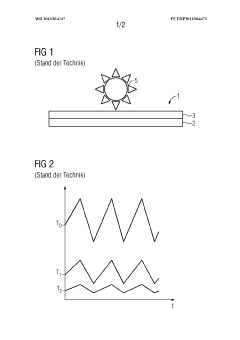
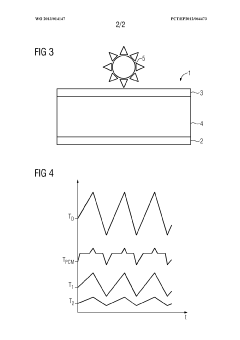
Thermoelectric generator
PatentInactiveUS20190363235A1
Innovation
- A thermoelectric generator design incorporating a perovskite dielectric substrate doped to n-type with an energy filter having a higher conduction band, limiting the perovskite stack thickness to less than 0.25 mm, and using a band offset to enhance the Seebeck coefficient and electric conductivity, promoting ballistic or quasi-ballistic conduction.


Material Sustainability and Supply Chain Considerations
The sustainability of lithium fluoride (LiF) as a key material in thermoelectric generators presents significant challenges that require strategic consideration. Lithium resources, while relatively abundant globally, face increasing demand pressure from multiple industries, particularly the rapidly expanding electric vehicle sector. This competition creates potential supply constraints for thermoelectric applications, necessitating careful resource management strategies. Current global lithium production is concentrated in a limited number of regions—primarily Australia, Chile, Argentina, and China—creating geopolitical vulnerabilities in the supply chain for LiF-based thermoelectric technologies.
Environmental impacts of lithium extraction vary significantly by method, with brine extraction causing substantial water table depletion in sensitive ecosystems, while hard rock mining generates considerable carbon emissions and habitat disruption. These environmental costs must be factored into the full lifecycle assessment of LiF-based thermoelectric generators to ensure genuine sustainability advantages over alternative energy technologies.
Recycling infrastructure for lithium fluoride remains underdeveloped compared to other industrial materials. The complex nature of thermoelectric devices, where LiF is integrated with multiple other materials, presents technical challenges for efficient end-of-life recovery. Developing advanced recycling technologies specifically designed for thermoelectric components could significantly improve the material's sustainability profile and reduce dependence on primary extraction.
Supply chain resilience for LiF requires diversification strategies, including exploration of alternative sourcing regions and development of strategic reserves. The processing of lithium into high-purity LiF suitable for thermoelectric applications represents another potential bottleneck, as this capability is currently concentrated in a small number of facilities globally, primarily in Asia.
Material substitution research offers another pathway to sustainability, investigating partial replacement of lithium with more abundant elements while maintaining thermoelectric performance. Preliminary research indicates potential for sodium or potassium fluoride composites that could reduce lithium dependency while preserving key functional properties.
Regulatory frameworks governing critical materials vary significantly across jurisdictions, creating compliance challenges for global supply chains. Forward-looking companies in the thermoelectric sector are increasingly adopting voluntary sustainability standards that exceed minimum regulatory requirements, anticipating stricter future regulations and responding to market demands for environmentally responsible technologies.
Environmental impacts of lithium extraction vary significantly by method, with brine extraction causing substantial water table depletion in sensitive ecosystems, while hard rock mining generates considerable carbon emissions and habitat disruption. These environmental costs must be factored into the full lifecycle assessment of LiF-based thermoelectric generators to ensure genuine sustainability advantages over alternative energy technologies.
Recycling infrastructure for lithium fluoride remains underdeveloped compared to other industrial materials. The complex nature of thermoelectric devices, where LiF is integrated with multiple other materials, presents technical challenges for efficient end-of-life recovery. Developing advanced recycling technologies specifically designed for thermoelectric components could significantly improve the material's sustainability profile and reduce dependence on primary extraction.
Supply chain resilience for LiF requires diversification strategies, including exploration of alternative sourcing regions and development of strategic reserves. The processing of lithium into high-purity LiF suitable for thermoelectric applications represents another potential bottleneck, as this capability is currently concentrated in a small number of facilities globally, primarily in Asia.
Material substitution research offers another pathway to sustainability, investigating partial replacement of lithium with more abundant elements while maintaining thermoelectric performance. Preliminary research indicates potential for sodium or potassium fluoride composites that could reduce lithium dependency while preserving key functional properties.
Regulatory frameworks governing critical materials vary significantly across jurisdictions, creating compliance challenges for global supply chains. Forward-looking companies in the thermoelectric sector are increasingly adopting voluntary sustainability standards that exceed minimum regulatory requirements, anticipating stricter future regulations and responding to market demands for environmentally responsible technologies.
Thermal Efficiency Benchmarking Methodologies
Thermal efficiency benchmarking for lithium fluoride-based thermoelectric generators requires standardized methodologies to accurately assess performance improvements. The establishment of consistent testing protocols is essential for comparing different LiF configurations and their impact on overall system efficiency. Current benchmarking approaches typically measure conversion efficiency under varying temperature gradients, with particular attention to the temperature ranges where LiF exhibits optimal phase change characteristics (800-900°C).
Industry standards for thermoelectric generator (TEG) benchmarking include the figure of merit ZT, power density measurements, and conversion efficiency percentages. For LiF-enhanced systems, additional metrics must be incorporated to account for the thermal storage capabilities and phase change dynamics. The modified Harman method has been adapted specifically for high-temperature TEGs incorporating phase change materials, providing more accurate efficiency measurements under dynamic thermal conditions.
Comparative analysis frameworks have been developed to evaluate LiF-enhanced TEGs against conventional designs. These frameworks typically include controlled testing environments where temperature gradients, thermal cycling, and load conditions are precisely regulated. Round-robin testing among different laboratories has helped establish reproducibility standards for LiF-based thermal systems, though variations in testing equipment still present challenges for absolute comparisons.
Real-world performance validation requires long-duration testing protocols that simulate actual operating conditions. For automotive and industrial waste heat recovery applications, benchmarking must include thermal cycling stability, response to variable heat sources, and degradation analysis over thousands of hours. Several research institutions have developed accelerated aging protocols specifically for LiF-enhanced thermoelectric systems to predict long-term performance.
Computational modeling approaches complement physical testing by providing theoretical efficiency limits and optimization pathways. Finite element analysis and molecular dynamics simulations help predict the thermal behavior of LiF at interfaces with thermoelectric materials, guiding experimental design. These models must be validated against experimental data, creating a feedback loop that continuously refines benchmarking methodologies.
Recent advancements in in-situ measurement techniques have enabled more precise characterization of thermal interfaces during operation. High-resolution thermal imaging, combined with distributed temperature sensing, provides spatial and temporal mapping of heat flow through LiF-enhanced thermoelectric systems. These techniques have revealed previously undetected thermal bottlenecks at material interfaces, leading to targeted optimization strategies.
Standardization efforts by organizations such as ASTM International and the International Electrotechnical Commission are working to establish universal benchmarking protocols specifically for high-temperature thermoelectric systems incorporating phase change materials like LiF. These emerging standards will facilitate more meaningful comparisons between different research groups and commercial technologies, accelerating the optimization process.
Industry standards for thermoelectric generator (TEG) benchmarking include the figure of merit ZT, power density measurements, and conversion efficiency percentages. For LiF-enhanced systems, additional metrics must be incorporated to account for the thermal storage capabilities and phase change dynamics. The modified Harman method has been adapted specifically for high-temperature TEGs incorporating phase change materials, providing more accurate efficiency measurements under dynamic thermal conditions.
Comparative analysis frameworks have been developed to evaluate LiF-enhanced TEGs against conventional designs. These frameworks typically include controlled testing environments where temperature gradients, thermal cycling, and load conditions are precisely regulated. Round-robin testing among different laboratories has helped establish reproducibility standards for LiF-based thermal systems, though variations in testing equipment still present challenges for absolute comparisons.
Real-world performance validation requires long-duration testing protocols that simulate actual operating conditions. For automotive and industrial waste heat recovery applications, benchmarking must include thermal cycling stability, response to variable heat sources, and degradation analysis over thousands of hours. Several research institutions have developed accelerated aging protocols specifically for LiF-enhanced thermoelectric systems to predict long-term performance.
Computational modeling approaches complement physical testing by providing theoretical efficiency limits and optimization pathways. Finite element analysis and molecular dynamics simulations help predict the thermal behavior of LiF at interfaces with thermoelectric materials, guiding experimental design. These models must be validated against experimental data, creating a feedback loop that continuously refines benchmarking methodologies.
Recent advancements in in-situ measurement techniques have enabled more precise characterization of thermal interfaces during operation. High-resolution thermal imaging, combined with distributed temperature sensing, provides spatial and temporal mapping of heat flow through LiF-enhanced thermoelectric systems. These techniques have revealed previously undetected thermal bottlenecks at material interfaces, leading to targeted optimization strategies.
Standardization efforts by organizations such as ASTM International and the International Electrotechnical Commission are working to establish universal benchmarking protocols specifically for high-temperature thermoelectric systems incorporating phase change materials like LiF. These emerging standards will facilitate more meaningful comparisons between different research groups and commercial technologies, accelerating the optimization process.
Unlock deeper insights with PatSnap Eureka Quick Research — get a full tech report to explore trends and direct your research. Try now!
Generate Your Research Report Instantly with AI Agent
Supercharge your innovation with PatSnap Eureka AI Agent Platform!