

Optimizing Resource Allocation with Adaptive Network Control
MAR 18, 20269 MIN READ
Generate Your Research Report Instantly with AI Agent
PatSnap Eureka helps you evaluate technical feasibility & market potential.
Adaptive Network Control Background and Objectives
Adaptive network control has emerged as a critical paradigm in modern computing systems, driven by the exponential growth of network complexity and the increasing demand for dynamic resource management. This technology represents a fundamental shift from traditional static network configurations to intelligent, self-adjusting systems capable of real-time optimization. The evolution began with basic Quality of Service (QoS) mechanisms in the 1990s and has progressed through software-defined networking (SDN) implementations to today's machine learning-enhanced adaptive systems.
The historical development of adaptive network control can be traced through several key phases. Early implementations focused on simple traffic shaping and bandwidth allocation algorithms. The introduction of SDN in the mid-2000s provided centralized control capabilities, enabling more sophisticated resource management strategies. Subsequently, the integration of artificial intelligence and machine learning algorithms has transformed adaptive control into a predictive and proactive discipline, capable of anticipating network demands and adjusting resources accordingly.
Current technological trends indicate a convergence toward autonomous network operations, where adaptive control systems leverage real-time analytics, predictive modeling, and automated decision-making processes. The proliferation of edge computing, Internet of Things (IoT) devices, and 5G networks has intensified the need for granular, responsive resource allocation mechanisms that can operate across heterogeneous network environments.
The primary objective of optimizing resource allocation through adaptive network control is to achieve dynamic equilibrium between network performance, resource utilization efficiency, and service quality requirements. This involves developing intelligent algorithms that can continuously monitor network conditions, predict traffic patterns, and automatically adjust resource distribution to maintain optimal performance levels while minimizing operational costs.
Key technical goals include implementing real-time traffic analysis capabilities, developing predictive models for resource demand forecasting, and creating automated response mechanisms that can adapt to changing network conditions without human intervention. The ultimate aim is to establish self-healing, self-optimizing network infrastructures that can maintain consistent performance standards across varying operational scenarios while maximizing resource utilization efficiency and minimizing service disruptions.
The historical development of adaptive network control can be traced through several key phases. Early implementations focused on simple traffic shaping and bandwidth allocation algorithms. The introduction of SDN in the mid-2000s provided centralized control capabilities, enabling more sophisticated resource management strategies. Subsequently, the integration of artificial intelligence and machine learning algorithms has transformed adaptive control into a predictive and proactive discipline, capable of anticipating network demands and adjusting resources accordingly.
Current technological trends indicate a convergence toward autonomous network operations, where adaptive control systems leverage real-time analytics, predictive modeling, and automated decision-making processes. The proliferation of edge computing, Internet of Things (IoT) devices, and 5G networks has intensified the need for granular, responsive resource allocation mechanisms that can operate across heterogeneous network environments.
The primary objective of optimizing resource allocation through adaptive network control is to achieve dynamic equilibrium between network performance, resource utilization efficiency, and service quality requirements. This involves developing intelligent algorithms that can continuously monitor network conditions, predict traffic patterns, and automatically adjust resource distribution to maintain optimal performance levels while minimizing operational costs.
Key technical goals include implementing real-time traffic analysis capabilities, developing predictive models for resource demand forecasting, and creating automated response mechanisms that can adapt to changing network conditions without human intervention. The ultimate aim is to establish self-healing, self-optimizing network infrastructures that can maintain consistent performance standards across varying operational scenarios while maximizing resource utilization efficiency and minimizing service disruptions.
Market Demand for Dynamic Resource Allocation Solutions
The global market for dynamic resource allocation solutions is experiencing unprecedented growth driven by the exponential increase in data traffic, cloud computing adoption, and the proliferation of Internet of Things devices. Organizations across industries are grappling with the challenge of efficiently managing computational resources, network bandwidth, and storage capacity in real-time environments where demand patterns fluctuate dramatically.
Enterprise cloud infrastructure represents the largest segment of market demand, where businesses require sophisticated resource allocation mechanisms to handle varying workloads while maintaining cost efficiency. The shift toward hybrid and multi-cloud architectures has intensified the need for adaptive network control systems that can dynamically redistribute resources across different platforms and geographical locations.
Telecommunications networks constitute another critical demand driver, particularly with the deployment of 5G infrastructure and edge computing nodes. Network operators require advanced resource allocation solutions to manage spectrum efficiency, reduce latency, and ensure quality of service across diverse application scenarios ranging from autonomous vehicles to industrial automation.
The financial services sector demonstrates strong demand for dynamic resource allocation solutions to support high-frequency trading systems, real-time fraud detection, and regulatory compliance processing. These applications require millisecond-level resource reallocation capabilities to maintain competitive advantages and operational reliability.
Manufacturing industries are increasingly adopting smart factory concepts that rely on adaptive network control for coordinating robotic systems, supply chain optimization, and predictive maintenance operations. The integration of artificial intelligence and machine learning algorithms into production processes creates dynamic computational demands that traditional static resource allocation methods cannot adequately address.
Healthcare organizations represent an emerging market segment, particularly in medical imaging, genomic analysis, and telemedicine applications. The COVID-19 pandemic accelerated digital transformation initiatives, creating substantial demand for scalable resource allocation solutions that can handle surge capacity requirements while maintaining data security and regulatory compliance.
The gaming and entertainment industry drives demand for low-latency resource allocation solutions to support cloud gaming platforms, virtual reality experiences, and live streaming services. These applications require sophisticated algorithms to predict user behavior patterns and preemptively allocate resources to maintain seamless user experiences across geographically distributed audiences.
Enterprise cloud infrastructure represents the largest segment of market demand, where businesses require sophisticated resource allocation mechanisms to handle varying workloads while maintaining cost efficiency. The shift toward hybrid and multi-cloud architectures has intensified the need for adaptive network control systems that can dynamically redistribute resources across different platforms and geographical locations.
Telecommunications networks constitute another critical demand driver, particularly with the deployment of 5G infrastructure and edge computing nodes. Network operators require advanced resource allocation solutions to manage spectrum efficiency, reduce latency, and ensure quality of service across diverse application scenarios ranging from autonomous vehicles to industrial automation.
The financial services sector demonstrates strong demand for dynamic resource allocation solutions to support high-frequency trading systems, real-time fraud detection, and regulatory compliance processing. These applications require millisecond-level resource reallocation capabilities to maintain competitive advantages and operational reliability.
Manufacturing industries are increasingly adopting smart factory concepts that rely on adaptive network control for coordinating robotic systems, supply chain optimization, and predictive maintenance operations. The integration of artificial intelligence and machine learning algorithms into production processes creates dynamic computational demands that traditional static resource allocation methods cannot adequately address.
Healthcare organizations represent an emerging market segment, particularly in medical imaging, genomic analysis, and telemedicine applications. The COVID-19 pandemic accelerated digital transformation initiatives, creating substantial demand for scalable resource allocation solutions that can handle surge capacity requirements while maintaining data security and regulatory compliance.
The gaming and entertainment industry drives demand for low-latency resource allocation solutions to support cloud gaming platforms, virtual reality experiences, and live streaming services. These applications require sophisticated algorithms to predict user behavior patterns and preemptively allocate resources to maintain seamless user experiences across geographically distributed audiences.
Current State of Network Resource Management Technologies
Network resource management technologies have evolved significantly over the past decade, driven by the exponential growth in data traffic and the increasing complexity of modern network infrastructures. Traditional static resource allocation methods, which relied on predetermined configurations and manual interventions, have proven inadequate for handling dynamic network conditions and varying traffic patterns. The current landscape is characterized by a shift toward intelligent, automated systems that can adapt to real-time network demands.
Software-Defined Networking (SDN) represents one of the most significant technological advances in network resource management. By decoupling the control plane from the data plane, SDN enables centralized network control and programmable resource allocation policies. Major implementations include OpenFlow-based controllers and intent-based networking systems that allow administrators to define high-level policies while the system automatically translates them into specific network configurations.
Network Function Virtualization (NFV) has emerged as a complementary technology, enabling the virtualization of network services traditionally performed by dedicated hardware appliances. This approach allows for more flexible resource allocation by dynamically instantiating, scaling, and migrating network functions based on current demand. The integration of NFV with cloud computing platforms has further enhanced the ability to optimize resource utilization across distributed network infrastructures.
Machine learning and artificial intelligence techniques are increasingly being integrated into network resource management systems. Current implementations include reinforcement learning algorithms for dynamic bandwidth allocation, neural networks for traffic prediction and anomaly detection, and genetic algorithms for optimizing network topology configurations. These AI-driven approaches enable proactive resource management by predicting future network conditions and adjusting allocations accordingly.
Edge computing has introduced new challenges and opportunities in network resource management. The distributed nature of edge networks requires sophisticated coordination mechanisms to ensure optimal resource allocation across multiple edge nodes while maintaining low latency requirements. Current solutions include federated learning approaches for distributed decision-making and blockchain-based consensus mechanisms for resource coordination.
Despite these technological advances, several challenges persist in current network resource management implementations. Scalability remains a significant concern, particularly in large-scale networks with thousands of nodes and diverse traffic patterns. Interoperability between different vendor solutions and legacy systems continues to pose integration challenges. Additionally, the complexity of modern networks makes it difficult to achieve truly optimal resource allocation while maintaining system stability and security requirements.
Software-Defined Networking (SDN) represents one of the most significant technological advances in network resource management. By decoupling the control plane from the data plane, SDN enables centralized network control and programmable resource allocation policies. Major implementations include OpenFlow-based controllers and intent-based networking systems that allow administrators to define high-level policies while the system automatically translates them into specific network configurations.
Network Function Virtualization (NFV) has emerged as a complementary technology, enabling the virtualization of network services traditionally performed by dedicated hardware appliances. This approach allows for more flexible resource allocation by dynamically instantiating, scaling, and migrating network functions based on current demand. The integration of NFV with cloud computing platforms has further enhanced the ability to optimize resource utilization across distributed network infrastructures.
Machine learning and artificial intelligence techniques are increasingly being integrated into network resource management systems. Current implementations include reinforcement learning algorithms for dynamic bandwidth allocation, neural networks for traffic prediction and anomaly detection, and genetic algorithms for optimizing network topology configurations. These AI-driven approaches enable proactive resource management by predicting future network conditions and adjusting allocations accordingly.
Edge computing has introduced new challenges and opportunities in network resource management. The distributed nature of edge networks requires sophisticated coordination mechanisms to ensure optimal resource allocation across multiple edge nodes while maintaining low latency requirements. Current solutions include federated learning approaches for distributed decision-making and blockchain-based consensus mechanisms for resource coordination.
Despite these technological advances, several challenges persist in current network resource management implementations. Scalability remains a significant concern, particularly in large-scale networks with thousands of nodes and diverse traffic patterns. Interoperability between different vendor solutions and legacy systems continues to pose integration challenges. Additionally, the complexity of modern networks makes it difficult to achieve truly optimal resource allocation while maintaining system stability and security requirements.
Existing Adaptive Resource Allocation Frameworks
01 Dynamic resource allocation based on network conditions
Adaptive network control systems can dynamically allocate resources based on real-time network conditions such as traffic load, bandwidth availability, and quality of service requirements. These systems monitor network parameters continuously and adjust resource distribution to optimize performance. The allocation mechanisms can prioritize critical applications and services while maintaining overall network efficiency. Machine learning algorithms may be employed to predict network behavior and proactively adjust resource allocation strategies.- Dynamic resource allocation based on network conditions: Adaptive network control systems can dynamically allocate resources based on real-time network conditions such as traffic load, bandwidth availability, and quality of service requirements. These systems monitor network parameters continuously and adjust resource distribution to optimize performance. The allocation mechanisms can prioritize critical applications and services while maintaining overall network efficiency. Machine learning algorithms may be employed to predict network behavior and proactively adjust resource allocation strategies.
- Quality of Service (QoS) management and prioritization: Network control systems implement quality of service management techniques to ensure that different types of traffic receive appropriate priority levels. These systems can classify data flows based on application requirements and assign resources accordingly. Priority-based scheduling algorithms enable critical services to maintain performance even during network congestion. The systems can dynamically adjust QoS parameters to meet service level agreements and user expectations.
- Bandwidth allocation and traffic management: Adaptive control mechanisms manage bandwidth allocation across multiple users and applications to prevent congestion and ensure fair resource distribution. These systems employ traffic shaping and policing techniques to regulate data flow rates. Bandwidth can be allocated dynamically based on demand patterns and network capacity. The systems may implement admission control policies to prevent oversubscription and maintain network stability.
- Load balancing and network optimization: Network resource allocation systems incorporate load balancing techniques to distribute traffic across multiple network paths and resources. These mechanisms monitor resource utilization and redirect traffic to underutilized components to prevent bottlenecks. Optimization algorithms calculate optimal routing paths and resource assignments to maximize network throughput. The systems can adapt to changing network topologies and dynamically reconfigure resource allocation strategies.
- Adaptive control protocols and signaling mechanisms: Control protocols enable communication between network elements to coordinate resource allocation decisions. Signaling mechanisms facilitate the exchange of network state information and resource availability data. These protocols support negotiation processes for resource requests and reservations. Adaptive algorithms adjust control parameters based on feedback from network monitoring systems to maintain optimal performance under varying conditions.
02 Quality of Service (QoS) management and prioritization
Network control systems implement quality of service management techniques to ensure that different types of traffic receive appropriate resource allocation based on their priority levels. These systems can classify and prioritize data flows according to application requirements, user preferences, or service level agreements. Traffic shaping and scheduling algorithms are used to manage bandwidth distribution among competing flows. The systems can dynamically adjust QoS parameters to maintain service quality during network congestion or varying load conditions.Expand Specific Solutions03 Admission control and connection management
Adaptive network systems employ admission control mechanisms to regulate the acceptance of new connections or service requests based on available resources. These mechanisms evaluate whether sufficient resources exist to accommodate new requests without degrading existing service quality. Connection management protocols handle the establishment, maintenance, and termination of network sessions while optimizing resource utilization. The systems can implement policies for rejecting or queuing requests when resources are insufficient.Expand Specific Solutions04 Load balancing and traffic distribution
Network resource allocation systems implement load balancing techniques to distribute traffic and computational loads across multiple network elements or paths. These systems monitor resource utilization across different network components and redirect traffic to underutilized resources to prevent bottlenecks. Dynamic load balancing algorithms can adapt to changing network conditions and traffic patterns in real-time. The distribution mechanisms help maximize overall network throughput and minimize latency by efficiently utilizing available resources.Expand Specific Solutions05 Bandwidth allocation and scheduling algorithms
Adaptive control systems utilize sophisticated bandwidth allocation and scheduling algorithms to manage network capacity among multiple users and applications. These algorithms determine how available bandwidth is divided and assigned to different traffic flows based on various criteria such as fairness, efficiency, and priority. Scheduling mechanisms control the timing and order of packet transmission to optimize resource utilization. The systems can implement both static and dynamic allocation schemes that adapt to changing network demands and user requirements.Expand Specific Solutions
Major Players in Network Optimization Industry
The adaptive network control technology for resource allocation optimization is experiencing rapid evolution across multiple industry verticals, with the market transitioning from early deployment to mainstream adoption phases. Major telecommunications infrastructure providers like Ericsson, Qualcomm, and NTT Docomo are driving standardization efforts, while technology giants including Microsoft Technology Licensing LLC, Samsung Electronics, and Apple are integrating adaptive algorithms into their platforms. The competitive landscape spans traditional telecom operators such as China Telecom and Deutsche Telekom, automotive manufacturers like BMW and Continental Automotive implementing vehicle-to-everything communications, and industrial automation leaders including Siemens and Hitachi developing smart manufacturing solutions. Academic institutions like Beijing Jiaotong University and Osaka University are contributing foundational research, while specialized firms like Ofinno Technologies focus on next-generation wireless patents. Technology maturity varies significantly across segments, with 5G implementations reaching commercial readiness while emerging 6G and IoT applications remain in advanced research phases, creating a fragmented yet rapidly consolidating market environment.
Telefonaktiebolaget LM Ericsson
Technical Solution: Ericsson has developed advanced network slicing and resource orchestration solutions that enable dynamic allocation of network resources based on real-time demand and service requirements. Their Ericsson Cloud RAN platform utilizes machine learning algorithms to predict traffic patterns and automatically adjust resource allocation across different network slices. The system implements intelligent load balancing mechanisms that can redistribute computing, storage, and bandwidth resources in milliseconds, ensuring optimal network performance. Their adaptive control framework includes automated scaling capabilities that can provision or de-provision resources based on network conditions, traffic loads, and quality of service requirements. The solution integrates with their Network Functions Virtualization Infrastructure (NFVI) to provide end-to-end resource optimization across the entire network infrastructure.
Strengths: Market-leading 5G infrastructure expertise, comprehensive end-to-end solutions, strong AI/ML integration for predictive resource management. Weaknesses: High implementation costs, complex integration requirements, dependency on proprietary hardware platforms.
QUALCOMM, Inc.
Technical Solution: Qualcomm's approach focuses on chipset-level optimization for adaptive network control, particularly in mobile and edge computing environments. Their Snapdragon platforms incorporate dedicated AI processing units that enable real-time resource allocation decisions at the device level. The company has developed advanced antenna tuning and RF resource management technologies that dynamically adjust transmission power, frequency allocation, and MIMO configurations based on network conditions. Their X65 5G modem implements intelligent carrier aggregation that can adaptively combine multiple frequency bands to optimize throughput and reduce latency. The solution includes power management algorithms that balance performance requirements with energy efficiency, automatically scaling processing resources based on application demands and thermal constraints.
Strengths: Leading mobile chipset technology, strong integration with device hardware, excellent power efficiency optimization. Weaknesses: Limited to device-level optimization, requires hardware upgrades for full implementation, less comprehensive network-wide solutions.
Core Patents in Dynamic Network Control Systems
Method and apparatus for network wide adaptive resource allocation for OFDMA/TDMA networks
PatentActiveUS8284715B2
Innovation
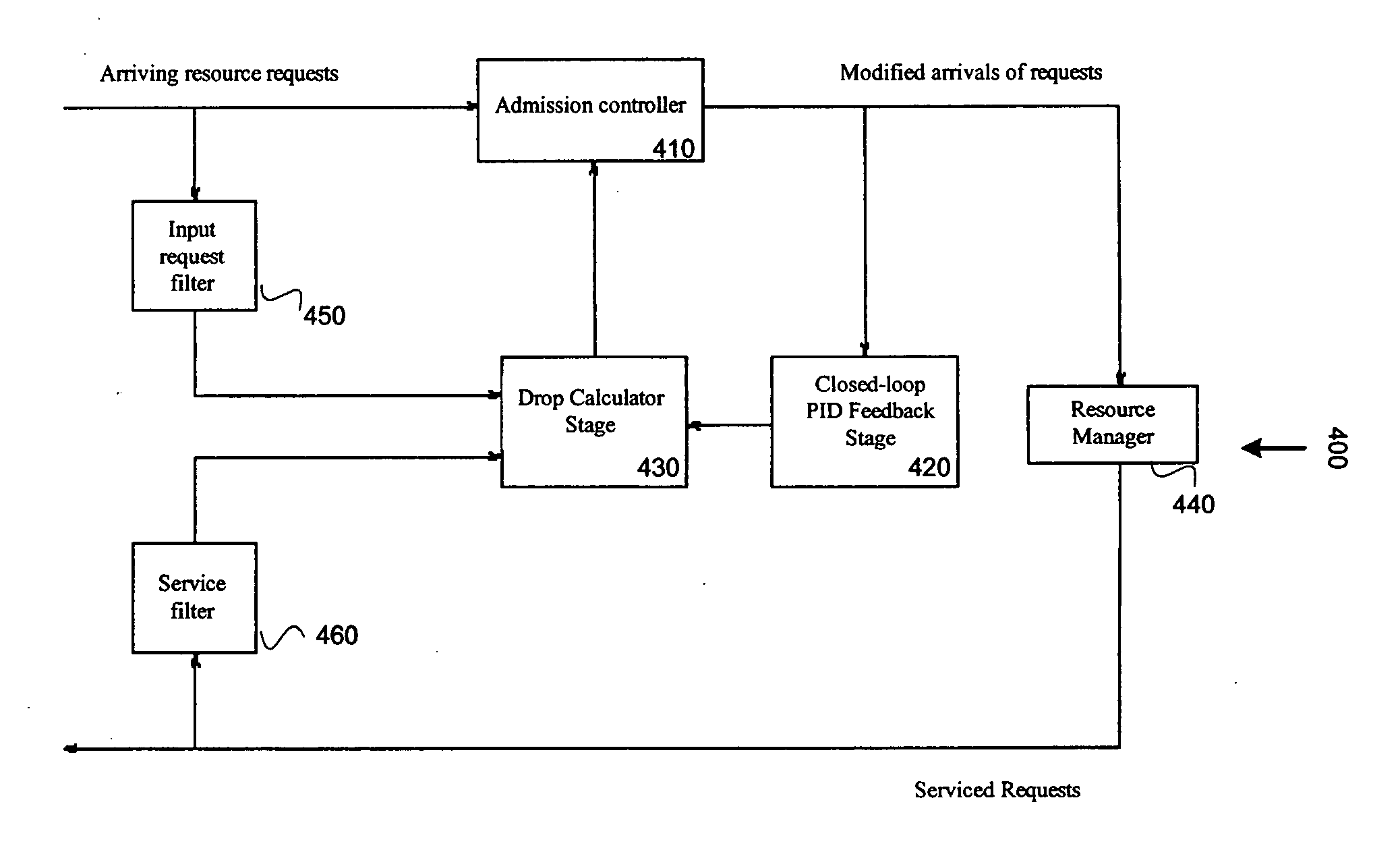
- A centralized resource management system that employs a feedback control method to select policies based on changing network scenarios, using a split-resource management approach where a Macro-Resource Manager and Micro-Resource Manager work together to identify interference regions, allocate resources, and optimize network performance by minimizing interference and maximizing resource reuse across base stations.


Nonlinear adaptive control of resource-distribution dynamics
PatentInactiveUS20060013132A1
Innovation
- An adaptive, nonlinear, model-reference controller is employed to manage resource states by building a distribution model, such as a Markov Chain model, to selectively control resource access and prevent failures by degrading service smoothly, using probabilistic modeling and online parameter estimation to react to dynamic loads.

Network Security Implications of Adaptive Control
The integration of adaptive network control mechanisms in resource allocation systems introduces significant security vulnerabilities that require comprehensive evaluation and mitigation strategies. Traditional static security models become inadequate when dealing with dynamic resource allocation patterns, as adaptive systems continuously modify network configurations, access permissions, and data flow paths based on real-time conditions.
Adaptive control systems create expanded attack surfaces through their inherent flexibility and responsiveness. Malicious actors can exploit the system's adaptive nature by manipulating input parameters or environmental conditions to trigger unintended resource reallocations. This manipulation can lead to denial-of-service attacks where critical resources are diverted away from legitimate users, or privilege escalation scenarios where attackers gain access to restricted network segments through dynamically adjusted pathways.
The dynamic nature of adaptive networks complicates traditional security monitoring and intrusion detection systems. Conventional security tools rely on established baselines and known network topologies, but adaptive systems constantly alter these reference points. This creates blind spots in security monitoring where malicious activities may go undetected during periods of legitimate network reconfiguration.
Authentication and authorization mechanisms face particular challenges in adaptive environments. As resources are dynamically allocated and network paths change, maintaining consistent identity verification and access control becomes complex. The system must balance security requirements with the need for rapid adaptation, often creating windows of vulnerability during transition periods.
Data integrity and confidentiality concerns arise when adaptive control systems modify encryption keys, communication protocols, or data routing paths in response to changing conditions. These modifications can inadvertently expose sensitive information or create opportunities for man-in-the-middle attacks during the adaptation process.
Implementing robust security measures requires developing adaptive security frameworks that can evolve alongside the network control mechanisms. This includes deploying machine learning-based anomaly detection systems capable of distinguishing between legitimate adaptive behaviors and potential security threats, establishing secure communication protocols for control signaling, and implementing multi-layered authentication systems that maintain security during dynamic reconfigurations.
Adaptive control systems create expanded attack surfaces through their inherent flexibility and responsiveness. Malicious actors can exploit the system's adaptive nature by manipulating input parameters or environmental conditions to trigger unintended resource reallocations. This manipulation can lead to denial-of-service attacks where critical resources are diverted away from legitimate users, or privilege escalation scenarios where attackers gain access to restricted network segments through dynamically adjusted pathways.
The dynamic nature of adaptive networks complicates traditional security monitoring and intrusion detection systems. Conventional security tools rely on established baselines and known network topologies, but adaptive systems constantly alter these reference points. This creates blind spots in security monitoring where malicious activities may go undetected during periods of legitimate network reconfiguration.
Authentication and authorization mechanisms face particular challenges in adaptive environments. As resources are dynamically allocated and network paths change, maintaining consistent identity verification and access control becomes complex. The system must balance security requirements with the need for rapid adaptation, often creating windows of vulnerability during transition periods.
Data integrity and confidentiality concerns arise when adaptive control systems modify encryption keys, communication protocols, or data routing paths in response to changing conditions. These modifications can inadvertently expose sensitive information or create opportunities for man-in-the-middle attacks during the adaptation process.
Implementing robust security measures requires developing adaptive security frameworks that can evolve alongside the network control mechanisms. This includes deploying machine learning-based anomaly detection systems capable of distinguishing between legitimate adaptive behaviors and potential security threats, establishing secure communication protocols for control signaling, and implementing multi-layered authentication systems that maintain security during dynamic reconfigurations.
Energy Efficiency in Adaptive Network Systems
Energy efficiency has emerged as a critical performance metric in adaptive network systems, driven by the increasing demand for sustainable computing infrastructure and the rising operational costs associated with power consumption. As networks become more dynamic and resource-intensive, the challenge of maintaining optimal performance while minimizing energy expenditure has become paramount for both economic and environmental considerations.
The fundamental relationship between adaptive network control and energy consumption lies in the dynamic nature of resource allocation decisions. Traditional static allocation methods often result in over-provisioning of resources, leading to significant energy waste during periods of low demand. Conversely, adaptive systems can dynamically adjust resource utilization based on real-time network conditions, traffic patterns, and service requirements, thereby achieving substantial energy savings without compromising performance quality.
Modern adaptive network systems employ sophisticated energy-aware algorithms that consider power consumption as a primary optimization objective alongside traditional metrics such as throughput, latency, and reliability. These algorithms leverage predictive analytics and machine learning techniques to anticipate traffic patterns and proactively adjust resource allocation strategies. By implementing intelligent sleep modes, dynamic voltage scaling, and selective component activation, networks can achieve energy reductions of 30-50% compared to conventional approaches.
The integration of renewable energy sources into network infrastructure has further emphasized the importance of energy-efficient adaptive control mechanisms. Smart grid integration enables networks to optimize their operation schedules based on renewable energy availability, shifting computational loads to periods of high renewable generation and reducing reliance on carbon-intensive power sources.
However, achieving optimal energy efficiency in adaptive networks presents several technical challenges. The trade-off between energy savings and performance degradation requires careful calibration, as aggressive power management strategies may introduce latency penalties or reduce system responsiveness. Additionally, the overhead associated with continuous monitoring and dynamic reconfiguration must be carefully balanced against the achieved energy benefits.
Emerging technologies such as edge computing and 5G networks are driving new paradigms in energy-efficient adaptive control, where distributed intelligence enables more granular and responsive energy management strategies across heterogeneous network environments.
The fundamental relationship between adaptive network control and energy consumption lies in the dynamic nature of resource allocation decisions. Traditional static allocation methods often result in over-provisioning of resources, leading to significant energy waste during periods of low demand. Conversely, adaptive systems can dynamically adjust resource utilization based on real-time network conditions, traffic patterns, and service requirements, thereby achieving substantial energy savings without compromising performance quality.
Modern adaptive network systems employ sophisticated energy-aware algorithms that consider power consumption as a primary optimization objective alongside traditional metrics such as throughput, latency, and reliability. These algorithms leverage predictive analytics and machine learning techniques to anticipate traffic patterns and proactively adjust resource allocation strategies. By implementing intelligent sleep modes, dynamic voltage scaling, and selective component activation, networks can achieve energy reductions of 30-50% compared to conventional approaches.
The integration of renewable energy sources into network infrastructure has further emphasized the importance of energy-efficient adaptive control mechanisms. Smart grid integration enables networks to optimize their operation schedules based on renewable energy availability, shifting computational loads to periods of high renewable generation and reducing reliance on carbon-intensive power sources.
However, achieving optimal energy efficiency in adaptive networks presents several technical challenges. The trade-off between energy savings and performance degradation requires careful calibration, as aggressive power management strategies may introduce latency penalties or reduce system responsiveness. Additionally, the overhead associated with continuous monitoring and dynamic reconfiguration must be carefully balanced against the achieved energy benefits.
Emerging technologies such as edge computing and 5G networks are driving new paradigms in energy-efficient adaptive control, where distributed intelligence enables more granular and responsive energy management strategies across heterogeneous network environments.
Unlock deeper insights with PatSnap Eureka Quick Research — get a full tech report to explore trends and direct your research. Try now!
Generate Your Research Report Instantly with AI Agent
Supercharge your innovation with PatSnap Eureka AI Agent Platform!