

Optimizing Spintronic Behavior in Racetrack Memory for HPC Centers
MAY 14, 20269 MIN READ
Generate Your Research Report Instantly with AI Agent
PatSnap Eureka helps you evaluate technical feasibility & market potential.
Spintronic Racetrack Memory Background and HPC Objectives
Spintronic racetrack memory represents a revolutionary paradigm shift in data storage technology, fundamentally departing from conventional charge-based memory systems by exploiting the intrinsic spin properties of electrons. This innovative approach leverages magnetic domain walls that can be precisely manipulated along nanoscale magnetic tracks, enabling ultra-dense, non-volatile memory storage with exceptional endurance characteristics.
The technology emerged from groundbreaking research in spintronics, where information encoding relies on electron spin orientation rather than charge accumulation. In racetrack memory architectures, data bits are stored as magnetic domains separated by domain walls within ferromagnetic nanowires. These domain walls can be electrically driven along the track using spin-transfer torque or spin-orbit torque mechanisms, allowing sequential access to stored information without mechanical movement.
High-Performance Computing centers face unprecedented challenges in memory hierarchy optimization, driven by the exponential growth of data-intensive applications and the widening gap between processor performance and memory bandwidth. Traditional DRAM and NAND flash technologies struggle to meet the simultaneous demands for high density, low latency, non-volatility, and energy efficiency required by modern HPC workloads.
The primary objective for implementing spintronic racetrack memory in HPC environments centers on achieving breakthrough improvements in memory wall mitigation. This involves developing storage solutions that can bridge the performance gap between volatile high-speed cache memory and non-volatile bulk storage, potentially eliminating the need for complex memory hierarchies.
Energy efficiency optimization represents another critical objective, as HPC centers consume substantial power for memory operations. Racetrack memory's inherently low-power operation, stemming from its non-volatile nature and efficient spin-based switching mechanisms, offers significant potential for reducing overall system power consumption while maintaining computational performance.
Density enhancement objectives focus on maximizing storage capacity within existing physical constraints. The three-dimensional stackability of racetrack memory devices, combined with their nanoscale footprint, presents opportunities to achieve storage densities exceeding conventional memory technologies by orders of magnitude, directly addressing the space and cooling limitations prevalent in modern data centers.
The technology emerged from groundbreaking research in spintronics, where information encoding relies on electron spin orientation rather than charge accumulation. In racetrack memory architectures, data bits are stored as magnetic domains separated by domain walls within ferromagnetic nanowires. These domain walls can be electrically driven along the track using spin-transfer torque or spin-orbit torque mechanisms, allowing sequential access to stored information without mechanical movement.
High-Performance Computing centers face unprecedented challenges in memory hierarchy optimization, driven by the exponential growth of data-intensive applications and the widening gap between processor performance and memory bandwidth. Traditional DRAM and NAND flash technologies struggle to meet the simultaneous demands for high density, low latency, non-volatility, and energy efficiency required by modern HPC workloads.
The primary objective for implementing spintronic racetrack memory in HPC environments centers on achieving breakthrough improvements in memory wall mitigation. This involves developing storage solutions that can bridge the performance gap between volatile high-speed cache memory and non-volatile bulk storage, potentially eliminating the need for complex memory hierarchies.
Energy efficiency optimization represents another critical objective, as HPC centers consume substantial power for memory operations. Racetrack memory's inherently low-power operation, stemming from its non-volatile nature and efficient spin-based switching mechanisms, offers significant potential for reducing overall system power consumption while maintaining computational performance.
Density enhancement objectives focus on maximizing storage capacity within existing physical constraints. The three-dimensional stackability of racetrack memory devices, combined with their nanoscale footprint, presents opportunities to achieve storage densities exceeding conventional memory technologies by orders of magnitude, directly addressing the space and cooling limitations prevalent in modern data centers.
Market Demand for Advanced Memory Solutions in HPC
The high-performance computing sector is experiencing unprecedented growth driven by artificial intelligence, machine learning, and big data analytics applications. Traditional memory architectures face significant bottlenecks in meeting the demanding requirements of modern HPC workloads, creating substantial market opportunities for advanced memory solutions. The exponential increase in data processing requirements has exposed critical limitations in conventional DRAM and NAND flash technologies, particularly regarding energy efficiency, data throughput, and storage density.
HPC centers worldwide are grappling with the memory wall problem, where processor performance improvements far outpace memory access speeds. This disparity creates severe performance bottlenecks that limit the effectiveness of computational resources. Current memory hierarchies struggle to provide the necessary bandwidth and latency characteristics required for emerging applications such as real-time AI inference, large-scale simulations, and complex data analytics workloads.
The demand for non-volatile memory solutions with near-DRAM performance characteristics has intensified significantly. HPC applications require memory technologies that can bridge the gap between volatile and non-volatile storage while providing superior energy efficiency. Racetrack memory technology addresses these critical needs by offering high-density storage, low power consumption, and fast access times that align with HPC performance requirements.
Energy consumption represents a major operational concern for HPC facilities, with memory subsystems accounting for substantial portions of total power budgets. Advanced memory solutions that reduce energy consumption while maintaining or improving performance characteristics are increasingly prioritized in procurement decisions. The growing emphasis on sustainable computing practices further amplifies the demand for energy-efficient memory technologies.
Market drivers include the proliferation of edge computing applications, the expansion of cloud-based HPC services, and the increasing adoption of heterogeneous computing architectures. These trends create diverse requirements for memory solutions that can adapt to varying workload characteristics while maintaining consistent performance levels. The integration of artificial intelligence accelerators and specialized processing units in HPC systems demands memory technologies capable of supporting diverse access patterns and bandwidth requirements.
The competitive landscape reveals significant investment in next-generation memory technologies, with major technology companies and research institutions actively pursuing solutions beyond traditional memory architectures. This investment climate indicates strong market confidence in the commercial viability of advanced memory solutions for HPC applications.
HPC centers worldwide are grappling with the memory wall problem, where processor performance improvements far outpace memory access speeds. This disparity creates severe performance bottlenecks that limit the effectiveness of computational resources. Current memory hierarchies struggle to provide the necessary bandwidth and latency characteristics required for emerging applications such as real-time AI inference, large-scale simulations, and complex data analytics workloads.
The demand for non-volatile memory solutions with near-DRAM performance characteristics has intensified significantly. HPC applications require memory technologies that can bridge the gap between volatile and non-volatile storage while providing superior energy efficiency. Racetrack memory technology addresses these critical needs by offering high-density storage, low power consumption, and fast access times that align with HPC performance requirements.
Energy consumption represents a major operational concern for HPC facilities, with memory subsystems accounting for substantial portions of total power budgets. Advanced memory solutions that reduce energy consumption while maintaining or improving performance characteristics are increasingly prioritized in procurement decisions. The growing emphasis on sustainable computing practices further amplifies the demand for energy-efficient memory technologies.
Market drivers include the proliferation of edge computing applications, the expansion of cloud-based HPC services, and the increasing adoption of heterogeneous computing architectures. These trends create diverse requirements for memory solutions that can adapt to varying workload characteristics while maintaining consistent performance levels. The integration of artificial intelligence accelerators and specialized processing units in HPC systems demands memory technologies capable of supporting diverse access patterns and bandwidth requirements.
The competitive landscape reveals significant investment in next-generation memory technologies, with major technology companies and research institutions actively pursuing solutions beyond traditional memory architectures. This investment climate indicates strong market confidence in the commercial viability of advanced memory solutions for HPC applications.
Current State and Challenges of Spintronic Memory Technology
Spintronic memory technology has emerged as a promising solution for next-generation storage systems, particularly in high-performance computing environments where traditional memory architectures face significant limitations. Current spintronic memory implementations primarily focus on magnetic random-access memory (MRAM) variants, including spin-transfer torque MRAM (STT-MRAM) and spin-orbit torque MRAM (SOT-MRAM), which have achieved commercial viability in specific applications.
Racetrack memory represents an advanced spintronic concept that utilizes magnetic domain walls moving along nanoscale magnetic strips, offering theoretical advantages in density and energy efficiency compared to conventional memory technologies. Leading research institutions and semiconductor companies have demonstrated functional racetrack memory prototypes, with IBM's initial proof-of-concept establishing the foundational principles for domain wall manipulation through spin-polarized currents.
The current technological landscape reveals significant disparities between laboratory demonstrations and practical implementation requirements for HPC centers. While basic racetrack memory functionality has been validated at the device level, scaling challenges persist in achieving the reliability, speed, and integration density necessary for enterprise-grade applications. Manufacturing processes for spintronic devices remain complex and costly, with yield rates substantially lower than established semiconductor memory technologies.
Critical technical challenges encompass domain wall pinning effects that compromise data reliability, thermal stability issues affecting retention characteristics, and write endurance limitations that restrict operational lifespan. Current spintronic materials exhibit sensitivity to temperature variations and magnetic field interference, creating operational constraints incompatible with typical HPC center environments where electromagnetic noise and thermal fluctuations are prevalent.
Integration challenges with existing CMOS technology present additional barriers, as spintronic devices require specialized fabrication processes and novel peripheral circuitry designs. The absence of standardized manufacturing protocols and limited availability of production-ready equipment further constrain widespread adoption. Performance optimization remains hindered by incomplete understanding of spin dynamics in complex multilayer structures and insufficient modeling tools for predicting device behavior under varying operational conditions.
Geographically, spintronic memory research concentrates in advanced semiconductor regions, with significant activities in the United States, Japan, South Korea, and European Union countries. However, the technology transfer gap between research institutions and commercial manufacturing facilities continues to impede rapid technological maturation and cost reduction necessary for HPC market penetration.
Racetrack memory represents an advanced spintronic concept that utilizes magnetic domain walls moving along nanoscale magnetic strips, offering theoretical advantages in density and energy efficiency compared to conventional memory technologies. Leading research institutions and semiconductor companies have demonstrated functional racetrack memory prototypes, with IBM's initial proof-of-concept establishing the foundational principles for domain wall manipulation through spin-polarized currents.
The current technological landscape reveals significant disparities between laboratory demonstrations and practical implementation requirements for HPC centers. While basic racetrack memory functionality has been validated at the device level, scaling challenges persist in achieving the reliability, speed, and integration density necessary for enterprise-grade applications. Manufacturing processes for spintronic devices remain complex and costly, with yield rates substantially lower than established semiconductor memory technologies.
Critical technical challenges encompass domain wall pinning effects that compromise data reliability, thermal stability issues affecting retention characteristics, and write endurance limitations that restrict operational lifespan. Current spintronic materials exhibit sensitivity to temperature variations and magnetic field interference, creating operational constraints incompatible with typical HPC center environments where electromagnetic noise and thermal fluctuations are prevalent.
Integration challenges with existing CMOS technology present additional barriers, as spintronic devices require specialized fabrication processes and novel peripheral circuitry designs. The absence of standardized manufacturing protocols and limited availability of production-ready equipment further constrain widespread adoption. Performance optimization remains hindered by incomplete understanding of spin dynamics in complex multilayer structures and insufficient modeling tools for predicting device behavior under varying operational conditions.
Geographically, spintronic memory research concentrates in advanced semiconductor regions, with significant activities in the United States, Japan, South Korea, and European Union countries. However, the technology transfer gap between research institutions and commercial manufacturing facilities continues to impede rapid technological maturation and cost reduction necessary for HPC market penetration.
Existing Solutions for Spintronic Behavior Optimization
01 Domain wall motion control in racetrack memory devices
Methods and structures for controlling the movement of magnetic domain walls along nanowire tracks in racetrack memory systems. This involves techniques for precise positioning and manipulation of domain walls through current pulses, magnetic fields, or structural modifications to achieve reliable data storage and retrieval operations.- Domain wall motion control in racetrack memory devices: Technologies for controlling the movement of magnetic domain walls along nanowire tracks in racetrack memory systems. These methods involve precise manipulation of domain wall velocity and positioning through current pulses, magnetic field application, and structural modifications to achieve reliable data storage and retrieval operations.
- Spintronic material composition and magnetic properties: Development of specialized magnetic materials and multilayer structures optimized for racetrack memory applications. These materials exhibit specific magnetic anisotropy, coercivity, and spin polarization characteristics that enable efficient domain wall nucleation and propagation while maintaining data integrity and thermal stability.
- Current-induced spin transfer torque mechanisms: Implementation of spin-polarized current injection techniques to generate spin transfer torque effects for domain wall manipulation. These approaches utilize the interaction between conduction electrons and localized magnetic moments to achieve controlled domain wall motion without requiring external magnetic fields.
- Three-dimensional racetrack memory architectures: Design and fabrication of vertical and three-dimensional racetrack memory structures to increase storage density and improve device performance. These architectures incorporate multiple layers of magnetic nanowires with optimized interconnects and access mechanisms for enhanced data capacity and processing speed.
- Read and write operation optimization: Methods for improving data read and write operations in racetrack memory systems through advanced sensing techniques, error correction algorithms, and timing control mechanisms. These optimizations enhance data reliability, reduce power consumption, and increase operational speed while minimizing interference between adjacent memory cells.
02 Spintronic material optimization for racetrack applications
Development of specialized magnetic materials and multilayer structures that exhibit enhanced spintronic properties for racetrack memory implementations. This includes engineering materials with specific magnetic anisotropy, spin polarization, and domain wall dynamics to improve memory performance and stability.Expand Specific Solutions03 Current-induced spin transfer torque mechanisms
Techniques utilizing spin-polarized currents to generate torques that can manipulate magnetic states in racetrack memory devices. These mechanisms enable the writing and erasing of data bits by controlling the orientation of magnetic domains through electrical current rather than external magnetic fields.Expand Specific Solutions04 Three-dimensional racetrack memory architectures
Advanced structural designs that implement racetrack memory concepts in three-dimensional configurations to increase storage density. These architectures involve vertical or multi-level arrangements of magnetic nanowires with associated read/write mechanisms for high-capacity data storage applications.Expand Specific Solutions05 Read and write head integration for racetrack systems
Design and implementation of specialized read and write mechanisms for accessing data stored as magnetic domains in racetrack memory devices. This includes magnetic tunnel junctions, spin valves, and other spintronic sensors that can detect and modify the magnetic states of moving domain walls.Expand Specific Solutions
Key Players in Spintronic Memory and HPC Industry
The racetrack memory optimization field represents an emerging technology sector in early development stages, characterized by significant research investments but limited commercial deployment. The market remains nascent with substantial growth potential as HPC centers increasingly demand high-density, low-power memory solutions. Technology maturity varies considerably across key players, with established semiconductor giants like IBM, Intel, Samsung Electronics, and Toshiba leading fundamental research and prototype development. Chinese manufacturers including SMIC and Shanghai Ciyu Information Technologies are advancing manufacturing capabilities, while academic institutions such as Max Planck Gesellschaft, Beihang University, and Central South University contribute theoretical breakthroughs. The competitive landscape shows a clear division between research-focused entities developing core spintronic principles and industry players working toward practical implementation, suggesting the technology is transitioning from laboratory research to pre-commercial phases with significant barriers to mass production remaining.
International Business Machines Corp.
Technical Solution: IBM has been a pioneer in racetrack memory development, focusing on domain wall motion optimization in magnetic nanowires. Their approach utilizes spin-orbit torque mechanisms to achieve efficient domain wall propagation with reduced current densities. The company has developed advanced materials engineering techniques using heavy metal underlayers like tantalum and platinum to enhance spin-orbit coupling effects. IBM's racetrack memory architecture incorporates three-dimensional nanowire arrays that can significantly increase storage density while maintaining fast access times suitable for HPC applications. Their research emphasizes thermal stability optimization and error correction mechanisms specifically designed for spintronic memory systems.
Strengths: Pioneer in racetrack memory with extensive patent portfolio and proven research capabilities. Weaknesses: High development costs and manufacturing complexity may limit commercial scalability.
Toshiba Corp.
Technical Solution: Toshiba has developed spintronic racetrack memory solutions focusing on perpendicular magnetic anisotropy materials to improve thermal stability and reduce switching currents. Their technology leverages CoFeB/MgO interfaces with optimized annealing processes to achieve high tunnel magnetoresistance ratios exceeding 200%. The company's approach integrates voltage-controlled magnetic anisotropy effects to further reduce power consumption in HPC environments. Toshiba's racetrack memory design incorporates advanced read/write head architectures that enable precise domain wall positioning and detection. Their manufacturing process utilizes existing semiconductor fabrication infrastructure, making it more cost-effective for large-scale HPC deployments.
Strengths: Strong manufacturing capabilities and cost-effective production methods using existing fab infrastructure. Weaknesses: Limited research depth compared to IBM and faces competition from established memory technologies.
Core Patents in Racetrack Memory Spintronic Control
Race-track memory with improved domain wall motion control
PatentActiveKR1020220029347A
Innovation
- A race track memory layer with interleaved bit positions and domain wall traps, featuring distinct domain wall velocities and Dzyaloshinskii-Moriya Interaction (DMI) and Synthetic Antiferromagnetic (SAF) effects, along with a nonmagnetic coupling layer and ferromagnetic layer, to modulate domain wall speeds and improve control.


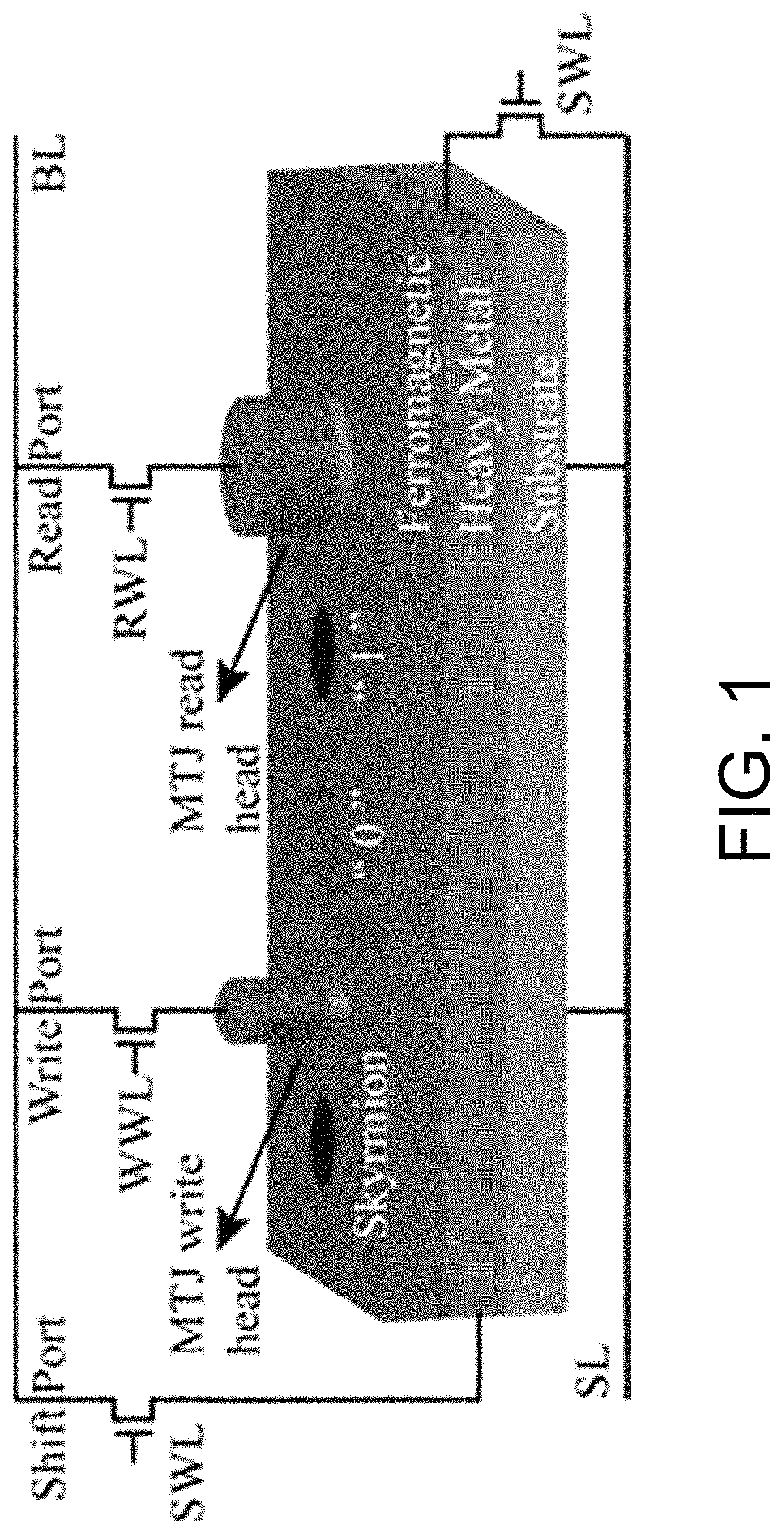
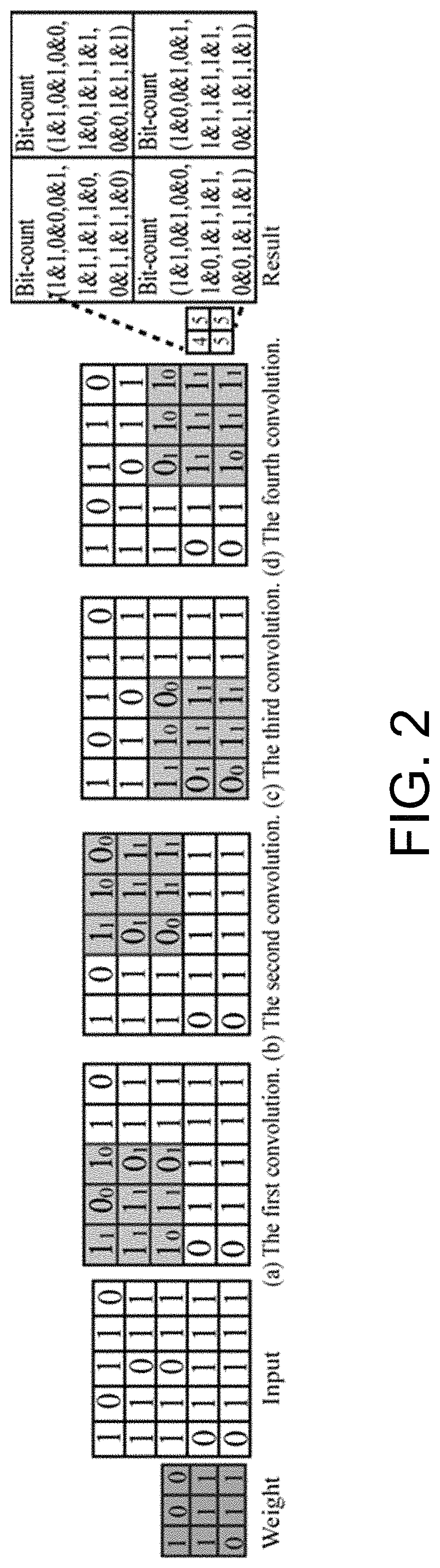
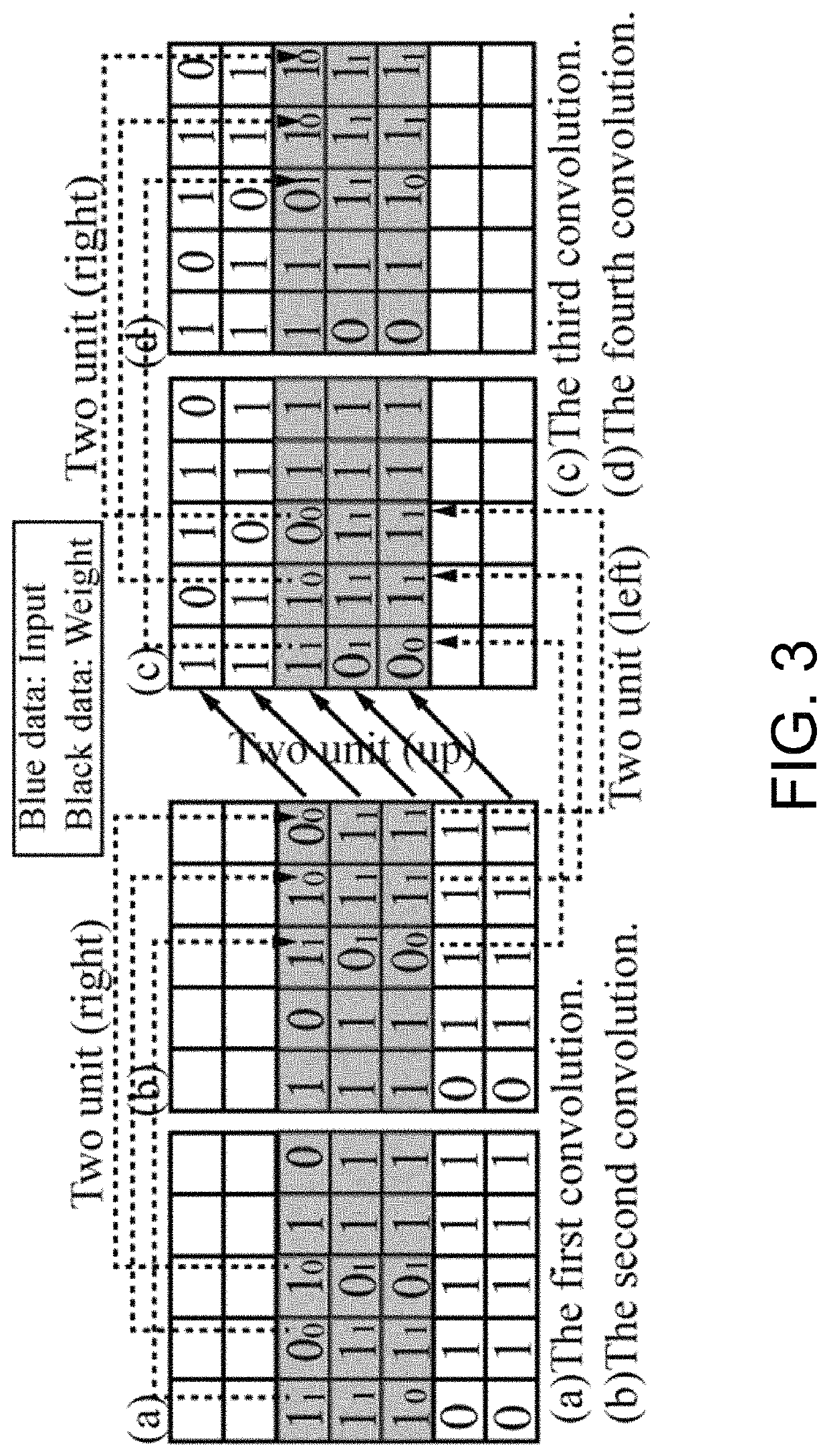
Computing in-memory system and method based on skyrmion racetrack memory
PatentActiveUS11151439B2
Innovation
- A computing in-memory system based on skyrmion racetrack memory, incorporating a circuit architecture with a row decoder, column decoder, voltage-driven circuit, sensor circuit, counter, and mode controller, utilizing skyrmion racetrack memory for storage and computation, enabling efficient binary convolutional neural network operations with reduced power consumption.

Energy Efficiency Standards for HPC Memory Systems
The establishment of comprehensive energy efficiency standards for HPC memory systems has become increasingly critical as data centers face mounting pressure to reduce power consumption while maintaining computational performance. Current industry benchmarks primarily focus on processor efficiency metrics, leaving memory subsystems inadequately regulated despite their substantial contribution to overall system power draw.
Existing standards such as ENERGY STAR for servers and the Green500 list provide foundational frameworks but lack specific provisions for emerging memory technologies like racetrack memory. The IEEE 1621 standard for mobile device battery life measurement offers methodological insights, yet its application to HPC environments requires significant adaptation to address the unique operational characteristics of high-performance computing workloads.
International standardization bodies including JEDEC and SNIA have initiated preliminary discussions regarding memory power efficiency metrics, focusing on traditional DRAM and emerging non-volatile memory technologies. However, these efforts have not yet addressed the specific requirements of spintronic-based memory systems, creating a regulatory gap that could impede widespread adoption of racetrack memory in HPC applications.
The development of specialized energy efficiency standards for HPC memory systems must incorporate dynamic power scaling capabilities, idle state management, and workload-adaptive performance metrics. These standards should establish baseline power consumption thresholds, define measurement methodologies for spintronic devices, and create certification processes that account for the unique operational modes of racetrack memory architectures.
Proposed standardization frameworks should integrate thermal management requirements, as spintronic devices exhibit temperature-dependent behavior that directly impacts both performance and energy consumption. Additionally, standards must address the energy overhead associated with domain wall manipulation and magnetic field generation, which represent fundamental aspects of racetrack memory operation that differ significantly from conventional memory technologies.
The implementation of robust energy efficiency standards will facilitate vendor compliance verification, enable meaningful performance comparisons across different memory technologies, and provide procurement guidelines for HPC center operators seeking to optimize their infrastructure investments while meeting sustainability objectives.
Existing standards such as ENERGY STAR for servers and the Green500 list provide foundational frameworks but lack specific provisions for emerging memory technologies like racetrack memory. The IEEE 1621 standard for mobile device battery life measurement offers methodological insights, yet its application to HPC environments requires significant adaptation to address the unique operational characteristics of high-performance computing workloads.
International standardization bodies including JEDEC and SNIA have initiated preliminary discussions regarding memory power efficiency metrics, focusing on traditional DRAM and emerging non-volatile memory technologies. However, these efforts have not yet addressed the specific requirements of spintronic-based memory systems, creating a regulatory gap that could impede widespread adoption of racetrack memory in HPC applications.
The development of specialized energy efficiency standards for HPC memory systems must incorporate dynamic power scaling capabilities, idle state management, and workload-adaptive performance metrics. These standards should establish baseline power consumption thresholds, define measurement methodologies for spintronic devices, and create certification processes that account for the unique operational modes of racetrack memory architectures.
Proposed standardization frameworks should integrate thermal management requirements, as spintronic devices exhibit temperature-dependent behavior that directly impacts both performance and energy consumption. Additionally, standards must address the energy overhead associated with domain wall manipulation and magnetic field generation, which represent fundamental aspects of racetrack memory operation that differ significantly from conventional memory technologies.
The implementation of robust energy efficiency standards will facilitate vendor compliance verification, enable meaningful performance comparisons across different memory technologies, and provide procurement guidelines for HPC center operators seeking to optimize their infrastructure investments while meeting sustainability objectives.
Thermal Management Considerations for Spintronic Devices
Thermal management represents one of the most critical engineering challenges in deploying spintronic racetrack memory devices within high-performance computing environments. The unique operational characteristics of domain wall motion in magnetic nanowires create distinct thermal signatures that differ significantly from conventional semiconductor memory technologies. Unlike traditional CMOS-based storage systems, spintronic devices exhibit complex temperature-dependent behaviors that directly influence domain wall velocity, pinning mechanisms, and overall device reliability.
The fundamental thermal challenge stems from the intricate relationship between temperature and magnetic properties in spintronic materials. Elevated temperatures can significantly alter the magnetic anisotropy of the racetrack material, leading to unpredictable domain wall dynamics and potential data corruption. Current density requirements for domain wall manipulation generate localized Joule heating, creating thermal gradients across the device structure that can exceed 100K/μm in high-density implementations.
Material selection plays a pivotal role in thermal management strategies for spintronic racetrack memory. Perpendicular magnetic anisotropy materials, while offering superior data retention characteristics, often exhibit heightened temperature sensitivity compared to in-plane magnetized systems. The thermal stability factor, defined by the ratio of magnetic energy barrier to thermal energy, becomes increasingly critical as device dimensions shrink to accommodate HPC density requirements.
Advanced thermal mitigation approaches focus on multi-layered heat dissipation architectures integrated directly into the racetrack structure. Novel heat sink designs utilizing graphene-based thermal interface materials demonstrate promising results in maintaining operational temperatures below critical thresholds. Additionally, dynamic thermal monitoring systems enable real-time adjustment of operating parameters to prevent thermal-induced performance degradation.
The integration of spintronic devices with existing HPC cooling infrastructure presents unique challenges requiring specialized thermal interface solutions. Conventional air and liquid cooling systems must be augmented with localized thermal management strategies that account for the non-uniform heat generation patterns characteristic of domain wall manipulation processes. Emerging approaches include embedded microfluidic cooling channels and phase-change material integration to provide enhanced thermal buffering capabilities during peak computational loads.
The fundamental thermal challenge stems from the intricate relationship between temperature and magnetic properties in spintronic materials. Elevated temperatures can significantly alter the magnetic anisotropy of the racetrack material, leading to unpredictable domain wall dynamics and potential data corruption. Current density requirements for domain wall manipulation generate localized Joule heating, creating thermal gradients across the device structure that can exceed 100K/μm in high-density implementations.
Material selection plays a pivotal role in thermal management strategies for spintronic racetrack memory. Perpendicular magnetic anisotropy materials, while offering superior data retention characteristics, often exhibit heightened temperature sensitivity compared to in-plane magnetized systems. The thermal stability factor, defined by the ratio of magnetic energy barrier to thermal energy, becomes increasingly critical as device dimensions shrink to accommodate HPC density requirements.
Advanced thermal mitigation approaches focus on multi-layered heat dissipation architectures integrated directly into the racetrack structure. Novel heat sink designs utilizing graphene-based thermal interface materials demonstrate promising results in maintaining operational temperatures below critical thresholds. Additionally, dynamic thermal monitoring systems enable real-time adjustment of operating parameters to prevent thermal-induced performance degradation.
The integration of spintronic devices with existing HPC cooling infrastructure presents unique challenges requiring specialized thermal interface solutions. Conventional air and liquid cooling systems must be augmented with localized thermal management strategies that account for the non-uniform heat generation patterns characteristic of domain wall manipulation processes. Emerging approaches include embedded microfluidic cooling channels and phase-change material integration to provide enhanced thermal buffering capabilities during peak computational loads.
Unlock deeper insights with PatSnap Eureka Quick Research — get a full tech report to explore trends and direct your research. Try now!
Generate Your Research Report Instantly with AI Agent
Supercharge your innovation with PatSnap Eureka AI Agent Platform!