

Photodiode exploration in textile sensing technologies
AUG 21, 20259 MIN READ
Generate Your Research Report Instantly with AI Agent
PatSnap Eureka helps you evaluate technical feasibility & market potential.
Textile Sensing Tech Evolution and Objectives
The field of textile sensing technologies has witnessed significant advancements over the past few decades, with photodiodes emerging as a promising component in this evolving landscape. The integration of photodiodes into textiles represents a convergence of electronics and fabric engineering, opening up new possibilities for wearable technology and smart textiles.
The evolution of textile sensing technologies can be traced back to the early 2000s when researchers began exploring ways to incorporate electronic components into fabrics. Initially, the focus was on simple conductive threads and basic sensors. As technology progressed, more sophisticated sensing mechanisms were introduced, including pressure sensors, temperature sensors, and strain gauges.
The introduction of photodiodes into textile sensing marks a significant milestone in this technological journey. Photodiodes, being light-sensitive semiconductor devices, offer unique capabilities for detecting and measuring light intensity. Their integration into textiles enables a wide range of applications, from health monitoring to environmental sensing.
The objectives of exploring photodiodes in textile sensing technologies are multifaceted. Primarily, researchers aim to develop flexible, lightweight, and washable textiles that can accurately detect and measure various light-based parameters. This includes ambient light sensing, UV detection, and even biomedical applications such as pulse oximetry.
One of the key goals is to enhance the seamless integration of photodiodes into textiles without compromising the fabric's comfort, flexibility, or durability. This involves developing new manufacturing techniques and materials that can withstand the rigors of daily wear and washing cycles while maintaining optimal sensing performance.
Another important objective is to improve the power efficiency of these textile-integrated photodiodes. As wearable technology becomes more prevalent, there is a growing need for energy-efficient sensing solutions that can operate for extended periods without frequent charging or battery replacement.
Researchers are also focusing on expanding the functionality of photodiode-embedded textiles. This includes developing multi-modal sensing capabilities, where photodiodes work in conjunction with other sensors to provide comprehensive data about the wearer's environment and physiological state.
The ultimate aim of this technological exploration is to create smart textiles that seamlessly blend into everyday life, providing valuable data and functionality without being intrusive or cumbersome. As the technology continues to evolve, we can expect to see increasingly sophisticated applications in fields such as healthcare, sports performance monitoring, and personal safety.
The evolution of textile sensing technologies can be traced back to the early 2000s when researchers began exploring ways to incorporate electronic components into fabrics. Initially, the focus was on simple conductive threads and basic sensors. As technology progressed, more sophisticated sensing mechanisms were introduced, including pressure sensors, temperature sensors, and strain gauges.
The introduction of photodiodes into textile sensing marks a significant milestone in this technological journey. Photodiodes, being light-sensitive semiconductor devices, offer unique capabilities for detecting and measuring light intensity. Their integration into textiles enables a wide range of applications, from health monitoring to environmental sensing.
The objectives of exploring photodiodes in textile sensing technologies are multifaceted. Primarily, researchers aim to develop flexible, lightweight, and washable textiles that can accurately detect and measure various light-based parameters. This includes ambient light sensing, UV detection, and even biomedical applications such as pulse oximetry.
One of the key goals is to enhance the seamless integration of photodiodes into textiles without compromising the fabric's comfort, flexibility, or durability. This involves developing new manufacturing techniques and materials that can withstand the rigors of daily wear and washing cycles while maintaining optimal sensing performance.
Another important objective is to improve the power efficiency of these textile-integrated photodiodes. As wearable technology becomes more prevalent, there is a growing need for energy-efficient sensing solutions that can operate for extended periods without frequent charging or battery replacement.
Researchers are also focusing on expanding the functionality of photodiode-embedded textiles. This includes developing multi-modal sensing capabilities, where photodiodes work in conjunction with other sensors to provide comprehensive data about the wearer's environment and physiological state.
The ultimate aim of this technological exploration is to create smart textiles that seamlessly blend into everyday life, providing valuable data and functionality without being intrusive or cumbersome. As the technology continues to evolve, we can expect to see increasingly sophisticated applications in fields such as healthcare, sports performance monitoring, and personal safety.
Market Analysis for Smart Textiles
The smart textiles market has been experiencing significant growth in recent years, driven by advancements in textile sensing technologies, including the integration of photodiodes. This market segment is poised for substantial expansion, with projections indicating a compound annual growth rate (CAGR) of over 30% for the next five years. The increasing demand for wearable technology, coupled with the rising interest in health and fitness monitoring, has created a fertile ground for smart textile innovations.
Photodiode-based textile sensing technologies are particularly attractive due to their ability to measure various physiological parameters non-invasively. This capability has opened up new opportunities in healthcare, sports and fitness, and military applications. In the healthcare sector, smart textiles incorporating photodiodes are being developed for continuous monitoring of vital signs, such as heart rate, blood oxygen levels, and skin temperature. This technology is especially valuable for remote patient monitoring and early detection of health issues.
The sports and fitness industry has also shown keen interest in smart textiles with photodiode sensors. These fabrics can provide athletes and fitness enthusiasts with real-time data on their performance, including metrics like muscle oxygenation and hydration levels. This information is crucial for optimizing training regimens and preventing injuries, making it a highly sought-after feature in high-performance sportswear.
Military and defense sectors are another significant market for photodiode-enabled smart textiles. These technologies can be used to monitor soldiers' vital signs, detect chemical or biological threats, and even provide camouflage capabilities. The potential for enhancing soldier safety and performance has led to increased investment in research and development in this area.
Consumer electronics companies are also entering the smart textiles market, recognizing the potential for integrating their devices with clothing and accessories. This trend is expected to drive further innovation and market growth, as these companies bring their expertise in user experience and data analytics to the textile industry.
However, challenges remain in the widespread adoption of photodiode-based smart textiles. Issues such as durability, washability, and power consumption need to be addressed to make these products more practical for everyday use. Additionally, concerns about data privacy and security must be carefully considered as these technologies collect and transmit sensitive personal information.
Despite these challenges, the market outlook for smart textiles incorporating photodiode technology remains highly positive. As manufacturing processes improve and costs decrease, we can expect to see a wider range of applications and increased consumer adoption. The convergence of textiles and electronics is set to revolutionize multiple industries, creating new opportunities for innovation and growth in the coming years.
Photodiode-based textile sensing technologies are particularly attractive due to their ability to measure various physiological parameters non-invasively. This capability has opened up new opportunities in healthcare, sports and fitness, and military applications. In the healthcare sector, smart textiles incorporating photodiodes are being developed for continuous monitoring of vital signs, such as heart rate, blood oxygen levels, and skin temperature. This technology is especially valuable for remote patient monitoring and early detection of health issues.
The sports and fitness industry has also shown keen interest in smart textiles with photodiode sensors. These fabrics can provide athletes and fitness enthusiasts with real-time data on their performance, including metrics like muscle oxygenation and hydration levels. This information is crucial for optimizing training regimens and preventing injuries, making it a highly sought-after feature in high-performance sportswear.
Military and defense sectors are another significant market for photodiode-enabled smart textiles. These technologies can be used to monitor soldiers' vital signs, detect chemical or biological threats, and even provide camouflage capabilities. The potential for enhancing soldier safety and performance has led to increased investment in research and development in this area.
Consumer electronics companies are also entering the smart textiles market, recognizing the potential for integrating their devices with clothing and accessories. This trend is expected to drive further innovation and market growth, as these companies bring their expertise in user experience and data analytics to the textile industry.
However, challenges remain in the widespread adoption of photodiode-based smart textiles. Issues such as durability, washability, and power consumption need to be addressed to make these products more practical for everyday use. Additionally, concerns about data privacy and security must be carefully considered as these technologies collect and transmit sensitive personal information.
Despite these challenges, the market outlook for smart textiles incorporating photodiode technology remains highly positive. As manufacturing processes improve and costs decrease, we can expect to see a wider range of applications and increased consumer adoption. The convergence of textiles and electronics is set to revolutionize multiple industries, creating new opportunities for innovation and growth in the coming years.
Photodiode Integration Challenges in Textiles
The integration of photodiodes into textile sensing technologies presents several significant challenges that researchers and engineers must overcome. One of the primary obstacles is maintaining the flexibility and comfort of the textile while incorporating rigid electronic components. Photodiodes, typically manufactured as solid-state devices, can introduce stiffness and discomfort when integrated into fabrics, potentially compromising the wearability of the final product.
Another critical challenge lies in ensuring the durability and longevity of the integrated photodiodes. Textiles are subject to frequent mechanical stresses, including bending, stretching, and compression during regular wear and washing cycles. These stresses can lead to fatigue and failure of the photodiode components, potentially resulting in reduced sensor performance or complete failure over time.
The issue of power supply and management also poses a significant hurdle. Photodiodes require a stable power source to function effectively, and integrating power systems into textiles without adding bulk or compromising comfort remains a complex task. Researchers must develop innovative solutions for energy harvesting or efficient battery technologies that can seamlessly integrate with the textile structure.
Environmental factors present additional challenges for photodiode integration. Textiles are exposed to various conditions, including moisture, temperature fluctuations, and UV radiation. These factors can affect the performance and lifespan of photodiodes, necessitating the development of robust encapsulation techniques to protect the sensitive electronic components from environmental degradation.
Signal integrity and noise reduction are crucial considerations in photodiode-based textile sensing systems. The close proximity of multiple electronic components and the potential for electromagnetic interference from the human body or external sources can compromise the accuracy of sensor readings. Designers must implement effective shielding and signal processing techniques to ensure reliable data acquisition.
Manufacturing scalability remains a significant challenge in the commercialization of photodiode-integrated textiles. Current integration methods often involve manual processes or specialized equipment, limiting mass production capabilities. Developing automated, cost-effective manufacturing techniques that can seamlessly incorporate photodiodes into textiles at scale is essential for widespread adoption of this technology.
Lastly, the challenge of achieving uniform sensor distribution across the textile surface must be addressed. Ensuring consistent spacing and orientation of photodiodes throughout the fabric is crucial for accurate and reliable sensing performance. This requires innovative design approaches and manufacturing techniques to maintain precise component placement while preserving the textile's inherent properties.
Another critical challenge lies in ensuring the durability and longevity of the integrated photodiodes. Textiles are subject to frequent mechanical stresses, including bending, stretching, and compression during regular wear and washing cycles. These stresses can lead to fatigue and failure of the photodiode components, potentially resulting in reduced sensor performance or complete failure over time.
The issue of power supply and management also poses a significant hurdle. Photodiodes require a stable power source to function effectively, and integrating power systems into textiles without adding bulk or compromising comfort remains a complex task. Researchers must develop innovative solutions for energy harvesting or efficient battery technologies that can seamlessly integrate with the textile structure.
Environmental factors present additional challenges for photodiode integration. Textiles are exposed to various conditions, including moisture, temperature fluctuations, and UV radiation. These factors can affect the performance and lifespan of photodiodes, necessitating the development of robust encapsulation techniques to protect the sensitive electronic components from environmental degradation.
Signal integrity and noise reduction are crucial considerations in photodiode-based textile sensing systems. The close proximity of multiple electronic components and the potential for electromagnetic interference from the human body or external sources can compromise the accuracy of sensor readings. Designers must implement effective shielding and signal processing techniques to ensure reliable data acquisition.
Manufacturing scalability remains a significant challenge in the commercialization of photodiode-integrated textiles. Current integration methods often involve manual processes or specialized equipment, limiting mass production capabilities. Developing automated, cost-effective manufacturing techniques that can seamlessly incorporate photodiodes into textiles at scale is essential for widespread adoption of this technology.
Lastly, the challenge of achieving uniform sensor distribution across the textile surface must be addressed. Ensuring consistent spacing and orientation of photodiodes throughout the fabric is crucial for accurate and reliable sensing performance. This requires innovative design approaches and manufacturing techniques to maintain precise component placement while preserving the textile's inherent properties.
Current Photodiode-Textile Integration Solutions
01 Photodiode structure and fabrication
Photodiodes are semiconductor devices that convert light into electrical current. Their structure typically includes a p-n junction or PIN structure. Fabrication techniques involve epitaxial growth, doping, and various deposition methods to create the active layers and electrodes. Advanced designs may incorporate multiple layers or novel materials to enhance performance.- Photodiode structure and fabrication: Photodiodes are semiconductor devices that convert light into electrical current. Their structure typically includes a p-n junction or PIN structure. Fabrication techniques involve epitaxial growth, doping, and various deposition methods to create the active layers and electrodes. Advanced designs may incorporate multiple layers or novel materials to enhance performance.
- Integration with CMOS technology: Photodiodes are often integrated with CMOS (Complementary Metal-Oxide-Semiconductor) technology for use in image sensors and other optoelectronic applications. This integration allows for the creation of compact, high-performance devices that combine light sensing with signal processing capabilities on a single chip.
- Avalanche photodiodes: Avalanche photodiodes (APDs) are a specialized type of photodiode that provides internal gain through avalanche multiplication. These devices operate at high reverse bias voltages and are capable of detecting very low light levels, making them suitable for applications in optical communication and low-light imaging.
- Photodiode arrays and imaging applications: Photodiode arrays consist of multiple photodiodes arranged in a grid or linear configuration. These arrays are used in various imaging applications, including digital cameras, spectroscopy, and medical imaging devices. The design of these arrays focuses on optimizing pixel density, sensitivity, and readout circuitry.
- Specialized photodiode designs: Specialized photodiode designs cater to specific applications or performance requirements. These may include high-speed photodiodes for optical communication, UV-enhanced photodiodes for ultraviolet detection, or infrared photodiodes for thermal imaging. Such designs often involve novel materials, structures, or packaging techniques to achieve the desired characteristics.
02 Integration with CMOS technology
Photodiodes are often integrated with CMOS (Complementary Metal-Oxide-Semiconductor) technology to create image sensors and other optoelectronic devices. This integration allows for the combination of light sensing capabilities with signal processing on a single chip, enabling applications such as digital cameras and optical communication systems.Expand Specific Solutions03 Avalanche photodiodes
Avalanche photodiodes (APDs) are a specialized type of photodiode that provides internal gain through impact ionization. They are designed to operate at high reverse bias voltages, allowing for high sensitivity and fast response times. APDs are particularly useful in applications requiring detection of weak light signals.Expand Specific Solutions04 Photodiode arrays and imaging applications
Photodiode arrays consist of multiple photodiodes arranged in a grid or linear configuration. These arrays are used in various imaging applications, including spectroscopy, medical imaging, and scientific instrumentation. Advanced designs may incorporate on-chip circuitry for signal processing and readout.Expand Specific Solutions05 Photodiode performance optimization
Techniques for optimizing photodiode performance include reducing dark current, improving quantum efficiency, and enhancing spectral response. This may involve the use of novel materials, surface treatments, or structural modifications. Additionally, strategies for minimizing noise and increasing speed are crucial for many applications.Expand Specific Solutions
Key Players in Textile Sensing Industry
The exploration of photodiode technology in textile sensing is at an early stage of development, with significant potential for growth in wearable technology and smart textile markets. The market size is expanding rapidly, driven by increasing demand for health monitoring and IoT applications. While the technology is still evolving, several key players are making strides in its advancement. Universities like Zhejiang Sci-Tech University and companies such as Koninklijke Philips NV, BOE Technology Group, and Goertek Inc. are at the forefront of research and development. These entities are working on integrating photodiodes into fabrics, improving sensitivity, and enhancing durability for practical applications in smart textiles.
Zhejiang Sci-Tech University
Technical Solution: Zhejiang Sci-Tech University has developed innovative photodiode-based textile sensing technologies. Their approach integrates flexible photodiodes directly into fabric structures, enabling the creation of smart textiles with light-sensing capabilities. The university's research focuses on improving the sensitivity and durability of these textile-integrated photodiodes, utilizing advanced materials such as conductive polymers and nanoparticles to enhance performance. They have successfully demonstrated prototypes of light-responsive clothing that can adapt to environmental conditions or user activities[1][3]. The university is also exploring applications in healthcare monitoring, where photodiode-embedded textiles can measure vital signs through light absorption and reflection techniques.
Strengths: Strong expertise in textile engineering and material science integration. Weaknesses: May face challenges in scaling up production for commercial applications.
Koninklijke Philips NV
Technical Solution: Koninklijke Philips NV has made significant strides in photodiode exploration for textile sensing technologies. Their approach focuses on developing ultra-thin, flexible photodiodes that can be seamlessly integrated into fabrics without compromising comfort or wearability. Philips has patented a method for creating stretchable photodiode arrays using organic semiconductors, which allows for better conformity to body contours[2]. These photodiodes are designed to detect various physiological parameters through light interaction with the skin, enabling continuous health monitoring in everyday clothing. The company has also developed advanced signal processing algorithms to filter out motion artifacts and ambient light interference, improving the accuracy of measurements in real-world conditions[4]. Philips is actively exploring applications in sports performance monitoring, sleep tracking, and early detection of cardiovascular issues using their textile-integrated photodiode technology.
Strengths: Strong R&D capabilities and existing market presence in healthcare technology. Weaknesses: May face regulatory hurdles in bringing medical-grade wearable textiles to market.
Innovative Photodiode Designs for Textiles
Free space optical communication-enabled textile assembly
PatentActiveUS20190007139A1
Innovation
- Development of a textile capable of detecting electromagnetic radiation, featuring interlaced fibers with embedded photodetectors and electrical conductors, integrated through a fiber draw process, allowing for the detection of optical wireless communication signals and integration with amplifier circuits to reject electromagnetic interference.


Multifunctional textile sensor
PatentActiveUS20180302983A1
Innovation
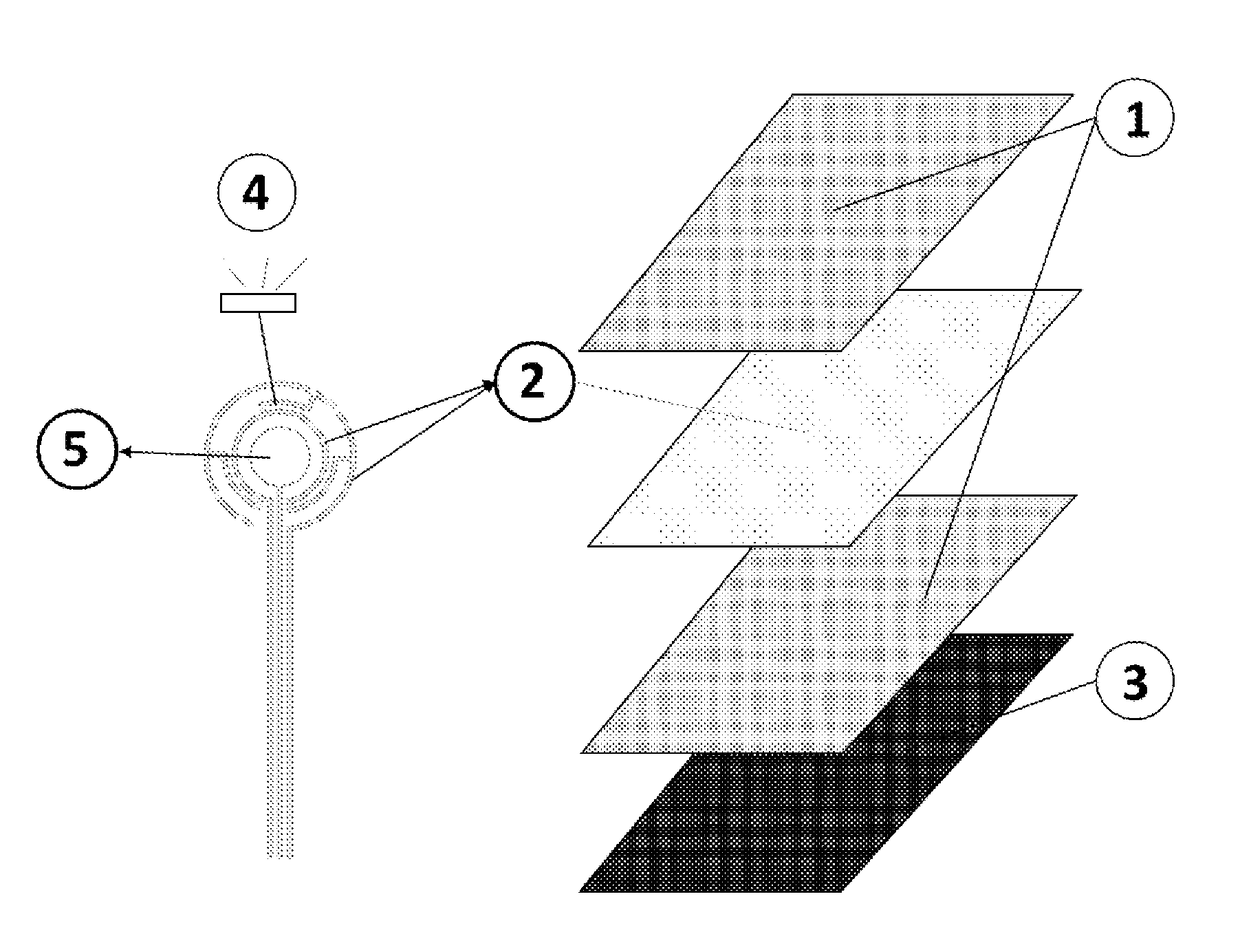
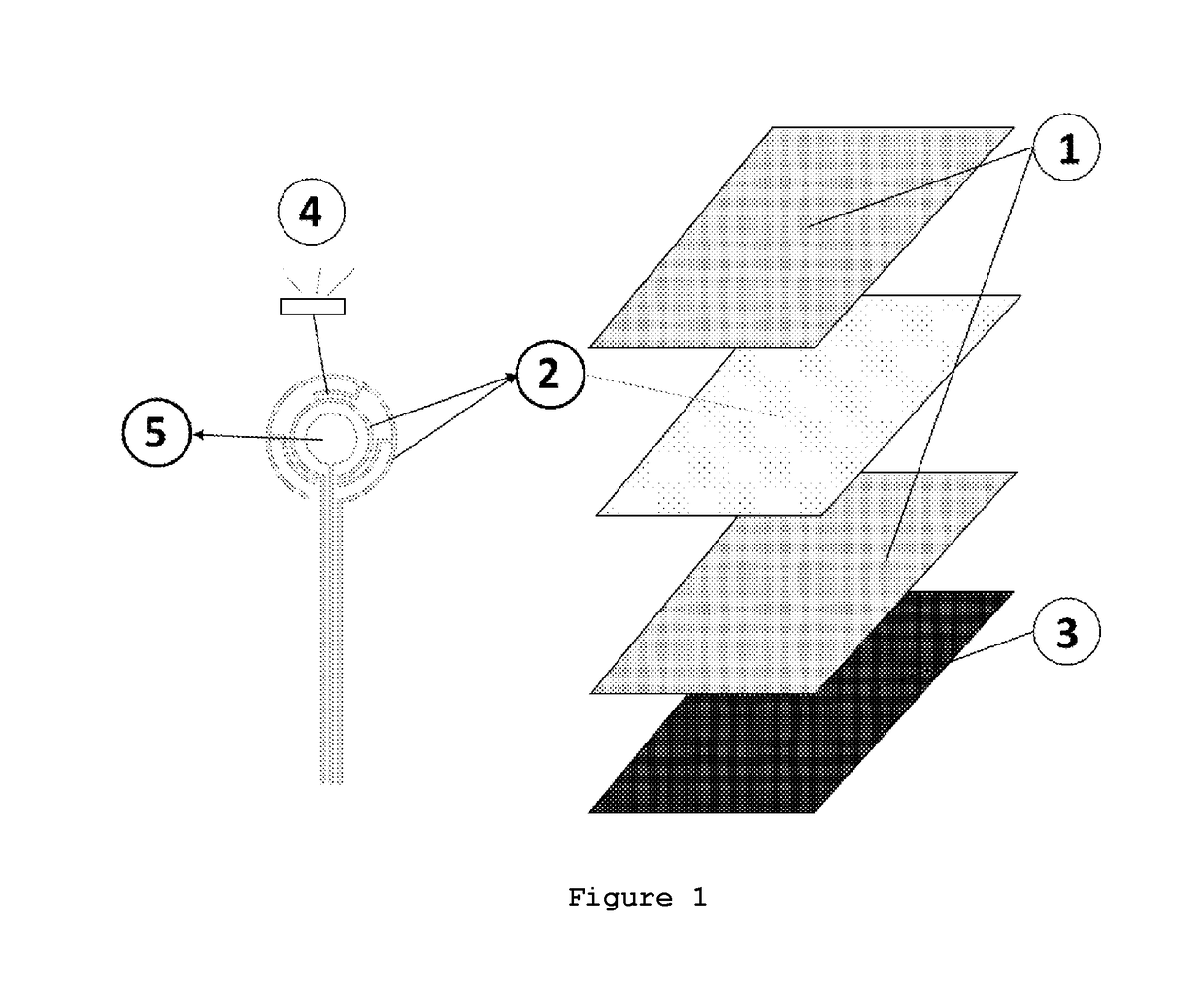
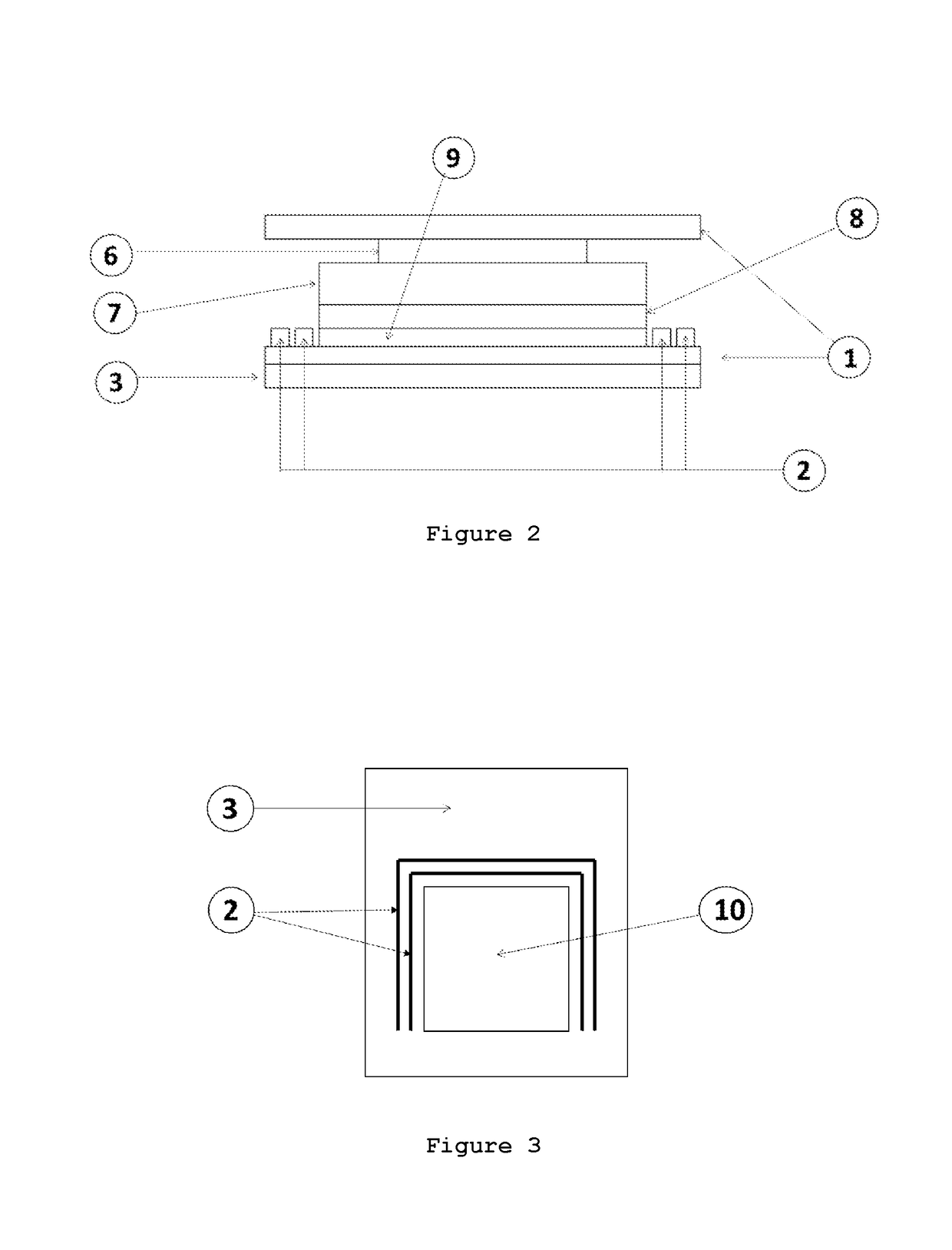
- A flexible textile structure with self-capacitive sensing capabilities is developed using a single electrode and conductive tracks, integrated with electroluminescent devices, and enhanced with a polymeric membrane layer to fill gaps and a grounded conductive track to prevent interference, allowing for easier printing and stable functionality.

Textile Sensing Standards and Regulations
The development of textile sensing technologies has led to the need for comprehensive standards and regulations to ensure safety, reliability, and interoperability. As photodiodes are increasingly integrated into smart textiles, it is crucial to establish guidelines that address their unique characteristics and applications.
Several international organizations are working towards creating standardized frameworks for textile sensing technologies. The International Electrotechnical Commission (IEC) has formed a technical committee (TC 124) specifically focused on wearable electronic devices and technologies. This committee is developing standards that encompass various aspects of textile-integrated electronics, including photodiode-based sensing systems.
The European Committee for Standardization (CEN) has also established a technical committee (TC 248) dedicated to textiles and textile products. This committee is actively working on standards related to smart textiles, which include provisions for photodiode-based sensing technologies integrated into fabrics.
In the United States, the American Society for Testing and Materials (ASTM) has developed standards for wearable electronics (F3461) that provide guidelines for the design, manufacture, and testing of electronic textiles. These standards include considerations for optical sensing technologies like photodiodes embedded in textiles.
Regulatory bodies such as the Food and Drug Administration (FDA) in the United States and the European Medicines Agency (EMA) in Europe are also developing guidelines for wearable medical devices, which may incorporate photodiode-based textile sensing technologies. These regulations focus on ensuring the safety and efficacy of such devices when used for health monitoring or diagnostic purposes.
Key areas addressed by these standards and regulations include electrical safety, electromagnetic compatibility, biocompatibility, durability, and washability of textile-integrated electronic components. Specific to photodiode exploration in textile sensing, standards are being developed to address issues such as light transmission through fabrics, sensor placement optimization, and calibration methods for ensuring accurate readings in various environmental conditions.
As the field of textile sensing continues to evolve, it is expected that more specific standards and regulations will emerge to address the unique challenges posed by photodiode integration in textiles. This will likely include guidelines for optical performance under mechanical stress, long-term stability of embedded sensors, and data privacy considerations for wearable sensing devices.
Several international organizations are working towards creating standardized frameworks for textile sensing technologies. The International Electrotechnical Commission (IEC) has formed a technical committee (TC 124) specifically focused on wearable electronic devices and technologies. This committee is developing standards that encompass various aspects of textile-integrated electronics, including photodiode-based sensing systems.
The European Committee for Standardization (CEN) has also established a technical committee (TC 248) dedicated to textiles and textile products. This committee is actively working on standards related to smart textiles, which include provisions for photodiode-based sensing technologies integrated into fabrics.
In the United States, the American Society for Testing and Materials (ASTM) has developed standards for wearable electronics (F3461) that provide guidelines for the design, manufacture, and testing of electronic textiles. These standards include considerations for optical sensing technologies like photodiodes embedded in textiles.
Regulatory bodies such as the Food and Drug Administration (FDA) in the United States and the European Medicines Agency (EMA) in Europe are also developing guidelines for wearable medical devices, which may incorporate photodiode-based textile sensing technologies. These regulations focus on ensuring the safety and efficacy of such devices when used for health monitoring or diagnostic purposes.
Key areas addressed by these standards and regulations include electrical safety, electromagnetic compatibility, biocompatibility, durability, and washability of textile-integrated electronic components. Specific to photodiode exploration in textile sensing, standards are being developed to address issues such as light transmission through fabrics, sensor placement optimization, and calibration methods for ensuring accurate readings in various environmental conditions.
As the field of textile sensing continues to evolve, it is expected that more specific standards and regulations will emerge to address the unique challenges posed by photodiode integration in textiles. This will likely include guidelines for optical performance under mechanical stress, long-term stability of embedded sensors, and data privacy considerations for wearable sensing devices.
Environmental Impact of Smart Textiles
The integration of photodiodes in textile sensing technologies has raised concerns about the environmental impact of smart textiles. As these advanced fabrics become more prevalent, it is crucial to assess their ecological footprint throughout their lifecycle. The production of smart textiles incorporating photodiodes often involves the use of specialized materials and manufacturing processes that may have significant environmental implications.
One of the primary environmental concerns is the use of rare earth elements and precious metals in the fabrication of photodiodes and associated electronic components. The extraction and processing of these materials can lead to habitat destruction, water pollution, and increased carbon emissions. Additionally, the production of smart textiles often requires energy-intensive processes, contributing to greenhouse gas emissions and climate change.
The durability and lifespan of smart textiles with integrated photodiodes also play a role in their environmental impact. If these textiles have a shorter lifespan compared to traditional fabrics, it could lead to increased waste generation and resource consumption. The complex nature of smart textiles may also make them more challenging to recycle, potentially resulting in a higher volume of electronic waste.
Water usage and pollution are other significant factors to consider. The textile industry is already known for its high water consumption and the release of harmful chemicals into water systems. The addition of photodiodes and other electronic components may exacerbate these issues, requiring additional water for production and potentially introducing new pollutants into wastewater streams.
However, it is important to note that smart textiles with photodiode technology may also offer environmental benefits. For instance, these textiles could potentially reduce energy consumption in certain applications, such as adaptive lighting systems in buildings or wearable health monitoring devices that reduce the need for more resource-intensive medical equipment.
To mitigate the environmental impact of smart textiles, researchers and manufacturers are exploring more sustainable production methods. This includes developing biodegradable electronic components, improving recycling techniques for complex textiles, and optimizing manufacturing processes to reduce energy and water consumption. Additionally, efforts are being made to extend the lifespan of smart textiles, which could help offset their initial environmental cost.
As the field of smart textiles continues to evolve, it is crucial to conduct comprehensive life cycle assessments to fully understand and address their environmental impact. This will enable the development of more sustainable smart textile solutions that balance technological innovation with ecological responsibility.
One of the primary environmental concerns is the use of rare earth elements and precious metals in the fabrication of photodiodes and associated electronic components. The extraction and processing of these materials can lead to habitat destruction, water pollution, and increased carbon emissions. Additionally, the production of smart textiles often requires energy-intensive processes, contributing to greenhouse gas emissions and climate change.
The durability and lifespan of smart textiles with integrated photodiodes also play a role in their environmental impact. If these textiles have a shorter lifespan compared to traditional fabrics, it could lead to increased waste generation and resource consumption. The complex nature of smart textiles may also make them more challenging to recycle, potentially resulting in a higher volume of electronic waste.
Water usage and pollution are other significant factors to consider. The textile industry is already known for its high water consumption and the release of harmful chemicals into water systems. The addition of photodiodes and other electronic components may exacerbate these issues, requiring additional water for production and potentially introducing new pollutants into wastewater streams.
However, it is important to note that smart textiles with photodiode technology may also offer environmental benefits. For instance, these textiles could potentially reduce energy consumption in certain applications, such as adaptive lighting systems in buildings or wearable health monitoring devices that reduce the need for more resource-intensive medical equipment.
To mitigate the environmental impact of smart textiles, researchers and manufacturers are exploring more sustainable production methods. This includes developing biodegradable electronic components, improving recycling techniques for complex textiles, and optimizing manufacturing processes to reduce energy and water consumption. Additionally, efforts are being made to extend the lifespan of smart textiles, which could help offset their initial environmental cost.
As the field of smart textiles continues to evolve, it is crucial to conduct comprehensive life cycle assessments to fully understand and address their environmental impact. This will enable the development of more sustainable smart textile solutions that balance technological innovation with ecological responsibility.
Unlock deeper insights with PatSnap Eureka Quick Research — get a full tech report to explore trends and direct your research. Try now!
Generate Your Research Report Instantly with AI Agent
Supercharge your innovation with PatSnap Eureka AI Agent Platform!