

Predicting Maintenance Needs in Solid State Transformers Using IoT Analytics
JUN 4, 20269 MIN READ
Generate Your Research Report Instantly with AI Agent
PatSnap Eureka helps you evaluate technical feasibility & market potential.
SST Predictive Maintenance Background and Objectives
Solid State Transformers represent a paradigm shift in power conversion technology, emerging from the convergence of advanced semiconductor materials, digital control systems, and power electronics. Unlike conventional electromagnetic transformers that have remained largely unchanged for over a century, SSTs integrate power conversion, voltage regulation, and intelligent control functions into a single compact unit. This technological evolution addresses the growing demands of modern power grids for enhanced efficiency, bidirectional power flow capabilities, and seamless integration with renewable energy sources.
The development trajectory of SST technology has been driven by the limitations of traditional transformers in smart grid applications. Conventional transformers lack real-time monitoring capabilities, offer limited controllability, and cannot effectively manage the dynamic nature of distributed energy resources. SSTs bridge this gap by incorporating sophisticated power electronic circuits, advanced control algorithms, and comprehensive sensing capabilities that enable unprecedented levels of grid intelligence and responsiveness.
The strategic importance of predictive maintenance in SST deployment cannot be overstated. As critical infrastructure components, SSTs must maintain exceptional reliability while operating under increasingly complex and variable conditions. Traditional time-based maintenance approaches prove inadequate for these sophisticated systems, where component degradation patterns are influenced by multiple factors including thermal cycling, electrical stress, environmental conditions, and operational load profiles.
IoT analytics emerges as the enabling technology for transforming SST maintenance from reactive to predictive paradigms. By leveraging distributed sensor networks, edge computing capabilities, and advanced data analytics, IoT systems can continuously monitor SST health parameters and predict potential failures before they occur. This approach promises to significantly reduce unplanned downtime, optimize maintenance costs, and extend equipment lifespan.
The primary objective of implementing predictive maintenance in SSTs using IoT analytics encompasses multiple dimensions. First, achieving real-time visibility into SST operational health through comprehensive monitoring of electrical, thermal, and mechanical parameters. Second, developing sophisticated algorithms capable of detecting early warning signs of component degradation and system anomalies. Third, establishing predictive models that can accurately forecast maintenance requirements and optimal intervention timing.
Furthermore, the integration aims to create adaptive maintenance strategies that respond dynamically to changing operational conditions and grid requirements. This includes optimizing maintenance scheduling to minimize grid disruption, reducing spare parts inventory through demand forecasting, and enabling condition-based replacement strategies that maximize component utilization while maintaining system reliability.
The development trajectory of SST technology has been driven by the limitations of traditional transformers in smart grid applications. Conventional transformers lack real-time monitoring capabilities, offer limited controllability, and cannot effectively manage the dynamic nature of distributed energy resources. SSTs bridge this gap by incorporating sophisticated power electronic circuits, advanced control algorithms, and comprehensive sensing capabilities that enable unprecedented levels of grid intelligence and responsiveness.
The strategic importance of predictive maintenance in SST deployment cannot be overstated. As critical infrastructure components, SSTs must maintain exceptional reliability while operating under increasingly complex and variable conditions. Traditional time-based maintenance approaches prove inadequate for these sophisticated systems, where component degradation patterns are influenced by multiple factors including thermal cycling, electrical stress, environmental conditions, and operational load profiles.
IoT analytics emerges as the enabling technology for transforming SST maintenance from reactive to predictive paradigms. By leveraging distributed sensor networks, edge computing capabilities, and advanced data analytics, IoT systems can continuously monitor SST health parameters and predict potential failures before they occur. This approach promises to significantly reduce unplanned downtime, optimize maintenance costs, and extend equipment lifespan.
The primary objective of implementing predictive maintenance in SSTs using IoT analytics encompasses multiple dimensions. First, achieving real-time visibility into SST operational health through comprehensive monitoring of electrical, thermal, and mechanical parameters. Second, developing sophisticated algorithms capable of detecting early warning signs of component degradation and system anomalies. Third, establishing predictive models that can accurately forecast maintenance requirements and optimal intervention timing.
Furthermore, the integration aims to create adaptive maintenance strategies that respond dynamically to changing operational conditions and grid requirements. This includes optimizing maintenance scheduling to minimize grid disruption, reducing spare parts inventory through demand forecasting, and enabling condition-based replacement strategies that maximize component utilization while maintaining system reliability.
Market Demand for Smart Grid SST Solutions
The global smart grid market is experiencing unprecedented growth driven by increasing demand for energy efficiency, grid modernization initiatives, and the integration of renewable energy sources. Solid State Transformers represent a critical component in this transformation, offering superior controllability, power quality management, and bidirectional power flow capabilities compared to conventional transformers. The convergence of IoT analytics with SST technology addresses a fundamental market need for predictive maintenance solutions that can minimize downtime and optimize operational efficiency.
Utility companies worldwide are facing mounting pressure to modernize aging grid infrastructure while maintaining reliability and reducing operational costs. Traditional transformer maintenance relies heavily on scheduled inspections and reactive repairs, leading to significant inefficiencies and unexpected failures. The market demand for intelligent SST solutions stems from utilities' urgent need to transition from reactive to predictive maintenance strategies, enabling them to anticipate equipment failures before they occur.
The integration of renewable energy sources into power grids has created new challenges for grid stability and power quality management. SSTs equipped with IoT-enabled predictive maintenance capabilities offer utilities the ability to dynamically manage power flows while ensuring optimal equipment performance. This dual functionality addresses two critical market demands simultaneously: enhanced grid flexibility and improved asset management.
Industrial and commercial sectors are increasingly adopting smart grid technologies to reduce energy costs and improve power reliability. Large manufacturing facilities, data centers, and commercial buildings require uninterrupted power supply and are willing to invest in advanced transformer technologies that offer predictive maintenance capabilities. The market demand in these sectors is driven by the high cost of power outages and the need for precise power quality control.
Government regulations and incentives promoting grid modernization are creating substantial market opportunities for SST solutions. Many countries have established mandates for smart grid deployment and energy efficiency improvements, creating a regulatory environment that favors advanced transformer technologies with integrated monitoring and analytics capabilities.
The emergence of electric vehicle charging infrastructure and distributed energy resources is generating new market segments for SST applications. These applications require sophisticated power management and real-time monitoring capabilities, creating demand for SSTs with advanced IoT analytics for predictive maintenance and optimal performance management.
Utility companies worldwide are facing mounting pressure to modernize aging grid infrastructure while maintaining reliability and reducing operational costs. Traditional transformer maintenance relies heavily on scheduled inspections and reactive repairs, leading to significant inefficiencies and unexpected failures. The market demand for intelligent SST solutions stems from utilities' urgent need to transition from reactive to predictive maintenance strategies, enabling them to anticipate equipment failures before they occur.
The integration of renewable energy sources into power grids has created new challenges for grid stability and power quality management. SSTs equipped with IoT-enabled predictive maintenance capabilities offer utilities the ability to dynamically manage power flows while ensuring optimal equipment performance. This dual functionality addresses two critical market demands simultaneously: enhanced grid flexibility and improved asset management.
Industrial and commercial sectors are increasingly adopting smart grid technologies to reduce energy costs and improve power reliability. Large manufacturing facilities, data centers, and commercial buildings require uninterrupted power supply and are willing to invest in advanced transformer technologies that offer predictive maintenance capabilities. The market demand in these sectors is driven by the high cost of power outages and the need for precise power quality control.
Government regulations and incentives promoting grid modernization are creating substantial market opportunities for SST solutions. Many countries have established mandates for smart grid deployment and energy efficiency improvements, creating a regulatory environment that favors advanced transformer technologies with integrated monitoring and analytics capabilities.
The emergence of electric vehicle charging infrastructure and distributed energy resources is generating new market segments for SST applications. These applications require sophisticated power management and real-time monitoring capabilities, creating demand for SSTs with advanced IoT analytics for predictive maintenance and optimal performance management.
Current SST Monitoring Challenges and IoT Integration Status
Solid State Transformers face significant monitoring challenges that impede effective predictive maintenance implementation. Traditional monitoring approaches rely heavily on periodic manual inspections and basic electrical parameter measurements, which provide limited insight into the complex semiconductor-based components within SSTs. The high-frequency switching operations and thermal dynamics of power electronic devices create monitoring complexities that conventional transformer monitoring systems cannot adequately address.
Current SST monitoring systems predominantly focus on output parameters such as voltage, current, and power quality metrics. However, these systems lack comprehensive visibility into critical internal components including semiconductor junction temperatures, gate driver performance, and capacitor health degradation. The absence of real-time monitoring for these critical elements creates blind spots that can lead to unexpected failures and suboptimal maintenance scheduling.
IoT integration in SST monitoring remains in its nascent stages, with most implementations limited to basic data collection rather than advanced analytics. Existing IoT deployments typically involve retrofitting traditional sensors to SST installations, resulting in fragmented data streams that lack the granularity required for sophisticated predictive algorithms. The integration challenges are compounded by the harsh electromagnetic environments surrounding SSTs, which can interfere with wireless sensor communications and data transmission reliability.
Sensor placement and selection present additional technical hurdles in SST monitoring systems. The compact design of solid-state transformers limits physical access for sensor installation, while the high-frequency electromagnetic fields generated during operation can affect sensor accuracy and longevity. Current sensor technologies struggle to provide continuous, accurate measurements of critical parameters such as semiconductor junction temperatures and insulation degradation without compromising system performance or reliability.
Data standardization and interoperability issues further complicate IoT integration efforts. Different SST manufacturers employ proprietary communication protocols and data formats, making it difficult to implement unified monitoring solutions across diverse installations. The lack of industry-wide standards for SST monitoring data creates barriers to developing comprehensive predictive maintenance platforms that can operate effectively across multiple vendor ecosystems.
Edge computing capabilities in current SST monitoring implementations remain limited, with most systems relying on cloud-based processing for data analysis. This approach introduces latency issues that can compromise real-time decision-making capabilities essential for preventing catastrophic failures. The bandwidth requirements for transmitting high-frequency monitoring data to remote processing centers also present practical challenges for widespread deployment, particularly in remote or bandwidth-constrained environments where SSTs are increasingly being deployed.
Current SST monitoring systems predominantly focus on output parameters such as voltage, current, and power quality metrics. However, these systems lack comprehensive visibility into critical internal components including semiconductor junction temperatures, gate driver performance, and capacitor health degradation. The absence of real-time monitoring for these critical elements creates blind spots that can lead to unexpected failures and suboptimal maintenance scheduling.
IoT integration in SST monitoring remains in its nascent stages, with most implementations limited to basic data collection rather than advanced analytics. Existing IoT deployments typically involve retrofitting traditional sensors to SST installations, resulting in fragmented data streams that lack the granularity required for sophisticated predictive algorithms. The integration challenges are compounded by the harsh electromagnetic environments surrounding SSTs, which can interfere with wireless sensor communications and data transmission reliability.
Sensor placement and selection present additional technical hurdles in SST monitoring systems. The compact design of solid-state transformers limits physical access for sensor installation, while the high-frequency electromagnetic fields generated during operation can affect sensor accuracy and longevity. Current sensor technologies struggle to provide continuous, accurate measurements of critical parameters such as semiconductor junction temperatures and insulation degradation without compromising system performance or reliability.
Data standardization and interoperability issues further complicate IoT integration efforts. Different SST manufacturers employ proprietary communication protocols and data formats, making it difficult to implement unified monitoring solutions across diverse installations. The lack of industry-wide standards for SST monitoring data creates barriers to developing comprehensive predictive maintenance platforms that can operate effectively across multiple vendor ecosystems.
Edge computing capabilities in current SST monitoring implementations remain limited, with most systems relying on cloud-based processing for data analysis. This approach introduces latency issues that can compromise real-time decision-making capabilities essential for preventing catastrophic failures. The bandwidth requirements for transmitting high-frequency monitoring data to remote processing centers also present practical challenges for widespread deployment, particularly in remote or bandwidth-constrained environments where SSTs are increasingly being deployed.
Existing IoT-Based SST Condition Monitoring Solutions
01 Condition monitoring and diagnostic systems for solid state transformers
Advanced monitoring systems are essential for tracking the operational status and health of solid state transformers. These systems utilize various sensors and diagnostic algorithms to continuously assess transformer performance, detect anomalies, and predict potential failures. Real-time monitoring capabilities enable proactive maintenance scheduling and help prevent unexpected downtime by identifying degradation patterns in critical components.- Diagnostic and monitoring systems for solid state transformers: Advanced diagnostic systems are essential for monitoring the health and performance of solid state transformers. These systems utilize various sensors and measurement techniques to continuously assess operational parameters, detect anomalies, and predict potential failures. Real-time monitoring capabilities enable proactive maintenance scheduling and help prevent unexpected downtime by identifying issues before they become critical.
- Thermal management and cooling system maintenance: Effective thermal management is crucial for solid state transformer reliability and longevity. Maintenance procedures focus on ensuring proper heat dissipation through cooling systems, thermal interface materials, and heat sink assemblies. Regular inspection and maintenance of cooling components prevent overheating issues that could lead to component degradation or failure, maintaining optimal operating temperatures throughout the transformer's lifecycle.
- Power semiconductor component inspection and replacement: Power semiconductor devices are critical components in solid state transformers that require regular inspection and periodic replacement. Maintenance protocols include testing semiconductor performance, checking for degradation signs, and implementing replacement strategies for aging components. Proper handling procedures and quality control measures ensure reliable operation and extend the overall system lifespan.
- Control system calibration and software updates: Control systems in solid state transformers require regular calibration and software maintenance to ensure accurate operation and optimal performance. This includes updating control algorithms, calibrating sensors and feedback systems, and verifying communication interfaces. Systematic maintenance of control electronics helps maintain precise voltage and current regulation while adapting to changing operational requirements.
- Insulation system testing and maintenance: Insulation integrity is fundamental to safe and reliable solid state transformer operation. Maintenance procedures include periodic insulation resistance testing, partial discharge monitoring, and assessment of insulating materials for signs of aging or degradation. Regular insulation system evaluation helps prevent electrical failures and ensures continued safe operation under various environmental conditions.
02 Thermal management and cooling system maintenance
Effective thermal management is crucial for maintaining optimal performance and extending the lifespan of solid state transformers. Regular maintenance of cooling systems, including heat sinks, fans, and thermal interface materials, ensures proper heat dissipation from power semiconductor devices. Temperature monitoring and thermal cycling analysis help identify potential hotspots and prevent thermal-related failures that could compromise transformer reliability.Expand Specific Solutions03 Power semiconductor component inspection and replacement
Power semiconductor devices are critical components that require regular inspection and periodic replacement in solid state transformers. Maintenance procedures include testing switching characteristics, measuring on-state resistance, and evaluating gate drive circuits. Preventive replacement schedules based on operating hours, thermal stress, and electrical stress help maintain system reliability and prevent catastrophic failures.Expand Specific Solutions04 Control system calibration and software updates
The control systems of solid state transformers require regular calibration and software maintenance to ensure accurate operation and optimal performance. This includes updating control algorithms, calibrating feedback sensors, and verifying protection system functionality. Regular firmware updates and parameter adjustments help maintain system stability and incorporate improvements in control strategies and protection schemes.Expand Specific Solutions05 Insulation system testing and maintenance
Insulation integrity is fundamental to safe and reliable operation of solid state transformers. Regular testing includes partial discharge measurements, insulation resistance testing, and dielectric strength verification. Maintenance activities focus on monitoring insulation degradation, cleaning insulating surfaces, and replacing deteriorated insulation materials to prevent electrical failures and ensure personnel safety.Expand Specific Solutions
Key Players in SST and IoT Analytics Industry
The predictive maintenance market for solid state transformers using IoT analytics represents an emerging sector within the broader industrial IoT landscape, currently in its early growth phase with significant expansion potential driven by increasing grid modernization initiatives. The market demonstrates substantial scale opportunities as evidenced by major power grid operators like State Grid Corp. of China, Guizhou Power Supply Co., and State Grid Shanghai Energy Internet Research Institute investing heavily in smart grid infrastructure and predictive analytics capabilities. Technology maturity varies significantly across market participants, with established players such as Hitachi Energy Ltd. and Woodward Inc. offering advanced industrial control and monitoring solutions, while specialized IoT companies like MachineSense LLC and UTILCELL focus on sensor-based predictive maintenance platforms. Chinese transformer manufacturers including China XD Electric Co. and Xidian Jinan Transformer Co. are integrating IoT capabilities into their solid state transformer offerings, though most solutions remain in pilot or early deployment stages, indicating the technology is approaching commercial viability but requires further development for widespread adoption.
State Grid Corp. of China
Technical Solution: State Grid has developed comprehensive IoT-based predictive maintenance systems for solid state transformers, integrating advanced sensor networks with machine learning algorithms to monitor critical parameters such as temperature, voltage fluctuations, and component degradation patterns. Their solution employs real-time data analytics to predict maintenance needs up to 30 days in advance, utilizing digital twin technology to simulate transformer behavior under various operating conditions. The system incorporates edge computing capabilities to process data locally, reducing latency and improving response times for critical maintenance alerts.
Strengths: Extensive grid infrastructure experience and massive deployment scale. Weaknesses: Limited flexibility for customization in diverse industrial applications.
Machinesense LLC
Technical Solution: Machinesense specializes in AI-driven predictive maintenance solutions for power equipment including solid state transformers. Their IoT platform combines vibration analysis, thermal monitoring, and electrical parameter tracking to create comprehensive health profiles for transformers. The system uses machine learning models trained on historical failure data to predict maintenance needs with 85% accuracy. Their edge-to-cloud architecture enables real-time monitoring while providing detailed analytics through cloud-based dashboards for maintenance planning and resource optimization.
Strengths: Specialized focus on predictive maintenance with proven AI algorithms. Weaknesses: Limited market presence compared to established power equipment manufacturers.
Core Innovations in SST Failure Prediction Algorithms
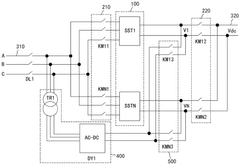
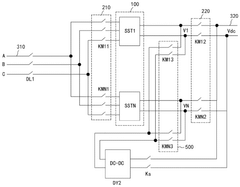
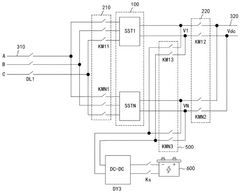
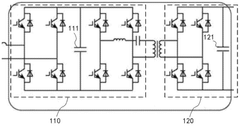
Solid-state transformer in-grid operations and maintenance circuit and method therefor, controller, and storage medium
PatentWO2025148799A1
Innovation
- The circuit consisting of multiple solid-state transformer singles is used to connect parallel to the input and output side switches and auxiliary charging circuits to realize the disconnection and impact-free recovery of some singles. The auxiliary charging circuit is used to charge the singles to ensure that the system can still operate normally during maintenance or replacement.
Systems and methods for monitoring input data and model scores in analytical models for IoT (internet of things) devices
PatentActiveUS20190324838A1
Innovation
- A data-driven framework for monitoring IIoT analytic models using statistical distances such as Hellinger Distance and Jeffrey's Divergence to determine risk metrics, allowing for continuous monitoring and alerting when data deviations exceed predetermined thresholds, ensuring model performance and integrity.


Grid Integration Standards for SST IoT Systems
The integration of Solid State Transformer (SST) IoT systems into existing electrical grids requires adherence to comprehensive standards that ensure interoperability, safety, and reliability. Current grid integration frameworks primarily rely on IEEE 1547 series standards, which define interconnection requirements for distributed energy resources, though these standards are being continuously updated to accommodate advanced power electronics like SSTs.
Communication protocols represent a critical aspect of SST IoT grid integration standards. The IEC 61850 standard provides the foundation for substation automation and communication, enabling seamless data exchange between SST systems and grid control centers. Additionally, the emerging IEEE 2030.5 standard specifically addresses smart energy profile requirements for demand response and distributed energy resource management, which directly impacts SST IoT deployment strategies.
Cybersecurity standards have become increasingly vital as SST IoT systems introduce new attack vectors into grid infrastructure. The NIST Cybersecurity Framework, combined with IEC 62351 security standards for power system communications, establishes baseline security requirements. These frameworks mandate encryption protocols, authentication mechanisms, and intrusion detection systems specifically tailored for power grid applications.
Data management and analytics standards are evolving to support predictive maintenance capabilities in SST systems. The IEC 61970 Common Information Model (CIM) provides standardized data formats for power system operations, while the IEEE 2030.8 standard addresses microgrid controllers that often interface with SST systems. These standards ensure consistent data representation across different vendor platforms and enable effective analytics implementation.
Grid code compliance remains a fundamental requirement for SST IoT integration. Regional transmission organizations maintain specific interconnection standards that SST systems must satisfy, including voltage regulation capabilities, fault ride-through requirements, and power quality specifications. The IEEE 1159 standard for power quality monitoring becomes particularly relevant when implementing IoT-based condition monitoring systems.
Emerging standards development focuses on advanced grid services that SST IoT systems can provide. The IEEE 2030.10 standard for DC microgrids and the ongoing work on IEEE 2030.13 for grid-interactive efficient buildings create new opportunities for SST deployment while establishing technical requirements for grid integration.
Communication protocols represent a critical aspect of SST IoT grid integration standards. The IEC 61850 standard provides the foundation for substation automation and communication, enabling seamless data exchange between SST systems and grid control centers. Additionally, the emerging IEEE 2030.5 standard specifically addresses smart energy profile requirements for demand response and distributed energy resource management, which directly impacts SST IoT deployment strategies.
Cybersecurity standards have become increasingly vital as SST IoT systems introduce new attack vectors into grid infrastructure. The NIST Cybersecurity Framework, combined with IEC 62351 security standards for power system communications, establishes baseline security requirements. These frameworks mandate encryption protocols, authentication mechanisms, and intrusion detection systems specifically tailored for power grid applications.
Data management and analytics standards are evolving to support predictive maintenance capabilities in SST systems. The IEC 61970 Common Information Model (CIM) provides standardized data formats for power system operations, while the IEEE 2030.8 standard addresses microgrid controllers that often interface with SST systems. These standards ensure consistent data representation across different vendor platforms and enable effective analytics implementation.
Grid code compliance remains a fundamental requirement for SST IoT integration. Regional transmission organizations maintain specific interconnection standards that SST systems must satisfy, including voltage regulation capabilities, fault ride-through requirements, and power quality specifications. The IEEE 1159 standard for power quality monitoring becomes particularly relevant when implementing IoT-based condition monitoring systems.
Emerging standards development focuses on advanced grid services that SST IoT systems can provide. The IEEE 2030.10 standard for DC microgrids and the ongoing work on IEEE 2030.13 for grid-interactive efficient buildings create new opportunities for SST deployment while establishing technical requirements for grid integration.
Cybersecurity Framework for Connected SST Networks
The integration of IoT analytics for predictive maintenance in solid state transformers necessitates a comprehensive cybersecurity framework to protect interconnected SST networks from evolving threats. As these systems become increasingly digitized and networked, they present expanded attack surfaces that require sophisticated security measures beyond traditional power infrastructure protection.
A multi-layered security architecture forms the foundation of effective SST network protection. This approach encompasses device-level security through hardware-based root of trust mechanisms, secure boot processes, and encrypted communication protocols. Each SST unit must implement robust authentication mechanisms to verify the legitimacy of connected IoT sensors and maintenance prediction systems before allowing data exchange.
Network segmentation strategies play a crucial role in containing potential security breaches within SST networks. Implementing micro-segmentation allows for granular control over data flows between different network zones, isolating critical operational technology systems from less secure information technology components. This segmentation extends to separating predictive maintenance analytics platforms from real-time control systems.
Real-time threat detection and response capabilities are essential for maintaining network integrity. Advanced intrusion detection systems specifically designed for industrial IoT environments can identify anomalous behavior patterns that may indicate cyberattacks or system compromises. These systems must distinguish between legitimate maintenance prediction activities and malicious intrusions while maintaining low latency requirements for operational systems.
Data protection throughout the analytics pipeline requires end-to-end encryption for sensor data transmission, secure storage protocols for historical maintenance records, and access controls for predictive analytics platforms. Blockchain-based integrity verification can ensure that maintenance prediction algorithms operate on uncompromised datasets, preventing attackers from manipulating predictive models to cause premature failures or mask developing issues.
Regulatory compliance frameworks such as NERC CIP standards for critical infrastructure protection must be integrated into the cybersecurity architecture. This includes implementing proper identity and access management systems, maintaining audit trails for all network activities, and establishing incident response procedures specifically tailored to SST network environments.
A multi-layered security architecture forms the foundation of effective SST network protection. This approach encompasses device-level security through hardware-based root of trust mechanisms, secure boot processes, and encrypted communication protocols. Each SST unit must implement robust authentication mechanisms to verify the legitimacy of connected IoT sensors and maintenance prediction systems before allowing data exchange.
Network segmentation strategies play a crucial role in containing potential security breaches within SST networks. Implementing micro-segmentation allows for granular control over data flows between different network zones, isolating critical operational technology systems from less secure information technology components. This segmentation extends to separating predictive maintenance analytics platforms from real-time control systems.
Real-time threat detection and response capabilities are essential for maintaining network integrity. Advanced intrusion detection systems specifically designed for industrial IoT environments can identify anomalous behavior patterns that may indicate cyberattacks or system compromises. These systems must distinguish between legitimate maintenance prediction activities and malicious intrusions while maintaining low latency requirements for operational systems.
Data protection throughout the analytics pipeline requires end-to-end encryption for sensor data transmission, secure storage protocols for historical maintenance records, and access controls for predictive analytics platforms. Blockchain-based integrity verification can ensure that maintenance prediction algorithms operate on uncompromised datasets, preventing attackers from manipulating predictive models to cause premature failures or mask developing issues.
Regulatory compliance frameworks such as NERC CIP standards for critical infrastructure protection must be integrated into the cybersecurity architecture. This includes implementing proper identity and access management systems, maintaining audit trails for all network activities, and establishing incident response procedures specifically tailored to SST network environments.
Unlock deeper insights with PatSnap Eureka Quick Research — get a full tech report to explore trends and direct your research. Try now!
Generate Your Research Report Instantly with AI Agent
Supercharge your innovation with PatSnap Eureka AI Agent Platform!