

Racetrack Memory vs SRAM: Which Offers Better Reliability?
MAY 14, 20269 MIN READ
Generate Your Research Report Instantly with AI Agent
PatSnap Eureka helps you evaluate technical feasibility & market potential.
Racetrack Memory vs SRAM Technology Background and Goals
Memory technologies have undergone significant evolution since the early days of computing, driven by the relentless demand for faster, denser, and more reliable storage solutions. Traditional memory architectures have reached physical and economic limitations, necessitating exploration of novel approaches to meet the exponential growth in data processing requirements across diverse applications from mobile devices to high-performance computing systems.
Static Random Access Memory (SRAM) represents a mature and well-established technology that has served as the cornerstone of cache memory systems for decades. SRAM cells utilize bistable latching circuitry to store data, offering exceptional speed and reliability through proven silicon fabrication processes. The technology has continuously evolved through process node scaling, achieving remarkable improvements in density and performance while maintaining its fundamental operational principles.
Racetrack Memory emerges as a revolutionary magnetic storage concept that leverages domain wall motion in ferromagnetic nanowires to achieve ultra-high density storage. This technology represents a paradigm shift from conventional charge-based storage to magnetic domain manipulation, promising to bridge the gap between volatile and non-volatile memory characteristics. The concept builds upon decades of research in spintronics and magnetic materials science.
The fundamental goals driving the comparison between these technologies center on addressing critical reliability challenges in next-generation computing systems. As semiconductor scaling approaches physical limits, traditional SRAM faces increasing susceptibility to soft errors, process variations, and power consumption issues. The primary objective is to evaluate whether Racetrack Memory can provide superior reliability characteristics while maintaining competitive performance metrics.
Key technical goals include assessing data retention capabilities under various environmental conditions, evaluating error rates and correction mechanisms, and determining long-term stability under operational stress. The comparison aims to establish which technology offers better resilience against radiation-induced errors, thermal fluctuations, and manufacturing defects that increasingly impact memory reliability in advanced process nodes.
The strategic importance of this evaluation extends beyond immediate technical considerations to encompass future scalability, manufacturing feasibility, and integration challenges. Understanding the reliability trade-offs between these fundamentally different approaches will inform critical decisions regarding memory hierarchy design and technology roadmap planning for next-generation computing architectures.
Static Random Access Memory (SRAM) represents a mature and well-established technology that has served as the cornerstone of cache memory systems for decades. SRAM cells utilize bistable latching circuitry to store data, offering exceptional speed and reliability through proven silicon fabrication processes. The technology has continuously evolved through process node scaling, achieving remarkable improvements in density and performance while maintaining its fundamental operational principles.
Racetrack Memory emerges as a revolutionary magnetic storage concept that leverages domain wall motion in ferromagnetic nanowires to achieve ultra-high density storage. This technology represents a paradigm shift from conventional charge-based storage to magnetic domain manipulation, promising to bridge the gap between volatile and non-volatile memory characteristics. The concept builds upon decades of research in spintronics and magnetic materials science.
The fundamental goals driving the comparison between these technologies center on addressing critical reliability challenges in next-generation computing systems. As semiconductor scaling approaches physical limits, traditional SRAM faces increasing susceptibility to soft errors, process variations, and power consumption issues. The primary objective is to evaluate whether Racetrack Memory can provide superior reliability characteristics while maintaining competitive performance metrics.
Key technical goals include assessing data retention capabilities under various environmental conditions, evaluating error rates and correction mechanisms, and determining long-term stability under operational stress. The comparison aims to establish which technology offers better resilience against radiation-induced errors, thermal fluctuations, and manufacturing defects that increasingly impact memory reliability in advanced process nodes.
The strategic importance of this evaluation extends beyond immediate technical considerations to encompass future scalability, manufacturing feasibility, and integration challenges. Understanding the reliability trade-offs between these fundamentally different approaches will inform critical decisions regarding memory hierarchy design and technology roadmap planning for next-generation computing architectures.
Market Demand Analysis for Next-Generation Memory Solutions
The global memory market is experiencing unprecedented demand driven by the exponential growth of data-intensive applications across multiple sectors. Cloud computing infrastructure, artificial intelligence workloads, and edge computing deployments are creating substantial pressure on existing memory architectures, particularly in terms of performance, power efficiency, and reliability requirements. Traditional memory solutions are increasingly struggling to meet the stringent demands of modern computing environments where system downtime and data integrity failures carry significant financial and operational consequences.
Enterprise data centers represent the largest segment driving next-generation memory adoption, where reliability directly impacts service level agreements and operational costs. High-performance computing applications, including scientific simulations and financial modeling, require memory solutions that can maintain consistent performance under extreme workloads while ensuring data integrity. The automotive industry's transition toward autonomous vehicles and advanced driver assistance systems has created new reliability standards, where memory failures could have safety-critical implications.
Mobile and IoT device proliferation continues to expand the addressable market for reliable memory solutions. These applications demand memory technologies that can operate efficiently across varying environmental conditions while maintaining data integrity over extended operational lifespans. The increasing deployment of edge computing nodes in industrial and smart city applications further amplifies the need for memory solutions that combine high reliability with low maintenance requirements.
The semiconductor industry's ongoing challenges with traditional scaling approaches have intensified interest in alternative memory architectures. Manufacturing yield concerns and increasing defect rates in advanced process nodes are driving system designers to seek memory solutions with inherent fault tolerance capabilities. This trend is particularly pronounced in mission-critical applications where system reliability cannot depend solely on external error correction mechanisms.
Market research indicates strong growth potential for memory technologies that can demonstrate superior reliability metrics compared to conventional solutions. The total cost of ownership considerations increasingly favor memory architectures that reduce system-level failure rates, even when initial component costs may be higher. This shift in procurement priorities reflects the growing recognition that memory reliability directly impacts overall system economics and user experience across diverse application domains.
Enterprise data centers represent the largest segment driving next-generation memory adoption, where reliability directly impacts service level agreements and operational costs. High-performance computing applications, including scientific simulations and financial modeling, require memory solutions that can maintain consistent performance under extreme workloads while ensuring data integrity. The automotive industry's transition toward autonomous vehicles and advanced driver assistance systems has created new reliability standards, where memory failures could have safety-critical implications.
Mobile and IoT device proliferation continues to expand the addressable market for reliable memory solutions. These applications demand memory technologies that can operate efficiently across varying environmental conditions while maintaining data integrity over extended operational lifespans. The increasing deployment of edge computing nodes in industrial and smart city applications further amplifies the need for memory solutions that combine high reliability with low maintenance requirements.
The semiconductor industry's ongoing challenges with traditional scaling approaches have intensified interest in alternative memory architectures. Manufacturing yield concerns and increasing defect rates in advanced process nodes are driving system designers to seek memory solutions with inherent fault tolerance capabilities. This trend is particularly pronounced in mission-critical applications where system reliability cannot depend solely on external error correction mechanisms.
Market research indicates strong growth potential for memory technologies that can demonstrate superior reliability metrics compared to conventional solutions. The total cost of ownership considerations increasingly favor memory architectures that reduce system-level failure rates, even when initial component costs may be higher. This shift in procurement priorities reflects the growing recognition that memory reliability directly impacts overall system economics and user experience across diverse application domains.
Current Reliability Status and Challenges in Memory Technologies
Memory technologies face increasingly complex reliability challenges as semiconductor devices scale down and performance demands escalate. Traditional SRAM has established itself as a cornerstone of high-performance computing systems, yet emerging technologies like Racetrack Memory present alternative approaches to addressing fundamental reliability concerns in modern memory architectures.
SRAM reliability primarily stems from its static nature and mature fabrication processes. Current SRAM implementations demonstrate excellent data retention characteristics without refresh requirements, maintaining stored information as long as power remains supplied. However, SRAM faces significant challenges from process variation effects, particularly threshold voltage fluctuations that become more pronounced at advanced technology nodes below 28nm. These variations lead to increased susceptibility to soft errors and reduced noise margins.
Soft error rates in SRAM have become a critical concern, with alpha particle strikes and neutron-induced single event upsets causing temporary data corruption. Modern SRAM designs incorporate error correction codes and redundancy schemes, but these solutions increase area overhead and power consumption. Additionally, aging effects such as negative bias temperature instability and hot carrier injection gradually degrade transistor performance over operational lifetime.
Racetrack Memory presents a fundamentally different reliability profile based on magnetic domain wall manipulation in nanowires. The technology leverages magnetic storage principles, offering inherent non-volatility that eliminates data loss during power interruptions. Current prototypes demonstrate promising endurance characteristics, with theoretical cycling capabilities exceeding traditional charge-based memories by several orders of magnitude.
However, Racetrack Memory faces unique reliability challenges related to domain wall motion precision and magnetic field interference. Controlling domain wall positioning with nanometer accuracy remains technically demanding, as thermal fluctuations and material imperfections can cause unpredictable domain wall behavior. Manufacturing consistency across large arrays presents additional challenges, requiring precise control of magnetic anisotropy and material properties.
Thermal stability represents another critical factor, as elevated temperatures can affect magnetic domain integrity and domain wall mobility. Current research indicates that Racetrack Memory requires sophisticated thermal management and compensation mechanisms to maintain reliable operation across industrial temperature ranges.
Both technologies encounter scaling-related reliability degradation, though through different mechanisms. SRAM suffers from increased variability and reduced signal margins, while Racetrack Memory faces challenges in maintaining magnetic stability at smaller dimensions. The comparative reliability assessment depends heavily on specific application requirements, operating conditions, and acceptable error rates for target systems.
SRAM reliability primarily stems from its static nature and mature fabrication processes. Current SRAM implementations demonstrate excellent data retention characteristics without refresh requirements, maintaining stored information as long as power remains supplied. However, SRAM faces significant challenges from process variation effects, particularly threshold voltage fluctuations that become more pronounced at advanced technology nodes below 28nm. These variations lead to increased susceptibility to soft errors and reduced noise margins.
Soft error rates in SRAM have become a critical concern, with alpha particle strikes and neutron-induced single event upsets causing temporary data corruption. Modern SRAM designs incorporate error correction codes and redundancy schemes, but these solutions increase area overhead and power consumption. Additionally, aging effects such as negative bias temperature instability and hot carrier injection gradually degrade transistor performance over operational lifetime.
Racetrack Memory presents a fundamentally different reliability profile based on magnetic domain wall manipulation in nanowires. The technology leverages magnetic storage principles, offering inherent non-volatility that eliminates data loss during power interruptions. Current prototypes demonstrate promising endurance characteristics, with theoretical cycling capabilities exceeding traditional charge-based memories by several orders of magnitude.
However, Racetrack Memory faces unique reliability challenges related to domain wall motion precision and magnetic field interference. Controlling domain wall positioning with nanometer accuracy remains technically demanding, as thermal fluctuations and material imperfections can cause unpredictable domain wall behavior. Manufacturing consistency across large arrays presents additional challenges, requiring precise control of magnetic anisotropy and material properties.
Thermal stability represents another critical factor, as elevated temperatures can affect magnetic domain integrity and domain wall mobility. Current research indicates that Racetrack Memory requires sophisticated thermal management and compensation mechanisms to maintain reliable operation across industrial temperature ranges.
Both technologies encounter scaling-related reliability degradation, though through different mechanisms. SRAM suffers from increased variability and reduced signal margins, while Racetrack Memory faces challenges in maintaining magnetic stability at smaller dimensions. The comparative reliability assessment depends heavily on specific application requirements, operating conditions, and acceptable error rates for target systems.
Current Reliability Enhancement Solutions for Memory Systems
01 Racetrack memory architecture and design optimization
Advanced memory architectures utilizing magnetic domain walls in nanowires for data storage and retrieval. These designs focus on optimizing the physical structure and layout of racetrack memory devices to improve performance, reduce power consumption, and enhance data integrity through innovative nanowire configurations and magnetic field control mechanisms.- Racetrack memory architecture and domain wall motion control: Racetrack memory utilizes magnetic domain walls that move along nanowires to store and access data. The reliability of this technology depends on precise control of domain wall motion through spin-polarized currents and magnetic fields. Key aspects include optimizing the nanowire geometry, material composition, and current pulse parameters to ensure consistent and predictable domain wall movement for reliable data storage and retrieval.
- SRAM cell stability and noise margin optimization: Static Random Access Memory reliability is fundamentally dependent on maintaining adequate noise margins and cell stability under various operating conditions. This involves optimizing transistor sizing, threshold voltage matching, and supply voltage levels to prevent data corruption. Advanced techniques include implementing assist circuits, adaptive body biasing, and process variation compensation to enhance cell stability across different process corners and environmental conditions.
- Error detection and correction mechanisms: Both racetrack memory and SRAM systems implement sophisticated error detection and correction schemes to maintain data integrity. These mechanisms include parity checking, error correcting codes, and redundancy techniques. Advanced implementations feature real-time error monitoring, adaptive correction algorithms, and built-in self-test capabilities to identify and mitigate soft errors, hard errors, and aging-related failures.
- Process variation compensation and yield enhancement: Manufacturing process variations significantly impact memory reliability, requiring compensation techniques to maintain consistent performance across different dies and wafers. Solutions include adaptive voltage scaling, threshold voltage compensation, and statistical design optimization. These approaches help mitigate the effects of random dopant fluctuations, line edge roughness, and other process-induced variations that can affect memory cell functionality and reliability.
- Power management and retention reliability: Effective power management is crucial for memory reliability, particularly in low-power applications and during standby modes. This includes implementing power gating techniques, retention voltage optimization, and leakage current management. Advanced power management schemes also incorporate temperature monitoring, dynamic voltage and frequency scaling, and intelligent power state transitions to maintain data integrity while minimizing power consumption and thermal stress.
02 SRAM cell stability and error correction mechanisms
Techniques for improving the reliability and stability of static random access memory cells through advanced error detection and correction methods. These approaches include implementing redundancy schemes, voltage regulation, and noise immunity enhancements to maintain data integrity under various operating conditions and process variations.Expand Specific Solutions03 Memory testing and fault detection methodologies
Comprehensive testing strategies and fault detection systems designed to identify and characterize reliability issues in both racetrack memory and SRAM technologies. These methods encompass built-in self-test mechanisms, stress testing protocols, and real-time monitoring systems to ensure memory reliability throughout the device lifecycle.Expand Specific Solutions04 Power management and retention techniques
Power optimization strategies specifically developed for memory systems to enhance reliability while minimizing energy consumption. These techniques include dynamic voltage scaling, sleep mode implementations, data retention mechanisms during power-down states, and efficient power delivery systems that maintain memory integrity across different operational modes.Expand Specific Solutions05 Process variation compensation and yield improvement
Methods for mitigating the effects of manufacturing process variations on memory reliability through adaptive compensation techniques and yield enhancement strategies. These approaches include statistical analysis of device parameters, adaptive biasing schemes, and design-for-manufacturability techniques that ensure consistent performance across different fabrication conditions and device generations.Expand Specific Solutions
Major Players in Racetrack Memory and SRAM Industry
The racetrack memory versus SRAM reliability comparison represents an emerging technology battleground in the early development stage, with significant market potential but limited commercial deployment. The global memory market, valued at over $150 billion, presents substantial opportunities for next-generation technologies. Technology maturity varies considerably across key players: IBM leads fundamental racetrack memory research with pioneering domain wall manipulation techniques, while established memory manufacturers like Samsung Electronics, SK Hynix, and Intel dominate mature SRAM production with proven reliability metrics. Academic institutions including Max Planck Gesellschaft, Fudan University, and Tsinghua University contribute theoretical foundations, while foundries like TSMC and GlobalFoundries provide manufacturing capabilities. The competitive landscape shows traditional memory leaders maintaining SRAM supremacy through decades of optimization, while racetrack memory remains largely experimental despite promising density and power advantages, creating a technology gap that requires substantial R&D investment to bridge.
International Business Machines Corp.
Technical Solution: IBM has been a pioneer in racetrack memory development, leveraging domain wall motion in magnetic nanowires for data storage. Their approach utilizes spin-polarized currents to move magnetic domains along nanowires, enabling non-volatile storage with SRAM-like access speeds. The technology promises significantly higher density than traditional SRAM while maintaining fast read/write operations. IBM's racetrack memory design focuses on three-dimensional stacking capabilities, potentially achieving storage densities 100 times greater than conventional memory technologies. Their research demonstrates successful domain wall manipulation and has shown promising results in prototype devices, positioning them as a leader in this emerging memory technology that could bridge the gap between volatile and non-volatile memory solutions.
Strengths: Revolutionary storage density improvements, non-volatile characteristics with fast access speeds, strong IP portfolio. Weaknesses: Still in research phase, manufacturing complexity, unproven commercial viability and reliability metrics.
Intel Corp.
Technical Solution: Intel has developed comprehensive SRAM reliability solutions focusing on error detection and correction mechanisms, particularly for their processor cache memories. Their approach includes implementing advanced ECC schemes, redundant bitlines, and adaptive voltage scaling to enhance SRAM reliability in harsh operating conditions. Intel has also explored spin-based memory technologies as potential SRAM alternatives, investigating magnetic tunnel junctions and spin-transfer torque mechanisms. Their research includes hybrid memory architectures that combine traditional SRAM with emerging non-volatile memory technologies to optimize both performance and reliability. Intel's manufacturing process innovations include advanced materials and device structures designed to improve SRAM cell stability and reduce soft error rates in radiation environments.
Strengths: Advanced process technology, comprehensive error correction capabilities, strong integration with processor architectures. Weaknesses: Conservative approach to emerging memory technologies, limited commercial racetrack memory development, focus primarily on traditional SRAM improvements.
Core Reliability Innovations in Racetrack vs SRAM Technologies
Racetrack memory device
PatentActiveEP2353167B1
Innovation
- A magnetic shift register system that allows domain walls to be moved in only one direction along a shorter racetrack, eliminating the need for a reservoir and simplifying the design by using unidirectional current pulses to shift and rewrite domain walls, with the option to store data in a microelectronic memory device once read.


Memory with improved read stability
PatentInactiveUS20110085391A1
Innovation
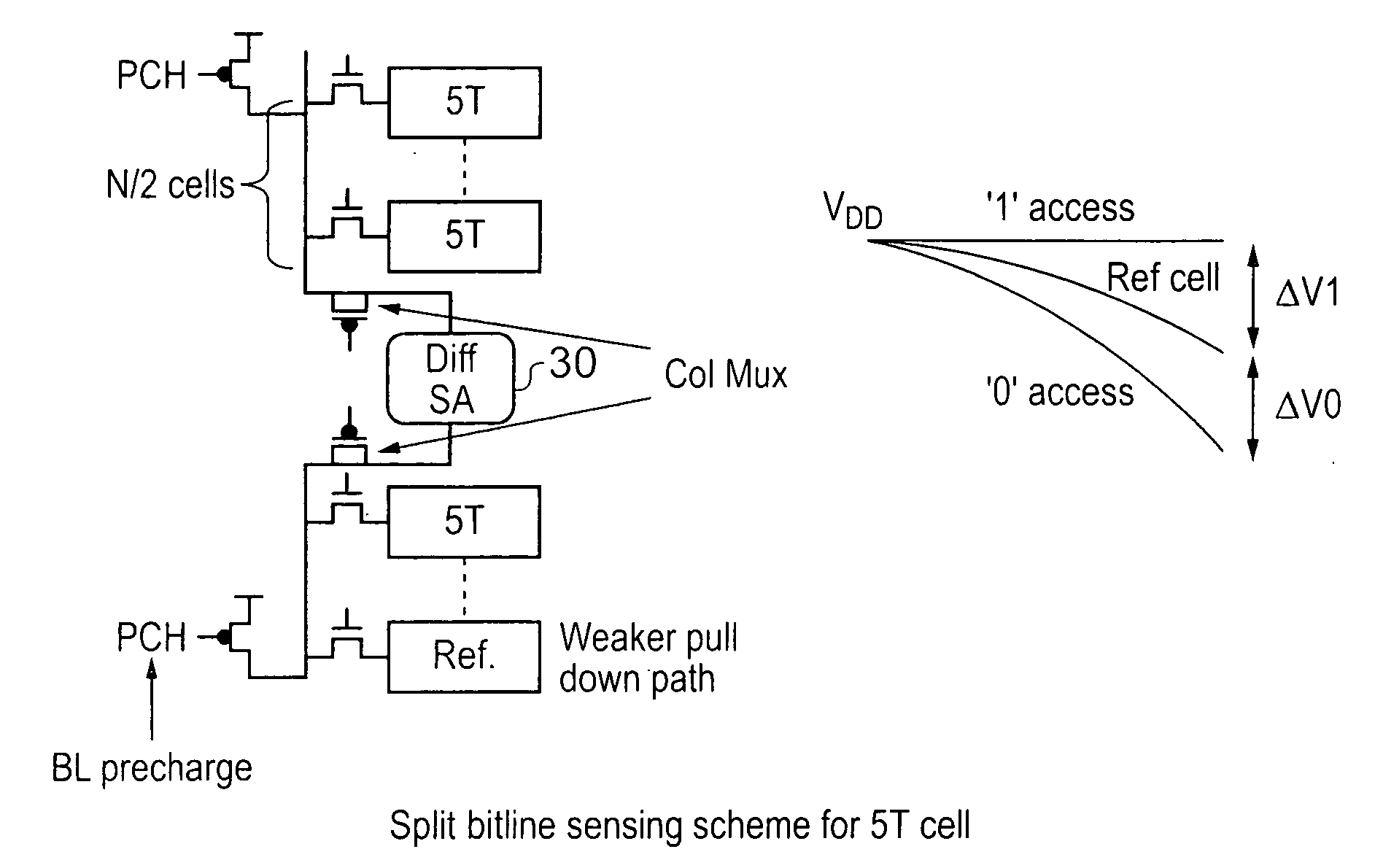
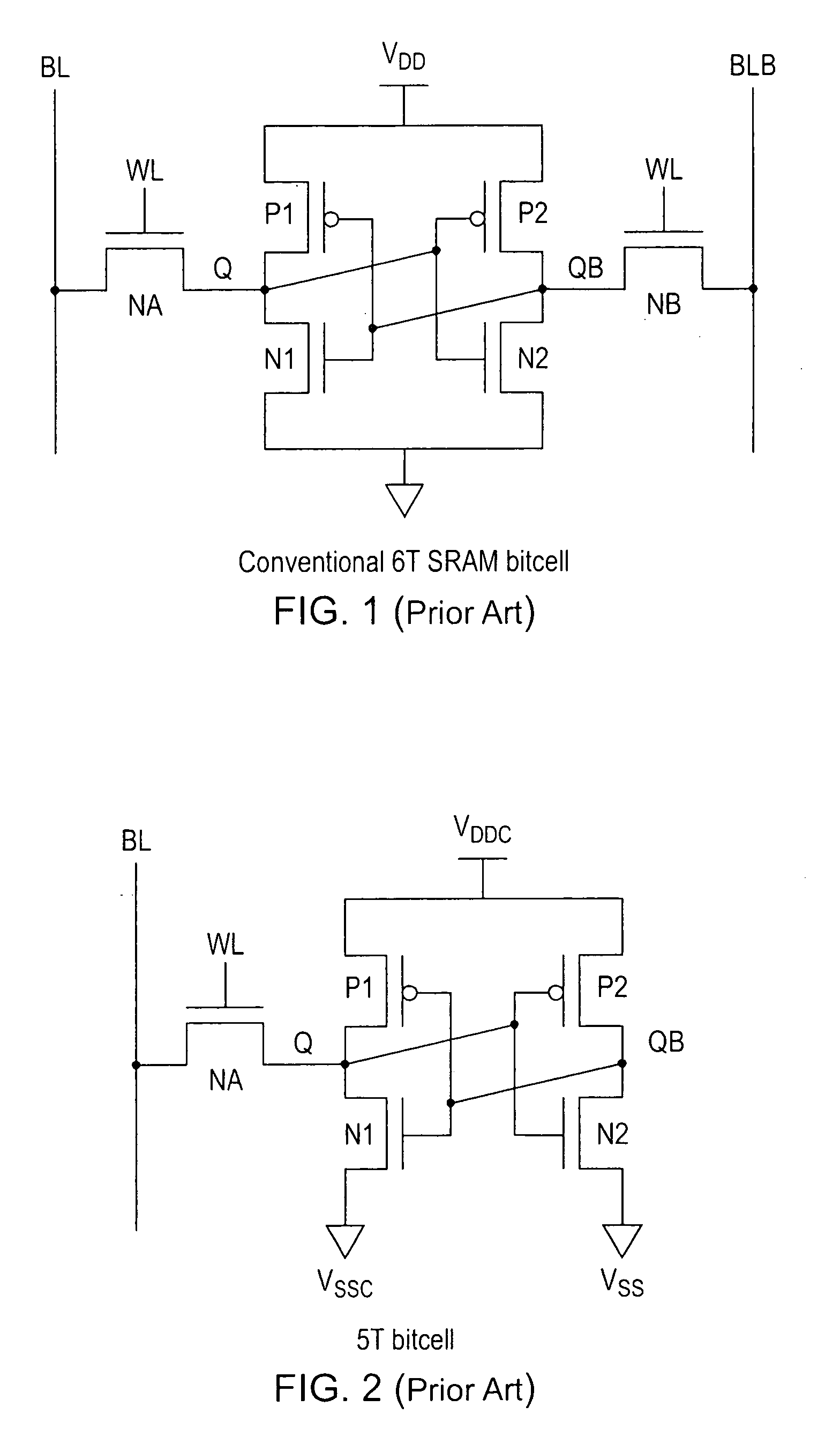
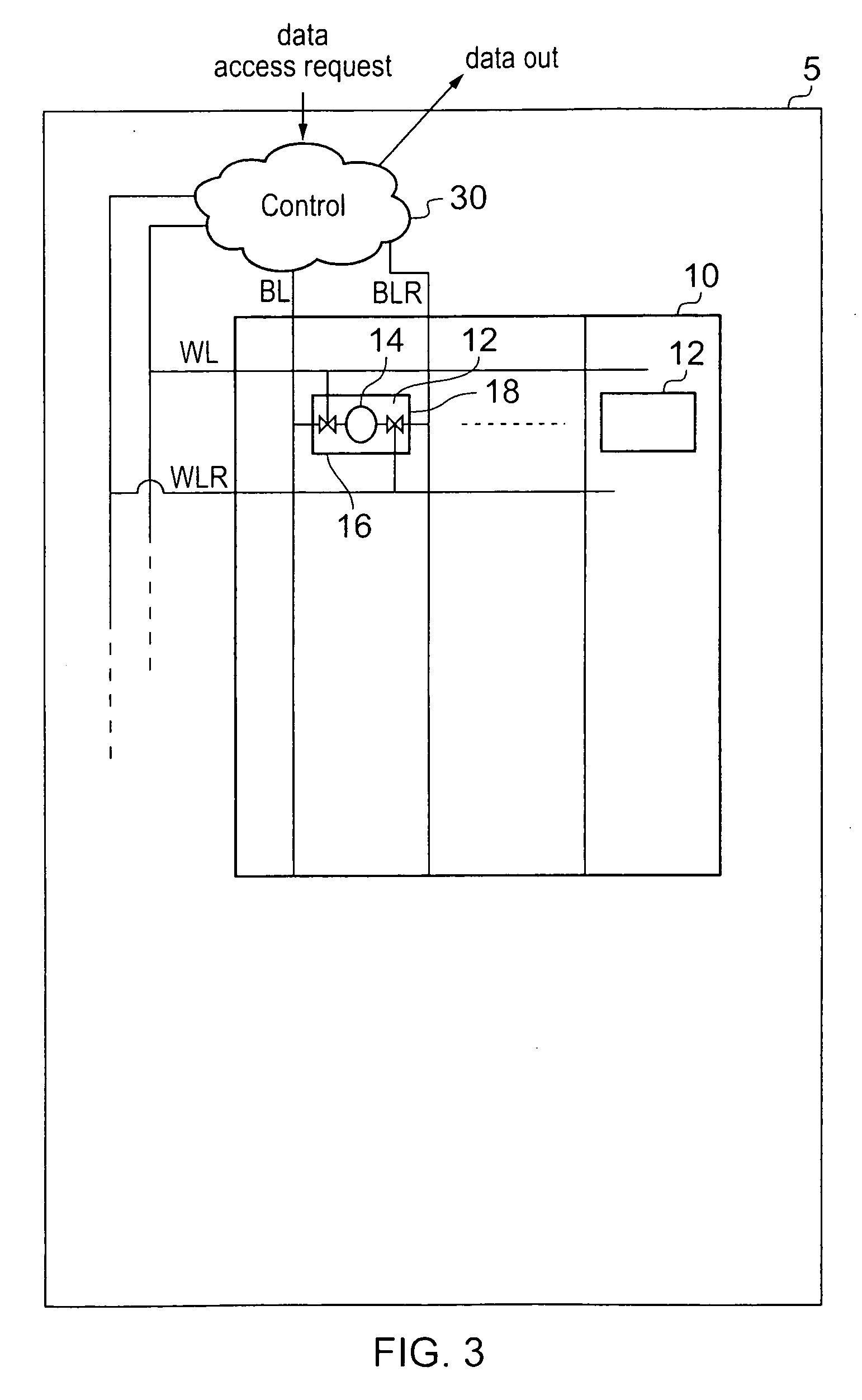
- The SRAM memory design incorporates an asymmetric feedback loop with a data line and a reset line, along with independent control signals for the access and reset devices, allowing for separate control of data and complementary value storage, enabling robust read operations without additional components and facilitating a two-step writing procedure.

Memory Technology Standards and Certification Requirements
Memory technology standards and certification requirements play a crucial role in determining the commercial viability and industrial adoption of both Racetrack Memory and SRAM technologies. The semiconductor industry relies heavily on established standards to ensure interoperability, reliability, and quality across different manufacturers and applications.
SRAM technology benefits from decades of standardization efforts through organizations such as JEDEC Solid State Technology Association and IEEE. These standards cover various aspects including electrical specifications, timing parameters, package dimensions, and testing methodologies. JEDEC standards like JESD79 series provide comprehensive guidelines for SRAM interface protocols, while military and aerospace applications follow stringent standards such as MIL-STD-883 for space-grade memory components.
Racetrack Memory, being an emerging technology, faces significant challenges in standardization. Currently, no dedicated industry standards exist specifically for racetrack memory devices. The technology must adapt existing magnetic memory standards or develop entirely new certification frameworks. This presents both opportunities and obstacles for widespread adoption, as early standardization efforts could influence the technology's development trajectory.
Certification requirements vary significantly across application domains. Consumer electronics typically require compliance with basic JEDEC standards and environmental regulations, while automotive applications demand adherence to AEC-Q100 qualification standards. Industrial and military applications impose even stricter requirements, including extended temperature ranges, radiation tolerance, and enhanced reliability testing protocols.
The certification process for memory technologies involves extensive testing procedures covering electrical performance, environmental stress, and long-term reliability assessments. SRAM devices undergo well-established test methodologies including burn-in testing, temperature cycling, and accelerated aging tests. Racetrack Memory will need to develop equivalent testing protocols that address its unique failure mechanisms and operational characteristics.
Regulatory compliance adds another layer of complexity, particularly for international markets. Memory devices must meet various regional standards such as RoHS directives in Europe, FCC regulations in the United States, and similar requirements in other markets. The absence of established standards for Racetrack Memory could potentially delay its market entry and increase development costs for manufacturers seeking global certification.
SRAM technology benefits from decades of standardization efforts through organizations such as JEDEC Solid State Technology Association and IEEE. These standards cover various aspects including electrical specifications, timing parameters, package dimensions, and testing methodologies. JEDEC standards like JESD79 series provide comprehensive guidelines for SRAM interface protocols, while military and aerospace applications follow stringent standards such as MIL-STD-883 for space-grade memory components.
Racetrack Memory, being an emerging technology, faces significant challenges in standardization. Currently, no dedicated industry standards exist specifically for racetrack memory devices. The technology must adapt existing magnetic memory standards or develop entirely new certification frameworks. This presents both opportunities and obstacles for widespread adoption, as early standardization efforts could influence the technology's development trajectory.
Certification requirements vary significantly across application domains. Consumer electronics typically require compliance with basic JEDEC standards and environmental regulations, while automotive applications demand adherence to AEC-Q100 qualification standards. Industrial and military applications impose even stricter requirements, including extended temperature ranges, radiation tolerance, and enhanced reliability testing protocols.
The certification process for memory technologies involves extensive testing procedures covering electrical performance, environmental stress, and long-term reliability assessments. SRAM devices undergo well-established test methodologies including burn-in testing, temperature cycling, and accelerated aging tests. Racetrack Memory will need to develop equivalent testing protocols that address its unique failure mechanisms and operational characteristics.
Regulatory compliance adds another layer of complexity, particularly for international markets. Memory devices must meet various regional standards such as RoHS directives in Europe, FCC regulations in the United States, and similar requirements in other markets. The absence of established standards for Racetrack Memory could potentially delay its market entry and increase development costs for manufacturers seeking global certification.
Comparative Reliability Assessment Framework for Memory Selection
Establishing a comprehensive reliability assessment framework for memory technologies requires systematic evaluation across multiple dimensions to enable informed selection between competing solutions. The framework must encompass quantitative metrics, operational parameters, and long-term performance indicators that directly impact system reliability and operational continuity.
The foundation of this assessment framework centers on failure rate analysis, incorporating both intrinsic device physics limitations and extrinsic environmental factors. Mean Time Between Failures (MTBF) serves as the primary quantitative metric, supplemented by Bit Error Rate (BER) measurements under various operational conditions. These metrics must be evaluated across different temperature ranges, voltage variations, and electromagnetic interference scenarios to establish comprehensive reliability profiles.
Endurance characteristics form another critical evaluation dimension, particularly relevant when comparing emerging technologies like racetrack memory against established solutions such as SRAM. The framework should quantify write/erase cycle limitations, retention capabilities under power-off conditions, and degradation patterns over extended operational periods. This analysis must consider both absolute endurance numbers and the practical implications of different usage patterns on overall system reliability.
Environmental resilience assessment constitutes a vital component, examining performance stability under radiation exposure, temperature cycling, and humidity variations. The framework should incorporate accelerated aging tests and stress testing protocols to predict long-term reliability behavior. Particular attention must be paid to soft error susceptibility and recovery mechanisms, as these factors significantly influence system-level reliability in critical applications.
Data integrity mechanisms represent an essential evaluation criterion, encompassing built-in error correction capabilities, redundancy schemes, and fault tolerance features. The framework should assess the effectiveness of Error Correction Codes (ECC), scrubbing mechanisms, and self-healing capabilities inherent to each memory technology. This evaluation must consider both single-bit and multi-bit error scenarios.
Finally, the framework should incorporate operational reliability factors including power supply sensitivity, timing margin stability, and interface robustness. Manufacturing variability impacts and process maturity levels must also be quantified to provide realistic reliability projections for production deployment scenarios.
The foundation of this assessment framework centers on failure rate analysis, incorporating both intrinsic device physics limitations and extrinsic environmental factors. Mean Time Between Failures (MTBF) serves as the primary quantitative metric, supplemented by Bit Error Rate (BER) measurements under various operational conditions. These metrics must be evaluated across different temperature ranges, voltage variations, and electromagnetic interference scenarios to establish comprehensive reliability profiles.
Endurance characteristics form another critical evaluation dimension, particularly relevant when comparing emerging technologies like racetrack memory against established solutions such as SRAM. The framework should quantify write/erase cycle limitations, retention capabilities under power-off conditions, and degradation patterns over extended operational periods. This analysis must consider both absolute endurance numbers and the practical implications of different usage patterns on overall system reliability.
Environmental resilience assessment constitutes a vital component, examining performance stability under radiation exposure, temperature cycling, and humidity variations. The framework should incorporate accelerated aging tests and stress testing protocols to predict long-term reliability behavior. Particular attention must be paid to soft error susceptibility and recovery mechanisms, as these factors significantly influence system-level reliability in critical applications.
Data integrity mechanisms represent an essential evaluation criterion, encompassing built-in error correction capabilities, redundancy schemes, and fault tolerance features. The framework should assess the effectiveness of Error Correction Codes (ECC), scrubbing mechanisms, and self-healing capabilities inherent to each memory technology. This evaluation must consider both single-bit and multi-bit error scenarios.
Finally, the framework should incorporate operational reliability factors including power supply sensitivity, timing margin stability, and interface robustness. Manufacturing variability impacts and process maturity levels must also be quantified to provide realistic reliability projections for production deployment scenarios.
Unlock deeper insights with PatSnap Eureka Quick Research — get a full tech report to explore trends and direct your research. Try now!
Generate Your Research Report Instantly with AI Agent
Supercharge your innovation with PatSnap Eureka AI Agent Platform!