Laser Engineered Net Shaping for Customized Tooling: Insights
APR 1, 20269 MIN READ
Generate Your Research Report Instantly with AI Agent
Patsnap Eureka helps you evaluate technical feasibility & market potential.
LENS Technology Background and Tooling Objectives
Laser Engineered Net Shaping (LENS) represents a revolutionary additive manufacturing technology that emerged in the mid-1990s as a direct metal deposition process. This technology utilizes a high-powered laser beam to create a molten pool on a substrate, into which metal powder is simultaneously injected and fused layer by layer to build three-dimensional components. The process operates in an inert atmosphere, typically argon, to prevent oxidation and ensure high-quality metallurgical bonding between deposited layers.
The evolution of LENS technology stems from the convergence of laser processing, powder metallurgy, and computer-aided manufacturing. Initially developed at Sandia National Laboratories, the technology addressed the growing industrial demand for rapid prototyping and manufacturing of complex metallic components that were difficult or impossible to produce through conventional subtractive manufacturing methods. The process enables the creation of parts with intricate internal geometries, overhangs, and near-net-shape features without requiring expensive tooling or extensive machining operations.
In the context of customized tooling applications, LENS technology offers unprecedented capabilities for manufacturing specialized tools, dies, molds, and fixtures with tailored properties and geometries. Traditional tooling manufacturing often involves lengthy lead times, substantial material waste, and significant costs associated with machining complex shapes from solid billets. The layer-by-layer additive approach of LENS eliminates many of these constraints while enabling the integration of conformal cooling channels, variable material compositions, and optimized stress distributions within tooling components.
The primary objectives of implementing LENS technology for customized tooling encompass several critical performance targets. First, achieving rapid turnaround times for prototype and production tooling, reducing development cycles from weeks to days. Second, enabling the creation of tools with enhanced thermal management capabilities through integrated cooling channels and heat-dissipating features that cannot be manufactured conventionally. Third, facilitating the production of tools with graded material properties, where different regions can exhibit varying hardness, wear resistance, or thermal conductivity based on functional requirements.
Furthermore, LENS technology aims to minimize material waste and reduce overall tooling costs by eliminating the need for extensive machining operations and enabling the use of only the necessary amount of material. The technology also targets the production of tools with superior surface finish and dimensional accuracy, approaching the quality standards required for direct production applications without extensive post-processing requirements.
The evolution of LENS technology stems from the convergence of laser processing, powder metallurgy, and computer-aided manufacturing. Initially developed at Sandia National Laboratories, the technology addressed the growing industrial demand for rapid prototyping and manufacturing of complex metallic components that were difficult or impossible to produce through conventional subtractive manufacturing methods. The process enables the creation of parts with intricate internal geometries, overhangs, and near-net-shape features without requiring expensive tooling or extensive machining operations.
In the context of customized tooling applications, LENS technology offers unprecedented capabilities for manufacturing specialized tools, dies, molds, and fixtures with tailored properties and geometries. Traditional tooling manufacturing often involves lengthy lead times, substantial material waste, and significant costs associated with machining complex shapes from solid billets. The layer-by-layer additive approach of LENS eliminates many of these constraints while enabling the integration of conformal cooling channels, variable material compositions, and optimized stress distributions within tooling components.
The primary objectives of implementing LENS technology for customized tooling encompass several critical performance targets. First, achieving rapid turnaround times for prototype and production tooling, reducing development cycles from weeks to days. Second, enabling the creation of tools with enhanced thermal management capabilities through integrated cooling channels and heat-dissipating features that cannot be manufactured conventionally. Third, facilitating the production of tools with graded material properties, where different regions can exhibit varying hardness, wear resistance, or thermal conductivity based on functional requirements.
Furthermore, LENS technology aims to minimize material waste and reduce overall tooling costs by eliminating the need for extensive machining operations and enabling the use of only the necessary amount of material. The technology also targets the production of tools with superior surface finish and dimensional accuracy, approaching the quality standards required for direct production applications without extensive post-processing requirements.
Market Demand for Customized Tooling Solutions
The global manufacturing landscape is experiencing a fundamental shift toward mass customization, driving unprecedented demand for specialized tooling solutions. Traditional manufacturing approaches, which rely on standardized tooling and lengthy lead times, are increasingly inadequate for meeting the diverse requirements of modern production environments. Industries ranging from aerospace and automotive to medical devices and consumer electronics are seeking tooling solutions that can be rapidly developed, precisely tailored to specific applications, and economically viable for both high-volume and low-volume production runs.
Aerospace manufacturers represent one of the most significant market segments for customized tooling, where complex geometries and stringent performance requirements necessitate specialized fixtures, jigs, and forming tools. The industry's emphasis on lightweight components and advanced materials creates continuous demand for tooling that can accommodate unique part configurations and manufacturing processes. Similarly, the automotive sector's transition toward electric vehicles and autonomous systems has generated new tooling requirements for battery housings, sensor mounts, and lightweight structural components.
The medical device industry presents another compelling market opportunity, where patient-specific implants and surgical instruments require highly customized tooling solutions. Regulatory requirements and biocompatibility standards further emphasize the need for precise, traceable manufacturing processes that can be achieved through advanced tooling technologies. The growing trend toward personalized medicine and minimally invasive procedures continues to expand the market for specialized medical tooling.
Manufacturing efficiency pressures are intensifying the demand for rapid tooling solutions that can reduce time-to-market while maintaining quality standards. Companies are increasingly recognizing that traditional tooling development cycles, which can span weeks or months, represent significant competitive disadvantages in fast-moving markets. The ability to produce functional tooling within days rather than weeks has become a critical capability for maintaining market responsiveness.
Small and medium-sized manufacturers, who previously lacked access to specialized tooling due to cost constraints, now represent an emerging market segment. These companies require cost-effective solutions that can support limited production runs without the substantial upfront investments associated with conventional tooling approaches. The democratization of advanced manufacturing technologies is creating new opportunities to serve this previously underserved market segment.
Geographic market dynamics reveal strong demand concentration in established manufacturing hubs, particularly in North America, Europe, and Asia-Pacific regions. However, emerging markets are demonstrating increasing interest in advanced tooling solutions as their manufacturing capabilities mature and quality requirements become more stringent.
Aerospace manufacturers represent one of the most significant market segments for customized tooling, where complex geometries and stringent performance requirements necessitate specialized fixtures, jigs, and forming tools. The industry's emphasis on lightweight components and advanced materials creates continuous demand for tooling that can accommodate unique part configurations and manufacturing processes. Similarly, the automotive sector's transition toward electric vehicles and autonomous systems has generated new tooling requirements for battery housings, sensor mounts, and lightweight structural components.
The medical device industry presents another compelling market opportunity, where patient-specific implants and surgical instruments require highly customized tooling solutions. Regulatory requirements and biocompatibility standards further emphasize the need for precise, traceable manufacturing processes that can be achieved through advanced tooling technologies. The growing trend toward personalized medicine and minimally invasive procedures continues to expand the market for specialized medical tooling.
Manufacturing efficiency pressures are intensifying the demand for rapid tooling solutions that can reduce time-to-market while maintaining quality standards. Companies are increasingly recognizing that traditional tooling development cycles, which can span weeks or months, represent significant competitive disadvantages in fast-moving markets. The ability to produce functional tooling within days rather than weeks has become a critical capability for maintaining market responsiveness.
Small and medium-sized manufacturers, who previously lacked access to specialized tooling due to cost constraints, now represent an emerging market segment. These companies require cost-effective solutions that can support limited production runs without the substantial upfront investments associated with conventional tooling approaches. The democratization of advanced manufacturing technologies is creating new opportunities to serve this previously underserved market segment.
Geographic market dynamics reveal strong demand concentration in established manufacturing hubs, particularly in North America, Europe, and Asia-Pacific regions. However, emerging markets are demonstrating increasing interest in advanced tooling solutions as their manufacturing capabilities mature and quality requirements become more stringent.
Current LENS Capabilities and Manufacturing Challenges
Laser Engineered Net Shaping technology has demonstrated significant capabilities in producing complex geometries that are difficult or impossible to achieve through conventional manufacturing methods. Current LENS systems can fabricate parts with intricate internal channels, overhangs, and lattice structures without requiring support materials, making it particularly valuable for customized tooling applications. The technology enables direct fabrication from CAD models with layer thicknesses ranging from 0.25 to 1.0 millimeters, achieving dimensional accuracies within ±0.1 to ±0.5 millimeters depending on part complexity and material properties.
Material compatibility represents both a strength and limitation of current LENS capabilities. The technology successfully processes various metals including titanium alloys, stainless steels, nickel-based superalloys, and tool steels commonly used in tooling applications. However, material selection remains constrained compared to traditional manufacturing, with powder quality and flowability requirements limiting options. Current systems can achieve material utilization rates of 95-98%, significantly higher than subtractive manufacturing methods.
Manufacturing challenges persist in several critical areas that impact tooling production. Surface finish quality remains a primary concern, with as-built surfaces typically exhibiting roughness values of Ra 10-25 micrometers, necessitating post-processing for most tooling applications. Residual stress management poses another significant challenge, as the rapid heating and cooling cycles inherent in LENS processing can introduce internal stresses that may cause part distortion or cracking, particularly in large tooling components.
Process monitoring and quality control present ongoing difficulties in LENS manufacturing. Real-time monitoring of melt pool characteristics, powder flow consistency, and layer adhesion remains technically challenging, leading to potential defects that may not be detected until post-processing inspection. Current systems lack comprehensive in-situ monitoring capabilities, making it difficult to ensure consistent quality across complex tooling geometries.
Build rate limitations constrain LENS applicability for large-scale tooling production. Current systems typically achieve deposition rates of 1-10 cubic centimeters per hour, making the technology more suitable for small to medium-sized tooling components or high-value applications where geometric complexity justifies longer production times. Additionally, the need for controlled atmosphere environments and specialized powder handling systems increases operational complexity and costs compared to conventional tooling manufacturing methods.
Material compatibility represents both a strength and limitation of current LENS capabilities. The technology successfully processes various metals including titanium alloys, stainless steels, nickel-based superalloys, and tool steels commonly used in tooling applications. However, material selection remains constrained compared to traditional manufacturing, with powder quality and flowability requirements limiting options. Current systems can achieve material utilization rates of 95-98%, significantly higher than subtractive manufacturing methods.
Manufacturing challenges persist in several critical areas that impact tooling production. Surface finish quality remains a primary concern, with as-built surfaces typically exhibiting roughness values of Ra 10-25 micrometers, necessitating post-processing for most tooling applications. Residual stress management poses another significant challenge, as the rapid heating and cooling cycles inherent in LENS processing can introduce internal stresses that may cause part distortion or cracking, particularly in large tooling components.
Process monitoring and quality control present ongoing difficulties in LENS manufacturing. Real-time monitoring of melt pool characteristics, powder flow consistency, and layer adhesion remains technically challenging, leading to potential defects that may not be detected until post-processing inspection. Current systems lack comprehensive in-situ monitoring capabilities, making it difficult to ensure consistent quality across complex tooling geometries.
Build rate limitations constrain LENS applicability for large-scale tooling production. Current systems typically achieve deposition rates of 1-10 cubic centimeters per hour, making the technology more suitable for small to medium-sized tooling components or high-value applications where geometric complexity justifies longer production times. Additionally, the need for controlled atmosphere environments and specialized powder handling systems increases operational complexity and costs compared to conventional tooling manufacturing methods.
Existing LENS Solutions for Tooling Manufacturing
01 Laser cladding and surface modification techniques
Laser Engineered Net Shaping technology can be applied for laser cladding processes to modify surface properties of materials. This involves depositing material layer by layer using a laser beam to create coatings or repair worn surfaces. The process enables precise control over material composition and microstructure, resulting in enhanced wear resistance, corrosion resistance, and mechanical properties of the substrate material.- Laser cladding and surface modification techniques: Laser Engineered Net Shaping technology can be applied for laser cladding processes to modify surface properties of materials. This technique involves depositing material layer by layer using a laser beam to create coatings or repair worn surfaces. The process enables precise control over material composition and microstructure, resulting in enhanced wear resistance, corrosion resistance, and mechanical properties of the substrate material.
- Powder feeding and material delivery systems: Advanced powder feeding mechanisms are essential for laser net shaping processes to ensure consistent material deposition. These systems control the flow rate, distribution, and delivery of powder materials to the laser interaction zone. Precise powder feeding enables uniform layer formation and helps achieve desired geometric accuracy and material properties in the final manufactured components.
- Process parameter optimization and control: Optimization of laser processing parameters is critical for successful net shaping operations. Key parameters include laser power, scanning speed, powder feed rate, and beam focus position. Advanced control systems monitor and adjust these parameters in real-time to maintain consistent quality, minimize defects, and achieve desired material properties. Process monitoring techniques help ensure repeatability and reliability of the manufacturing process.
- Multi-material and gradient structure fabrication: Laser engineered net shaping enables the fabrication of components with multiple materials or functionally graded structures. This capability allows for the creation of parts with varying composition and properties across different regions. The technology supports the integration of dissimilar materials and the formation of gradient transitions, enabling the production of complex components with tailored properties for specific applications.
- Repair and remanufacturing applications: The technology provides effective solutions for repairing damaged or worn components and extending their service life. Laser net shaping can restore dimensional accuracy and mechanical properties of high-value parts through additive material deposition. This approach is particularly valuable for aerospace, automotive, and industrial equipment maintenance, offering cost-effective alternatives to component replacement while maintaining or improving original performance specifications.
02 Powder feeding and material delivery systems
Advanced powder feeding mechanisms are critical for laser net shaping processes. These systems control the delivery rate, flow pattern, and distribution of powder materials to the laser processing zone. Precise powder feeding ensures uniform material deposition, consistent layer thickness, and high-quality part formation. The systems may include coaxial nozzles, multi-channel feeders, and automated powder flow control mechanisms.Expand Specific Solutions03 Process parameter optimization and control
Optimization of laser processing parameters is essential for achieving desired part quality in net shaping applications. Key parameters include laser power, scanning speed, powder feed rate, and layer thickness. Advanced control systems monitor and adjust these parameters in real-time to maintain consistent processing conditions. This ensures dimensional accuracy, minimizes defects, and improves mechanical properties of the fabricated components.Expand Specific Solutions04 Multi-material and functionally graded structures
Laser net shaping technology enables the fabrication of components with multiple materials or functionally graded compositions. By controlling the powder composition during the deposition process, it is possible to create parts with varying material properties across different regions. This capability allows for the design of components with optimized performance characteristics, such as combining wear-resistant surfaces with tough core materials.Expand Specific Solutions05 Defect detection and quality monitoring
Quality assurance in laser net shaping processes requires real-time monitoring and defect detection systems. These systems utilize sensors, imaging technologies, and data analysis algorithms to identify porosity, cracks, dimensional deviations, and other defects during the manufacturing process. Early detection enables immediate corrective actions, reducing waste and ensuring the production of high-quality components that meet specifications.Expand Specific Solutions
Key Players in LENS and Custom Tooling Industry
The Laser Engineered Net Shaping (LENS) technology for customized tooling represents a rapidly evolving additive manufacturing sector currently in its growth phase, with the global market expanding significantly driven by aerospace and automotive applications. The technology demonstrates varying maturity levels across different players, with established aerospace giants like Boeing and Rolls-Royce leveraging LENS for complex component manufacturing, while specialized laser technology companies such as TRUMPF Laser- und Systemtechnik and research institutions including Fraunhofer-Gesellschaft and California Institute of Technology advancing fundamental capabilities. Industrial manufacturers like General Electric and MTU Aero Engines are integrating LENS into production workflows, while emerging players like Opsydia and material specialists such as XiAn Xinyao Ceramic Composite Materials are developing novel applications and advanced materials, indicating a competitive landscape characterized by both technological convergence and specialized differentiation across the value chain.
TRUMPF Laser- und Systemtechnik GmbH
Technical Solution: TRUMPF has developed advanced laser systems specifically for Laser Engineered Net Shaping (LENS) applications, featuring high-power fiber lasers with precise beam control and multi-axis powder delivery systems. Their technology integrates real-time process monitoring with closed-loop control systems to ensure consistent material deposition and geometric accuracy. The company's LENS solutions incorporate adaptive powder flow control, temperature monitoring, and layer-by-layer build strategies optimized for customized tooling applications. Their systems support various metal powders including tool steels, titanium alloys, and nickel-based superalloys, enabling direct manufacturing of complex tooling geometries with minimal post-processing requirements.
Strengths: Industry-leading laser technology with excellent beam quality and power stability, comprehensive process control systems. Weaknesses: High capital investment costs, requires specialized operator training and maintenance expertise.
The Boeing Co.
Technical Solution: Boeing utilizes LENS technology for aerospace tooling applications, focusing on titanium and aluminum alloy components with complex geometries. Their implementation includes automated powder delivery systems, multi-axis deposition heads, and integrated quality assurance protocols specifically designed for aerospace tooling requirements. Boeing's LENS processes incorporate advanced path planning algorithms and thermal management systems to minimize residual stresses and achieve precise dimensional tolerances. The company has developed specialized post-processing techniques including machining, heat treatment, and surface finishing optimized for aerospace tooling applications, enabling rapid prototyping and low-volume production of customized fixtures and manufacturing aids.
Strengths: Deep aerospace industry expertise, rigorous quality standards and certification processes, advanced materials knowledge. Weaknesses: Limited technology transfer to commercial markets, high regulatory compliance requirements may limit flexibility.
Core LENS Patents for Advanced Tooling Applications
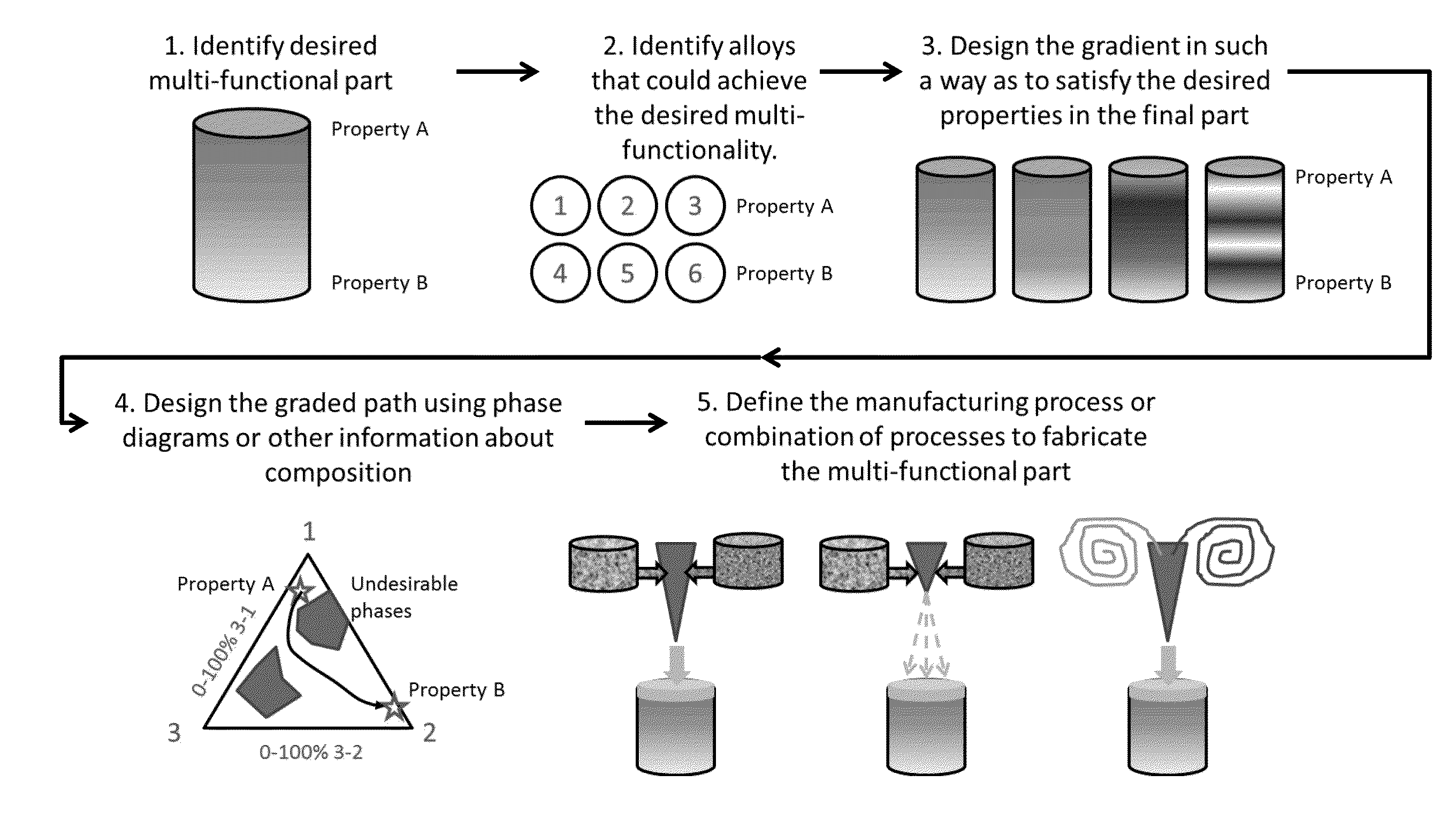
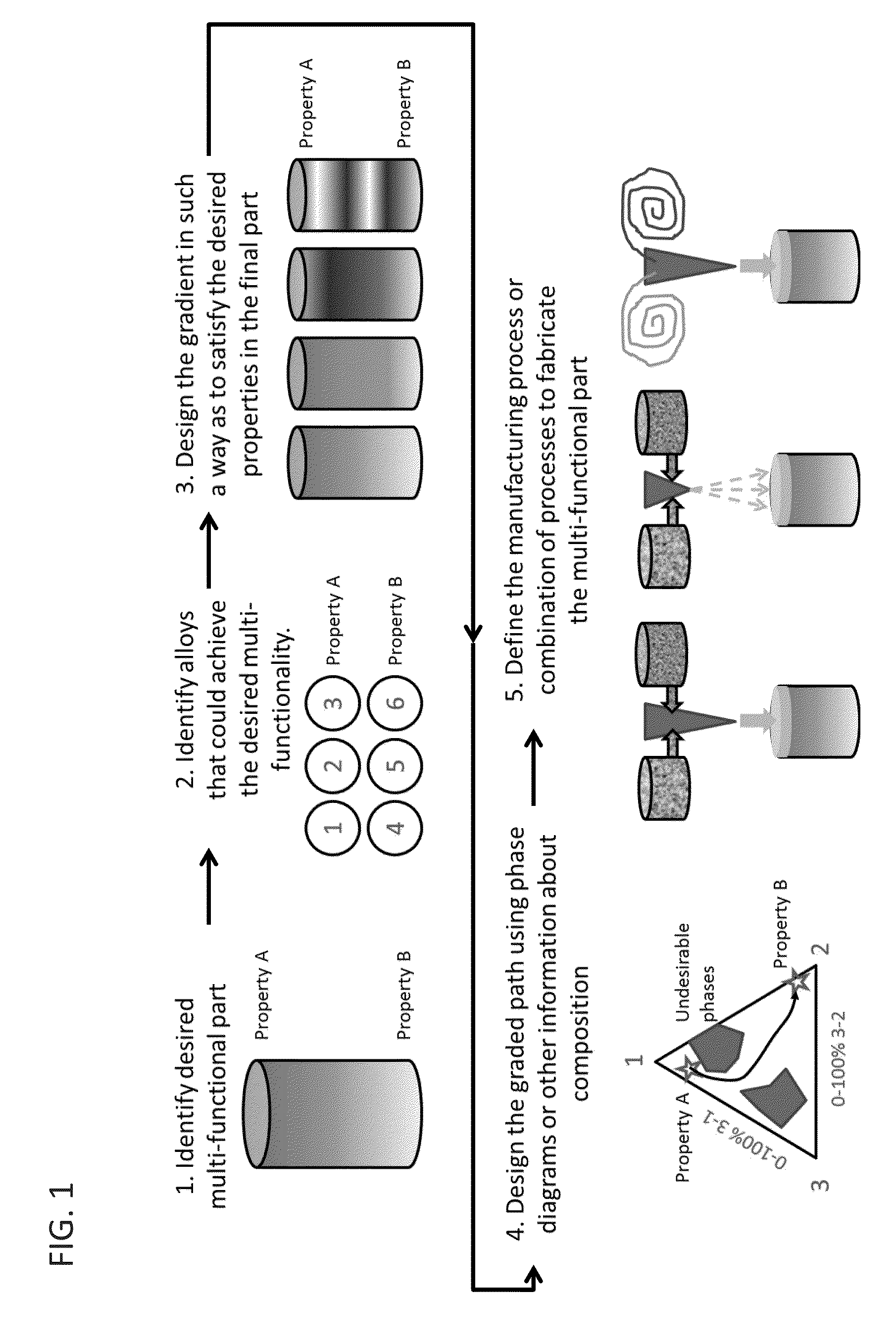
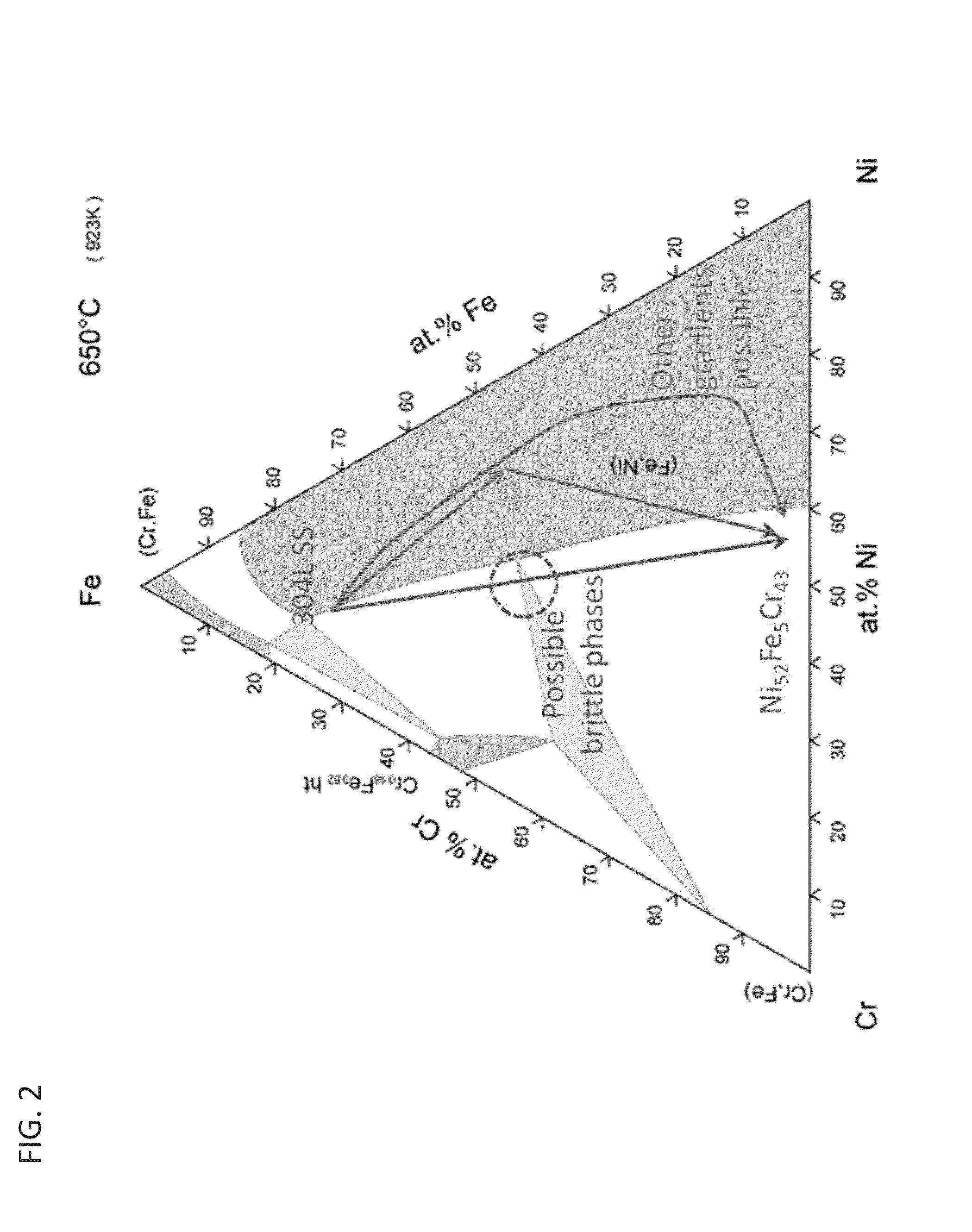
Methods for fabricating gradient alloy articles with multi-functional properties
PatentActiveUS20150044084A1
Innovation
- The method involves determining a compositional gradient pathway between distinct materials using phase diagrams to avoid undesirable phases, and then using additive manufacturing techniques like Laser Engineered Net Shaping (LENS) to form multi-functional articles with precise compositional transitions, allowing for the creation of gradient layers with varying mechanical and thermophysical properties.

Laser net shape manufactured component using an adaptive toolpath deposition method
PatentActiveUS20160076374A1
Innovation
- The adaptive toolpath deposition method in Laser Net Shape Manufacturing (LNSM) uses a laser to deposit thin layers of metal powder with variable bead widths and controlled overlap ratios, allowing for precise 3D geometry creation and minimizing fusion imperfections by dynamically adjusting laser power and toolpath parameters.


Quality Standards for LENS-Manufactured Tools
The establishment of comprehensive quality standards for LENS-manufactured tools represents a critical requirement for widespread industrial adoption of this additive manufacturing technology. Current quality frameworks must address the unique characteristics of laser-deposited materials, including microstructural variations, surface finish requirements, and dimensional accuracy specifications that differ significantly from conventional manufacturing processes.
Material property standards constitute the foundation of LENS tool quality assessment. These standards must define acceptable ranges for mechanical properties such as tensile strength, hardness, and fatigue resistance, while accounting for the inherent anisotropy in laser-deposited materials. Microstructural requirements should specify grain size distribution, porosity levels, and phase composition to ensure consistent tool performance across different applications.
Dimensional accuracy standards for LENS-manufactured tools require specialized measurement protocols that accommodate the near-net-shape nature of the process. Tolerance specifications must consider the typical dimensional variations associated with laser deposition, including thermal distortion effects and layer-to-layer variations. Surface roughness parameters need redefinition to reflect the unique surface characteristics produced by LENS processing.
Process validation standards play a crucial role in ensuring reproducible tool quality. These standards should establish monitoring requirements for critical process parameters including laser power stability, powder feed rate consistency, and substrate temperature control. Real-time quality monitoring protocols must be integrated to detect deviations during the manufacturing process.
Testing methodologies specific to LENS-manufactured tools require development of standardized procedures for evaluating tool performance under operational conditions. These include accelerated wear testing protocols, thermal cycling assessments, and stress analysis procedures that account for the layered structure inherent in additive manufacturing.
Certification frameworks must establish clear pathways for qualifying LENS-manufactured tools for specific applications, particularly in high-stakes industries such as aerospace and automotive manufacturing. These frameworks should define documentation requirements, traceability protocols, and quality assurance procedures that meet regulatory compliance standards while supporting the unique advantages of customized tooling solutions.
Material property standards constitute the foundation of LENS tool quality assessment. These standards must define acceptable ranges for mechanical properties such as tensile strength, hardness, and fatigue resistance, while accounting for the inherent anisotropy in laser-deposited materials. Microstructural requirements should specify grain size distribution, porosity levels, and phase composition to ensure consistent tool performance across different applications.
Dimensional accuracy standards for LENS-manufactured tools require specialized measurement protocols that accommodate the near-net-shape nature of the process. Tolerance specifications must consider the typical dimensional variations associated with laser deposition, including thermal distortion effects and layer-to-layer variations. Surface roughness parameters need redefinition to reflect the unique surface characteristics produced by LENS processing.
Process validation standards play a crucial role in ensuring reproducible tool quality. These standards should establish monitoring requirements for critical process parameters including laser power stability, powder feed rate consistency, and substrate temperature control. Real-time quality monitoring protocols must be integrated to detect deviations during the manufacturing process.
Testing methodologies specific to LENS-manufactured tools require development of standardized procedures for evaluating tool performance under operational conditions. These include accelerated wear testing protocols, thermal cycling assessments, and stress analysis procedures that account for the layered structure inherent in additive manufacturing.
Certification frameworks must establish clear pathways for qualifying LENS-manufactured tools for specific applications, particularly in high-stakes industries such as aerospace and automotive manufacturing. These frameworks should define documentation requirements, traceability protocols, and quality assurance procedures that meet regulatory compliance standards while supporting the unique advantages of customized tooling solutions.
Cost-Benefit Analysis of LENS vs Traditional Tooling
The economic evaluation of Laser Engineered Net Shaping (LENS) technology versus traditional tooling methods reveals significant variations in cost structures and return on investment across different manufacturing scenarios. Initial capital expenditure for LENS systems typically ranges from $500,000 to $2 million, substantially higher than conventional machining equipment. However, this upfront investment must be evaluated against the technology's unique value propositions and long-term operational benefits.
Traditional tooling manufacturing involves multiple process steps including material procurement, rough machining, heat treatment, finish machining, and quality inspection. Each step incurs labor costs, material waste, and time delays. LENS technology consolidates these operations into a single additive manufacturing process, eliminating intermediate steps and reducing overall production time by 40-60% for complex geometries. The direct material utilization rate in LENS approaches 95%, compared to 30-50% in subtractive manufacturing methods.
Labor cost analysis demonstrates LENS's advantage in skilled workforce requirements. Traditional tooling demands specialized machinists, heat treatment operators, and quality control technicians across multiple shifts. LENS operations require fewer personnel with different skill sets, primarily focusing on process monitoring and post-processing activities. The reduction in labor hours per part can reach 70% for intricate tooling designs, translating to significant cost savings in high-wage manufacturing environments.
Material costs present a complex comparison framework. While LENS metal powders command premium pricing compared to conventional raw materials, the near-net-shape manufacturing capability minimizes waste generation. For titanium and high-performance alloys commonly used in tooling applications, material savings alone can justify 20-30% of the technology investment. Additionally, LENS enables the use of functionally graded materials and internal cooling channels, features impossible with traditional methods.
The break-even analysis for LENS implementation typically occurs within 18-36 months, depending on production volume and part complexity. High-mix, low-volume manufacturing scenarios favor LENS economics, while high-volume production of simple geometries may still benefit from traditional approaches. Customized tooling applications, particularly those requiring rapid prototyping and design iterations, demonstrate the strongest economic case for LENS adoption, with payback periods as short as 12 months in optimal conditions.
Traditional tooling manufacturing involves multiple process steps including material procurement, rough machining, heat treatment, finish machining, and quality inspection. Each step incurs labor costs, material waste, and time delays. LENS technology consolidates these operations into a single additive manufacturing process, eliminating intermediate steps and reducing overall production time by 40-60% for complex geometries. The direct material utilization rate in LENS approaches 95%, compared to 30-50% in subtractive manufacturing methods.
Labor cost analysis demonstrates LENS's advantage in skilled workforce requirements. Traditional tooling demands specialized machinists, heat treatment operators, and quality control technicians across multiple shifts. LENS operations require fewer personnel with different skill sets, primarily focusing on process monitoring and post-processing activities. The reduction in labor hours per part can reach 70% for intricate tooling designs, translating to significant cost savings in high-wage manufacturing environments.
Material costs present a complex comparison framework. While LENS metal powders command premium pricing compared to conventional raw materials, the near-net-shape manufacturing capability minimizes waste generation. For titanium and high-performance alloys commonly used in tooling applications, material savings alone can justify 20-30% of the technology investment. Additionally, LENS enables the use of functionally graded materials and internal cooling channels, features impossible with traditional methods.
The break-even analysis for LENS implementation typically occurs within 18-36 months, depending on production volume and part complexity. High-mix, low-volume manufacturing scenarios favor LENS economics, while high-volume production of simple geometries may still benefit from traditional approaches. Customized tooling applications, particularly those requiring rapid prototyping and design iterations, demonstrate the strongest economic case for LENS adoption, with payback periods as short as 12 months in optimal conditions.
Unlock deeper insights with Patsnap Eureka Quick Research — get a full tech report to explore trends and direct your research. Try now!
Generate Your Research Report Instantly with AI Agent
Supercharge your innovation with Patsnap Eureka AI Agent Platform!