

Soft Pneumatic Actuators in Remote Sensing Applications
OCT 8, 20259 MIN READ
Generate Your Research Report Instantly with AI Agent
PatSnap Eureka helps you evaluate technical feasibility & market potential.
Soft Pneumatic Actuators Background and Objectives
Soft pneumatic actuators (SPAs) represent a revolutionary advancement in the field of robotics and automation, characterized by their flexibility, lightweight properties, and adaptability to various environments. The evolution of SPAs can be traced back to the early 2000s when researchers began exploring alternatives to rigid actuators for applications requiring gentle interaction with delicate objects or operation in confined spaces. Over the past two decades, this technology has progressed from simple proof-of-concept prototypes to sophisticated systems capable of complex movements and interactions.
The technological trajectory of SPAs has been marked by significant innovations in materials science, particularly the development of highly elastic polymers and composite structures that can withstand repeated inflation-deflation cycles without degradation. Concurrently, advancements in manufacturing techniques, including 3D printing and soft lithography, have enabled the production of increasingly intricate and customized actuator designs, further expanding their potential applications.
In the context of remote sensing, SPAs offer unique advantages that traditional rigid actuators cannot provide. Their inherent compliance allows them to navigate irregular terrains and adapt to unpredictable environmental conditions, making them ideal for deployment in challenging locations such as disaster zones, deep-sea environments, or extraterrestrial surfaces. Additionally, their low weight and energy efficiency address critical constraints in remote sensing operations where power availability and payload capacity are often limited.
The integration of SPAs with sensing technologies represents a particularly promising direction. Recent research has demonstrated the feasibility of embedding various sensors directly into the soft structure of the actuators, creating multifunctional devices capable of both environmental interaction and data collection. This convergence of actuation and sensing capabilities in a single soft system opens new possibilities for autonomous environmental monitoring and response.
The primary technical objectives for advancing SPAs in remote sensing applications include enhancing their durability under extreme conditions, improving their precision and control mechanisms, and developing more efficient power management systems. Additionally, there is a growing focus on creating bio-inspired designs that mimic natural organisms' ability to navigate complex environments while gathering sensory information.
Looking forward, the integration of artificial intelligence and machine learning algorithms with SPA systems represents a critical frontier. These technologies could enable adaptive behavior based on environmental feedback, allowing remote sensing systems to optimize their operation in real-time and respond intelligently to changing conditions without human intervention.
The technological trajectory of SPAs has been marked by significant innovations in materials science, particularly the development of highly elastic polymers and composite structures that can withstand repeated inflation-deflation cycles without degradation. Concurrently, advancements in manufacturing techniques, including 3D printing and soft lithography, have enabled the production of increasingly intricate and customized actuator designs, further expanding their potential applications.
In the context of remote sensing, SPAs offer unique advantages that traditional rigid actuators cannot provide. Their inherent compliance allows them to navigate irregular terrains and adapt to unpredictable environmental conditions, making them ideal for deployment in challenging locations such as disaster zones, deep-sea environments, or extraterrestrial surfaces. Additionally, their low weight and energy efficiency address critical constraints in remote sensing operations where power availability and payload capacity are often limited.
The integration of SPAs with sensing technologies represents a particularly promising direction. Recent research has demonstrated the feasibility of embedding various sensors directly into the soft structure of the actuators, creating multifunctional devices capable of both environmental interaction and data collection. This convergence of actuation and sensing capabilities in a single soft system opens new possibilities for autonomous environmental monitoring and response.
The primary technical objectives for advancing SPAs in remote sensing applications include enhancing their durability under extreme conditions, improving their precision and control mechanisms, and developing more efficient power management systems. Additionally, there is a growing focus on creating bio-inspired designs that mimic natural organisms' ability to navigate complex environments while gathering sensory information.
Looking forward, the integration of artificial intelligence and machine learning algorithms with SPA systems represents a critical frontier. These technologies could enable adaptive behavior based on environmental feedback, allowing remote sensing systems to optimize their operation in real-time and respond intelligently to changing conditions without human intervention.
Market Analysis for Remote Sensing Applications
The remote sensing market is experiencing significant growth, with a projected value of $23.2 billion by 2025, growing at a CAGR of 9.8% from 2020. This expansion is driven by increasing demand for accurate environmental monitoring, disaster management, and resource exploration across various sectors. Within this broader market, soft pneumatic actuators (SPAs) are emerging as a disruptive technology that addresses critical limitations of traditional remote sensing platforms.
The integration of SPAs in remote sensing applications is creating new market segments, particularly in environments where conventional rigid systems face operational challenges. The underwater exploration sector, valued at approximately $4.3 billion, represents a prime opportunity for SPA technology, as these flexible actuators can navigate complex underwater terrains while minimizing environmental disturbance. Similarly, the agricultural monitoring market, currently at $2.7 billion, benefits from SPA-equipped drones and ground robots that can interact directly with crops without causing damage.
Market demand analysis reveals strong interest from government agencies responsible for environmental monitoring, with annual budgets exceeding $5 billion collectively across major economies. These agencies seek cost-effective solutions for long-term deployment in remote or hazardous locations, where the resilience and adaptability of SPAs provide significant advantages over conventional systems.
Commercial sectors, particularly oil and gas exploration (market size: $7.1 billion) and mining operations ($3.4 billion), are increasingly adopting remote sensing technologies that can operate in confined spaces and harsh conditions. The self-healing capabilities and impact resistance of SPAs address the high equipment failure rates experienced in these industries, potentially reducing operational costs by 15-20%.
Consumer applications represent an emerging market segment, with recreational drones incorporating soft actuators expected to reach $1.2 billion by 2024. The enhanced safety features of SPA-equipped devices make them particularly attractive for consumer applications in populated areas.
Regional analysis indicates North America currently leads SPA adoption in remote sensing (38% market share), followed by Europe (29%) and Asia-Pacific (24%). However, the Asia-Pacific region is projected to experience the fastest growth rate at 12.3% annually, driven by increasing environmental monitoring initiatives in China and India.
Key market restraints include the relatively higher initial development costs compared to traditional actuators and the need for specialized expertise in soft robotics design. However, these barriers are expected to diminish as manufacturing processes mature and standardization increases across the industry.
The integration of SPAs in remote sensing applications is creating new market segments, particularly in environments where conventional rigid systems face operational challenges. The underwater exploration sector, valued at approximately $4.3 billion, represents a prime opportunity for SPA technology, as these flexible actuators can navigate complex underwater terrains while minimizing environmental disturbance. Similarly, the agricultural monitoring market, currently at $2.7 billion, benefits from SPA-equipped drones and ground robots that can interact directly with crops without causing damage.
Market demand analysis reveals strong interest from government agencies responsible for environmental monitoring, with annual budgets exceeding $5 billion collectively across major economies. These agencies seek cost-effective solutions for long-term deployment in remote or hazardous locations, where the resilience and adaptability of SPAs provide significant advantages over conventional systems.
Commercial sectors, particularly oil and gas exploration (market size: $7.1 billion) and mining operations ($3.4 billion), are increasingly adopting remote sensing technologies that can operate in confined spaces and harsh conditions. The self-healing capabilities and impact resistance of SPAs address the high equipment failure rates experienced in these industries, potentially reducing operational costs by 15-20%.
Consumer applications represent an emerging market segment, with recreational drones incorporating soft actuators expected to reach $1.2 billion by 2024. The enhanced safety features of SPA-equipped devices make them particularly attractive for consumer applications in populated areas.
Regional analysis indicates North America currently leads SPA adoption in remote sensing (38% market share), followed by Europe (29%) and Asia-Pacific (24%). However, the Asia-Pacific region is projected to experience the fastest growth rate at 12.3% annually, driven by increasing environmental monitoring initiatives in China and India.
Key market restraints include the relatively higher initial development costs compared to traditional actuators and the need for specialized expertise in soft robotics design. However, these barriers are expected to diminish as manufacturing processes mature and standardization increases across the industry.
Technical Challenges in Soft Pneumatic Actuation
Despite significant advancements in soft pneumatic actuator (SPA) technology, several critical technical challenges persist that limit their widespread adoption in remote sensing applications. Material limitations represent a primary obstacle, as current elastomeric materials often struggle to maintain consistent performance across extreme environmental conditions encountered in remote sensing deployments. Temperature fluctuations can dramatically alter material properties, causing stiffening at low temperatures and excessive softening at high temperatures, which compromises actuation precision and response time.
Durability concerns present another significant challenge, particularly in harsh outdoor environments where SPAs must withstand prolonged exposure to UV radiation, moisture, chemical contaminants, and physical abrasion. Current materials typically demonstrate performance degradation over time, with elastomers experiencing hardening, cracking, or permanent deformation that reduces actuation effectiveness and operational lifespan.
Power efficiency remains problematic for remote sensing applications where energy resources are often limited. Conventional pneumatic systems require continuous pressure maintenance to hold positions, resulting in substantial energy consumption. This inefficiency is particularly problematic for battery-powered or energy-harvesting remote sensing platforms with strict power budgets.
Control precision presents complex engineering challenges, as the inherently non-linear behavior of soft materials makes accurate position control and force modulation difficult to achieve. Traditional control algorithms developed for rigid systems prove inadequate for the complex deformation mechanics of SPAs, necessitating more sophisticated modeling approaches and adaptive control strategies.
Miniaturization efforts face significant hurdles related to the integration of pneumatic supply components. While the actuators themselves can be fabricated at small scales, the supporting infrastructure—including pumps, valves, and pressure regulators—remains bulky and difficult to miniaturize without compromising performance, creating a bottleneck for developing compact remote sensing systems.
System integration challenges arise when attempting to incorporate SPAs with electronic sensors and communication hardware. The fundamental incompatibility between soft, deformable structures and rigid electronic components creates design conflicts that complicate the development of fully integrated sensing systems. Current solutions often involve compromises that limit either the mechanical performance of the actuator or the functionality of the sensing elements.
Standardization and manufacturing scalability represent additional barriers, as fabrication processes for SPAs remain largely artisanal and laboratory-focused, with limited options for mass production with consistent quality control. This lack of standardization impedes commercial viability and widespread adoption in practical remote sensing applications.
Durability concerns present another significant challenge, particularly in harsh outdoor environments where SPAs must withstand prolonged exposure to UV radiation, moisture, chemical contaminants, and physical abrasion. Current materials typically demonstrate performance degradation over time, with elastomers experiencing hardening, cracking, or permanent deformation that reduces actuation effectiveness and operational lifespan.
Power efficiency remains problematic for remote sensing applications where energy resources are often limited. Conventional pneumatic systems require continuous pressure maintenance to hold positions, resulting in substantial energy consumption. This inefficiency is particularly problematic for battery-powered or energy-harvesting remote sensing platforms with strict power budgets.
Control precision presents complex engineering challenges, as the inherently non-linear behavior of soft materials makes accurate position control and force modulation difficult to achieve. Traditional control algorithms developed for rigid systems prove inadequate for the complex deformation mechanics of SPAs, necessitating more sophisticated modeling approaches and adaptive control strategies.
Miniaturization efforts face significant hurdles related to the integration of pneumatic supply components. While the actuators themselves can be fabricated at small scales, the supporting infrastructure—including pumps, valves, and pressure regulators—remains bulky and difficult to miniaturize without compromising performance, creating a bottleneck for developing compact remote sensing systems.
System integration challenges arise when attempting to incorporate SPAs with electronic sensors and communication hardware. The fundamental incompatibility between soft, deformable structures and rigid electronic components creates design conflicts that complicate the development of fully integrated sensing systems. Current solutions often involve compromises that limit either the mechanical performance of the actuator or the functionality of the sensing elements.
Standardization and manufacturing scalability represent additional barriers, as fabrication processes for SPAs remain largely artisanal and laboratory-focused, with limited options for mass production with consistent quality control. This lack of standardization impedes commercial viability and widespread adoption in practical remote sensing applications.
Current Implementation Solutions
01 Design and structure of soft pneumatic actuators
Soft pneumatic actuators are designed with flexible materials that deform when pressurized with air. These structures typically include chambers or channels that expand in predetermined directions when inflated, creating controlled movement. The design may incorporate various geometries, reinforcement patterns, and material combinations to achieve specific motion profiles such as bending, twisting, or extending. These structural considerations are fundamental to creating effective soft actuators for various applications.- Design and structure of soft pneumatic actuators: Soft pneumatic actuators are designed with flexible materials that deform when pressurized with air. These structures typically include chambers or channels that expand or contract to create movement. The design can incorporate various geometries and reinforcement patterns to control the direction and type of motion, such as bending, twisting, or extending. Materials commonly used include silicone elastomers and other flexible polymers that provide the necessary elasticity while maintaining durability under repeated inflation cycles.
- Fabrication methods for soft pneumatic actuators: Various fabrication techniques are employed to create soft pneumatic actuators, including molding, 3D printing, and layered manufacturing. These methods allow for the creation of complex internal structures and channels necessary for controlled actuation. Advanced manufacturing approaches enable the integration of multiple materials with different properties in a single actuator, as well as the embedding of sensors or other functional components during the fabrication process. These techniques aim to improve production efficiency while maintaining precise control over the actuator's performance characteristics.
- Control systems and sensing for soft pneumatic actuators: Control systems for soft pneumatic actuators involve pressure regulation, valve control, and feedback mechanisms to achieve precise movements. These systems may incorporate various sensors to monitor parameters such as pressure, position, and deformation. Advanced control strategies include machine learning algorithms and model-based approaches that can adapt to changing conditions or tasks. Integration of electronic components with the soft structure presents unique challenges that require specialized solutions to maintain the flexibility and compliance of the actuator while providing accurate control.
- Applications of soft pneumatic actuators in robotics and biomimetics: Soft pneumatic actuators are widely applied in soft robotics, particularly for tasks requiring safe human-robot interaction, manipulation of delicate objects, or operation in unstructured environments. These actuators enable the development of biomimetic systems that replicate natural movements of organisms like octopus tentacles, elephant trunks, or human muscles. Medical applications include assistive devices, rehabilitation equipment, and minimally invasive surgical tools. The inherent compliance and adaptability of soft actuators make them particularly suitable for wearable technologies and prosthetic devices that need to conform to the human body.
- Performance enhancement and optimization of soft pneumatic actuators: Enhancing the performance of soft pneumatic actuators involves optimizing their design parameters, material properties, and operating conditions. Techniques include reinforcement strategies to direct deformation, multi-chamber designs for complex movements, and variable stiffness mechanisms that can adapt to different tasks. Research focuses on improving force output, speed, precision, and energy efficiency while maintaining the inherent safety advantages of soft actuators. Advanced modeling and simulation tools help predict behavior and optimize designs before physical prototyping, reducing development time and improving performance outcomes.
02 Materials for soft pneumatic actuators
The selection of materials is crucial for soft pneumatic actuators, with elastomers like silicone rubber being commonly used due to their flexibility, durability, and air-tight properties. Some designs incorporate composite structures with varying stiffness to control deformation patterns. Advanced materials may include fiber-reinforced elastomers, shape memory polymers, or biomimetic materials that enhance performance characteristics such as force output, response time, and operational lifespan while maintaining the inherent compliance of soft actuators.Expand Specific Solutions03 Control systems for soft pneumatic actuators
Control systems for soft pneumatic actuators typically include pressure regulation components, valves, sensors, and feedback mechanisms. These systems manage the air flow and pressure distribution to achieve precise movements and force outputs. Advanced control strategies may incorporate machine learning algorithms, predictive models, or adaptive control techniques to compensate for the nonlinear behavior of soft materials. Integration with external sensors enables responsive operation based on environmental conditions or interaction forces.Expand Specific Solutions04 Applications of soft pneumatic actuators
Soft pneumatic actuators find applications across various fields due to their inherent safety and adaptability. In robotics, they enable compliant gripping and manipulation of delicate objects. Medical applications include assistive devices, rehabilitation equipment, and minimally invasive surgical tools. Industrial uses range from adaptive manufacturing tools to human-machine interfaces. Other applications include wearable technologies, prosthetics, and biomimetic systems that replicate natural movements for research or practical purposes.Expand Specific Solutions05 Fabrication methods for soft pneumatic actuators
Fabrication techniques for soft pneumatic actuators include molding, 3D printing, and layered manufacturing approaches. Molding processes typically involve creating negative molds into which elastomeric materials are cast and cured. Advanced fabrication methods may incorporate multi-material printing, embedded components, or sacrificial structures to create complex internal channels. These manufacturing techniques enable customization of actuator properties, integration of sensing elements, and scalable production from prototype to commercial applications.Expand Specific Solutions
Leading Organizations in Soft Pneumatic Actuators
The soft pneumatic actuator market for remote sensing is in an early growth phase, characterized by significant academic research transitioning to commercial applications. The market size remains modest but is expanding rapidly due to increasing demand for flexible, lightweight sensing solutions in harsh environments. Technologically, academic institutions like Harvard, MIT, and Cornell lead fundamental research, while companies such as Artimus Robotics, Oxipital AI, and Bioliberty are commercializing applications. Chinese universities (Zhejiang, Tsinghua, Soochow) are rapidly advancing the field, particularly in materials innovation. The technology shows varying maturity levels: basic actuator design is well-established, but integration with advanced sensing capabilities and autonomous operation remains developmental, with significant innovation occurring at the intersection of soft robotics and AI-enabled sensing.
President & Fellows of Harvard College
Technical Solution: Harvard's approach to Soft Pneumatic Actuators (SPAs) in remote sensing focuses on their pioneering work with soft robotics. Their technology utilizes elastomeric materials with embedded pneumatic networks that can be inflated to create controlled motion. For remote sensing applications, Harvard has developed SPAs that can navigate complex terrains and confined spaces while carrying sensor payloads. Their design incorporates multi-chambered actuators that enable complex movements and adaptability to various environments. Harvard researchers have created SPAs with integrated sensing capabilities, including pressure, strain, and environmental parameter detection, allowing for real-time data collection in remote or hazardous locations. Their actuators feature programmable stiffness, enabling them to transition between compliant and rigid states depending on mission requirements. Harvard has also pioneered self-healing materials for these actuators, increasing their durability in harsh environments where maintenance is difficult.
Strengths: Superior adaptability to irregular terrains and confined spaces; excellent compliance for safe interaction with fragile environments; inherent resilience against impact damage. Weaknesses: Lower force output compared to rigid actuators; potential air leakage issues in prolonged field deployments; temperature sensitivity affecting performance in extreme environments.
Massachusetts Institute of Technology
Technical Solution: MIT has pioneered advanced Soft Pneumatic Actuators (SPAs) specifically designed for remote sensing applications in challenging environments. Their technology incorporates origami-inspired folding structures that enable complex movements with simple pneumatic inputs. For remote sensing, MIT has developed SPAs with integrated sensor arrays that can detect environmental parameters while simultaneously adapting their shape to optimize data collection. Their actuators feature variable stiffness capabilities, allowing them to transition between compliant states for safe interaction and rigid states for precise positioning of sensing equipment. MIT researchers have created multi-material SPAs that combine elastomers with embedded functional materials to enhance sensing capabilities, including temperature-responsive polymers and electrically conductive composites. Their designs incorporate distributed pneumatic networks that enable selective inflation and precise control over actuator morphology, facilitating adaptive sampling strategies in heterogeneous environments. MIT has also developed energy-efficient actuation mechanisms that minimize compressed air consumption, extending operational duration for remote deployments.
Strengths: Exceptional precision in positioning sensing equipment; innovative biomimetic designs that enable access to previously unreachable environments; advanced material integration enhancing both actuation and sensing capabilities. Weaknesses: Complex fabrication processes increasing production costs; potential reliability issues in long-term deployments; challenges in scaling certain designs for larger applications.
Key Patents and Technical Literature Review
Pneumatic soft actuators with tunable force-displacement relation and methods and machines therefor
PatentPendingUS20230373082A1
Innovation
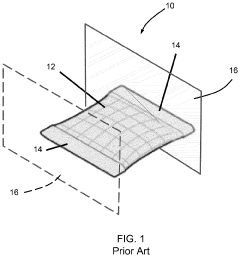
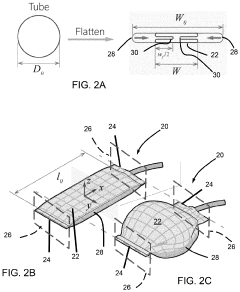
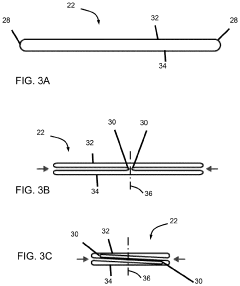
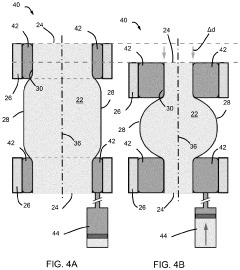
- A pneumatic soft actuator with an inflatable pouch featuring symmetrical folds at its ends, allowing for active modification of the end geometry through a branched tendon and spool mechanism, enabling adjustment of the force-strain relationship and range of motion without altering the pouch's composition or structure.
Wearable device concept powered by a combination of soft pneumatic actuators and variable stiffness knitting
PatentPendingUS20250209895A1
Innovation
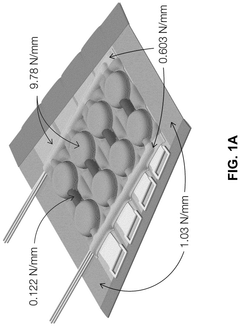
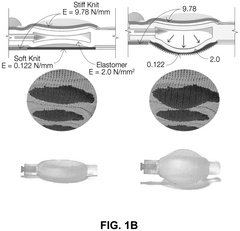
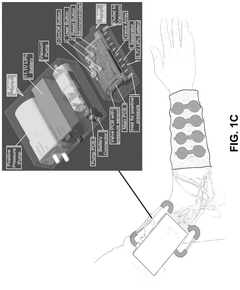
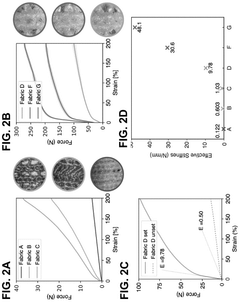
- A pneumatic haptic sleeve is designed with integrated soft pneumatic actuators and variable stiffness areas, achieved through knitted layers with high and low stiffness regions, allowing for seamless integration and distribution of actuation forces, powered by an untethered pneumatic system.
Environmental Impact Assessment
The deployment of Soft Pneumatic Actuators (SPAs) in remote sensing applications presents both challenges and opportunities for environmental sustainability. These flexible, lightweight systems offer significant environmental advantages compared to traditional rigid actuators. SPAs typically consume less energy during operation, with studies indicating up to 30% reduction in power requirements for certain applications. This energy efficiency translates directly to reduced carbon emissions when deployed in field-based remote sensing networks, particularly important for long-term environmental monitoring projects.
Material composition represents another critical environmental consideration. Most SPAs utilize elastomers such as silicone rubber, thermoplastic polyurethanes, or natural rubber derivatives. These materials generally have lower environmental impact during manufacturing compared to metal-based components in conventional actuators. However, end-of-life disposal remains problematic as many elastomers are not readily biodegradable. Recent research has explored biodegradable alternatives, including cellulose-based composites and protein-derived polymers, which show promise for environmentally sensitive deployments.
When implemented in remote sensing applications, SPAs contribute to reduced site disturbance during installation and operation. Their compliant nature minimizes physical impact on fragile ecosystems, making them particularly valuable for monitoring sensitive habitats such as coral reefs, wetlands, and alpine environments. Field tests in the Great Barrier Reef demonstrated that SPA-equipped sensing platforms caused 78% less physical disturbance to coral structures compared to rigid systems.
Lifecycle assessment studies indicate that the environmental footprint of SPA-based remote sensing systems is heavily influenced by operational lifespan. While manufacturing impacts may be lower than traditional systems, premature failure due to material degradation can offset these benefits. Environmental exposure, particularly UV radiation and temperature fluctuations, accelerates elastomer breakdown, potentially leading to microplastic pollution in marine and terrestrial environments. Protective coatings and material innovations have extended typical operational lifespans from 6-8 months to 2-3 years in harsh environments.
Water consumption during manufacturing represents another environmental consideration. Production of specialized elastomers for high-performance SPAs typically requires 40-60% less water than manufacturing equivalent metal components. However, chemical additives used to enhance material properties may introduce toxicity concerns if improperly managed during production or disposal phases.
Overall, SPAs offer promising environmental advantages for remote sensing applications, particularly in sensitive ecosystems. However, continued innovation in biodegradable materials, durability enhancements, and end-of-life management strategies remains essential to maximize their positive environmental impact while minimizing potential drawbacks.
Material composition represents another critical environmental consideration. Most SPAs utilize elastomers such as silicone rubber, thermoplastic polyurethanes, or natural rubber derivatives. These materials generally have lower environmental impact during manufacturing compared to metal-based components in conventional actuators. However, end-of-life disposal remains problematic as many elastomers are not readily biodegradable. Recent research has explored biodegradable alternatives, including cellulose-based composites and protein-derived polymers, which show promise for environmentally sensitive deployments.
When implemented in remote sensing applications, SPAs contribute to reduced site disturbance during installation and operation. Their compliant nature minimizes physical impact on fragile ecosystems, making them particularly valuable for monitoring sensitive habitats such as coral reefs, wetlands, and alpine environments. Field tests in the Great Barrier Reef demonstrated that SPA-equipped sensing platforms caused 78% less physical disturbance to coral structures compared to rigid systems.
Lifecycle assessment studies indicate that the environmental footprint of SPA-based remote sensing systems is heavily influenced by operational lifespan. While manufacturing impacts may be lower than traditional systems, premature failure due to material degradation can offset these benefits. Environmental exposure, particularly UV radiation and temperature fluctuations, accelerates elastomer breakdown, potentially leading to microplastic pollution in marine and terrestrial environments. Protective coatings and material innovations have extended typical operational lifespans from 6-8 months to 2-3 years in harsh environments.
Water consumption during manufacturing represents another environmental consideration. Production of specialized elastomers for high-performance SPAs typically requires 40-60% less water than manufacturing equivalent metal components. However, chemical additives used to enhance material properties may introduce toxicity concerns if improperly managed during production or disposal phases.
Overall, SPAs offer promising environmental advantages for remote sensing applications, particularly in sensitive ecosystems. However, continued innovation in biodegradable materials, durability enhancements, and end-of-life management strategies remains essential to maximize their positive environmental impact while minimizing potential drawbacks.
Integration with IoT and AI Systems
The integration of Soft Pneumatic Actuators (SPAs) with IoT and AI systems represents a transformative advancement in remote sensing applications. This convergence creates intelligent, adaptive sensing networks capable of responding to environmental changes in real-time. SPAs, with their inherent flexibility and biomimetic properties, serve as ideal physical interfaces for IoT-enabled remote sensing platforms, while AI algorithms provide the analytical backbone for data interpretation and decision-making.
IoT connectivity enables SPAs to function as nodes within larger sensing networks, transmitting data through wireless protocols such as LoRaWAN, NB-IoT, or Zigbee. These communication standards are particularly suitable for remote deployment scenarios due to their low power requirements and long-range capabilities. The integration allows for continuous monitoring and control of SPA-based sensors across geographically dispersed locations, creating comprehensive environmental monitoring systems that can operate autonomously for extended periods.
Machine learning algorithms significantly enhance the capabilities of SPA-based sensing systems by enabling pattern recognition, anomaly detection, and predictive analytics. Supervised learning models can be trained to identify specific environmental conditions based on the mechanical response patterns of SPAs, while unsupervised learning approaches help discover hidden correlations in sensor data. Reinforcement learning frameworks optimize the actuation parameters of SPAs in response to changing environmental conditions, maximizing sensing efficiency and accuracy.
Edge computing architectures are increasingly being implemented alongside SPA-IoT systems to process data locally before transmission. This approach reduces bandwidth requirements and power consumption while enabling real-time response capabilities. Miniaturized edge processors embedded within SPA-based sensing platforms can execute lightweight AI models for immediate data analysis, triggering appropriate actuation responses without requiring constant communication with centralized servers.
Digital twin technology represents another promising integration pathway, creating virtual replicas of SPA-based sensing systems that can simulate responses to various environmental conditions. These digital models facilitate predictive maintenance, performance optimization, and scenario testing without risking physical hardware. By continuously updating digital twins with real-time data from deployed SPAs, system operators can maintain accurate virtual representations that evolve alongside their physical counterparts.
Security considerations remain paramount in SPA-IoT-AI integrations, particularly for applications in sensitive environments or critical infrastructure monitoring. Encryption protocols, secure boot mechanisms, and blockchain-based data verification systems are being implemented to protect both the integrity of collected data and the operational security of the sensing networks themselves. As these integrated systems become more autonomous, establishing robust security frameworks becomes increasingly essential to prevent unauthorized access or manipulation.
IoT connectivity enables SPAs to function as nodes within larger sensing networks, transmitting data through wireless protocols such as LoRaWAN, NB-IoT, or Zigbee. These communication standards are particularly suitable for remote deployment scenarios due to their low power requirements and long-range capabilities. The integration allows for continuous monitoring and control of SPA-based sensors across geographically dispersed locations, creating comprehensive environmental monitoring systems that can operate autonomously for extended periods.
Machine learning algorithms significantly enhance the capabilities of SPA-based sensing systems by enabling pattern recognition, anomaly detection, and predictive analytics. Supervised learning models can be trained to identify specific environmental conditions based on the mechanical response patterns of SPAs, while unsupervised learning approaches help discover hidden correlations in sensor data. Reinforcement learning frameworks optimize the actuation parameters of SPAs in response to changing environmental conditions, maximizing sensing efficiency and accuracy.
Edge computing architectures are increasingly being implemented alongside SPA-IoT systems to process data locally before transmission. This approach reduces bandwidth requirements and power consumption while enabling real-time response capabilities. Miniaturized edge processors embedded within SPA-based sensing platforms can execute lightweight AI models for immediate data analysis, triggering appropriate actuation responses without requiring constant communication with centralized servers.
Digital twin technology represents another promising integration pathway, creating virtual replicas of SPA-based sensing systems that can simulate responses to various environmental conditions. These digital models facilitate predictive maintenance, performance optimization, and scenario testing without risking physical hardware. By continuously updating digital twins with real-time data from deployed SPAs, system operators can maintain accurate virtual representations that evolve alongside their physical counterparts.
Security considerations remain paramount in SPA-IoT-AI integrations, particularly for applications in sensitive environments or critical infrastructure monitoring. Encryption protocols, secure boot mechanisms, and blockchain-based data verification systems are being implemented to protect both the integrity of collected data and the operational security of the sensing networks themselves. As these integrated systems become more autonomous, establishing robust security frameworks becomes increasingly essential to prevent unauthorized access or manipulation.
Unlock deeper insights with PatSnap Eureka Quick Research — get a full tech report to explore trends and direct your research. Try now!
Generate Your Research Report Instantly with AI Agent
Supercharge your innovation with PatSnap Eureka AI Agent Platform!