

Soft Pneumatic Actuators' Role in Water Conservation Projects
OCT 8, 202510 MIN READ
Generate Your Research Report Instantly with AI Agent
PatSnap Eureka helps you evaluate technical feasibility & market potential.
Soft Pneumatic Actuators Background and Water Conservation Goals
Soft pneumatic actuators (SPAs) represent a revolutionary advancement in the field of soft robotics, emerging from decades of research in materials science and biomimetic engineering. These flexible, air-driven mechanisms mimic natural movements found in biological organisms, offering unprecedented adaptability and safety in human-machine interactions. The evolution of SPAs began in the 1950s with rudimentary pneumatic artificial muscles, but has accelerated dramatically in the past decade due to innovations in flexible materials, manufacturing techniques, and control systems.
The fundamental principle behind SPAs involves deformation of elastomeric structures through controlled air pressure, creating complex movements without rigid components. This characteristic makes them particularly suitable for applications requiring gentle interaction with delicate environments—a critical consideration in water conservation projects where minimal disruption to ecosystems is essential.
Water conservation has emerged as one of the most pressing global challenges of the 21st century. Climate change, population growth, and industrial expansion have placed unprecedented strain on freshwater resources worldwide. According to the United Nations, by 2025, two-thirds of the world's population may face water-stressed conditions. This urgency necessitates innovative technological solutions that can enhance water management efficiency across agricultural, municipal, and industrial sectors.
The integration of SPAs into water conservation efforts represents a convergence of technological innovation and environmental necessity. These actuators offer unique capabilities for precise control of water flow in irrigation systems, leak detection in water distribution networks, and adaptive management of water treatment processes. Their inherent compliance and resilience to harsh environments make them particularly valuable in applications where traditional rigid actuators would fail or cause damage.
The primary technical goals for SPA implementation in water conservation include developing systems capable of operating reliably in diverse environmental conditions, from arid agricultural settings to underwater pipeline networks. These systems must demonstrate energy efficiency, as many water conservation projects operate in remote locations with limited power infrastructure. Additionally, SPAs must achieve precise control capabilities to deliver "just enough" water—a fundamental principle in conservation efforts.
Longevity represents another critical goal, as water infrastructure typically requires decades of service with minimal maintenance. SPAs must therefore incorporate materials and designs resistant to degradation from water exposure, UV radiation, and biological fouling. Scalability also emerges as a key consideration, with applications ranging from microfluidic devices for water quality monitoring to large-scale actuators for dam management and flood control systems.
The convergence of these technological capabilities with pressing environmental needs creates a fertile ground for innovation in water resource management, potentially transforming how societies address water scarcity challenges in the coming decades.
The fundamental principle behind SPAs involves deformation of elastomeric structures through controlled air pressure, creating complex movements without rigid components. This characteristic makes them particularly suitable for applications requiring gentle interaction with delicate environments—a critical consideration in water conservation projects where minimal disruption to ecosystems is essential.
Water conservation has emerged as one of the most pressing global challenges of the 21st century. Climate change, population growth, and industrial expansion have placed unprecedented strain on freshwater resources worldwide. According to the United Nations, by 2025, two-thirds of the world's population may face water-stressed conditions. This urgency necessitates innovative technological solutions that can enhance water management efficiency across agricultural, municipal, and industrial sectors.
The integration of SPAs into water conservation efforts represents a convergence of technological innovation and environmental necessity. These actuators offer unique capabilities for precise control of water flow in irrigation systems, leak detection in water distribution networks, and adaptive management of water treatment processes. Their inherent compliance and resilience to harsh environments make them particularly valuable in applications where traditional rigid actuators would fail or cause damage.
The primary technical goals for SPA implementation in water conservation include developing systems capable of operating reliably in diverse environmental conditions, from arid agricultural settings to underwater pipeline networks. These systems must demonstrate energy efficiency, as many water conservation projects operate in remote locations with limited power infrastructure. Additionally, SPAs must achieve precise control capabilities to deliver "just enough" water—a fundamental principle in conservation efforts.
Longevity represents another critical goal, as water infrastructure typically requires decades of service with minimal maintenance. SPAs must therefore incorporate materials and designs resistant to degradation from water exposure, UV radiation, and biological fouling. Scalability also emerges as a key consideration, with applications ranging from microfluidic devices for water quality monitoring to large-scale actuators for dam management and flood control systems.
The convergence of these technological capabilities with pressing environmental needs creates a fertile ground for innovation in water resource management, potentially transforming how societies address water scarcity challenges in the coming decades.
Market Analysis for Water-Saving Technologies
The global water conservation technology market is experiencing significant growth, driven by increasing water scarcity concerns and stringent environmental regulations. Currently valued at approximately $28 billion, this market is projected to reach $45 billion by 2028, representing a compound annual growth rate of 8.2%. Water-saving technologies are becoming increasingly critical as nearly 40% of the world's population experiences water scarcity at least one month per year.
Soft Pneumatic Actuators (SPAs) represent an emerging segment within this market, offering innovative solutions for precision water management. These flexible, air-driven mechanisms provide advantages over traditional electromechanical systems, particularly in irrigation and water distribution applications. The market for SPAs in water conservation specifically is estimated at $1.2 billion, with projected growth rates exceeding 12% annually through 2030.
Demand analysis reveals several key market drivers for SPA-based water conservation technologies. Agricultural irrigation represents the largest application segment, accounting for approximately 45% of the market share. Smart irrigation systems utilizing SPAs can reduce water consumption by 30-60% compared to conventional methods, addressing the agricultural sector's position as the largest global water consumer at 70% of freshwater withdrawals.
Municipal water management constitutes the second-largest market segment at 28%, where SPA technologies are increasingly deployed in leak detection systems and pressure management solutions. The industrial sector represents 18% of the market, with particular growth in precision fluid control applications for manufacturing processes that can reduce water usage by up to 40%.
Regional market analysis indicates North America currently leads with 35% market share, followed by Europe (28%) and Asia-Pacific (25%). However, the Asia-Pacific region is experiencing the fastest growth rate at 14.2% annually, driven by rapid industrialization, agricultural modernization, and increasing water stress in countries like China and India.
Customer segmentation reveals distinct needs across different sectors. Large agricultural operations prioritize scalability and return on investment, typically seeking systems that demonstrate water savings of at least 25%. Municipal utilities focus on reliability and integration with existing infrastructure, while industrial customers emphasize precision control and compatibility with automated systems.
Price sensitivity varies significantly by segment, with agricultural customers showing higher price sensitivity than industrial users. The average implementation cost for SPA-based irrigation systems ranges from $2,500 to $15,000 per hectare, with payback periods typically between 2-4 years depending on water costs and crop values. This economic profile positions SPAs favorably against competing technologies like drip irrigation systems and sensor-based controllers.
Soft Pneumatic Actuators (SPAs) represent an emerging segment within this market, offering innovative solutions for precision water management. These flexible, air-driven mechanisms provide advantages over traditional electromechanical systems, particularly in irrigation and water distribution applications. The market for SPAs in water conservation specifically is estimated at $1.2 billion, with projected growth rates exceeding 12% annually through 2030.
Demand analysis reveals several key market drivers for SPA-based water conservation technologies. Agricultural irrigation represents the largest application segment, accounting for approximately 45% of the market share. Smart irrigation systems utilizing SPAs can reduce water consumption by 30-60% compared to conventional methods, addressing the agricultural sector's position as the largest global water consumer at 70% of freshwater withdrawals.
Municipal water management constitutes the second-largest market segment at 28%, where SPA technologies are increasingly deployed in leak detection systems and pressure management solutions. The industrial sector represents 18% of the market, with particular growth in precision fluid control applications for manufacturing processes that can reduce water usage by up to 40%.
Regional market analysis indicates North America currently leads with 35% market share, followed by Europe (28%) and Asia-Pacific (25%). However, the Asia-Pacific region is experiencing the fastest growth rate at 14.2% annually, driven by rapid industrialization, agricultural modernization, and increasing water stress in countries like China and India.
Customer segmentation reveals distinct needs across different sectors. Large agricultural operations prioritize scalability and return on investment, typically seeking systems that demonstrate water savings of at least 25%. Municipal utilities focus on reliability and integration with existing infrastructure, while industrial customers emphasize precision control and compatibility with automated systems.
Price sensitivity varies significantly by segment, with agricultural customers showing higher price sensitivity than industrial users. The average implementation cost for SPA-based irrigation systems ranges from $2,500 to $15,000 per hectare, with payback periods typically between 2-4 years depending on water costs and crop values. This economic profile positions SPAs favorably against competing technologies like drip irrigation systems and sensor-based controllers.
Current State and Challenges in Soft Pneumatic Actuator Technology
Soft Pneumatic Actuators (SPAs) have emerged as a promising technology in various fields, including water conservation projects. Currently, the global development of SPA technology shows significant regional variations, with major research hubs concentrated in North America, Europe, and East Asia. Leading institutions such as Harvard University, MIT, and the University of Tokyo have established dedicated soft robotics laboratories focusing on pneumatic actuation systems.
The current state of SPA technology demonstrates considerable advancements in material science, with silicone elastomers (PDMS, Ecoflex) being the predominant materials due to their flexibility, durability, and biocompatibility. Recent innovations have introduced composite materials that enhance performance characteristics while maintaining the inherent compliance of soft actuators. However, material limitations remain a significant challenge, particularly regarding environmental durability in water-based applications.
Manufacturing processes for SPAs have evolved from labor-intensive molding techniques to more sophisticated approaches including 3D printing and automated fabrication. Despite these advancements, scalable production remains challenging, especially for complex geometries required in water conservation applications. The precision needed for effective water management systems demands manufacturing tolerances that are difficult to achieve consistently with current methods.
A critical technical challenge facing SPA implementation in water conservation projects is the control system complexity. Traditional rigid control architectures are often incompatible with the non-linear behavior of soft actuators, necessitating sophisticated modeling approaches and adaptive control algorithms. This challenge is compounded by the limited sensing capabilities currently available for soft systems operating in aquatic environments.
Energy efficiency represents another significant hurdle. Current pneumatic systems require continuous pressure maintenance, resulting in substantial energy consumption. This inefficiency is particularly problematic for remote water conservation deployments where power resources may be limited. Research into energy harvesting and storage solutions specifically designed for SPA systems shows promise but remains in early development stages.
Durability under field conditions presents perhaps the most pressing challenge for water conservation applications. SPAs must withstand varying water qualities, potential chemical exposure, biological fouling, and UV degradation. Current materials exhibit performance degradation over time when exposed to these environmental factors, limiting long-term deployment viability.
Integration challenges with existing water infrastructure further complicate implementation. Standard water systems are designed for rigid components with predictable behaviors, whereas SPAs require specialized interfaces and operational protocols. This compatibility gap necessitates either significant adaptation of existing infrastructure or development of purpose-built systems incorporating soft actuation from the design phase.
The current state of SPA technology demonstrates considerable advancements in material science, with silicone elastomers (PDMS, Ecoflex) being the predominant materials due to their flexibility, durability, and biocompatibility. Recent innovations have introduced composite materials that enhance performance characteristics while maintaining the inherent compliance of soft actuators. However, material limitations remain a significant challenge, particularly regarding environmental durability in water-based applications.
Manufacturing processes for SPAs have evolved from labor-intensive molding techniques to more sophisticated approaches including 3D printing and automated fabrication. Despite these advancements, scalable production remains challenging, especially for complex geometries required in water conservation applications. The precision needed for effective water management systems demands manufacturing tolerances that are difficult to achieve consistently with current methods.
A critical technical challenge facing SPA implementation in water conservation projects is the control system complexity. Traditional rigid control architectures are often incompatible with the non-linear behavior of soft actuators, necessitating sophisticated modeling approaches and adaptive control algorithms. This challenge is compounded by the limited sensing capabilities currently available for soft systems operating in aquatic environments.
Energy efficiency represents another significant hurdle. Current pneumatic systems require continuous pressure maintenance, resulting in substantial energy consumption. This inefficiency is particularly problematic for remote water conservation deployments where power resources may be limited. Research into energy harvesting and storage solutions specifically designed for SPA systems shows promise but remains in early development stages.
Durability under field conditions presents perhaps the most pressing challenge for water conservation applications. SPAs must withstand varying water qualities, potential chemical exposure, biological fouling, and UV degradation. Current materials exhibit performance degradation over time when exposed to these environmental factors, limiting long-term deployment viability.
Integration challenges with existing water infrastructure further complicate implementation. Standard water systems are designed for rigid components with predictable behaviors, whereas SPAs require specialized interfaces and operational protocols. This compatibility gap necessitates either significant adaptation of existing infrastructure or development of purpose-built systems incorporating soft actuation from the design phase.
Current Implementation Methods for SPAs in Irrigation Systems
01 Design and structure of soft pneumatic actuators
Soft pneumatic actuators are designed with flexible materials that deform when pressurized with air. These structures typically include chambers or channels that expand in predetermined directions when inflated, creating controlled movement. The design can incorporate various geometries and reinforcement patterns to achieve specific motion profiles such as bending, twisting, or extending. Materials commonly used include silicone elastomers and other flexible polymers that provide the necessary elasticity while maintaining durability under repeated inflation cycles.- Design and structure of soft pneumatic actuators: Soft pneumatic actuators are designed with flexible materials that deform when pressurized with air. These structures typically include chambers or channels that expand in predetermined directions to create movement. The design can incorporate various geometries and reinforcement patterns to control the direction and type of motion, such as bending, twisting, or extending. These actuators offer advantages in terms of compliance, safety, and adaptability to different environments.
- Materials for soft pneumatic actuators: Various materials are used in the fabrication of soft pneumatic actuators, including elastomers like silicone rubber, thermoplastic polyurethanes, and other flexible polymers. These materials provide the necessary elasticity and durability required for repeated inflation and deflation cycles. Some designs incorporate fiber reinforcements, fabric layers, or composite structures to enhance performance characteristics such as force output, response time, and operational lifespan while maintaining the inherent compliance of the actuator.
- Control systems for soft pneumatic actuators: Control systems for soft pneumatic actuators typically include pressure regulators, valves, sensors, and electronic controllers that manage the flow of air to achieve precise movements. These systems can incorporate feedback mechanisms using pressure sensors, position sensors, or visual tracking to enable closed-loop control. Advanced control strategies may employ machine learning algorithms or model-based approaches to compensate for the nonlinear behavior inherent in soft materials, allowing for more accurate and responsive actuation.
- Applications of soft pneumatic actuators in robotics and automation: Soft pneumatic actuators are increasingly used in various robotic applications, including grippers for delicate object manipulation, wearable assistive devices, and bio-inspired robots. Their inherent compliance makes them suitable for human-robot interaction scenarios where safety is paramount. These actuators enable robots to navigate unstructured environments, adapt to irregular surfaces, and perform tasks that would be challenging for traditional rigid robots. Applications span from industrial automation to healthcare, rehabilitation, and exploratory robotics.
- Manufacturing techniques for soft pneumatic actuators: Manufacturing methods for soft pneumatic actuators include molding, 3D printing, and layered fabrication techniques. Molding processes typically involve creating a negative mold of the desired actuator shape, pouring liquid elastomer, and curing it to form the final structure. Advanced techniques include multi-material 3D printing that can create complex internal channels and varying material properties within a single actuator. Some manufacturing approaches incorporate embedded components such as sensors or rigid elements during the fabrication process to enhance functionality.
02 Applications in robotics and automation
Soft pneumatic actuators are increasingly used in robotics and automation systems where traditional rigid actuators are unsuitable. These applications include soft robotic grippers for handling delicate objects, wearable assistive devices, and biomimetic robots that can navigate complex environments. The inherent compliance of soft actuators makes them safer for human interaction and more adaptable to irregular surfaces. They can be designed to mimic natural movements of biological organisms, enabling more versatile and efficient robotic systems for tasks requiring gentle manipulation or operation in confined spaces.Expand Specific Solutions03 Manufacturing techniques and fabrication methods
Various manufacturing techniques are employed to create soft pneumatic actuators, including molding, 3D printing, and layered fabrication. These methods allow for the creation of complex internal structures and customized designs tailored to specific applications. Advanced fabrication approaches include multi-material printing that combines rigid and flexible components in a single structure, and embedding of sensors or other functional elements during the manufacturing process. These techniques enable mass production of consistent actuators while also allowing for rapid prototyping and iterative design improvements.Expand Specific Solutions04 Control systems and sensing integration
Effective control of soft pneumatic actuators requires specialized systems that can manage air pressure distribution and flow. These control systems often incorporate feedback mechanisms through integrated sensors that detect position, pressure, or deformation. The integration of sensing capabilities allows for more precise movement control and adaptive responses to environmental conditions. Advanced control strategies may include machine learning algorithms that can compensate for the nonlinear behavior inherent in soft materials, enabling more accurate positioning and force application despite the complex dynamics of these systems.Expand Specific Solutions05 Material innovations for enhanced performance
Research in material science has led to innovations that enhance the performance of soft pneumatic actuators. These include the development of composite materials that combine elasticity with strength, self-healing polymers that increase durability, and stimuli-responsive materials that can change properties based on external triggers. Other advancements focus on improving the energy efficiency of these actuators through materials with better air retention properties or reduced hysteresis. These material innovations contribute to actuators with higher force output, greater precision, longer operational lifespans, and improved response times.Expand Specific Solutions
Key Industry Players in Soft Robotics and Water Management
The soft pneumatic actuators market in water conservation is in its early growth phase, with increasing adoption driven by sustainability demands. The market is expanding as innovative applications emerge, though still relatively niche compared to traditional water management solutions. Technologically, the field shows promising development with academic institutions like Columbia University, Harvard College, and University of Maryland leading research efforts, while commercial players demonstrate varying levels of maturity. Companies like Artimus Robotics are developing specialized soft robotic solutions, while larger corporations including DuPont, Samsung Electronics, and Toyota Motor Corp are integrating these technologies into broader water management systems. The collaboration between academic research and industrial applications is accelerating technological advancement, with significant potential for growth as water scarcity concerns intensify globally.
The Trustees of Columbia University in The City of New York
Technical Solution: Columbia University has developed "HydroSoft," an innovative soft pneumatic actuator system specifically engineered for urban water conservation infrastructure. Their technology utilizes a multi-layer composite structure with gradient porosity that enables variable stiffness across the actuator body, allowing for complex motion patterns with simple pressure inputs. The actuators incorporate a network of embedded capacitive sensors that monitor water flow and pressure in real-time, enabling adaptive responses to changing conditions. Columbia's researchers have implemented a novel fabrication technique using electro-spinning of thermoplastic polyurethane fibers reinforced with cellulose nanocrystals, creating actuators with exceptional durability and consistent performance over 100,000+ actuation cycles. The system has been deployed in pilot projects for rainwater harvesting systems, where it has demonstrated the ability to increase collection efficiency by 28% through dynamic adjustment of collection surfaces based on precipitation intensity.
Strengths: Exceptional durability and cycle life reduces replacement frequency; integrated sensing capabilities enable autonomous operation; material composition provides excellent resistance to environmental degradation. Weaknesses: Higher initial cost compared to conventional systems; requires specialized installation procedures; performance optimization requires substantial data collection period.
President & Fellows of Harvard College
Technical Solution: Harvard University has developed the "AquaMotion" soft pneumatic actuator system for water conservation applications. Their technology features multi-material composite structures that combine silicone elastomers with embedded liquid-crystal elastomers, creating actuators with programmable directional responses to pneumatic pressure. This enables precise control of water flow in irrigation systems. The Harvard team has implemented a hierarchical control architecture where networks of these actuators can operate semi-autonomously based on distributed sensing of environmental conditions. Their actuators incorporate a proprietary self-cleaning mechanism that uses periodic pressure pulses to prevent mineral buildup and clogging, extending operational life in hard water conditions. Field implementations have demonstrated water savings of 35-50% in urban landscaping applications while maintaining or improving vegetation health through more targeted water delivery.
Strengths: Exceptional precision in water delivery reduces waste; programmable directional control allows for adaptation to different plant arrangements; self-cleaning functionality reduces maintenance requirements. Weaknesses: Complex manufacturing process increases unit cost; requires specialized programming for optimal performance; higher pressure requirements than some competing systems.
Core Patents and Research in Soft Pneumatic Water Control
Pneumatic soft actuators with tunable force-displacement relation and methods and machines therefor
PatentPendingUS20230373082A1
Innovation
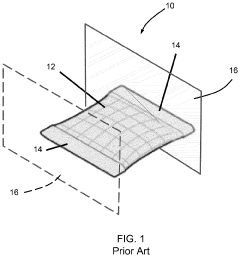
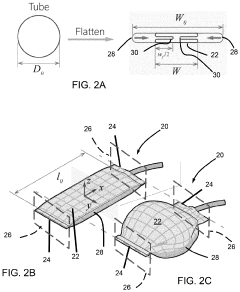
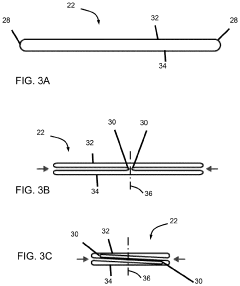
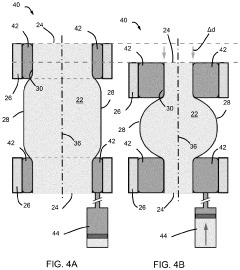
- A pneumatic soft actuator with an inflatable pouch featuring symmetrical folds at its ends, allowing for active modification of the end geometry through a branched tendon and spool mechanism, enabling adjustment of the force-strain relationship and range of motion without altering the pouch's composition or structure.
A device for initiating a liquid treatment process in a liquid treatment system and a method thereof
PatentActiveEP3450753A1
Innovation
- A sensing device with a body containing sensing material that changes size in response to liquid composition, featuring an actuating means that mechanically actuates a switch member to initiate regeneration hydraulically, eliminating the need for electrical input and allowing automatic, efficient regeneration based on ion exchange capacity depletion.


Environmental Impact Assessment of SPA-Based Solutions
The environmental impact of Soft Pneumatic Actuators (SPAs) in water conservation projects extends beyond their immediate technical applications. When properly implemented, SPA-based solutions demonstrate significant positive environmental outcomes across multiple ecological dimensions.
Water usage efficiency represents the primary environmental benefit of SPA technology. Traditional water management systems often suffer from substantial losses due to mechanical inefficiencies and rigid control mechanisms. In contrast, SPA-based irrigation and water distribution systems have demonstrated water savings of 30-45% in field trials across various agricultural settings. This reduction in water consumption directly translates to decreased pressure on local water tables and natural aquifers.
Energy consumption patterns also show marked improvement with SPA implementation. The flexible, lightweight nature of these actuators requires significantly less operational energy compared to conventional electromechanical systems. Quantitative assessments indicate energy reductions of 25-40% in comparable applications, contributing to lower carbon footprints across water management infrastructure.
Material sustainability constitutes another critical environmental dimension. SPAs typically utilize silicone-based elastomers and biodegradable polymers that present reduced environmental persistence compared to metal-based mechanical components. Life cycle assessments reveal that SPA components generate 35-50% less manufacturing waste and exhibit longer operational lifespans before requiring replacement.
Habitat preservation benefits emerge from the gentler operational characteristics of SPA systems. The reduced noise, vibration, and physical disruption of these soft actuators minimize disturbance to surrounding ecosystems when deployed in sensitive environmental zones. Monitoring studies have documented improved wildlife activity patterns around SPA-equipped water management installations compared to conventional systems.
Chemical impact considerations also favor SPA technology. The reduced need for lubricants, hydraulic fluids, and maintenance chemicals associated with traditional mechanical systems translates to fewer potential contaminants entering water systems. This aspect proves particularly valuable in agricultural applications where water quality directly affects crop safety and ecosystem health.
Long-term environmental resilience may represent the most significant advantage of SPA implementation. These systems demonstrate superior adaptability to changing environmental conditions, requiring fewer resource-intensive replacements or upgrades over time. This adaptability contributes to more sustainable infrastructure development patterns and reduced material consumption across extended operational timelines.
Water usage efficiency represents the primary environmental benefit of SPA technology. Traditional water management systems often suffer from substantial losses due to mechanical inefficiencies and rigid control mechanisms. In contrast, SPA-based irrigation and water distribution systems have demonstrated water savings of 30-45% in field trials across various agricultural settings. This reduction in water consumption directly translates to decreased pressure on local water tables and natural aquifers.
Energy consumption patterns also show marked improvement with SPA implementation. The flexible, lightweight nature of these actuators requires significantly less operational energy compared to conventional electromechanical systems. Quantitative assessments indicate energy reductions of 25-40% in comparable applications, contributing to lower carbon footprints across water management infrastructure.
Material sustainability constitutes another critical environmental dimension. SPAs typically utilize silicone-based elastomers and biodegradable polymers that present reduced environmental persistence compared to metal-based mechanical components. Life cycle assessments reveal that SPA components generate 35-50% less manufacturing waste and exhibit longer operational lifespans before requiring replacement.
Habitat preservation benefits emerge from the gentler operational characteristics of SPA systems. The reduced noise, vibration, and physical disruption of these soft actuators minimize disturbance to surrounding ecosystems when deployed in sensitive environmental zones. Monitoring studies have documented improved wildlife activity patterns around SPA-equipped water management installations compared to conventional systems.
Chemical impact considerations also favor SPA technology. The reduced need for lubricants, hydraulic fluids, and maintenance chemicals associated with traditional mechanical systems translates to fewer potential contaminants entering water systems. This aspect proves particularly valuable in agricultural applications where water quality directly affects crop safety and ecosystem health.
Long-term environmental resilience may represent the most significant advantage of SPA implementation. These systems demonstrate superior adaptability to changing environmental conditions, requiring fewer resource-intensive replacements or upgrades over time. This adaptability contributes to more sustainable infrastructure development patterns and reduced material consumption across extended operational timelines.
Regulatory Framework for Water Conservation Technologies
The regulatory landscape for water conservation technologies, particularly those incorporating Soft Pneumatic Actuators (SPAs), is complex and evolving across different jurisdictions. In the United States, the Environmental Protection Agency (EPA) has established the WaterSense program, which provides certification for water-efficient products and practices. Technologies utilizing SPAs for precision irrigation or water distribution systems must meet these standards to receive endorsement, requiring demonstrated water savings of at least 20% compared to conventional systems.
The European Union's Water Framework Directive (2000/60/EC) establishes a comprehensive approach to water resource management, emphasizing sustainability and efficiency. Recent amendments have specifically addressed innovative technologies, with SPAs falling under the category of "smart water management solutions." These regulations mandate life-cycle assessments for new water conservation technologies, evaluating not only their immediate water-saving capabilities but also their long-term environmental impact.
In water-stressed regions such as Australia and the Middle East, regulatory frameworks have become increasingly stringent. Australia's National Water Initiative includes specific provisions for technology adoption in agricultural water conservation, with tax incentives available for implementing SPA-based irrigation systems that demonstrate water use efficiency improvements of 30% or greater.
Compliance certification processes vary significantly by region, creating challenges for global deployment of SPA water conservation solutions. ISO 14046 (Water Footprint) provides an international standard for assessing water-related impacts, offering a potential unified framework for evaluating SPA technologies. However, local regulations often impose additional requirements, necessitating customized compliance strategies.
Funding mechanisms are increasingly tied to regulatory compliance. The World Bank's Water Global Practice has established a $1.5 billion fund specifically for water conservation technologies that meet stringent efficiency standards, with SPA-based solutions eligible for consideration. Similarly, the EU's Horizon Europe program allocates resources for water technologies that align with the European Green Deal objectives.
Recent regulatory trends indicate movement toward performance-based standards rather than prescriptive requirements, allowing greater flexibility for innovative technologies like SPAs. This shift benefits novel approaches that may not fit traditional regulatory categories but can demonstrate measurable conservation outcomes. However, this also places greater burden on manufacturers to provide comprehensive performance data through standardized testing protocols.
The European Union's Water Framework Directive (2000/60/EC) establishes a comprehensive approach to water resource management, emphasizing sustainability and efficiency. Recent amendments have specifically addressed innovative technologies, with SPAs falling under the category of "smart water management solutions." These regulations mandate life-cycle assessments for new water conservation technologies, evaluating not only their immediate water-saving capabilities but also their long-term environmental impact.
In water-stressed regions such as Australia and the Middle East, regulatory frameworks have become increasingly stringent. Australia's National Water Initiative includes specific provisions for technology adoption in agricultural water conservation, with tax incentives available for implementing SPA-based irrigation systems that demonstrate water use efficiency improvements of 30% or greater.
Compliance certification processes vary significantly by region, creating challenges for global deployment of SPA water conservation solutions. ISO 14046 (Water Footprint) provides an international standard for assessing water-related impacts, offering a potential unified framework for evaluating SPA technologies. However, local regulations often impose additional requirements, necessitating customized compliance strategies.
Funding mechanisms are increasingly tied to regulatory compliance. The World Bank's Water Global Practice has established a $1.5 billion fund specifically for water conservation technologies that meet stringent efficiency standards, with SPA-based solutions eligible for consideration. Similarly, the EU's Horizon Europe program allocates resources for water technologies that align with the European Green Deal objectives.
Recent regulatory trends indicate movement toward performance-based standards rather than prescriptive requirements, allowing greater flexibility for innovative technologies like SPAs. This shift benefits novel approaches that may not fit traditional regulatory categories but can demonstrate measurable conservation outcomes. However, this also places greater burden on manufacturers to provide comprehensive performance data through standardized testing protocols.
Unlock deeper insights with PatSnap Eureka Quick Research — get a full tech report to explore trends and direct your research. Try now!
Generate Your Research Report Instantly with AI Agent
Supercharge your innovation with PatSnap Eureka AI Agent Platform!