
Solid-State Battery Management Systems: An Emerging Discipline
AUG 8, 20259 MIN READ
Generate Your Research Report Instantly with AI Agent
Patsnap Eureka helps you evaluate technical feasibility & market potential.
SSB Tech Background
Solid-state batteries (SSBs) represent a significant leap forward in energy storage technology, promising higher energy density, improved safety, and longer lifespan compared to traditional lithium-ion batteries. The development of SSBs can be traced back to the 1970s, but it is only in recent years that they have gained substantial attention from researchers and industry alike.
The evolution of SSB technology has been driven by the increasing demand for more efficient and safer energy storage solutions, particularly in the automotive and consumer electronics sectors. As conventional lithium-ion batteries approach their theoretical limits, SSBs offer a pathway to overcome these limitations and meet the growing energy demands of modern devices and electric vehicles.
One of the key advantages of SSBs is their use of solid electrolytes instead of liquid ones, which eliminates the risk of leakage and reduces the potential for thermal runaway. This inherent safety feature has made SSBs particularly attractive for applications where safety is paramount, such as in aerospace and medical devices.
The technical goals for SSB development are multifaceted. Researchers aim to increase energy density, improve charge/discharge rates, enhance cycle life, and develop manufacturing processes that are scalable and cost-effective. Additionally, there is a focus on creating SSBs that can operate efficiently across a wide temperature range, addressing one of the current limitations of this technology.
As the field progresses, several key technological trends have emerged. These include the exploration of various solid electrolyte materials, such as ceramics, polymers, and sulfides, each with its own set of advantages and challenges. There is also significant research into interface engineering to improve the contact between electrodes and electrolytes, which is crucial for enhancing battery performance.
The development of SSBs is closely tied to advancements in materials science and nanotechnology. Innovations in these fields have led to the creation of novel electrode and electrolyte materials with improved ionic conductivity and stability. Furthermore, the integration of SSBs with other emerging technologies, such as artificial intelligence for battery management and advanced manufacturing techniques like 3D printing, is opening up new possibilities for customized and high-performance energy storage solutions.
As SSB technology matures, the focus is shifting towards addressing the challenges of large-scale production and integration into existing manufacturing processes. This transition from laboratory to industry is a critical phase in the technology's evolution, requiring significant investment and collaboration between academic institutions, private companies, and government agencies.
The evolution of SSB technology has been driven by the increasing demand for more efficient and safer energy storage solutions, particularly in the automotive and consumer electronics sectors. As conventional lithium-ion batteries approach their theoretical limits, SSBs offer a pathway to overcome these limitations and meet the growing energy demands of modern devices and electric vehicles.
One of the key advantages of SSBs is their use of solid electrolytes instead of liquid ones, which eliminates the risk of leakage and reduces the potential for thermal runaway. This inherent safety feature has made SSBs particularly attractive for applications where safety is paramount, such as in aerospace and medical devices.
The technical goals for SSB development are multifaceted. Researchers aim to increase energy density, improve charge/discharge rates, enhance cycle life, and develop manufacturing processes that are scalable and cost-effective. Additionally, there is a focus on creating SSBs that can operate efficiently across a wide temperature range, addressing one of the current limitations of this technology.
As the field progresses, several key technological trends have emerged. These include the exploration of various solid electrolyte materials, such as ceramics, polymers, and sulfides, each with its own set of advantages and challenges. There is also significant research into interface engineering to improve the contact between electrodes and electrolytes, which is crucial for enhancing battery performance.
The development of SSBs is closely tied to advancements in materials science and nanotechnology. Innovations in these fields have led to the creation of novel electrode and electrolyte materials with improved ionic conductivity and stability. Furthermore, the integration of SSBs with other emerging technologies, such as artificial intelligence for battery management and advanced manufacturing techniques like 3D printing, is opening up new possibilities for customized and high-performance energy storage solutions.
As SSB technology matures, the focus is shifting towards addressing the challenges of large-scale production and integration into existing manufacturing processes. This transition from laboratory to industry is a critical phase in the technology's evolution, requiring significant investment and collaboration between academic institutions, private companies, and government agencies.
SSB Market Analysis
The solid-state battery (SSB) market is experiencing rapid growth and attracting significant attention from investors, manufacturers, and researchers. This emerging technology promises to revolutionize energy storage solutions across various industries, particularly in the automotive sector. The global SSB market is projected to expand substantially over the next decade, driven by increasing demand for high-performance, safe, and long-lasting energy storage solutions.
One of the primary factors fueling market growth is the automotive industry's shift towards electrification. Major automakers are investing heavily in SSB technology, recognizing its potential to overcome the limitations of conventional lithium-ion batteries. SSBs offer higher energy density, faster charging capabilities, and improved safety features, making them ideal for electric vehicles (EVs). This alignment with the automotive sector's needs is expected to be a significant driver of market expansion in the coming years.
The consumer electronics sector is another key market for SSBs. As devices become more powerful and energy-demanding, there is a growing need for batteries that can provide longer life and faster charging times. SSBs are well-positioned to meet these requirements, potentially leading to widespread adoption in smartphones, laptops, and wearable devices.
In the energy storage sector, SSBs are gaining traction for grid-scale applications. Their improved safety profile and longer lifespan make them attractive for large-scale energy storage systems, which are crucial for integrating renewable energy sources into the power grid. This application is expected to contribute significantly to market growth as countries worldwide increase their focus on renewable energy adoption.
The aerospace and defense industries are also showing interest in SSB technology. The lightweight nature and high energy density of SSBs make them suitable for use in aircraft and military equipment, where weight and performance are critical factors.
Geographically, Asia-Pacific is expected to dominate the SSB market, with Japan, South Korea, and China leading in research, development, and production. North America and Europe are also significant markets, driven by strong automotive and electronics industries.
Despite the promising outlook, challenges remain in scaling up production and reducing costs. Current SSB production is limited and expensive compared to traditional lithium-ion batteries. However, ongoing research and development efforts are focused on addressing these issues, with several companies and research institutions working on innovative manufacturing processes and materials to make SSBs more commercially viable.
As the technology matures and production scales up, the SSB market is poised for substantial growth. The increasing focus on sustainability and the push for cleaner energy solutions across various sectors will likely accelerate the adoption of SSBs, reshaping the energy storage landscape in the coming decades.
One of the primary factors fueling market growth is the automotive industry's shift towards electrification. Major automakers are investing heavily in SSB technology, recognizing its potential to overcome the limitations of conventional lithium-ion batteries. SSBs offer higher energy density, faster charging capabilities, and improved safety features, making them ideal for electric vehicles (EVs). This alignment with the automotive sector's needs is expected to be a significant driver of market expansion in the coming years.
The consumer electronics sector is another key market for SSBs. As devices become more powerful and energy-demanding, there is a growing need for batteries that can provide longer life and faster charging times. SSBs are well-positioned to meet these requirements, potentially leading to widespread adoption in smartphones, laptops, and wearable devices.
In the energy storage sector, SSBs are gaining traction for grid-scale applications. Their improved safety profile and longer lifespan make them attractive for large-scale energy storage systems, which are crucial for integrating renewable energy sources into the power grid. This application is expected to contribute significantly to market growth as countries worldwide increase their focus on renewable energy adoption.
The aerospace and defense industries are also showing interest in SSB technology. The lightweight nature and high energy density of SSBs make them suitable for use in aircraft and military equipment, where weight and performance are critical factors.
Geographically, Asia-Pacific is expected to dominate the SSB market, with Japan, South Korea, and China leading in research, development, and production. North America and Europe are also significant markets, driven by strong automotive and electronics industries.
Despite the promising outlook, challenges remain in scaling up production and reducing costs. Current SSB production is limited and expensive compared to traditional lithium-ion batteries. However, ongoing research and development efforts are focused on addressing these issues, with several companies and research institutions working on innovative manufacturing processes and materials to make SSBs more commercially viable.
As the technology matures and production scales up, the SSB market is poised for substantial growth. The increasing focus on sustainability and the push for cleaner energy solutions across various sectors will likely accelerate the adoption of SSBs, reshaping the energy storage landscape in the coming decades.
SSB Challenges
Solid-state batteries (SSBs) represent a promising advancement in energy storage technology, offering potential improvements in safety, energy density, and longevity compared to traditional lithium-ion batteries. However, the development and implementation of SSBs face several significant challenges that must be addressed before widespread commercialization can be achieved.
One of the primary challenges in SSB technology is the development of suitable solid electrolytes. These materials must exhibit high ionic conductivity at room temperature, comparable to that of liquid electrolytes, while maintaining chemical and electrochemical stability. Current solid electrolytes often struggle to meet these requirements, leading to reduced battery performance and limited practical applications.
Interface management between the solid electrolyte and electrodes presents another major hurdle. The formation of stable and low-resistance interfaces is crucial for efficient ion transfer and overall battery performance. However, many SSB systems suffer from high interfacial resistance and poor contact between components, resulting in reduced power output and cycling stability.
Manufacturing scalability remains a significant challenge for SSBs. Traditional battery production methods are not directly applicable to solid-state systems, necessitating the development of new manufacturing processes and equipment. Achieving uniform and defect-free layers of solid electrolytes and electrodes at scale is particularly challenging and requires innovative production techniques.
Thermal management is another critical issue in SSB development. While solid-state batteries are generally considered safer than their liquid-electrolyte counterparts, they still generate heat during operation. Efficient heat dissipation is essential to prevent thermal runaway and ensure optimal performance, especially in high-power applications.
The mechanical stability of SSBs under various operating conditions poses yet another challenge. Solid-state batteries must withstand mechanical stresses induced by volume changes during cycling, as well as external forces in real-world applications. Ensuring the structural integrity of the battery components over extended periods of use is crucial for long-term reliability and safety.
Cost-effectiveness remains a significant barrier to the widespread adoption of SSBs. Current production costs for solid-state batteries are substantially higher than those of conventional lithium-ion batteries, primarily due to expensive materials and complex manufacturing processes. Reducing costs while maintaining performance advantages is essential for market competitiveness.
Lastly, the integration of SSBs into existing battery management systems (BMS) presents unique challenges. Traditional BMS algorithms and hardware may not be directly applicable to solid-state systems, necessitating the development of new monitoring and control strategies tailored to the specific characteristics of SSBs.
One of the primary challenges in SSB technology is the development of suitable solid electrolytes. These materials must exhibit high ionic conductivity at room temperature, comparable to that of liquid electrolytes, while maintaining chemical and electrochemical stability. Current solid electrolytes often struggle to meet these requirements, leading to reduced battery performance and limited practical applications.
Interface management between the solid electrolyte and electrodes presents another major hurdle. The formation of stable and low-resistance interfaces is crucial for efficient ion transfer and overall battery performance. However, many SSB systems suffer from high interfacial resistance and poor contact between components, resulting in reduced power output and cycling stability.
Manufacturing scalability remains a significant challenge for SSBs. Traditional battery production methods are not directly applicable to solid-state systems, necessitating the development of new manufacturing processes and equipment. Achieving uniform and defect-free layers of solid electrolytes and electrodes at scale is particularly challenging and requires innovative production techniques.
Thermal management is another critical issue in SSB development. While solid-state batteries are generally considered safer than their liquid-electrolyte counterparts, they still generate heat during operation. Efficient heat dissipation is essential to prevent thermal runaway and ensure optimal performance, especially in high-power applications.
The mechanical stability of SSBs under various operating conditions poses yet another challenge. Solid-state batteries must withstand mechanical stresses induced by volume changes during cycling, as well as external forces in real-world applications. Ensuring the structural integrity of the battery components over extended periods of use is crucial for long-term reliability and safety.
Cost-effectiveness remains a significant barrier to the widespread adoption of SSBs. Current production costs for solid-state batteries are substantially higher than those of conventional lithium-ion batteries, primarily due to expensive materials and complex manufacturing processes. Reducing costs while maintaining performance advantages is essential for market competitiveness.
Lastly, the integration of SSBs into existing battery management systems (BMS) presents unique challenges. Traditional BMS algorithms and hardware may not be directly applicable to solid-state systems, necessitating the development of new monitoring and control strategies tailored to the specific characteristics of SSBs.
Current SSB BMS
01 Thermal management systems for solid-state batteries
Advanced thermal management systems are crucial for solid-state batteries to maintain optimal operating temperatures, enhance performance, and extend battery life. These systems may include active cooling mechanisms, heat dissipation structures, and temperature monitoring sensors to prevent overheating and ensure efficient operation.- Temperature management in solid-state batteries: Effective temperature control is crucial for solid-state battery management systems. This involves monitoring and regulating the battery's temperature to optimize performance, prevent overheating, and ensure safe operation. Advanced thermal management techniques may include active cooling systems, heat dissipation mechanisms, and temperature sensors integrated into the battery pack.
- State of charge estimation for solid-state batteries: Accurate state of charge (SOC) estimation is essential for solid-state battery management systems. This involves developing algorithms and methods to precisely determine the remaining charge in the battery, considering the unique characteristics of solid-state electrolytes. Advanced techniques may incorporate machine learning and real-time data analysis to improve SOC accuracy.
- Safety mechanisms for solid-state battery systems: Implementing robust safety mechanisms is critical in solid-state battery management systems. This includes developing advanced protection circuits, fault detection algorithms, and emergency shutdown procedures. These safety features aim to prevent issues such as short circuits, overcharging, and thermal runaway, ensuring the overall reliability and longevity of the battery system.
- Cell balancing techniques for solid-state batteries: Efficient cell balancing is crucial for optimizing the performance and lifespan of solid-state battery packs. This involves developing advanced algorithms and hardware solutions to ensure uniform charge distribution across multiple cells. Techniques may include active balancing methods and intelligent charge redistribution to maximize overall battery capacity and prevent premature degradation.
- Integration of solid-state batteries with power electronics: Seamless integration of solid-state batteries with power electronics is essential for efficient energy management. This involves designing specialized converters, inverters, and control systems tailored to the unique characteristics of solid-state batteries. Advanced integration techniques may include bidirectional power flow capabilities and adaptive control algorithms to optimize overall system performance.
02 State of charge (SOC) and state of health (SOH) estimation
Accurate estimation of SOC and SOH is essential for solid-state battery management systems. Advanced algorithms and sensing techniques are employed to monitor and predict battery performance, capacity, and degradation over time, enabling better control and optimization of battery usage.Expand Specific Solutions03 Safety and protection mechanisms
Solid-state battery management systems incorporate various safety features to prevent potential hazards such as overcharging, over-discharging, and short circuits. These may include advanced current limiting circuits, voltage monitoring systems, and fail-safe shutdown mechanisms to ensure safe operation under various conditions.Expand Specific Solutions04 Cell balancing and voltage regulation
Efficient cell balancing techniques are implemented in solid-state battery management systems to ensure uniform charge distribution across multiple cells. This includes active and passive balancing methods, along with precise voltage regulation to maximize battery performance and longevity.Expand Specific Solutions05 Integration with power electronics and control systems
Solid-state battery management systems are designed to seamlessly integrate with power electronics and overall control systems. This includes advanced communication protocols, data management, and intelligent control algorithms to optimize battery performance in various applications such as electric vehicles and grid energy storage.Expand Specific Solutions
SSB Industry Players
The solid-state battery management systems market is in its early growth stage, characterized by rapid technological advancements and increasing investments. The market size is expanding, driven by the growing demand for electric vehicles and energy storage solutions. While the technology is still evolving, major players like LG Energy Solution, Contemporary Amperex Technology, and Samsung Electronics are making significant strides in research and development. Established companies such as ABB Group and DuPont are also entering the space, leveraging their expertise in related fields. The competition is intensifying as both startups and large corporations race to commercialize solid-state battery technologies, with a focus on improving energy density, safety, and charging speeds.
LG Energy Solution Ltd.
Technical Solution: LG Energy Solution is at the forefront of solid-state battery management systems development. Their approach focuses on integrating advanced ceramic electrolytes with high-performance cathode materials to create a more stable and efficient battery structure. The company has developed a proprietary solid electrolyte that demonstrates superior ionic conductivity, allowing for faster charging and higher energy density[1]. Their battery management system (BMS) utilizes AI-driven algorithms to optimize charge/discharge cycles, extending battery life and improving safety. LG Energy Solution has also implemented a novel thermal management system that addresses the unique heat dissipation challenges of solid-state batteries, ensuring consistent performance across various operating conditions[2].
Strengths: Advanced ceramic electrolyte technology, AI-driven BMS, and innovative thermal management. Weaknesses: Higher production costs and challenges in scaling up manufacturing processes for mass production.
Contemporary Amperex Technology Co., Ltd.
Technical Solution: CATL has made significant strides in solid-state battery management systems, focusing on integrating their technology with existing lithium-ion infrastructure. Their approach involves a hybrid solid-liquid electrolyte system that aims to bridge the gap between current technologies and full solid-state implementations. CATL's BMS for solid-state batteries incorporates advanced sensors and predictive modeling to monitor and control the unique characteristics of solid electrolytes, such as interfacial resistance and dendrite formation[3]. The company has also developed a modular BMS architecture that allows for easy scalability and adaptation to different battery sizes and configurations. CATL's system includes real-time impedance spectroscopy capabilities, enabling more accurate state-of-health estimations for solid-state cells[4].
Strengths: Hybrid electrolyte approach for easier transition, scalable BMS architecture, and advanced diagnostic capabilities. Weaknesses: Potential limitations in energy density compared to pure solid-state systems and complexity in managing hybrid electrolytes.
Key SSB BMS Patents
Solid-state battery system, and control method for solid-state battery system
PatentWO2024119652A1
Innovation
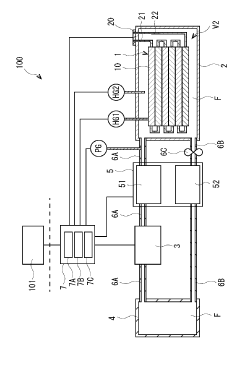
- Provide a solid-state battery system and control method, apply a preset pressure value through the flow medium inlet and outlet interface and the pressure application system, and adjust the pressure and temperature in the battery pack through the pressure sensor and circulation power device to ensure three-dimensional extrusion within the battery The force is stable.


All-solid-state battery control system
PatentActiveJP2022163356A
Innovation
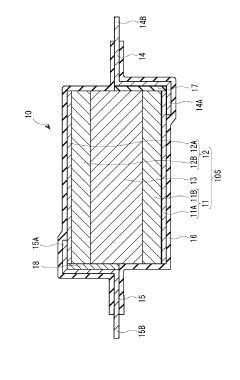
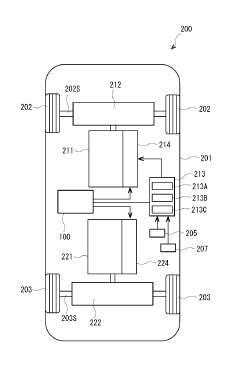
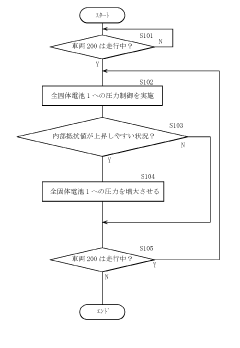
- An all-solid-state battery control system that applies pressure to the battery via a fluid medium, controlled by a unit that adjusts pressure based on temperature and State Of Charge (SOC) to stabilize ionic conductivity.
SSB Safety Standards
The development of solid-state battery (SSB) technology has necessitated the creation of new safety standards specifically tailored to address the unique characteristics and potential risks associated with these advanced energy storage systems. As SSBs differ significantly from traditional lithium-ion batteries in terms of their composition and operational principles, existing safety standards require substantial revision and expansion to ensure the safe deployment of SSB-powered devices and vehicles.
Key areas of focus for SSB safety standards include thermal management, mechanical integrity, and electrical safety. Unlike liquid electrolyte-based batteries, SSBs operate at higher temperatures and may be more susceptible to thermal runaway under certain conditions. Therefore, new standards must establish rigorous thermal testing protocols and define acceptable temperature ranges for various operating scenarios.
Mechanical safety is another critical aspect, as the solid electrolyte in SSBs can be prone to cracking or deformation under stress. Safety standards must address the potential for internal short circuits caused by mechanical failures and outline requirements for robust cell and pack designs that can withstand vibration, impact, and other physical stresses encountered in real-world applications.
Electrical safety considerations for SSBs include the prevention of dendrite formation, which can lead to internal short circuits. Standards must define testing methodologies to evaluate the long-term stability of the solid electrolyte interface and establish criteria for acceptable charge and discharge rates to minimize the risk of dendrite growth.
Furthermore, SSB safety standards need to encompass the entire lifecycle of the battery, from manufacturing and transportation to installation, operation, and end-of-life disposal or recycling. This holistic approach ensures that safety considerations are integrated at every stage of the SSB's life.
Internationally recognized bodies such as the International Electrotechnical Commission (IEC) and the Society of Automotive Engineers (SAE) are actively working on developing comprehensive safety standards for SSBs. These standards will likely include specifications for cell and pack design, testing procedures for thermal, mechanical, and electrical safety, as well as guidelines for battery management systems specifically optimized for SSB characteristics.
As the technology continues to evolve, safety standards for SSBs will need to remain flexible and adaptable. Regular reviews and updates will be essential to keep pace with technological advancements and emerging safety concerns identified through real-world deployment and testing of SSB systems.
Key areas of focus for SSB safety standards include thermal management, mechanical integrity, and electrical safety. Unlike liquid electrolyte-based batteries, SSBs operate at higher temperatures and may be more susceptible to thermal runaway under certain conditions. Therefore, new standards must establish rigorous thermal testing protocols and define acceptable temperature ranges for various operating scenarios.
Mechanical safety is another critical aspect, as the solid electrolyte in SSBs can be prone to cracking or deformation under stress. Safety standards must address the potential for internal short circuits caused by mechanical failures and outline requirements for robust cell and pack designs that can withstand vibration, impact, and other physical stresses encountered in real-world applications.
Electrical safety considerations for SSBs include the prevention of dendrite formation, which can lead to internal short circuits. Standards must define testing methodologies to evaluate the long-term stability of the solid electrolyte interface and establish criteria for acceptable charge and discharge rates to minimize the risk of dendrite growth.
Furthermore, SSB safety standards need to encompass the entire lifecycle of the battery, from manufacturing and transportation to installation, operation, and end-of-life disposal or recycling. This holistic approach ensures that safety considerations are integrated at every stage of the SSB's life.
Internationally recognized bodies such as the International Electrotechnical Commission (IEC) and the Society of Automotive Engineers (SAE) are actively working on developing comprehensive safety standards for SSBs. These standards will likely include specifications for cell and pack design, testing procedures for thermal, mechanical, and electrical safety, as well as guidelines for battery management systems specifically optimized for SSB characteristics.
As the technology continues to evolve, safety standards for SSBs will need to remain flexible and adaptable. Regular reviews and updates will be essential to keep pace with technological advancements and emerging safety concerns identified through real-world deployment and testing of SSB systems.
SSB Lifecycle Mgmt
Solid-state battery (SSB) lifecycle management is a critical aspect of the emerging field of solid-state battery management systems. As SSBs progress from research and development to commercialization, effective lifecycle management becomes increasingly important to ensure optimal performance, longevity, and safety throughout the battery's lifespan.
The lifecycle of an SSB can be broadly divided into several stages: design and manufacturing, integration and installation, operation and maintenance, and end-of-life management. Each stage presents unique challenges and opportunities for optimization.
During the design and manufacturing phase, careful consideration must be given to material selection, cell architecture, and production processes to maximize battery performance and minimize potential issues that may arise during later stages of the lifecycle. Advanced manufacturing techniques, such as 3D printing and roll-to-roll processing, are being explored to improve SSB production efficiency and consistency.
Integration and installation of SSBs into various applications, such as electric vehicles or grid storage systems, require specialized knowledge and procedures. Proper integration ensures optimal thermal management, mechanical stability, and electrical connections, which are crucial for the long-term performance and safety of the battery system.
The operation and maintenance stage is where battery management systems (BMS) play a critical role. SSB-specific BMS must be designed to accurately monitor and control parameters such as state of charge, state of health, and temperature. These systems must also be capable of detecting and mitigating potential issues unique to SSBs, such as dendrite formation or interfacial resistance changes.
Predictive maintenance strategies, leveraging machine learning and big data analytics, are being developed to anticipate and prevent potential failures in SSB systems. These approaches aim to extend battery life and reduce downtime in critical applications.
End-of-life management for SSBs is an area that requires further research and development. While SSBs are expected to have longer lifespans than traditional lithium-ion batteries, effective recycling and repurposing strategies must be established to minimize environmental impact and recover valuable materials.
As the field of SSB technology continues to evolve, lifecycle management practices will need to adapt accordingly. This may include the development of new diagnostic tools, refinement of safety protocols, and the establishment of industry standards specific to SSB lifecycle management. Collaboration between battery manufacturers, system integrators, and end-users will be essential in addressing the unique challenges presented by SSB lifecycle management and realizing the full potential of this promising technology.
The lifecycle of an SSB can be broadly divided into several stages: design and manufacturing, integration and installation, operation and maintenance, and end-of-life management. Each stage presents unique challenges and opportunities for optimization.
During the design and manufacturing phase, careful consideration must be given to material selection, cell architecture, and production processes to maximize battery performance and minimize potential issues that may arise during later stages of the lifecycle. Advanced manufacturing techniques, such as 3D printing and roll-to-roll processing, are being explored to improve SSB production efficiency and consistency.
Integration and installation of SSBs into various applications, such as electric vehicles or grid storage systems, require specialized knowledge and procedures. Proper integration ensures optimal thermal management, mechanical stability, and electrical connections, which are crucial for the long-term performance and safety of the battery system.
The operation and maintenance stage is where battery management systems (BMS) play a critical role. SSB-specific BMS must be designed to accurately monitor and control parameters such as state of charge, state of health, and temperature. These systems must also be capable of detecting and mitigating potential issues unique to SSBs, such as dendrite formation or interfacial resistance changes.
Predictive maintenance strategies, leveraging machine learning and big data analytics, are being developed to anticipate and prevent potential failures in SSB systems. These approaches aim to extend battery life and reduce downtime in critical applications.
End-of-life management for SSBs is an area that requires further research and development. While SSBs are expected to have longer lifespans than traditional lithium-ion batteries, effective recycling and repurposing strategies must be established to minimize environmental impact and recover valuable materials.
As the field of SSB technology continues to evolve, lifecycle management practices will need to adapt accordingly. This may include the development of new diagnostic tools, refinement of safety protocols, and the establishment of industry standards specific to SSB lifecycle management. Collaboration between battery manufacturers, system integrators, and end-users will be essential in addressing the unique challenges presented by SSB lifecycle management and realizing the full potential of this promising technology.
Unlock deeper insights with Patsnap Eureka Quick Research — get a full tech report to explore trends and direct your research. Try now!
Generate Your Research Report Instantly with AI Agent
Supercharge your innovation with Patsnap Eureka AI Agent Platform!