

Solid State Transformer Based Energy Storage Systems: Design Validation
JUN 4, 20269 MIN READ
Generate Your Research Report Instantly with AI Agent
PatSnap Eureka helps you evaluate technical feasibility & market potential.
SST-Based Energy Storage Background and Objectives
Solid State Transformers represent a paradigm shift in power conversion technology, emerging from the convergence of advanced semiconductor devices, high-frequency magnetic components, and sophisticated control algorithms. Unlike conventional electromagnetic transformers that operate at line frequency, SSTs utilize power electronic converters to achieve galvanic isolation and voltage transformation at significantly higher frequencies, typically ranging from several kilohertz to hundreds of kilohertz. This fundamental departure from traditional approaches enables unprecedented functionality including bidirectional power flow, voltage regulation, and seamless integration with renewable energy sources and storage systems.
The evolution of SST technology has been driven by the increasing demand for more flexible, intelligent, and efficient power distribution systems. Traditional grid infrastructure, built around passive transformers and centralized generation, faces mounting challenges from distributed energy resources, electric vehicle proliferation, and the imperative for enhanced grid resilience. SSTs address these challenges by providing active power management capabilities, enabling real-time voltage and frequency regulation, and facilitating the integration of diverse energy sources with varying characteristics.
Energy storage integration represents a critical application domain for SST technology, where the transformer's inherent power conversion capabilities can be leveraged to optimize storage system performance. The integration challenges stem from the need to efficiently interface storage devices operating at different voltage levels with AC distribution systems while maintaining power quality and system stability. Conventional approaches typically require multiple conversion stages, each introducing efficiency losses and complexity.
The primary objective of SST-based energy storage systems centers on achieving seamless bidirectional power conversion between storage devices and the electrical grid while maximizing overall system efficiency. This involves developing control strategies that can dynamically manage power flow based on grid conditions, storage state, and load demands. The system must demonstrate capability for both grid-tied and islanded operation modes, ensuring continuous power supply during grid disturbances.
Design validation objectives encompass comprehensive performance verification across multiple operational scenarios including steady-state efficiency characterization, transient response evaluation, and long-term reliability assessment. The validation process must demonstrate compliance with relevant grid codes and safety standards while proving the system's ability to provide ancillary services such as frequency regulation, voltage support, and harmonic mitigation. Additionally, the economic viability of SST-based solutions compared to conventional alternatives requires thorough analysis of lifecycle costs, maintenance requirements, and operational benefits.
The evolution of SST technology has been driven by the increasing demand for more flexible, intelligent, and efficient power distribution systems. Traditional grid infrastructure, built around passive transformers and centralized generation, faces mounting challenges from distributed energy resources, electric vehicle proliferation, and the imperative for enhanced grid resilience. SSTs address these challenges by providing active power management capabilities, enabling real-time voltage and frequency regulation, and facilitating the integration of diverse energy sources with varying characteristics.
Energy storage integration represents a critical application domain for SST technology, where the transformer's inherent power conversion capabilities can be leveraged to optimize storage system performance. The integration challenges stem from the need to efficiently interface storage devices operating at different voltage levels with AC distribution systems while maintaining power quality and system stability. Conventional approaches typically require multiple conversion stages, each introducing efficiency losses and complexity.
The primary objective of SST-based energy storage systems centers on achieving seamless bidirectional power conversion between storage devices and the electrical grid while maximizing overall system efficiency. This involves developing control strategies that can dynamically manage power flow based on grid conditions, storage state, and load demands. The system must demonstrate capability for both grid-tied and islanded operation modes, ensuring continuous power supply during grid disturbances.
Design validation objectives encompass comprehensive performance verification across multiple operational scenarios including steady-state efficiency characterization, transient response evaluation, and long-term reliability assessment. The validation process must demonstrate compliance with relevant grid codes and safety standards while proving the system's ability to provide ancillary services such as frequency regulation, voltage support, and harmonic mitigation. Additionally, the economic viability of SST-based solutions compared to conventional alternatives requires thorough analysis of lifecycle costs, maintenance requirements, and operational benefits.
Market Demand for Advanced Energy Storage Solutions
The global energy storage market is experiencing unprecedented growth driven by the accelerating transition toward renewable energy sources and the urgent need for grid modernization. Traditional energy storage systems face significant limitations in efficiency, power density, and grid integration capabilities, creating substantial market opportunities for advanced solutions like solid state transformer-based energy storage systems.
Renewable energy integration represents the primary market driver, as wind and solar installations continue expanding globally. These intermittent sources require sophisticated energy storage solutions capable of rapid response times and bidirectional power flow management. Solid state transformer-based systems address these requirements through enhanced power conversion efficiency and improved grid synchronization capabilities compared to conventional transformer-based alternatives.
Grid modernization initiatives across developed and emerging economies are creating substantial demand for advanced energy storage technologies. Aging electrical infrastructure requires replacement with intelligent systems capable of handling distributed energy resources, microgrids, and smart grid functionalities. The compact design and advanced control capabilities of solid state transformer-based energy storage systems align perfectly with these modernization requirements.
Industrial and commercial sectors demonstrate increasing demand for reliable backup power and peak shaving solutions. Manufacturing facilities, data centers, and critical infrastructure operators seek energy storage systems offering high reliability, fast switching capabilities, and minimal maintenance requirements. The solid state design eliminates many mechanical failure points associated with traditional systems, addressing these market needs effectively.
Electric vehicle charging infrastructure expansion creates additional market opportunities for advanced energy storage solutions. Fast charging stations require high-power energy storage systems capable of managing grid load fluctuations while providing consistent charging performance. Solid state transformer-based systems offer superior power density and thermal management characteristics essential for these applications.
Regulatory frameworks worldwide increasingly favor energy storage deployment through incentives, mandates, and grid service compensation mechanisms. These policies create favorable market conditions for advanced technologies that demonstrate superior performance characteristics and grid support capabilities.
The market demand extends beyond traditional applications to emerging sectors including maritime electrification, aviation ground support, and remote area electrification projects. These applications require robust, efficient energy storage solutions capable of operating in challenging environments while maintaining high performance standards.
Renewable energy integration represents the primary market driver, as wind and solar installations continue expanding globally. These intermittent sources require sophisticated energy storage solutions capable of rapid response times and bidirectional power flow management. Solid state transformer-based systems address these requirements through enhanced power conversion efficiency and improved grid synchronization capabilities compared to conventional transformer-based alternatives.
Grid modernization initiatives across developed and emerging economies are creating substantial demand for advanced energy storage technologies. Aging electrical infrastructure requires replacement with intelligent systems capable of handling distributed energy resources, microgrids, and smart grid functionalities. The compact design and advanced control capabilities of solid state transformer-based energy storage systems align perfectly with these modernization requirements.
Industrial and commercial sectors demonstrate increasing demand for reliable backup power and peak shaving solutions. Manufacturing facilities, data centers, and critical infrastructure operators seek energy storage systems offering high reliability, fast switching capabilities, and minimal maintenance requirements. The solid state design eliminates many mechanical failure points associated with traditional systems, addressing these market needs effectively.
Electric vehicle charging infrastructure expansion creates additional market opportunities for advanced energy storage solutions. Fast charging stations require high-power energy storage systems capable of managing grid load fluctuations while providing consistent charging performance. Solid state transformer-based systems offer superior power density and thermal management characteristics essential for these applications.
Regulatory frameworks worldwide increasingly favor energy storage deployment through incentives, mandates, and grid service compensation mechanisms. These policies create favorable market conditions for advanced technologies that demonstrate superior performance characteristics and grid support capabilities.
The market demand extends beyond traditional applications to emerging sectors including maritime electrification, aviation ground support, and remote area electrification projects. These applications require robust, efficient energy storage solutions capable of operating in challenging environments while maintaining high performance standards.
Current SST Energy Storage Challenges and Limitations
Solid State Transformer based Energy Storage Systems face significant technical challenges that currently limit their widespread commercial deployment. The primary constraint lies in the complex power conversion architecture, which requires multiple stages of DC-AC-DC conversion, leading to cumulative efficiency losses that can reach 8-12% under typical operating conditions. This multi-stage conversion process not only reduces overall system efficiency but also introduces additional points of failure that compromise system reliability.
Thermal management represents another critical limitation in current SST energy storage implementations. The high-frequency switching operations generate substantial heat loads, particularly in the power semiconductor devices and magnetic components. Existing cooling solutions struggle to maintain optimal operating temperatures while preserving the compact form factor that makes SSTs attractive. This thermal stress accelerates component degradation and reduces the expected lifespan of the energy storage system.
Control system complexity poses substantial challenges for real-time operation and grid integration. Current SST energy storage systems require sophisticated control algorithms to manage bidirectional power flow, maintain voltage regulation, and ensure seamless grid synchronization. The computational overhead of these control systems often leads to response delays that can affect grid stability, particularly during rapid load changes or fault conditions.
Economic barriers significantly impede market adoption of SST-based energy storage solutions. The initial capital investment remains 40-60% higher than conventional transformer-based systems, primarily due to the cost of high-frequency power semiconductors and advanced control electronics. Additionally, the lack of standardized design methodologies increases development costs and extends time-to-market for new implementations.
Grid integration challenges emerge from the limited availability of established standards and testing protocols specifically designed for SST energy storage systems. Current grid codes and interconnection requirements were developed for conventional systems, creating regulatory uncertainties that slow deployment. The absence of comprehensive fault ride-through capabilities in many existing designs further complicates grid integration efforts.
Manufacturing scalability constraints limit the production volume of critical components, particularly custom magnetic cores and specialized power modules. Current production processes are not optimized for large-scale manufacturing, resulting in higher per-unit costs and longer lead times. Quality control and testing procedures for SST energy storage systems also lack standardization, creating variability in performance and reliability across different manufacturers.
Thermal management represents another critical limitation in current SST energy storage implementations. The high-frequency switching operations generate substantial heat loads, particularly in the power semiconductor devices and magnetic components. Existing cooling solutions struggle to maintain optimal operating temperatures while preserving the compact form factor that makes SSTs attractive. This thermal stress accelerates component degradation and reduces the expected lifespan of the energy storage system.
Control system complexity poses substantial challenges for real-time operation and grid integration. Current SST energy storage systems require sophisticated control algorithms to manage bidirectional power flow, maintain voltage regulation, and ensure seamless grid synchronization. The computational overhead of these control systems often leads to response delays that can affect grid stability, particularly during rapid load changes or fault conditions.
Economic barriers significantly impede market adoption of SST-based energy storage solutions. The initial capital investment remains 40-60% higher than conventional transformer-based systems, primarily due to the cost of high-frequency power semiconductors and advanced control electronics. Additionally, the lack of standardized design methodologies increases development costs and extends time-to-market for new implementations.
Grid integration challenges emerge from the limited availability of established standards and testing protocols specifically designed for SST energy storage systems. Current grid codes and interconnection requirements were developed for conventional systems, creating regulatory uncertainties that slow deployment. The absence of comprehensive fault ride-through capabilities in many existing designs further complicates grid integration efforts.
Manufacturing scalability constraints limit the production volume of critical components, particularly custom magnetic cores and specialized power modules. Current production processes are not optimized for large-scale manufacturing, resulting in higher per-unit costs and longer lead times. Quality control and testing procedures for SST energy storage systems also lack standardization, creating variability in performance and reliability across different manufacturers.
Existing SST Energy Storage Design Solutions
01 Solid state transformer topology and control systems
Advanced control architectures and topologies for solid state transformers that enable efficient power conversion and management in energy storage applications. These systems incorporate sophisticated control algorithms and circuit designs to optimize power flow, voltage regulation, and system stability in energy storage integration scenarios.- Solid state transformer topology and control systems: Advanced control methodologies and topological configurations for solid state transformers in energy storage applications. These systems utilize sophisticated power electronic circuits and control algorithms to manage power flow, voltage regulation, and frequency conversion. The control systems enable bidirectional power flow management and provide enhanced grid stability through real-time monitoring and adaptive control strategies.
- Energy storage integration and management: Methods for integrating various energy storage technologies with solid state transformer systems, including battery management systems, capacitor banks, and hybrid storage solutions. These approaches focus on optimizing energy storage capacity, charge-discharge cycles, and power delivery efficiency. The integration enables seamless energy transfer between storage devices and the power grid while maintaining system stability and reliability.
- Power conversion and voltage regulation: Advanced power conversion techniques for solid state transformer-based energy storage systems, focusing on AC-DC conversion, voltage step-up/step-down operations, and power quality improvement. These systems employ high-frequency switching technologies and advanced semiconductor devices to achieve efficient power conversion with minimal losses. The voltage regulation capabilities ensure stable output under varying load conditions and grid disturbances.
- Grid interconnection and synchronization: Technologies for connecting solid state transformer energy storage systems to electrical grids, including synchronization protocols, grid-tie inverters, and islanding protection mechanisms. These systems enable seamless integration with existing power infrastructure while providing grid support services such as frequency regulation, voltage support, and power factor correction. The interconnection systems ensure compliance with grid codes and safety standards.
- System validation and testing methodologies: Comprehensive validation approaches for solid state transformer energy storage systems, including hardware-in-the-loop testing, simulation models, and performance verification protocols. These methodologies encompass thermal analysis, electromagnetic compatibility testing, and long-term reliability assessment. The validation processes ensure system performance meets design specifications and regulatory requirements under various operating conditions and environmental factors.
02 Energy storage integration and interface design
Methods and systems for integrating various energy storage technologies with solid state transformers, including battery management systems, capacitor banks, and hybrid storage solutions. These designs focus on seamless interface between storage elements and power conversion systems to maximize efficiency and reliability.Expand Specific Solutions03 Power electronics and switching technologies
Advanced semiconductor switching devices and power electronic circuits specifically designed for solid state transformer applications in energy storage systems. These technologies enable high-frequency operation, reduced losses, and improved power density while maintaining system reliability and performance.Expand Specific Solutions04 Grid integration and power quality management
Systems and methods for connecting solid state transformer-based energy storage systems to electrical grids while maintaining power quality standards. These solutions address voltage regulation, harmonic mitigation, and grid stability requirements for utility-scale and distributed energy storage applications.Expand Specific Solutions05 System validation and testing methodologies
Comprehensive testing frameworks and validation procedures for solid state transformer energy storage systems, including performance characterization, reliability assessment, and safety verification. These methodologies ensure system compliance with industry standards and operational requirements through systematic evaluation processes.Expand Specific Solutions
Key Players in SST and Energy Storage Industry
The solid state transformer-based energy storage systems market represents an emerging technology sector in the early commercialization stage, with significant growth potential driven by smart grid modernization and renewable energy integration demands. The market remains relatively nascent but shows promising expansion as utilities and industrial players seek more efficient power conversion solutions. Technology maturity varies significantly across key players, with established power electronics companies like Hitachi Energy Ltd. and Robert Bosch GmbH leading in advanced power conversion technologies, while energy storage specialists such as LG Energy Solution Ltd., Samsung SDI Co., Ltd., and QuantumScape Corp. contribute cutting-edge battery integration capabilities. Traditional utility giants including State Grid Corp. of China and its subsidiaries provide essential grid infrastructure expertise, while innovative companies like Enphase Energy Inc. and SPARQ Systems Inc. focus on distributed energy solutions. The competitive landscape reflects a convergence of power electronics, energy storage, and grid modernization technologies, positioning this sector for substantial growth as smart grid deployments accelerate globally.
LG Energy Solution Ltd.
Technical Solution: LG Energy Solution focuses on the energy storage component of SST-based systems, developing high-density lithium-ion battery modules specifically designed for integration with solid state transformers. Their approach emphasizes modular battery architecture that can be seamlessly integrated with SST power conversion stages. The company has developed advanced battery management systems (BMS) that communicate directly with SST control systems to optimize charging/discharging cycles and maintain grid stability. Their design validation includes comprehensive safety testing, thermal runaway prevention, and long-term cycling performance evaluation under various operating conditions including temperature extremes and high-frequency switching environments.
Strengths: Leading battery technology expertise and established manufacturing capabilities. Weaknesses: Limited experience in power electronics integration and dependency on external SST technology partners.
Hitachi Energy Ltd.
Technical Solution: Hitachi Energy has developed comprehensive solid state transformer solutions that integrate advanced power electronics with energy storage systems. Their SST technology utilizes silicon carbide (SiC) semiconductors to achieve high-frequency operation up to 20kHz, enabling significant size and weight reduction compared to conventional transformers. The system incorporates modular multilevel converter topology with integrated battery energy storage, providing bidirectional power flow control and grid stabilization capabilities. Their design validation process includes extensive thermal management analysis, electromagnetic compatibility testing, and real-time digital simulation to ensure reliable operation under various grid conditions.
Strengths: Proven track record in power electronics and grid infrastructure, advanced SiC technology implementation. Weaknesses: High initial investment costs and complex system integration requirements.
Core Design Validation Methods for SST Systems
Solid state transformer controller
PatentWO2022098304A1
Innovation
- A decoupled control system for SSTs, comprising a stored energy controller, power flow controller, and energy balancing controllers, each operating independently to regulate energy within capacitors and manage power flow, eliminating the need for voltage balancing and power sharing mechanisms, and allowing for separate deployment of stages in different physical locations.


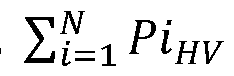
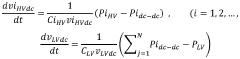
SST system with multiple LVDC outputs
PatentActiveIN202247054943A
Innovation
- An electrical interconnection circuit with at least two independent LVDC buses and an interconnecting DC/DC converter that re-routes power to equalize load across MVDC to LVDC converters, reducing the number of conversion stages by using a single interconnecting DC/DC converter to manage power between buses, thereby simplifying the circuit and reducing power ratings.
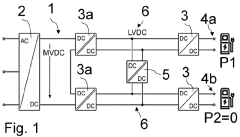
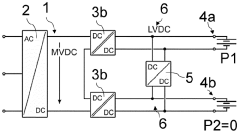
Grid Integration Standards for SST Systems
The integration of Solid State Transformer (SST) based energy storage systems into electrical grids requires adherence to comprehensive standards that ensure safe, reliable, and efficient operation. Current grid integration standards for SST systems are primarily governed by IEEE 1547 series, which establishes fundamental requirements for distributed energy resources interconnection. These standards address voltage regulation, frequency response, and power quality parameters that SST systems must maintain during normal and abnormal grid conditions.
Power quality standards represent a critical aspect of SST grid integration, with IEEE 519 defining harmonic distortion limits and voltage fluctuation boundaries. SST systems must demonstrate compliance with total harmonic distortion (THD) requirements, typically maintaining voltage THD below 5% and current THD below 8% at the point of common coupling. Additionally, flicker and voltage unbalance standards ensure that SST operations do not adversely affect other grid-connected equipment or consumer loads.
Safety and protection standards encompass multiple layers of requirements, including UL 1741 for inverter safety certification and IEEE C37.90 series for protective relay coordination. SST systems must incorporate anti-islanding protection, ground fault detection, and arc fault circuit interruption capabilities. These protection mechanisms ensure rapid disconnection during grid disturbances while preventing equipment damage and maintaining personnel safety.
Communication and interoperability standards facilitate seamless integration with grid management systems through protocols such as IEC 61850 and IEEE 2030.5. These standards enable real-time monitoring, control, and data exchange between SST systems and utility control centers. Smart grid functionality requires compliance with cybersecurity frameworks outlined in NIST guidelines, ensuring secure communication channels and protection against cyber threats.
Emerging standards specifically address high-frequency isolation transformers and wide bandgap semiconductor devices commonly employed in SST architectures. IEC 62040 series provides guidance for power electronic converter systems, while IEEE 1547.1 establishes testing procedures for grid integration validation. These evolving standards reflect the unique characteristics of SST technology and its distinct operational requirements compared to conventional transformer-based systems.
Power quality standards represent a critical aspect of SST grid integration, with IEEE 519 defining harmonic distortion limits and voltage fluctuation boundaries. SST systems must demonstrate compliance with total harmonic distortion (THD) requirements, typically maintaining voltage THD below 5% and current THD below 8% at the point of common coupling. Additionally, flicker and voltage unbalance standards ensure that SST operations do not adversely affect other grid-connected equipment or consumer loads.
Safety and protection standards encompass multiple layers of requirements, including UL 1741 for inverter safety certification and IEEE C37.90 series for protective relay coordination. SST systems must incorporate anti-islanding protection, ground fault detection, and arc fault circuit interruption capabilities. These protection mechanisms ensure rapid disconnection during grid disturbances while preventing equipment damage and maintaining personnel safety.
Communication and interoperability standards facilitate seamless integration with grid management systems through protocols such as IEC 61850 and IEEE 2030.5. These standards enable real-time monitoring, control, and data exchange between SST systems and utility control centers. Smart grid functionality requires compliance with cybersecurity frameworks outlined in NIST guidelines, ensuring secure communication channels and protection against cyber threats.
Emerging standards specifically address high-frequency isolation transformers and wide bandgap semiconductor devices commonly employed in SST architectures. IEC 62040 series provides guidance for power electronic converter systems, while IEEE 1547.1 establishes testing procedures for grid integration validation. These evolving standards reflect the unique characteristics of SST technology and its distinct operational requirements compared to conventional transformer-based systems.
Safety and Reliability Validation Protocols
Safety and reliability validation protocols for solid state transformer based energy storage systems represent a critical framework ensuring operational integrity and risk mitigation throughout the system lifecycle. These protocols encompass comprehensive testing methodologies that address both component-level and system-level performance under various operational scenarios, environmental conditions, and failure modes.
The validation framework begins with electrical safety assessments, focusing on insulation integrity, ground fault protection, and arc fault detection capabilities. High-voltage isolation testing validates the SST's ability to maintain safe operation under transient overvoltage conditions, while thermal safety protocols evaluate heat dissipation mechanisms and thermal runaway prevention in energy storage components. These assessments utilize standardized testing procedures including IEC 62477 for power electronic converter systems and IEEE 1547 for distributed energy resources.
Reliability validation employs accelerated life testing methodologies to predict long-term performance degradation patterns. Power cycling tests simulate operational stress on semiconductor devices within the SST, while environmental stress screening evaluates system resilience under temperature variations, humidity exposure, and vibration conditions. Statistical reliability modeling techniques, including Weibull analysis and Monte Carlo simulations, provide quantitative assessments of mean time between failures and system availability metrics.
Functional safety protocols implement systematic hazard analysis and risk assessment procedures following IEC 61508 standards. These protocols establish safety integrity levels for critical control functions, define fail-safe operational modes, and validate emergency shutdown procedures. Cybersecurity validation addresses communication protocol vulnerabilities and implements intrusion detection mechanisms to protect against malicious attacks on grid-connected systems.
Comprehensive validation testing includes electromagnetic compatibility assessments, ensuring compliance with grid codes and minimizing interference with adjacent electrical equipment. Field validation protocols establish performance benchmarks under real-world operating conditions, incorporating grid disturbance scenarios and load profile variations to verify system robustness and adaptive control capabilities.
The validation framework begins with electrical safety assessments, focusing on insulation integrity, ground fault protection, and arc fault detection capabilities. High-voltage isolation testing validates the SST's ability to maintain safe operation under transient overvoltage conditions, while thermal safety protocols evaluate heat dissipation mechanisms and thermal runaway prevention in energy storage components. These assessments utilize standardized testing procedures including IEC 62477 for power electronic converter systems and IEEE 1547 for distributed energy resources.
Reliability validation employs accelerated life testing methodologies to predict long-term performance degradation patterns. Power cycling tests simulate operational stress on semiconductor devices within the SST, while environmental stress screening evaluates system resilience under temperature variations, humidity exposure, and vibration conditions. Statistical reliability modeling techniques, including Weibull analysis and Monte Carlo simulations, provide quantitative assessments of mean time between failures and system availability metrics.
Functional safety protocols implement systematic hazard analysis and risk assessment procedures following IEC 61508 standards. These protocols establish safety integrity levels for critical control functions, define fail-safe operational modes, and validate emergency shutdown procedures. Cybersecurity validation addresses communication protocol vulnerabilities and implements intrusion detection mechanisms to protect against malicious attacks on grid-connected systems.
Comprehensive validation testing includes electromagnetic compatibility assessments, ensuring compliance with grid codes and minimizing interference with adjacent electrical equipment. Field validation protocols establish performance benchmarks under real-world operating conditions, incorporating grid disturbance scenarios and load profile variations to verify system robustness and adaptive control capabilities.
Unlock deeper insights with PatSnap Eureka Quick Research — get a full tech report to explore trends and direct your research. Try now!
Generate Your Research Report Instantly with AI Agent
Supercharge your innovation with PatSnap Eureka AI Agent Platform!