

Solid State Transformer Renewability Comparison: GaN vs SiC Components
JUN 4, 20269 MIN READ
Generate Your Research Report Instantly with AI Agent
PatSnap Eureka helps you evaluate technical feasibility & market potential.
SST Renewability Background and Technical Objectives
Solid State Transformers represent a paradigmatic shift in power conversion technology, emerging from the convergence of advanced semiconductor materials and sophisticated power electronics control systems. The evolution from traditional magnetic transformers to SSTs has been driven by the increasing demand for higher efficiency, reduced size, and enhanced controllability in power distribution networks. This transformation has become particularly critical as renewable energy integration and smart grid implementations require more flexible and responsive power management solutions.
The development trajectory of SST technology has been fundamentally influenced by the advancement of wide bandgap semiconductor materials, particularly Silicon Carbide and Gallium Nitride. These materials have enabled operation at higher switching frequencies, elevated temperatures, and improved power densities compared to conventional silicon-based solutions. The progression from silicon IGBTs to SiC MOSFETs and subsequently to GaN HEMTs has marked distinct evolutionary phases in SST capability enhancement.
Current market dynamics reveal an accelerating adoption of SST technology across multiple sectors, including renewable energy systems, electric vehicle charging infrastructure, data centers, and industrial automation. The global push toward carbon neutrality and sustainable energy systems has intensified the focus on component renewability and lifecycle environmental impact. This shift has elevated the importance of evaluating not only technical performance metrics but also sustainability characteristics of core semiconductor components.
The renewability comparison between GaN and SiC components has emerged as a critical evaluation criterion for SST deployment decisions. This assessment encompasses material sourcing sustainability, manufacturing energy intensity, operational efficiency impacts, end-of-life recyclability, and overall environmental footprint throughout the component lifecycle. Understanding these factors becomes essential for organizations committed to sustainable technology adoption and regulatory compliance with emerging environmental standards.
Technical objectives for this comparative analysis focus on establishing comprehensive evaluation frameworks that integrate traditional performance metrics with sustainability indicators. The primary goal involves developing quantitative methodologies to assess the renewability characteristics of GaN versus SiC components while maintaining rigorous technical performance standards. This includes evaluating material extraction impacts, manufacturing process energy requirements, operational efficiency contributions to system-level sustainability, and end-of-life material recovery potential.
Secondary objectives encompass identifying optimization opportunities for enhancing the renewability profile of SST implementations while preserving or improving technical performance. This involves exploring design methodologies that maximize the utilization of renewable material sources, minimize manufacturing environmental impact, and facilitate component lifecycle extension through advanced thermal management and reliability enhancement techniques.
The development trajectory of SST technology has been fundamentally influenced by the advancement of wide bandgap semiconductor materials, particularly Silicon Carbide and Gallium Nitride. These materials have enabled operation at higher switching frequencies, elevated temperatures, and improved power densities compared to conventional silicon-based solutions. The progression from silicon IGBTs to SiC MOSFETs and subsequently to GaN HEMTs has marked distinct evolutionary phases in SST capability enhancement.
Current market dynamics reveal an accelerating adoption of SST technology across multiple sectors, including renewable energy systems, electric vehicle charging infrastructure, data centers, and industrial automation. The global push toward carbon neutrality and sustainable energy systems has intensified the focus on component renewability and lifecycle environmental impact. This shift has elevated the importance of evaluating not only technical performance metrics but also sustainability characteristics of core semiconductor components.
The renewability comparison between GaN and SiC components has emerged as a critical evaluation criterion for SST deployment decisions. This assessment encompasses material sourcing sustainability, manufacturing energy intensity, operational efficiency impacts, end-of-life recyclability, and overall environmental footprint throughout the component lifecycle. Understanding these factors becomes essential for organizations committed to sustainable technology adoption and regulatory compliance with emerging environmental standards.
Technical objectives for this comparative analysis focus on establishing comprehensive evaluation frameworks that integrate traditional performance metrics with sustainability indicators. The primary goal involves developing quantitative methodologies to assess the renewability characteristics of GaN versus SiC components while maintaining rigorous technical performance standards. This includes evaluating material extraction impacts, manufacturing process energy requirements, operational efficiency contributions to system-level sustainability, and end-of-life material recovery potential.
Secondary objectives encompass identifying optimization opportunities for enhancing the renewability profile of SST implementations while preserving or improving technical performance. This involves exploring design methodologies that maximize the utilization of renewable material sources, minimize manufacturing environmental impact, and facilitate component lifecycle extension through advanced thermal management and reliability enhancement techniques.
Market Demand for Renewable Energy SST Solutions
The global renewable energy sector is experiencing unprecedented growth, driving substantial demand for advanced power conversion technologies. Solid State Transformers have emerged as critical enablements for efficient energy conversion in renewable applications, particularly in solar photovoltaic systems, wind power generation, and energy storage integration. The market recognizes SSTs as essential components for achieving higher power density, improved efficiency, and enhanced grid integration capabilities compared to traditional magnetic transformers.
Wind energy installations worldwide are increasingly adopting SST solutions to optimize power conversion from variable AC generation to grid-compatible output. The technology enables better power quality management and reduces the overall footprint of wind turbine power electronics systems. Solar photovoltaic applications represent another significant demand driver, where SSTs facilitate efficient DC-AC conversion while providing galvanic isolation and voltage regulation capabilities essential for grid-tied systems.
Energy storage system integration has created substantial market opportunities for SST technologies. Battery energy storage systems require sophisticated power conversion capabilities to manage charging and discharging cycles while maintaining grid stability. SSTs offer superior performance in bidirectional power flow management, making them increasingly attractive for utility-scale storage deployments and distributed energy resource applications.
The electric vehicle charging infrastructure market presents emerging demand for SST solutions, particularly in fast-charging applications where high power density and efficiency are paramount. SSTs enable more compact charging station designs while providing the necessary isolation and power quality features required for safe vehicle charging operations.
Grid modernization initiatives across developed and developing markets are accelerating SST adoption. Smart grid implementations require advanced power electronics capable of handling bidirectional power flows, voltage regulation, and power quality enhancement. SSTs provide the technological foundation for these capabilities while supporting the integration of distributed renewable energy resources.
Industrial applications in manufacturing and data centers are recognizing the benefits of SST technology for power distribution and conversion. The ability to provide multiple voltage levels from a single conversion stage, combined with improved efficiency and reduced maintenance requirements, makes SSTs attractive for industrial renewable energy integration projects.
Market demand is particularly strong in regions with aggressive renewable energy targets and supportive regulatory frameworks. The technology's ability to enhance grid stability while accommodating high penetration levels of renewable energy sources aligns with global decarbonization objectives and energy security priorities.
Wind energy installations worldwide are increasingly adopting SST solutions to optimize power conversion from variable AC generation to grid-compatible output. The technology enables better power quality management and reduces the overall footprint of wind turbine power electronics systems. Solar photovoltaic applications represent another significant demand driver, where SSTs facilitate efficient DC-AC conversion while providing galvanic isolation and voltage regulation capabilities essential for grid-tied systems.
Energy storage system integration has created substantial market opportunities for SST technologies. Battery energy storage systems require sophisticated power conversion capabilities to manage charging and discharging cycles while maintaining grid stability. SSTs offer superior performance in bidirectional power flow management, making them increasingly attractive for utility-scale storage deployments and distributed energy resource applications.
The electric vehicle charging infrastructure market presents emerging demand for SST solutions, particularly in fast-charging applications where high power density and efficiency are paramount. SSTs enable more compact charging station designs while providing the necessary isolation and power quality features required for safe vehicle charging operations.
Grid modernization initiatives across developed and developing markets are accelerating SST adoption. Smart grid implementations require advanced power electronics capable of handling bidirectional power flows, voltage regulation, and power quality enhancement. SSTs provide the technological foundation for these capabilities while supporting the integration of distributed renewable energy resources.
Industrial applications in manufacturing and data centers are recognizing the benefits of SST technology for power distribution and conversion. The ability to provide multiple voltage levels from a single conversion stage, combined with improved efficiency and reduced maintenance requirements, makes SSTs attractive for industrial renewable energy integration projects.
Market demand is particularly strong in regions with aggressive renewable energy targets and supportive regulatory frameworks. The technology's ability to enhance grid stability while accommodating high penetration levels of renewable energy sources aligns with global decarbonization objectives and energy security priorities.
GaN vs SiC Component Status and Technical Challenges
The current landscape of wide bandgap semiconductors in solid state transformer applications is dominated by two primary technologies: Gallium Nitride (GaN) and Silicon Carbide (SiC) components. Both technologies have achieved significant commercial maturity, yet each faces distinct developmental trajectories and market positioning challenges that influence their adoption in renewable energy systems.
GaN technology has demonstrated remarkable progress in high-frequency switching applications, with commercial devices now available in voltage ratings up to 650V for power electronics applications. The technology excels in applications requiring high switching frequencies above 100 kHz, enabling significant size and weight reductions in transformer designs. However, GaN faces limitations in high-voltage applications, with current commercial availability primarily concentrated in the sub-1000V range, restricting its deployment in utility-scale renewable energy integration scenarios.
SiC technology presents a contrasting profile, with robust commercial availability spanning voltage ratings from 650V to 15kV and beyond. The technology has achieved widespread adoption in electric vehicle charging infrastructure and grid-tied renewable energy systems. SiC devices demonstrate superior performance in high-voltage, high-power applications where efficiency and thermal management are critical considerations for long-term reliability.
The primary technical challenges confronting GaN implementation include gate drive complexity, limited avalanche energy capability, and thermal management constraints in high-power density applications. Dynamic on-resistance degradation under high-frequency switching conditions remains a significant concern for long-term reliability assessments. Additionally, the relatively narrow safe operating area compared to SiC devices presents design challenges in fault-tolerant renewable energy applications.
SiC technology faces different but equally significant challenges, including higher material costs, substrate quality variations affecting device yield, and bipolar degradation mechanisms in certain device structures. The technology also encounters challenges related to gate oxide reliability and cosmic ray-induced single event effects in high-altitude or space-based renewable energy applications.
Manufacturing scalability represents a critical differentiator between the technologies. GaN benefits from established silicon manufacturing infrastructure compatibility, potentially enabling cost reduction through volume production. Conversely, SiC manufacturing requires specialized high-temperature processing capabilities and faces substrate supply chain constraints that impact cost competitiveness and production scalability.
The geographic distribution of technological capabilities shows concentrated development in Asia for GaN manufacturing, while SiC technology development spans North America, Europe, and Asia with more distributed supply chain infrastructure. This distribution pattern significantly influences technology accessibility and cost structures for different regional renewable energy markets.
GaN technology has demonstrated remarkable progress in high-frequency switching applications, with commercial devices now available in voltage ratings up to 650V for power electronics applications. The technology excels in applications requiring high switching frequencies above 100 kHz, enabling significant size and weight reductions in transformer designs. However, GaN faces limitations in high-voltage applications, with current commercial availability primarily concentrated in the sub-1000V range, restricting its deployment in utility-scale renewable energy integration scenarios.
SiC technology presents a contrasting profile, with robust commercial availability spanning voltage ratings from 650V to 15kV and beyond. The technology has achieved widespread adoption in electric vehicle charging infrastructure and grid-tied renewable energy systems. SiC devices demonstrate superior performance in high-voltage, high-power applications where efficiency and thermal management are critical considerations for long-term reliability.
The primary technical challenges confronting GaN implementation include gate drive complexity, limited avalanche energy capability, and thermal management constraints in high-power density applications. Dynamic on-resistance degradation under high-frequency switching conditions remains a significant concern for long-term reliability assessments. Additionally, the relatively narrow safe operating area compared to SiC devices presents design challenges in fault-tolerant renewable energy applications.
SiC technology faces different but equally significant challenges, including higher material costs, substrate quality variations affecting device yield, and bipolar degradation mechanisms in certain device structures. The technology also encounters challenges related to gate oxide reliability and cosmic ray-induced single event effects in high-altitude or space-based renewable energy applications.
Manufacturing scalability represents a critical differentiator between the technologies. GaN benefits from established silicon manufacturing infrastructure compatibility, potentially enabling cost reduction through volume production. Conversely, SiC manufacturing requires specialized high-temperature processing capabilities and faces substrate supply chain constraints that impact cost competitiveness and production scalability.
The geographic distribution of technological capabilities shows concentrated development in Asia for GaN manufacturing, while SiC technology development spans North America, Europe, and Asia with more distributed supply chain infrastructure. This distribution pattern significantly influences technology accessibility and cost structures for different regional renewable energy markets.
Current GaN and SiC Implementation Solutions
01 Modular design and component replaceability in solid state transformers
Solid state transformers can be designed with modular architectures that allow individual components to be easily replaced or upgraded without replacing the entire system. This approach enhances the renewability by enabling selective component maintenance, extending operational lifetime, and reducing waste. Modular designs facilitate field serviceability and allow for technology upgrades as newer semiconductor devices become available.- Modular design and component replaceability for enhanced renewability: Solid state transformers can be designed with modular architectures that allow individual components to be easily replaced or upgraded without replacing the entire system. This approach enhances the renewability aspect by enabling selective component maintenance, extending overall system lifespan, and reducing waste. Modular designs facilitate field serviceability and allow for technology upgrades as newer components become available.
- Advanced power semiconductor technologies for improved longevity: Implementation of advanced semiconductor materials and technologies in solid state transformers contributes to their renewability by providing enhanced durability, reduced degradation rates, and improved thermal management. These technologies enable longer operational lifespans and better performance retention over time, making the transformers more sustainable and reducing the need for frequent replacements.
- Smart monitoring and predictive maintenance systems: Integration of intelligent monitoring systems and predictive maintenance capabilities in solid state transformers enables proactive identification of potential issues before they lead to system failures. These systems monitor various parameters and component health, allowing for timely interventions that extend equipment life and optimize performance, thereby enhancing the overall renewability of the transformer systems.
- Recyclable materials and eco-friendly construction methods: Solid state transformers can be constructed using recyclable materials and environmentally conscious manufacturing processes that support renewability goals. This includes the use of materials that can be easily recovered and reprocessed at end-of-life, as well as design considerations that minimize environmental impact during production and disposal phases.
- Energy recovery and regenerative capabilities: Advanced solid state transformer designs incorporate energy recovery mechanisms and regenerative capabilities that improve overall system efficiency and support renewable energy integration. These features allow for bidirectional power flow, energy storage integration, and optimization of power conversion processes, making the transformers more compatible with renewable energy sources and grid modernization efforts.
02 Advanced semiconductor materials for enhanced durability
The use of wide bandgap semiconductor materials and advanced power electronics improves the reliability and longevity of solid state transformers. These materials offer better thermal performance, higher efficiency, and increased resistance to environmental stresses, contributing to the renewable aspects by reducing replacement frequency and improving overall system sustainability.Expand Specific Solutions03 Smart monitoring and predictive maintenance systems
Integration of intelligent monitoring systems enables real-time health assessment and predictive maintenance capabilities in solid state transformers. These systems can detect component degradation early, optimize maintenance schedules, and prevent catastrophic failures, thereby extending equipment life and supporting renewable operation through proactive maintenance strategies.Expand Specific Solutions04 Recyclable materials and eco-friendly construction
Solid state transformer designs incorporating recyclable materials and environmentally conscious manufacturing processes enhance their renewable characteristics. This includes the use of materials that can be easily separated and recycled at end-of-life, biodegradable components where applicable, and manufacturing processes that minimize environmental impact throughout the product lifecycle.Expand Specific Solutions05 Energy recovery and efficiency optimization technologies
Implementation of energy recovery circuits and efficiency optimization techniques in solid state transformers contributes to their renewable operation by minimizing energy losses and recovering otherwise wasted energy. These technologies include regenerative circuits, advanced control algorithms, and power factor correction systems that maximize energy utilization and reduce overall environmental impact.Expand Specific Solutions
Key Players in SST and WBG Semiconductor Industry
The solid-state transformer market comparing GaN versus SiC components represents a rapidly evolving sector within the power electronics industry, currently in its growth phase with significant expansion driven by renewable energy integration demands. The market demonstrates substantial potential, valued in billions globally, as utilities and industrial applications increasingly adopt advanced power conversion technologies. Technology maturity varies significantly between the two competing materials: SiC technology, championed by established players like Wolfspeed, Infineon Technologies Austria, and Fuji Electric, has reached commercial maturity with proven reliability in high-power applications. Conversely, GaN technology, led by companies such as GaN Systems and supported by semiconductor giants like Intel, Samsung Electronics, and Texas Instruments, remains in earlier development stages but shows promising advantages in switching frequency and efficiency for specific transformer applications.
Wolfspeed, Inc.
Technical Solution: Wolfspeed specializes in silicon carbide (SiC) power semiconductors for solid state transformers, offering high-voltage SiC MOSFETs and diodes that operate efficiently at temperatures up to 200°C. Their SiC components enable SSTs to achieve power densities exceeding 10 kW/L with efficiency rates above 98%. The company's C3M series SiC MOSFETs provide low on-resistance and fast switching capabilities, reducing transformer size by up to 50% compared to silicon-based solutions. Their technology supports renewable energy integration through improved grid stability and reduced harmonic distortion in power conversion systems.
Strengths: Market leader in SiC technology with proven high-temperature performance and superior power density. Weaknesses: Higher initial costs compared to silicon alternatives and limited availability during supply chain constraints.
Infineon Technologies Austria AG
Technical Solution: Infineon develops both SiC and GaN power semiconductors for solid state transformer applications, focusing on medium-voltage grid integration. Their CoolSiC MOSFETs operate at voltages up to 1700V with switching frequencies reaching 100 kHz, enabling compact SST designs. The company also produces GaN-based solutions for lower voltage applications, achieving efficiency levels of 99% in renewable energy conversion systems. Their integrated gate driver technology reduces electromagnetic interference and improves system reliability in grid-tied renewable installations.
Strengths: Comprehensive portfolio covering both SiC and GaN technologies with strong automotive and industrial market presence. Weaknesses: Higher complexity in system integration and requires specialized thermal management solutions.
Core Patents in GaN vs SiC SST Applications
High voltage GaN transistors
PatentInactiveEP1965433A3
Innovation
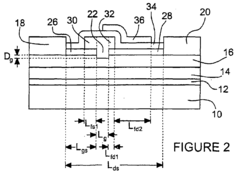
- The implementation of multiple field plate transistors with a specific configuration, including insulating and conducting field plates, reduces peak electric fields and enhances breakdown voltage while maintaining low on resistances, suitable for high-frequency applications.
Environmental Impact Assessment of WBG Materials
The environmental impact assessment of wide bandgap (WBG) materials, specifically GaN and SiC components in solid state transformers, reveals significant differences in their lifecycle environmental footprints. Both materials demonstrate superior environmental performance compared to traditional silicon-based solutions, yet each presents distinct sustainability profiles that influence their adoption in renewable energy applications.
GaN components exhibit a more complex manufacturing process requiring higher energy consumption during crystal growth and wafer fabrication. The epitaxial growth of GaN typically occurs at temperatures exceeding 1000°C under specialized atmospheric conditions, resulting in substantial carbon emissions during production. However, GaN's superior power density and efficiency characteristics enable smaller device footprints, reducing material consumption per unit of power handling capability.
SiC manufacturing presents different environmental challenges, particularly in the sublimation growth process required for high-quality crystal formation. The production of SiC substrates demands temperatures approaching 2300°C, creating significant energy intensity during manufacturing. Despite this energy-intensive production phase, SiC demonstrates excellent thermal stability and longevity, extending operational lifespans beyond 25 years in typical power conversion applications.
The operational phase environmental impact strongly favors both WBG materials over conventional alternatives. GaN components achieve switching frequencies exceeding 1 MHz with minimal switching losses, reducing overall system energy consumption by 15-20% compared to silicon IGBTs. SiC devices demonstrate superior performance at elevated temperatures, maintaining efficiency above 98% at junction temperatures up to 200°C, eliminating the need for extensive cooling infrastructure.
End-of-life considerations reveal contrasting recyclability profiles between the two materials. SiC components contain primarily silicon and carbon, both abundant elements with established recycling pathways in semiconductor industries. GaN devices incorporate gallium and nitrogen, where gallium represents a critical material with limited global reserves, necessitating specialized recovery processes to maintain supply chain sustainability.
Water consumption during manufacturing processes differs significantly between the technologies. GaN fabrication requires extensive chemical cleaning and etching processes, consuming approximately 2000 liters of ultrapure water per wafer. SiC processing demonstrates lower water intensity, utilizing approximately 1200 liters per equivalent wafer area, primarily due to simpler surface preparation requirements.
The carbon footprint analysis throughout the complete lifecycle indicates that SiC components generate approximately 30% lower total emissions compared to GaN alternatives when considering a 20-year operational period. This advantage stems primarily from SiC's extended operational lifetime and reduced manufacturing complexity, offsetting the initial energy-intensive crystal growth phase.
GaN components exhibit a more complex manufacturing process requiring higher energy consumption during crystal growth and wafer fabrication. The epitaxial growth of GaN typically occurs at temperatures exceeding 1000°C under specialized atmospheric conditions, resulting in substantial carbon emissions during production. However, GaN's superior power density and efficiency characteristics enable smaller device footprints, reducing material consumption per unit of power handling capability.
SiC manufacturing presents different environmental challenges, particularly in the sublimation growth process required for high-quality crystal formation. The production of SiC substrates demands temperatures approaching 2300°C, creating significant energy intensity during manufacturing. Despite this energy-intensive production phase, SiC demonstrates excellent thermal stability and longevity, extending operational lifespans beyond 25 years in typical power conversion applications.
The operational phase environmental impact strongly favors both WBG materials over conventional alternatives. GaN components achieve switching frequencies exceeding 1 MHz with minimal switching losses, reducing overall system energy consumption by 15-20% compared to silicon IGBTs. SiC devices demonstrate superior performance at elevated temperatures, maintaining efficiency above 98% at junction temperatures up to 200°C, eliminating the need for extensive cooling infrastructure.
End-of-life considerations reveal contrasting recyclability profiles between the two materials. SiC components contain primarily silicon and carbon, both abundant elements with established recycling pathways in semiconductor industries. GaN devices incorporate gallium and nitrogen, where gallium represents a critical material with limited global reserves, necessitating specialized recovery processes to maintain supply chain sustainability.
Water consumption during manufacturing processes differs significantly between the technologies. GaN fabrication requires extensive chemical cleaning and etching processes, consuming approximately 2000 liters of ultrapure water per wafer. SiC processing demonstrates lower water intensity, utilizing approximately 1200 liters per equivalent wafer area, primarily due to simpler surface preparation requirements.
The carbon footprint analysis throughout the complete lifecycle indicates that SiC components generate approximately 30% lower total emissions compared to GaN alternatives when considering a 20-year operational period. This advantage stems primarily from SiC's extended operational lifetime and reduced manufacturing complexity, offsetting the initial energy-intensive crystal growth phase.
Grid Integration Standards for SST Technologies
The integration of Solid State Transformers into electrical grids requires adherence to comprehensive standards that ensure safety, reliability, and interoperability. Current grid integration standards for SST technologies encompass multiple regulatory frameworks, with IEEE 1547 serving as the primary standard for distributed energy resource interconnection. This standard addresses voltage regulation, frequency response, and ride-through capabilities that are particularly relevant for SST deployments in renewable energy applications.
IEC 61850 provides the communication protocol framework essential for SST grid integration, enabling standardized data exchange between SST systems and grid management infrastructure. The standard defines logical nodes and data objects that facilitate real-time monitoring and control of SST operations, which is crucial for both GaN and SiC-based implementations regardless of their semiconductor composition.
Grid codes such as NERC reliability standards impose specific requirements for power quality, harmonic distortion limits, and fault response characteristics that directly impact SST design considerations. These standards mandate total harmonic distortion levels below 5% and require specific voltage and frequency operating ranges that SST systems must maintain during normal and abnormal grid conditions.
Emerging standards like IEEE 2030.10 specifically address DC microgrids and energy storage integration, areas where SST technologies demonstrate significant advantages. These standards establish protocols for bidirectional power flow management and energy storage system coordination, capabilities that are enhanced by the fast switching characteristics of both GaN and SiC semiconductors.
Regional grid codes, including European Network Codes and various national standards, introduce additional requirements for grid support functions such as reactive power provision and voltage support services. SST systems must demonstrate compliance with these diverse regulatory requirements while maintaining operational efficiency and reliability across varying grid conditions and renewable energy penetration levels.
IEC 61850 provides the communication protocol framework essential for SST grid integration, enabling standardized data exchange between SST systems and grid management infrastructure. The standard defines logical nodes and data objects that facilitate real-time monitoring and control of SST operations, which is crucial for both GaN and SiC-based implementations regardless of their semiconductor composition.
Grid codes such as NERC reliability standards impose specific requirements for power quality, harmonic distortion limits, and fault response characteristics that directly impact SST design considerations. These standards mandate total harmonic distortion levels below 5% and require specific voltage and frequency operating ranges that SST systems must maintain during normal and abnormal grid conditions.
Emerging standards like IEEE 2030.10 specifically address DC microgrids and energy storage integration, areas where SST technologies demonstrate significant advantages. These standards establish protocols for bidirectional power flow management and energy storage system coordination, capabilities that are enhanced by the fast switching characteristics of both GaN and SiC semiconductors.
Regional grid codes, including European Network Codes and various national standards, introduce additional requirements for grid support functions such as reactive power provision and voltage support services. SST systems must demonstrate compliance with these diverse regulatory requirements while maintaining operational efficiency and reliability across varying grid conditions and renewable energy penetration levels.
Unlock deeper insights with PatSnap Eureka Quick Research — get a full tech report to explore trends and direct your research. Try now!
Generate Your Research Report Instantly with AI Agent
Supercharge your innovation with PatSnap Eureka AI Agent Platform!