Streamline Workflow in Laser Engineered Net Shaping for Productivity
APR 1, 20269 MIN READ
Generate Your Research Report Instantly with AI Agent
PatSnap Eureka helps you evaluate technical feasibility & market potential.
LENS Technology Background and Workflow Optimization Goals
Laser Engineered Net Shaping (LENS) represents a revolutionary additive manufacturing technology that emerged in the mid-1990s at Sandia National Laboratories. This directed energy deposition process utilizes a high-powered laser beam to simultaneously melt metallic powder and substrate material, creating fully dense three-dimensional components layer by layer. The technology has evolved from experimental research applications to industrial-scale manufacturing solutions, particularly excelling in repair, modification, and fabrication of complex metallic components.
The fundamental principle of LENS involves the precise coordination of laser energy, powder delivery, and substrate movement within an inert atmosphere chamber. Multiple powder delivery nozzles converge at the laser focal point, enabling multi-material deposition and gradient material structures. This capability distinguishes LENS from other additive manufacturing processes, offering unique advantages in creating functionally graded materials and repairing high-value components with dissimilar materials.
Historical development of LENS technology has progressed through distinct phases, beginning with proof-of-concept demonstrations in the late 1990s, advancing to commercial system development in the early 2000s, and reaching current sophisticated multi-axis platforms capable of processing aerospace-grade superalloys. The technology has demonstrated particular strength in processing difficult-to-weld materials including titanium alloys, Inconel, and tool steels.
Current workflow optimization objectives center on addressing inherent productivity limitations that constrain broader industrial adoption. Primary goals include reducing build times through enhanced deposition rates while maintaining dimensional accuracy and material properties. Process automation represents another critical optimization target, focusing on minimizing manual intervention requirements for powder handling, part positioning, and quality monitoring.
Integration of real-time process monitoring and adaptive control systems constitutes a fundamental optimization objective. These systems aim to automatically adjust laser power, powder feed rates, and traverse speeds based on continuous feedback from thermal sensors, optical monitoring, and geometric measurement systems. Such integration promises to reduce scrap rates and eliminate time-consuming post-process inspections.
Workflow streamlining efforts also target the elimination of bottlenecks in pre-processing and post-processing operations. This includes automated powder recycling systems, integrated heat treatment capabilities, and seamless CAD-to-part workflows that minimize setup times and reduce operator skill requirements for consistent production outcomes.
The fundamental principle of LENS involves the precise coordination of laser energy, powder delivery, and substrate movement within an inert atmosphere chamber. Multiple powder delivery nozzles converge at the laser focal point, enabling multi-material deposition and gradient material structures. This capability distinguishes LENS from other additive manufacturing processes, offering unique advantages in creating functionally graded materials and repairing high-value components with dissimilar materials.
Historical development of LENS technology has progressed through distinct phases, beginning with proof-of-concept demonstrations in the late 1990s, advancing to commercial system development in the early 2000s, and reaching current sophisticated multi-axis platforms capable of processing aerospace-grade superalloys. The technology has demonstrated particular strength in processing difficult-to-weld materials including titanium alloys, Inconel, and tool steels.
Current workflow optimization objectives center on addressing inherent productivity limitations that constrain broader industrial adoption. Primary goals include reducing build times through enhanced deposition rates while maintaining dimensional accuracy and material properties. Process automation represents another critical optimization target, focusing on minimizing manual intervention requirements for powder handling, part positioning, and quality monitoring.
Integration of real-time process monitoring and adaptive control systems constitutes a fundamental optimization objective. These systems aim to automatically adjust laser power, powder feed rates, and traverse speeds based on continuous feedback from thermal sensors, optical monitoring, and geometric measurement systems. Such integration promises to reduce scrap rates and eliminate time-consuming post-process inspections.
Workflow streamlining efforts also target the elimination of bottlenecks in pre-processing and post-processing operations. This includes automated powder recycling systems, integrated heat treatment capabilities, and seamless CAD-to-part workflows that minimize setup times and reduce operator skill requirements for consistent production outcomes.
Market Demand for Efficient LENS Manufacturing Solutions
The aerospace industry represents the largest market segment driving demand for efficient LENS manufacturing solutions, particularly for complex geometries and repair applications. Aircraft engine manufacturers increasingly require rapid prototyping capabilities for turbine blades, fuel nozzles, and other critical components where traditional manufacturing methods prove inadequate. The ability to produce near-net-shape parts with minimal material waste has become essential for maintaining competitive manufacturing costs while meeting stringent quality requirements.
Defense contractors constitute another significant market driver, seeking LENS technology for producing specialized components with enhanced material properties. Military applications demand parts with superior strength-to-weight ratios and the capability to incorporate multiple materials within single components. The technology's capacity for on-demand manufacturing of spare parts in remote locations presents substantial value propositions for defense logistics operations.
The medical device sector demonstrates growing adoption of LENS technology for manufacturing patient-specific implants and surgical instruments. Orthopedic implant manufacturers particularly value the technology's ability to create complex internal structures and surface textures that promote bone integration. The customization capabilities inherent in LENS processes align perfectly with the medical industry's trend toward personalized healthcare solutions.
Automotive manufacturers are increasingly exploring LENS applications for producing lightweight components and tooling. The technology's potential for creating parts with optimized internal cooling channels and complex geometries supports the industry's push toward electric vehicle development and improved fuel efficiency. Racing and high-performance vehicle segments show particular interest in rapid prototyping capabilities for custom components.
Energy sector applications, including oil and gas equipment manufacturing, drive demand for LENS solutions capable of producing corrosion-resistant components with complex internal passages. Wind turbine manufacturers seek the technology for creating large-scale components with enhanced fatigue resistance properties.
The overall market demand reflects a shift toward distributed manufacturing models, where LENS technology enables localized production capabilities. This trend reduces supply chain dependencies and enables rapid response to changing market requirements, making efficient LENS manufacturing solutions increasingly critical for maintaining competitive advantages across multiple industrial sectors.
Defense contractors constitute another significant market driver, seeking LENS technology for producing specialized components with enhanced material properties. Military applications demand parts with superior strength-to-weight ratios and the capability to incorporate multiple materials within single components. The technology's capacity for on-demand manufacturing of spare parts in remote locations presents substantial value propositions for defense logistics operations.
The medical device sector demonstrates growing adoption of LENS technology for manufacturing patient-specific implants and surgical instruments. Orthopedic implant manufacturers particularly value the technology's ability to create complex internal structures and surface textures that promote bone integration. The customization capabilities inherent in LENS processes align perfectly with the medical industry's trend toward personalized healthcare solutions.
Automotive manufacturers are increasingly exploring LENS applications for producing lightweight components and tooling. The technology's potential for creating parts with optimized internal cooling channels and complex geometries supports the industry's push toward electric vehicle development and improved fuel efficiency. Racing and high-performance vehicle segments show particular interest in rapid prototyping capabilities for custom components.
Energy sector applications, including oil and gas equipment manufacturing, drive demand for LENS solutions capable of producing corrosion-resistant components with complex internal passages. Wind turbine manufacturers seek the technology for creating large-scale components with enhanced fatigue resistance properties.
The overall market demand reflects a shift toward distributed manufacturing models, where LENS technology enables localized production capabilities. This trend reduces supply chain dependencies and enables rapid response to changing market requirements, making efficient LENS manufacturing solutions increasingly critical for maintaining competitive advantages across multiple industrial sectors.
Current LENS Workflow Challenges and Productivity Bottlenecks
The LENS manufacturing process faces significant workflow inefficiencies that substantially impact overall productivity and operational effectiveness. Current production cycles are characterized by extended setup times, with operators requiring 2-4 hours to configure equipment parameters, calibrate laser systems, and prepare powder feedstock for each new build job. This lengthy preparation phase creates substantial downtime between production runs and limits the system's ability to handle multiple small-batch orders efficiently.
Process monitoring and quality control represent another critical bottleneck in existing LENS workflows. Traditional approaches rely heavily on manual inspection and post-process analysis, requiring operators to halt production for dimensional measurements and defect detection. The lack of real-time monitoring capabilities means that quality issues are often discovered only after significant material and time investment, leading to costly rework or part rejection. Current quality assurance protocols can extend total production time by 30-40% compared to theoretical processing speeds.
Material handling and powder management systems present ongoing operational challenges that disrupt workflow continuity. Existing powder delivery mechanisms frequently experience clogging, inconsistent flow rates, and contamination issues that require immediate operator intervention. The manual powder loading and changeover processes between different materials can consume 1-2 hours per transition, severely limiting the system's flexibility for multi-material applications or rapid prototyping scenarios.
Software integration and process planning inefficiencies create additional productivity constraints within current LENS operations. Most existing systems utilize disparate software platforms for design preparation, toolpath generation, and machine control, requiring multiple file conversions and manual data transfers. This fragmented digital workflow introduces opportunities for errors and requires specialized operator expertise to navigate between different software environments effectively.
Post-processing requirements further compound workflow challenges, as current LENS parts typically require extensive machining, heat treatment, and surface finishing operations. The integration between additive manufacturing and subsequent processing steps remains poorly coordinated, often resulting in extended lead times and increased handling complexity. These downstream bottlenecks can effectively negate the rapid manufacturing advantages that LENS technology theoretically provides.
Process monitoring and quality control represent another critical bottleneck in existing LENS workflows. Traditional approaches rely heavily on manual inspection and post-process analysis, requiring operators to halt production for dimensional measurements and defect detection. The lack of real-time monitoring capabilities means that quality issues are often discovered only after significant material and time investment, leading to costly rework or part rejection. Current quality assurance protocols can extend total production time by 30-40% compared to theoretical processing speeds.
Material handling and powder management systems present ongoing operational challenges that disrupt workflow continuity. Existing powder delivery mechanisms frequently experience clogging, inconsistent flow rates, and contamination issues that require immediate operator intervention. The manual powder loading and changeover processes between different materials can consume 1-2 hours per transition, severely limiting the system's flexibility for multi-material applications or rapid prototyping scenarios.
Software integration and process planning inefficiencies create additional productivity constraints within current LENS operations. Most existing systems utilize disparate software platforms for design preparation, toolpath generation, and machine control, requiring multiple file conversions and manual data transfers. This fragmented digital workflow introduces opportunities for errors and requires specialized operator expertise to navigate between different software environments effectively.
Post-processing requirements further compound workflow challenges, as current LENS parts typically require extensive machining, heat treatment, and surface finishing operations. The integration between additive manufacturing and subsequent processing steps remains poorly coordinated, often resulting in extended lead times and increased handling complexity. These downstream bottlenecks can effectively negate the rapid manufacturing advantages that LENS technology theoretically provides.
Existing LENS Workflow Streamlining Solutions
01 CAD/CAM integration and digital workflow for laser net shaping
Integration of computer-aided design and computer-aided manufacturing systems enables digital workflow management for laser engineered net shaping processes. This includes digital model preparation, toolpath generation, and process parameter optimization through software interfaces. The digital workflow facilitates automated conversion of design data into machine instructions for precise layer-by-layer material deposition.- CAD/CAM integration and digital workflow for laser net shaping: Integration of computer-aided design and computer-aided manufacturing systems enables digital workflow management for laser engineered net shaping processes. This includes digital model preparation, toolpath generation, and process parameter optimization through software interfaces. The digital workflow facilitates seamless transition from design to manufacturing, allowing for automated process planning and real-time adjustments during fabrication.
- Powder delivery and material feeding systems: Specialized powder delivery mechanisms control the flow and distribution of metal powder materials during the laser deposition process. These systems ensure consistent material feed rates, proper powder stream geometry, and synchronized delivery with laser scanning. Advanced feeding systems incorporate multiple powder hoppers for multi-material processing and real-time flow rate monitoring to maintain uniform deposition quality.
- Process monitoring and quality control: Real-time monitoring systems track critical process parameters including melt pool temperature, layer geometry, and defect formation during laser net shaping operations. Sensor technologies such as thermal imaging, optical cameras, and acoustic emission detectors provide feedback for adaptive process control. Quality assurance methods include in-situ inspection and closed-loop control systems that adjust processing parameters to maintain part quality.
- Multi-axis motion control and build strategies: Sophisticated motion control systems coordinate multi-axis movement of laser heads, build platforms, and powder nozzles to create complex three-dimensional geometries. Build strategies include layer-by-layer deposition patterns, scanning sequences, and support structure generation. Advanced systems enable five-axis or six-axis simultaneous motion for non-planar layer deposition and improved geometric flexibility.
- Post-processing and finishing operations: Post-processing workflows include heat treatment procedures, support structure removal, and surface finishing techniques specific to laser net shaped components. Thermal post-processing relieves residual stresses and optimizes microstructure properties. Finishing operations may involve machining, polishing, or additional surface treatments to achieve final dimensional accuracy and surface quality requirements for functional parts.
02 Process monitoring and quality control systems
Real-time monitoring systems are employed to track critical process parameters during laser net shaping operations. These systems utilize sensors and feedback mechanisms to detect defects, monitor temperature distribution, and ensure dimensional accuracy. Quality control methods include in-situ inspection, defect detection algorithms, and adaptive process control to maintain consistent part quality throughout the build process.Expand Specific Solutions03 Material handling and powder delivery systems
Specialized material delivery mechanisms are designed to supply metal powder or wire feedstock to the laser processing zone. These systems control powder flow rates, particle size distribution, and material composition to ensure uniform deposition. Material handling workflows include powder preparation, storage, recycling of unused material, and contamination prevention measures to maintain material quality.Expand Specific Solutions04 Laser beam control and energy management
Precise control of laser parameters including power, beam diameter, scanning speed, and focal position is essential for successful net shaping. Energy management systems optimize laser-material interaction to achieve desired melting and solidification characteristics. Advanced beam manipulation techniques enable complex geometries and improved surface finish through controlled energy distribution patterns.Expand Specific Solutions05 Post-processing and finishing workflow
Post-processing procedures are implemented to achieve final part specifications after laser net shaping. These workflows include heat treatment for stress relief, support structure removal, surface finishing operations, and dimensional verification. Additional steps may involve machining, polishing, and coating applications to meet specific functional and aesthetic requirements for the manufactured components.Expand Specific Solutions
Key Players in LENS Equipment and Software Industry
The Laser Engineered Net Shaping (LENS) workflow optimization market is in a mature growth phase, driven by increasing demand for additive manufacturing solutions across aerospace, automotive, and medical sectors. The market demonstrates significant scale with established players like Applied Materials, Toshiba Corp., Samsung Electronics, and Mercedes-Benz Group AG investing heavily in advanced manufacturing technologies. Technology maturity varies considerably across the competitive landscape, with specialized firms like Nikon SLM Solutions AG, Farsoon Technologies, and TRUMPF Laser- und Systemtechnik GmbH leading in dedicated additive manufacturing solutions, while diversified technology giants such as Hitachi Ltd., Fujitsu Ltd., and Robert Bosch GmbH leverage their broader R&D capabilities. Research institutions including Fraunhofer-Gesellschaft, Xi'an Jiaotong University, and National Research Council of Canada contribute fundamental innovations, while emerging players like Pulsar Photonics GmbH and Resonetics LLC focus on niche applications, creating a dynamic ecosystem where workflow streamlining technologies are rapidly advancing through both incremental improvements and breakthrough innovations.
Applied Materials, Inc.
Technical Solution: Applied Materials leverages its semiconductor manufacturing expertise to develop precision control systems for LENS processes. Their approach focuses on advanced process monitoring using multi-sensor arrays that capture thermal signatures, powder flow rates, and layer geometry in real-time. The company's workflow streamlining solution includes automated substrate preparation, intelligent path planning algorithms that optimize laser trajectories, and closed-loop feedback systems that adjust processing parameters mid-build. Their integrated platform reduces manual intervention by 60% and incorporates predictive analytics to prevent defects before they occur, significantly improving overall equipment effectiveness and part consistency.
Strengths: Proven expertise in precision manufacturing and process control, robust monitoring and feedback systems. Weaknesses: Limited focus specifically on additive manufacturing compared to core semiconductor business.
Farsoon Technologies Co., Ltd.
Technical Solution: Farsoon has developed specialized LENS systems with focus on multi-material processing capabilities and streamlined workflow integration. Their FlightTM series incorporates automated powder management systems with real-time composition monitoring and intelligent mixing algorithms for gradient materials. The workflow optimization includes integrated design validation tools, automated support structure generation, and post-processing planning that reduces total production time by 35%. Their proprietary software platform enables seamless integration with existing manufacturing execution systems and provides comprehensive traceability throughout the build process, from raw material batch tracking to final part certification.
Strengths: Strong focus on additive manufacturing with comprehensive software integration, competitive pricing for Asian markets. Weaknesses: Limited global service network compared to established European competitors.
Core Innovations in LENS Process Optimization Patents
Methods for fabricating gradient alloy articles with multi-functional properties
PatentActiveUS20150044084A1
Innovation
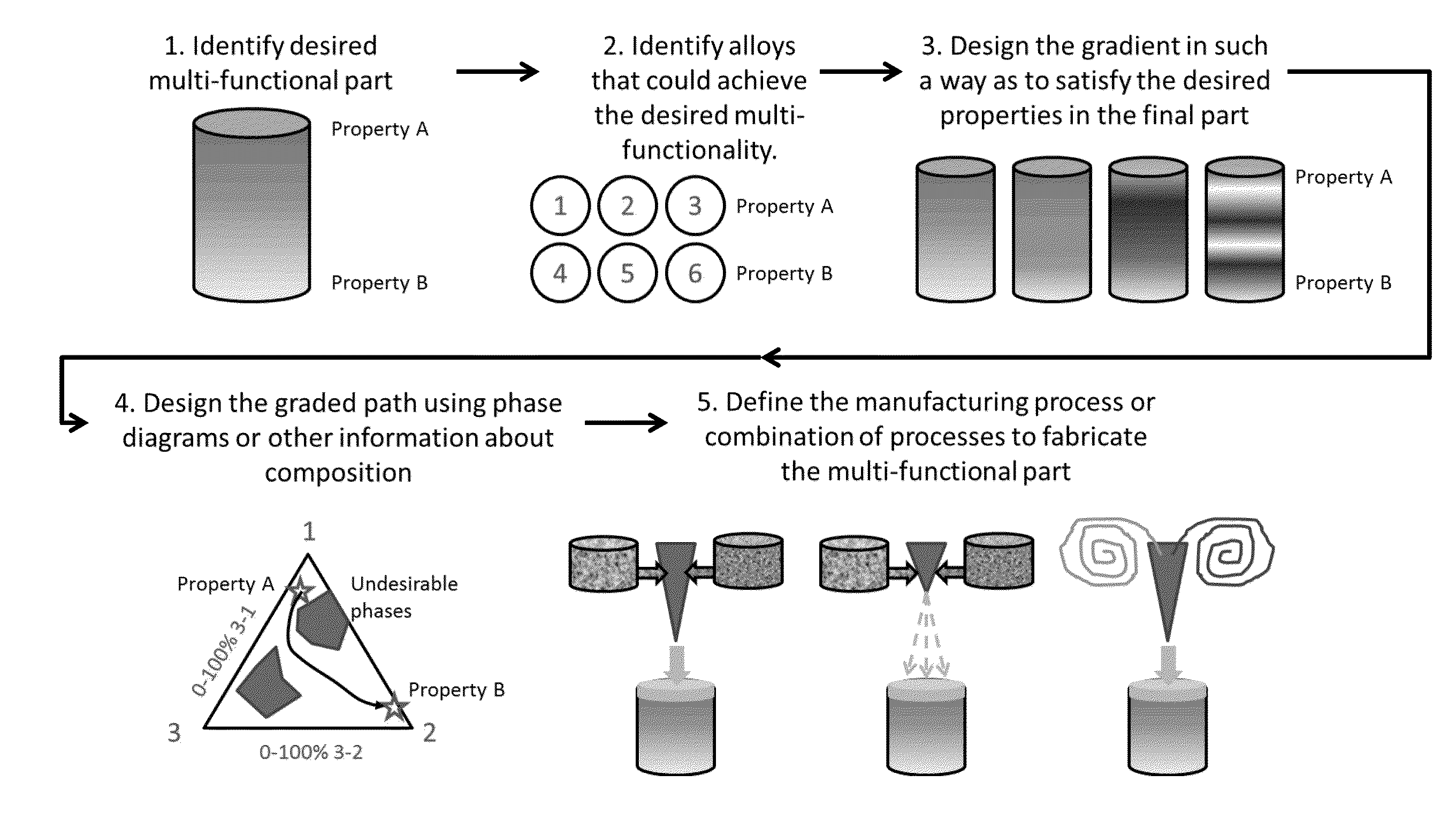
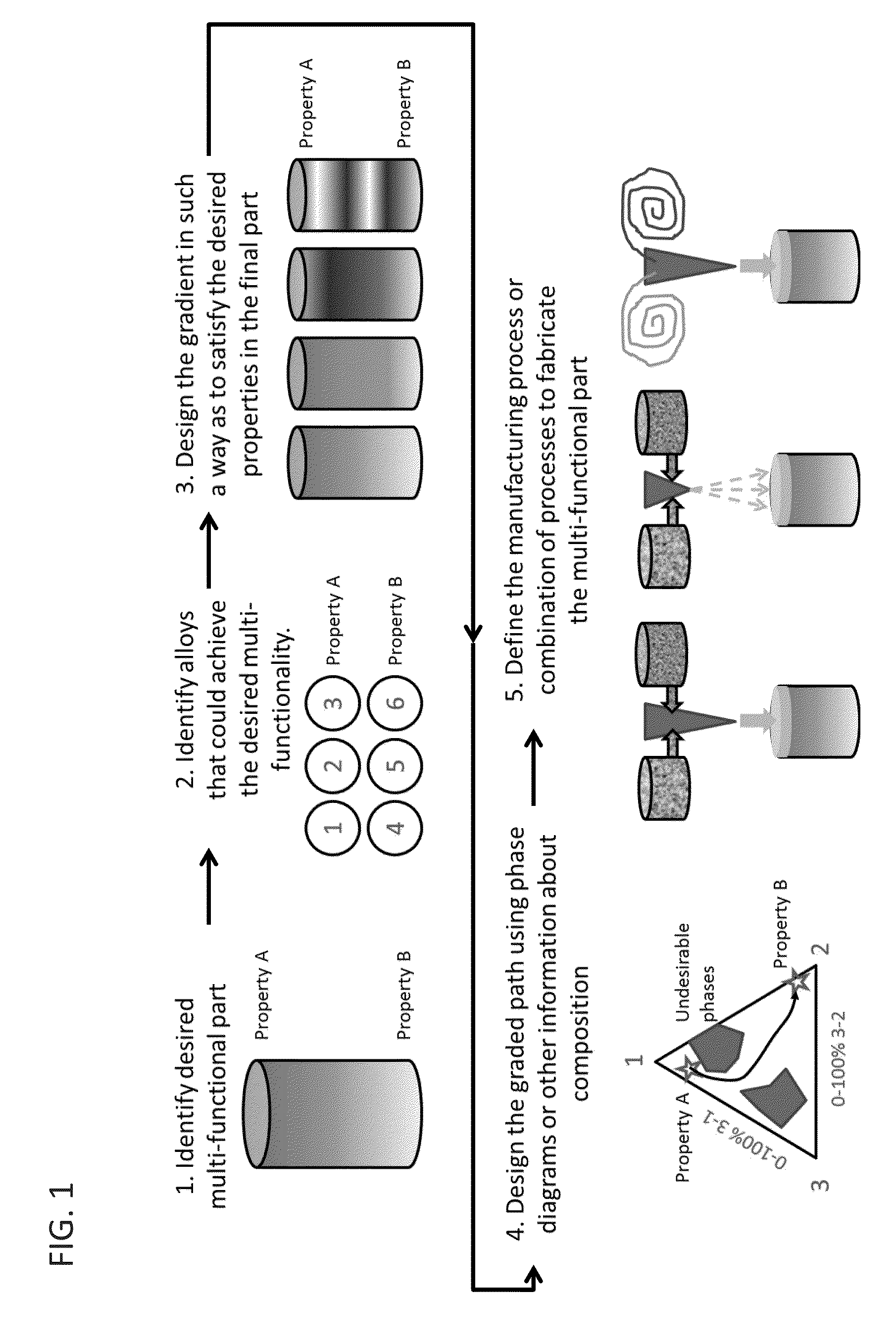
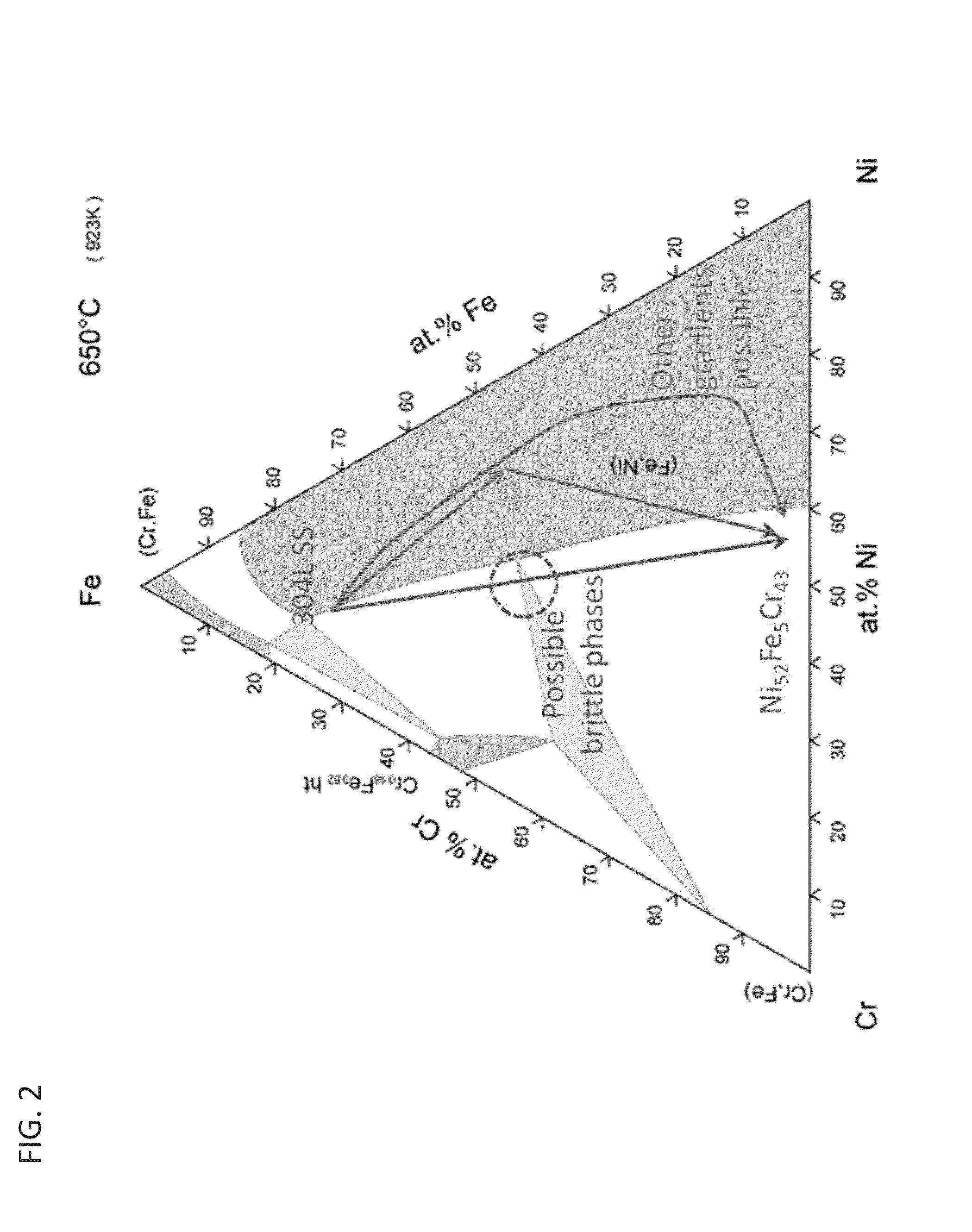
- The method involves determining a compositional gradient pathway between distinct materials using phase diagrams to avoid undesirable phases, and then using additive manufacturing techniques like Laser Engineered Net Shaping (LENS) to form multi-functional articles with precise compositional transitions, allowing for the creation of gradient layers with varying mechanical and thermophysical properties.

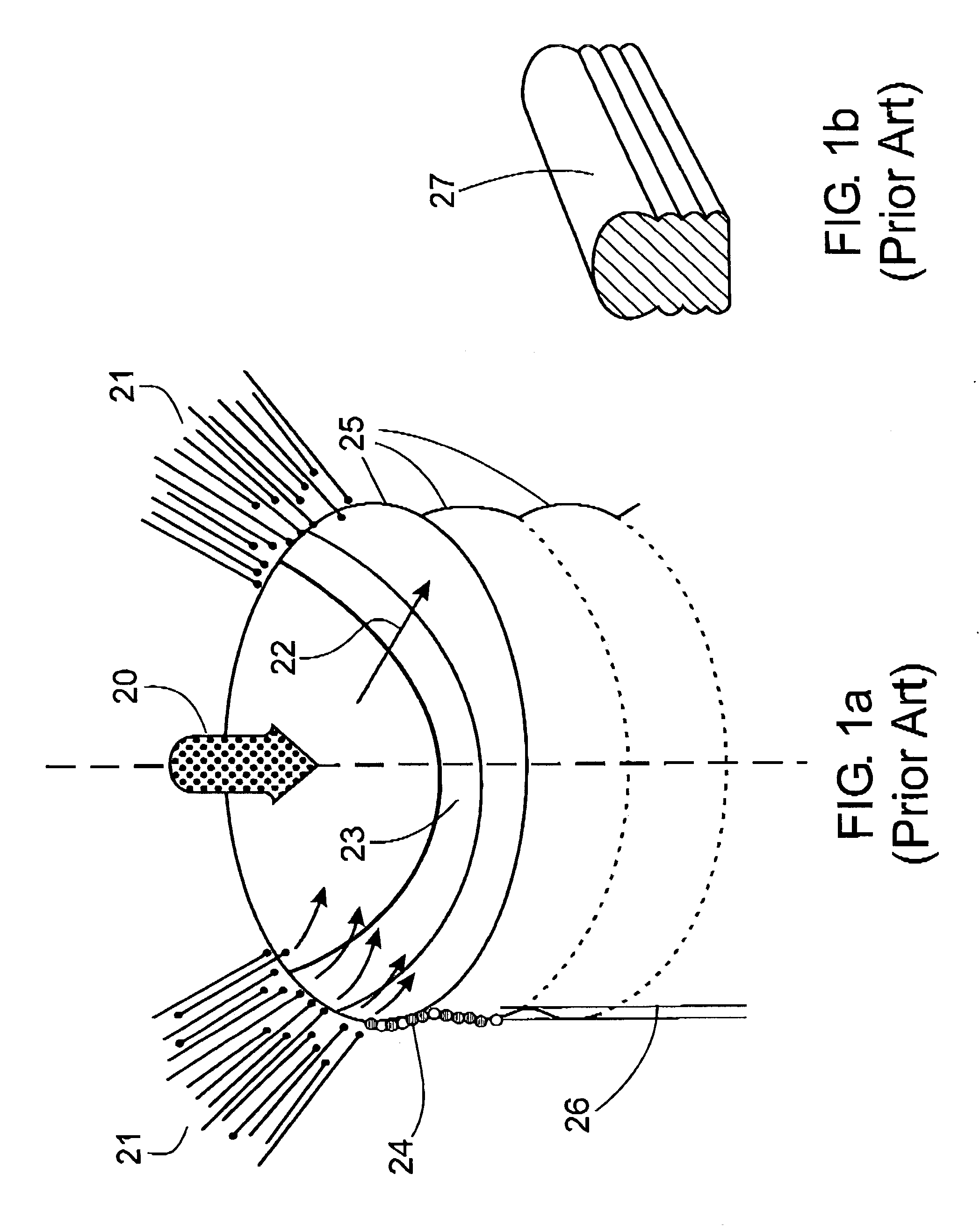
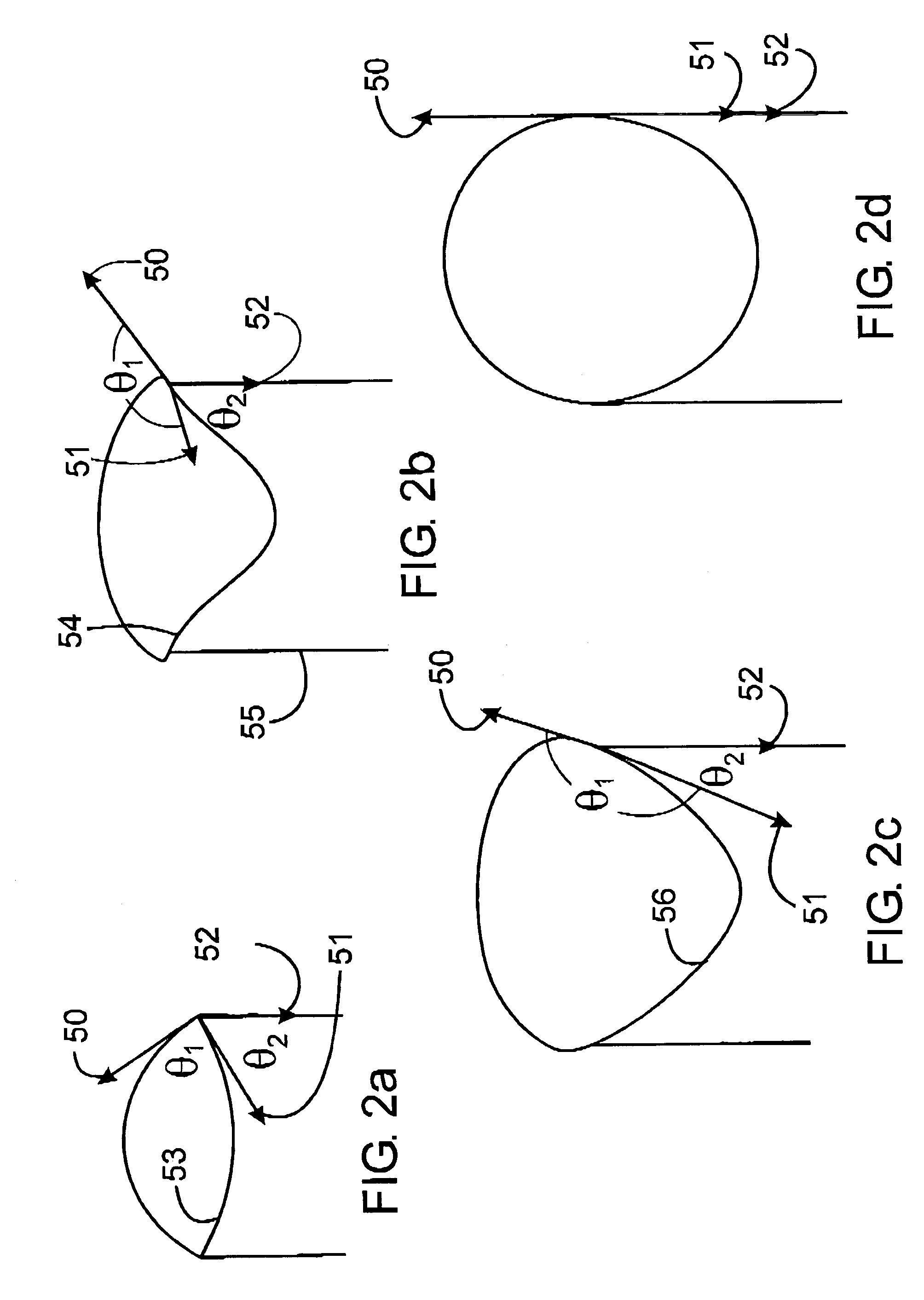
Laser consolidation apparatus for manufacturing precise structures
PatentInactiveUS20030116542A1
Innovation
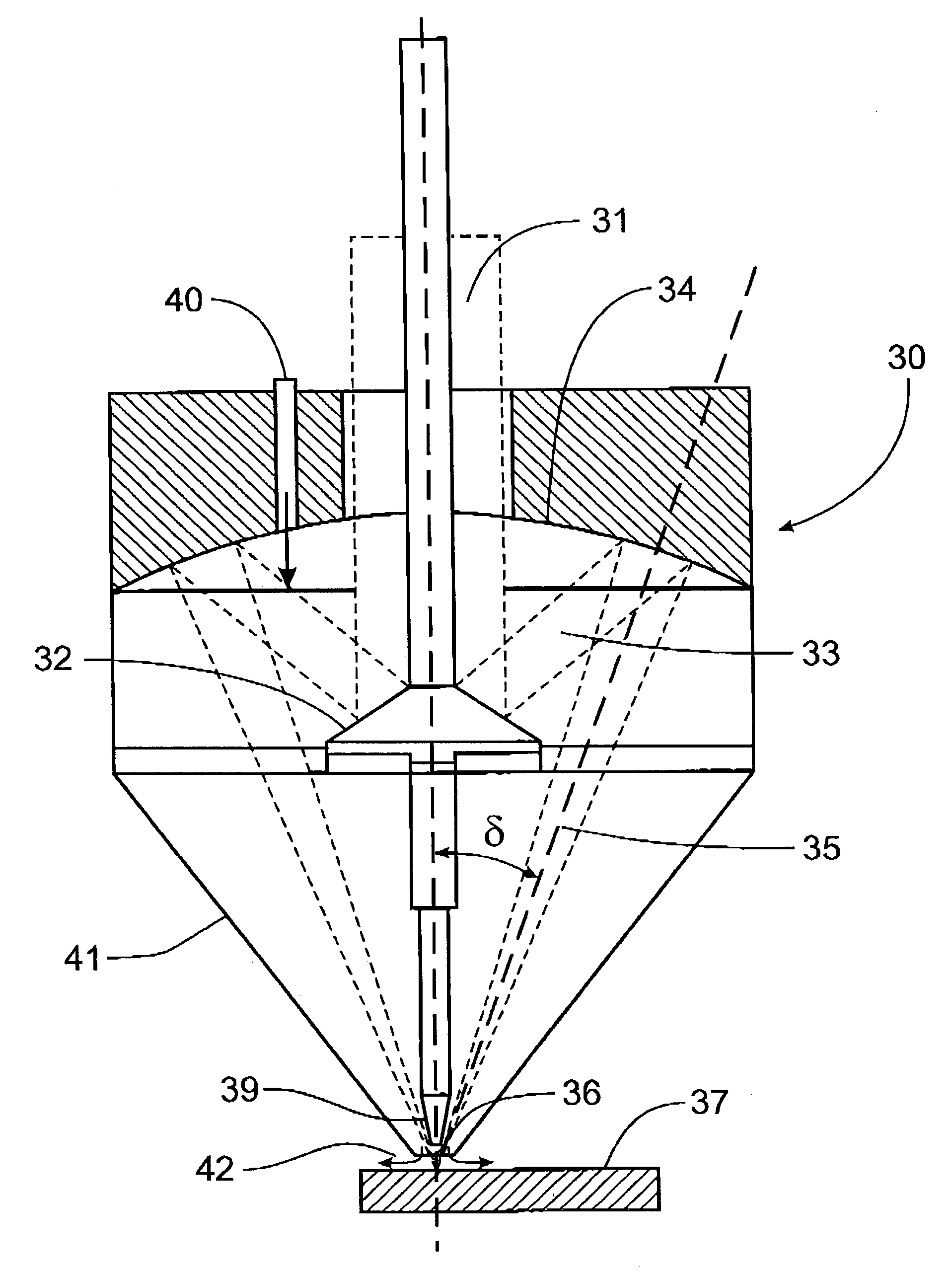
- A laser consolidation method where laser energy enters the molten pool at an angle of about 30 degrees symmetrically around the pool, and metallic powder is injected vertically at the top, creating a uniform temperature and surface tension, allowing for precise control of the melt pool shape and surface finish.

Quality Standards and Certification for LENS Products
Quality standards and certification frameworks for LENS products represent a critical foundation for ensuring manufacturing consistency and product reliability in additive manufacturing environments. The establishment of comprehensive quality benchmarks directly impacts workflow efficiency by providing clear acceptance criteria and reducing iterative quality assessment cycles that can significantly impede production throughput.
Current industry standards for LENS manufacturing primarily derive from established additive manufacturing protocols, including ASTM F2792 guidelines for additive manufacturing terminology and processes, and ISO/ASTM 52900 series standards. These frameworks provide fundamental classification systems for LENS processes and establish baseline requirements for material specifications, process parameters, and post-processing procedures. However, the rapid evolution of LENS technology often outpaces standardization efforts, creating gaps between emerging capabilities and formal certification requirements.
Certification pathways for LENS products vary significantly across industry sectors, with aerospace and medical device applications maintaining the most stringent requirements. AS9100 aerospace quality management standards and FDA medical device regulations impose rigorous documentation and validation protocols that can extend production timelines but ensure critical safety and performance criteria. These certification processes typically require extensive material traceability, process validation documentation, and comprehensive testing protocols that must be integrated into streamlined workflows.
Material certification represents a particularly complex aspect of LENS quality assurance, as powder feedstock quality directly influences final product characteristics. Established material standards such as ASTM B348 for titanium alloys and ASTM A564 for stainless steels provide baseline specifications, but LENS-specific material requirements often necessitate additional characterization protocols including particle size distribution analysis, flowability assessments, and contamination level verification.
Process certification frameworks focus on establishing repeatable manufacturing parameters that ensure consistent product quality while maintaining production efficiency. Key certification elements include laser power stability verification, powder feed rate calibration, and thermal management validation. These process controls must be documented and maintained throughout production cycles to satisfy certification requirements while supporting streamlined manufacturing operations.
Emerging quality assurance technologies, including real-time monitoring systems and in-situ inspection capabilities, are beginning to influence certification frameworks by enabling continuous quality verification rather than traditional batch-based inspection protocols. These advanced monitoring approaches offer potential pathways for reducing certification overhead while maintaining rigorous quality standards, ultimately supporting more efficient LENS manufacturing workflows.
Current industry standards for LENS manufacturing primarily derive from established additive manufacturing protocols, including ASTM F2792 guidelines for additive manufacturing terminology and processes, and ISO/ASTM 52900 series standards. These frameworks provide fundamental classification systems for LENS processes and establish baseline requirements for material specifications, process parameters, and post-processing procedures. However, the rapid evolution of LENS technology often outpaces standardization efforts, creating gaps between emerging capabilities and formal certification requirements.
Certification pathways for LENS products vary significantly across industry sectors, with aerospace and medical device applications maintaining the most stringent requirements. AS9100 aerospace quality management standards and FDA medical device regulations impose rigorous documentation and validation protocols that can extend production timelines but ensure critical safety and performance criteria. These certification processes typically require extensive material traceability, process validation documentation, and comprehensive testing protocols that must be integrated into streamlined workflows.
Material certification represents a particularly complex aspect of LENS quality assurance, as powder feedstock quality directly influences final product characteristics. Established material standards such as ASTM B348 for titanium alloys and ASTM A564 for stainless steels provide baseline specifications, but LENS-specific material requirements often necessitate additional characterization protocols including particle size distribution analysis, flowability assessments, and contamination level verification.
Process certification frameworks focus on establishing repeatable manufacturing parameters that ensure consistent product quality while maintaining production efficiency. Key certification elements include laser power stability verification, powder feed rate calibration, and thermal management validation. These process controls must be documented and maintained throughout production cycles to satisfy certification requirements while supporting streamlined manufacturing operations.
Emerging quality assurance technologies, including real-time monitoring systems and in-situ inspection capabilities, are beginning to influence certification frameworks by enabling continuous quality verification rather than traditional batch-based inspection protocols. These advanced monitoring approaches offer potential pathways for reducing certification overhead while maintaining rigorous quality standards, ultimately supporting more efficient LENS manufacturing workflows.
Cost-Benefit Analysis of LENS Workflow Improvements
The economic evaluation of LENS workflow improvements requires a comprehensive assessment of implementation costs versus anticipated productivity gains. Initial capital investments typically include advanced process monitoring systems, automated powder handling equipment, and enhanced software integration platforms. These upfront costs range from $150,000 to $500,000 depending on system complexity and manufacturing scale. However, the return on investment becomes evident through reduced cycle times, improved part quality consistency, and decreased material waste.
Labor cost reductions represent a significant benefit component in streamlined LENS operations. Automated workflow systems can reduce operator intervention by 40-60%, translating to substantial savings in skilled technician hours. Additionally, improved process reliability minimizes the need for part rework and quality inspection time, further reducing operational expenses. The integration of real-time monitoring systems prevents costly build failures, which can save $5,000-$15,000 per prevented failure depending on part complexity and material costs.
Material utilization improvements contribute substantially to the economic benefits. Enhanced powder management systems and optimized deposition strategies can reduce material waste by 15-25%, resulting in annual savings of $50,000-$200,000 for medium-scale operations. The improved powder recycling capabilities and reduced contamination rates extend material lifecycle, further enhancing cost efficiency.
Productivity gains through reduced setup times and faster build rates directly impact throughput economics. Streamlined workflows can increase effective machine utilization from 65% to 85%, enabling higher part production volumes without additional equipment investment. This improvement translates to revenue increases of 20-30% for existing manufacturing capacity.
The payback period for comprehensive LENS workflow improvements typically ranges from 18 to 36 months, depending on production volume and complexity. Long-term benefits include enhanced competitive positioning, improved customer satisfaction through consistent delivery times, and reduced operational risk through process standardization. These factors contribute to sustainable profitability improvements beyond the initial investment recovery period.
Labor cost reductions represent a significant benefit component in streamlined LENS operations. Automated workflow systems can reduce operator intervention by 40-60%, translating to substantial savings in skilled technician hours. Additionally, improved process reliability minimizes the need for part rework and quality inspection time, further reducing operational expenses. The integration of real-time monitoring systems prevents costly build failures, which can save $5,000-$15,000 per prevented failure depending on part complexity and material costs.
Material utilization improvements contribute substantially to the economic benefits. Enhanced powder management systems and optimized deposition strategies can reduce material waste by 15-25%, resulting in annual savings of $50,000-$200,000 for medium-scale operations. The improved powder recycling capabilities and reduced contamination rates extend material lifecycle, further enhancing cost efficiency.
Productivity gains through reduced setup times and faster build rates directly impact throughput economics. Streamlined workflows can increase effective machine utilization from 65% to 85%, enabling higher part production volumes without additional equipment investment. This improvement translates to revenue increases of 20-30% for existing manufacturing capacity.
The payback period for comprehensive LENS workflow improvements typically ranges from 18 to 36 months, depending on production volume and complexity. Long-term benefits include enhanced competitive positioning, improved customer satisfaction through consistent delivery times, and reduced operational risk through process standardization. These factors contribute to sustainable profitability improvements beyond the initial investment recovery period.
Unlock deeper insights with PatSnap Eureka Quick Research — get a full tech report to explore trends and direct your research. Try now!
Generate Your Research Report Instantly with AI Agent
Supercharge your innovation with PatSnap Eureka AI Agent Platform!